Rajesh Vishwas, a member of the Indian government, was suspended after he gave an order to empty a water reservoir in order to retrieve his phone, BBC reported on Saturday.
The food inspector was taking a photo when his phone, which was valued at roughly $1,200, fell into the Kherkatta Dam in Chhattisgarh. Millions of gallons of water had to be pumped out of the dam. The process of draining the dam took three days.
Vishwas has said in a video statement that after local divers failed to find it, he paid for a diesel pump to be brought in.
The process was halted after an official from the water resource department arrived following a complaint.
“He has been suspended until an inquiry. Water is an essential resource and it cannot be wasted like this,” Kanker district official Priyanka Shukla told an Indian newspaper.
However, Vishwas insisted that he had not abused his authority and that the water had been drained because it was “
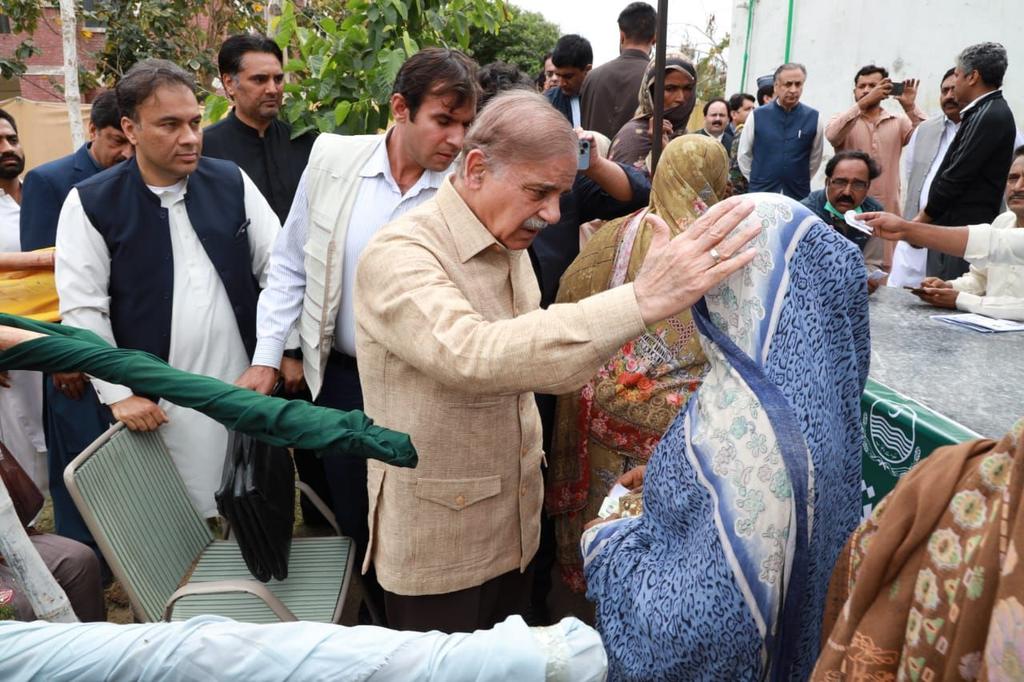
Prime Minister (PM) Shehbaz Sharif paid a visit to a flour distribution centre in Islamabad on Friday to oversee the work.
During the visit, the premier directed authorities to give priority to the distribution of flour bags to aged persons and women.
He also decided to provide two flour bags instead of one so that the people do not need to visit the distribution centres frequently.
He asked relevant authorities to chalk out a facilitatory mechanism for the person who can only present the photocopy of CNIC in case the original card is missing.
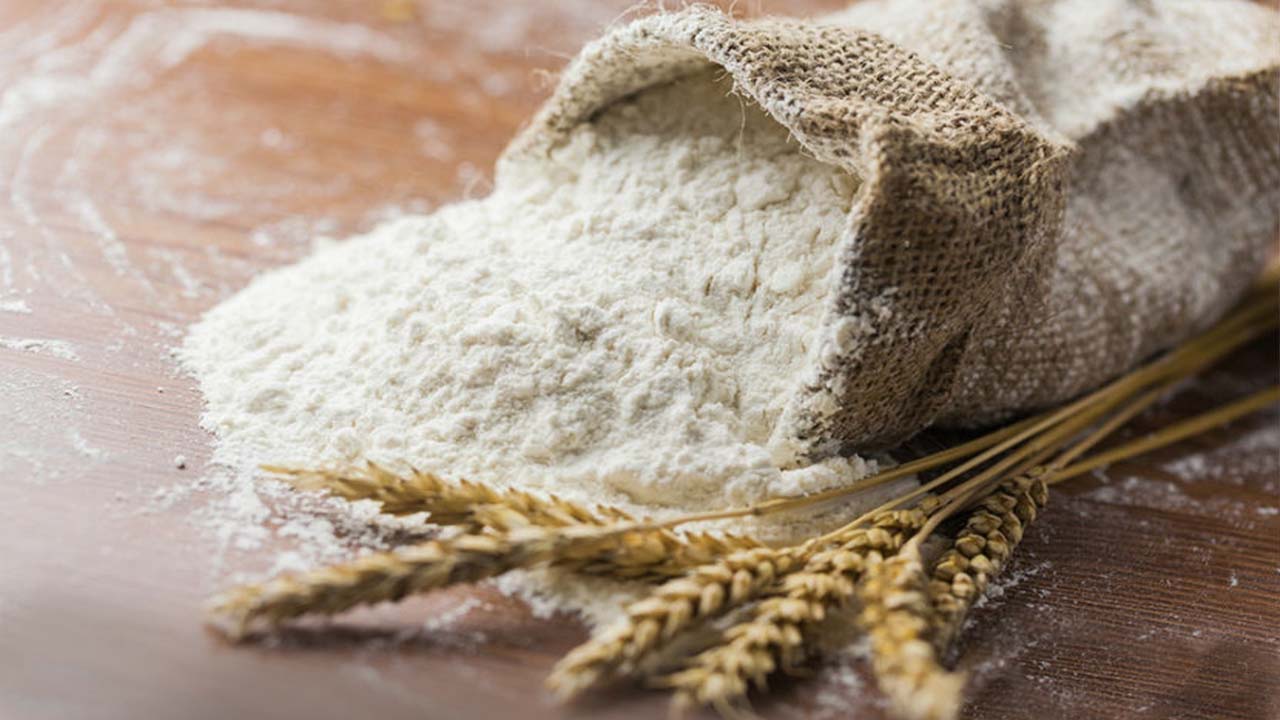
Under the Ramzan package jointly initiated by the prime minister and the Punjab government, 20 million bags of free flour have been distributed among deserving citizens by the 10th day of the programme.
Biryani is one of the most popular dishes, not just in the subcontinent, but in the world. And now we have another way of accessing it.
An Indian outlet, named ‘The BVK Biryani’ has implemented the concept of takeaway biryanis that can be bought from vending machines.
After placing the order, a timer appears on the screen showing that the food is being prepared and you can get a warm box of biryani ready in under four minutes.
The restaurant with the vending machine is located in Chennai’s Somanathapuram, Kolathur.
The machine offers different types of biryani as well as vegetarian dishes, starters or beverages.
The place is also known for its unique “manless takeaway” service as there are four to five vending machines at the restaurant where customers can place their orders.
Qudsia Ali has been on a roll- with her spectacular performance in ‘Betiyan’ and now as Taniya in ‘Kuch Ankahi’, she has been recieving rave reviews for her performance as the headstrong, youngest daughter of the family who actively pursues her dream to become a filmmaker.
Recently in a talk with Fuchsia Magazine, Ali opened up about how she struggles with criticism about her weight. She revealed that a lot of feedback she received at auditions was about her weight:
“Whenever I would go for auditions, I was told directly if I wish to come on to the main screen, then I would have to lose weight. But if we look at international work, you see people with different skin tones and body types, no one cares about such things because it is your skills that matter. Then why is it so important here?”
Ali revealed that she had recently started losing weight, but did it more for the sake of her health rather than to please the critics because she doesn’t want to change herself to prevent standing out, alluding to a remark made about her curly hair:
“I will never lose weight because of someone’s criticism, but I started this journey because I cared about my own health, to stay fit and healthy. Not for work, industry or for anyone.
People often tell me that I look overweight in scenes because of my hair, and I should get keratin treatment. No! This is how I stand out from other people. How many people do you know who have curly hair? If I’m going to find work based on my skills, then I will find it. I’m going to wait for that. I’m someone who can wait.”
Ali opened up that in the beginning of her career, hearing such negative feedback sometimes took a toll, but eventually with a positive mindset, especially with the help of colleagues like Sajal Aly, she was able to let it go and keep doing what she liked:
“In the beginning of my career, whenever I heard comments like these I had thought sometimes to listen and change my appearance. But what is the guarantee that after changing your appearance you will find work? You become slim and straighten your hair, whats the guarantee that you will find work?.. This was my own thought process. Ahmed saab and Sajal Aly would advice me a lot that I should do what makes me happy, rather than for others.”
Pakistani-American filmmaker Sharmeen Obaid has announced that she is launching a project “Museum of Food” which will celebrate and preserve the food culture in Pakistan.
Announcing her new intitiative in an Instagram post, the two-time Oscar winner revealed that the idea was inspired by her grandmother who had taught both young women and men how to cook:
“I grew up around my Nani’s dinning table…For as long as I can remember she was teaching young women and sometimes men how to cook…She diligently preserved all her recipes and every Friday an advert in the classified section would appear with the weeks menu under the banner: Mrs Azra Syed’s Cooking classes. Thousands of her students now live around the world carrying her recipes with them…My museum of food is an ode to her and her generation whose recipes are fast disappearing..”
Obaid elaborated that this project was set up for people across Pakistan to send their food recipes that were celebrated in their families so that Pakistan does not lose its cultural heritage
In Balochistan’s capital of Quetta, a shortage of flour has led to skyrocketing prices for 20kg bags of the commodity. According to reports, profiteers are taking advantage of the situation and selling flour bags for between Rs2,640 to Rs2,800 in Quetta and surrounding areas.
The residents of Quetta are frustrated that they are unable to obtain flour at the government’s fixed rate and are instead forced to pay an excessive price. They are calling on the provincial government to take action against the profiteers and ensure the availability of flour.
According to ARY News, the President of Flour Mills Association Balochistan, Nasir Agha, has also weighed in on the crisis. He stated that the supply of wheat to the mills has been suspended for the last ten days, and he blamed the incompetence of the Balochistan food department for the current situation.
With prices for flour continuing to rise, it remains to be seen how the provincial government will respond to the demands of the residents and the Flour Mills Association.
Pakistan’s inflation, as measured by the consumer price index (CPI), surged to a record-breaking 31.5 per cent in February, largely driven by steep price hikes in food, housing, and transportation groups. This concerning development was recently reported by the Pakistan Bureau of Statistics (PBS), and has heightened expectations of an increase in interest rates during the upcoming monetary policy committee (MPC) meeting, which the central bank has scheduled for March 2.
The February inflation rate marks the highest figure since available data dating back to July 1965, surpassing the previous record of slightly over 29 per cent in April 1975. The unexpected pace of price increases has surpassed the finance ministry’s expectations, who had projected an inflation range of 28 per cent to 30 per cent just a day before the report.
According to Geo, the monthly inflation rate surged by 4.3 per cent in February compared to January, primarily due to increased average prices of food items such as poultry, fruits, pulses, oil, vegetables, ghee, LPG, gas charges, and domestic petroleum products.
The inflation reading raises concerns that the government will need to review its strategy to secure the critical $1.1 loan tranche from the International Monetary Fund (IMF). Despite repeated efforts, the government has been unable to regain lost ground with the IMF and is continually delivering financial shocks to the people.
According to PBS, the inflation rate rose in both urban and rural areas. Urban inflation increased to 28.8 per cent in February, while rural inflation soared to 35.6 per cent compared to the same month last year. In February of the previous year, urban inflation was recorded at 11.5 per cent, while rural inflation was at 13.3 per cent.
Call it what you want – gol gappa, paani puri, phuchka or the like, this street-side snack is a favorite for many across the subcontinent. But the beloved snack often ends up being the subject of many food experiments.
For example, a video posted on twitter by a food blogger shows how a good old gol gappa is now being made into ice-cream.
Goll-Gappay is everyone’s favorite street food and if you are not a gol –gappa or pani puri fan, we think you’ve never had one. After shopping in busy markets, Goll-Gappay is the first thing in every person mind. But the standard sweet and sour Goll- Gappay is being usurped by ice cream goll-gappay.
The video shows the cart owner making goll-gappay for a customer with vanilla ice cream and also gola kanda ice cream.
The video went viral on social media after being shared by an Indian channel. After the video went viral social media users are saying NO to this rather horrible combination.
What are your thoughts on this food fusion? Pass or fail?
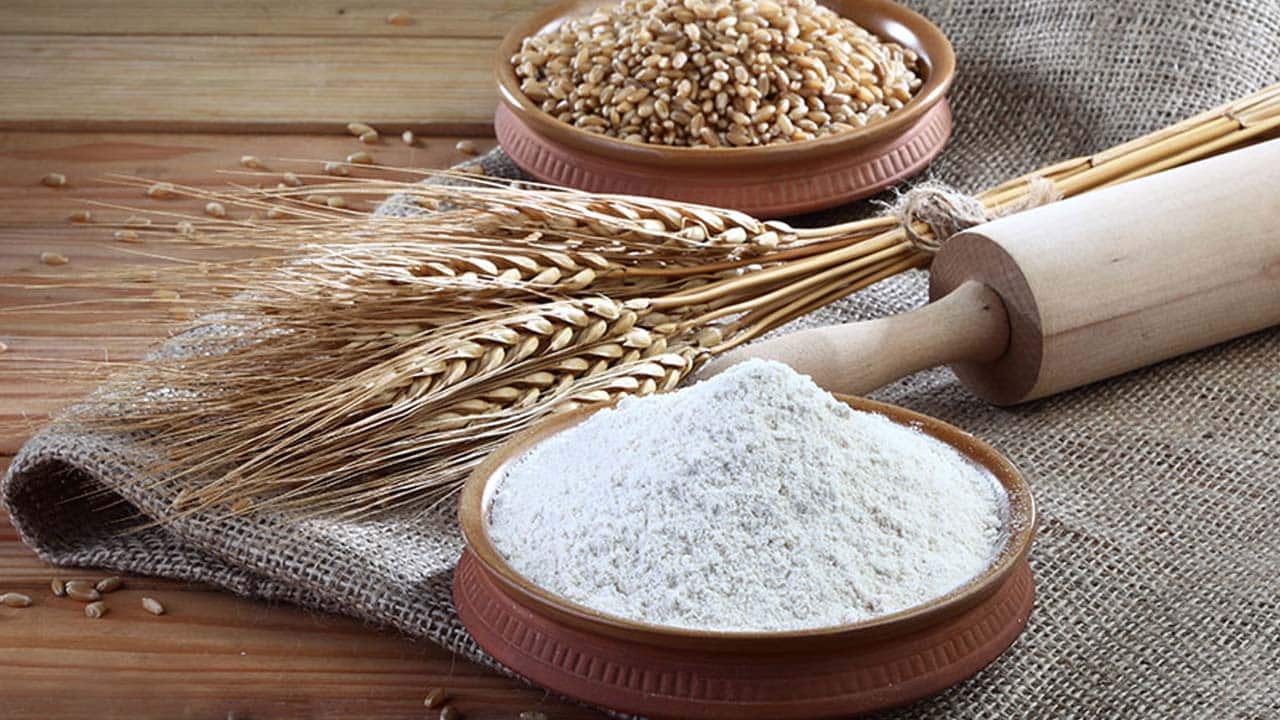
The Punjab Flour Mills Association has declared an indefinite strike from today, disrupting the supply of flour to the market from February 14th.
The strike is a response to the suspension of wheat quotas for over 100 flour mills by the Punjab Food Department.
The ongoing differences between the Flour Mills Association and the Food Department have reached a boiling point following the government’s decision to suspend the quotas.
The Chairman of the Punjab Flour Mills Association released a statement announcing that the flour mills will no longer receive wheat from the government quota, resulting in the discontinuation of the provision of affordable flour to the market.
He also requested the Food Department to provide evidence for any alleged malpractice within the association.
Prior to this development, the open market price of wheat in Punjab experienced a significant decrease of Rs1,200 per maund, due to the increased wheat quota and import. Market dealers report that the price dropped from Rs5,200 per maund to Rs4,000 per maund.
As a result of a decrease of Rs1,200 per maund, the price of wheat per kilogramme in the open market has fallen to Rs100 from its previous rate of Rs130 per kg, according to ARY News.