Tag: foreign exchange reserves

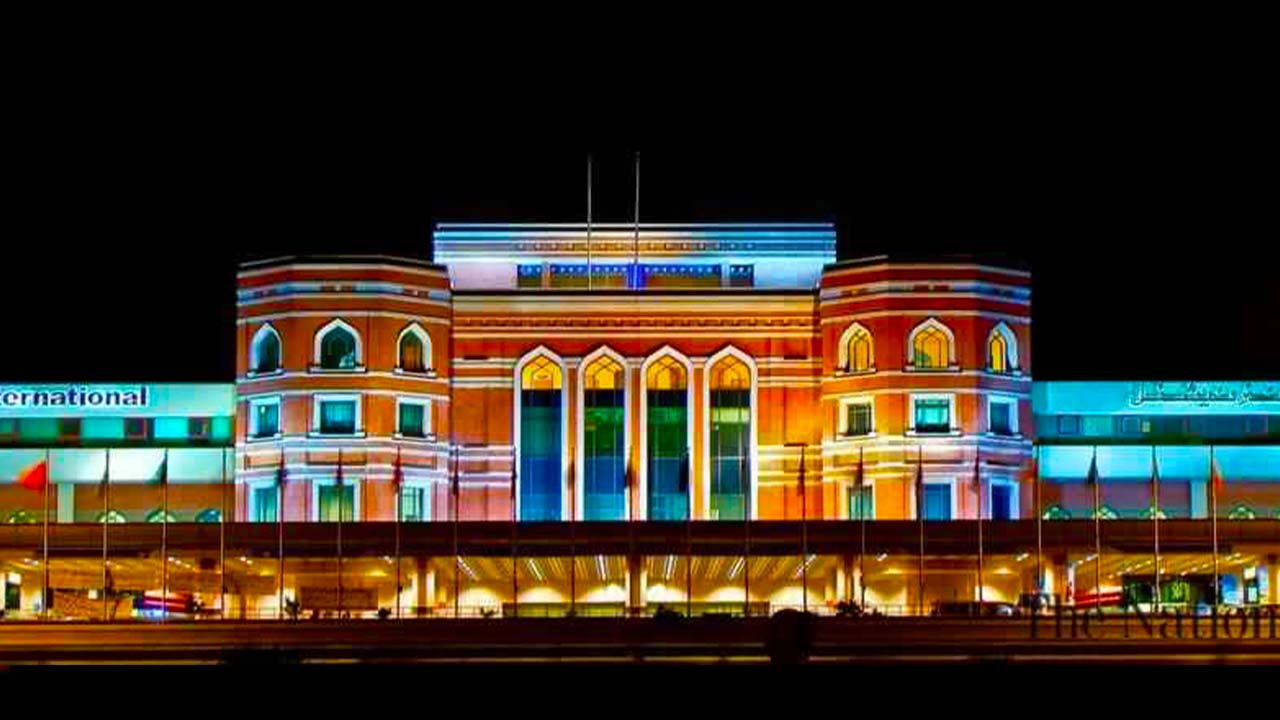
  • Jinnah, Allama Iqbal, and Islamabad airports to be outsourced by govt

    Jinnah, Allama Iqbal, and Islamabad airports to be outsourced by govt

    The government has approved a draft to outsource three of its major airports in a bid to boost its dwindling foreign exchange reserves.

    The Economic Coordination Committee (ECC) of the government considered a summary presented by the Ministry of Aviation regarding the engagement of the International Finance Corporation (IFC), which is part of the World Bank Group, as a transaction advisor for the outsourcing process.

    The airports that will be outsourced are the Jinnah International Airport Karachi, Allama Iqbal International Airport Lahore, and Islamabad International Airport.

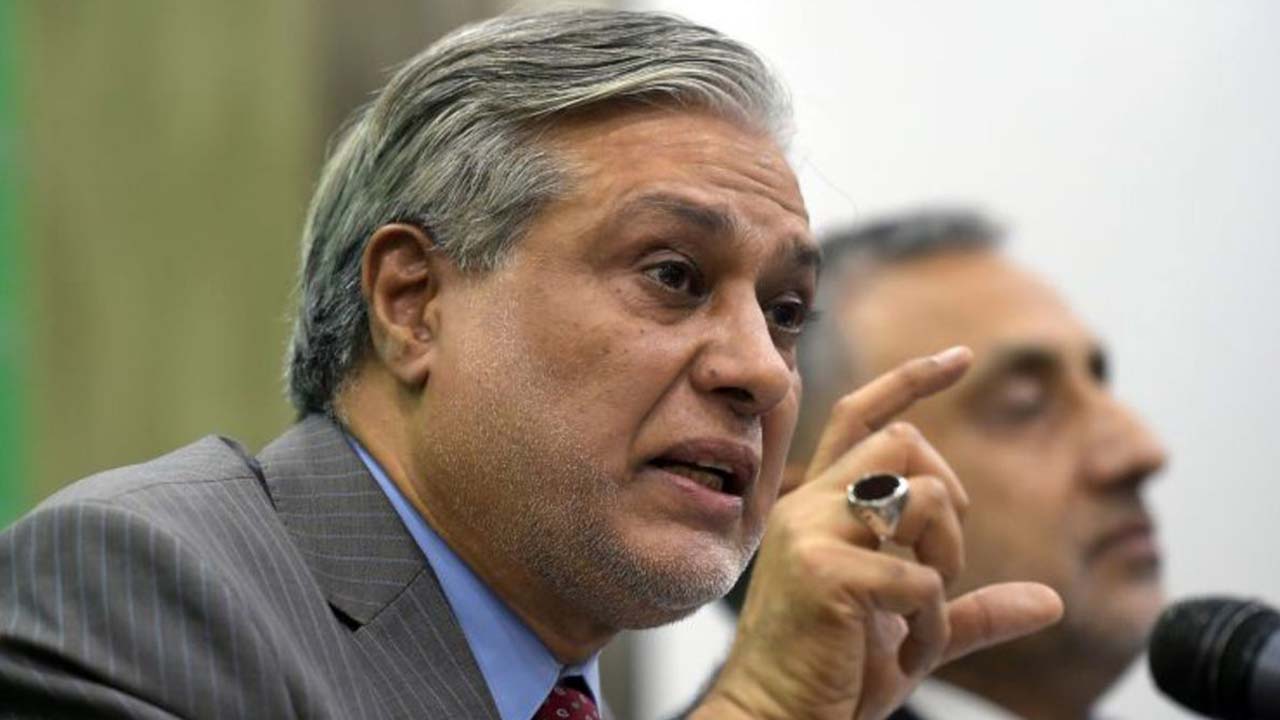
    The committee, headed by Finance Minister Ishaq Dar, initiated the outsourcing process under the Public-Private Partnership Act-2017 to engage private investors/airport operators to run the airports, develop associated land assets, and enhance commercial activities. The committee also approved the draft Transaction Advisory Agreement (TASA) reached with the IFC by the Pakistan Civil Aviation Authority (PCAA) for the outsourcing of the airports after a detailed discussion.

    The details of the partnership or any agreement have not been made official. According to officials, Pakistan has been in talks with Qatar to jointly run terminals at the three airports.

    Prime Minister visited Doha last year to seek Qatari investment in the country’s energy and aviation sectors, and the Qatar Investment Authority pledged $3 billion to Pakistan.

    Pakistan’s national flag carrier is struggling with accumulated losses of nearly Rs400 billion Pakistani rupees, and the government hopes that outsourcing the airports will help attract direct foreign investment and provide world-class facilities to passengers.

  • Toyota IMC announces shutdown of production plant once again due to parts shortage

    Toyota IMC announces shutdown of production plant once again due to parts shortage

    Indus Motor Company Limited (INDU), the company known for assembling and selling Toyota-brand vehicles in Pakistan, has announced the temporary shutdown of its production plant from March 24 to March 27 due to raw material and component shortages.

    In a notice to the Pakistan Stock Exchange (PSX), Indus Motor cited difficulties in opening Letters of Credit (LCs) for raw materials by banks, which have caused a disruption in the supply chain of the company and its vendors.

    As a result, the company is unable to continue its production activities due to insufficient inventory levels. This is the second time this year that Indus Motor has announced the shutdown of its plant, with the first being from February 1 to February 14 due to an inventory shortage.

    The CEO of Indus Motor, Ali Asghar Jamali, had previously acknowledged the challenges facing the local auto industry, including the restrictions on Completely Knocked Down (CKD) kits, which have resulted in manufacturers operating at only 40-45 per cent of their capacity.

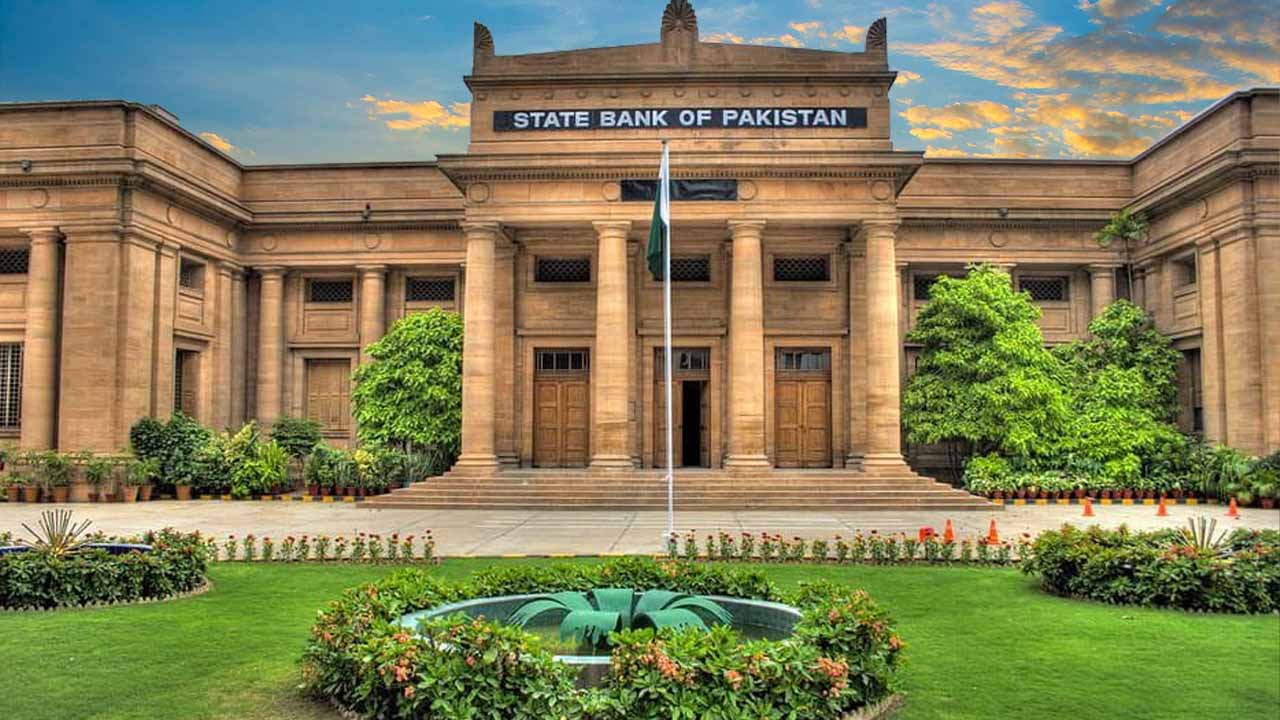
    The auto industry in Pakistan is heavily reliant on imports and has been affected by the State Bank of Pakistan’s (SBP) restrictions on the opening of LCs, following a sharp depreciation of the rupee.

    The SBP has imposed restrictions on imports due to the country’s low foreign exchange reserves, which has resulted in operational hindrances for many industries, including the auto sector.

    Although the SBP withdrew import restrictions in January, many industries are still struggling due to the dollar shortage.

  • Pakistan receives $500 million in second disbursement from Chinese bank ICBC

    Pakistan receives $500 million in second disbursement from Chinese bank ICBC

    On Friday, Pakistan received a sum of $500 million, which is the second disbursement of the $1.3 billion facility from the Industrial and Commercial Bank of China (ICBC). Senator Ishaq Dar, the Federal Minister for Finance and Revenue, announced this development on his Twitter handle, adding that the funds will help shore up Pakistan’s forex reserves.

    The Chinese bank made this critical disbursement after Pakistan completed the necessary documentation. Earlier in March, the ICBC approved a rollover of a $1.3 billion loan for Pakistan, following which the bank deposited $500 million, the first disbursement on March 4, which helped the foreign exchange reserves exceed $4 billion.

    Pakistan, which has been facing growing economic challenges such as high inflation, sliding forex reserves, a widening current account deficit, and a depreciating currency, has made payments of around $5.5 billion (excluding the $1 billion sukuk payment) to China Development Bank and ICBC, with $3.5 billion given to banks in other countries. To reduce the debt stock, Pakistan has been paying off debts in tranches, and now the country will receive the $1.3 billion back in three tranches.

    The current foreign exchange reserves of Pakistan stand at $4.3 billion as of March 10, which is barely enough for less than a month of imports, while the liquid foreign exchange reserves stand at around $9.8 billion, including $5.5 billion in net reserves held by commercial banks. According to a report published in The News, a Chinese bank has given assurances that it will provide another refinanced $500 million loan in the next few days, bringing the total of commercial loans up to $1.7 billion out of the total committed amount of $2 billion.

    According to The News, Pakistan has also requested a rollover on the Chinese SAFE deposit of $2 billion within the ongoing month. These actions, such as the refinancing of commercial loans and rollovers on SAFE deposits, are pre-requisites for moving towards the signing of a staff-level agreement between the IMF and the Pakistani side. Currently, Pakistani authorities are waiting for confirmation from the Kingdom of Saudi Arabia, the UAE, and Qatar, as well as from the World Bank and the AIIB, to fulfill their external financing needs of $6 billion until the end of June 2023, and the situation remains tense.

  • Dar says assurance of funding from friendly countries is the final hurdle in securing IMF deal

    Dar says assurance of funding from friendly countries is the final hurdle in securing IMF deal

    On Thursday, Finance Minister Ishaq Dar announced that the assurance of funding from “friendly countries” was the final obstacle to securing an IMF deal that would provide critical support to Pakistan’s struggling economy and prevent an economic crisis.

    During a session of the country’s upper house of parliament, Dar revealed that several countries had previously made commitments to support Pakistan during IMF reviews, and the IMF was now requesting that these commitments be fulfilled.

    The delay in securing the deal, which involves a $1.1 billion bailout package from the IMF, has been ongoing since November due to issues surrounding fiscal policy adjustments. The package is part of a larger $6.5 billion bailout approved by the IMF in 2019, which is crucial for Pakistan to avoid defaulting on external payment obligations.

    The deal would also allow Pakistan to access other financing avenues to bolster its foreign exchange reserves, which currently only cover four weeks’ worth of imports.

    The IMF has asked Pakistan to secure assurance of up to $7 billion to cover this year’s balance of payments gap, while Dar believes that $5 billion would suffice.

    An IMF mission has been present in Islamabad since February to negotiate a set of policy measures for Pakistan’s struggling economy, ahead of the annual budget due in June.

    Prime Minister Shehbaz Sharif stated that all of the IMF’s conditions had been met, and expressed hope that a staff level agreement would be reached soon.

  • State Bank of Pakistan’s foreign exchange reserves rise to $4.3 billion after Chinese loan

    State Bank of Pakistan’s foreign exchange reserves rise to $4.3 billion after Chinese loan

    Pakistan’s foreign exchange reserves held by the State Bank of Pakistan (SBP) have exceeded $4 billion after the country received a $500 million loan from the Industrial and Commercial Bank of China (ICBC).

    In a weekly bulletin, the SBP reported a rise in foreign exchange reserves by $487 million, boosting the total to $4,301 million as of 3 March, providing an import cover of around a month. This was part of the ICBC’s $1.3 billion facility, which followed another loan of $700 million from the China Development Bank.

    These loans were essential as Pakistan has not received funds from any other country, except China, while the $350 billion economy struggles to revive its stalled International Monetary Fund (IMF) program.

    There are $7 billion of repayments due in the coming months, including a Chinese loan of $2 billion due in March. According to Geo, experts believe that the Pakistan rupee, which has fallen to a historic low of Rs282.30 against the dollar in the interbank market, can only recover to Rs265 if the situation improves.

    Meanwhile, the government has imposed restrictions on imports due to a shortage of dollars, which has resulted in the partial closure of textile and automobile manufacturers, raising fears of unemployment.

  • SBP governor says import restrictions will be eased after completion of IMF review

    SBP governor says import restrictions will be eased after completion of IMF review

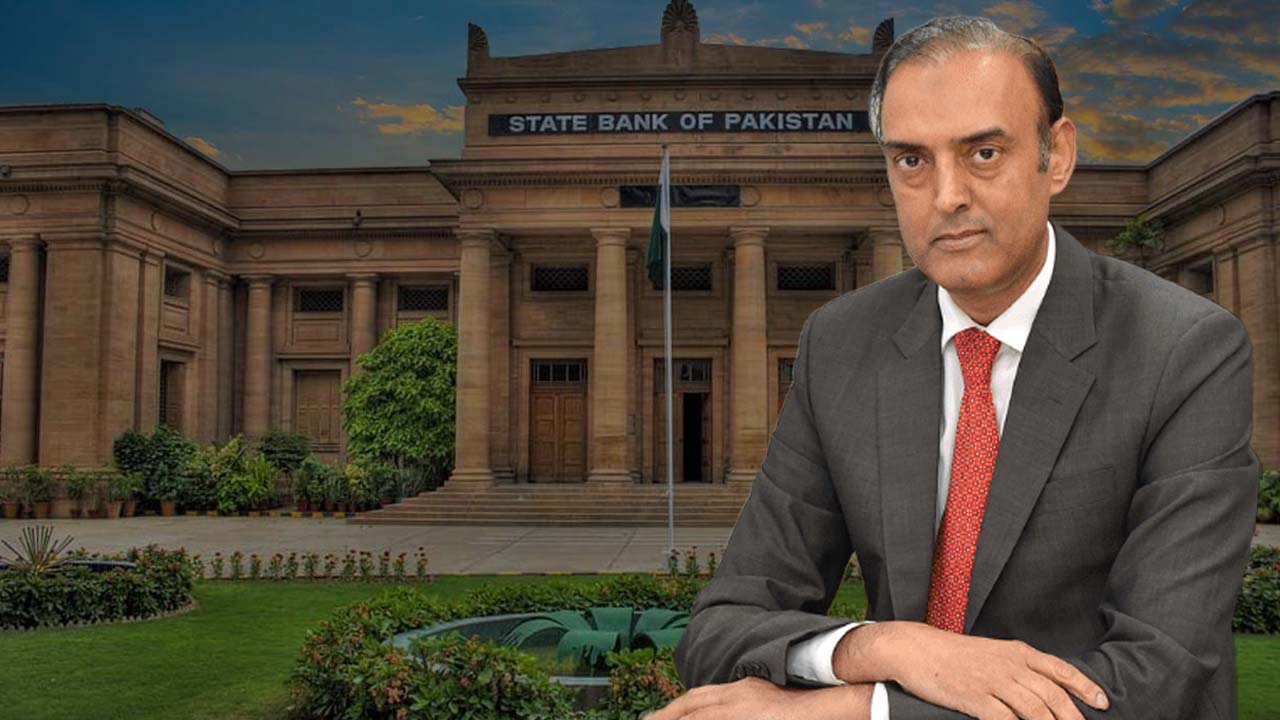
    During a briefing to the Senate Standing Committee on Finance, State Bank of Pakistan (SBP) Governor Jameel Ahmed projected that the current account deficit for the ongoing fiscal year would be $7 billion, which is lower than the budgetary target of $10 billion. He attributed the lower deficit to measures taken to control imports, which he said could not continue for a longer period of time. Ahmed stated that import compression would ease after the completion of the International Monetary Fund (IMF) review.

    Ahmed also mentioned that the low inflows due to the delay in the IMF review, higher commodity prices in the international market, and the Ukraine-Russia war are major reasons behind pressure on the external account and an increase in inflation. However, he clarified that an increase of 300 per cent basis points in the policy rate was not made on the demand of the International Monetary Fund (IMF), and that the Staff Level Agreement (SLA) is close to being finalized with the Fund.

    Regarding the outflow of $2.4 billion on account of debt repayment in the first half of the current fiscal year compared to $6.3 billion inflow for the same period a year ago, Ahmed said that the decline in inflows was due to the pending review of the IMF program. He hoped that budgeted inflow would materialize after the completion of the review in the second half, thereby increasing foreign exchange reserves.

    Ahmed also mentioned that the pressure of inflation will remain for two to three months and the average inflation this year will be 26.5 per cent. He added that remittances have decreased by $2 billion and are projected at $29 billion for the ongoing fiscal year against over $31 billion for the last fiscal year. There was also a decline of 7.4 per cent in exports as the country did not have exportable goods due to flood and a decrease in the export of rice. Vegetables and fruit exports have also declined by 48 and 37 per cent respectively.

    According to The News, the committee expressed concern over the fluctuation of the dollar and said that it was the responsibility of the regulator to maintain the actual price of the dollar and take measures against black marketing and smuggling. The committee sought details of the amount of dollars smuggled to Afghanistan in the recent period. The committee members recommended seriously addressing the issue of the difference between the dollar rate in the open market and the inter-bank. The chairman of the committee recommended that instead of rupee trade with Afghanistan, either be replaced with the dollar or barter trade because trade with Afghanistan in rupee is also contributing to the external account pressure.

    Senator Mohsin Aziz highlighted that the remittances, the FDI, and the exports have been on a decline, whereas the country’s debt was increasing. He also said that imports compression and policy rate were hurting the industry and exports, and exporters are unable to compete in the global market with regional players due to government policies.

    In response to the issue of refusal of LCs to importers of pharmaceutical ingredients, the SBP said it was fully supporting the import of above articles and imports of pharma industry have considerably increased in the month of February and the first seven days of March 2023.

  • Pakistan’s textile industry struggles as exports fall by 28% in February

    Pakistan’s textile industry struggles as exports fall by 28% in February

    On Monday, the All Pakistan Textile Mills Association (APTMA) released provisional data indicating that Pakistan’s textile sector exports declined significantly by 28 per cent, totaling $1.2 billion in February 2023, compared to $1.67 billion in the same month the previous year.

    Additionally, APTMA reported that textile exports for the first eight months of FY23 decreased by 11 per cent to $11.24 billion, down from $12.60 billion in 8MFY22. These declines are alarming for Pakistan, whose economy is already struggling with depleting foreign exchange reserves.

    The country’s central bank has only $3.81 billion in reserves, which is barely enough to cover a month of imports.

    Industrialists in Pakistan have expressed concern about the ongoing slump in the textile sector. Data released by the Pakistan Cotton Ginner’s Association (PCGA) on Friday revealed that cotton arrival in Pakistan also decreased by 34.5 per cent year-on-year.

    Last month, APTMA urged the federal government to implement a uniform gas price of $7 per MMBtu for the export industry throughout the country to ensure a level playing field.

    APTMA also warned that the government’s decision to suspend the regionally competitive energy tariff (RCET) of electricity for Export Oriented Units (EOUs) would harm the textile industry, particularly in Punjab.

    In December, APTMA wrote a letter to Prime Minister Shehbaz Sharif, warning that the country’s textile exports could fall below $1 billion a month from 2023 onwards, highlighting a range of issues affecting the sector, which is currently operating at less than 50 per cent capacity utilization.

  • Pakistan receives $500m in first installment of $1.3 billion Chinese loan

    Pakistan receives $500m in first installment of $1.3 billion Chinese loan

    On Friday, Pakistan’s Finance Minister Ishaq Dar announced that the Industrial and Commercial Bank of China (ICBC) has approved a facility of $1.3 billion, of which the first installment of $500 million has been received by the State Bank of Pakistan. The facility is expected to be disbursed in three installments and will help increase Pakistan’s foreign exchange reserves.

    The country has been facing economic challenges due to high inflation, a widening current account deficit, depreciating currency, and sliding forex reserves. As of February 24, foreign exchange reserves were at $3.8 billion, which is just enough for less than a month of imports.

    The finance minister also announced that China has renewed a facility under which Pakistan expects an additional inflow of $500 million in the next few days. The government returned $6.5 billion of foreign debt during the current fiscal year, and formalities with ICBC were completed to renew the facility.

  • All economic indicators moving in right direction: Dar dismisses rumors of Pakistan’s default

    All economic indicators moving in right direction: Dar dismisses rumors of Pakistan’s default

    According to the announcement by Pakistan’s Federal Finance Minister Ishaq Dar, negotiations between Pakistan and the International Monetary Fund (IMF) are about to conclude, and a staff-level agreement is expected to be signed soon.

    The minister also dismissed rumours of Pakistan defaulting as completely false and stated that all economic indicators are moving in the right direction. He highlighted that the State Bank of Pakistan’s foreign exchange reserves have increased and that foreign commercial banks have started extending facilities to Pakistan.

    However, the Pakistani rupee has plunged to a new all-time low of Rs290.18 against the US dollar in the interbank market, which is causing concern among importers who are panic buying dollars while exporters are reportedly withholding selling the greenback in anticipation of a higher exchange rate.

    It is reported that the IMF wants the value of the rupee in the interbank market to match its value in the black currency market.

  • IMF urges Pakistan to increase interest rate to move towards positive trajectory

    IMF urges Pakistan to increase interest rate to move towards positive trajectory

    The State Bank of Pakistan (SBP) and the International Monetary Fund (IMF) recently engaged in discussions concerning the possibility of tightening monetary policy and increasing foreign exchange reserves by the end of June 2023.

    As of February 10, 2023, Pakistan’s foreign exchange reserves held by the SBP stood at $3.1 billion, reflecting a $276 million increase. This was largely due to improved liquidity resulting from the reduction of discrepancies between the inter-bank and open markets following adjustments of the exchange rate.

    In accordance with the IMF’s recommendation to increase foreign exchange reserves to $12 billion by the end of June 2023, Pakistan will need to secure at least $17-18 billion over the next four-and-a-half months. This amount encompasses external debt repayment obligations of $5 billion, current account deficit (CAD) financing of $3-4 billion, and foreign exchange reserve building of $8-9 billion.

    If Pakistan’s proposal is approved by the IMF, it will require inflows of $11-12 billion in order to meet foreign debt servicing, CAD financing, and foreign exchange reserve building up to $6-$7 billion by the end of June 2023. The IMF has also suggested raising the policy rate by 300 to 400 basis points to shift towards a positive interest rate trajectory. However, SBP officials have asserted that the Monetary Policy Committee (MPC), established under the SBP Amendment Act, is empowered to make decisions based on macroeconomic fundamentals.

    According to a senior official of the finance ministry, Pakistani authorities are hoping to reach a staff-level agreement with the IMF’s review mission next week before the IMF executive board meeting in four to six weeks. Nevertheless, there is still a discrepancy on external financing projections.

    Pakistan has implemented tough measures, including increasing electricity and gas tariffs, imposing taxes worth Rs170 billion through a mini-budget, adopting a market-based exchange rate, and raising POL prices. While these steps were in the hands of Pakistani authorities, the most critical aspect now is securing confirmation from multilateral and bilateral creditors to meet the program period’s substantial external financing requirements. The EFF program is set to expire on June 30, 2023, with no possibility of extending it further.

    The IMF is pressing for a gross foreign exchange reserves target of up to $11-$12 billion by the end of June 2023, whereas Pakistan is requesting a target between $6 and $8 billion, given the possibility of reduced confirmation from bilateral partners. Both sides agree that reaching a gross foreign exchange reserves position of $16.2 billion by the end of June 2023, as requested during the finalization of the 7th and 8th reviews under the $6.5 billion EFF arrangement, is not feasible.

    The Pakistani side seeks a 50 per cent reduction in the target for the end of the program period, but the IMF insists on obtaining confirmation from all possible sources. Finance Minister Ishaq Dar is currently in Dubai, attempting to secure approval from multilateral and bilateral creditors as well as commercial banks to obtain the required dollar inflows support for the IMF program’s revival.