Tag: government

  • Govt, PTI break ice as much-awaited negotiations begin

    Govt, PTI break ice as much-awaited negotiations begin

    Aimed at easing the ongoing political tensions, much-awaited talks between the government and opposition’s Pakistan Tehreek-e-Insaf (PTI) began Monday, a government representative confirmed to The Current.

    According to the official, a high-level committee comprising senior members of the coalition government was formed by Prime Minister (PM) Shehbaz Sharif, days after PTI founder Imran Khan also formed a committee reflecting the party’s realisation that its policy of confrontation could no longer be continued.

    The government committee included Deputy Prime Minister Ishaq Dar, Rana Sanaullah, Senator Irfan Siddiqui, Raja Pervaiz Ashraf, Naveed Qamar, Dr Khalid Maqbool Siddiqui, Abdul Aleem Khan and Chaudhry Salik Hussain, reports said.

    While the PTI is yet to call off its currently postponed civil disobedience movement, government continues to say that any negotiations won’t bear fruit if they take place under pressure.

    The PTI’s committee for talks comprises Leader of Opposition in the National Assembly Omar Ayub, former NA speaker Asad Qaiser, PTI General Secretary Salman Akram Raja, Khyber Pakhtunkhwa Chief Minister Ali Amin Khan Gandapur, Sunni Ittehad Council Chairman Sahibzada Hamid Raza, senior PTI leader Hamid Khan and Majlis Wahdat-e-Muslimeen Allama Raja Nasir Abbas. 

    PTI Chairman Barrister Gohar Ali Khan, whose party has been agitating for several months now, called the committee’s formation a constructive step and said that meaningful dialogue based on positive intentions should be held.

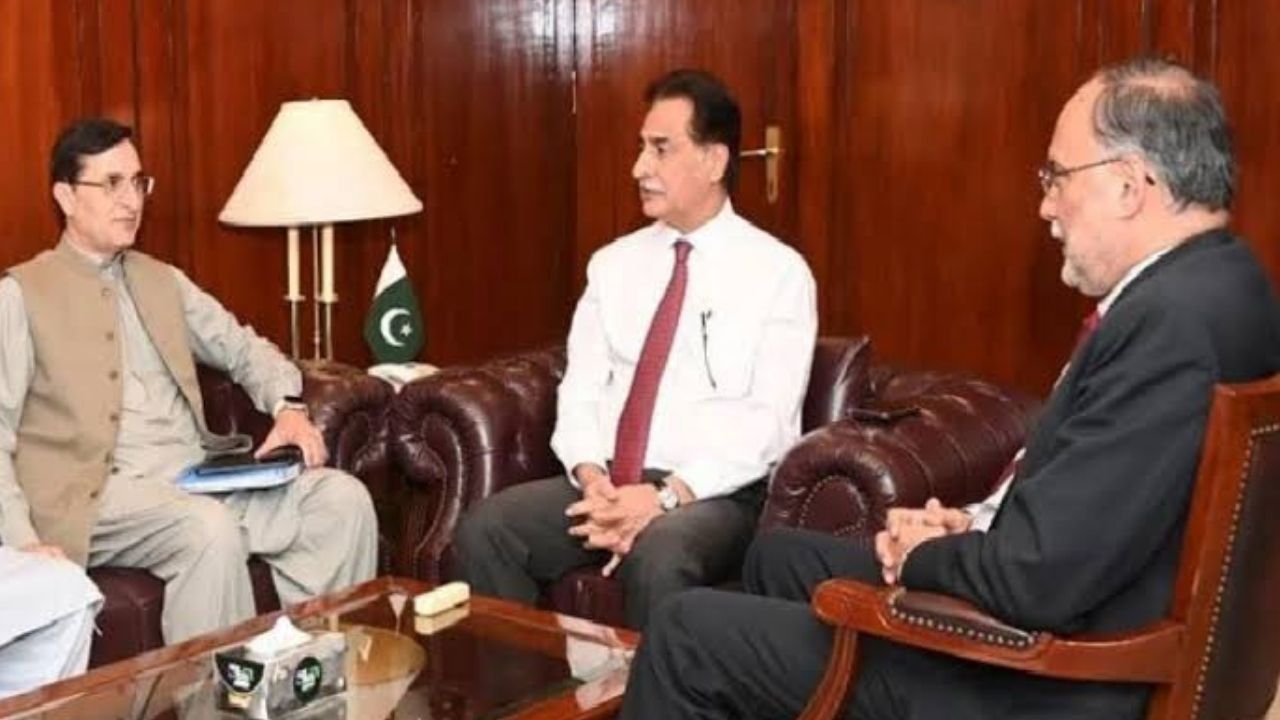
    The meeting, presided over by National Assembly Speaker Ayaz Sadiq, was attended by Deputy Prime Minister Ishaq Dar, PM’s Adviser Rana Sanaullah, Senator Irfan Siddiqui, PPP leaders Raja Pervaiz Ashraf, Naveed Qamar and MQM-P’s Farooq Sattar.

    PTI, on the other hand, was represented by former NA Speaker Asad Qaiser, Sunni Ittehad Council Chairman Sahibzada Hamid Raza, and Majlis Wahdat-e-Muslimeen Allama Raja Nasir Abbas, in today’s session. 

    Omar Ayub, Salman Akram Raja and KP CM Ali Amin Khan Gandapur were among PTI leaders who couldn’t attend the meeting. 

    The gathering witnessed the recitation of the Holy Quran, followed by prayers for the betterment of the country and the success of dialogue before officially commencing the negotiation process, reports said.

    Addressing the participants of the meeting, National Assembly Speaker Ayaz Sadiq welcomed the Prime Minister’s initiative to resolve issues through dialogue. 

    He assured attendees that his office would always remain open to them and that the Speaker’s Secretariat would provide all necessary support in this regard.

    Emphasising that progress could only be achieved through negotiations, Sadiq urged the forum to move forward with an open heart to advance the dialogue process.

    “I will strive to remain impartial and provide the required support,” he stated, adding that the success of the talks ultimately depended on the committees representing both the government and the opposition.

    “We are working to ensure the success of these discussions and to bring political stability to the country,” Sadiq concluded.

    While details of the meeting have not yet been released, the second round of talks has been scheduled for the first week of January.

    Last week it was reported that significant progress had been made as the government, PTI and the establishment had all acknowledged the need for dialogue. 

    Nawaz, who had previously rejected the possibility of talks with the PTI along with his daughter and Punjab Chief Minister (CM) Maryam Nawaz, now showed willingness to negotiate with Khan, reports had quoted a senior PML-N leader as saying.

    A high-level backchannel meeting, a separate report claimed, was also held between the government and the PTI.

    It quoted sources as saying that the meeting was attended by two important players of the government, including a minister and another official, whereas the PTI was represented by a key party leader.

    On the outcome of the meeting held last Wednesday, the report added, PTI would have to choose whether it wished to continue with the politics of agitation and confrontation or it really wanted reconciliation.

    Similarly, reports said, the government and the establishment must recognise that the PTI remains a popular party, and it cannot be eliminated via continuous conflict.


    Both sides will have to compromise, reports had quoted a member of the government as saying. “The PTI must recognise the government’s mandate and abandon its immediate demand for elections, while the government must step back from its efforts to exclude Khan from politics.”
  • Govt warns IPPs to end Power Purchase Agreement or face forensic audit

    Govt warns IPPs to end Power Purchase Agreement or face forensic audit

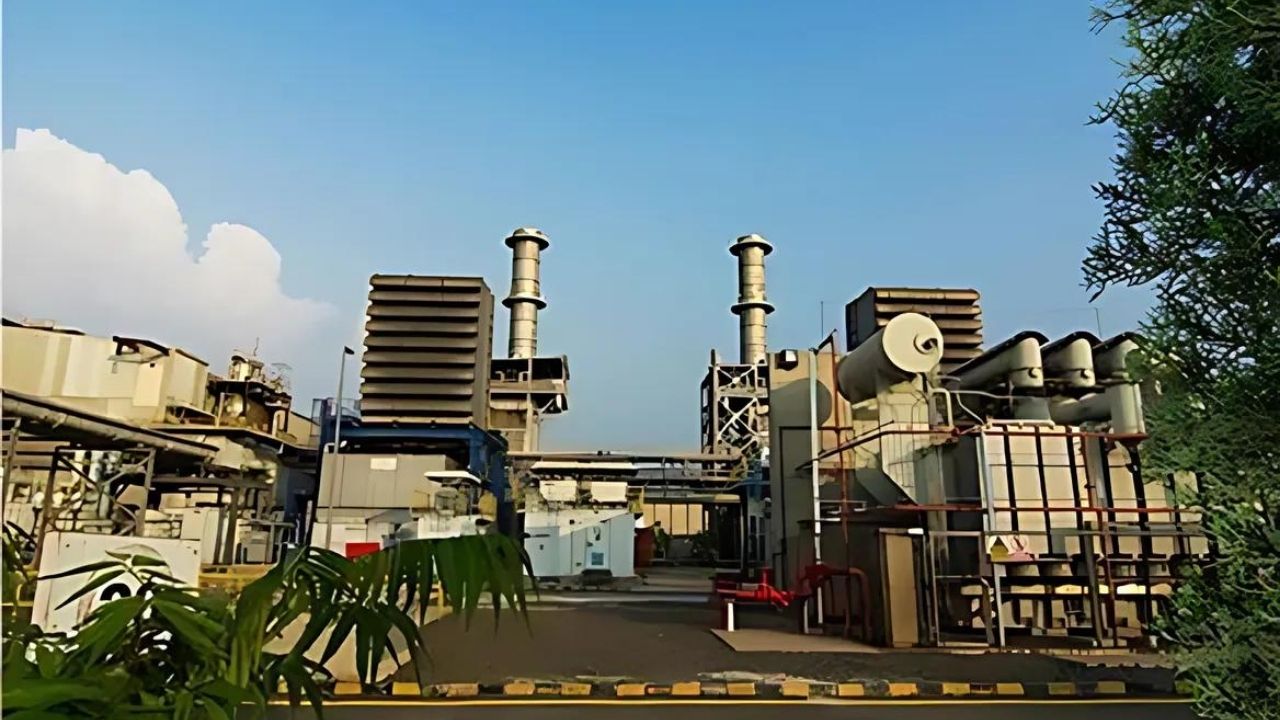
    Owners of four Independent Power Producers (IPPs) set up under both 1994 policy 2002 policy have been directed to voluntarily discontinue the Power Purchase Agreement (PPA) and go into ‘pay-and-take mode’, an official privy to the dealings told The News.

    Official privy further said, “The government will not pay capacity payments anymore in the range of Rs139-150 billion per annum to the said IPPs for the next 3-5 years; this has been told to the proprietors of the said five IPPs. They have also been categorically told that the government has already made excess payments to the said IPPs in the form of capacity payments and returns on equity and has also paid the loans for the IPPs.”

    Meanwhile, the owner of IPP, the official said, responded that if the government pays RS 55 billion to his company, he will not only be ready to terminate the contract but also hand over the plant to the government.

    The main member of the task force has told IPP owners that there is no other option for them; if they don’t act, a forensic audit will initiate and recover extra profits they made in the past through wrongdoings.

    The 1994 governmental agreement with IPPs states that whether these power producers work at a hundred per cent efficiency or fifty per cent efficiency, they will be paid for their installed capacity.

    The agreement was based on a ‘take or pay’ policy (the government was bound to pay to IPPs even if no electricity was produced or supplied), not a “take and pay” policy.

  • Government to introduce 5-year economic plan under supervision of British economist Stefan Dercon

    Government to introduce 5-year economic plan under supervision of British economist Stefan Dercon

    A five-year economic plan for the development of Pakistan’s struggling economy has been prepared under the supervision of Belgian-British economist Stefan Dercon. Prime Minister Shehbaz Sharif is likely to launch it on August 14.

    Geo News reported that the proposed economic plan has been named the Stefan Dercon plan. It contains target of 6 percent annual economic growth target by 2028.

    The ambitious plan also emphasises on structural reforms to take the export target to $60 billion by 2028.

    The proposed plan prioritises the promotion of private investment and the increase in exports. The successful implementation of reforms is estimated to create one million employment opportunities annually.

    According to the Dercon Plan, the proposed plan’s results would be fairly visible by 2028, one year after the IMF programme ends.

    “The failure of structural reforms for growth in Pakistan is not due to a lack of ideas, but a lack of political will to implement these reforms,” warns the draft report.

    It also warns that Pakistan won’t get chances like this; therefore, the opportunity must not be wasted.

  • The government has only two months, Imran Khan predicts

    The government has only two months, Imran Khan predicts

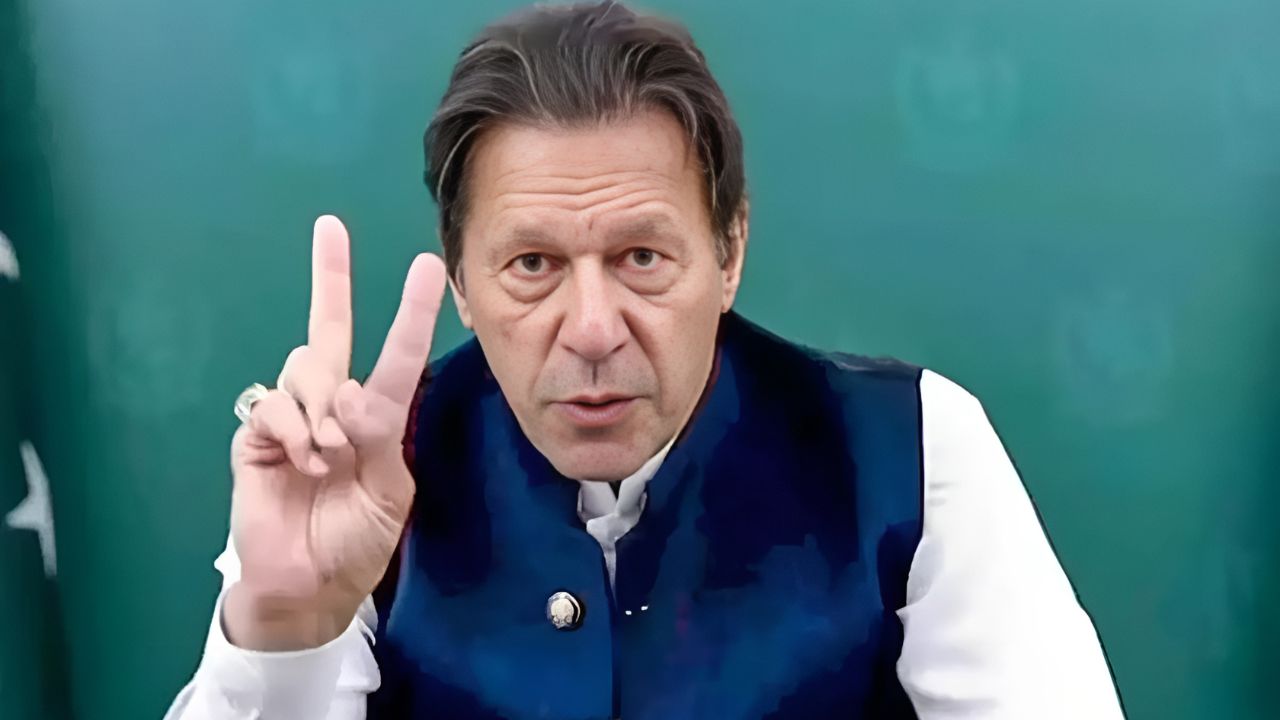
    Founder of Pakistan Tehreek-e-Insaf (PTI) Imran Khan has predicted that the incumbent government, led by the Pakistan Muslim League-Nawaz (PML-N), will last only two more months.

    Inside Rawalpindi Adiala’s jail, the former Prime Minister told journalists, ‘’The government is plunging into a quagmire; however, the rulers are fools and unable to understand this.’’

    ’I am predicting this from prison that this government has only two more months.’’
    He also said he has enough time, but the incumbent rulers are running out of time.

    Earlier, Imran offered to negotiate with the stakeholders in power by selecting Chief Milli Awami Party (MAP) Mahmood Khan Achakzai from his side.

  • Sindh government will start testing for drugs in schools

    Sindh government will start testing for drugs in schools

    Sindh Information Minister Sharjeel Memon has announced that children in educational institutions will undergo drug tests, with positive results reported only to their parents.

    Memon highlighted that President Asif Ali Zardari, upon taking office, had directed officials to combat drug abuse, reflecting his concern over the rising trend of drug abuse.

    At the inaugural meeting of the high-powered anti-narcotics committee, Memon stated that if a child tests positive, only the parents will be informed, and the child will then be questioned about the source of the drugs, including suppliers, dealers, and their accomplices.

    The primary focus will be on making arrests.

  • Dengue cases rise amid monsoon rains in Lahore

    Dengue cases rise amid monsoon rains in Lahore

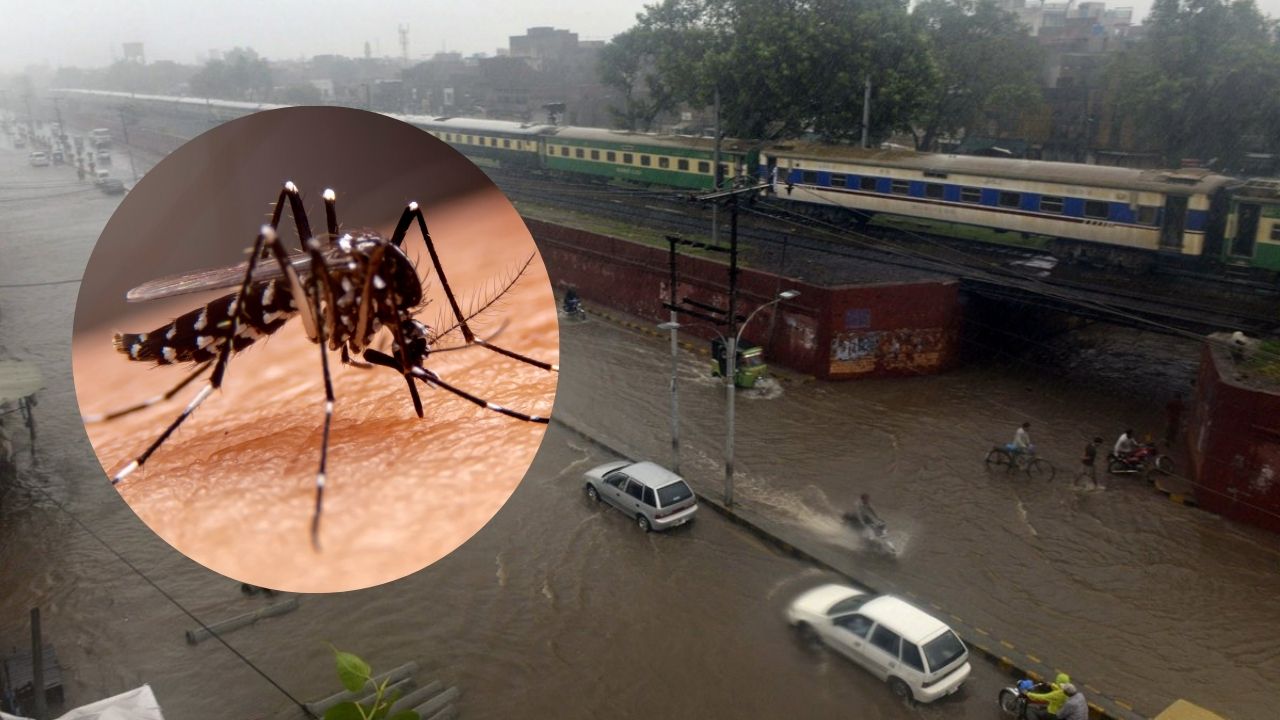
    Authorities have destroyed dengue larvae found in 1,555 locations in Lahore during the past 24 hours.

    According to reports, monsoon rains and changing weather have accelerated the spread of dengue. During this period, dengue larvae were discovered at over 1,500 sites, leading to 1,460 notices being issued.

    Samaa News reports that according to the Deputy Commissioner of Lahore, Rafia Haider, 95 cases have been filed for violations of SOPs.

    Authorities have issued notices to 47,539 individuals and registered 2,360 cases for serious SOP violations so far this year.

  • ‘Beep Pakistan’ should not be compared to WhatsApp, says government

    ‘Beep Pakistan’ should not be compared to WhatsApp, says government

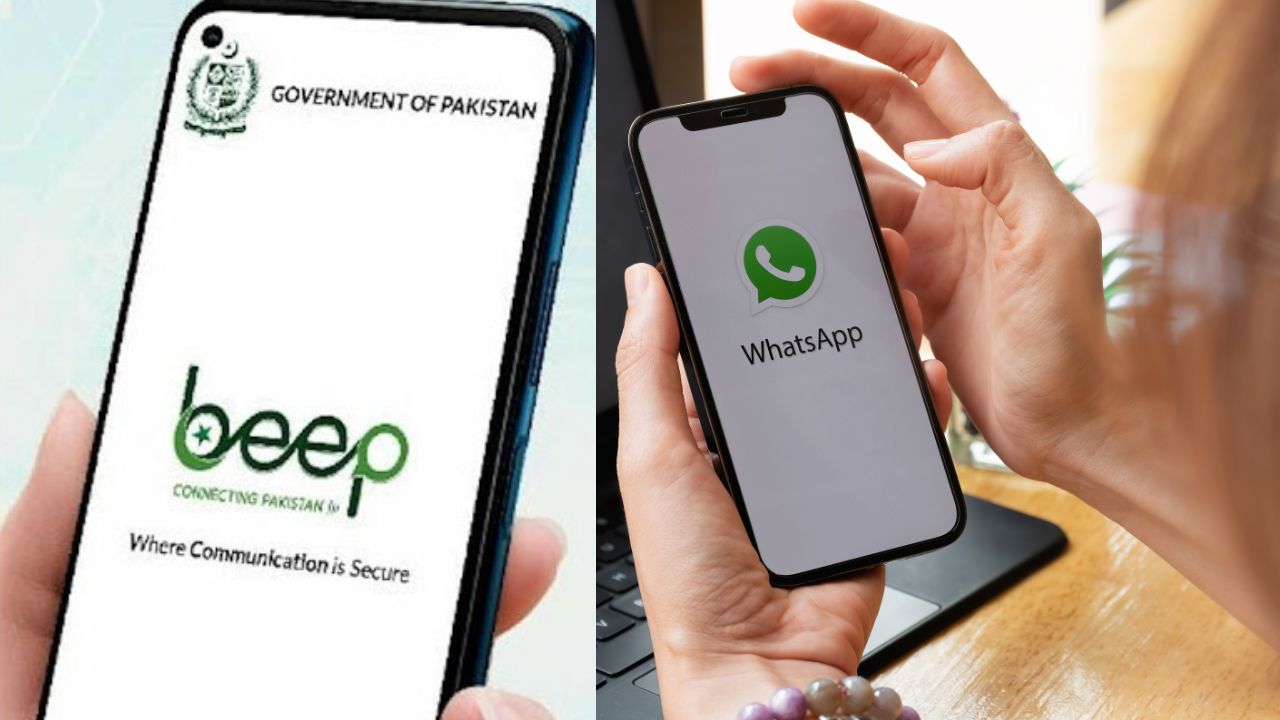
    Minister of State for Information Technology (IT) Shaza Fatima Khawaja has clarified that the soon-to-be-introduced instant messaging application ‘Beep Pakistan’ should not be compared with WhatsApp.

    The National Information Technology Board (NITB) developed ‘Beep Pakistan’ and began its trial in August 2023 under the then-Information Technology Minister Aminul Haq.

    Government officers and Ministry of Information Technology experts have been using the application for the past year, and it is still being tested.

    Recently, complaints about slow internet speeds and difficulties running WhatsApp led to rumours on social media that the government plans to introduce ‘Beep Pakistan’ as an alternative to WhatsApp.

    However, Minister of State Shaza Fatima Khawaja has clarified that ‘Beep Pakistan’ is not intended as a public alternative to WhatsApp but will serve as an alternative at the government level.

    In an interview with the Arab broadcaster Al Jazeera, Shaza Fatima emphasised that it is incorrect to consider ‘Beep Pakistan’ as an alternative to WhatsApp or to compare the two.

    She stated that the government does not intend to present ‘Beep Pakistan’ as an alternative to third-party applications.

    According to the Minister of State, the app is still being tested within the Ministry of Information Technology, and in the second phase, testing will extend to more federal ministries.

    Shaza explained that ‘Beep Pakistan’ will be introduced as an official instant messaging application. The government will ensure its privacy and will use the app exclusively for government affairs.

    The app will function similarly to WhatsApp, but all services and data will remain under the control of the Government of Pakistan.

    The Government of Pakistan has also recently issued orders to implement electronic and e-systems in ministries and institutions to reduce time and costs associated with paper-based processes.

  • Students panic as HEC’s degree verification system malfunctions

    Students panic as HEC’s degree verification system malfunctions

    The Higher Education Commission’s (HEC) degree verification system in Lahore has been faulty since the past 10 days.

    According to HEC sources, the malfunction has resulted in the suspension of degree verification for hundreds of students, causing serious issues for those intending to pursue higher education abroad.

    Students have expressed frustration over their futile visits to the HEC office and lack of response. Despite submitting online applications, they have yet to receive the issued challans.

    In response, the HEC administration has indicated that the system’s malfunction originated in Islamabad. They have stated that once the system is repaired, students will receive their challans and appointment dates.

  • Petrol pumps going on nationwide strike from July 5

    Petrol pumps going on nationwide strike from July 5

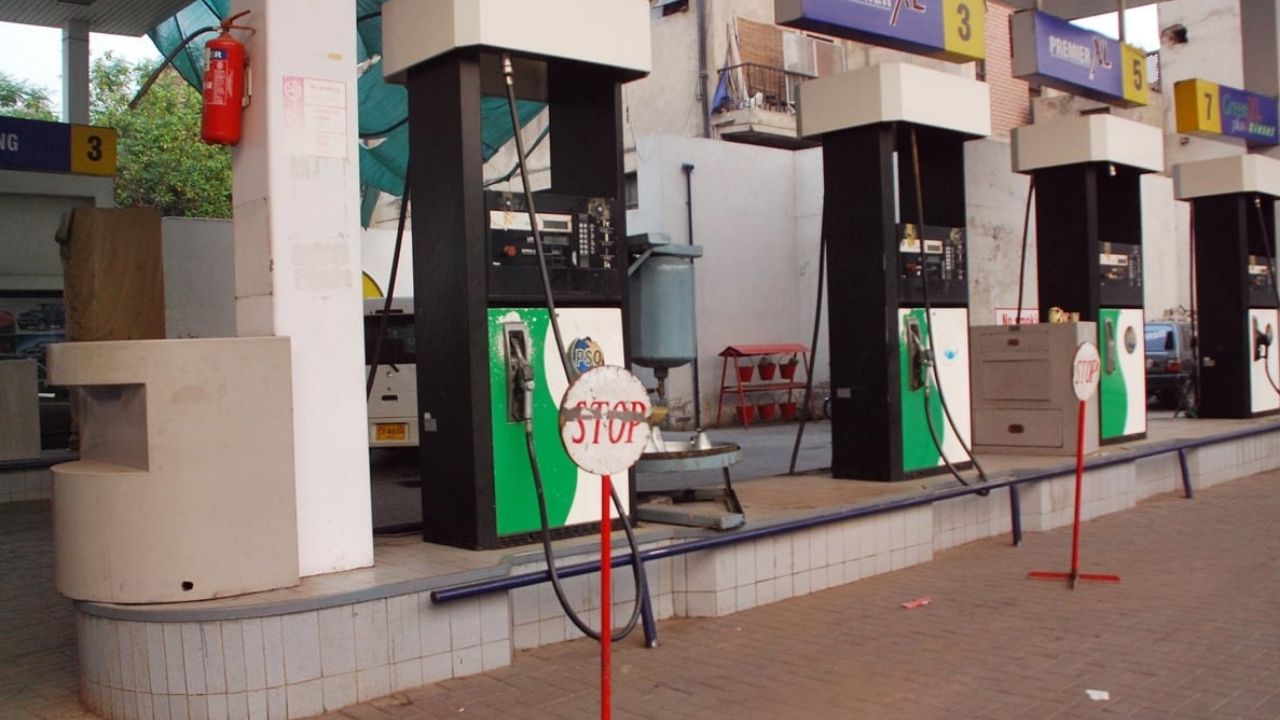
    The Pakistan Petroleum Dealers Association has decided to close petrol pumps across the country starting from 6 am on Friday, July 5.

    The strike was announced after negotiations between the Association and the government fell apart.

    A delegation from the Pakistan Petroleum Dealers Association held meetings with the Finance Minister, Chairman of FBR, and Chairman of OGRA.

    Abdul Sami Khan, President of the Petroleum Dealers Association, stated that the strike may last for more than one day, according to an Aaj News report.

    People have been advised to keep petrol tanks filled until July 4, as pumps across the country will begin to run dry tomorrow night.

    He also mentioned that negotiations will not resume until the government reverses its decision. Fourteen thousand dealers across the country will shut down their pumps starting July 5.

    On the other hand, the Pakistan Oil Tankers Association has declared that it will not be part of the strike.

    Shams Shahwani, Chairman of the Oil Tankers Association, stated that petrol and diesel supplies will continue uninterrupted throughout the country. He believes that given the current circumstances, stopping the supply is not an option, and he wants to prevent inconvenience to customers.

  • Ali Abbas wants 18+ age limit, ID verification for social media

    Ali Abbas wants 18+ age limit, ID verification for social media


    Pakistan is going through huge regulations, with Twitter/X banned by the government and talks of a firewall underway in the country. 
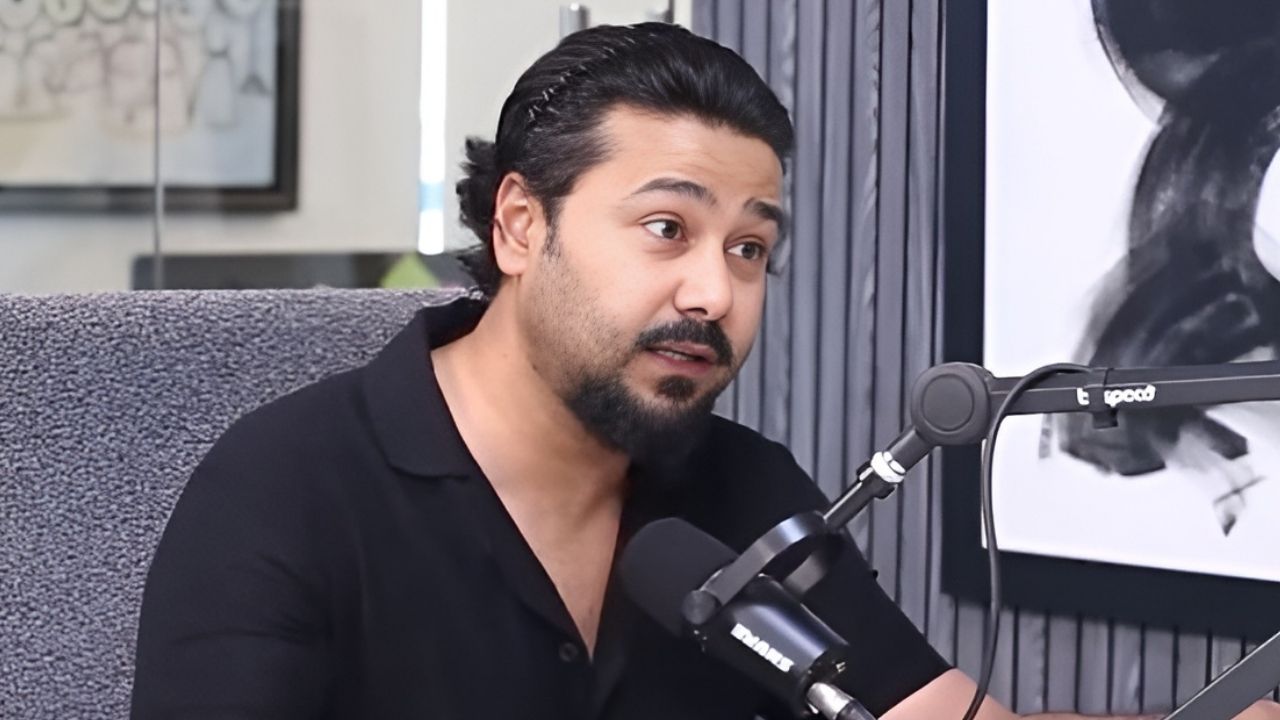
    Recently, actor Ali Abbas appeared as a guest on the ‘FHM Podcast’ where he talked about the urgent need for regulations on social media.
    Ali Abbas said, “There should be an age limit of 18 years enforced and monitored, with users required to verify their identity using an ID card or passport before opening an account. The younger generation is losing their way, influenced by inappropriate content they encounter online.”