Tag: IHC

  • Imran Khan casts doubt on election legitimacy in an article written from jail

    Imran Khan casts doubt on election legitimacy in an article written from jail

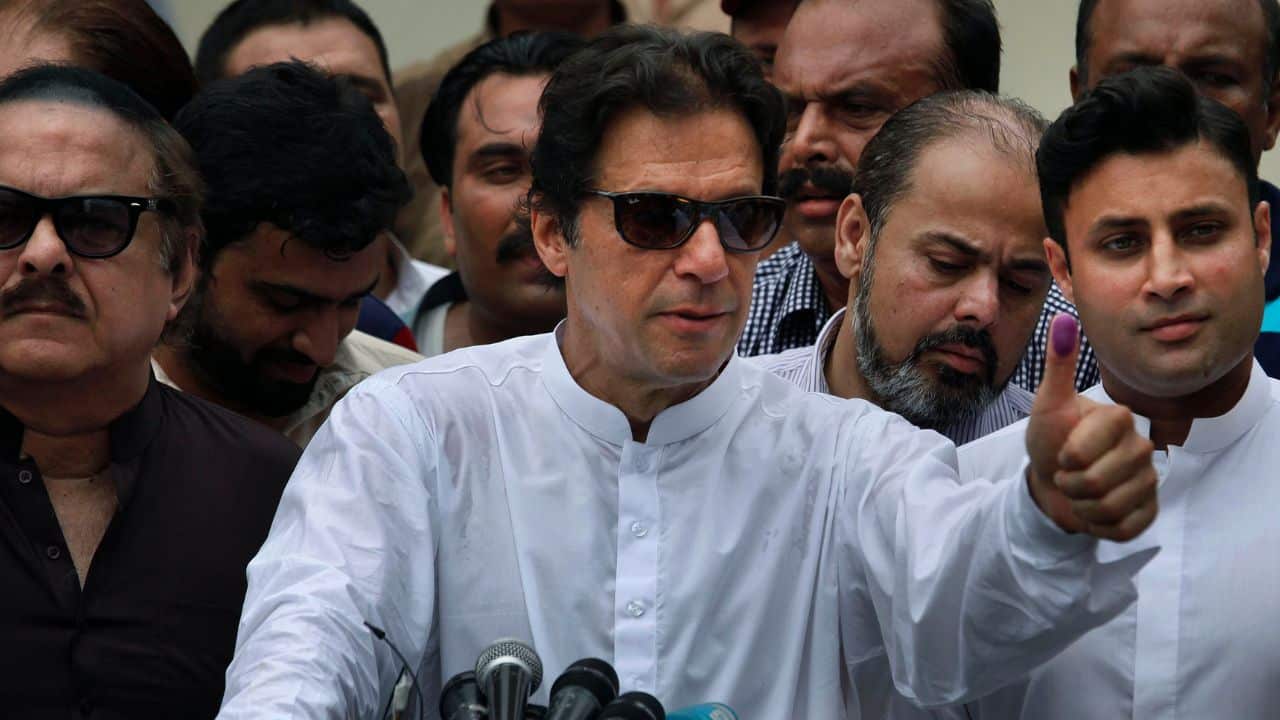
    In a recent article for The Economist, Imran Khan, the founder and former chairman of Pakistan Tehreek-e-Insaf (PTI), currently incarcerated, has expressed apprehensions about the legitimacy of the upcoming elections in Pakistan.

    Khan argues that the caretaker governments in place at both the federal and provincial levels are constitutionally illegal due to their failure to hold elections within 90 days of dissolving parliamentary assemblies.

    While the public is anticipating elections on February 8, Khan, who has faced various challenges since a vote of no confidence in April 2022, raises skepticism about the electoral process.

    He points to the election commission’s actions, which he claims include defying the Supreme Court, rejecting PTI nominations, hindering internal party elections, and initiating contempt cases against PTI leaders for criticizing the commission.

    “The country’s election commission has been tainted by its bizarre actions. Not only has it defied the top court but it has also rejected my Pakistan Tehreek-e-Insaf (PTI) party’s nominations for first-choice candidates, hindered the party’s internal elections and launched contempt cases against me and other PTI leaders for simply criticising the commission,” he wrote.

    Khan contends that since his government’s removal, orchestrated by what he terms as “the establishment”—comprising the army, security agencies, and civil bureaucracy—the playing field for PTI has been anything but level. He alleges external interference, specifically from the United States, citing a State Department message urging his removal from the prime minister’s seat.

    Despite subsequent protests and electoral victories in by-elections, Khan argues that the administration that replaced his government led to economic downturns, inflation, and currency devaluation within 18 months. He emphasizes the contrast between PTI’s governance, which garnered international praise, and the subsequent administration’s economic performance.

    Khan claims that various measures have been taken to sideline him politically, including assassination attempts, abductions of party members, and legal harassment. Despite facing nearly 200 legal cases and being denied a normal trial, Khan states that PTI remains popular, with a 66 per cent approval rating, according to a recent poll.

    The former prime minister also raises concerns about the return of Nawaz Sharif, a convicted former prime minister, speculating that Sharif may have struck a deal with the establishment for support in the upcoming elections.

    Khan, who remains incarcerated on charges including treason, expresses doubt about the fairness of the electoral process, claiming that PTI is being denied its basic right to campaign.

    He concludes by advocating for fair and free elections, “The only viable way forward for Pakistan is fair and free elections, which would bring back political stability and rule of law, as well as ushering in desperately needed reforms by a democratic government with a popular mandate. There is no other way for Pakistan to disentangle itself from the crises confronting it. Unfortunately, with democracy under siege, we are heading in the opposite direction on all these fronts.”

    The Economist added an Editor’s Note stating, “The Pakistani government and the U.S. State Department deny Khan’s allegations of American interference, and Khan faces charges under the Official Secrets Act.”
  • Imran Khan kitnay ameer hain?

    Imran Khan kitnay ameer hain?

    It’s that time of the electoral season when we find out just how rich are the people who rule us.

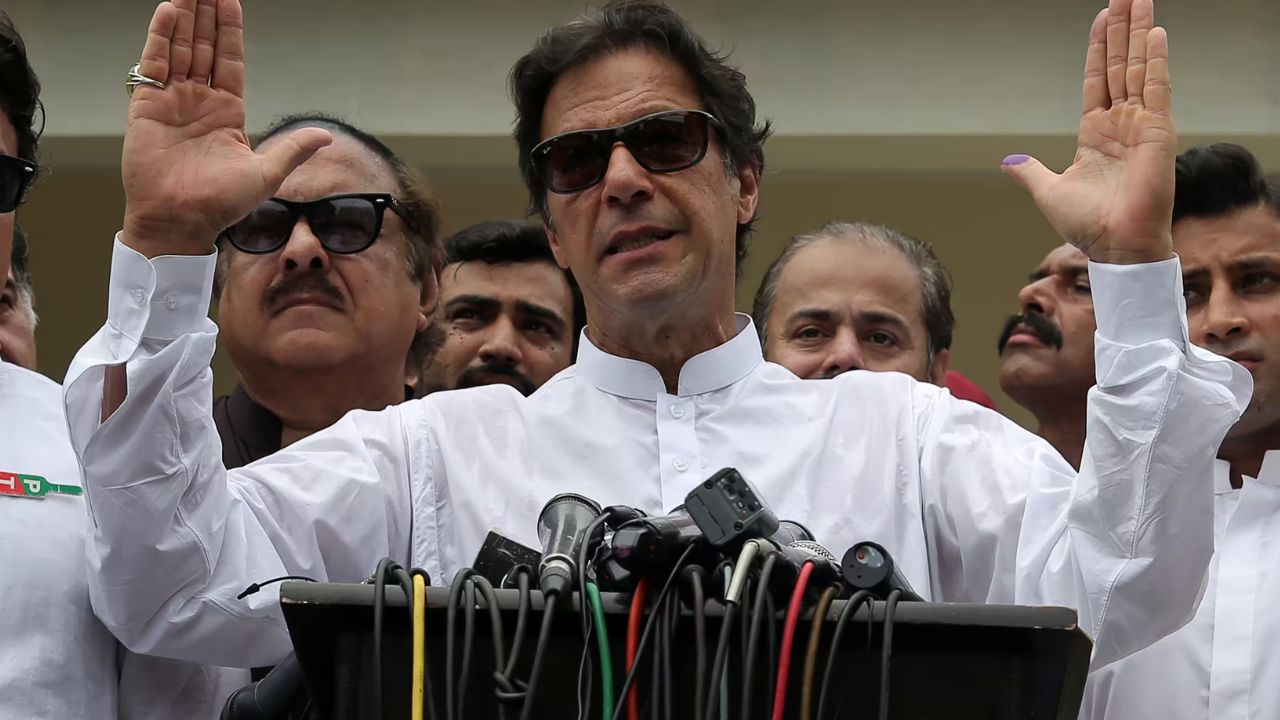
    Financial details in nomination papers reveal a noteworthy surge in the assets of former Prime Minister and founding Chairman of Pakistan Tehreek-e-Insaf (PTI) Imran Khan, a rise of a whopping Rs277 million over the past five years.

    According to the documents, Imran Khan’s assets, which were valued at Rs38.694 million in 2018, have now exceeded Rs315.95 million as per the nomination papers submitted for the upcoming elections in 2023.

    Imran Khan has made public the possession of a seven kanal eight marla house in Zaman Park, Lahore, with an associated construction expenditure of more than Rs48.6 million.

    At the same time, the PTI founder also owns another piece of land in Islamabad, much smaller in size though – six kanals and 16 marlas- with a stated market value of over Rs 5 million.

    Additionally, he has disclosed ownership of a 300-kanal land in Bani Gala received as a gift.

    Notably, the former PTI chairman does not own any vehicles, as indicated in his documents.

    Other assets in Islamabad include a Rs120m shop and a two-bed apartment which has been priced at Rs34m.

    According to the documents, the items bought from Toshakhana – the infamous pieces that resulted in a case and disqualification – are valued at over Rs11.8m.

    On the other hand, the PTI founding chairman says his wife – Bushra Bibi – is the owner of 698 kanal in Deepalpur and Pakpattan besides another three-kanal house located at Banigala.

    The financial trajectory showcases a substantial increase in Imran Khan’s wealth.

    He mentioned the value of his assets at Rs38.694m in the 2018 general elections’ nomination papers, which has now reached Rs315.95m, representing a massive jump, out which over Rs60m are in cash deposited with different banks of Islamabad.

    In 2021, he declared assets valued at over Rs141 million to the Federal Board of Revenue, which further rose to over Rs320 million in 2022.

    The Federal Board of Revenue (FBR) certificate attached to his nomination papers for the upcoming elections in 2023 verifies that the current value of Imran Khan’s assets is over Rs315.9 million.

    This revelation holds significance as Imran Khan, the jailed former Prime Minister, gears up to contest the upcoming elections. The submitted details to the Election Commission of Pakistan (ECP) depict a considerable financial evolution over the specified five-year period.

  • Murad Saeed’s papers rejected; Imran Khan to pay two lac fine

    Murad Saeed’s papers rejected; Imran Khan to pay two lac fine

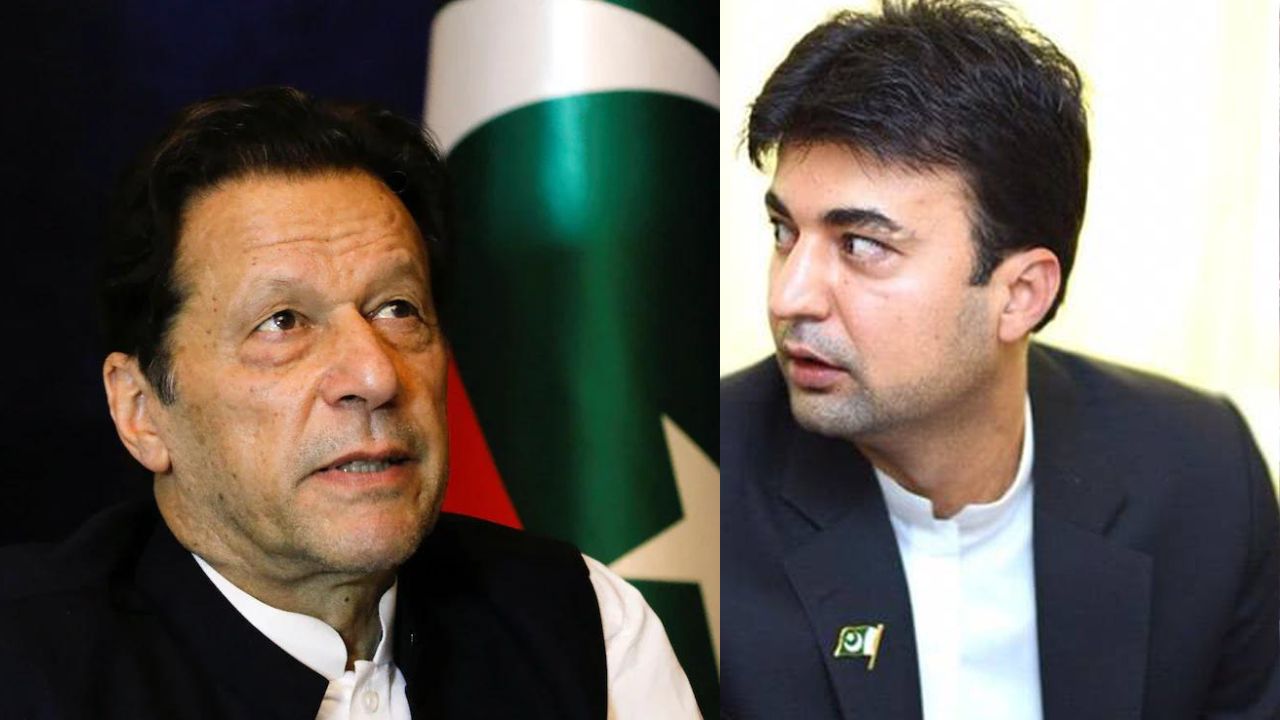
    The Returning Officer (RO) for NA-4 on Friday rejected the nomination papers of Pakistan Tehreek-e-Insaf (PTI) leader Murad Saeed as the candidate was on the absconder’s list.

    Murad Saeed has been absconding since the May 9 incidents.

    PTI’s lawyer has said that he has completed all the documents required by the Election Commission of Pakistan (ECP) and will appeal against the verdict in Peshawar High Court (PHC).

    Meanwhile, the Provincial election commissioner in Khyber Pakhtunkhwa has directed returning officers across different districts to recover unpaid fines from various political leaders, including former Prime Minister Imran Khan, as per Dawn.

    These fines, imposed by the Election Commission of Pakistan (ECP), are under scrutiny as part of the nomination paper review process for the upcoming February 8 elections.

    A letter dated December 28, issued by the provincial election commissioner and obtained by Dawn.com, reveals that a total of 62 political figures from Khyber Pakhtunkhwa (KP) and Punjab have outstanding fines ranging from Rs5,000 to Rs50,000.

    The fines are linked to violations committed during election campaigns, with the severity of the violations determining the penalty amount.

    According to the letter, Imran Khan faces a substantial debt of Rs200,000 to the ECP, making him the highest debtor on the list.

    The former premier allegedly committed four separate violations in March 2022, each resulting in a fine of Rs50,000. Notably, these violations occurred just a month before Imran Khan’s removal through a parliamentary vote.

    Other prominent figures on the list include former Chief Minister of KP Mahmood Khan, who owes Rs150,000 for three violations, and ex-federal minister Murad Saeed, facing a fine of Rs100,000 for two violations.

    Several members of the Pakistan Tehreek-e-Insaf (PTI) and Jamiat Ulema-e-Islam (JUI-P) are also included, with outstanding amounts ranging from Rs50,000.

    The ECP letter states, “Candidates and public office holders [in the past] violated the code of conduct during election campaigns of various previous elections… fines were imposed upon them under Section 234 sub-section (3) of the Election Act 2017.”

    It further notes that some individuals failed to deposit the fines and others filed appeals that were rejected by the ECP.

    The competent authority has directed returning officers to share the list of defaulters and ensure the recovery of unpaid fines during the scrutiny of nomination papers. The deadline for scrutinizing nomination papers is December 30, with the process commencing on December 24.

    The Election Commission of Pakistan (ECP) said on Friday that it will display the final list of the candidates’ list on January 23 (Tuesday).

    According to the electoral watchdog, the candidates will be able to withdraw their nomination papers until Monday, January 22.

    The ECP is expected to display the candidate list on January 20. The appellate tribunals will decide on the appeals until January 19.

    The appeals against RO’s verdict on the special seats can be filed until January 16.

    The electoral watchdog had revised the election schedule for the special seats. The scrutiny of the nomination papers of women and minorities candidates will continue until January 13.

  • Mureeds of Shah Mehmood Qureshi protest against ‘ill-treatment’ by police

    Meher Bano Qureshi, daughter of Pakistan Tehreek-e-Insaf (PTI) Vice Chairman Shah Mahmood Qureshi, said that the treatment being handed out to her father is unbearable for his “mureeds.”

    She was a guest on a podcast on the digital channel of Hum News.

    The mureeds of Shah Mehmood Qureshi protested on Thursday against the ill-treatment of police and the ‘bogus’ case against him.

    “The people of Umarkot came out of fear. Peaceful protest of Ghousia Jamaat followers and Pakistan Tehreek-e-Insaaf workers in Umarkot against the humiliation and bogus arrest of Makhdoom Shah Mehmood Qureshi by the Rawalpindi police.”

    @ik.imrankhan00 عمرکوٹ کی عوام خوف کے بت توڑ کر نکل آئی۔ کل راولپنڈی پولیس کی جانب سے مخدوم شاہ محمود قریشی کی تذلیل کرنے اور بوگس گرفتاری کے خلاف عمرکوٹ میں غوثیہ جماعت کے مریدین اور پاکستان تحریک انصاف کے کارکنان کا شہر میں پر امن احتجاج #ReleaseSMQ#releaseimrankhan #سیاسی_انتقام_بند_کرو #PakistanUnderFascism #foryou ♬ original sound – pti offical

    “The people of Khipro on the streets against oppression! Full peaceful protest of Ghousia Jamaat Khipro on ill-treatment of Shah Mehmood Qureshi and arrest in the bogus case.”

    @teamsmq کھپرو کے عوام ظلم کے خلاف سڑکوں پر! شاہ محمود قریشی کے ساتھ ناروا سلوک اور بوگس مقدمے میں گرفتاری پر غوثیہ جماعت کھپرو کا بھرپور پرامن احتجاج۔ #ReleaseSMQ ♬ original sound – riShi

    Makhdoom Shah Mahmood Qureshi is the Sajjada Nasheen of Shrine Hazrat Bahauddin Zakariya (R.A).

    After Hur and Sarwari Jamaats, the Ghousia Jamaat has the most influence in Sindh.

    Pir Pagara is the Sajjada Nashin for Hur Jamaat and Makhdum Amin Fahim for Sarwari Jamaat.

    Their “gaddis”- religious centers- are in Pir Jo Goth and Hala.

    While the gaddi for Qureshi’s followers is in Multan, the city used to be a part of Sindh till 1818 when Maharaja Ranjit Singh captured it. Hence, a large number of Bahauddin Zakariya’s followers are from Sindh.

    A few former parliamentarians in Sanghar, Hyderabad, and Tando Allahyar districts are diehard followers of Ghosia Jamaat, who were elected in the 2008 elections because of their influence in the community.

    Besides Tharparker, Sanghar, Tando Allahyar, Ghotki, Umerkot, Larkana, Kamber Shahdadkot, Shahdadpur, Mirpurkhas, Badin, Thatta and Jacobabad districts also have a large following of the Ghousia Jamaat.

  • ‘I was tortured mentally, physically in jail,’ Shah Mehmood claims

    ‘I was tortured mentally, physically in jail,’ Shah Mehmood claims

    Pakistan Tehreek-e-Insaf (PTI) Vice Chairman Shah Mahmood Qureshi claimed to have endured mental and physical torture during his incarceration.

    The former Foreign Minister appeared before Duty Magistrate Syed Jahangir Ali in the GHQ attack case, asserting that he was subjected to harsh conditions, both mentally and physically, and exposed to severe cold weather while in jail.

    During the court session, he insisted on recording his statement in the presence of his counsel, expressing dissatisfaction with the police’s attempt to obtain his statement without legal representation as per Geo News.

    The former foreign minister said he was being treated in jail for the past several months in the same manner. “Is this justice? I am tortured,” he asked.

    Qureshi said he will swear on the Holy Quran that he was not present in Rawalpindi on May 9 and instead, he was in Karachi that day.

    “I was with my wife in the Aga Khan Hospital. Get the record from PEMRA, I was present in Karachi,” said Qureshi.

    Qureshi, who had previously been granted bail by three Supreme Court judges, questioned the justice system, highlighting the fluctuating circumstances of his arrest and release.

    He said that he was arrested under Maintenance of Public Order (MPO) 3.

    “One night I am arrested and in the morning I am told that I am being released. When I asked what made it happen, they replied there is a loophole in the case,” he said.

    Qureshi said he was ordered to be arrested on December 26 then the date was changed to 27. He was within the jail’s premises when Punjab police arrived to arrest him, he said.

    “I have been a member of the assembly for five times. SHO Ashfaq tortured me. He kicked and punched me,” he said. He said he felt pain in his chest for which he was begged the superintendent police for hours to take him to hospital.

    “A doctor was called who was carrying just a blood pressure checking machine,” he added.

    Earlier, the Rawalpindi Police reportedly barred journalists from entering the judicial complex, citing a ban on media coverage of the GHQ attack case against Qureshi.

    His legal counsel expressed concern over the restriction, questioning the nature of an in-camera trial with limited media access.

    Qureshi’s daughter, Meher Bano Qureshi, filed a petition with the Election Commission of Pakistan (ECP) against what she termed the “unlawful abduction” of her father, as per Geo News.

    Meherbano stated in the petition that Qureshi had been granted bail by the Supreme Court, and referred to the remark of Justice Athar Minallah, who stated: “The incarceration of the petitioners will not serve any useful purpose.

    Moreover, their release on bail during the period of elections would ensure ‘genuine elections and thus enable the people to exercise the right to express their will effectively and meaningfully.”

    The PTI vice chairman’s recent arrest, just after securing bail in a cipher case, raised questions about the circumstances surrounding his detention.

    President Arif Alvi also weighed in, calling on authorities to address the alleged mistreatment of Qureshi and uphold human rights and dignity.

    “We must not become a state where human rights and dignity are violated without fear. Authorities must pay attention to the confiscation of documents, the brutal action against the protesters, and now the indecent treatment of the former foreign minister by two governments,” Alvi wrote on X (former Twitter).

    The arrest is linked to cases related to the May 9 riots following the arrest of PTI founder Imran Khan. Qureshi is implicated in a GHQ attack case and is expected to appear in an anti-terrorism court (ATC) for further proceedings.

  • Election 2024: Imran Khan excluded from Registered Political Parties List

    Election 2024: Imran Khan excluded from Registered Political Parties List

    The Election Commission of Pakistan (ECP) unveiled a revised list on Sunday, featuring 175 officially registered political parties that reflect the diverse landscape of the country’s political arena.

    The founder of Pakistan Tehreek-e-Insaf (PTI), Imran Khan, is no longer listed as the leader of the party in the updated list, indicating that PTI is now considered a political entity without a designated leader.

    However, the list now includes the group headed by Pervez Khattak, identified as Pakistan Tehreek-e-Insaf Parliamentarians (PTIP).

    An important development took place earlier in the week when the party led by Khan lost its electoral symbol, the “bat”, as a result of the Election Commission of Pakistan (ECP) releasing the reserved verdict on the party’s internal elections.

    After hearing arguments from all concerned parties, the ECP initially reserved its decision.

    Following this, Chief Election Commissioner Sikandar Sultan Raja, leading a five-member bench of the electoral authority, announced the invalidation of the PTI’s intra-party elections.

    After ECP’s verdict, Barrister Gohar Ali Khan, who took over as PTI chairman after Imran Khan, will no longer serve as the party’s leader.

  • ‘I will not contest the election, even if Imran Khan asks,’ Aleema Khan

    ‘I will not contest the election, even if Imran Khan asks,’ Aleema Khan

    Aleema Khan, the sister of Pakistan Tehreek-e-Insaf (PTI) founder Imran Khan, has stated that none of his family members will contest the upcoming general elections slated for February 8 next year.

    During a chat with journalists outside the Islamabad High Court on Thursday, she remarked: “I will not contest the election, even if Imran Khan asks (me), I will not participate in the election.”

    Aleema clarified that neither Khan’s sisters nor his wife will contest. “None of us is contesting elections. We only come for the cases of the PTI founder”.

    She emphasized that treating the PTI founder in the same manner as former Prime Minister Zulfiqar Ali Bhutto was unwarranted, highlighting the absence of a young generation during Bhutto’s time.

    She alleged that Nawaz Sharif, the leader of Pakistan Muslim League-Nawaz (PML-N), had got two umpires, asserting that he was preventing other political players from entering the political arena, stressing that evidence supporting this claim became apparent during the nomination paper submission process, where individuals are allegedly being deprived of their papers.

    She dismissed the cipher case as a mere joke, expressing concern over the rapid pace of the trial and raising the possibility of a death sentence being pronounced by December 30.

    “Our hope for justice is from Allah and justice should also be expected from the Supreme Court, but what is happening is in front of everyone. We are no longer disappointed with the Supreme Court. If you don’t expect anything from the Supreme Court, who will you expect from? If we do not get justice from there, we will definitely get it from Allah,” she remarked.

  • ‘Baloch protestors can stay in Islamabad, protest, or go back home. The choice is theirs’: IHC Chief Justice

    ‘Baloch protestors can stay in Islamabad, protest, or go back home. The choice is theirs’: IHC Chief Justice

    The Islamabad High Court (IHC) raised concerns on Friday about the forced repatriation of Baloch protesters, who had experienced harsh police action the day before, back to their province.

    Chief Justice Aamer Farooq heard a petition filed by Baloch protesters against unlawful detention, questioning why they were being “forcefully” sent back to Balochistan.

    “They can stay in Islamabad, protest, or go back home. The choice is theirs,” remarked Justice Aamer Farooq

    The police used brutal force on Wednesday night to disperse and detain Baloch demonstrators in Islamabad, who were protesting against enforced disappearances and extra-judicial killings in their province.

    Over 200 protesters were taken into custody after encountering tear gas, water cannons, and police batons.

    The government later claimed that more than 90 per cent of the Baloch men and women in custody had been released, except for men “who could not be identified” by the police.

    However, during the IHC hearing on a petition seeking the release of detained Baloch protesters, it was revealed that over 50 Baloch women protesters had gone missing after police took action.

    The court instructed representatives of the protesters and their counsel to approach the Islamabad SSP (Investigation) to record their version and sought a report from the police.

    Petitioners’ counsel Attaullah Kundi and Imaan Mazari appeared before the court, explaining that the police had informed them that buses were waiting to take protesters back home.

    Kundi stated that the police chief had mentioned orders from the prime minister for the repatriation of protesters, and Baloch women were forcefully filled into buses. He further revealed that some Baloch students studying in Islamabad were also coerced into the buses.

    The court expressed displeasure and summoned IG Akbar Nasir in response. The police chief claimed to have arranged transport for the protesters, to which the court questioned why they were sent back forcefully. Chief Justice Farooq emphasized that the protesters had the choice to stay in Islamabad, protest, or go home.

    When asked how many protesters were in police custody, the IG replied that 216 Baloch men and women were at the Kohsar police station of which some had been sent on judicial remand. Out of these, 19 women were released, he added.

    Protesters at the Tarnol police station were released by the local magistrate while 162 detainees were sent on judicial remand, said IG Nasir.

    The court also asked about the number of women who were sent home, those released, and the ones staying at the hostel. It also directed the police chief to arrange a meeting of the women with their counsels.

    “You have to convince them that not one person is missing,” Justice Farooq emphasised.

    Journalist Hamid Mir and Ahmed Butt of the Human Rights Commission of Pakistan also provided insights during the hearing. Mir highlighted discrepancies in government statements, and Butt emphasized the constitutional right to protest in a democracy.

    The court directed the police chief to arrange a meeting between the detained women and their counsels and ensure transparency in the process.

    The IHC CJ further expressed displeasure over Wednesday night’s events, regretting the police action on protesters. “What kind of a society are we living in? Even if a common person is being unjust, public officeholders should always be careful,” he remarked.

    The court then instructed Kundi to oversee the entire matter and contact the IHC registrar’s office if there was a problem. It further said that all the women staying at the I-10 hostel be released.

    “I will issue a detailed order of today’s proceedings,” Justice Farooq said, adding that the next hearing would be conducted by Justice Miangul Hasan Aurangzeb.

  • ‘Election will be held on February 8’, says General Asim Munir  

    ‘Election will be held on February 8’, says General Asim Munir  

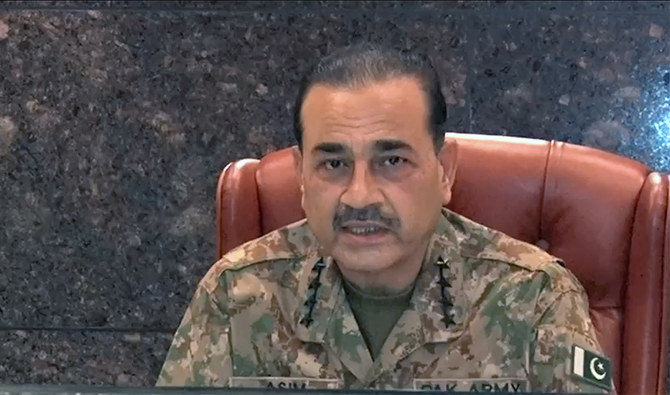
    The Chief of Army Staff (COAS), General Asim Munir, said last week while talking to the Pakistani-American business community in the United States that elections in Pakistan “will be held on February 8 next year.”

    The army chief gave the statement a few hours before the Supreme Court’s (SC) verdict suspending the Lahore High Court (LHC) staying the appointment of Returning Officers (ROs) from bureaucracy. conduct a general election on February 8, 2024.

    A Pakistani-American businessman posted a quote from General Asim Munir. Speaking with Geo News, Tanveer Ahmed, a Texas-based Pakistani businessman, quoted the army chief as saying, “As far as I know, general elections will be held on the 8th of February.”

    The businessman also shared the army chief’s words: “If elections get delayed, it won’t be beyond the limit when Senate elections are to be held.”

    The next senate elections will be held in March 2024.

    The notification to requisition returning officers (ROs) from the bureaucracy, important for the electoral process, was temporarily halted by the LHC on December 13, raising concerns about the timely conduct of elections.

  • Aakhir kaun kar raha hai audio recordings?

    Aakhir kaun kar raha hai audio recordings?

    During a court hearing, the Inter-Services Intelligence (ISI) reported its inability to trace the source of audio leaks.

    The court was addressing pleas filed by Saqib Nisar’s son and Bushra Bibi, wife of former Prime Minister Imran Khan, concerning leaked audio conversations.

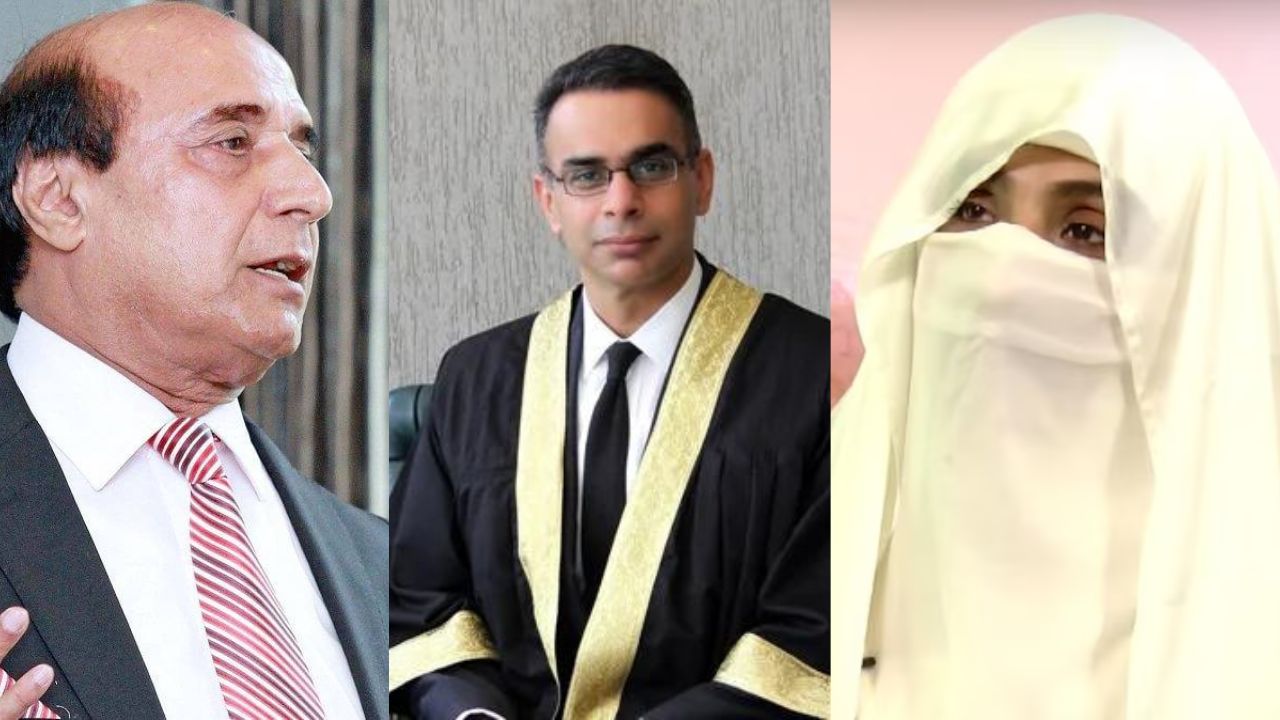
    Justice Babar Sattar of the Islamabad High Court (IHC) questioned why the ISI filed its report through the Ministry of Defence, prompting Attorney General for Pakistan (AGP) Mansoor Usman Awan to suggest that the intelligence agency should have submitted the report through the Prime Minister’s Office.

    The ISI report indicated that the investigation required assistance from social media platforms.

    “Any government agency conducting such recordings is doing so unlawfully,” AGP Mansoor Usman Awan said as he submitted a report on behalf of the Prime Minister’s Office (PMO).

    Awan emphasized that no intelligence agency, including the ISI, Federal Investigation Agency (FIA), and Intelligence Bureau (IB), was authorized by the federal government to tap audio conversations.

    Presiding over the single-member bench, Justice Babar Sattar remarked that it was now the federal government’s responsibility to decide how they want to proceed with the case. “If the government does not disclose [who is tapping the calls], then we may seek assistance from national and international judicial bodies.”

    The FIA needs to review the case first to determine who conducted the call recording. “After court orders, the FIA is sending notices to telecommunication companies,” AGP Awan told the court.

    “The FIA needs access to IP addresses. If any government agency is conducting these recordings, it is doing so unlawfully,” he reiterated.

    The court was informed by the Pakistan Electronic Media Regulatory Authority (PEMRA) lawyer that TV channels were prohibited from broadcasting private audio leaks.

    Addressing senior lawyer Aitzaz Ahsan during the hearing, Justice Sattar said: “There is a balance between freedom of information and privacy. How should this case be moved forward?”

    Aitzaz suggested that self-regulation should be in place, as the Constitution is not being followed here. “The Constitution has not been implemented in 90 days, despite the election announcement.”

    The court instructed the AGP to check if there was any news that the Intelligence Bureau (IB) was given the authority to record priviate conversations. To which he said he would check and report back.

    The court directed the Pakistan Tehreek-e-Insaf (PTI) , FIA, and other parties to re-file their responses for the next hearing.

    The court directed the Attorney General to investigate whether the Intelligence Bureau (IB) had the authority to record calls, and the AGP committed to providing the court with the necessary information.

    Additionally, the IHC instructed the Pakistan Telecommunication Authority (PTA) to submit a detailed report at the next hearing.

    If the government failed to provide the required information, the court expressed its intention to appoint national and international amici curiae for the investigation.

    It was also decided that senior journalists would be appointed as amici curiae to provide insights into the matter related to the code of conduct for TV channels.