Tag: Imran Khan

  • ‘Muslims living in the western world are the ones who suffer from Islamophobia’: PM Khan

    ‘Muslims living in the western world are the ones who suffer from Islamophobia’: PM Khan

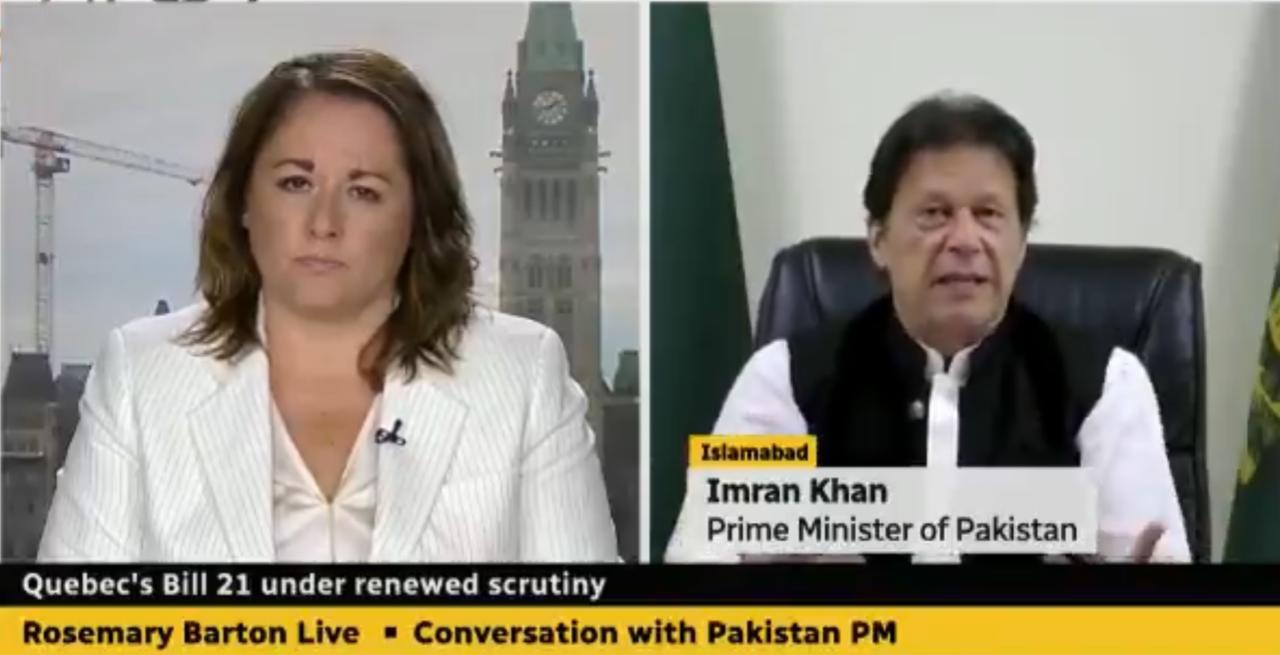
    In an interview with CBC’s chief political correspondent Rosemary Barton, Prime Minister (PM) Imran Khan said he had been trying to tell the world community that the Muslims living in the western countries are the ones who suffer from Islamophobia, and “we regularly hear about these incidents and many of them are not reported and our embassies tell us about those. So this gap needs to be closed”.

    The prime minister highlighted the grave issue of Islamophobia in the western world, which recently claimed the lives of four members of a Pakistan-origin family in Ontario last week.

    “Everyone is shocked [in Pakistan], because we saw the family picture, and so a family being targeted like that has had a deep impact in Pakistan,” PM Khan said.

    The prime minister said the use of the term “Islamic radicals” indicates there is something wrong with the religion, which radicalises people. Contrary to this, terrorism has no religion as extremists are found in every society, he added.

    Replying to a question about what should the governments do to shut down hate material, the prime minister called for strict action against online hate because such websites divide humanity by creating hatred through hate material.

    He further said that he “mostly agrees” with Trudeau and his position on extremism, but also expressed concern about some Canadian laws that he believed were contributing to Islamophobia.

    He asked as to why it became a big issue when someone wears a hijab (head scarf) or grows a beard in the west. “People objecting to hijab and a beard is quite bizarre for me. In liberal democracies, why is this an issue?”

    He described Quebec’s Bill 21 — which banned public servants, including teachers and police officers from wearing religious symbols at work — as a form of “secular extremism” that led to intolerance against Muslims.

    “I find this law secular extremism as it really is against, you see the whole idea behind secularism is liberalism, you want human beings to be basically free on how and the way they want to dress up as long as it doesn’t cause pain or hurt others. This is how I understand how liberalism is. If some cover their hair or their head, why has it become such a big issue,” he contended.

  • Demystifying Budget 2021-22

    Demystifying Budget 2021-22

    This year’s budget held special significance for the Pakistan Tehreek-e-Insaf (PTI) government, as many viewed it as the last opportunity for the incumbent government to show its mettle. The last two to three years were marred by the economic slowdown, the Covid-19 pandemic, and high inflation. If this were to continue, it could take a toll on PTI’s vote bank in the next election and therefore a course correction was in order. But no one expected that such course correction would come in so swiftly. Hafeez Shaikh was let go, apparently on his insistence on electricity tariff increase, and Shaukat Tarin was sworn in as the new finance minister.

    Soon after, this year’s growth estimates took everyone by surprise. Pakistani economy turned out to be much more resilient to the pandemic, but it is hard to ignore the role played by the Covid stimulus package, smart lockdowns and rapid vaccinations. Pakistan is once again back on the growth trajectory.

    While it was critical to sustain this rapid recovery, we were also facing tough IMF conditionalities, which if fully implemented, could very well slow down the economy once again. While no one would disagree on the need for fiscal discipline proposed by IMF, many would question its timing, scale, and modus operandi. 


    More than anyone else, it’s the politicians who clearly did not have time for a long economic cycle to run its course. They knew that they were fast running out of time and would have to go back to their voters in 2023.

    But to give credit where it’s due, the government held its end of the bargain and has come up with an excellent budget, perhaps the best that’s possible within the given constraints. It is interesting to see that so far no one has criticised the direction of the budget, and even the worst of the critique has been about the government’s ability to pull it off.   

    So what’s so great about this budget?

    First and foremost, the budget has introduced a number of proposals to support industry, businesses and investors. In particular, the budget has brought good news for construction, automobile, information technology and a number of other sectors. The budget includes reduction or exemption of duties on raw materials and inputs for various sectors such as electronics, pharmaceutical, textiles, footwear, paints, etc. Export of services for the IT sector have been zero-rated, while zero-rating has also been proposed for local supplies or import of raw materials, components, parts and plant and machinery for registered exporters authorised under Export Facilitation Scheme, 2021.

    The construction sector amnesty scheme has been extended by another six months, which will have a positive impact on cement and all construction-related industries. A number of incentives have been granted on electric vehicles including exemption of sales tax on CKD kits, while sales tax on small domestically assembled cars has been reduced. A number of generous incentives have also been introduced for the planned special technology zones. Lastly, the capital gains tax (CGT) has also been reduced on sale of securities that is likely to further support a rapid stock market recovery. 

    The budget has also introduced a number of incentives for the SMEs, which brings the spotlight on the long-ignored segment. A separate scheme of taxation is proposed for SMEs, giving them flexibility to be taxed either on their profitability or turnover. The threshold for levy of minimum tax (individuals/AOPs) has been enhanced, while the threshold for annual turnover to qualify as cottage industryhas been increased from Rs3 million to Rs10 million. The budget also includes proposals like common bonded warehousing, introducing a one-page tax return for SMEs, etc. that will have a positive impact on the small and medium-sized businesses. 

    One the taxation side, the budget 2021-22 promises to bring a major cultural transformation. After many years, we are again heading back to self-assessments, which will bode well for the businesses and will prevent harassment by tax officials. The budget also includes deletion of 12 withholding taxesincluding that on banking transactions and air travel. Electronic processing and issuance of refunds is also promised to facilitate businesses, whereas the arbitrary powers of the tax officials have been curtailed in many cases. 

    On the development side, the budget has increased the size of public sector development programme (PSDP) by a massive 38% increasing it to Rs900 billion. The national PSDP target is also set at Rs2.1 trillion (about 61 per cent higher than the last year). Such magnitude of increased spending is likely to help stimulate growth.

    Then comes the Ehsaas programme, for which the government has made a generous allocation of Rs260 billion. The government is also planning to give interest-free loans, provide free technical trainings and other initiatives for 4-6 million families at the bottom of the pyramid. The government has also allocated $1.1 billion for Covid-19 vaccination and set an ambitious target of vaccinating 100 million people by June 2022. In addition, the subsidies for power sector have been increased, aiming to minimize the need for tariff increases during the year. 

    All in all, these measures are likely to boost business confidence significantly and will stimulate growth, hopefully beyond the set target of 4.8 per cent. 

    However, there are a few things that need to be kept in mind. First is the ambitious revenue target of Rs5.8 trillion next year, which amounts to 24 per cent increase over this year. Soon after introducing the budget, the government had to retrack its proposal on taxing the cellular calls and internet usage, whichwould take away about Rs100 billion from the estimated revenues and would have to be compensated from elsewhere. In addition, the government foresees about Rs242 billion coming in from administrative measures. Although there is a plan to achieve this target through bringing e-commerce retailers within the tax net, installing POS machines at retailers and providing incentives to general public to demand sales tax receipts, this would need a strong management push throughout the year. Similarly, the public should also expect increase in petroleum prices to meet the Rs610 billion targetfor Petroleum Development Levy. Unless the global oil prices start receding, this would be passed on to the public. 

    The negotiations with IMF is another area which needs some attention. With this ambitious budget, the IMF program is likely to be affected. This in turn may impede our ability access funding from other sources. Therefore, an amicable settlement with IMF, if not immediately then in a few months, is critical. 

    Lastly and most importantly, comes the question of whether this growth is sustainable. While we’ll only get to know thisin due time, there are some good measures in place to support the industry targeting import substitution. Any consequent dip in imports, in the medium term, continued healthy remittance inflow on the back of FATF-action plan, and a realistic exchange rate will definitely help in averting a future balance of payment crisis. 

    For now, it seems that Pakistan is finally out of the woods and the next 2-3 years are going to witness some decent growth.
  • Budget 21-22: Minimum wage is 20,000 and other key announcements

    Budget 21-22: Minimum wage is 20,000 and other key announcements

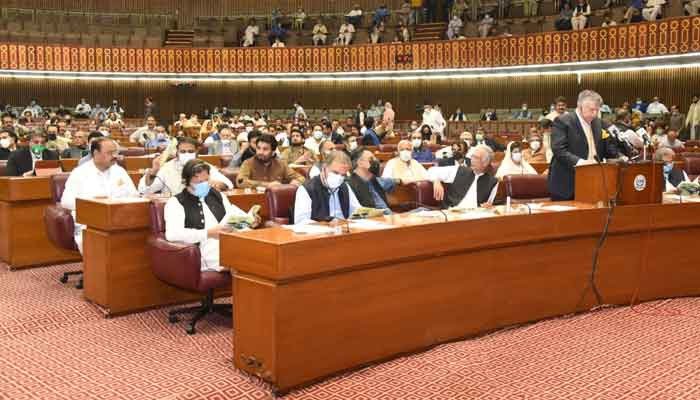
    Finance Minister Shaukat Tarin on Friday presented the Rs 8.48 trillion federal budget for fiscal year 2021-22 (FY22) in the National Assembly.

    Key announcements during the budget presentation

    Rs 900 billion allocated for federal Public Sector Development Program (PSDP) — 40 per cent increase from last year.

    Minimum wage has been increased to Rs 20,000.

    Rs 12 billion allocated for agriculture sector.

    Rs 118 billion for power distribution.

    Rs 61 billion for Viability Gap Fund.

    Rs 14 billion for Climate Change mitigation projects.

    $ 1.1 billion for vaccines procurement.

    Rs 100 billion for Covid-19 Emergency Fund.

    Rs 12 billion special grant for Sindh.

    For Fiscal Year (FY) 2022, the government had set Gross Domestic Product (GDP) growth target at 4.8 per cent.

    Large-scale manufacturing sector recorded growth after many years and posted 9 per cent growth during FY-21.

    During the fiscal year 2020-21, tax revenue increased and showed 18 per cent growth as tax receipts crossed Rs 4 trillion.

    Exports increased by a significant 14 per cent as a rebate, duty drawback helped the sector flourish.

    Special economic zones (SEZs) will be used to create jobs which will also ensure growth in exports.

    Highlighting PM Imran’s vision of planting trees, he said Rs 14 billion have been allocated for the government’s vision of “One Billion Tree Tsunami.”

    Non-tax revenues to rise by 22 per cent during FY-22, meanwhile federal expenditures to rise 15 per cent.

     The finance minister said no taxes to be applied on salaried class.

    The government decided to reduce sales tax on electric vehicles from 17 per cent to 1 per cent.

    Federal excise duty has been reduced from 17 per cent to 16 per cent, he said adding that the withholding tax (WHT) will be reduced by 40 per cent.

    The finance minister further added that the WHT on mobile phone services has been reduced from 12 per cent to 10 per cent.

    The government plans to further reduce taxes on mobile phone services to 8 per cent.

    If mobile phone call duration exceeds three minutes, one rupee per call in addition to the rates of duty will be charged.

    For SMS service, ten paisa per sms in addition to the rates of duty will be charged.

    Tax on Internet services not approved by the Cabinet. FED reduced to 16 per cent from 17 per cent . IT and IT-enabled services given zero duty regime status. Data storage and Cloud computing included in the definition of IT enabled services .

    Withholding tax on oil field services, warehousing services and collateral services have been reduced to 3 per cent from 8 per cent

    The Telecom sector will be given industrial status in the fiscal year 2021-22.

    The finance minister also announces a one-year customs duty exemption for electric vehicles.

     Pensioners will get 10 per cent rise. Integrated allowance for Grade 1-5 has been raised from Rs 450 to Rs 900.

  • Shaukat Tarin presents the Pakistan Economic Survey 2020-21

    Shaukat Tarin presents the Pakistan Economic Survey 2020-21

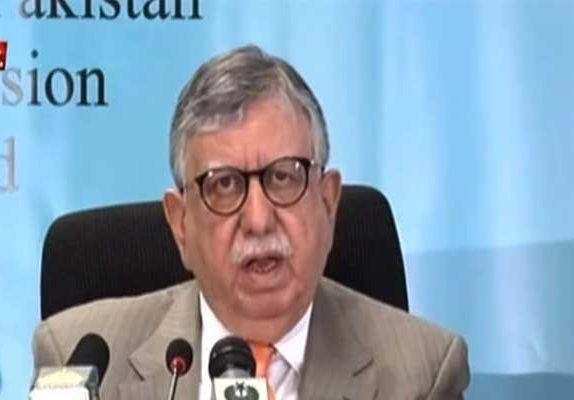
    Finance Minister Shaukat Tarin presented the Pakistan Economic Survey 2020-21 at a press conference in Islamabad on Thursday. However, the document did not have the latest figures on poverty and unemployment.

    Tarin revealed that the industrial and services sectors had helped the country post-Gross Domestic Product growth of 3.94 per cent in the first nine months of the fiscal year [FY](July to March), significantly higher than the target of 2.1 per cent.

    “The agriculture and manufacturing sectors helped the economy grow to 4.4%, laying stress on the need for sustainable growth in Pakistan in the years to come,” added Tarin.

    Coronavirus Pandemic

    The minister opened his press briefing by speaking highly of Prime Minister Imran Khan’s policies in combating the coronavirus pandemic.

    “The government itself had set [GDP] growth will be 2.1pc and the IMF predicted even lower. But the decisions by this government such as incentivising manufacturing and textiles, construction, and interventions in agriculture have helped the economy recover,” said Tarin.

    He said many people lost their jobs when the pandemic hit Pakistan, however, due to PM’s visionary policy of not imposing a complete lockdown across the country, millions of people who were unemployed were hired again. 

    “The economy is recovering,” he said. 

    Remittances

    Tarin said Pakistan’s remittances had broken records, adding that they had crossed $26bn. He said that lately imports, especially food in the form of wheat and sugar, were increasing as Pakistan’s economy was growing at the same time. 

    “We were net exporter of food but now, we have become a net importer,” he said. “Our exports registered a growth but our remittances increased manifold,” he added. 

    Ehsaas Programme

    Tarin spoke highly of the Ehsaas programme, adding that the World Bank had described it as “one of the best and the largest” poverty alleviation initiatives across the globe. 

    “Full credit goes to Sania Nishtar,” he said, adding that handing out cash to 15 million people was not a small achievement.

    Growth rate

    Tarin said he had told the prime minister it was time to focus on sustainable growth “until we go to 5-8pc GDP growth”.

    “We will do interventions and take care of the poor. The poor man has been crushed in this stabilisation phase because the dreams we have shown them have been of a trickledown economy. And this can only happen when growth is sustainable and continuous for 20-30 years,” he said.

    “Countries which had sustainable growth, they grew continuously for 20-30 years. What have we done? Every time we grow by borrowing money, which is credit-based growth.”

    Current Account

    According to the survey, during FY 2021, while the world was reeling from the economic impact of the pandemic, Pakistan’s “external sector appeared as a key buffer for resilience.”

     “The main driver of improvement in current account balance was the robust growth in remittances,” it stated.

    Trade Deficit

    “During July-March FY 2021, export of goods grew by 2.3 percent to $18.7 bn as compared to US$ 18.3 bn the same period last year. Import of goods grew by 9.4pc to $37.4 bn as compared to US$ 34.2 bn last year. Consequently, the trade deficit increased by 17.7per cent to $18.7bn as compared to $15.9bn last year,” the survey said.

    Inflation

    The finance minister said the government wanted to control inflation “but prices are still high and affecting the common man”.

    “So the way to solve this is by increasing production and that is why we have focused on agriculture in this budget,” Tarin said.

    Federal Board of Revenue (FBR)

    Speaking about the FBR, Tarin said he would end the practice of people being harassed by the bureau. “FBR will not audit [businesses or persons] but a third-party audit will be conducted,” he said. 

    International Monetary Fund (IMF)

    Tarin said Pakistan’s negotiations with the IMF were ongoing, adding that the international money lender had asked the government to hike tariffs and increase taxes. 

    The finance minister said Pakistan and the IMF want the same thing; sustainable growth, adding that the country cannot afford to increase taxes or hike tariffs so that the poor and the salaried class do not feel additional burden of inflation. 

    “This is a red line for the prime minister,” he said. “We will not further burden the poor,” he added. 

    Energy Sector

    Tarin said Pakistan’s economy was burdened due to the overcapacity in the power sector, saying that “it was a very big challenge and a black hole” for Pakistan. 

    Privitisation

     Tarin said it was fair to ask how he can privatise state-owned enterprises when all others, before him, promised to do the same but failed to. 

    “Nawaz Sharif used to shout the same slogan during the first time [when he was prime minister] and then for a second time [when he again became the prime minister] and then a third, but nothing happened,” he said. 

  • ‘20 plants for 20 numbers,’ says Zartaj Gul

    ‘20 plants for 20 numbers,’ says Zartaj Gul

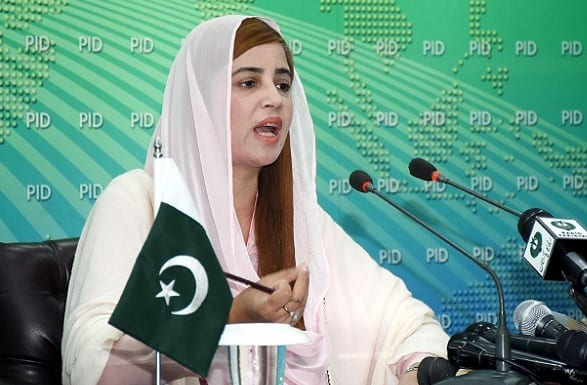
    Minister of State for Climate Change Zartaj Gul said on Wednesday that special legislation granting 20 additional marks was underway to incorporate the youth into Prime Minister’s Ten Billion Tsunami Tree plantation project.

    Zartaj Gul, in an exclusive interview with APP, said that in line with PM Khan’s clean and green Pakistan vision, a unique and innovative effort was devised to make it obligatory upon university graduates to plant 20 trees during the course of their study.

    Under PM Imran Khan’s vision for a clean and green Pakistan, the full participation of youth in the movement to plant more trees in the country would be encouraged through this legislation, she added.

    Explaining the proposed scheme for students, Zartaj Gul said extra marks were given to the students involved in the National Cadet Corps (NCC); additional marks would also be given to the students for planting trees as part of educational activities.

    “Programmes like ‘20 Plants 20 Numbers’ will not only encourage the youth to be a part of this national goal but will also further our dream of making Pakistan a green and prosperous country,” she said.

  • PM Imran expresses grief over killing of Muslim family in Canada in a suspected Islamophobic attack

    Prime Minister Imran Khan has expressed his grief over the killing of four members of a Muslim Pakistani-origin Canadian family in London, Ontario.

    “Saddened to learn of the killing of a Muslim Pakistani-origin Canadian family in London, Ontario,” wrote PM Imran.

    “This condemnable act of terrorism reveals the growing Islamophobia in Western countries. Islamophonia needs to be countered holistically by the international community,” he added.

    Police in London, Ontario, citing witnesses, said that 20-year-old Nathaniel Veltman jumped the curb in his vehicle on Sunday, struck five members of the same family ranging in age from 9 to 74, and then drove off at high speed, Reuters has reported.

    Police have not released the victims’ names, but the London Free Press said that among the dead were Syed Afzaal, 46, his wife, Madiha Salman, 44, and their 15-year-old daughter, Yumnah Afzaal. Syed Afzaal’s 74-year-old mother, whose name has not been confirmed, also died. Their 9-year-old son, Faez Afzaal, is in the hospital with serious but non-life-threatening injuries.

    As per media reports, the family immigrated from Pakistan about 14 years ago.

    “We believe this was an intentional act and that the victims of this horrific incident were targeted,” Police Chief Steve Williams said. “We believe the victims were targeted because of their Islamic faith.”

    “I’m horrified by the news from London, Ontario. To the loved ones of those who were terrorised by yesterday’s act of hatred, we are here for you. We are also here for the child who remains in hospital – our hearts go out to you, and you will be in our thoughts as you recover,” Canadian Prime Minister Justin Trudeau wrote on Twitter.

    “To the Muslim community in London and to Muslims across the country, know that we stand with you. Islamophobia has no place in any of our communities. This hate is insidious and despicable – and it must stop.”

  • What does PM Khan regret?

    What does PM Khan regret?

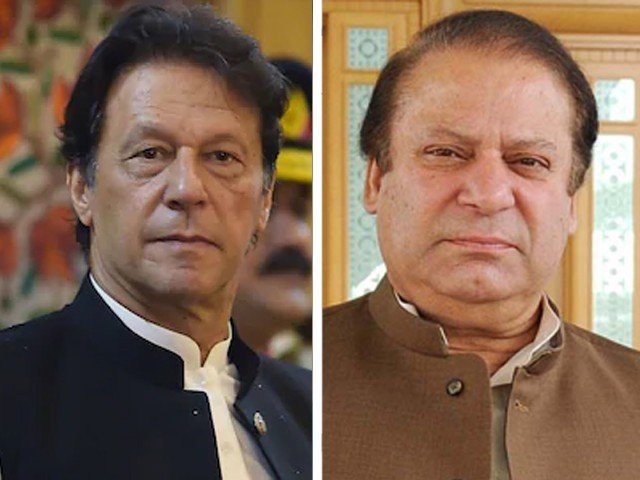
    Federal Minister for Interior Sheikh Rasheed on Sunday said that Prime Minister Imran Khan regrets that former prime minister Nawaz Sharif was able to escape from the grip of the law by leaving Pakistan for London.

    He said that Nawaz deceived the government and went abroad using “fake medical reports” and the prime minister has great sorrow over this.

    The government stopped Pakistan Muslim League-Nawaz (PML-N) President Shehbaz Sharif from going abroad and later placed his name on the Exit Control List (ECL).

    Sheikh Rasheed said a person whose name was included in the ECL could challenge the decision in 15 days but Shehbaz Sharif did not challenge the Interior Ministry’s decision.

    Rasheed went on to say that PM Imran Khan was lucky to have such an “incompetent” and “sluggish” Opposition.

    He further added that the entire Jahangir Tareen group will support the upcoming budget.

  • ‘Raiwand’s prime minister’ sent abroad despite conviction: Bilawal

    ‘Raiwand’s prime minister’ sent abroad despite conviction: Bilawal

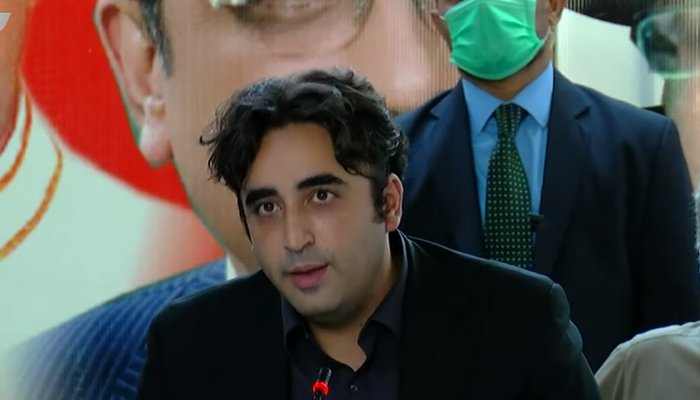
    Chairman Pakistan People’s Party (PPP) Bilawal Bhutto-Zardari, while addressing a press conference in Islamabad on Friday, said, “Raiwand’s prime minister” Nawaz Sharif was sent abroad despite being convicted.

    Bilawal said former president Asif Ali Zardari remains in Pakistan, moving from one doctor to another, despite his children telling him to go abroad and seek treatment.

    “If the president [Zardari] is from Nawabshah, he remains on medical bail despite trumped-up charges,” said chairman PPP.

    “I want to ask the prime minister (PM) what sort of accountability and justice is being implemented in the country? I want to ask the PM what kind of rule of law is there within the country?” Bilawal asked, adding that if the premier’s friends are being alleged of a crime, no action is taken against them.

    “This is revenge and political engineering and their ministers themselves accept it has hurt the economy,” added Bilawal.

    “If the prime minister and his sister are blamed for a crime, nothing happens to them,” Bilawal lashed out.

    However, if a former president from Nawabshah’s sister is blamed for something, then she is dragged to jail from her hospital bed, he said, referring to PPP leader Faryal Talpur.

    The PPP chairman denigrated the Pakistan Tehreek-e-Insaf (PTI) government and questioned its standards of accountability. “This system is a mockery of the Constitution,” said Bilawal.

    “If the Leader of Opposition is from Lahore (Shehbaz Sharif), he is awarded bail, and if the leader of Opposition hails from Sukkur (Khursheed Shah), he is denied the right and treated like a ping-pong ball — back and forth from the National Accountability Bureau (NAB) courts to Supreme Court,” Bilawal said.

    The PPP chairman claimed the authorities were repeatedly blackmailing Shah’s children and his wife.

    Bilawal further said that the party would support Leader of the Opposition in the National Assembly on the budget despite the inappropriate behaviour of some Pakistan Muslim League-Nawaz (PML-N) members.

    “I unconditionally say to Shehbaz Sharif in front of the media that all PPP members will be in your support with regards to parliament and this [upcoming] budget despite tantrums [of some PML-N members].”

    He said that PPP members would come and vote on the day of the budget and now it was up to Shehbaz as the Leader of the Opposition in the National Assembly to “do his work and stop the government’s budget.”

    Bilawal was responding to a question on whether the PPP had been contacted on the budget issue and whether it would support the Opposition. He responded that despite the “inappropriate behaviour” of the PML-N and other political parties in the Opposition, the PPP had prioritised national issues and the budget over differences between the political parties.

    “So despite their insults, the PPP went to Shehbaz Sharif’s invitation for dinner so we can rid the people of economic difficulties. Unfortunately, our host was publicly insulted after that dinner by some officeholders of the PML-N,” said Bilawal, adding that flinging statements at guests was not a part of “our tradition, values, and culture”.

    The PPP chairman also lashed out at the Pakistan Democratic Movement (PDM), saying it should have offered resignations the same day or the next when the PPP had “supposedly” refused to listen to its demands and set out for its long march.

    “If they still want to do politics of resignations, then they should have given them by now.”

    Hitting out at the prime minister, the PPP chairman said that the statements since the past few weeks on the state of the economy showed that the “prime minister has no connection to the common man”.

    “The prime minister says Pakistan’s difficult time is over. Not sure about the common man but the IMF’s (International Monetary Fund) difficult time is over, for sure,” he said.

    Bilawal Bhutto said the government’s ministers had come around to accept the PPP’s stance on the economy and expressed the hope that Pakistan would escape the “IMF’s grip” in the budget next week.

    Bilawal similarly hit out at an ordinance for the creation of a new media body and said the PPP would continue to oppose it. He added that the recent attacks on journalists such as Asad Ali Toor or pressure being applied to media personnel such as Hamid Mir through petitions had “exposed the government’s weakness and insecurity”.

  • ‘Those who call themselves democratic are demanding the military to topple the government’: PM Khan

    ‘Those who call themselves democratic are demanding the military to topple the government’: PM Khan

    Addressing a ceremony to lay the foundation for the upgradation of the Multan-Lodhran section of the N-5 Motorway, Prime Minister Imran Khan said, “Those who call themselves democratic are demanding the military to topple the government.”

    “From day one, the Pakistan Tehreek-e-Insaf (PTI) government faced criticism from the Opposition, which was poised to topple the government unless their leaders were given an NRO (National Reconciliation Ordinance),” said Khan.

    “These mafias are bent upon doing anything to safeguard their interests as billions of dollars stashed by them abroad through money looted in the country are being probed,” he said. PM added that rule of law changes society and ensures that there are no sugar and land mafias.

    “Change is not possible without a struggle,” Khan said adding that the Opposition raised a hue and cry regarding a change a week after they [PTI] took power.

    “My own people had to face a tough time. The media also gave an impression that Naya Pakistan can emerge by switching a button on,” he said.

    PM Khan said the country registered a growth of 4 per cent this financial year despite the challenge of the Covid-19 pandemic. He said we not only saved our people from the pandemic, but also the economy.

    The government is focusing on uplifting the agriculture sector, industries, IT, housing and tourism sectors, he said, adding that a package is being introduced for the farmers to bring a green revolution in the country.

  • Relations with India would be ‘betrayal’ to Kashmir: PM

    Relations with India would be ‘betrayal’ to Kashmir: PM

    Prime Minister (PM) Imran Khan said that normalisation of terms with India would be a betrayal to the Kashmiri struggle.

    PM Imran held a live Question and Answer (Q&A) session with the public on Sunday. He said that “re-establishing ties with India would be ignoring all the struggle of Kashmiris as more than 100,000 people have martyred.”

    PM Imran said he tried to resolve problems with India through dialogue. However, it cannot be the case now as India has illegally annexed Kashmir. The normalisation of terms after this is a betrayal to the Kashmir cause, said PM Khan.

    “There is no doubt that trade will improve but all their [Kashmiris] blood will be wasted, so this cannot happen. This cannot happen that our trade improves at the cost of their blood.”

    Pakistan can resume talks if New Delhi reverses its longstanding semi-autonomous status of Indian Occupied Kashmir, he maintained.

    On August 5, 2019, Modi government revoked the status of Article 370 and other related provisions and split Kashmir into two federally controlled areas. The government also locked down the region, imposed movement restrictions while imposing communication blackout.

    In retaliation, Pakistan downgraded diplomatic ties with India while also suspending trade.