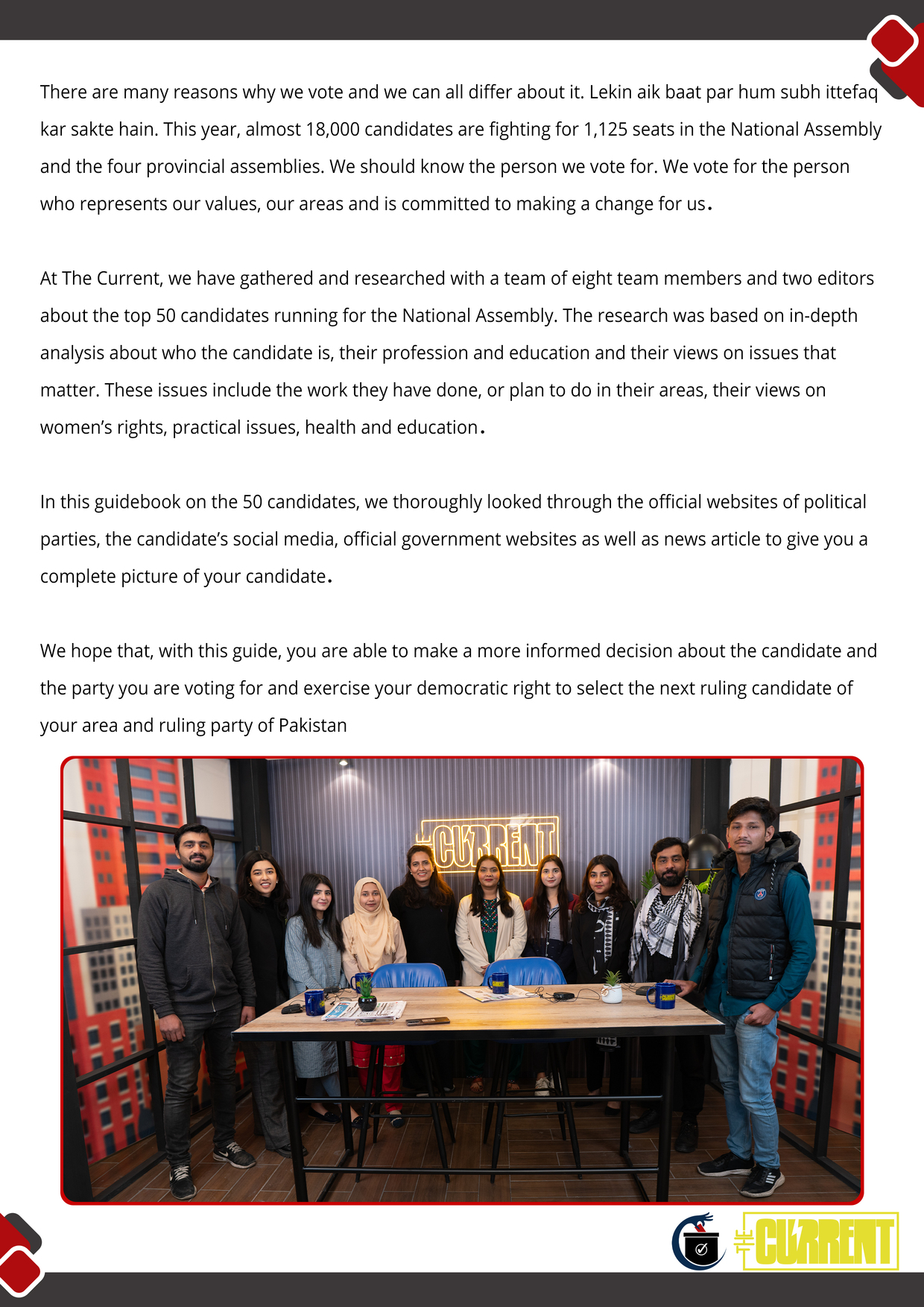
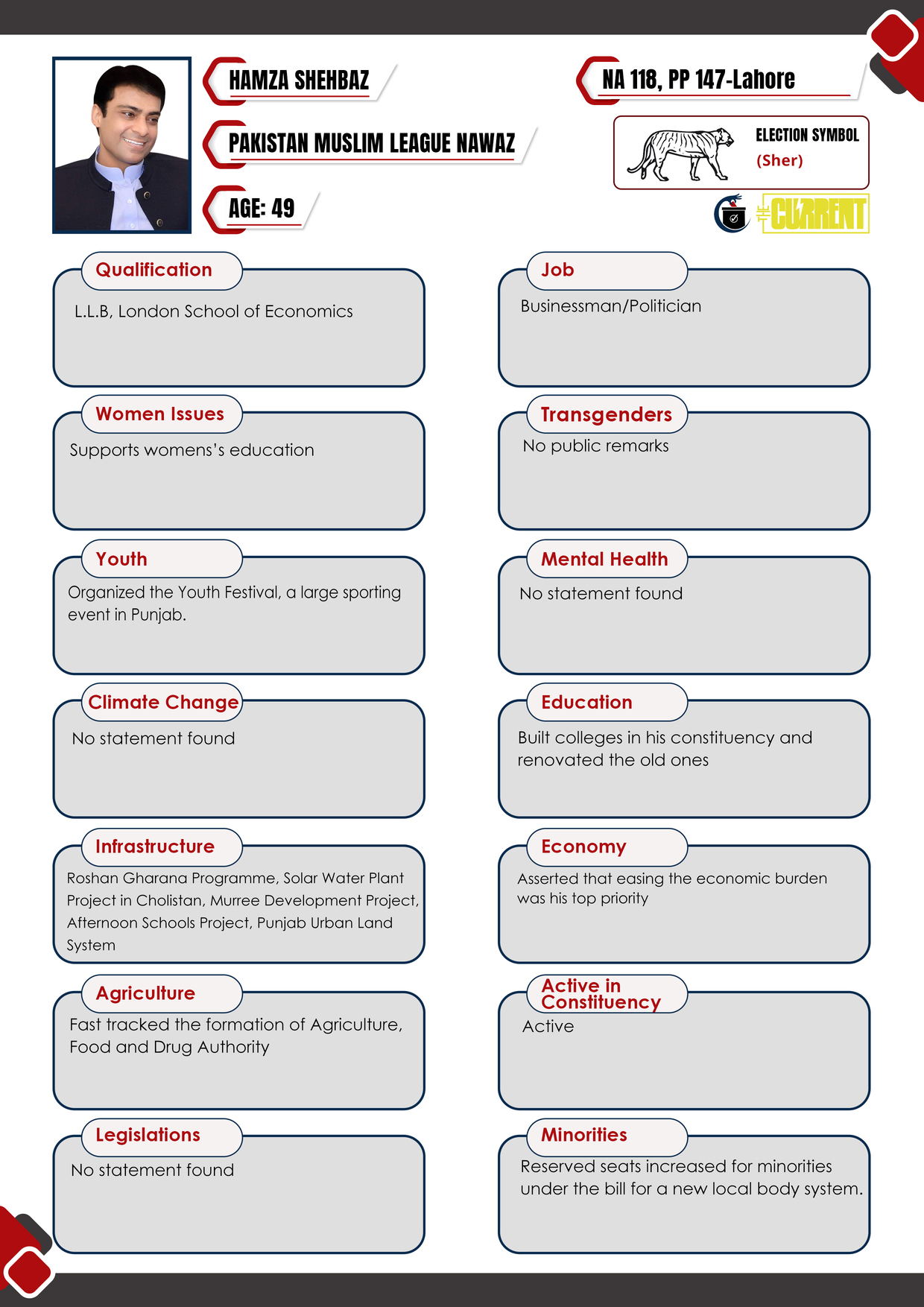
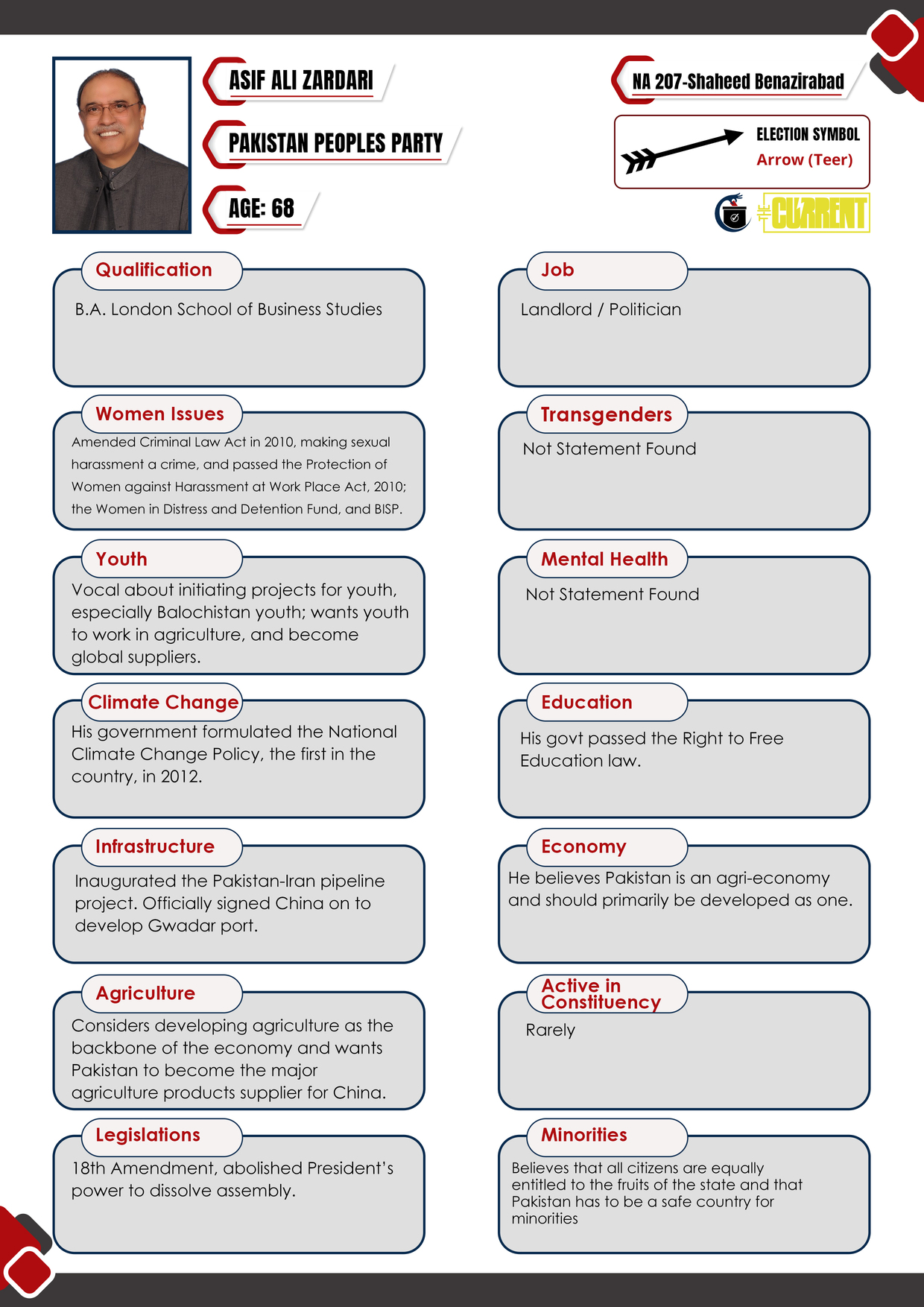
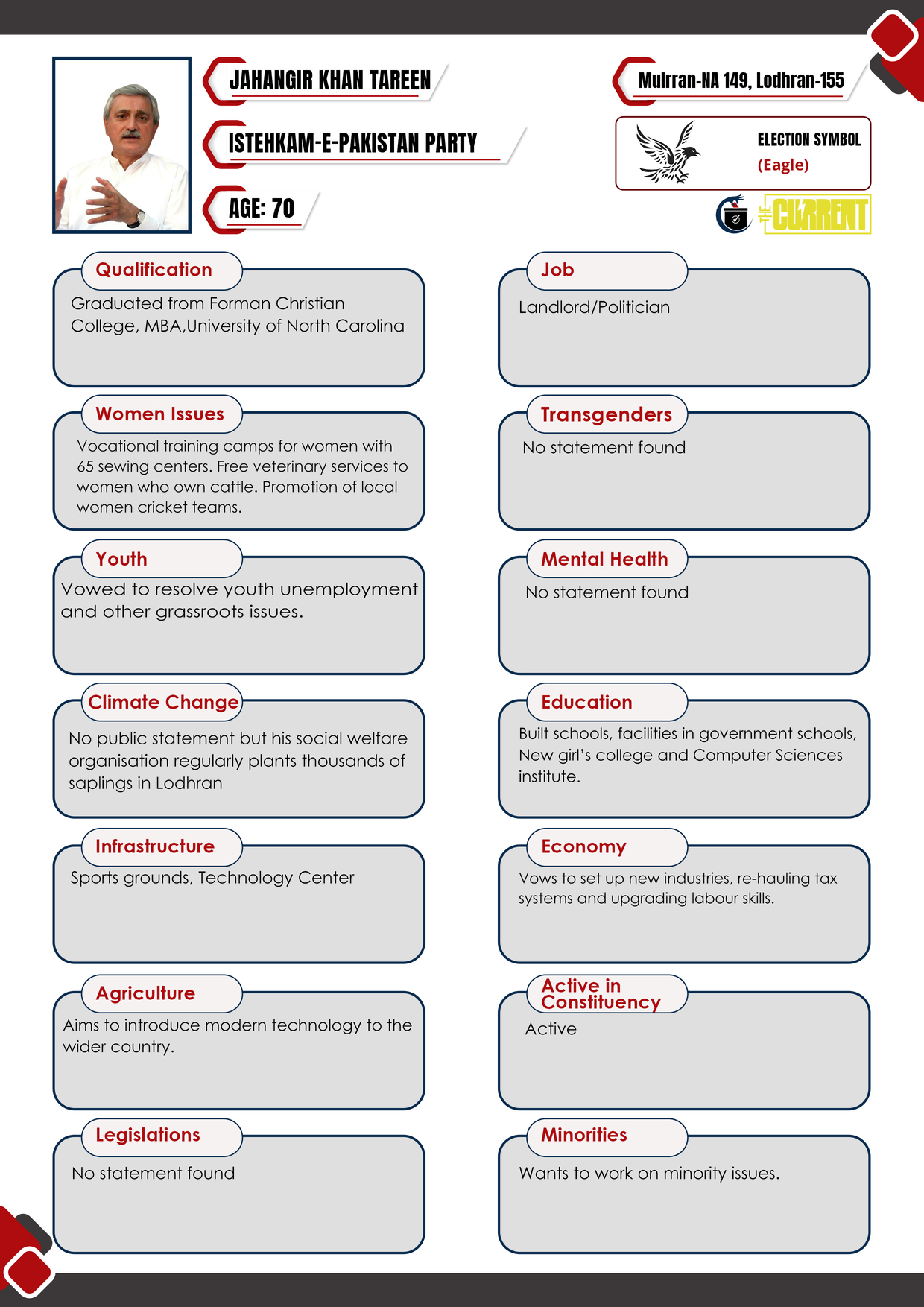
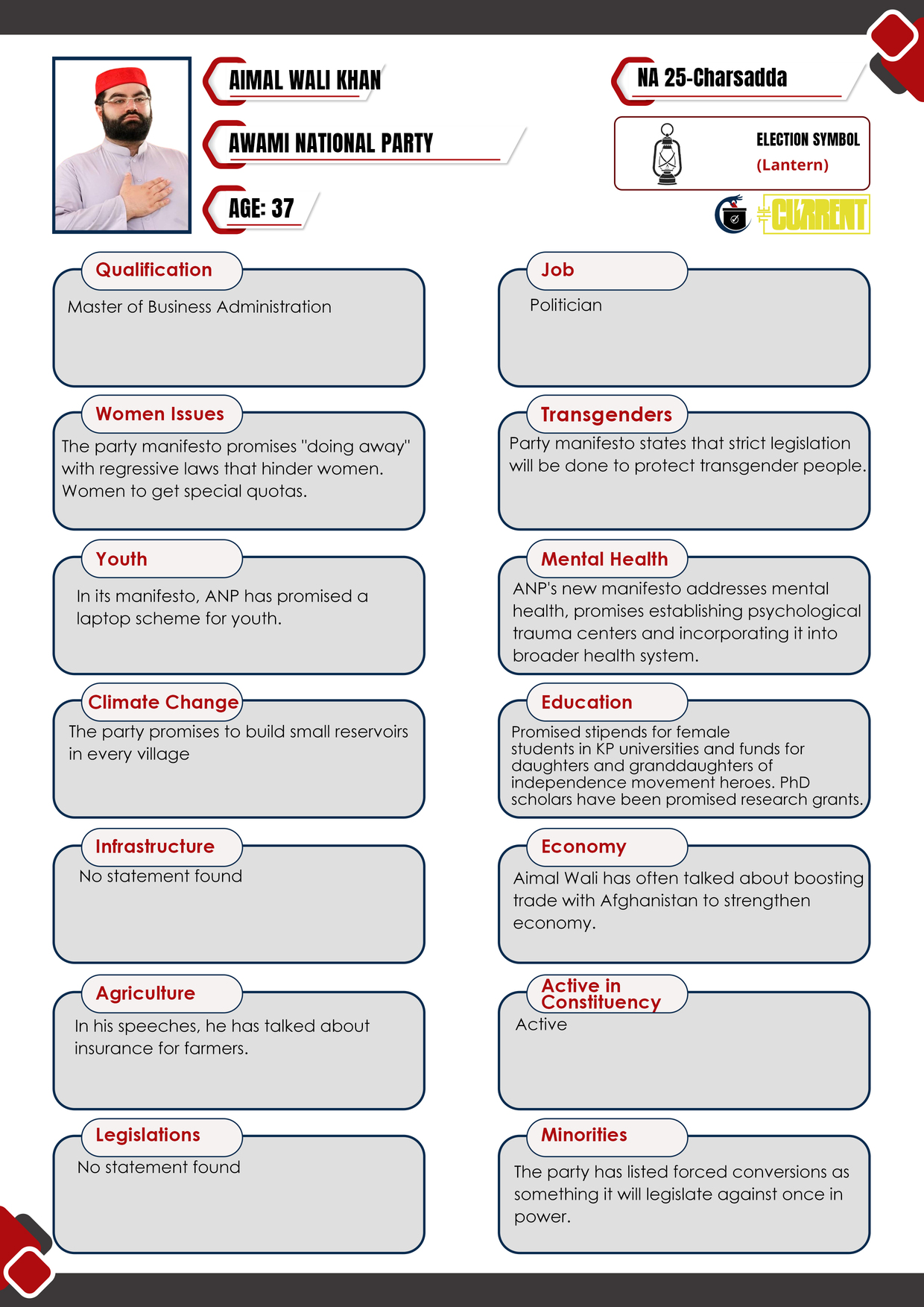
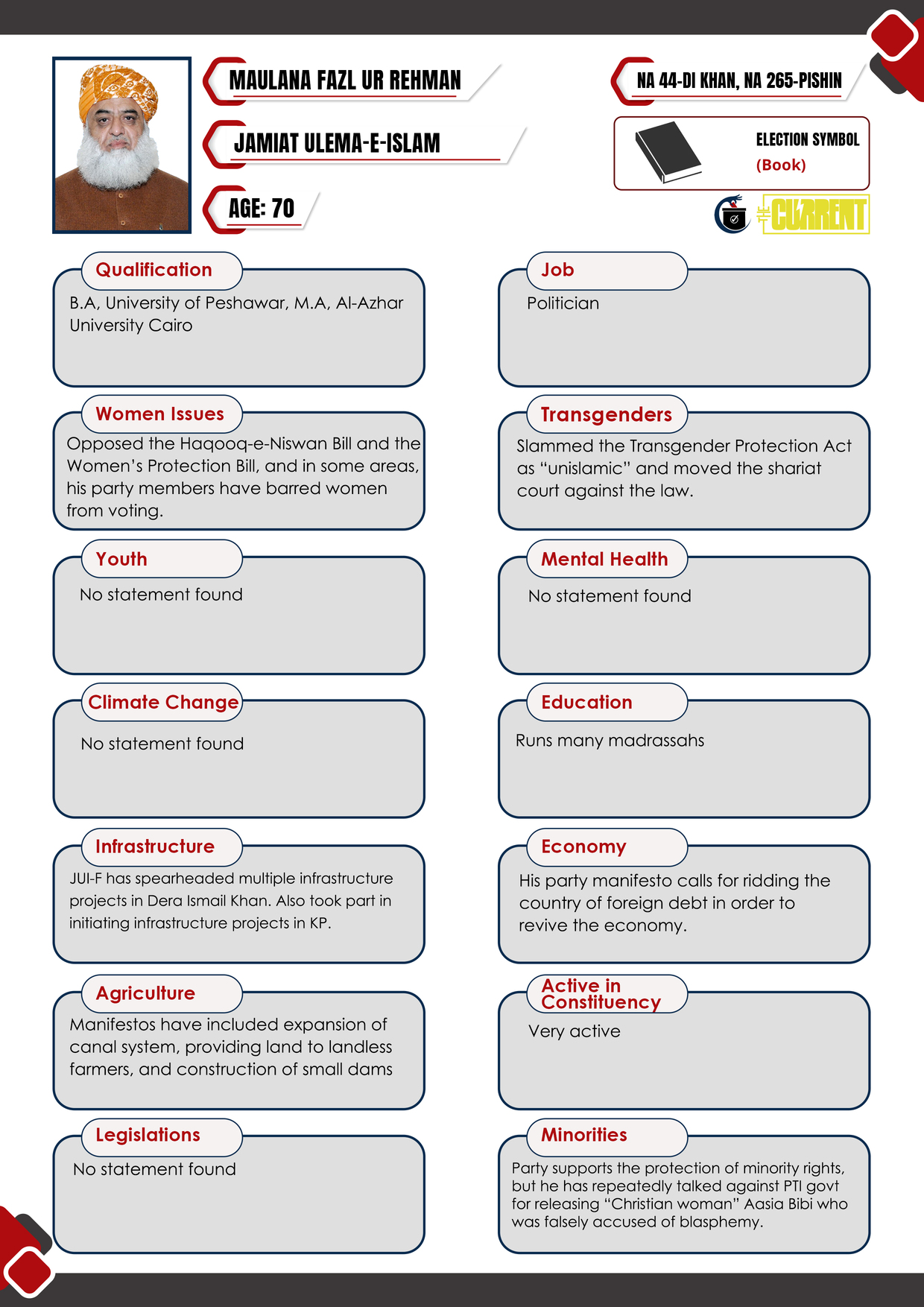
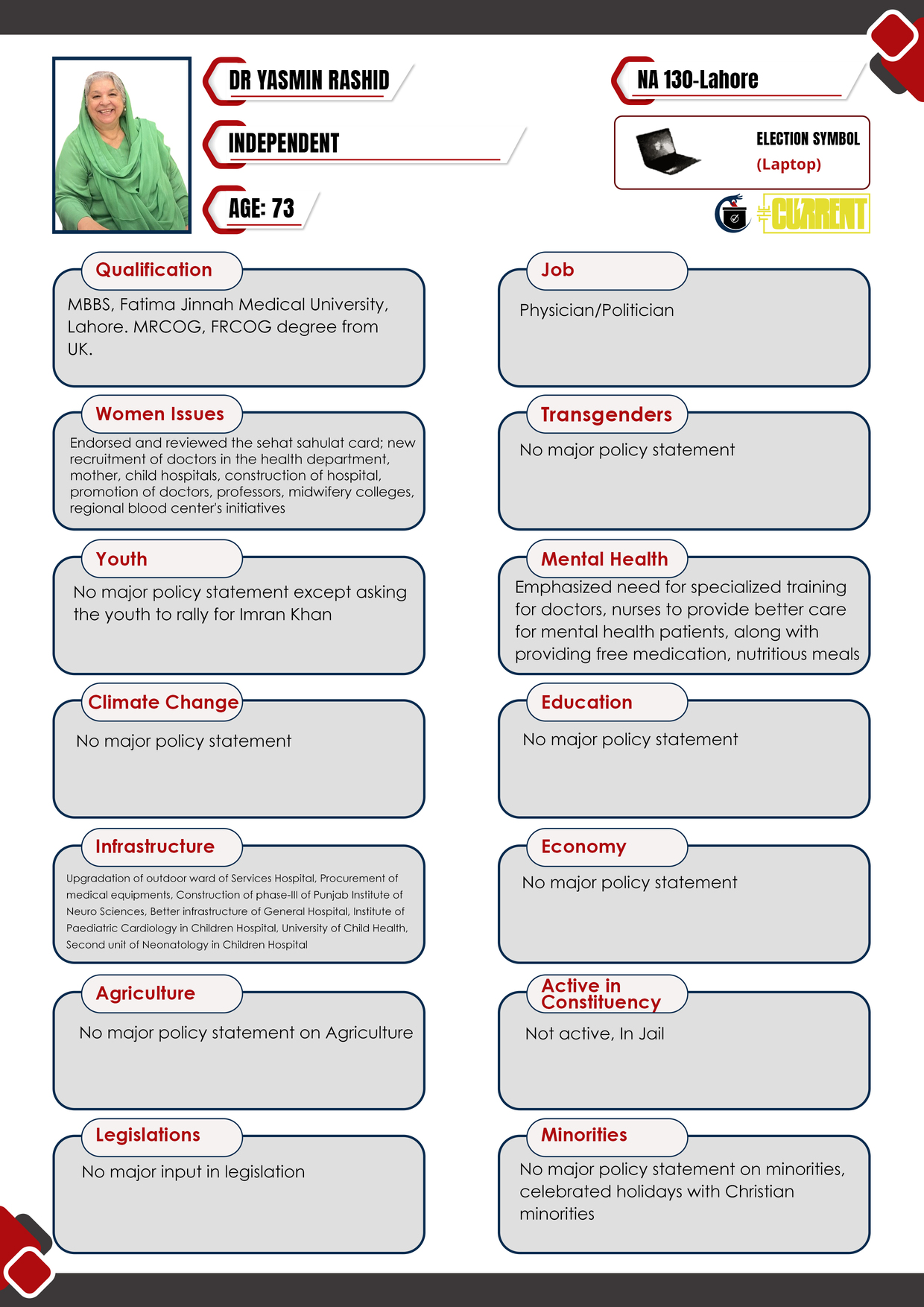
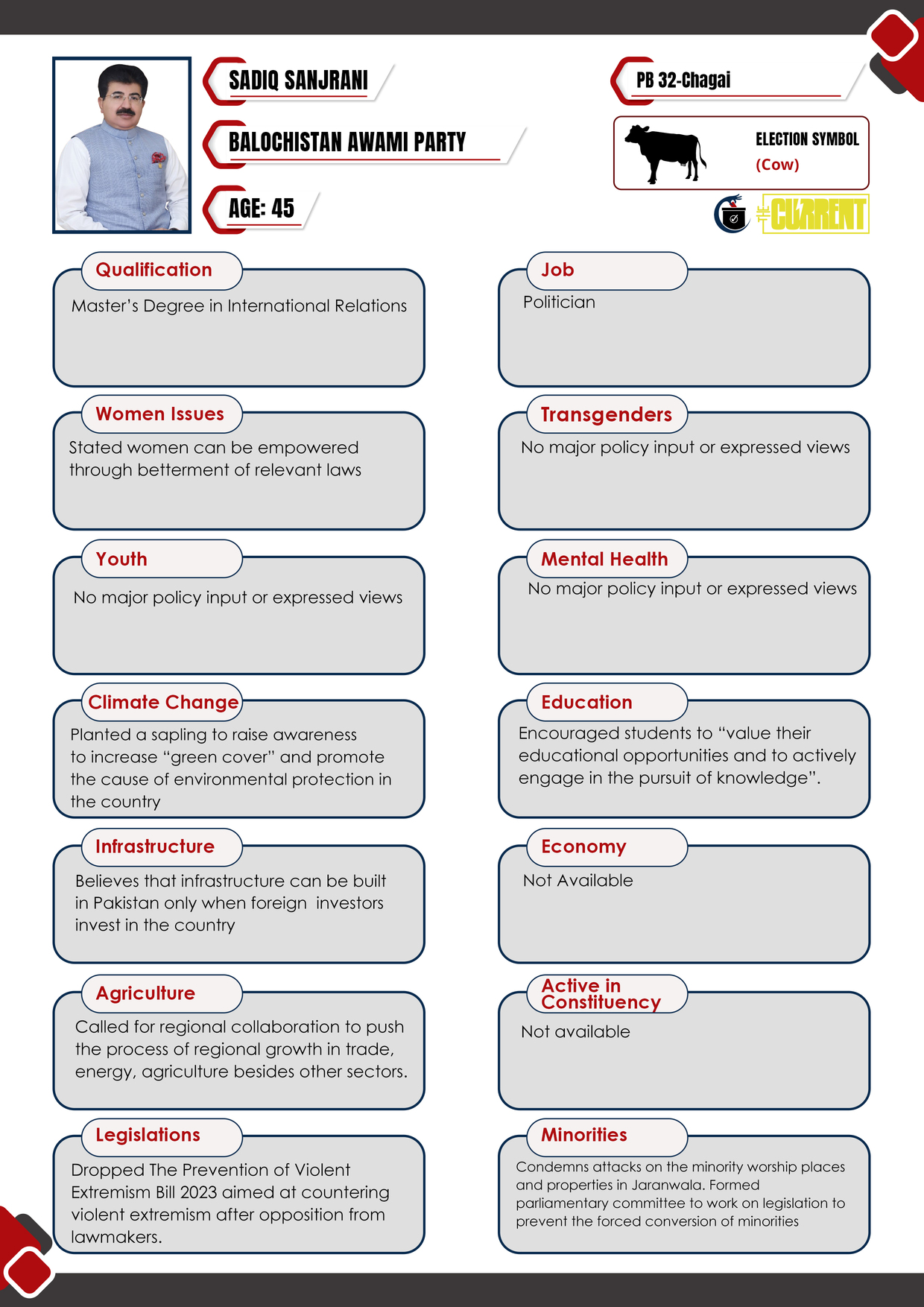
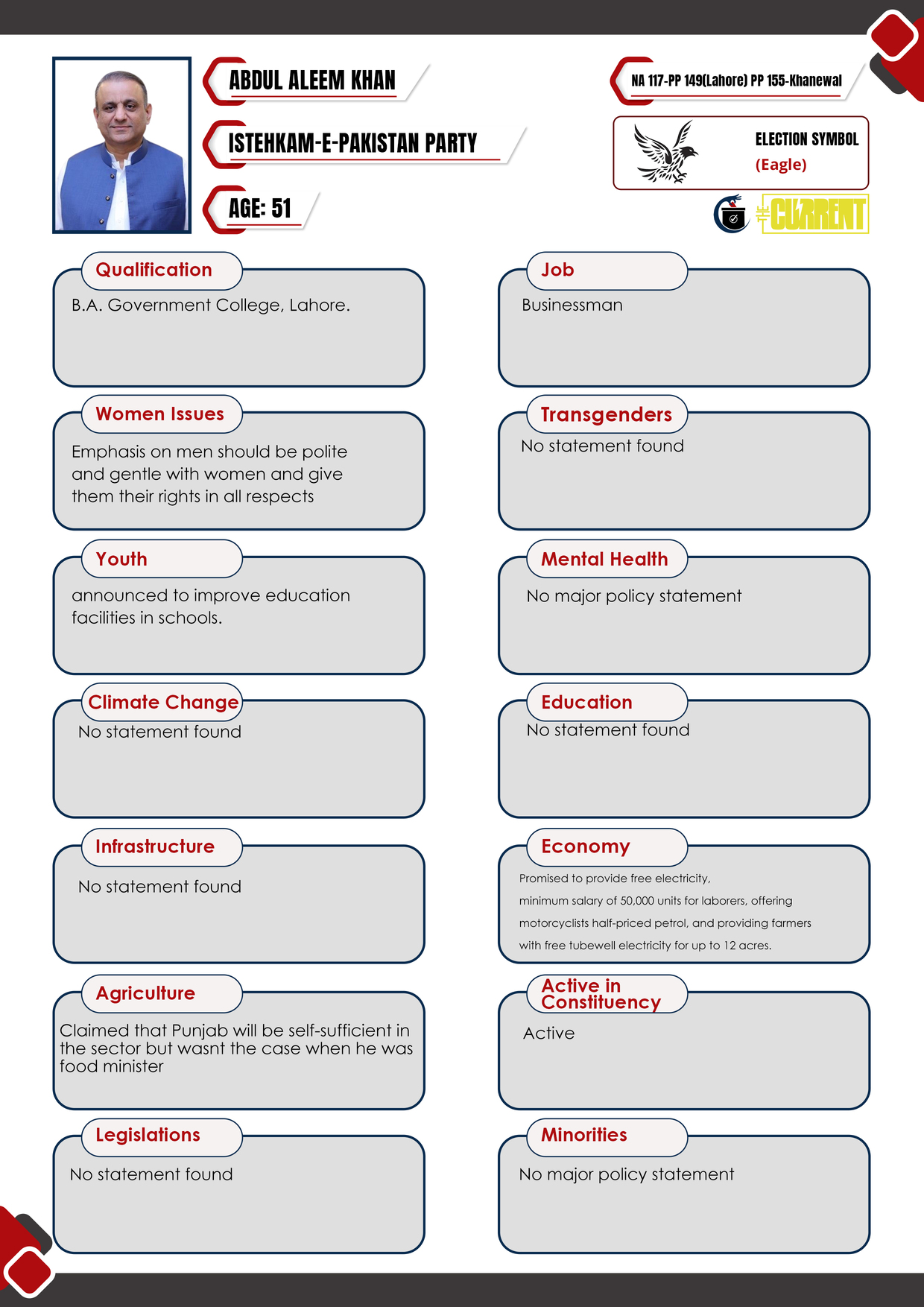
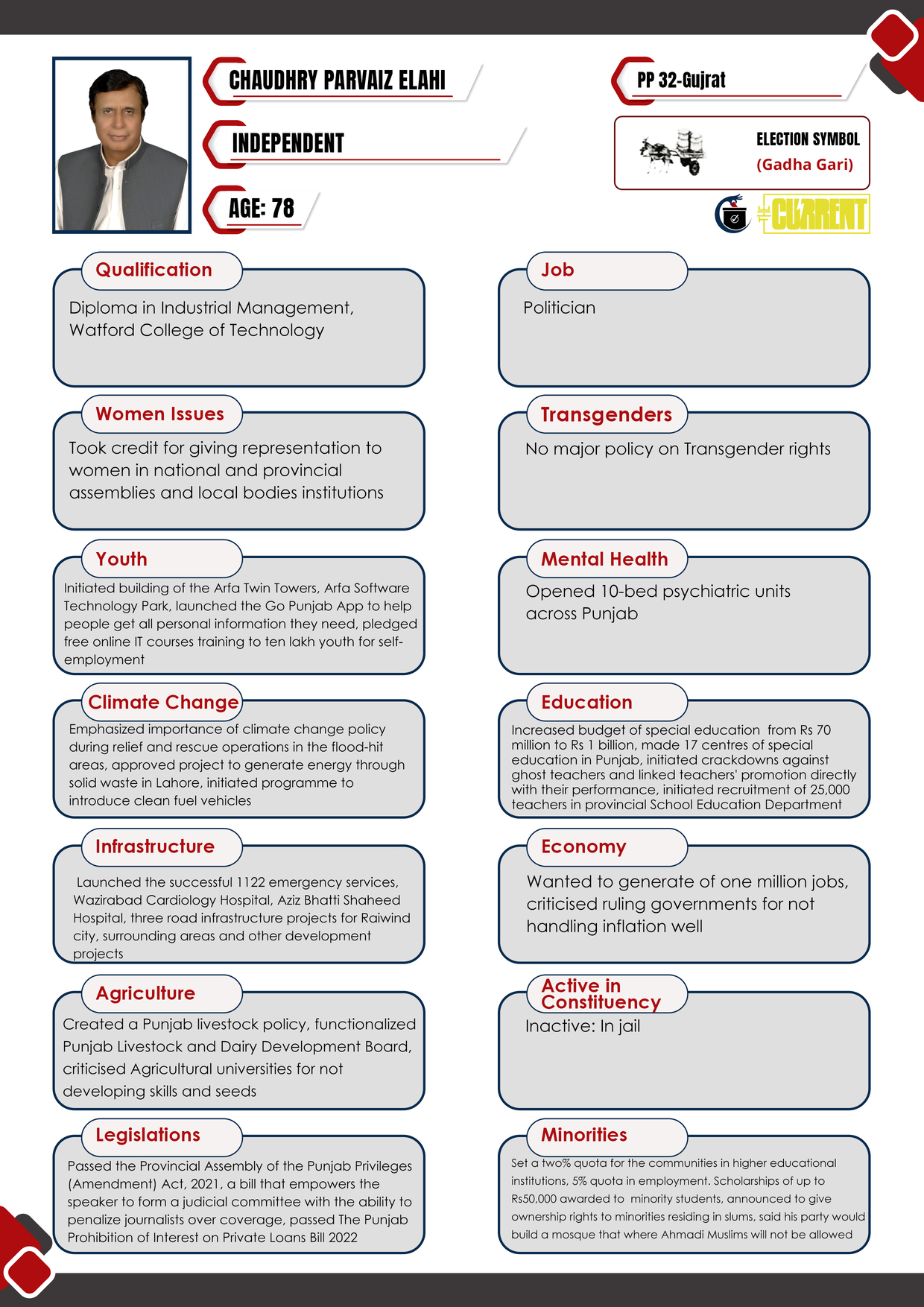
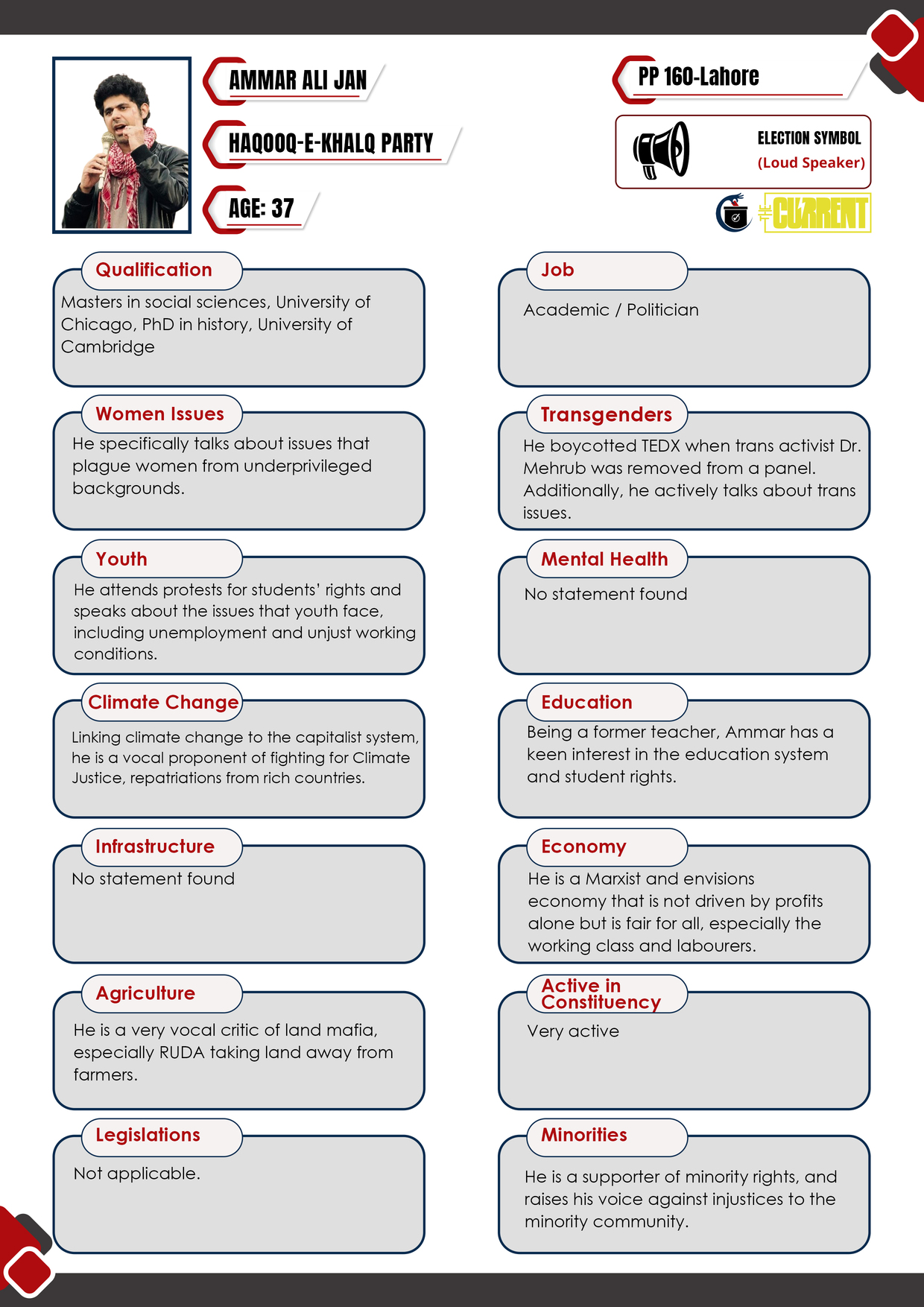
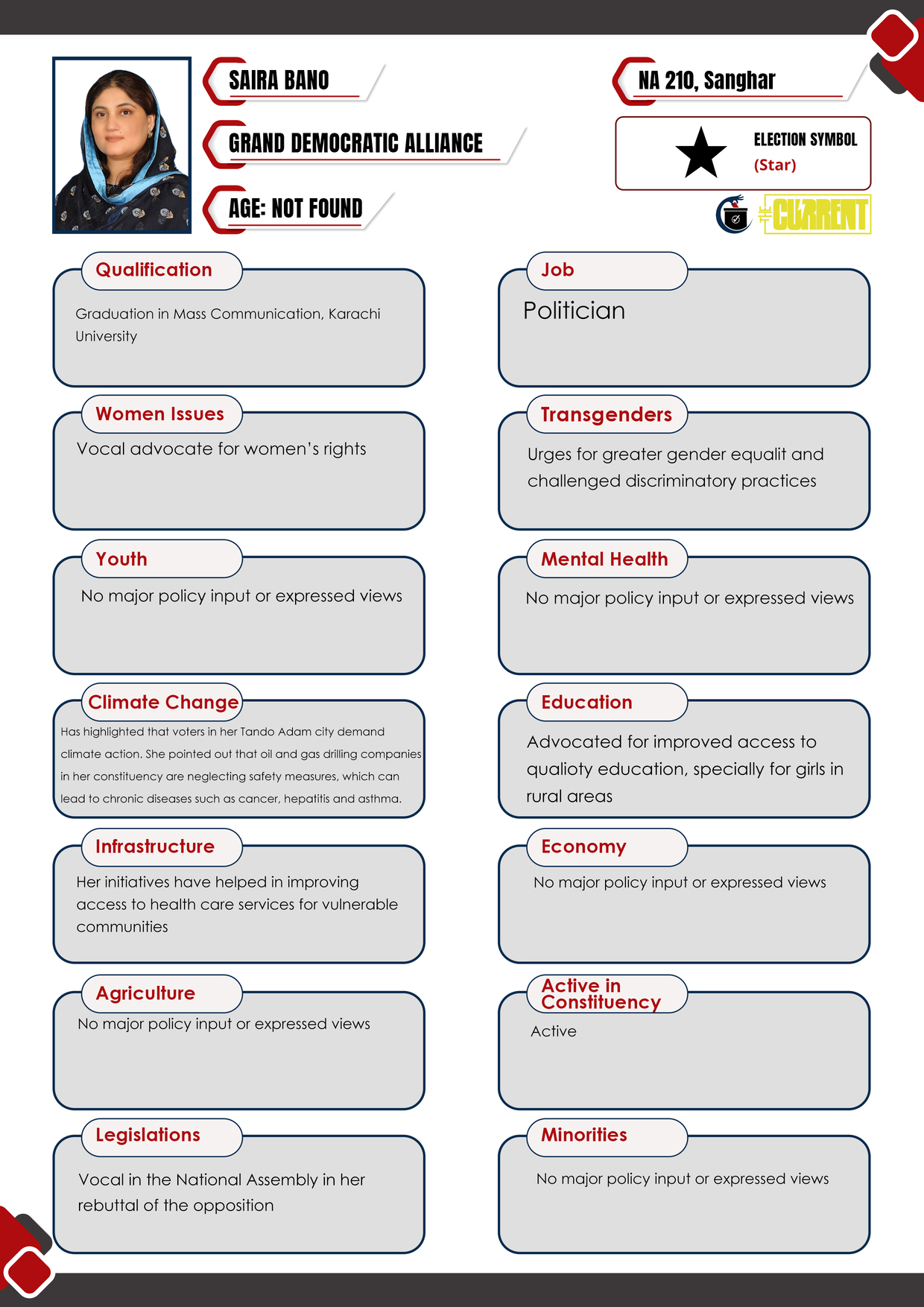
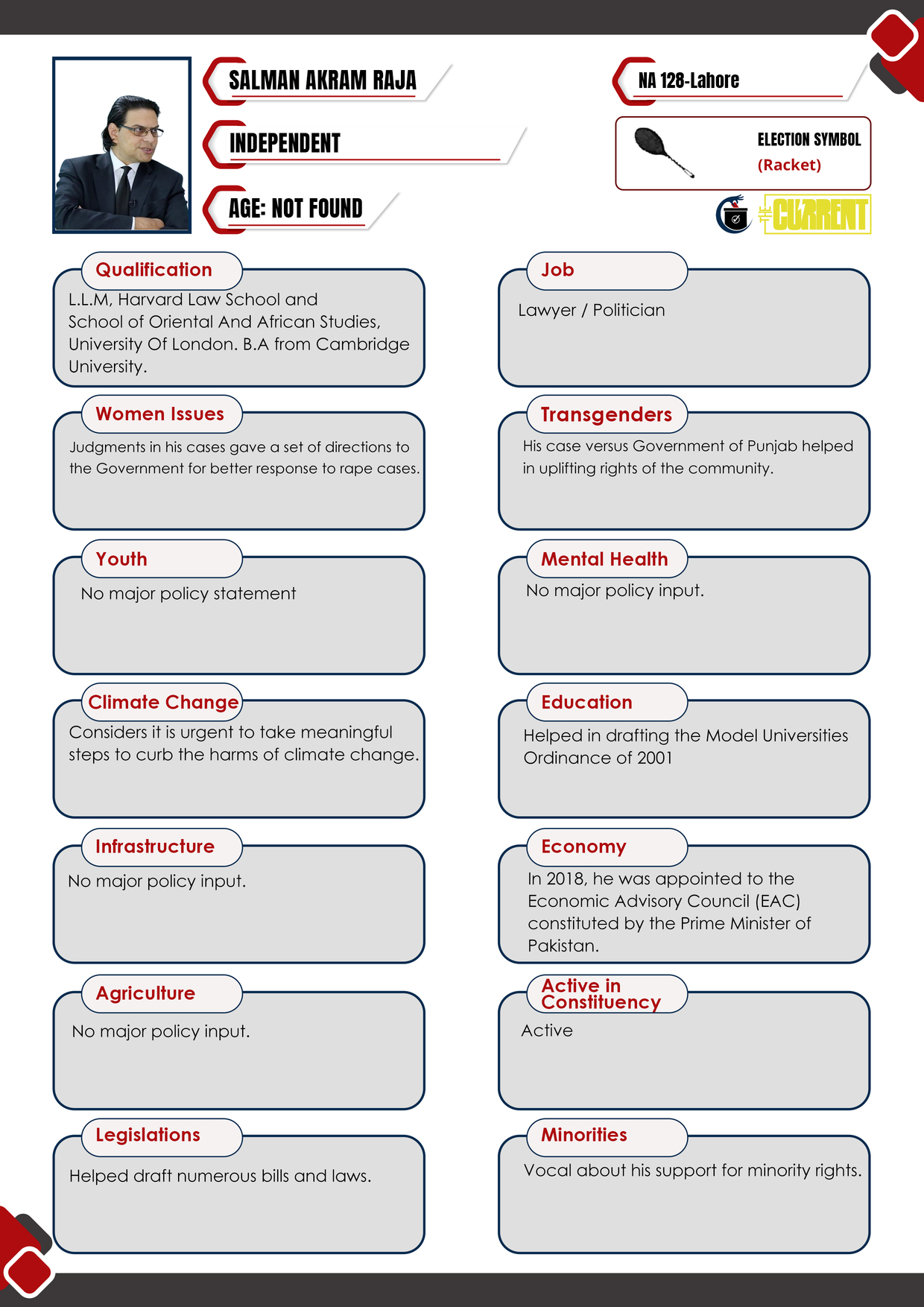
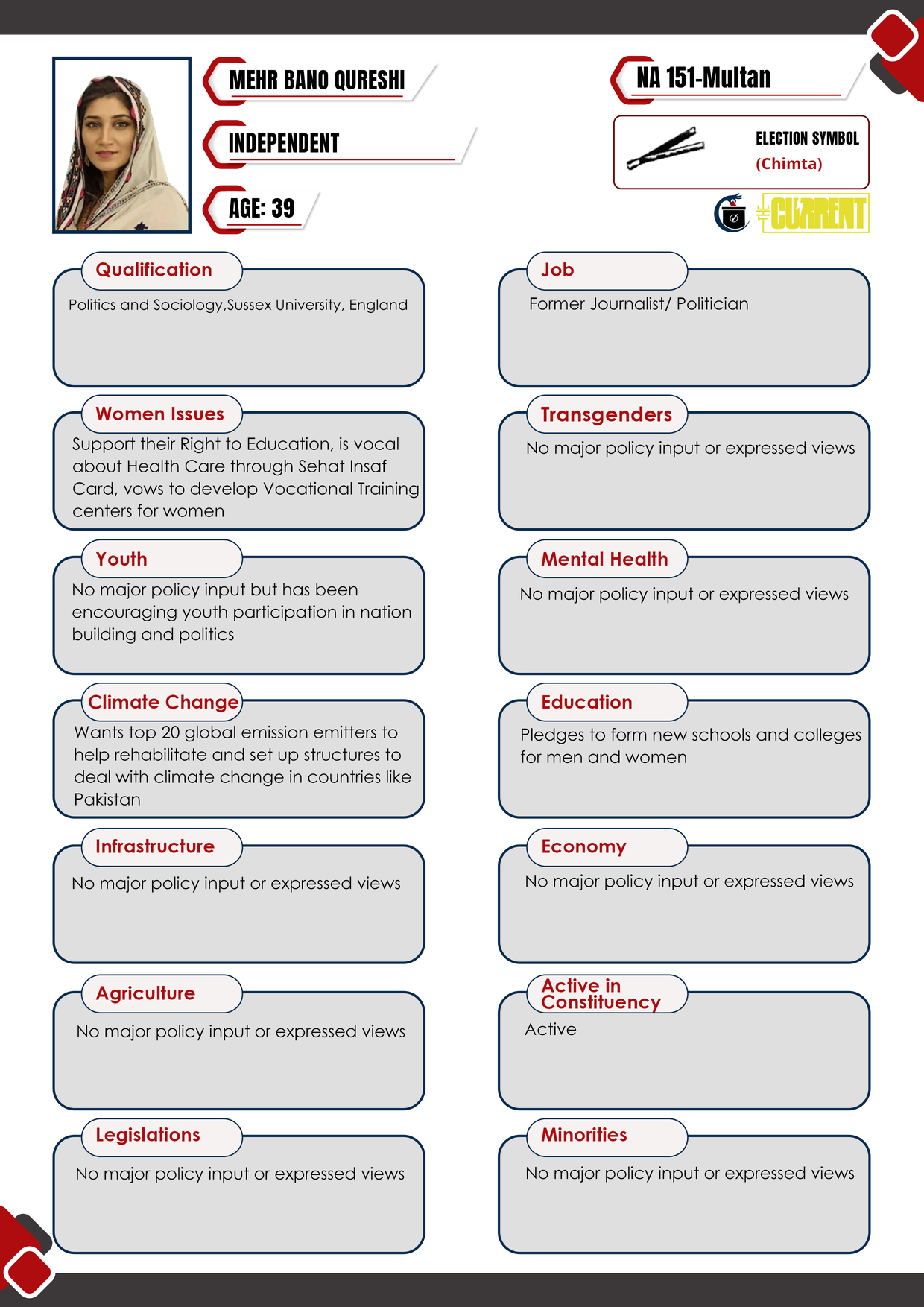
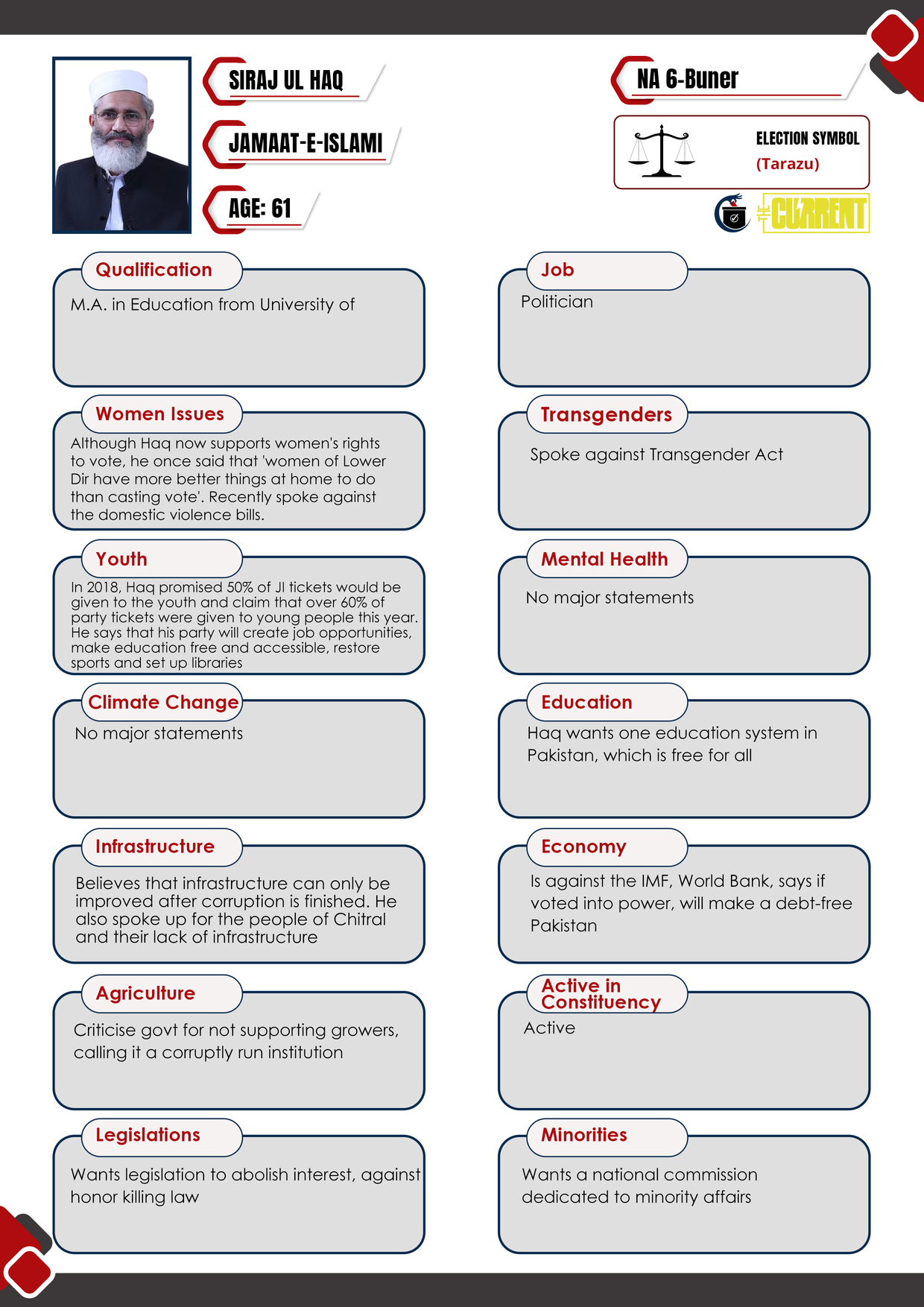
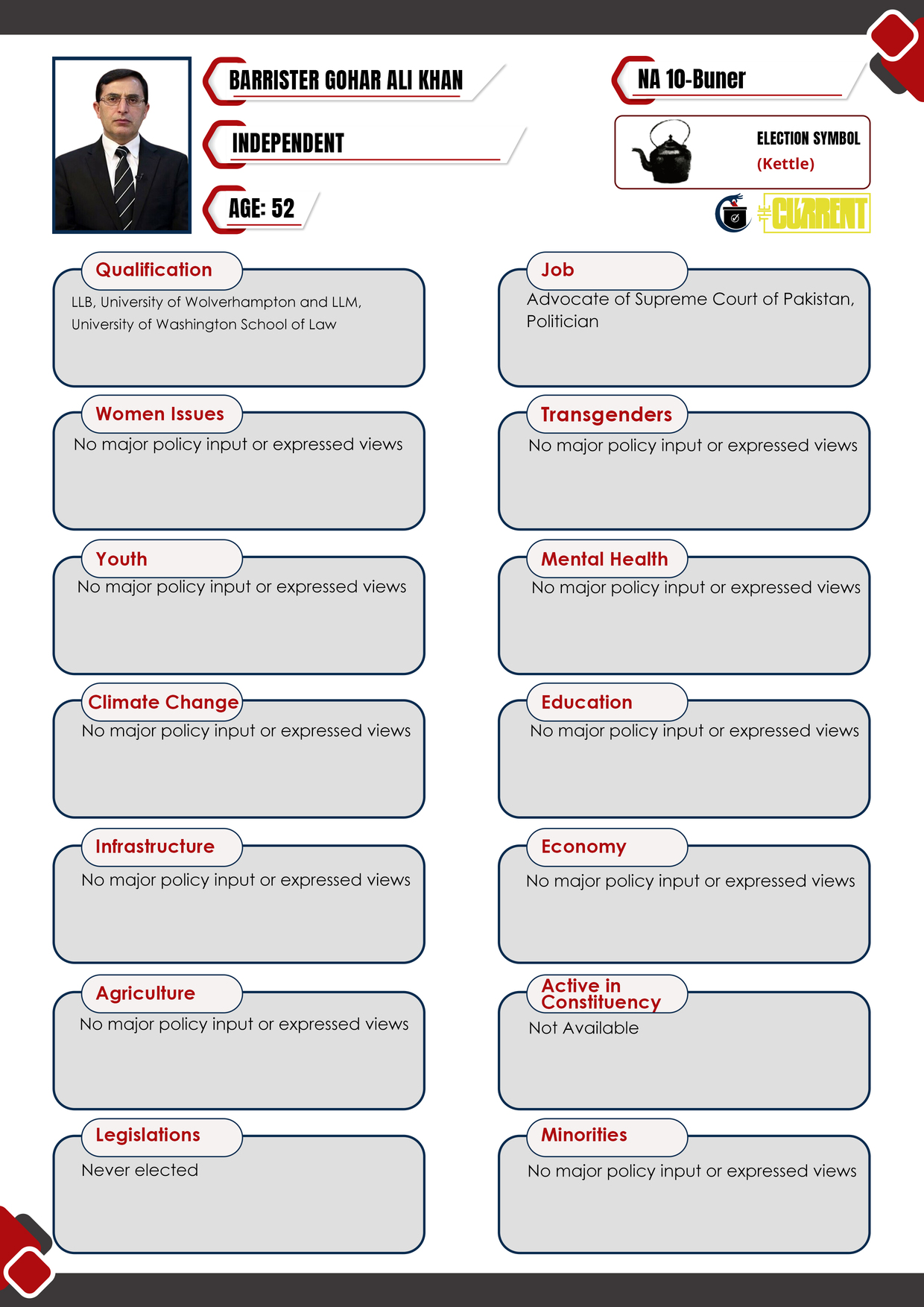
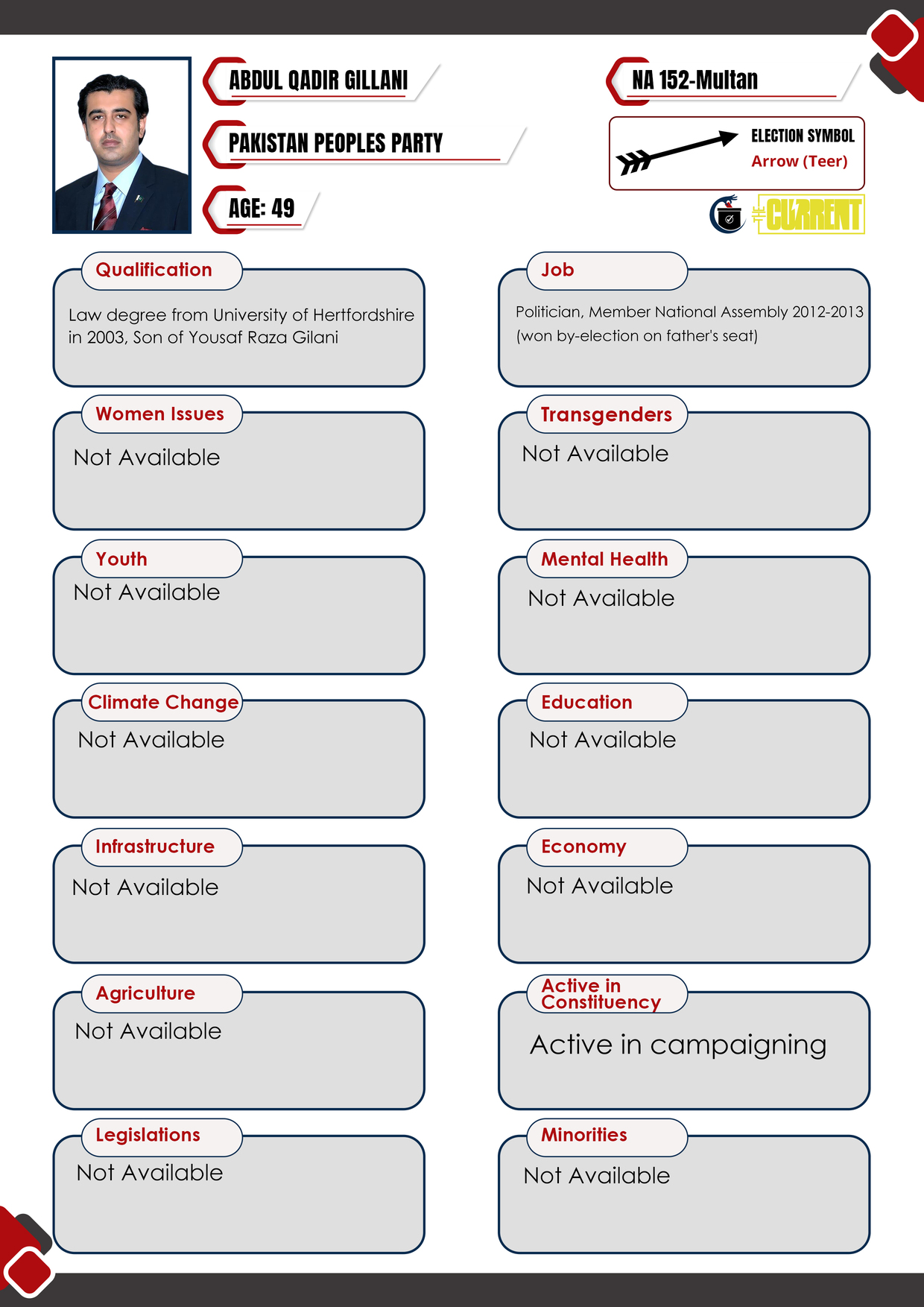
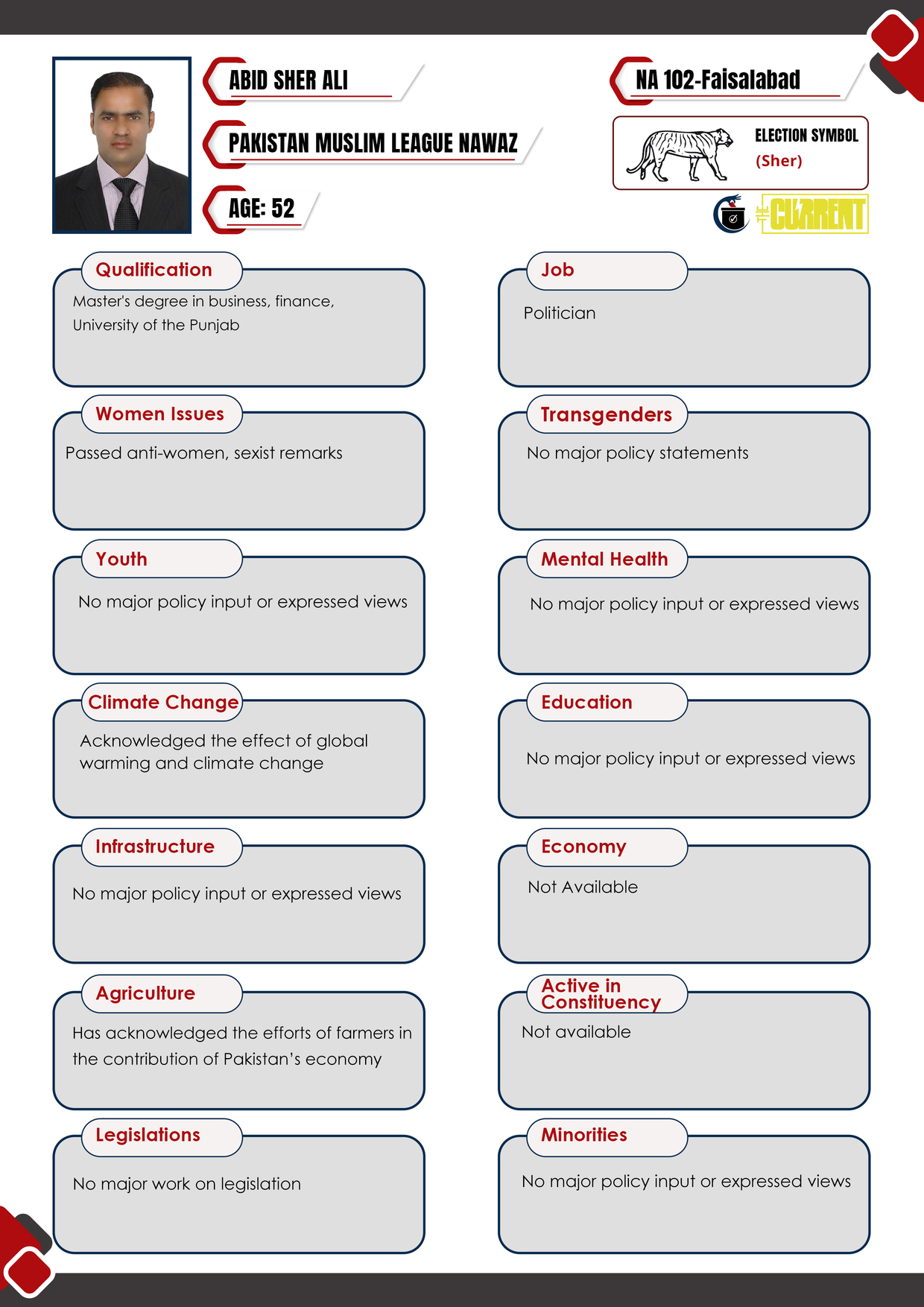
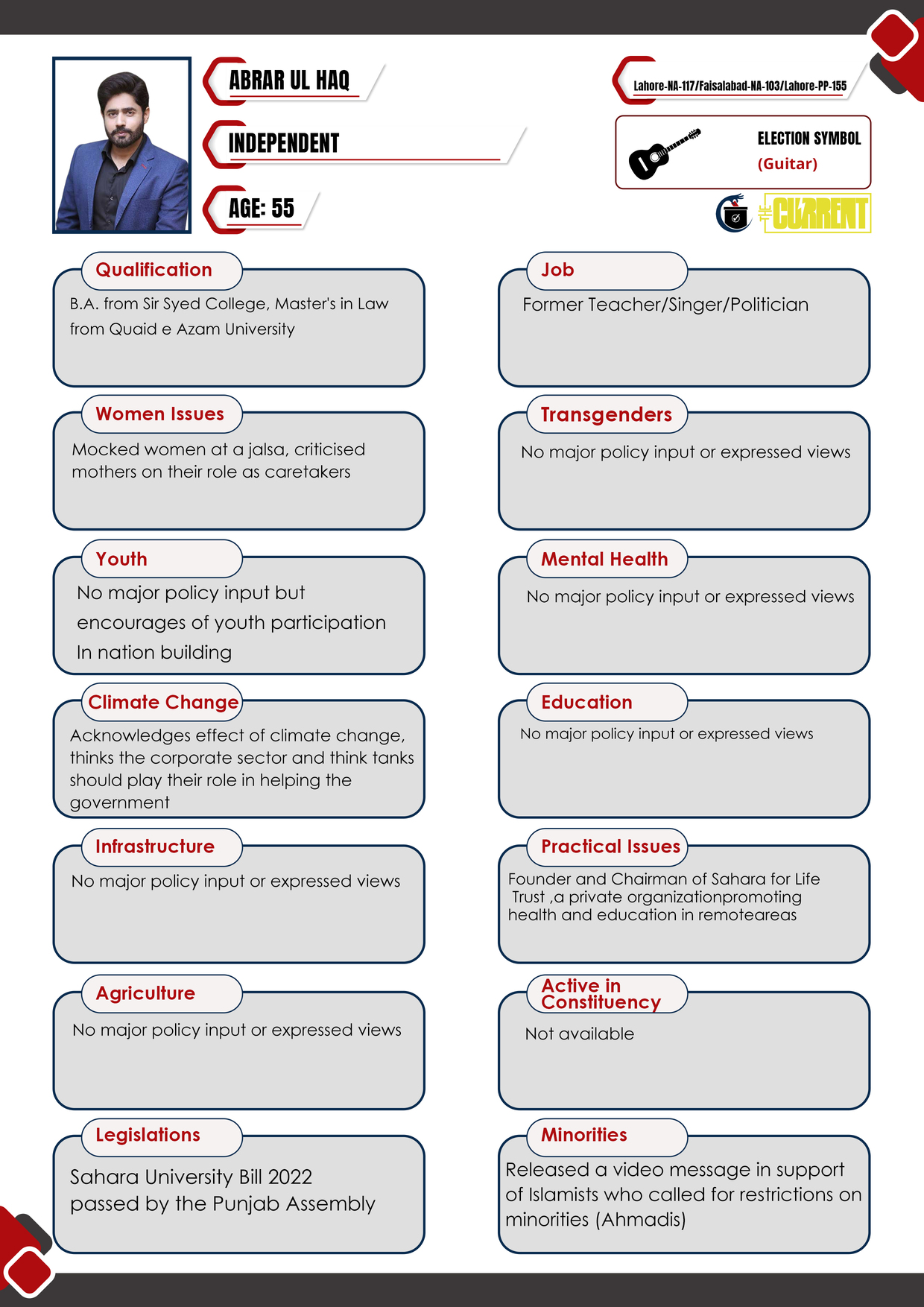
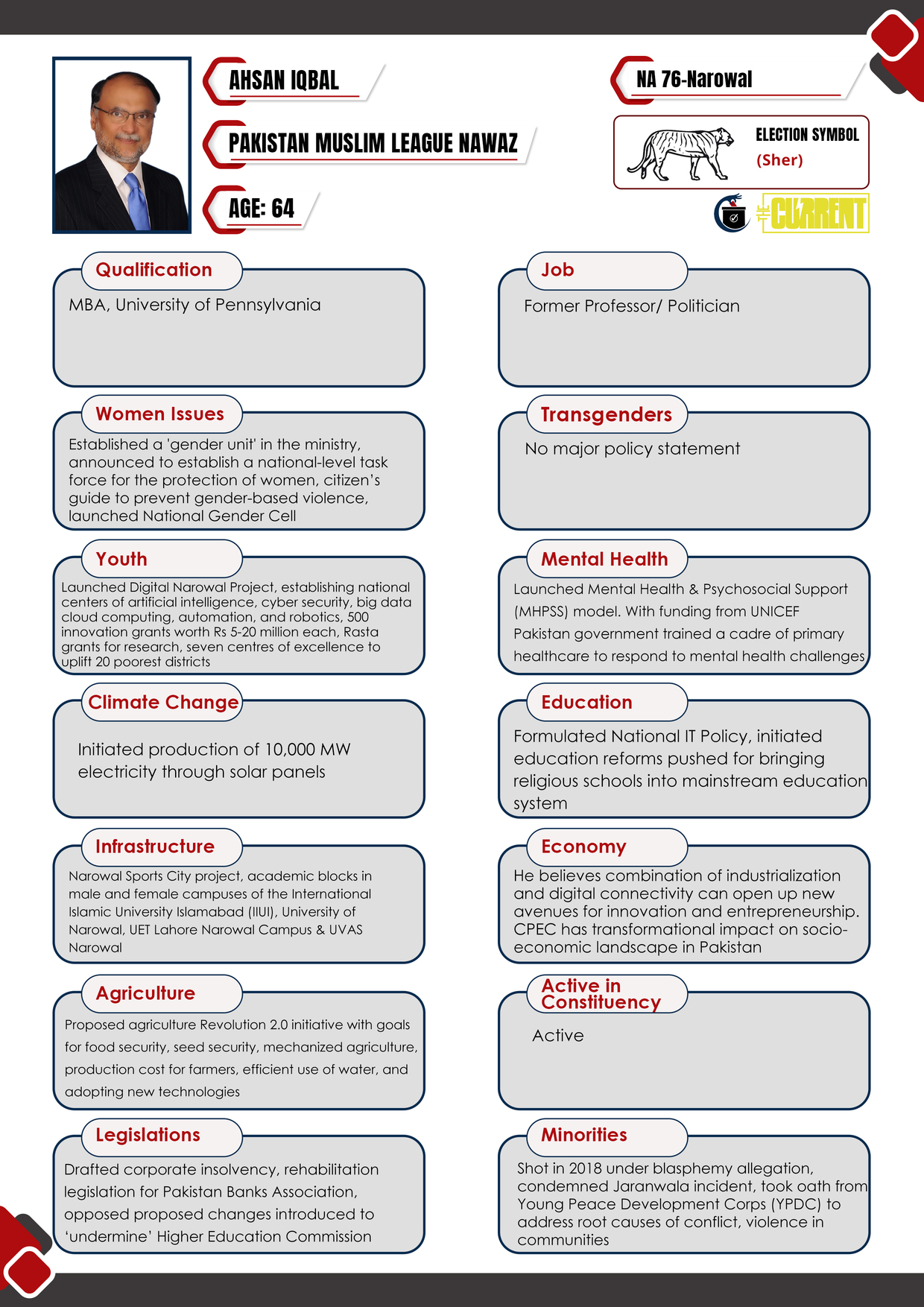
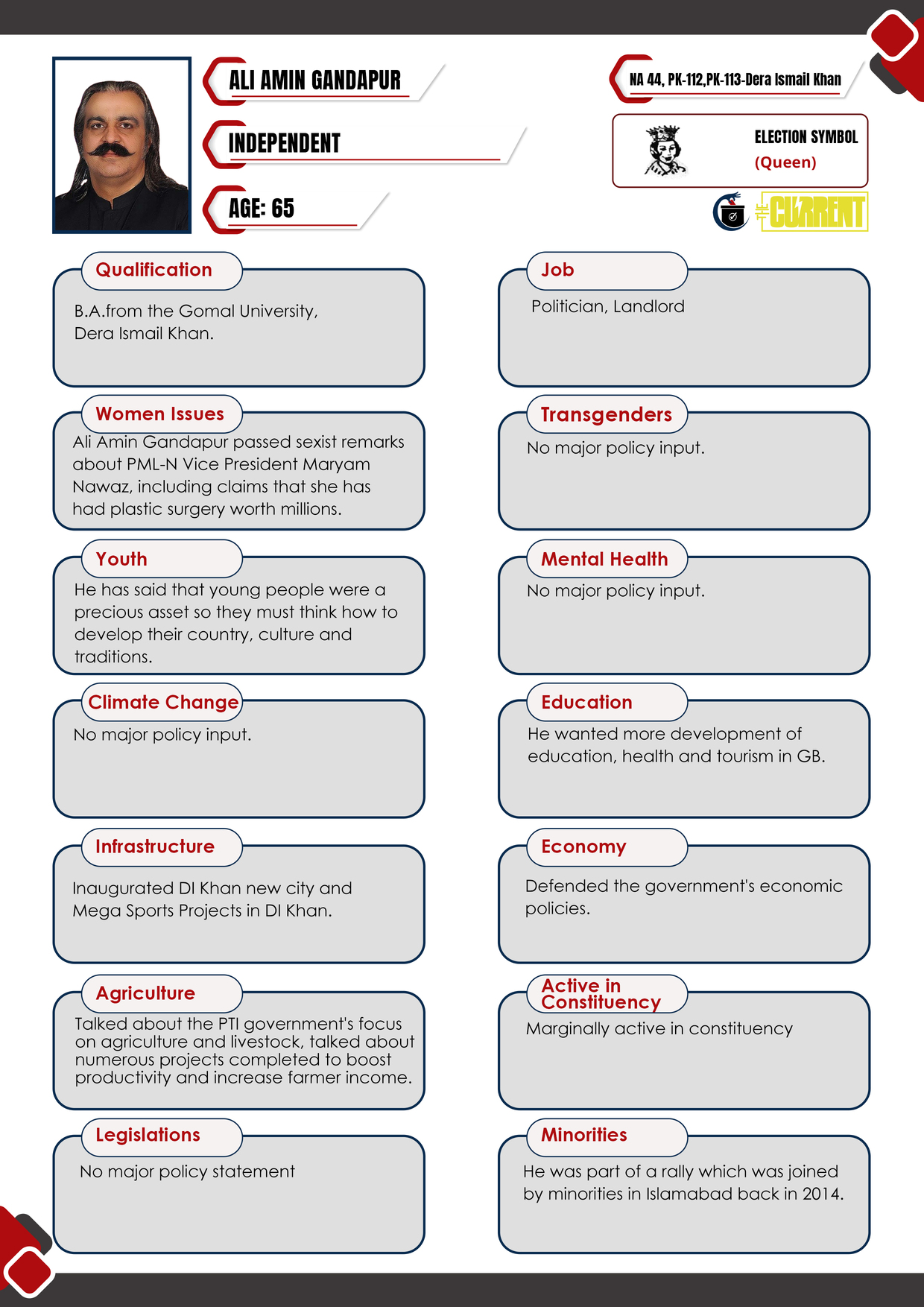
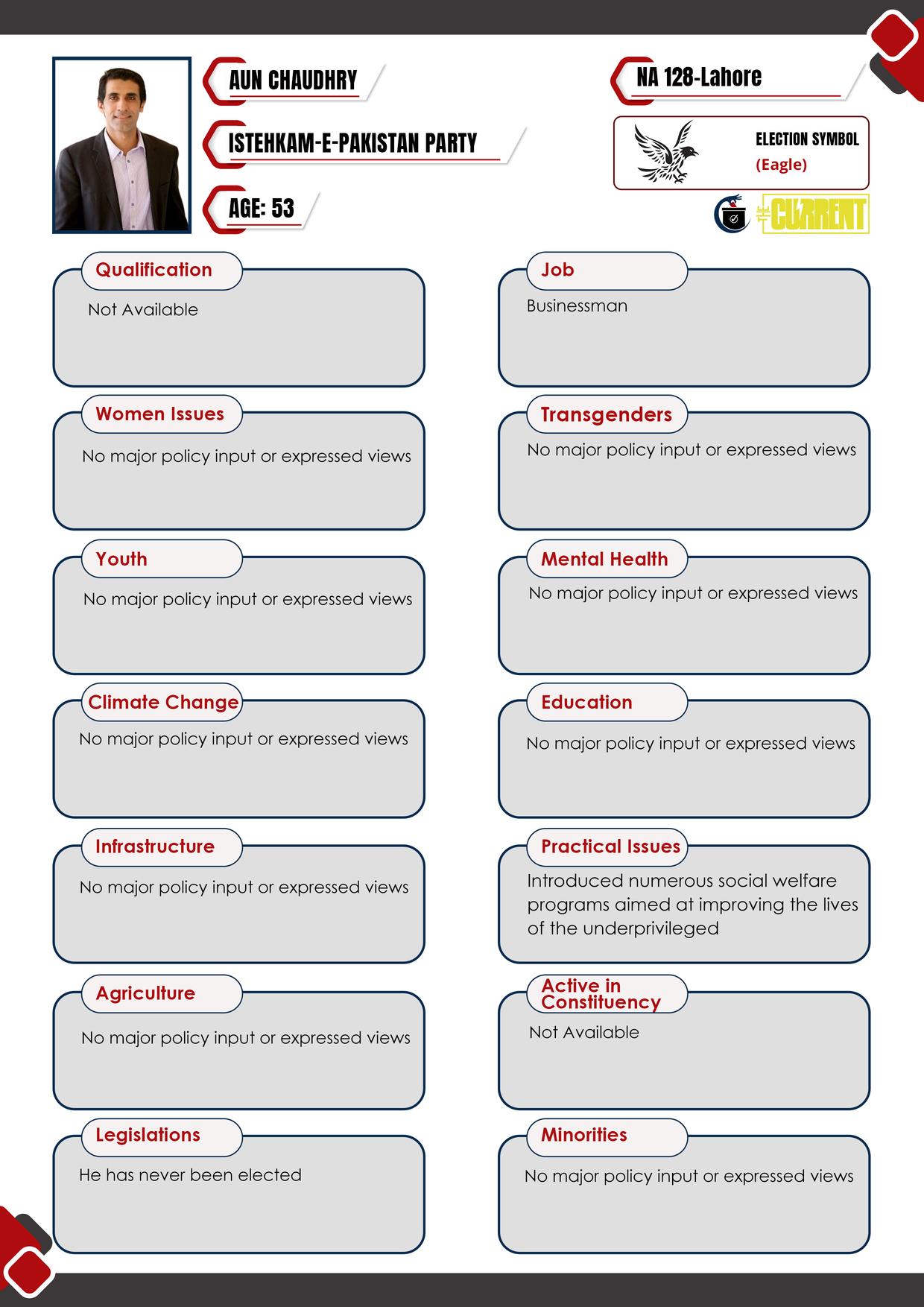
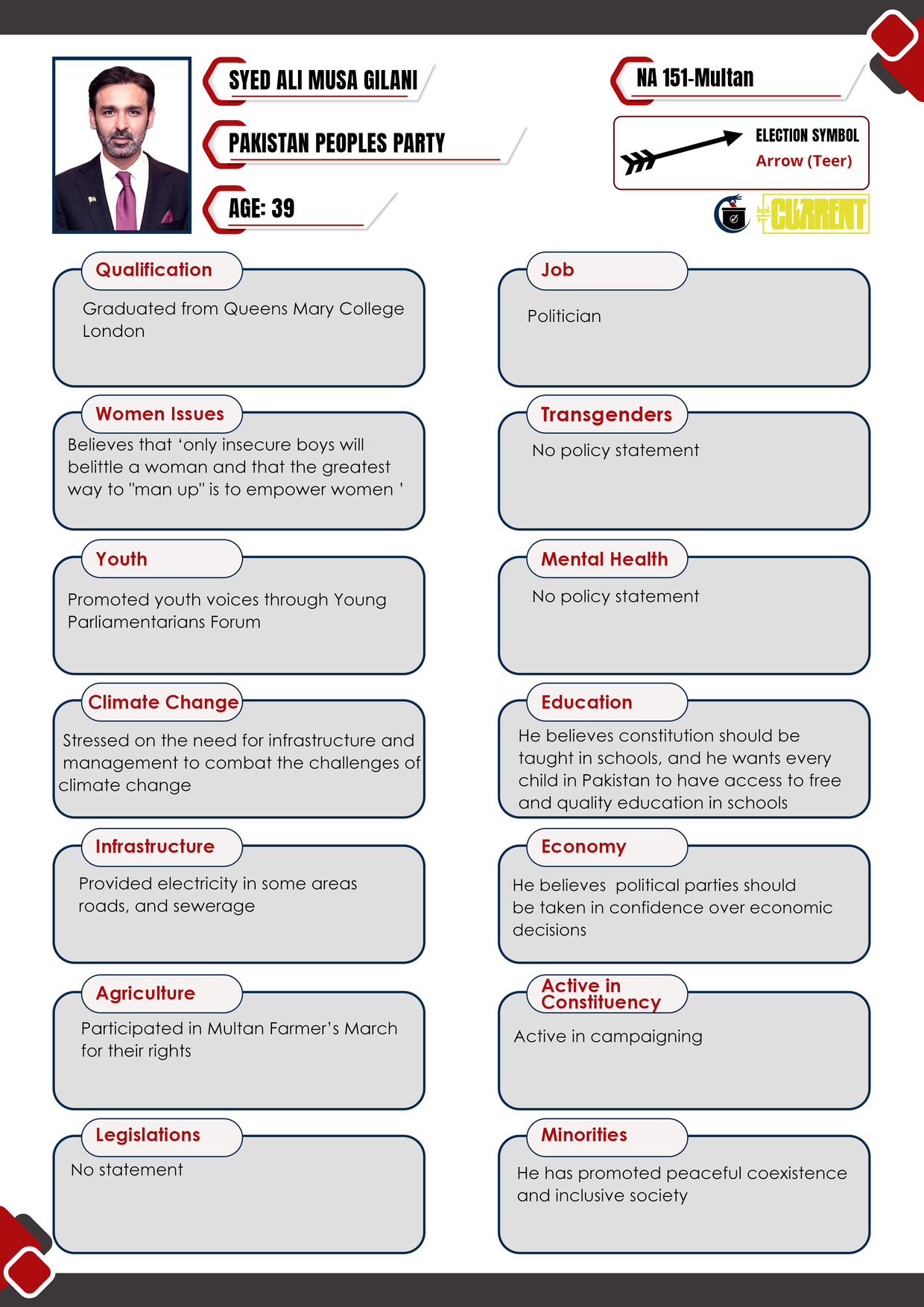
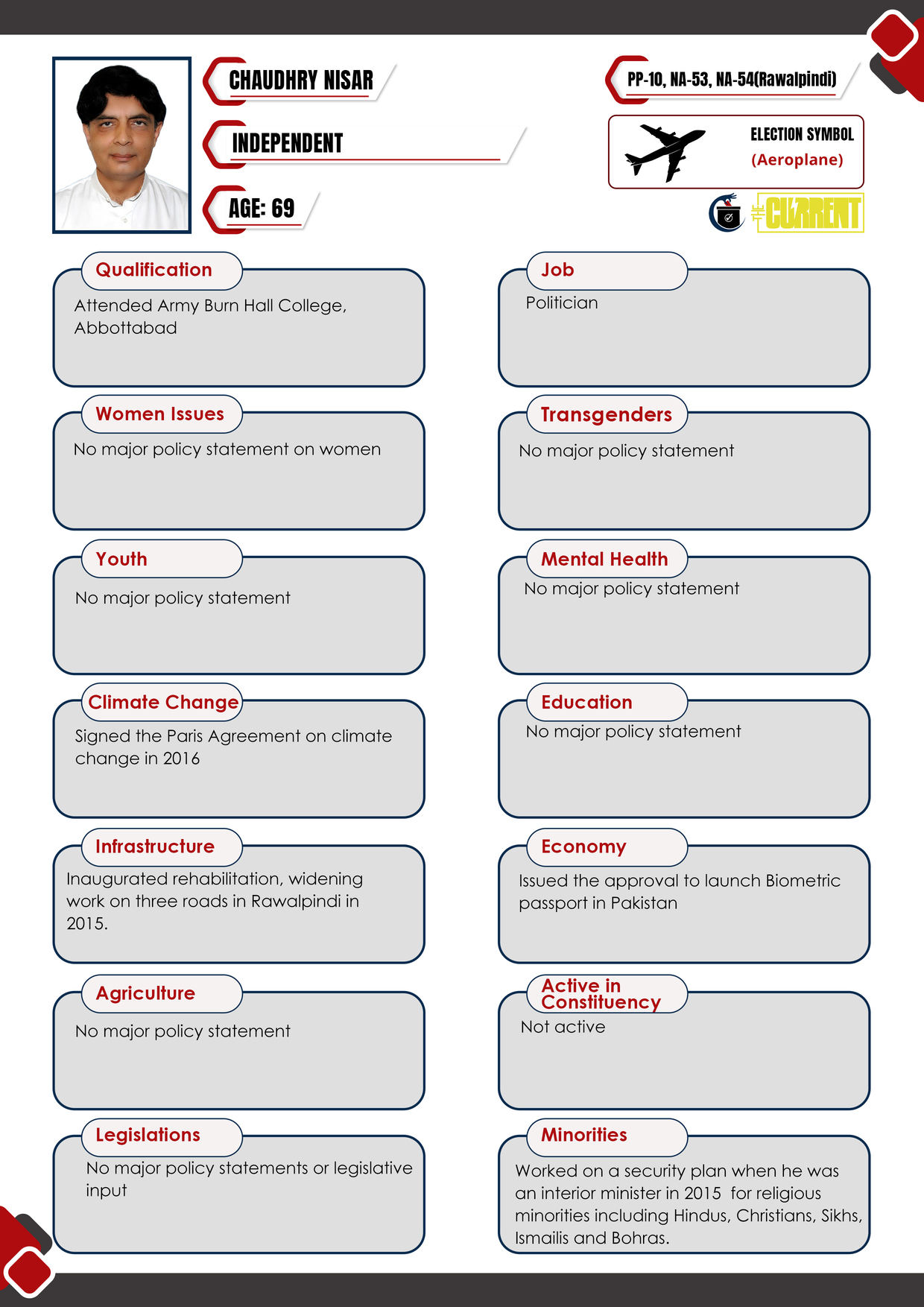
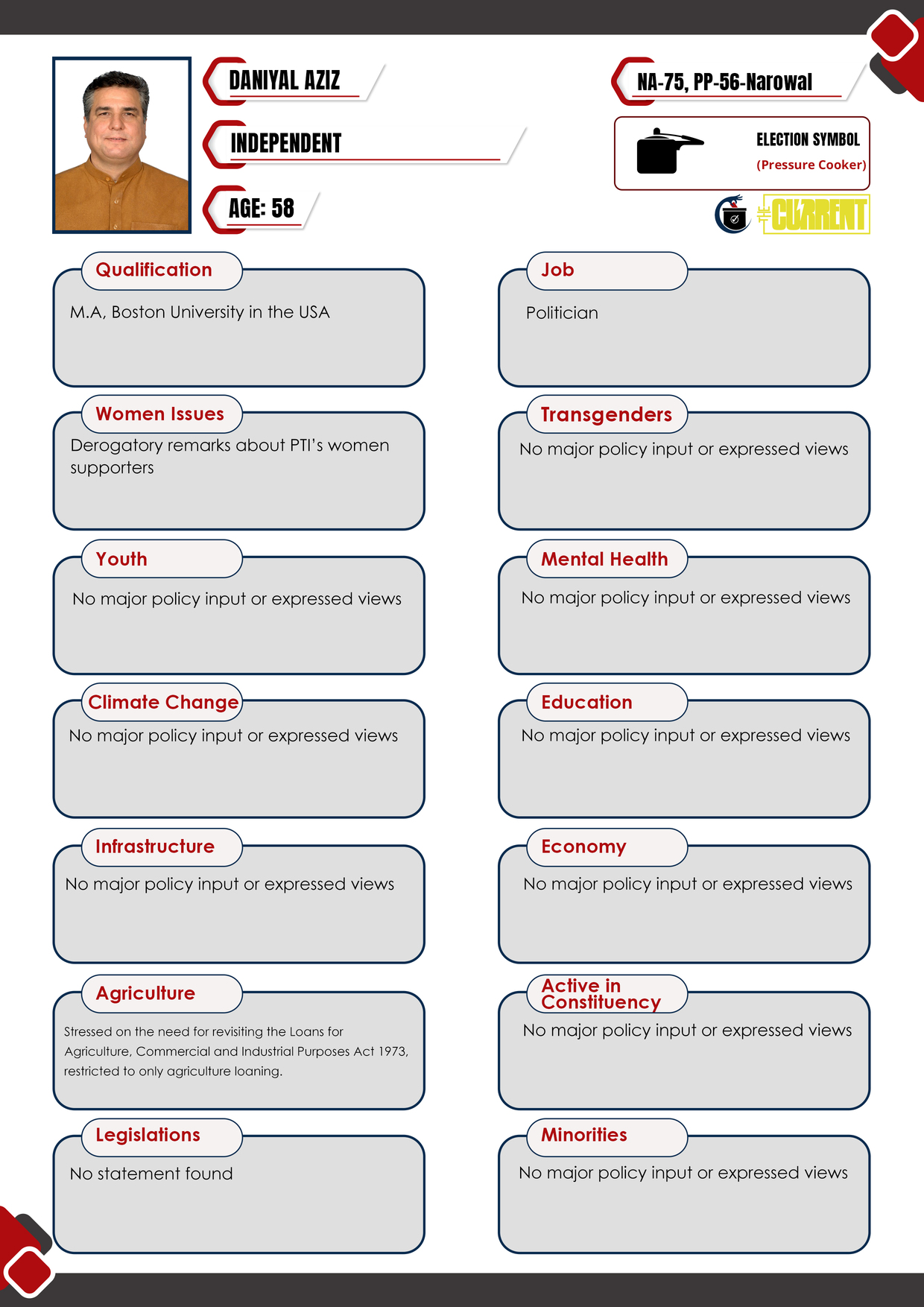
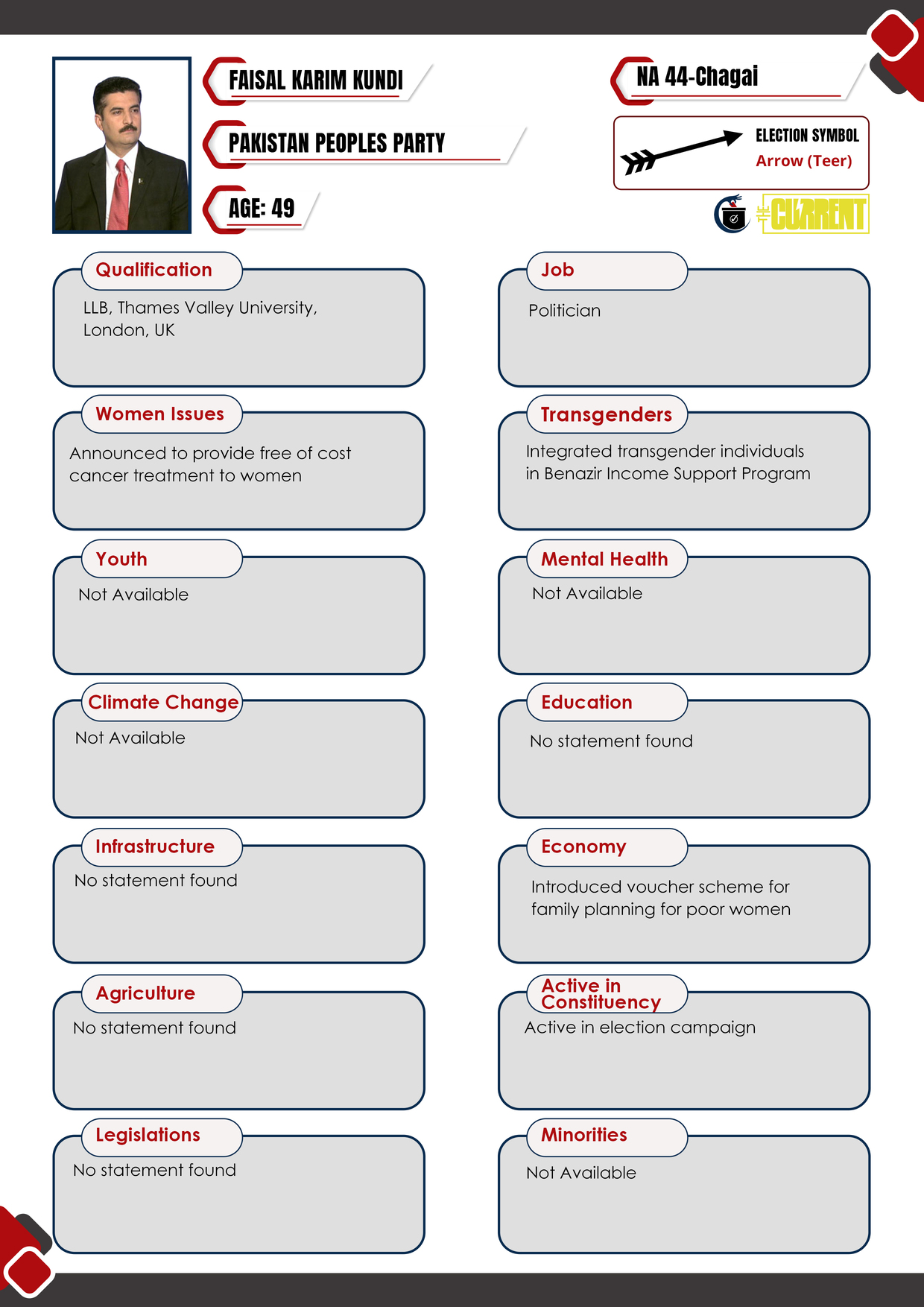
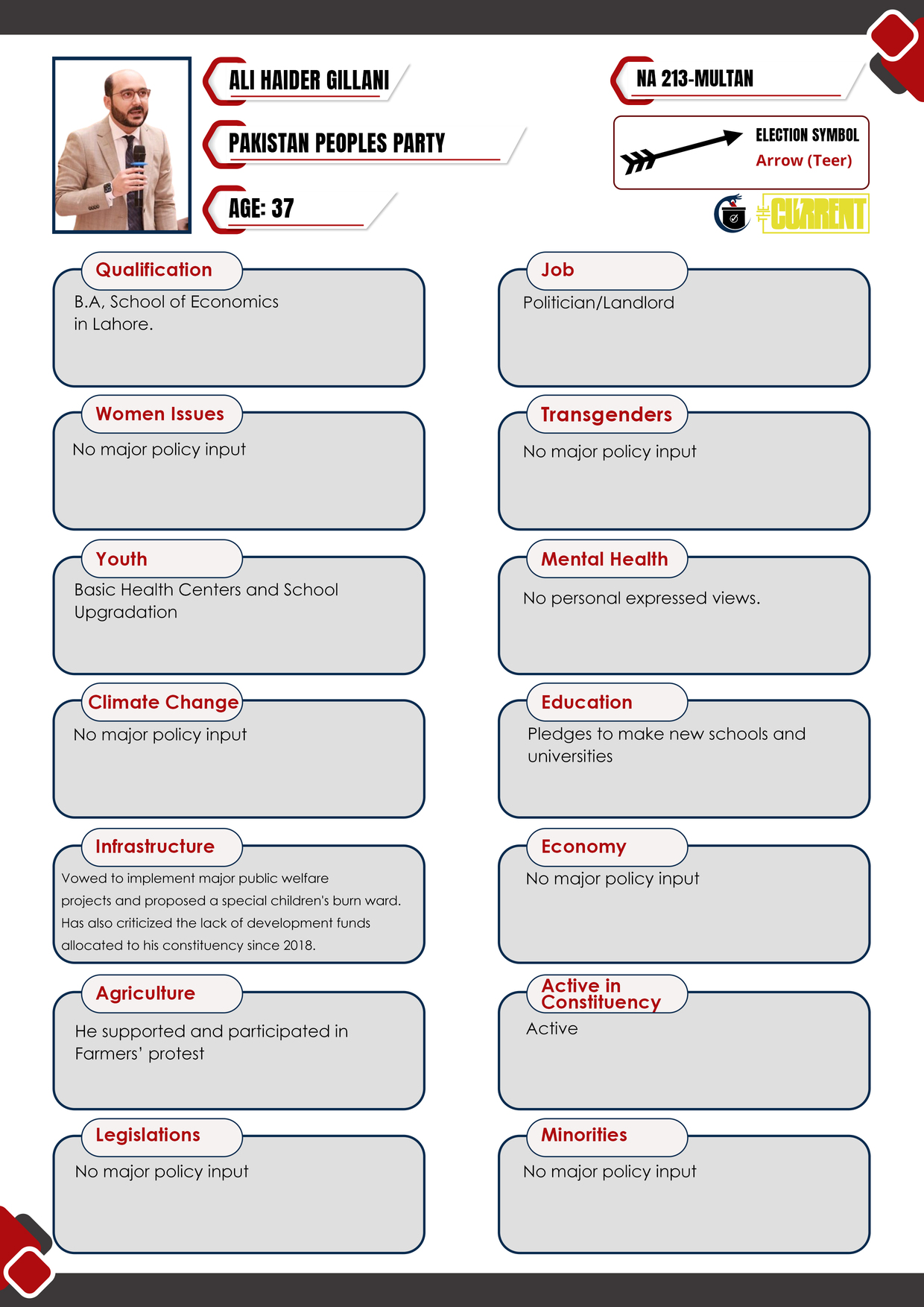
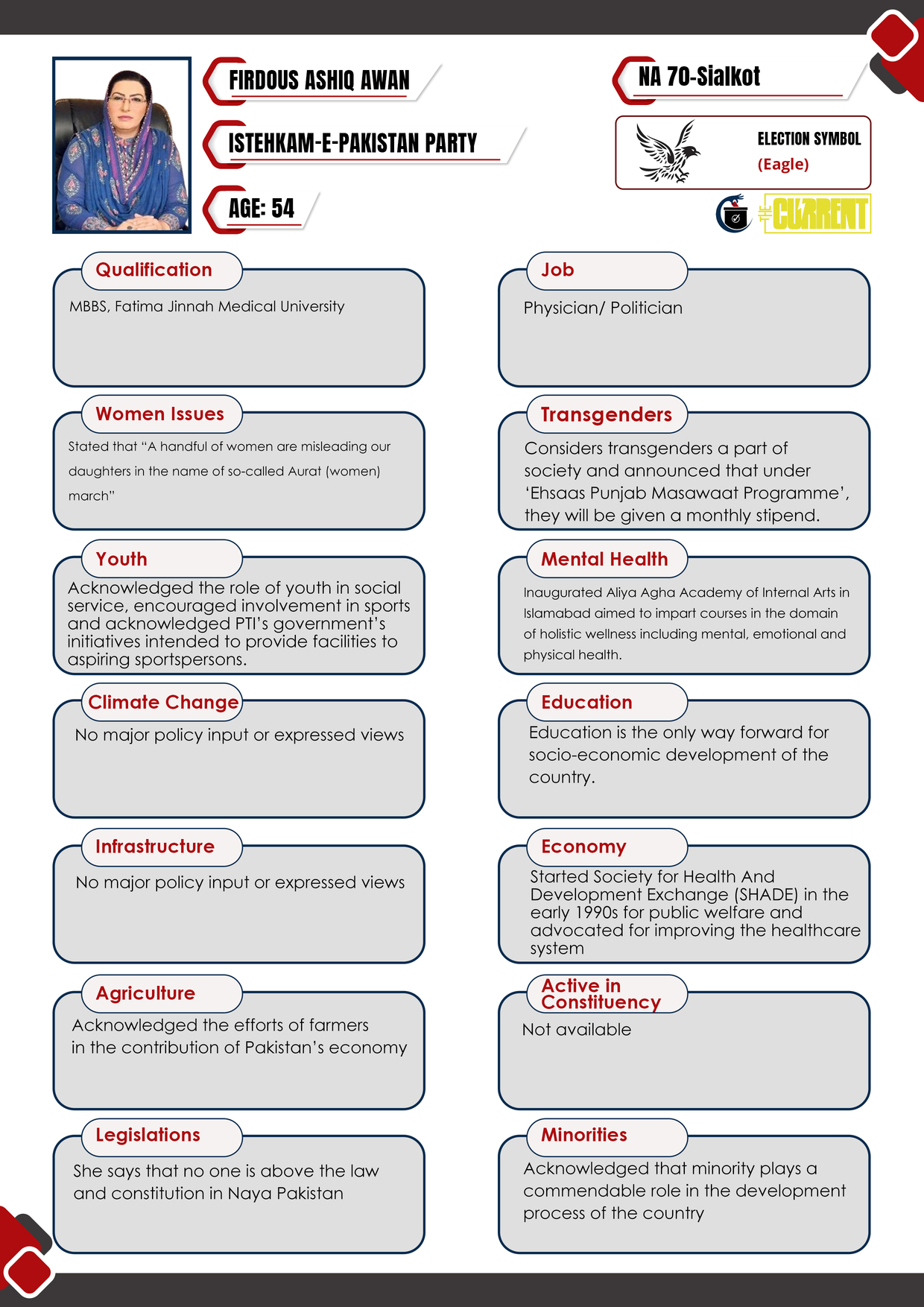
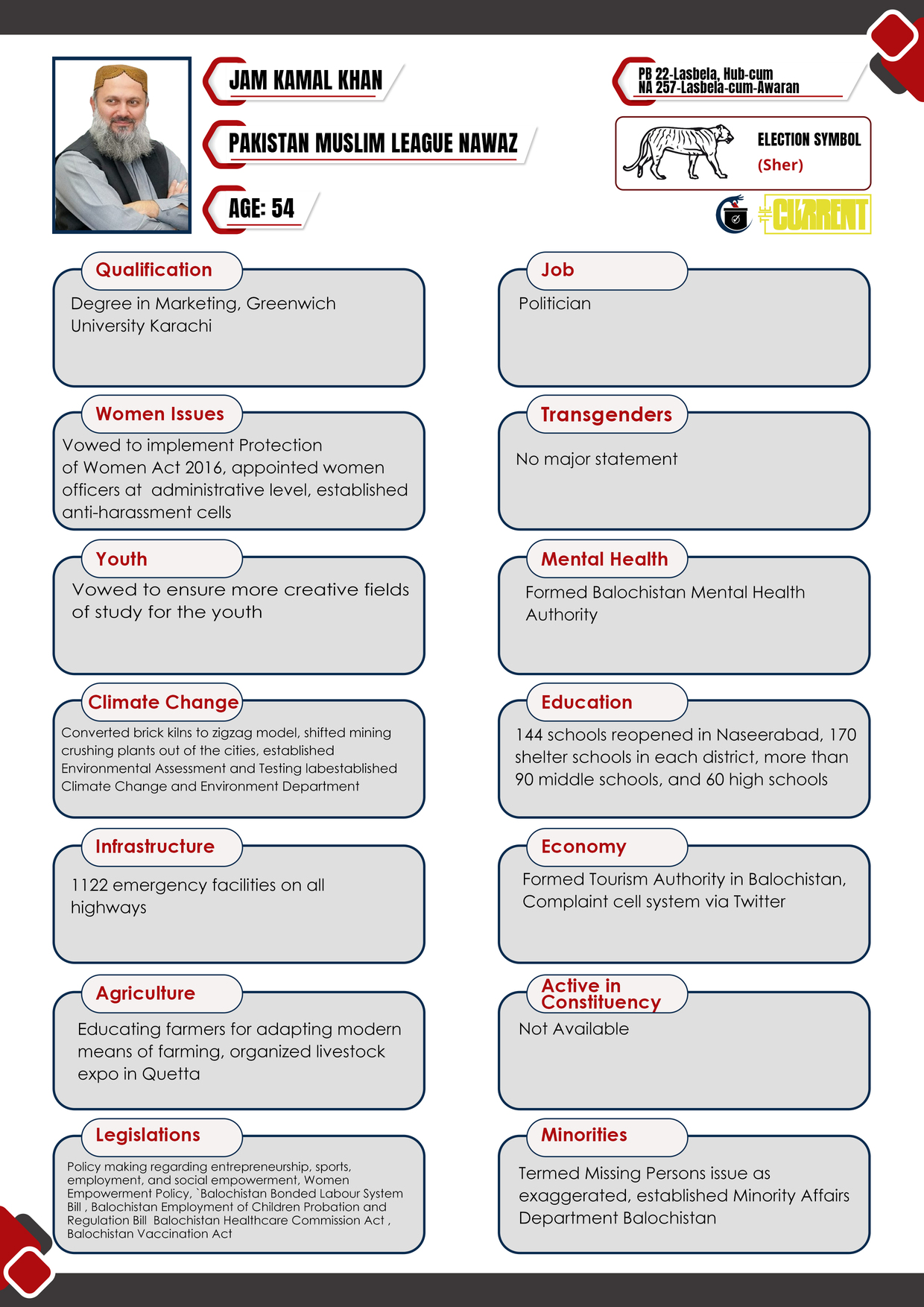
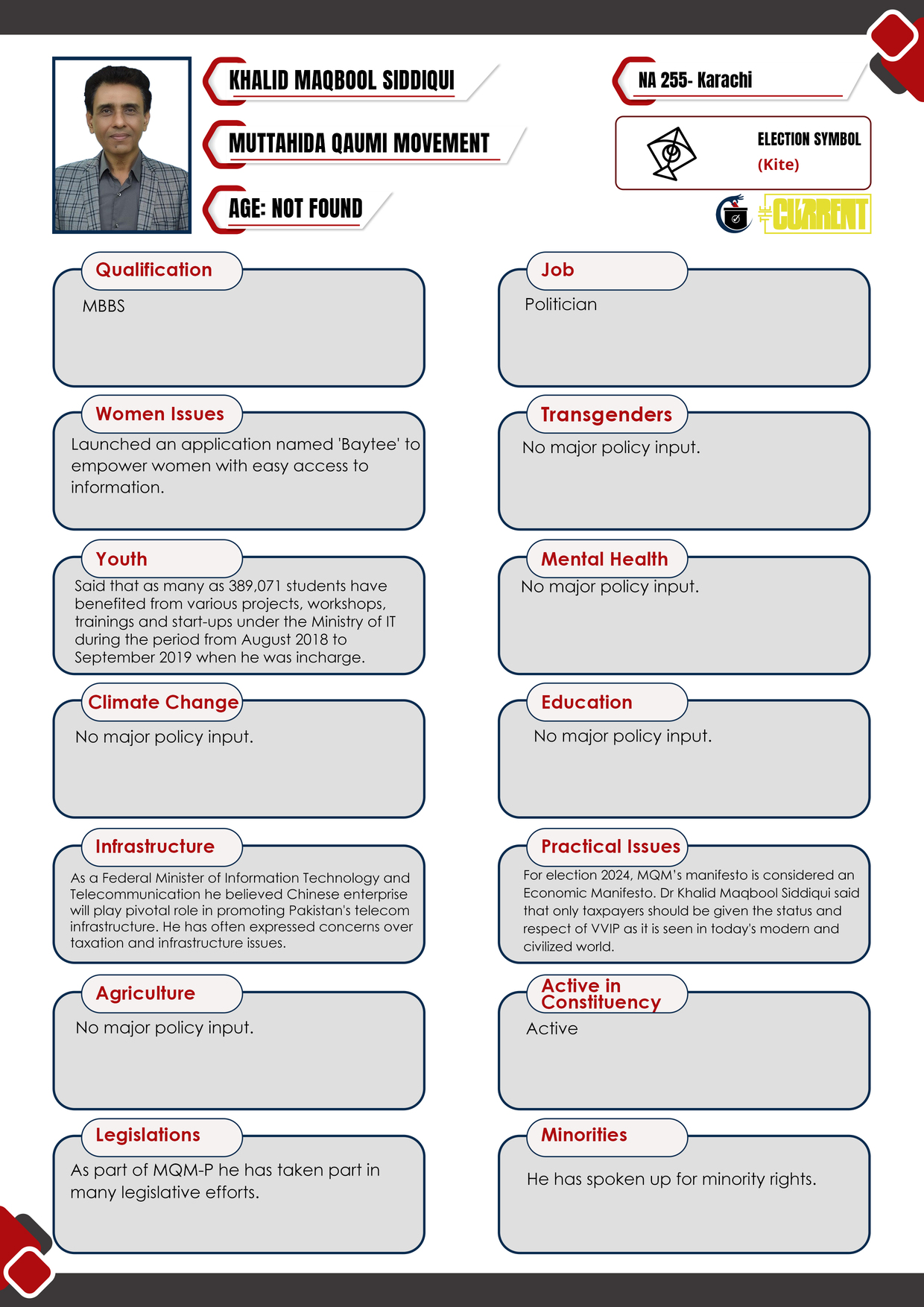
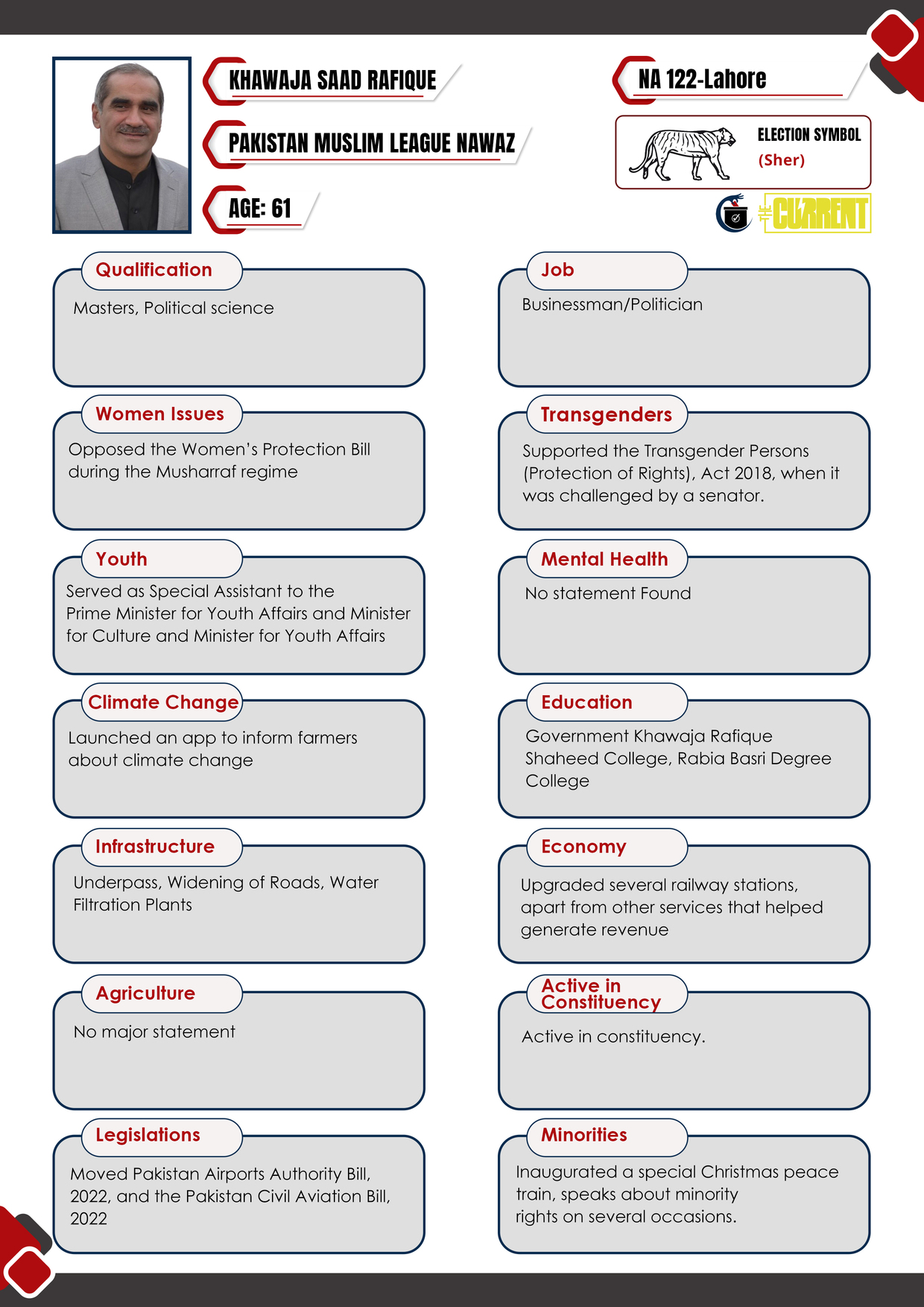
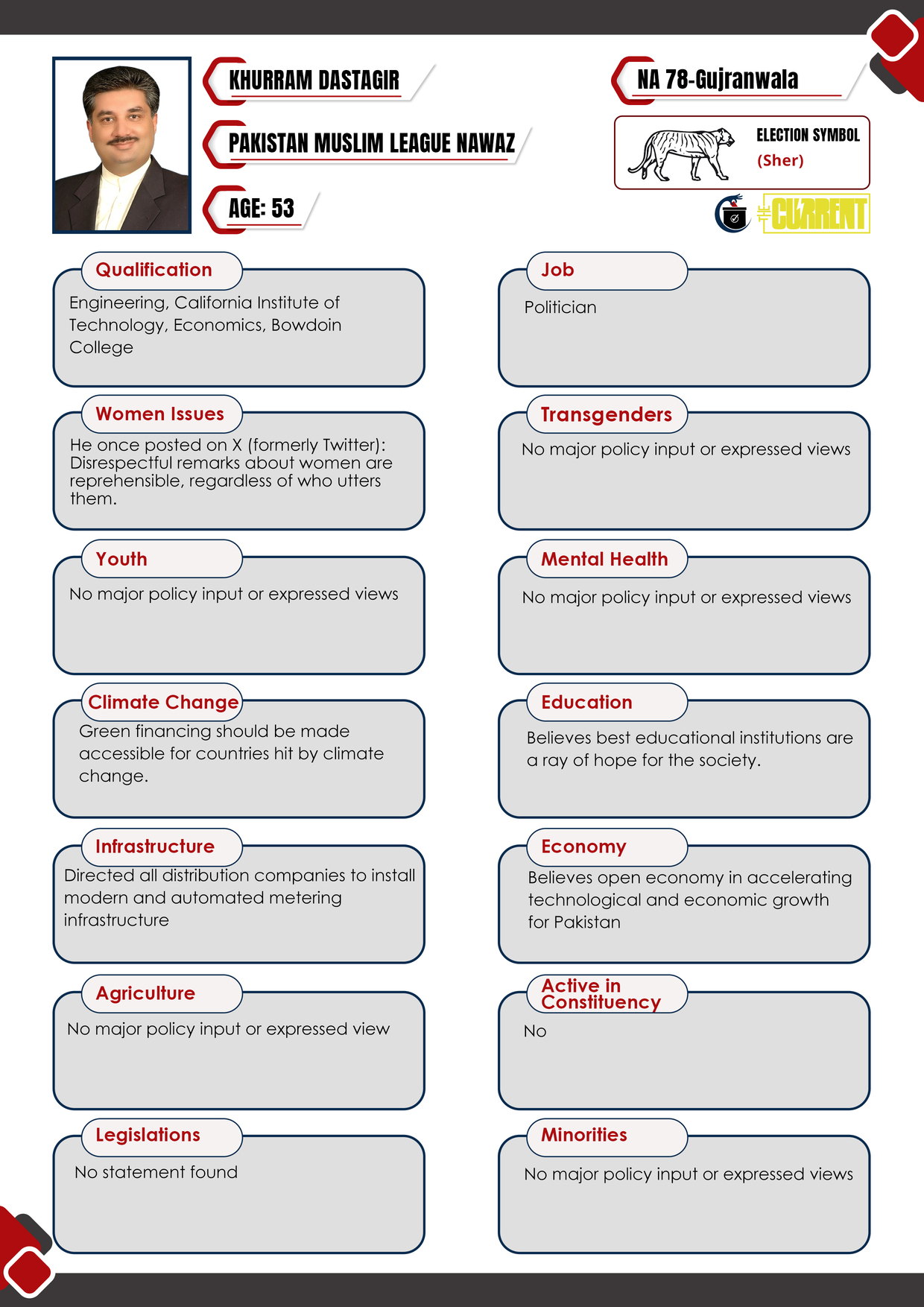
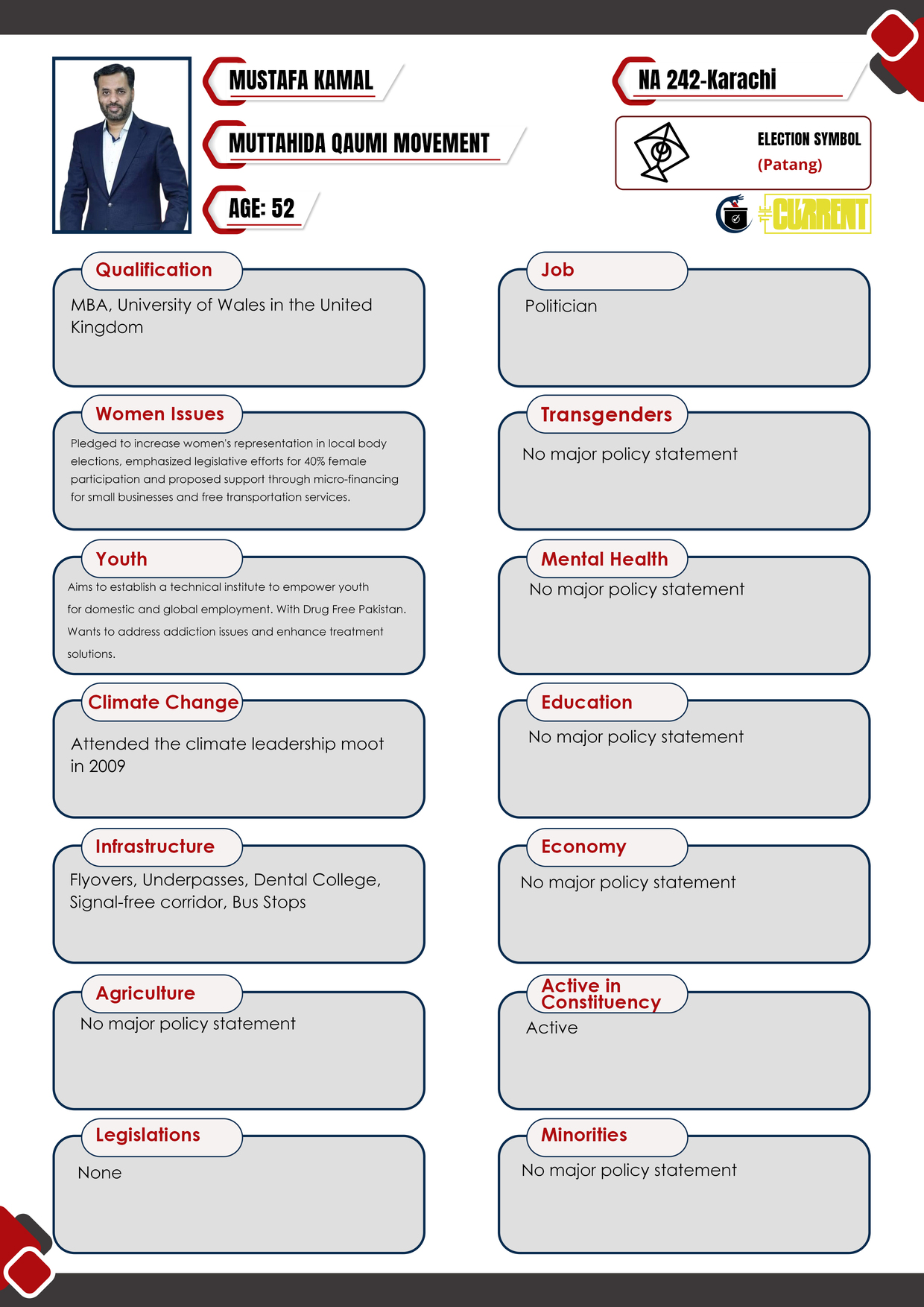
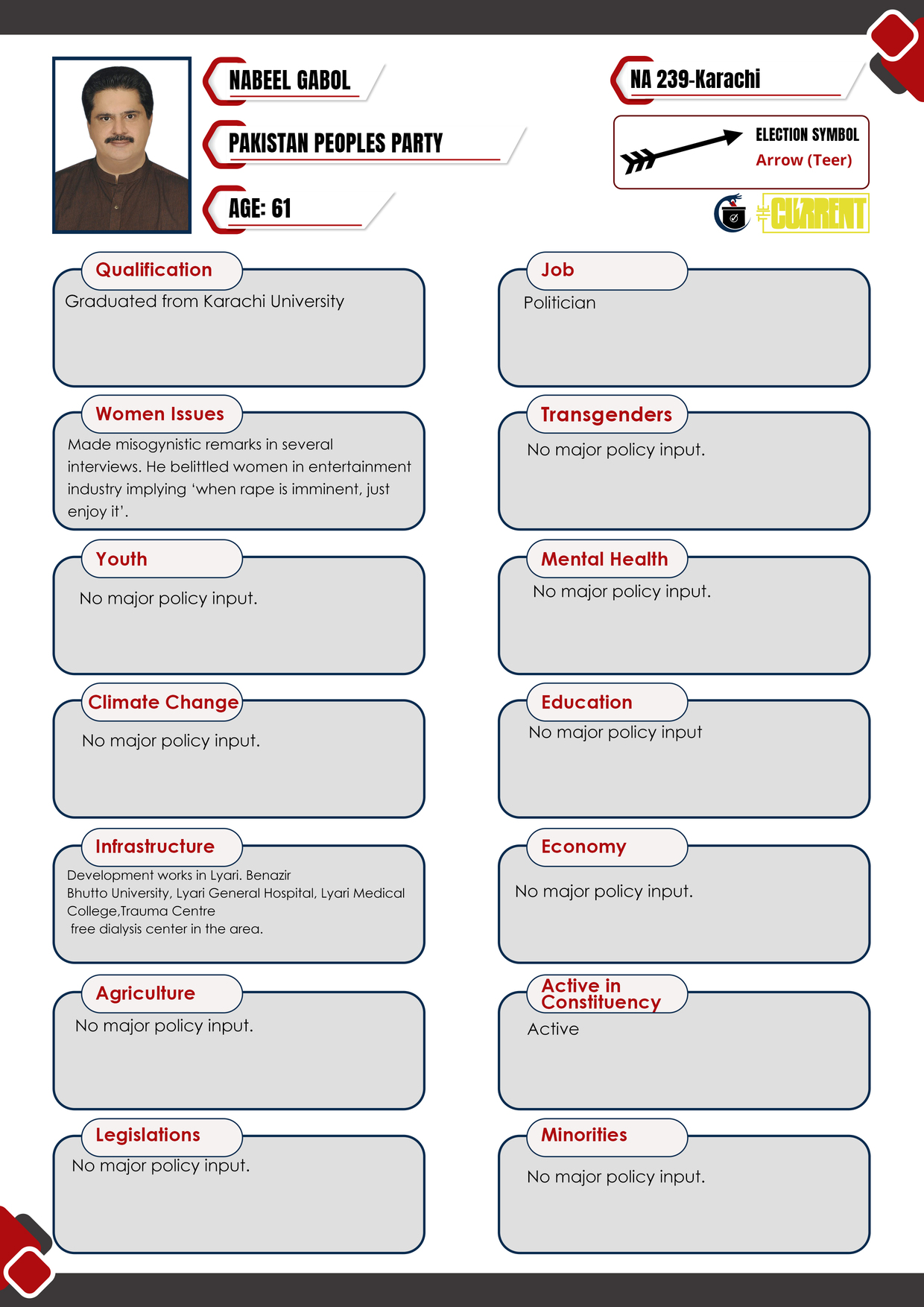
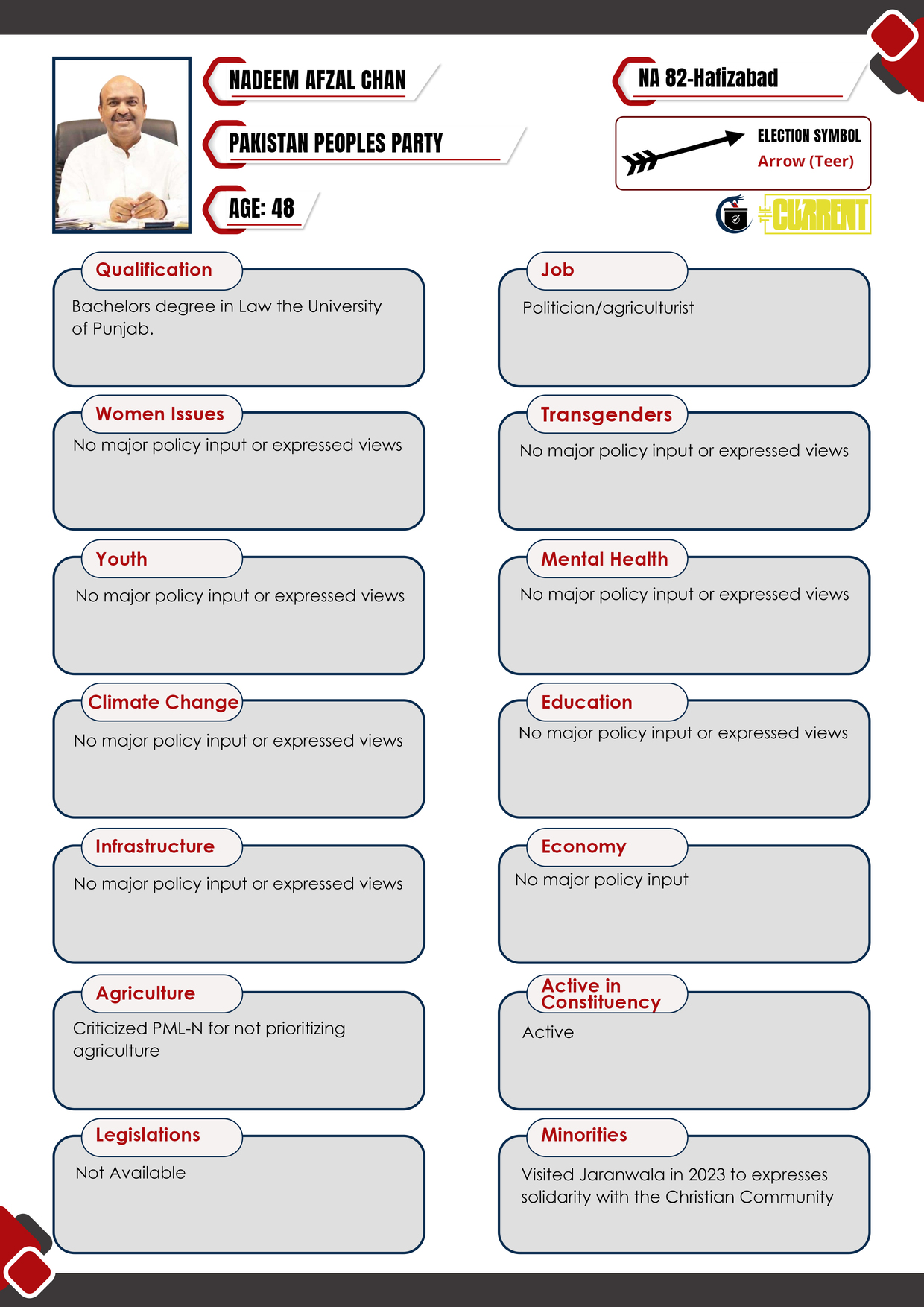
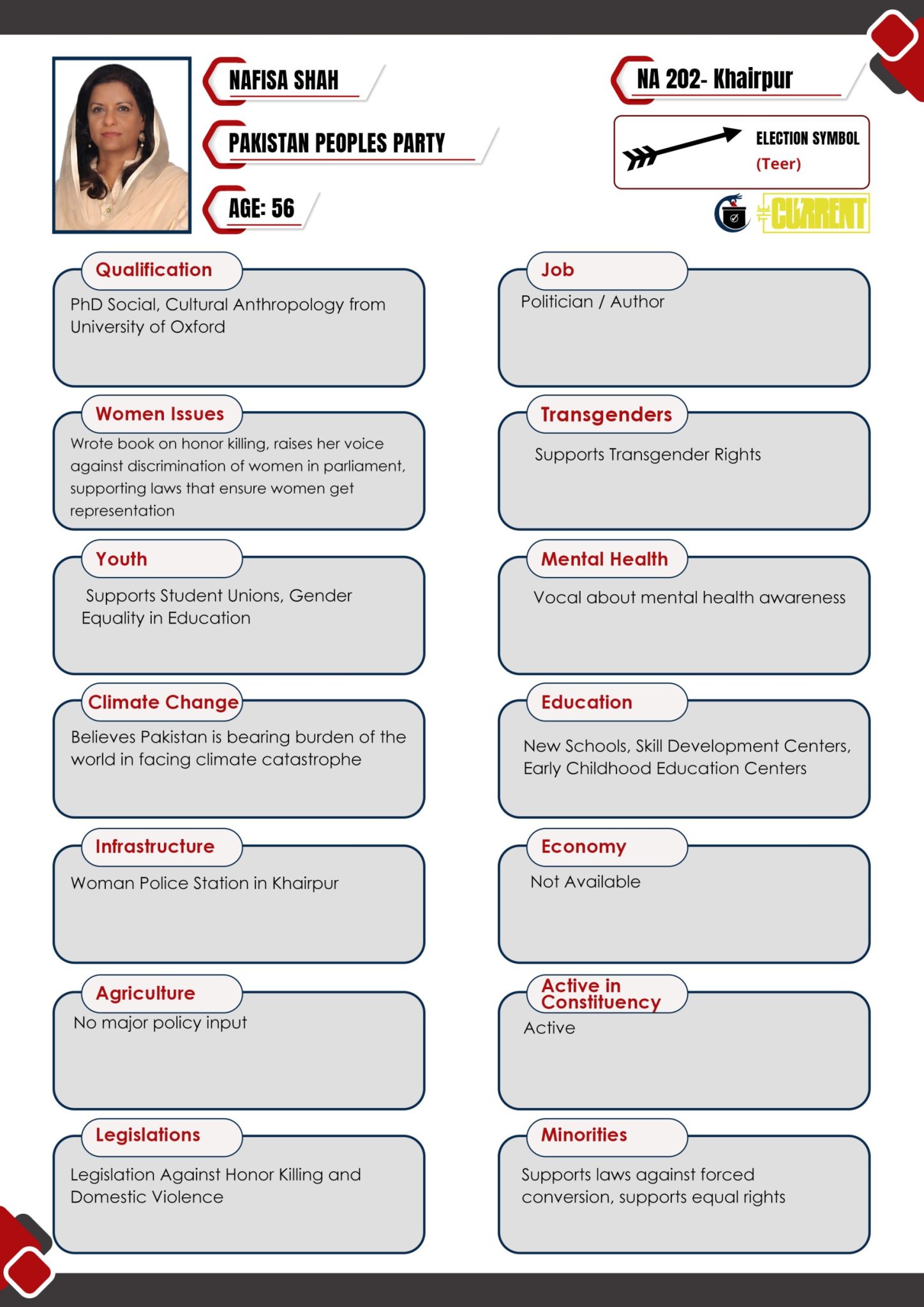
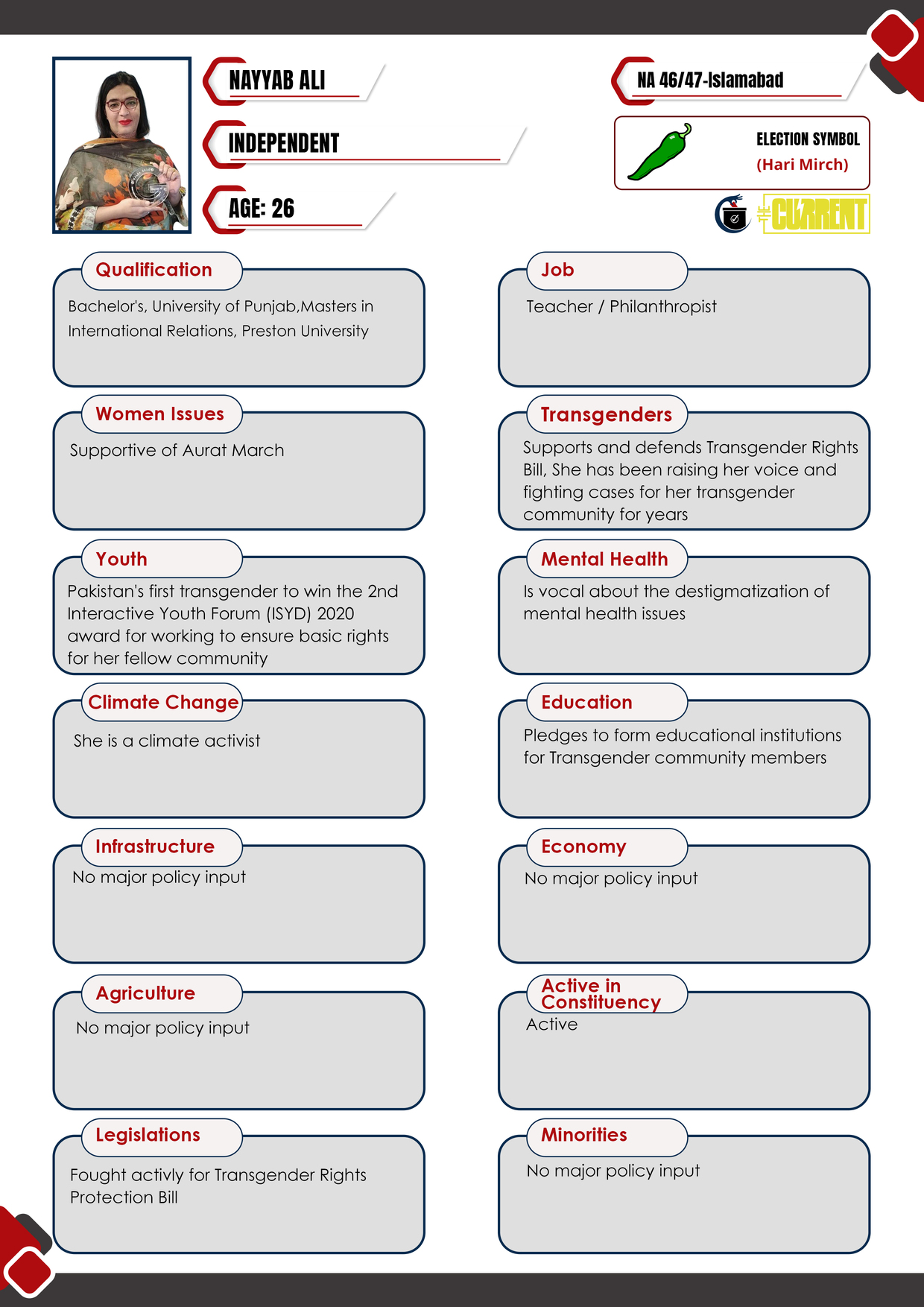
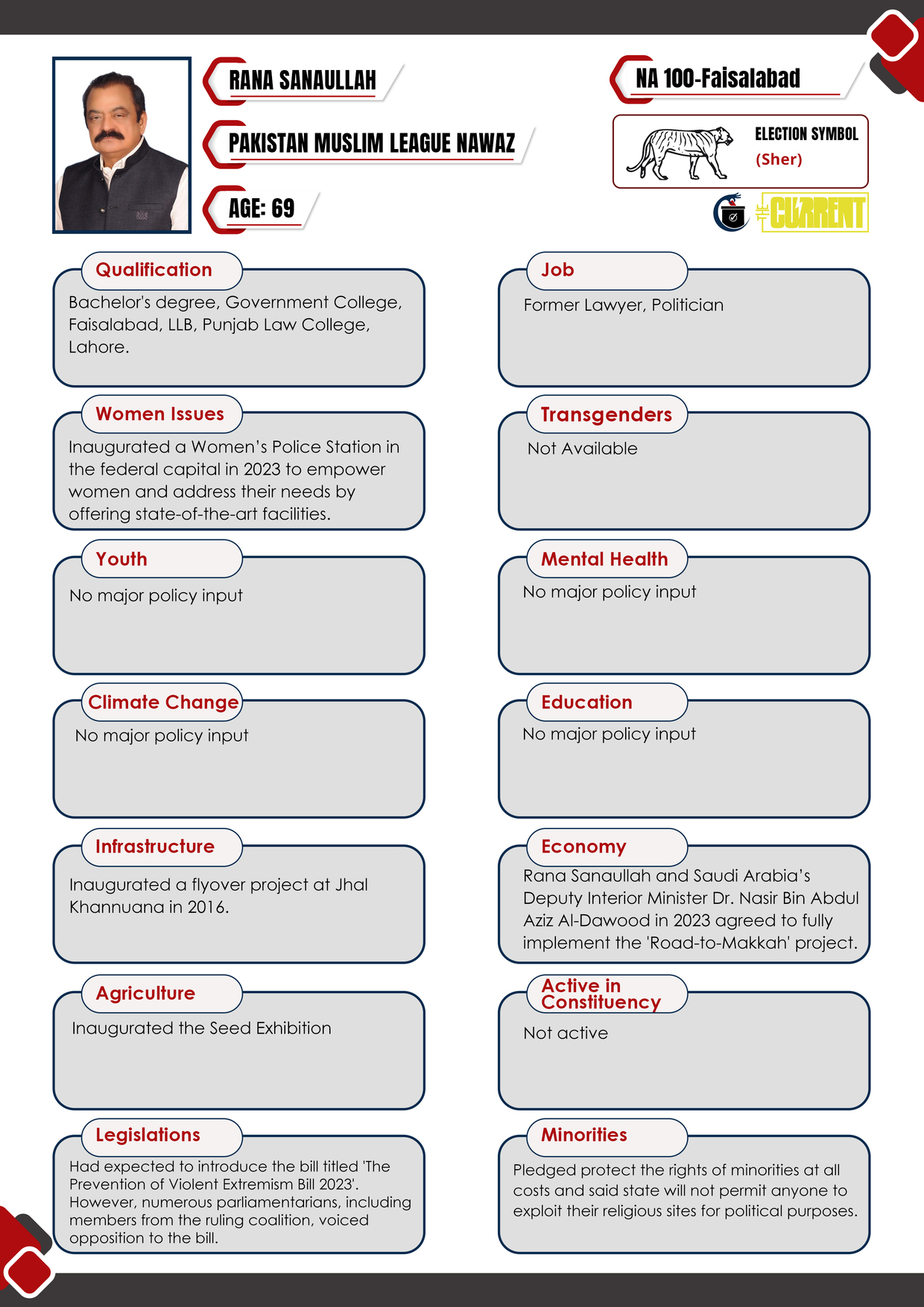
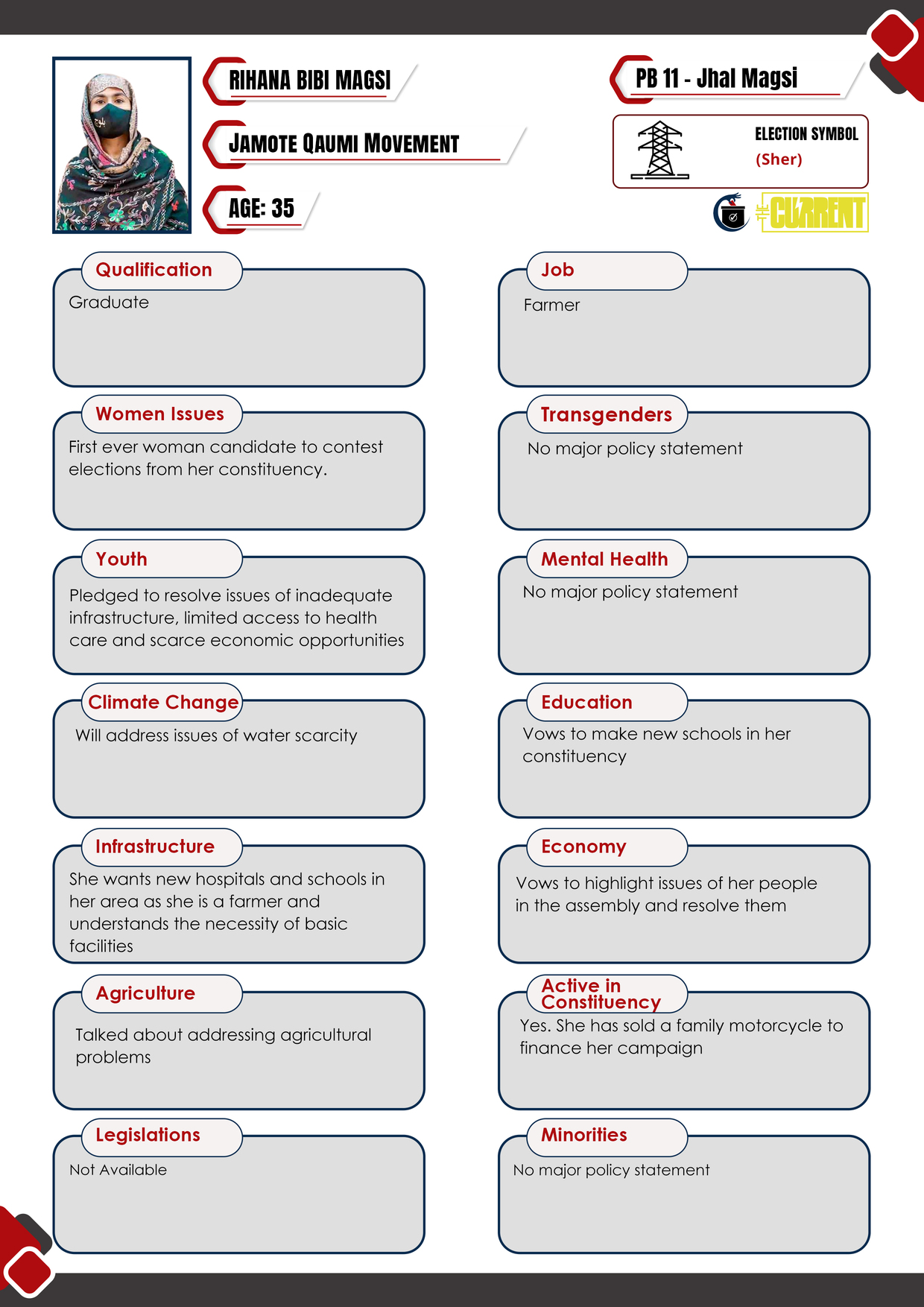
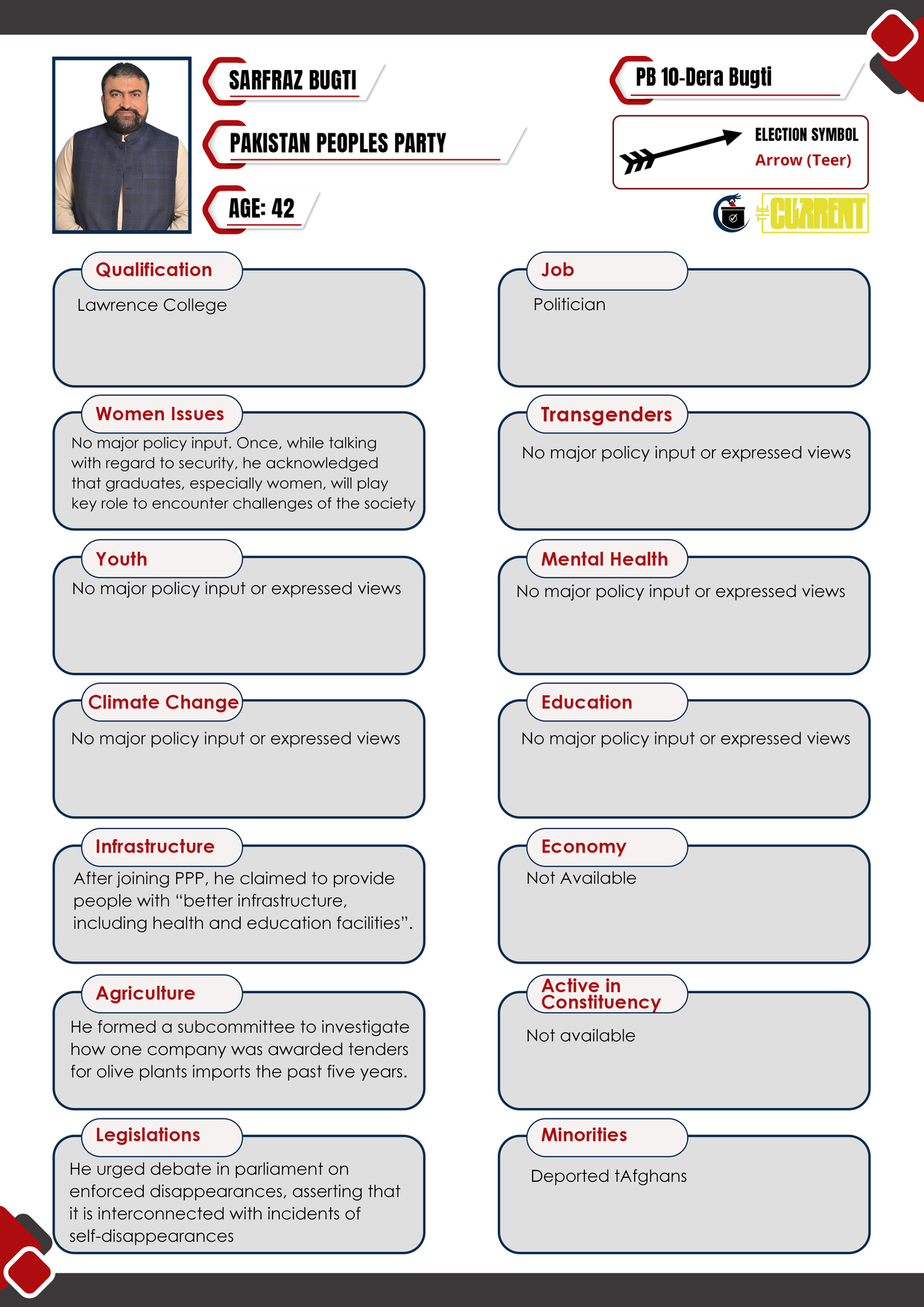
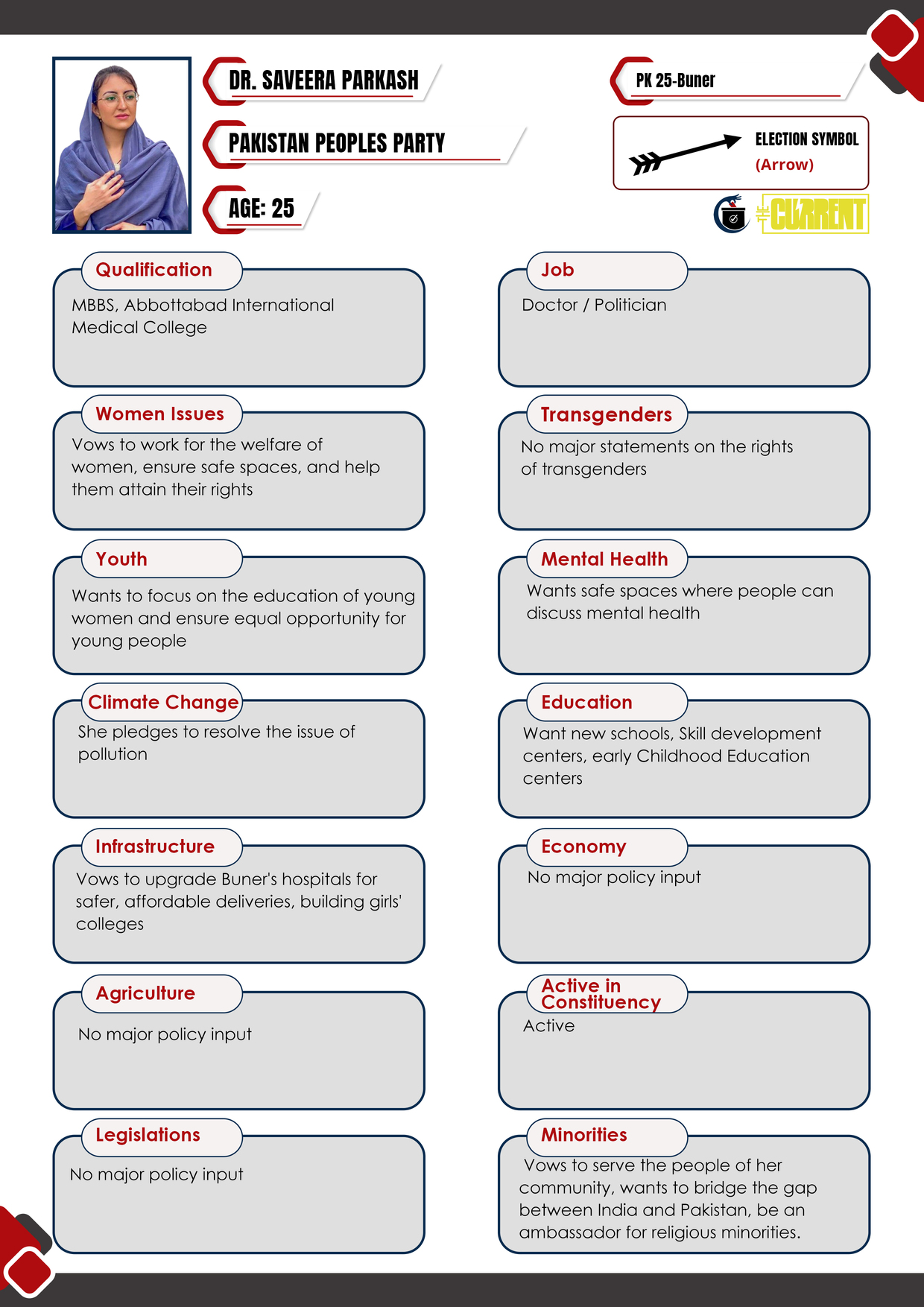
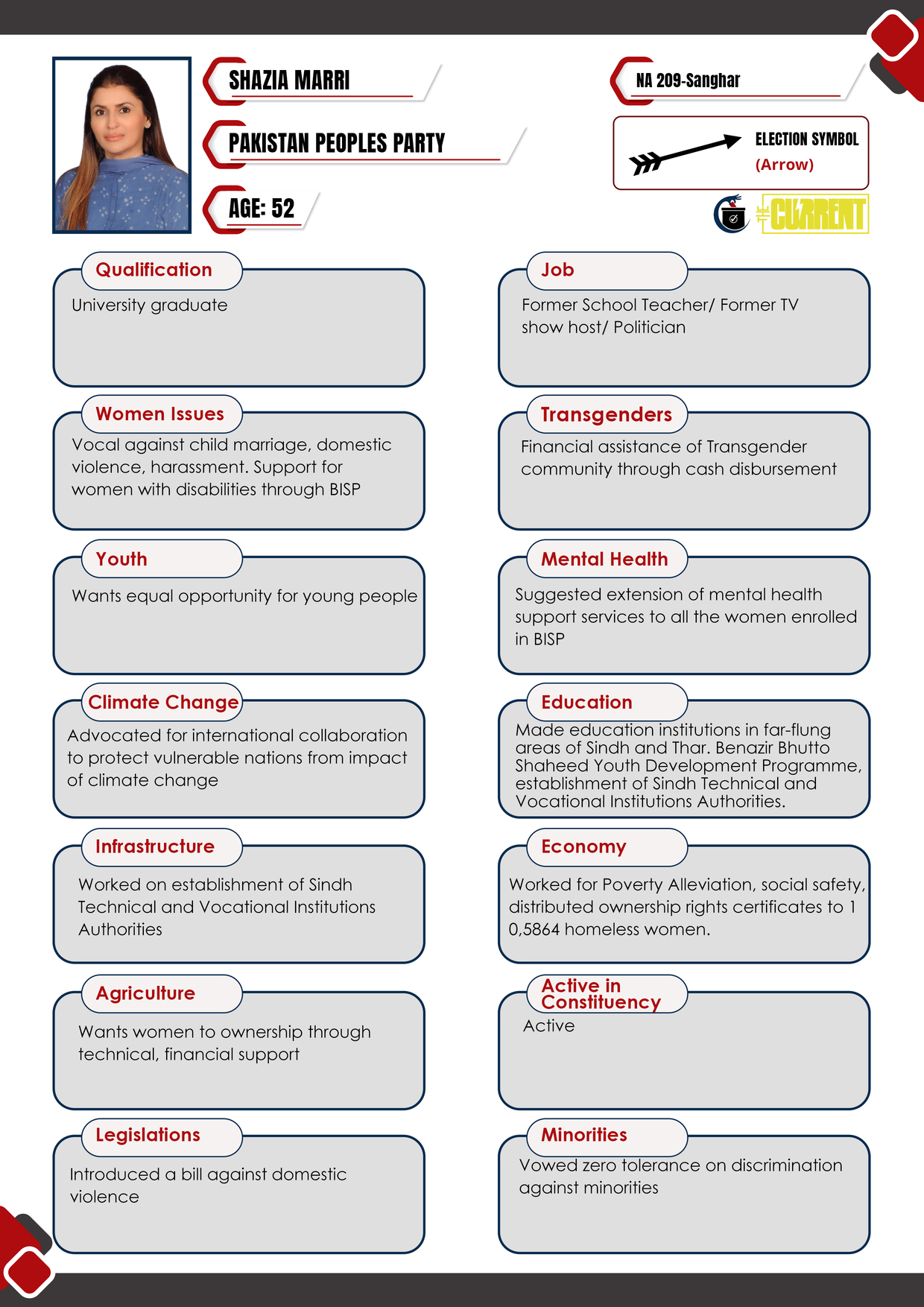
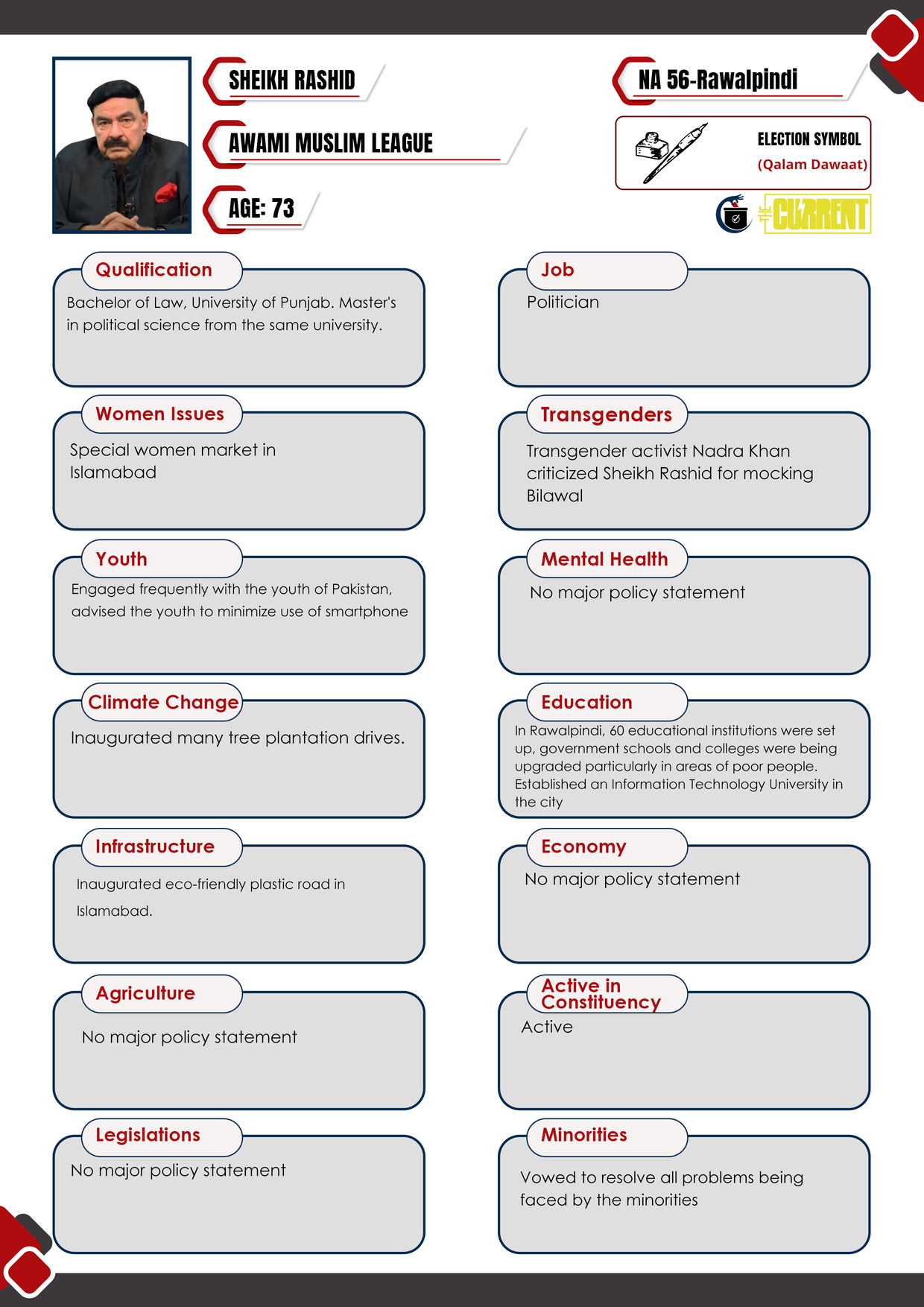
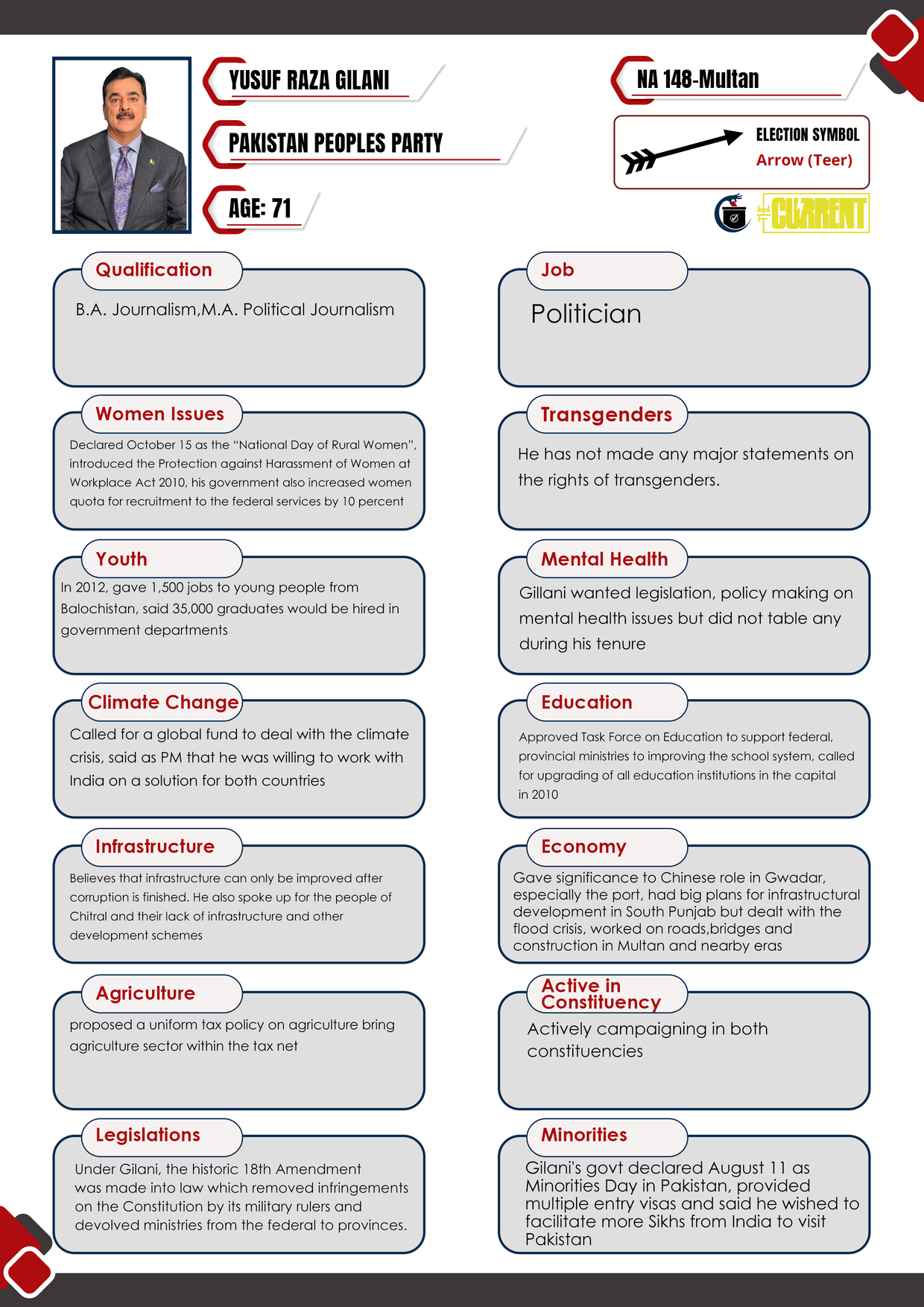
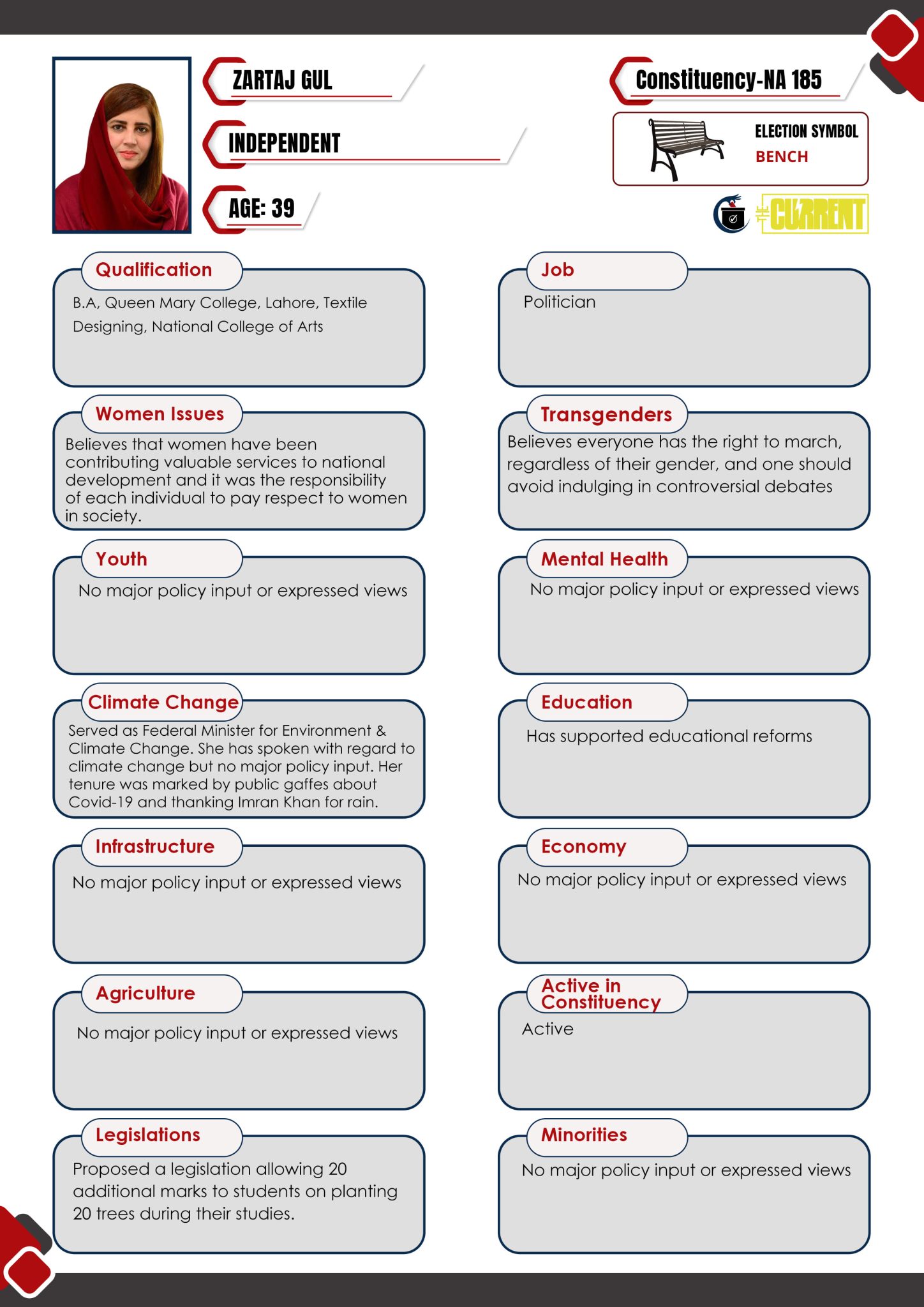
It’s been a long journey filled with tears, sweat, and countless sleepless nights (quite literally) as we meticulously researched your candidate.
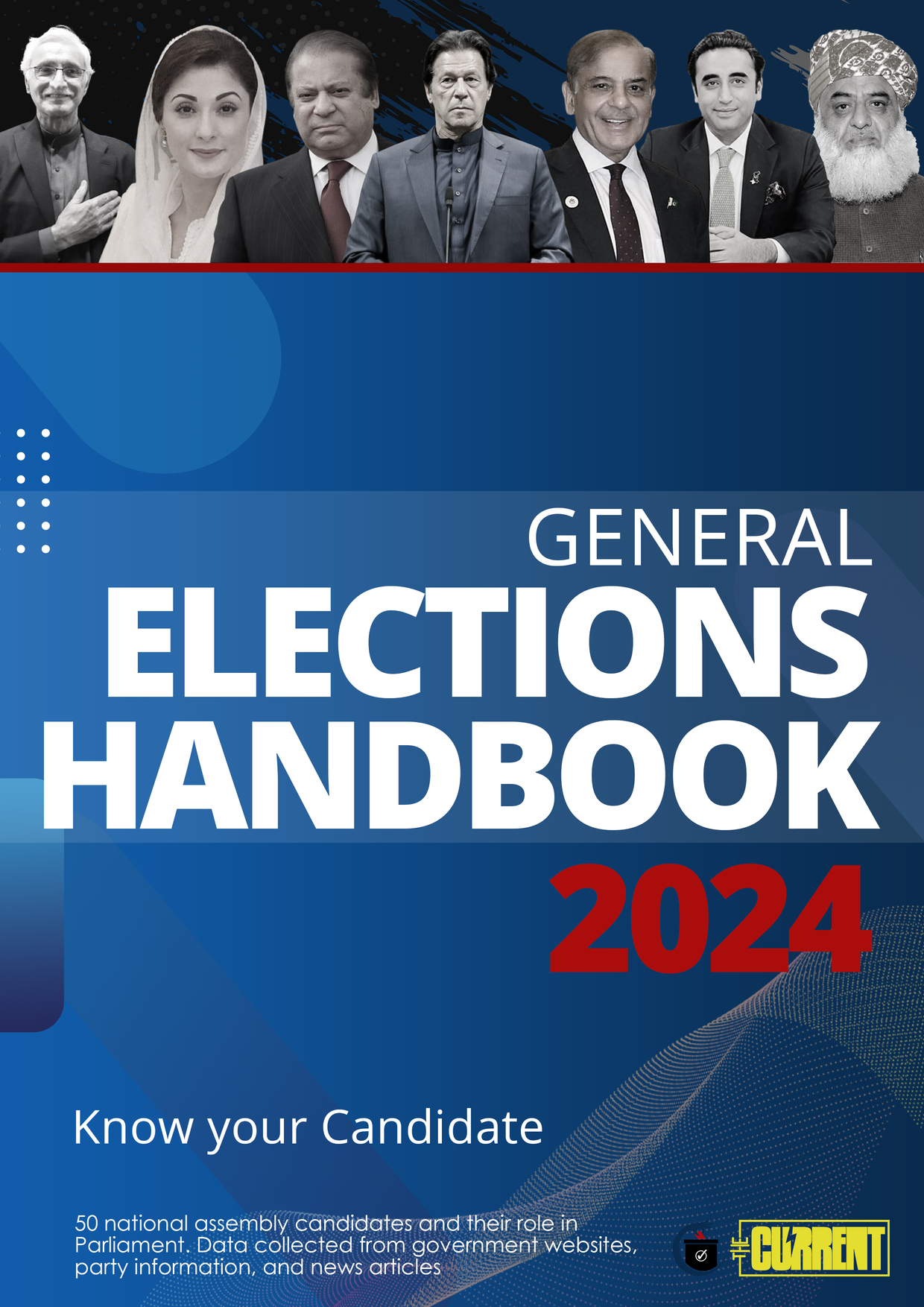
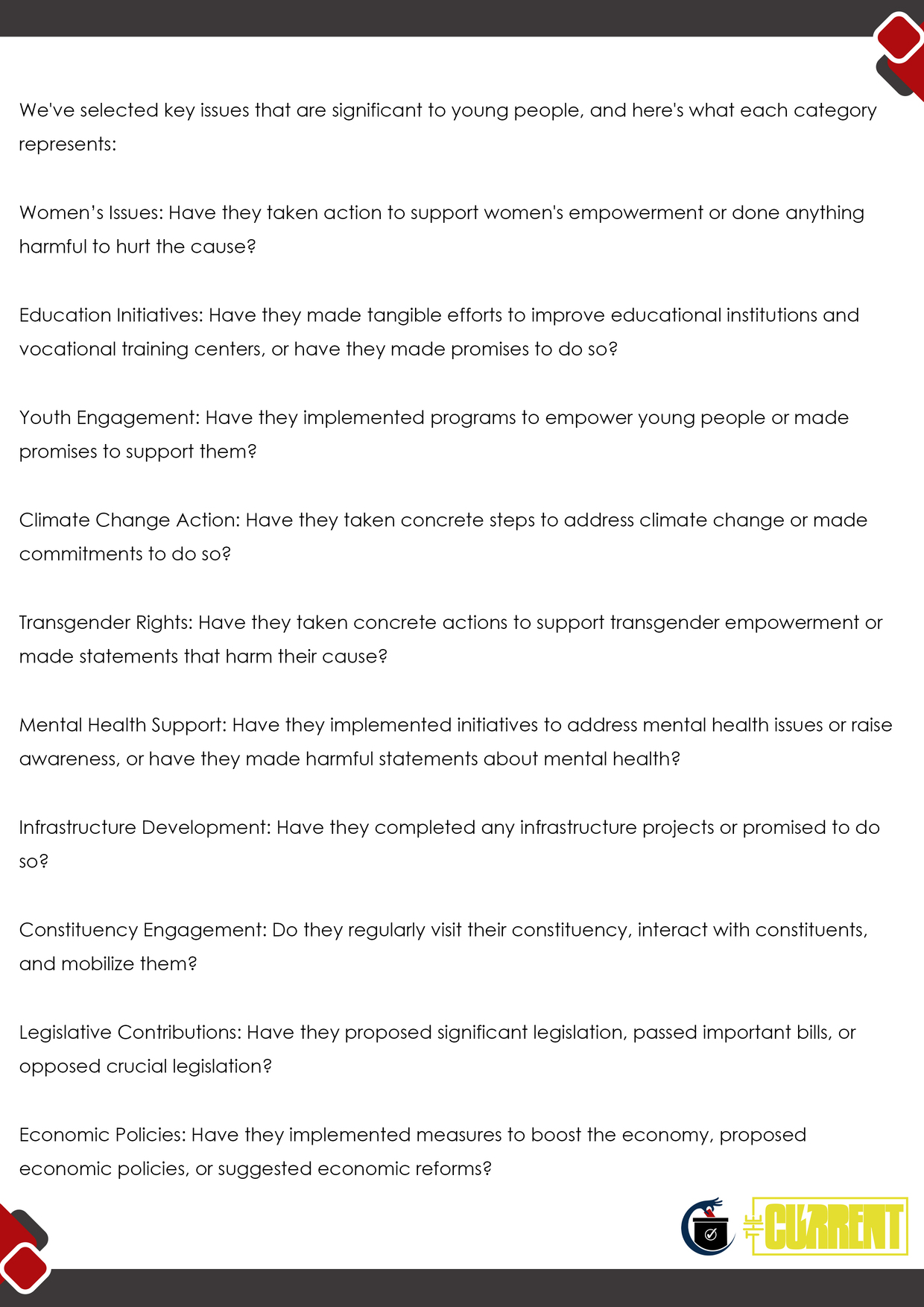
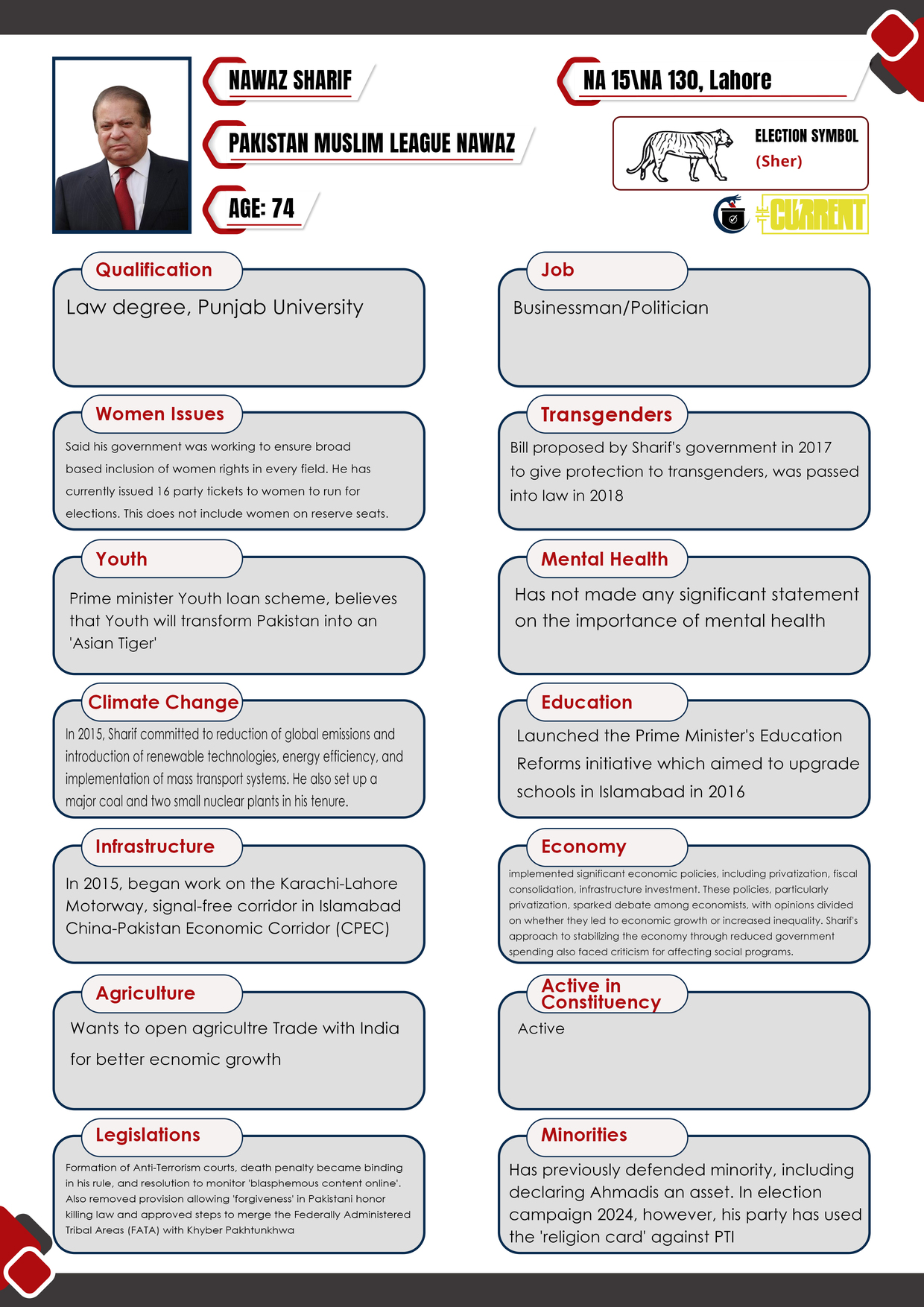
Do you know what your candidate thinks about women’s rights, transgender rights, climate change, and minority issues? We looked through official government and party websites, news articles, news videos to find information on what your candidate thinks about issues that matter to you. We only had the manpower to do 50 candidates and hope it helps you make the decision on who to vote for in your city. The handbook is added, page by page, below but if you rather download it, here is the link:
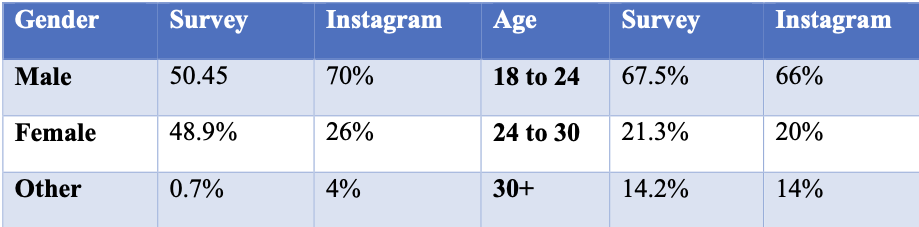
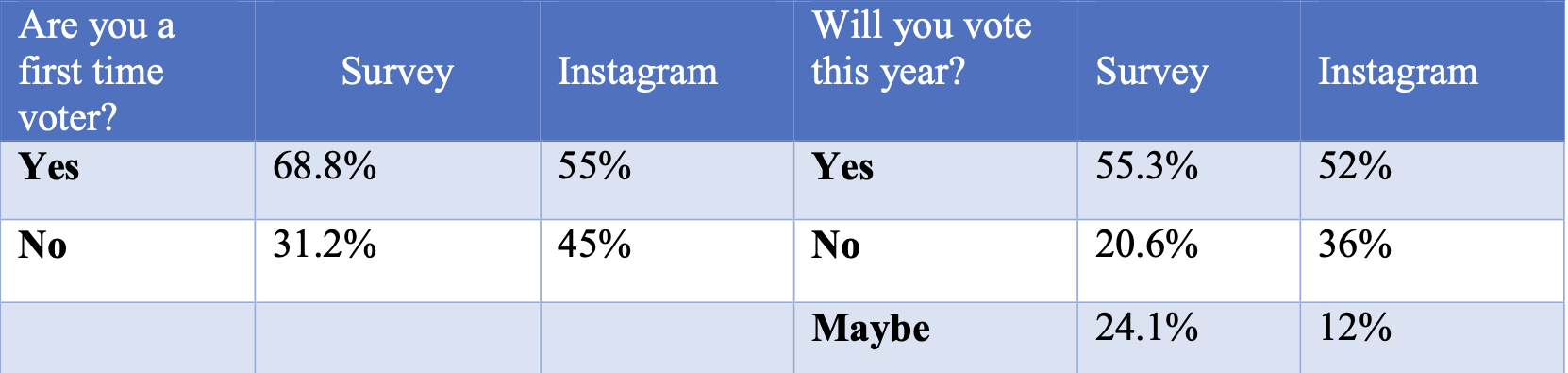
Pakistan’s political landscape is undergoing a significant transformation as the country prepares for critical elections. The young, energetic youth, a demographic powerhouse, holds significant potential to shape the country’s political future, making their thoughts, worries, and aspirations crucial.
Youth Voter Turnout 2018:
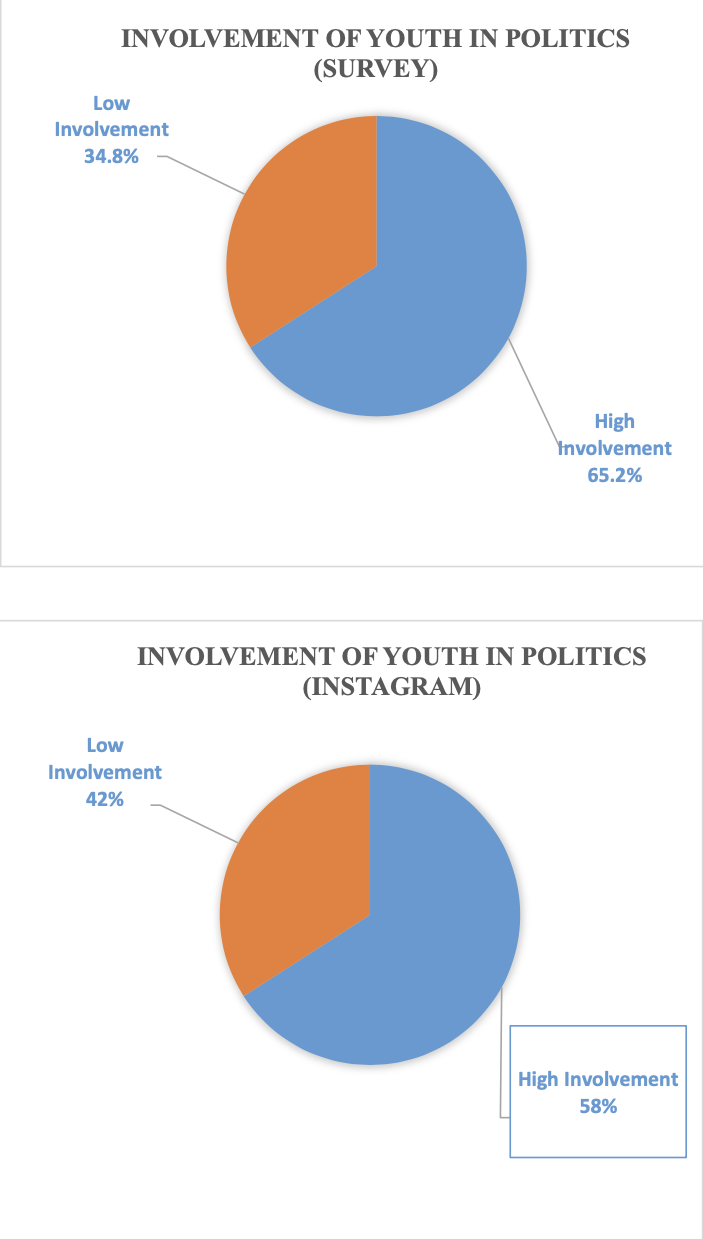
According to empirical Analysis of Elections in Pakistan done by Gallup Pakistan, average Youth voter turnout estimates are a mere 31.5% compared to 40% for women voter turnout and 53% for average national voter turnout during the last two elections in 2013 and 2018.
Youth Driven Digital Democracy:
To help the voices of the future, we also need to explore the influence of social media on political opinions and decisions driven by the youth. In the diverse society we are living in, social media is the strongest tool at the disposal of Pakistani political parties which can have a profound effect on youth’s minds and political parties and vice versa. Social media platforms enable young people to participate in conversations, express their opinions, and contribute to an active online political dialogue. Hashtags and trending topics frequently serve as vehicles for political speech, emphasizing certain concerns and establishing a virtual arena for political discourse.
Critical issues for upcoming 2024 election:
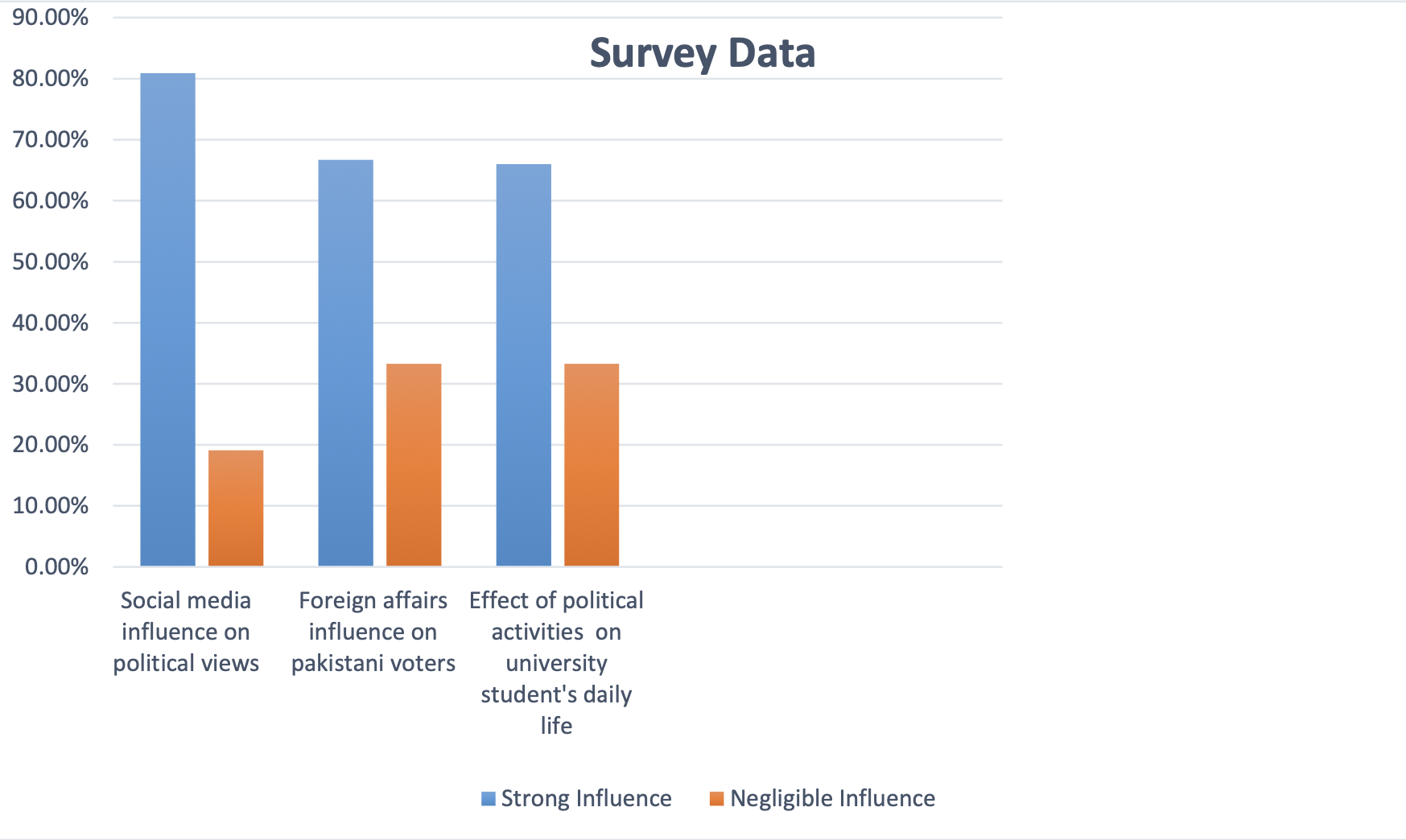
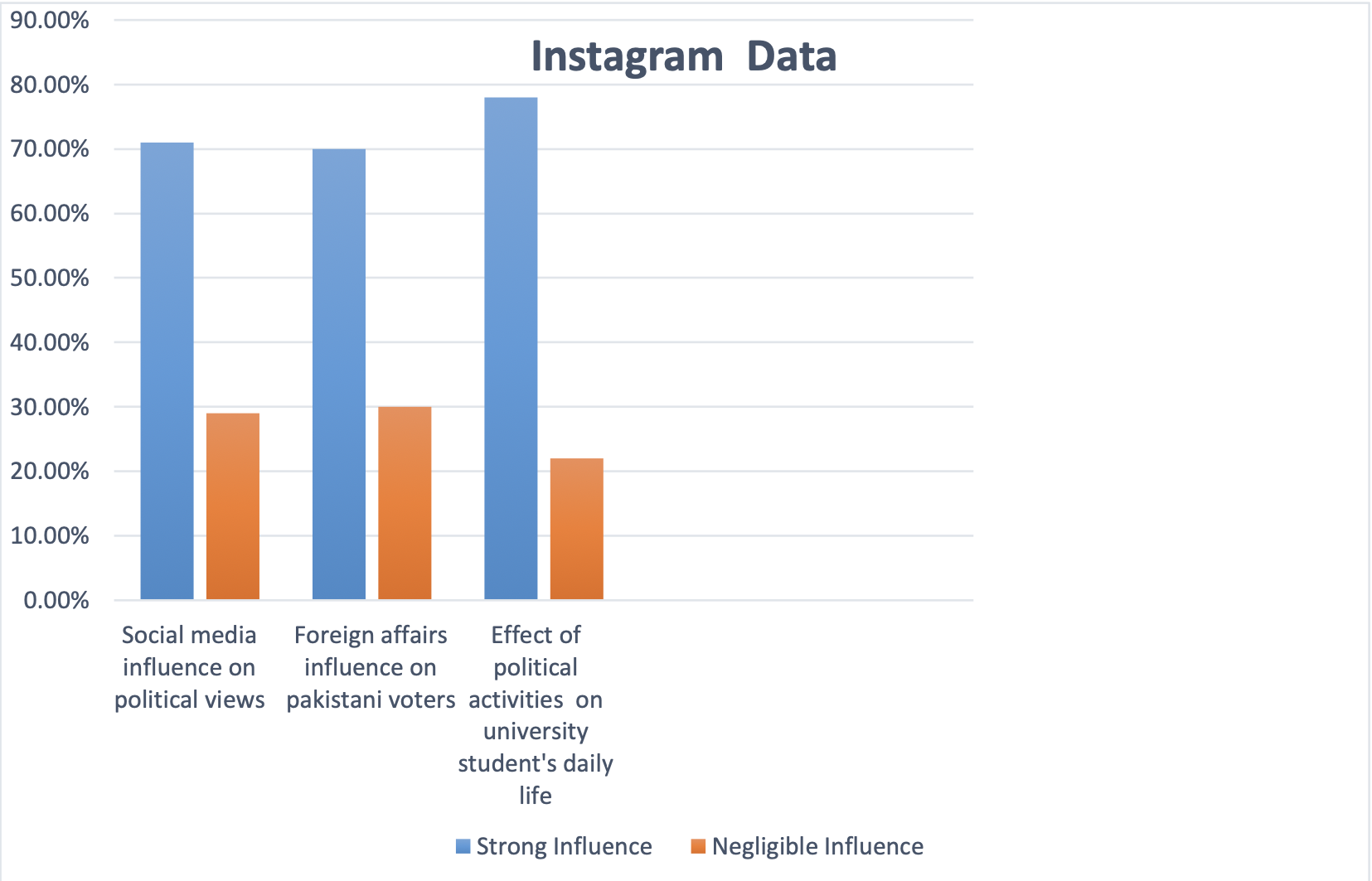
The 2024 elections survey by The Current Forum in Pakistan raised important concerns: 51.8% prioritized economic stability, 32.6% emphasized governance and accountability, 8.5%% focused on social services such as education and healthcare, 3.5% were conscious of climate change, and 3.5% were concerned about national security. Instagram polls echoed similar sentiments: 45% prioritized governance and accountability, 42% emphasized economic stability, 11% supported education and healthcare, and 2% were concerned about climate change. These findings highlight the different electorate objectives, emphasizing the necessity for policymakers to develop comprehensive policies that meet several issues
Request for political candidates for immediate impact on universities and student bodies:
The Current Forum’s 2024 elections survey found a wide range of student demands: 40.4% emphasized active engagement in decision-making for inclusive governance, 32.6% requested immediate financial assistance, and 24.8% increased funding for education. Notably, 2.1% prioritized increased campus security. According to Instagram surveys, 43% priorities student assistance, 34% advocate for student involvement in decision-making, 19% demand increased education financing, and 4% emphasize enhanced campus security.
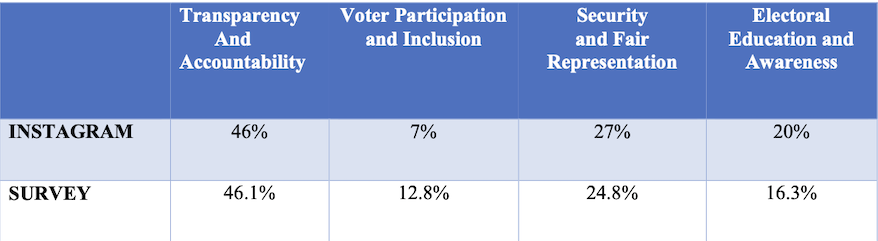
Concerns about the electoral process in Pakistan that need attention and improvement:
Initiatives or strategies that could encourage greater political awareness and participation among the youth in Pakistan:
The study indicates a variety of opinions on improving political engagement among Pakistani young. Notably, 29.8% prefer youth-focused political participation events, while 30.5% support greater young representation. 18.4% favor expanding civic education programs, while 21.3% support easily available information platforms.
According to Instagram polls, 25% prefer greater civic education, while 24% support youth-focused engagement activities. A majority (35%) advocate for expanded youth representation, while 16% support accessible information platforms.
Immediate Priorities for Universities and Students: Requests toPolitical Candidates in Pakistan’s 2024 Elections
The survey responses highlight a range of concerns and requests from students in Pakistan for political candidates to address in the 2024 elections. Key issues include the restoration of student unions, regulation of private institution fees, compulsory on-campus jobs, and student policies that positively impact the student body. The lack of governance in certain regions, particularly in Balochistan, is also a concern. Students advocate for changes in grading systems, tackling harassment issues, ensure affordable fees, and creating job opportunities post-graduation. They also advocate for free education, scholarships, and support for those unable to afford fees. The survey participants urged candidates to address the specific needs and concerns voiced by the student community, fostering a more responsive and accountable approach to policymaking.
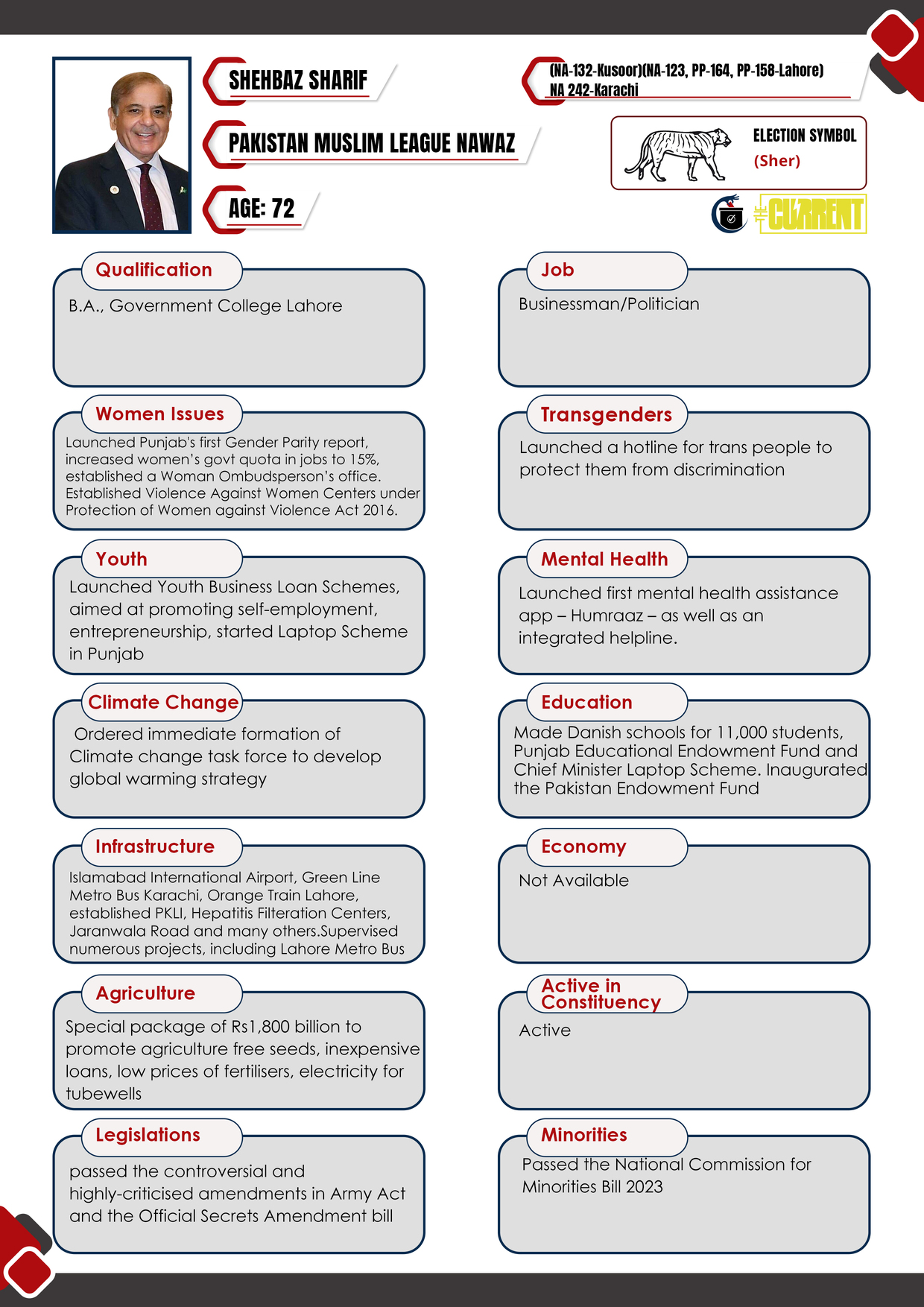
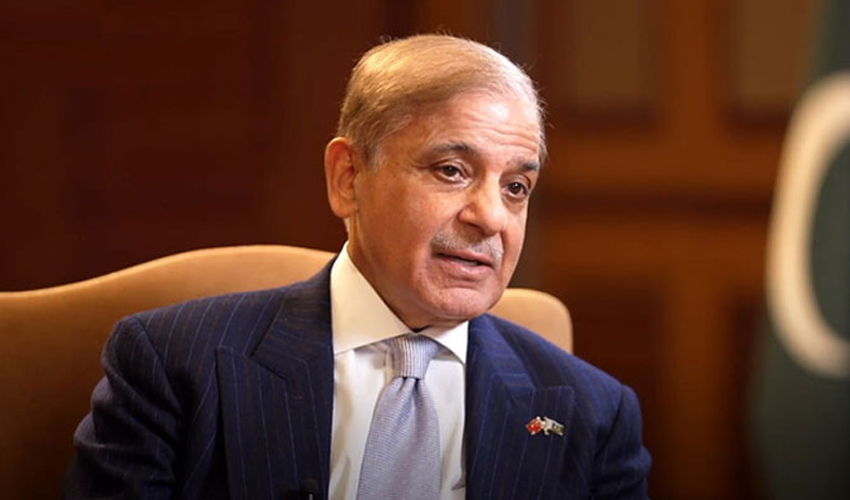
The former prime minister Shehbaz Sharif, while talking to GEO News, said that if Pakistan Muslim League-Nawaz (PML-N) gets a simple majority in elections, then PML-N chief Nawaz Sharif will be the next prime minister of Pakistan.
The former prime minister also said that PML-N needs to do more work for women’s empowerment, as the party is lacking in addressing this issue. He also said that the party is geared up to fix the economy when they win the election.
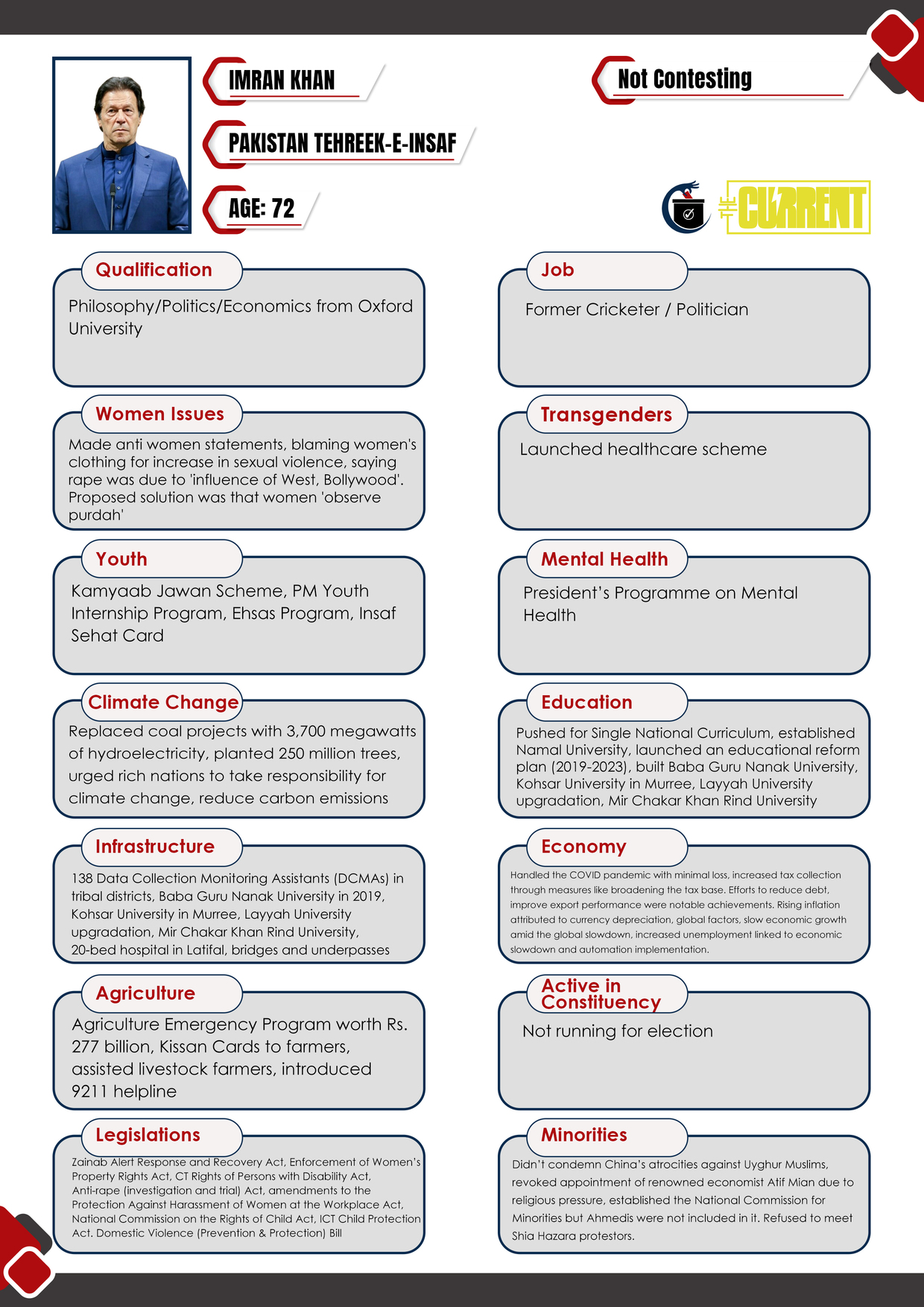
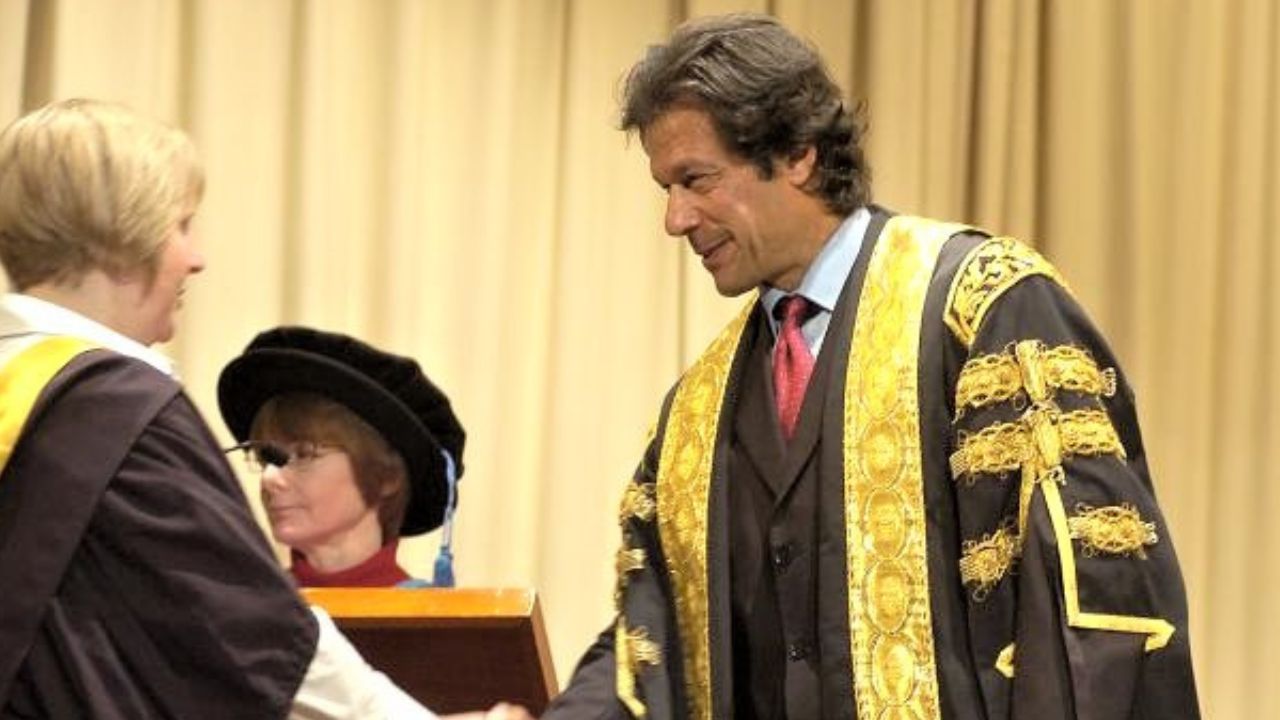
Former Prime Minister Imran Khan is among the candidates being considered to be elected the next Chancellor of Oxford University following the resignation of Chris Patten. The seat is vacant after 80-year-old Patten, who held the post for 21 years, resigned.
The position of Chancellor is largely ceremonial and is typically awarded to a former politician. Patten was the governor of Hong Kong and a Tory deputy prime minister.
For the first time, elections for the chancellor will be held online compared to the traditional process in which graduates were required to attend the process in full academic dress. The prestigious chancellorship goes to graduates of the university, usually politicians.
Among the candidates competing for the position is Imran Khan who studied Economics and Politics at Kelbe College, Oxford in 1972. He captained Oxford’s cricket team in 1974, and previously served as the chancellor of Braddford University for eight years before stepping down in November 2014.
Oxford University is looking for a chancellor. One wild card name being suggested is Imran Khan. And then there is Pakistan the country he loves, lived for and is willing to die for…they made up tons of cases and put him into jail because he threatened their lifestyles! pic.twitter.com/LVaympWaQ1
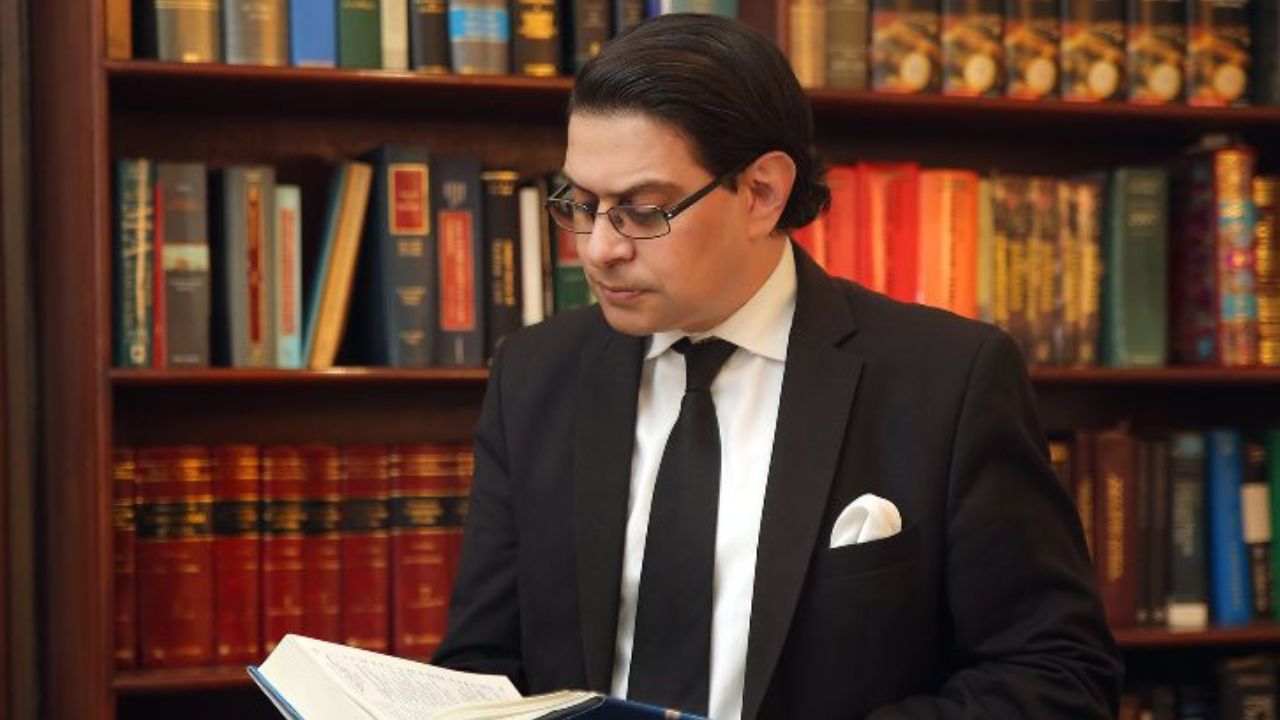
The Election Commission of Pakistan (ECP) has rejected the application of independent candidate Salman Akram Raja to declare his party, Pakistan Tehreek-e-Insaf (PTI) on Form 33, reports Geo.
ECP passed a reserved decision on Salman Akram Raja’s request to declare his party on Form 33.
Election Commission Deputy Director Law Saima Janjua announced the verdict.
The Commission has said in its decision that Salman Akram Raja has been given the symbol of an independent candidate, but the party he belongs to cannot be given one.
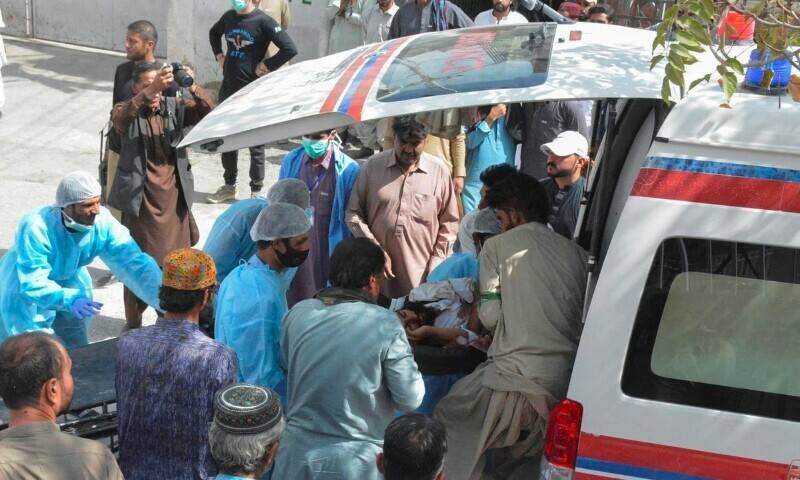
At least 28 people have been killed and 40 injured in two separate blasts in Balochistan on Wednesday afternoon, just a few short hours before polling starts on election day.
The first attack claimed at least 15 people’s lives while over 30 were injured after an explosion took place outside an independent candidate’s office in Balochistan’s Pishin. The second blast took place outside a Jamiat Ulema-e-Islam Fazl (JUI-F) office in the Killa Saifullah district. The Pishin blast happened outside the political office of independent candidate Asfand Yar Khan Kakar in the Khanozai area.
Injured people have been shifted to the Tehsil Hospital Khanozai, while the bodies have also been transferred, the hospital’s MS Dr Habib told Geo News.
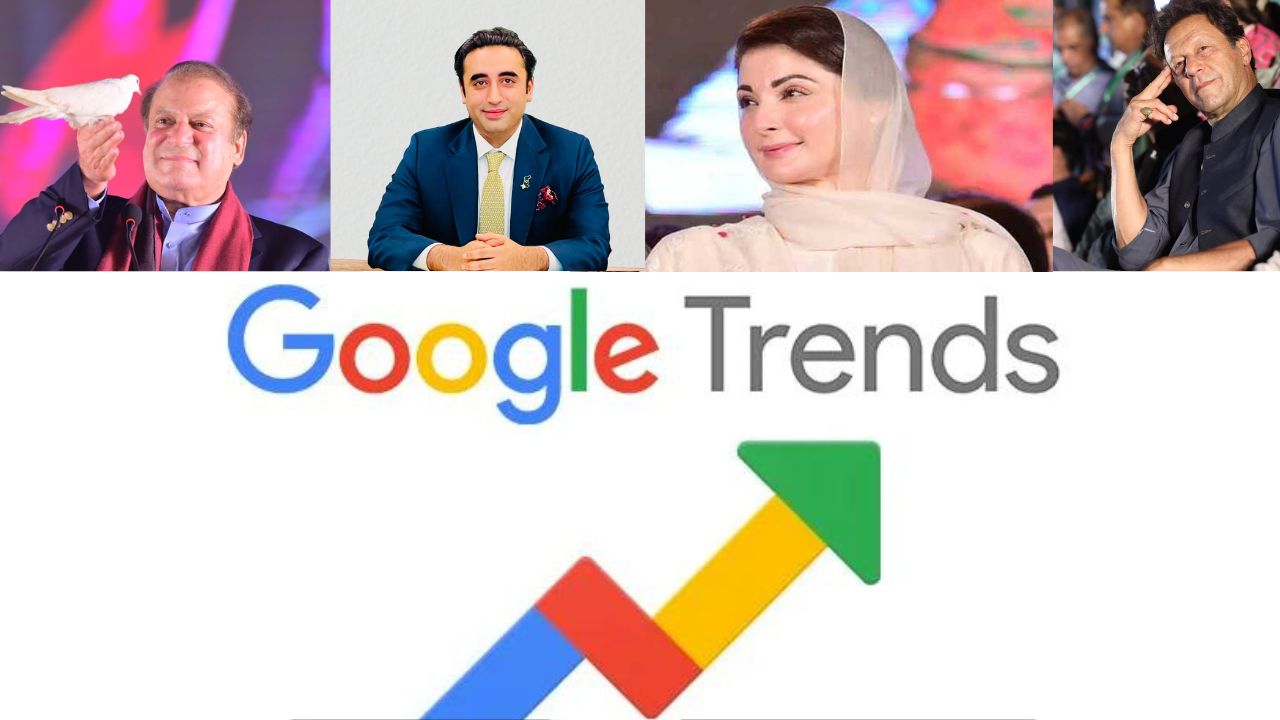
Google Trends offer an insight into the popularity and curiosity political leaders enjoy among the masses. As the elections are drawing near, we took a peak into the data Google Trends have recorded over the last 30 days.
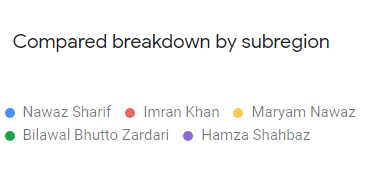
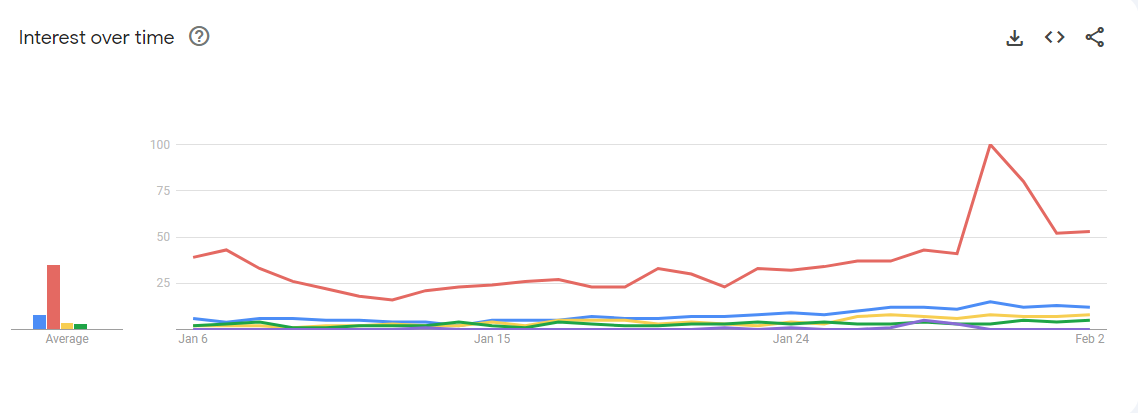
The highest and ever-increasing line graph is Imran Khan’s. The highest peak was shown on January 30 with Khan hitting the record 100 score whereas his contemporaries, Nawaz stood on 15, Maryam Nawaz at eight, Bilawal-Bhutto Zardari at three, and Hamza Shehbaz being the lowest: less than one.
However, it is important to note that Imran’s progressively increasing arc starts dropping successively in the days after Jan 30.
On the other hand, except for Hamza Shehbaz, the other three is slowly on an upward trend.
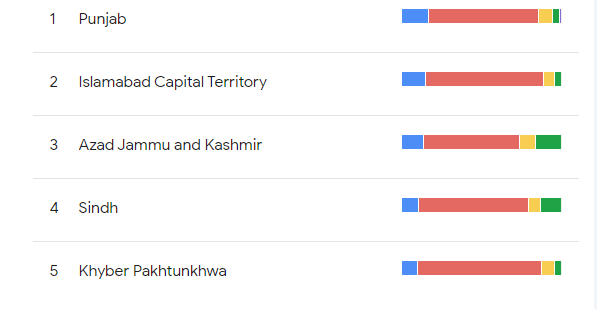
Breakdown of regions
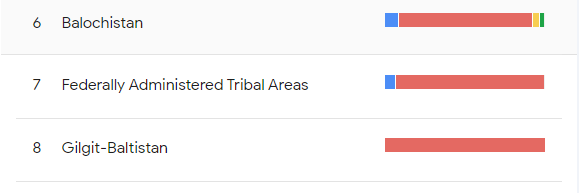
PTI founder and jailed leader Imran Khan is most popular all over Pakistan according to Google Trends.
Punjab
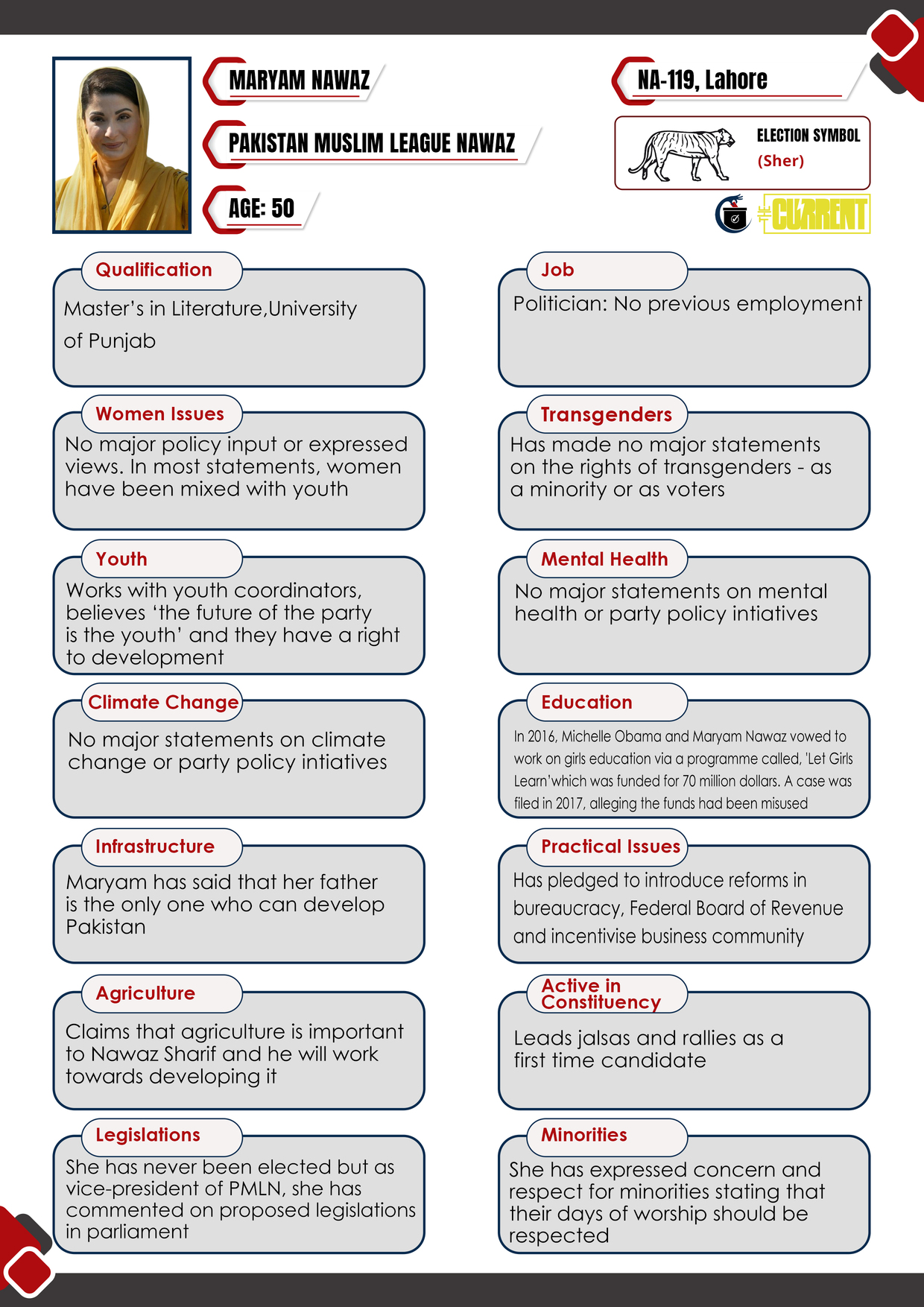
In Punjab, the most popular choices for Chief Ministership, Hamza Shehbaz, and Maryam Nawaz contrary to popular perception, are not being searched so much. After Khan winning with more than 69 percent of searches, Nawaz Sharif is at 17 percent while Maryam is at nine percent. It appears that people in Punjab are comparatively more interested in Bilawal than Hamza who has 1 percent searches from all over the province.
However, it is important to note that out of all the provinces, Punjab has shown more interest in PML-N leader Nawaz Sharif. Sindh has shown the most interest after Punjab, which is 11 percent, 10 percent in Khyber Pakhtunkhwa, nine percent in Balochistan, and seven percent in former FATA.
Sindh
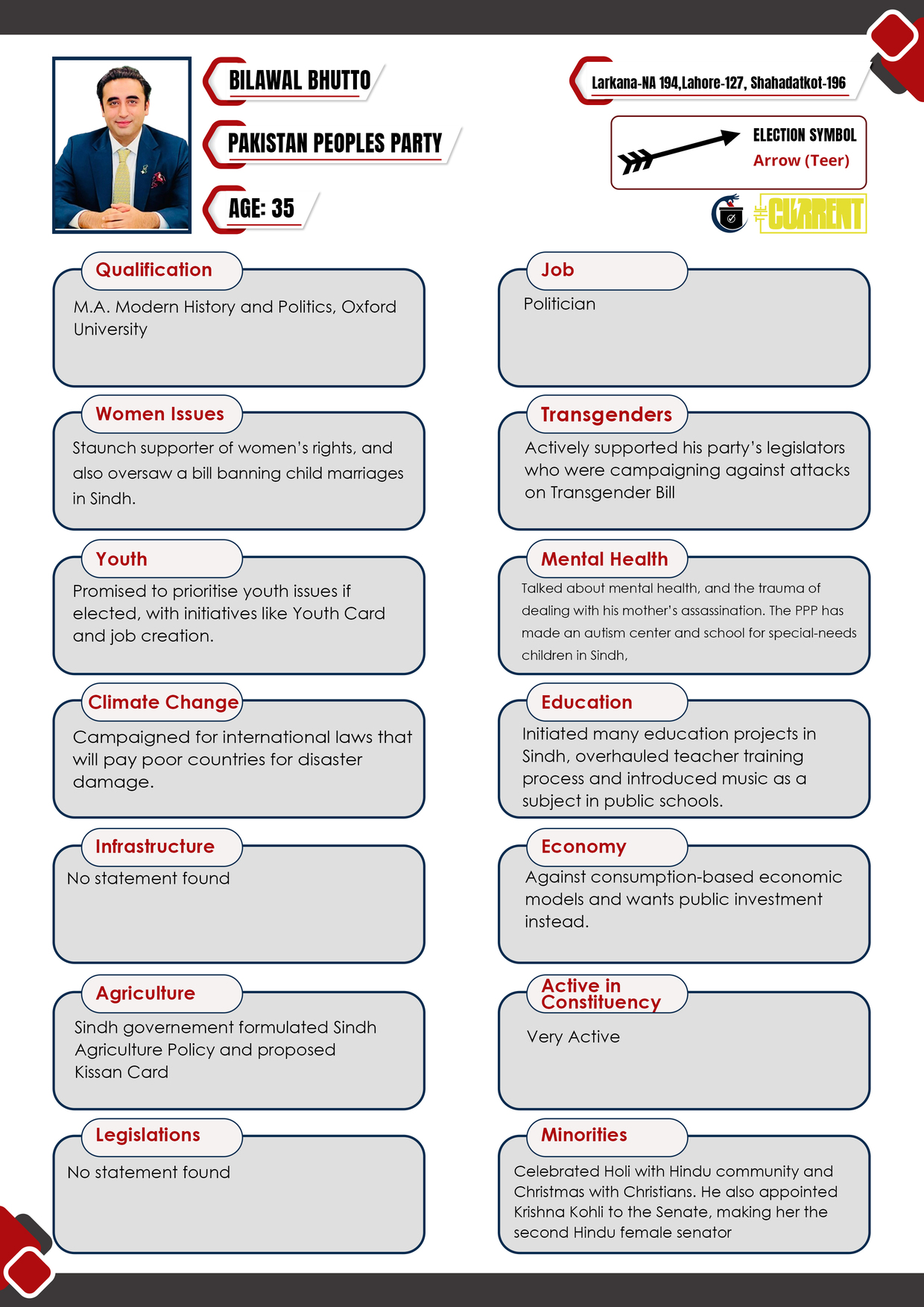
After Imran Khan (69 percent) former Foreign Minister and Chairman of Pakistan People’s Party, Bilawal Bhutto Zardari is unsurprisingly most popular in Sindh with 13 percent of Google searches. Second in line is Punjab and third is Balochistan. After him is Nawaz (11 percent) followed by Maryam (7 percent).
Balochistan
Imran Khan leading the slot here with 84 percent followed by Nawaz (9 percent), Maryam (4 percent), and Biawal Bhutto (3 percent). Hamza does not invoke public curiosity even the slightest.
Gilgit Baltistan
Imran Khan has a 100 percent popularity rate in Gilgit Baltistan, where it seems no other party leader stands a chance, implying that there were minor searches of them in GB.
Former FATA
Interestingly, in the former federally administered tribal areas, only Imran Khan and Nawaz Sharif were searched for, Khan at 93 per cent of searches and Nawaz at seven percent.
Though Google search and Google trends are not the ultimate parameter of a party leader’s popularity, they certainly are proof of what netizens are most interested in and the social media footing of a politician.
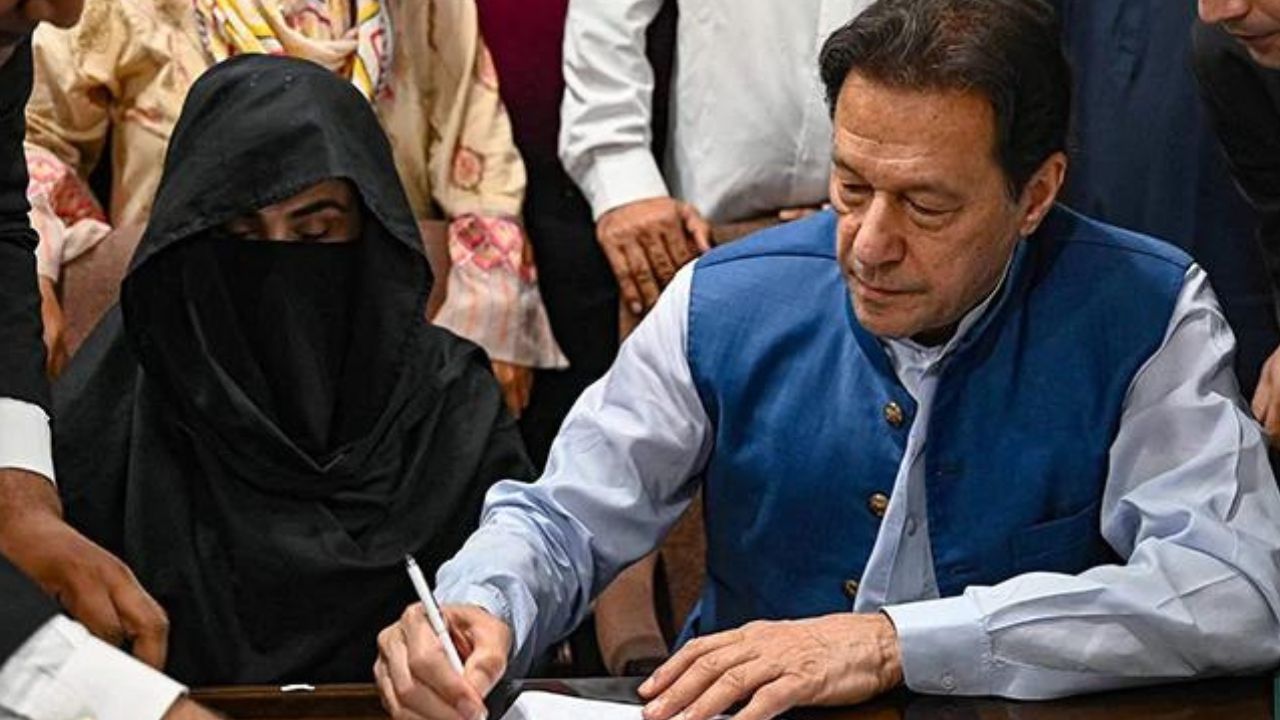
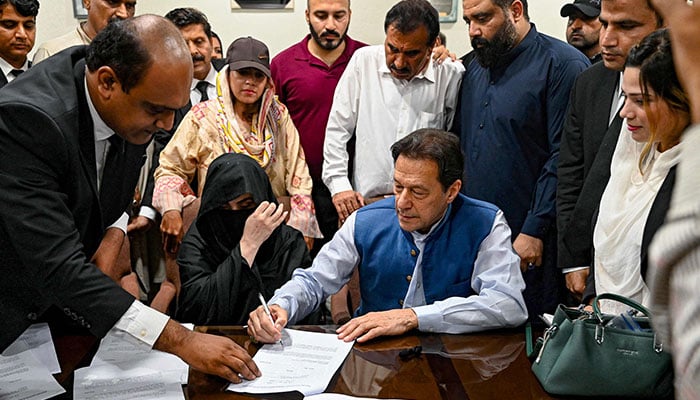
Bushra Bibi, the wife of Pakistan Tehreek e Insaf (PTI) founder chairman Imran Khan, has lodged a challenge against the authorities’ decision to confine her to her Bani Gala residence to serve a 14-year sentence in the Toshakhana case.
Previously detained at the sprawling residence, Bushra Bibi was imprisoned last month following an accountability court’s ruling that sentenced the couple to 14 years in jail in connection with the Toshakhana case.
In response to a request from the Adiala jail superintendent, authorities designated the Bani Gala house as a sub-jail for the former first lady’s confinement.
Both Bushra Bibi and Imran Khan were handed a 14-year jail term by Judge Muhammad Bashir in the Toshakhana case, which pertains to the illegal sale of state gifts.
In a recent petition, Bushra Bibi expressed her willingness to serve her sentence in ordinary jail premises at Adiala rather than the declared sub-jail at her residence, emphasizing her readiness to undergo punishment like any other political worker of the party.
Furthermore, she cited concerns about her safety in the solitary confinement of the sub-jail premises, highlighting potential security issues for preferring the ordinary jail premises.
“While the petitioner is in good health currently, however, there has been a movement of unidentified people in her house declared as a sub-jail by the Government thereby contributing to her sense of insecurity,” the application claimed.
Bushra Bibi said the “special treatment” afforded to her goes against the spirit of equality guaranteed under the Constitution and is consequently discriminatory.
Given the stated reasons, the petitioner pleaded with the court to set aside notification to declare her house sub-jail and shift her to Adiala Jail in the “interest of justice”.
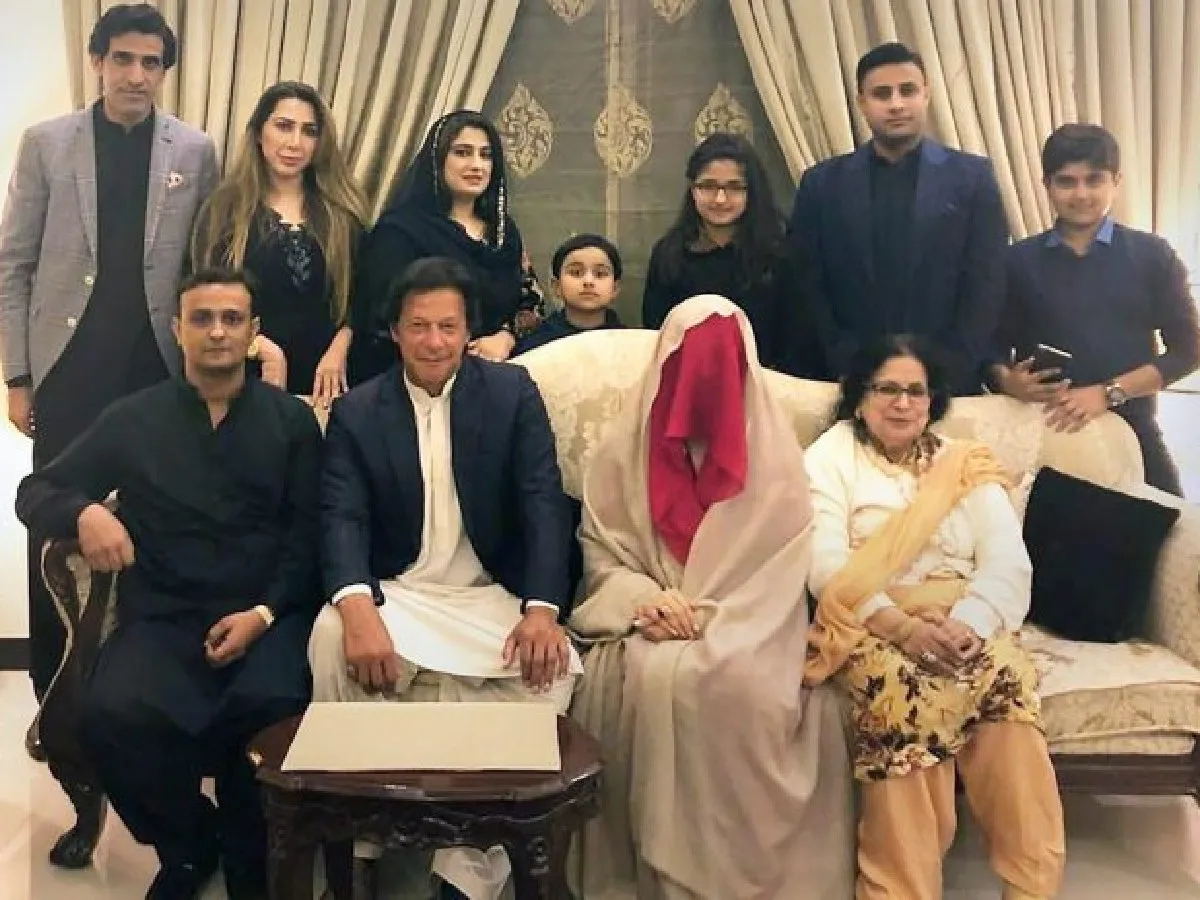
Last week, former prime minister and Pakistan Tehreek-e-Insaf (PTI) founder Imran Khan and his wife Bushra Bibi were handed a seven-year sentence each by a trial court in the iddat or ‘un-Islamic nikah’ case. Senior civil judge Qudratullah pronounced the verdict during proceedings at Adiala jail, on a petition filed by Bushra Bibi’s former husband Khawar Maneka, against the couple’s marriage. The verdict has been termed shameful and an assault on women’s rights by legal experts and civil society.
From The Human Rights Commission of Pakistan (HRCP), Women’s Action Forum (WAF) to Aurat March and legal experts, many have condemned the verdict vociferously. WAF Lahore in its statement said that the verdict “is an assault on women’s autonomy over their bodies, dignity and privacy, setting dangerous precedent for state’s intrusion into the private lives of citizens”. HRCP said that the verdict “could also set a precedent for Section 496 to be weaponised for political purposes”.
Lawyer Reema Omer made a pertinent point that by making a woman’s menstrual cycle the subject of criminal inquiry, “this case has cast a blow to women’s freedom to make decisions about divorce and marriage without fear of being dragged in court”. Aurat March Islamabad will hold a protest tomorrow against this unjust verdict, which has made a mockery of the legal system in Pakistan. This is not the first time that frivolous cases have been made against politicians but it is the first time that a disgusting and vindictive accusation by an ex-husband of a former first lady was levelled and the courts actually gave a verdict in favour of the shameless man while humiliating a woman in the process by taking away her agency. It was good to see that Chairman Pakistan People’s Party (PPP) Bilawal Bhutto-Zardari took a firm stand against the verdict and said that we should not stoop to this level in politics.
He also highlighted how this verdict can impact the efforts made in the past to safeguard women’s rights. Mr. Bhutto is not wrong in his assertion. The low level to which the state has stooped in order to humiliate a politician who has fallen out of favour is a blot on the justice system as well as score-settling. The verdict has set a precedent that judges and courts can now monitor women’s menstrual cycles, with some saying that the country might as well let all gynaecologists go and let the judges and courts give their expertise in this department.
From Fatima Jinnah to Benazir Bhutto to Bushra Bibi, we have seen how men hold the power to slander women for their personal gains and get away with it. No Pakistani citizen should remain silent on this shameful verdict and we all must register our protest at how this has taken our entire struggle and progress years back. It is not the state’s business to declare a marriage null and void in this shameless manner. At the end of the day, this verdict can impact each and every woman with a vindictive ex-husband. We hope that this sham of a verdict will be overturned as soon as possible in a high court. No woman will forgive the trial court that gave this verdict and no woman should ever trust the justice system again if this is not overturned and an apology issued not just to Bushra Bibi but all women of Pakistan.
The trial court at Adiala jail today sentenced Pakistan Tehreek-e-Insaf (PTI) founder Imran Khan and his wife Bushra Bibi to seven-year prison terms each in the “un-Islamic nikah” case.
Senior Civil Judge Qudratullah pronounced the verdict. Yesterday, the case was heard inside the jail premises for 14 hours.
The judge announced the court’s decision about the plea Khawar Maneka, Bushra Bibi’s ex-husband, made. He claimed that her marriage to the former prime minister was against Islamic law and illegal.
The complainant’s counsel, Raja Rizwan Abbasi, Khan’s lawyer, Salman Akram Raja, and Bushra Bibi’s lawyer, Usman Gul, also gave their final arguments a day earlier.
Maneka accused Bushra and Khan of committing fraud in their nikkah ceremony, claiming that they got married while Bushra was still in her iddat period.
“That above said nikah, and the marriage ceremony was neither legal nor Islamic as it was solemnised without observing the iddat period,” read the petition available with Geo.tv.
1. The proceedings + convictions in the “iddat case” (or specifically, “going through a marriage ceremony fraudulently without being lawfully married”) are a damning blot on our justice system
Horrifying the State stooped this low seemingly just to humiliate IK, Bushra Bibi