Tag: Imran Khan

  • Pakistan fails to ensure safety of journalists

    Pakistan fails to ensure safety of journalists

    As the world marks the International Day to End Impunity for Crimes against Journalists, Pakistan’s journalistic community continues to grapple with an alarming surge in violence and impunity.

    Several reports have highlighted the deteriorating situation, shedding light on the challenges faced by media professionals in the South Asian nation.

    According to the recently released annual report by the Islamabad-based independent media watchdog, Freedom Network, Pakistan has failed to combat the rising impunity of crimes against journalists, painting a grim picture of the state of press freedom in the country.

    The report titled ‘One Step Forward, Two Steps Back,’ outlines the harrowing experiences faced by journalists, including incidents of kidnapping, physical assaults, and unjust legal cases.

    Pakistan made history in 2021 by passing two special laws to protect journalists.

    The Sindh Assembly passed the “Sindh Protection of Journalists and other Media Practitioners Act-2021” while the National Assembly passed “Protection of Journalists and Media Professionals Act-2021” in space of few months.

    Azad Jammu and Kashmir, Gilgit-Baltistan, Balochistan, Khyber Pakhtunkhwa, and Punjab have not passed a similar law for their jurisdictions.

    According to the Freedom Network’s report at least 37.5 percent of the violations in Pakistan – 93 out of the total 248 cases in the period between August 2021- August 2023 – were recorded in Islamabad alone.

    The report further states that during this period there were 11 cases of murders of journalists, plus another 20 unsuccessful assassination attempts.

    25 instances of legal cases registered against journalists.


    11 cases of abductions, plus another case of an unsuccessful kidnapping attempt.

    25 cases of arrests, detentions, or illegal confinements of journalists by the State.

    59 cases of physical assaults, 26 of which caused bodily injuries.

    05 cases of attacks on the homes of journalists.

    30 cases of specific threats of murder or other dire consequences issued to journalists.

    59 cases of harassment of journalists.

    At least 37.5% of the violations (93 out of a total 248 cases) were recorded in the federal capital Islamabad alone.

    Sindh was the second worst with 22.5% of the violations (56 cases) and Khyber Pakhtunkhwa (KP) was a close third at 18.5% (46 cases).

    These were followed by Punjab with 17.3% (43 cases), Balochistan with about 2.5% (6 cases), Azad Kashmir (AJK) with 1.2% (3 cases) and Gilgit-Baltistan (GB) with 0.5% (1 case).

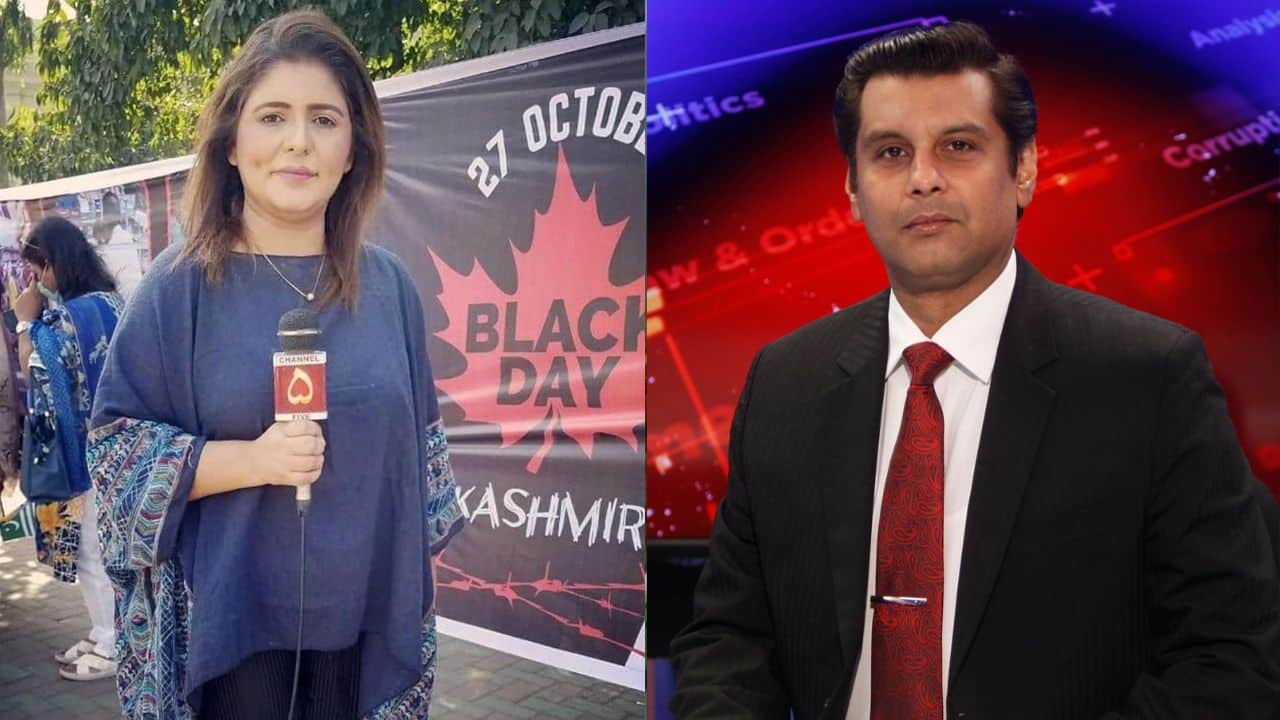
    The report also cited specific incidents, such as the tragic death of Channel 5 reporter Sadaf Naeem during the coverage of former Prime Minister Imran Khan’s rally in Punjab in October 2022.

    The report notes that another Pakistani journalist Ashad Sharif was killed in Kenya on October 23, 2022, and there is still no clarity on his murder.

    Pakistan Press Foundation has also documented at least 157 media-related attacks, including 16 instances of arrests, five instances of detention, and 44 cases of assault this year.

    Between January and September 2023, PPF has documented at least 157 attacks on the media in connection with their work, including 16 instances of arrests and five instances of detention, 44 cases of assault, two cases of damage to property, four instances of raids, 18 instances of registration of cases against media professionals and two instances of legal action, 26 instances of censorship, 20 instances of harassment of journalists or media practitioners, 13 cases of threats, seven confirmed cases of kidnappings and three unconfirmed cases.

    While the country witnessed an improvement in its ranking in the World Press Freedom Index, climbing from 157 in 2021 to 150 in 2023, this progress is overshadowed by the failure to effectively implement the laws designed to protect journalists.
  • Shah Mahmood Qureshi shifted to hospital after becoming ill

    Shah Mahmood Qureshi shifted to hospital after becoming ill

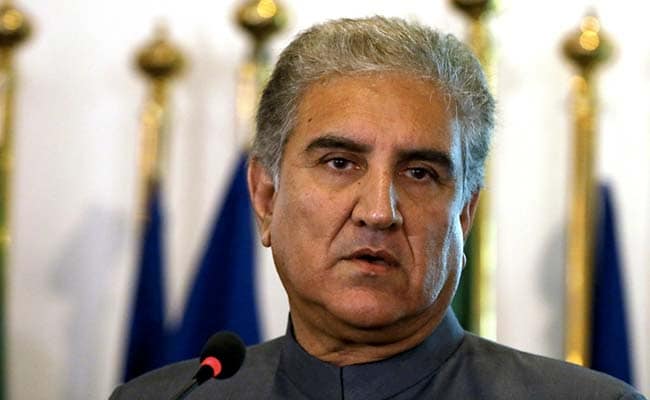
    Former foreign minister and Pakistan Tehreek-e-Insaf (PTI) vice chairman, Shah Mahmood Qureshi, was urgently shifted to Pakistan Institute of Medical Sciences (PIMS) hospital in Islamabad on Thursday after he became ill while incarcerated at Adiala jail.

    According to sources of Geo News, Qureshi has been given permission by jail authorities to urgently shift him from jail to the hospital.

    The result of tests conducted at PIMS will determine whether Qureshi will be kept in hospital.

    It should be noted that a special court has indicted Chairman PTI Imran Khan and Shah Mehmood Qureshi in the cipher case.

  • Finally, ECP gives date for general elections

    Finally, ECP gives date for general elections

    A three-member bench, headed by Chief Justice Qazi Faez Isa and comprising Justice Aminuddin Khan and Justice Athar Minallah, is hearing petitions filed by the Supreme Court Bar Association (SBCA) and others seeking directives to hold general elections within 90 days as stipulated by the Constitution.

    During the hearing, Election Commission of Pakistan (ECP) lawyer, Sharjeel Sawati, said that elections will be held on February 11, as per Geo News.

    After being questioned about wether they have consulted with the president of Pakistan on the date or not, the lawyer was instructed to consult with Arif Alvi today.

    Chief Justice of Pakistan (CJP) Qazi Faez Isa on Thursday remarked that President Arif Alvi violated the Constitution by not giving a date for general elections.

    At the outset of the hearing, Pakistan Peoples Party (PPP) counsel Farooq Naek told the court that his party had submitted the request to become a party in the case.

    After this, PTI’s lawyer Ali Zafar started his arguments by saying that the party has limited its petition to only seeking timely elections.

    “Elections must be held within 90 days after the dissolution of assemblies as per the Constitution,” he stressed. At this, CJP Isa said that the plea seeking polls within 90 days has then become ineffective.

    “The court was told that it was impossible to hold polls within 90 days in the previous hearing,” he remarked.

    Zafar then said that PTI only wants elections.

    He further said that there won’t be any parliament and law if elections are not conducted.

    “Giving a date and schedule of elections are two different things. President Dr Arif Alvi had written a letter to hold consultations with the ECP,” he remarked.

    The CJP observed that the president had written in his letter that the court should look into the matter of elections.
    “Is the president saying that court should take notice of the issue about elections,” he questioned.

    At this, Zafar replied that the president had said that the court can also review the matter.

    CJP Isa then said that the president did not give any date for elections in his letter. “Did the president not fulfil his constitutional duty,” he asked.

    Zafar said that the president fulfilled his responsibility by consulting on the elections.

    On this point, Justice Minallah asked why the president wrote the letter in September and not on August 15 after the assemblies were dissolved on August 9.

    “Did the president only ask the Supreme Court verbally to take notice of the matter,” asked CJP. He further said that the head of state wrote the letter to the ECP and not to SC.

    CJP Isa then questioned whether the apex court had the authority to give a date for polls. “Is it necessary for the president to consult the prime minister to give a date,” he inquired.

    Zafar replied that consultations are not necessary as the president has his own constitutional duty to give a date.

    During the last hearing, the SC had issued notices to the Election Commission of Pakistan (ECP) and the federal government for their input on polls within 90 days.

    The ECP had earlier set the date for elections in Punjab on April 30, but then postponed them to October 8 — in Punjab as well as KPK.

    PTI filed a plea in the top court against this decision.

    On April 4, the SC had ordered the government and the ECP to hold elections for Punjab assembly on May 14 but both institutions said this would not be possible due to shortage of resources, including funds and manpower.

    On September 21, the ECP announced that general elections will be held in the last week of January 2024. However, it did not issue a specific date.

    The commission also published the preliminary constituency lists.
    According to the ECP, objections to the preliminary constituency lists will be entertained until October 26, with hearings on these objections slated to run until November 25.

    The final electoral rolls are scheduled for release by November 30, and within 54 days following this publication, the election commission has outlined the election timetable.

  • PPP ready to form alliance with PTI in Punjab

    PPP ready to form alliance with PTI in Punjab

    The Pakistan People’s Party (PPP) Punjab chapter has expressed its willingness to form an alliance with any political party, including Pakistan Tehreek-e-Insaf (PTI), against Pakistan Muslim League Nawaz (PML-N), in the upcoming general elections in Punjab, Geo reported on Wednesday.

    “PPP opponents are making alliances, and the party is also ready to devise its strategy for the upcoming elections,” said PPP Punjab acting president Rana Farooq Saeed at a press conference after a meeting.

    Former state minister Tasneem Qureshi, Secretary Information PPP Punjab Shahzad Saeed Cheema, Mian Azhar Hassan Dar, Ali Sanwal, Azhar Awan, Haji Azizur Rehman Chan, and others attended the huddle.

    Shahzad Saeed Cheema criticised PML-N for depending on deals, stating that PML-N could not sustain a competitive stance without a deal in its favour. He further said that the party led by former Prime Minister Shehbaz Sharif ensures a “level playing field” only for itself in the elections.

    The PPP constantly emphasised the importance of a “level playing field” for all political parties taking part in the upcoming general elections, which are scheduled for January 2024.

  • ‘Zia-ul-Haq ko Sadar Nahi Maanta’: Chief Justice of Pakistan

    ‘Zia-ul-Haq ko Sadar Nahi Maanta’: Chief Justice of Pakistan

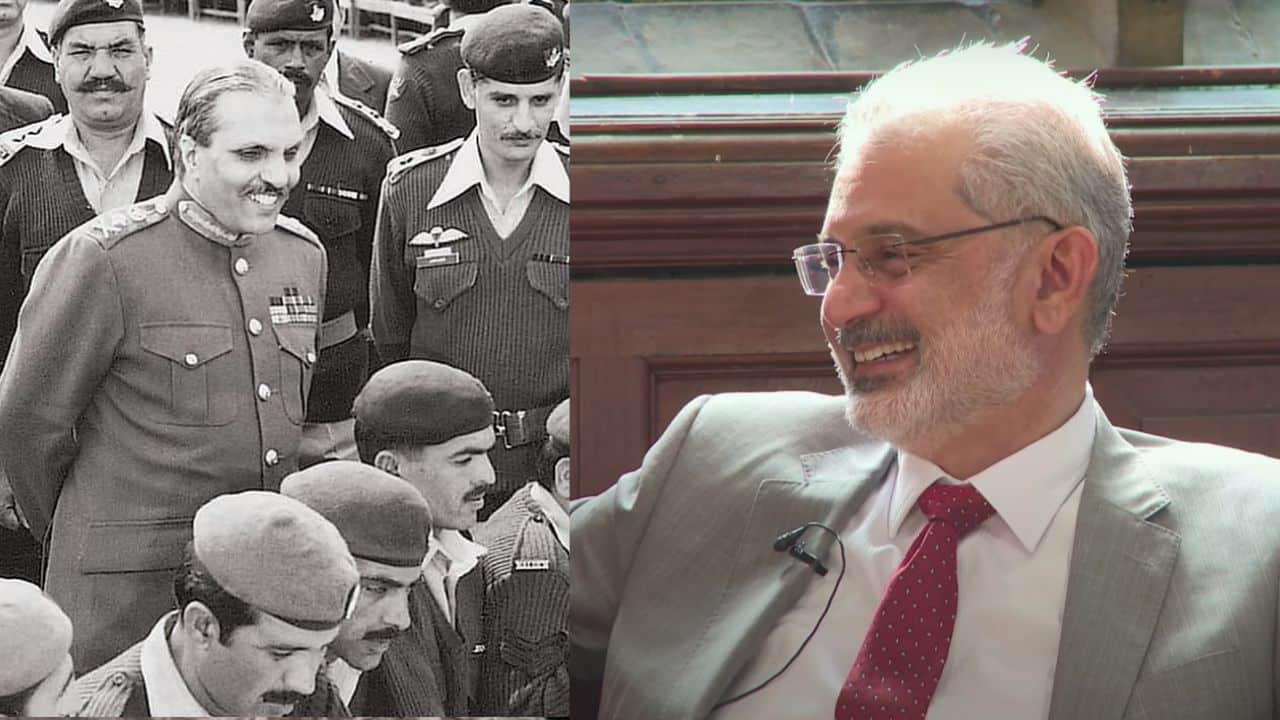
    Chief Justice of Pakistan, Justice Qazi Faez Isa gave an unexpected but strongly worded statement during the hearing of the Faizabad sit-in case, stating that he doesn’t recognize the late military dictator General Zia-ul-Haq as president, as per Neo News.

    During the hearing of the Faizabad sit-in case, Justice Faiz Isa, addressing Ijaz-ul-Haq’s lawyer, said that he does not consider Zia-ul-Haq the President of Pakistan.

    When the Attorney General revealed that Ijaz-ul-Haq’s lawyer had been asked to provide a written reply with an affidavit to withdraw the statement, the lawyer of countered the Attorney General’s statement, denying that he had been asked to retract the statement.

    Ijaz-ul-Haq’s lawyer informed the court that his client had merely stated that his name should be removed from the verdict, to which Chief Justice Justice Faiz Isa remarked that Ijaz-ul-Haq’s name was only mentioned in the report by intelligence agencies, and it was not included in the verdict.

    During the same conversation, when Chief Justice Justice Faiz Isa mentioned that Ijaz-ul-Haq is the son of former army chief Zia-ul-Haq, his lawyer replied that his father was also the President of Pakistan. In response, the Chief Justice stated, “I do not consider Zia-ul-Haq the President of Pakistan. No one can become the President by the force of arms. Do not call Zia the President again in this court.”

    The lawyer of Ijaz-ul-Haq, the son of former military ruler Zia-ul-Haq, asserted that it is documented in the constitution that Zia-ul-Haq was the president. Chief Justice Justice Faiz Isa responded by remarking that Zia-ul-Haq had written in the constitution that he was the president for five years.

    Earlier today, the Supreme Court of Pakistan issued summons for the chairman of the Pakistan Electronic Media Regulatory Authority (PEMRA) following allegations of “media coercion” during the 2017 Faizabad sit-in.

    The summon was initiated by a three-member bench of the apex court, led by Chief Justice of Pakistan (CJP) Qazi Faez Isa, and including Justice Aminuddin Khan, and Justice Athar Minallah.

    The hearing, part of a series of nine review petitions against the Supreme Court’s February 6, 2019 verdict on the Faizabad sit-in case, was marked by significant developments.

    Authored by Justice Isa years before he took oath as the chief justice of Pakistan (CJP), the searing judgement had instructed the defence ministry and the tri-services chiefs to penalise personnel under their command who were found to have violated their oath.

  • Imran Khan releases another message from jail

    Imran Khan releases another message from jail

    Imran Khan has released another message for Pakistanis from jail via his family on Tuesday.

    Talking about the responsibility of the judiciary, Imran Khan said, “It is the fiduciary duty of the judiciary and the lawyers to protect the Constitution, upon which rests the progress of our nation. Therefore, the legal fraternity must start and lead a movement for upholding the rights of the people of Pakistan, foremost their fundamental right to vote, to choose their leaders, and to define their future themselves.”

    He also emphasised giving fundamental rights to Pakistanis and said that “whom they choose as their leader is secondary, but they must be given their basic and fundamental right enshrined in the constitution to choose their representatives.”

    While encouraging people to struggle for the betterment of law in the country, Khan said, “Pakistan stands at the crossroads; it is a critical juncture where we are watching the steady destruction and dismantling of our justice system. We must, therefore, act immediately if we are to prevent its complete collapse.”

    Imran Khan also mentioned in his message that “if we do not fight for justice and stand behind our judges, we will not be able to establish constitutional supremacy in this country or stand up against this rule of might, where only the fittest and the richest survive.”

  • Faizabad sit-in: What is happening in court?

    The Supreme Court of Pakistan has issued summons for the chairman of the Pakistan Electronic Media Regulatory Authority (PEMRA) following allegations of “media coercion” during the 2017 Faizabad sit-in.

    The summon was initiated by a three-member bench of the apex court, led by Chief Justice of Pakistan (CJP) Qazi Faez Isa, and including Justice Aminuddin Khan, and Justice Athar Minallah.

    The hearing, part of a series of nine review petitions against the Supreme Court’s February 6, 2019 verdict on the Faizabad sit-in case, was marked by significant developments.

    Authored by Justice Isa years before he took oath as the chief justice of Pakistan (CJP), the searing judgement had instructed the defence ministry and the tri-services chiefs to penalise personnel under their command who were found to have violated their oath.

    Notably, the court addressed the allegations made by Justice Isa in a prior judgment, emphasizing the importance of upholding the Constitution and the rule of law.

    Former PEMRA chairman, Absar Alam, alleged that the then-Director General of Inter-Services Intelligence (ISI), General Faiz Hamid, and his subordinates exerted undue influence on media policies.

    In his written reply, Alam said, PEMRA officials were under pressure from “serving officers”, adding that he himself “received calls” from the then DG(C) Major General (retd) Hamid and or his subordinates complaining that their requests were not acceded to by him.

    “The Applicant-in-Person had been asked to: i) to take action against Najam Sethi a prominent senior journalist; and ii) to completely blackout Hussain Haqqani from TV Channels, however, both illegal/unlawful demands remained unmet,” read the affidavit, seen by Geo News.

    According to the ex-Pemra chairman, Gen (retd) Hamid and or his subordinates “controlled TV Channel policy through illegal/unlawful means by changing their numbers and moving them at the tail end, when they refused to follow instructions”.

    He further said that the situation became “untenable” in April 2017, adding that he addressed the matter in writing to then-prime minister Nawaz Sharif, then-chief justice Mian Saqib Nisar and then-Chief of Army Staff General (retd) Qamar Bajwa, to inform that due to grave threats by unknown persons to Pemra officials for not following instructions fear had paralysed the latter.

    Chief Justice Isa, expressing concern over the government’s handling of the matter, noted that the investigation committee formed by the government was inadequate.

    The fact-finding committee was constituted by the government, on Friday, to investigate the “role and directions” of all “concerned” officials in the management and handling of the sit-in in 2017.

    During the hearing today, Chief Justice Qazi Faez Isa said the apex court wanted to know who was behind the Faizabad sit-in.

    “We want to know who was the mastermind of the Faizabad sit-in,” he remarked, expressing annoyance over the decision not being implemented since its issuance on February 6, 2019.

    “Our job is to order, and your job is to implement,” he stressed, underlining the need for a comprehensive and transparent inquiry.

    In response to these developments, the Supreme Court rejected the government’s fact-finding committee, urging the Attorney-General for Pakistan, Mansoor Usman Awan, to swiftly form a new inquiry commission to ensure the implementation of the court’s verdict on the Faizabad sit-in case.

    The Faizabad sit-in, which occurred in 2017, disrupted daily life in Islamabad for 20 days, resulting in six casualties and numerous injuries.

    The sit-in was organized by the Tehreek-e-Labbaik Pakistan (TLP) to protest alleged modifications to the Khatm-i-Nabuwwat oath during the passage of the Elections Act 2017, later rectified by an act of Parliament.

  • Imran Khan’s lawyer retracts from ‘slow poisoning’ statement

    Imran Khan’s lawyer retracts from ‘slow poisoning’ statement

    In the latest development, Pakistan Tehreek-e-Insaf (PTI) Chairman Imran Khan’s lawyer, Aftab Bajwa, said that he misunderstood what Imran Khan said. According to him, Khan feared that he might be slow poisoned.

    Earlier, Aftab Bajwa, said while talking to media that Imran Khan told lawyers that he is being slow-poisoned by toxic substances in his shoes.

    The lawyer also said that the PTI chairman could be a victim of slow-poisoning via the food in Adiala jail because Khan informed his council that home-cooked food is not allowed.

    Bajwa also stated in a media talk that Imran Khan told him that the secret agencies of Pakistan are doing all this.

    PTI’s core committee is holding an urgent meeting about the information that Khan shared with his lawyers during a recent meeting.

    Earlier, Khan was also worried about his health, and in a message through his family on October 28, he stated, “At the moment, I am physically fit. I would know if my body was experiencing changes from weakness. But they have already made two public attempts to take my life. Since I won’t agree to leave my country, there is, of course, a danger that they will try to make another attempt on my life while I am in jail. Such an attempt could also be through slow poisoning.”

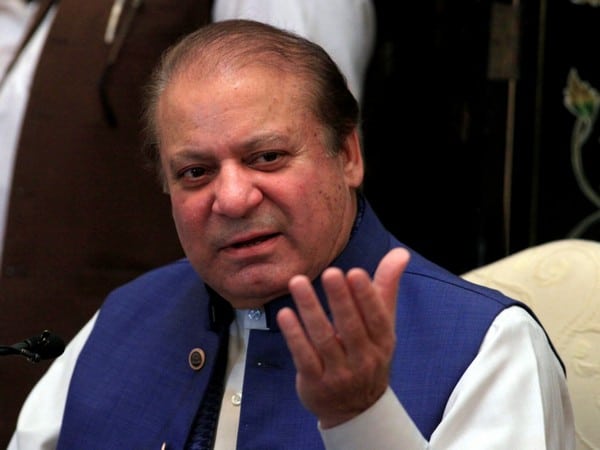
  • Nawaz Sharif to chair in-person party meeting after almost four years

    Nawaz Sharif to chair in-person party meeting after almost four years

    Former prime minister and Pakistan Muslim League-Nawaz (PML-N) supremo Nawaz Sharif is going to chair an in-person party meeting after a gap of almost four years, to formulate a campaign as general elections loom nearer, Geo News has reported on Tuesday.

    Senior party leaders have started reaching the PML-N supremo’s residence, Jati Umra, for the important huddle.

    A discussion on the political situation of the country is also on the meeting’s agenda.

    The party’s leadership will also discuss plans for the resumption of Nawaz’s political activities in Pakistan, and finalizing a schedule for the PML-N head’s countrywide tours will also be discussed in the meeting.

    Party members will discuss and plan the launch of election campaign.

  • Court declares Sheikh Rashid’s Lal Haveli sealing decision null and void

    Court declares Sheikh Rashid’s Lal Haveli sealing decision null and void

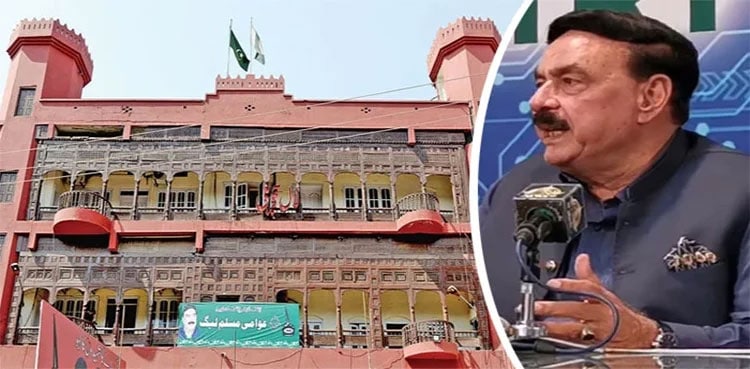
    In a decision that favoured former interior minister Sheikh Rashid, the Lahore High Court’s (LHC) Rawalpindi Bench on Monday instructed the Evacuee Trust Property Board (ETPB) to remove seals from Lal Haveli, the home of the Awami Muslim League (AML) leader.

    The Lal Haveli is a famous building at Bohar Bazar in Rawalpindi, it serves as the political office of AML.

    In a decision, Mirza Waqas Rauf announced the decision to seal the haveli null and void.

    ETPB sealed Lal Haveli last month, stating that Rashid’s property papers were not right. On September 21, ETPB, with help from the Federal Investigation Agency (FIA) and police, removed the people living there.

    The AML chief’s nephew, Sheikh Rashid Shafiq, said in a video message that the haveli is registered in the name of Sheikh Siddique. All information related to property has been given to the deputy commissioner Rawalpindi, Rashid Shafiq added.

    Responding to a question, the former interior minister said that the “40 days in chilla (isolation)” made him a new “Sheikh Rashid”