Tag: India

  • VIDEO: FM Qureshi says Pakistan ready to ‘ditch’ Saudi Arabia for Kashmir’s sake

    In what appears to be a major foreign policy shift for Pakistan, Foreign Minister Shah Mahmood Qureshi has asked Saudi Arabia-led Organisation of Islamic Cooperation (OIC) to stop dragging feet on the convening of a meeting of its Council of Foreign Ministers (CFM) on the Kashmir issue.

    “I am once again respectfully telling OIC that a meeting of the CFM is our expectation. If you cannot convene it, then I’ll be compelled to ask Prime Minister (PM) Imran Khan to call a meeting of the Islamic countries that are ready to stand with us on the issue of Kashmir and support the oppressed Kashmiris,” he said while speaking to a private media outlet.

    When asked if Pakistan will “move forward” with or without Saudi Arabia, the foreign minister said, “with or without…”. In response to another question, he said Pakistan could not wait any further.

    WATCH VIDEO:

    According to Dawn, Pakistan has been pushing for the foreign ministers’ meeting of the 57-member bloc of Muslim countries, which is the second-largest intergovernmental body after the United Nations (UN), since India annexed occupied Kashmir in August 2019.

    Qureshi had at an earlier presser explained the importance of CFM for Pakistan. He had then said that it was needed to send a clear message from Ummah on the Kashmir issue.

    Although there has been a meeting of the contact group on Kashmir on the sidelines of UN General Assembly session in New York since last August and OIC’s Independent Permanent Human Rights Commission has made statements on the rights abuses in the occupied valley, but no progress could be made towards the CFM meeting.

    A major reason behind the failure to call the foreign ministers’ meeting has been Saudi Arabia’s reluctance to accept Pakistan’s request for one specifically on Kashmir. Riyadh’s support is crucial for any move at the OIC, which is dominated by Saudi Arabia and other Arab countries.

    Qureshi said Pakistan skipped Kuala Lumpur Summit last December on Saudi request and now Pakistani Muslims, who are ready to lay down their lives for the Kingdom, are demanding of Riyadh to “show leadership on the issue”.

    “We have our own sensitivities. You have to realise this. Gulf countries should understand this,” the foreign minister said, adding that he could no more indulge in diplomatic niceties.

    “We cannot stay silent anymore on the sufferings of the Kashmiris,” he said.

  • India continues celebrating arrival of Rafale jets that other countries dumped

    As India continues to celebrate the arrival of its Rafale jets, military experts are not only questioning its capabilities against United States (US) aircraft but are also raising questions why the Rafale jets failed to compete in the international arms markets and got dumped by a majority of nations.

    According to foreign media reports, Dassault’s Rafale was not India’s only choice as various other global firms expressed interest in the MMRCA tender. Six renowned aircraft manufacturers competed to bag the contract of 126 jets, which was hailed to be the largest-ever defence acquisition deal of India.

    The initial bidders were Lockheed Martin’s F-16s, Boeing’s F/A-18s, Eurofighter Typhoon, Russia’s MiG-35, Sweden’s Saab’s Gripen and Dassault’s Rafale.

    All aircraft were tested by the IAF and after careful analysis on the bids, two of them — Eurofighter Typhoon and Dassault Rafale — were shortlisted.

    Dassault received the contract to provide 126 fighter jets as it was the lowest bidder and the aircraft was said to be easy to maintain. After Rafale won the contract, the Indian side and Dassault started negotiations in 2012. Though the initial plan was to buy 126 jets, India scaled it down to 36, that too in fly-away condition.

    Despite boasting of awe-inspiring capabilities and selected by India after a mammoth testing & bidding process, the French origin jets didn’t see many buyers. Other than France and India, only Qatar and Egypt are using Rafale jets and that too in very limited numbers.

    As reported earlier by EurAsian Times, Russian aviation experts had claimed that Rafale jets would have been useless against the Chinese Airforce (PLAAF). The maximum speed of the Rafale jet is about Mach 1.8 compared to Chinese J-16s at Mach 2.2.

    The Rafale’s practical ceiling is also lower than the J-16s. Even in engine thrust, the Chinese J-16s aka Russian Su-35s are far superior to the French combat aircraft. Even if the Indian Air Force (IAF) was to deploy all 36 of its newly acquired jets, the technical superiority would still be on the side of China, claimed the Russian expert.

    The Rafale is one of the most expensive aircraft in the international market. India’s deal of 36 jets is worth Rs. 60,000 crores. Experts argue that the high cost is the result of many reasons including general inefficiency in the country’s defence sector, along with the small scale on which the Rafale is being produced in comparison to rival fighters such as the F-18, MiG-29 or F-35 due to which Rafale has not benefitted from economies of scale. This has contributed to its poor performance in the international markets.

    Rafale’s third buyer, India, previously proposed to acquire 126 jets under Make in India and not 36. However, it took five years for even the first five jets to arrive in India after Prime Minister Narendra Modi announced it in April 2015 during his trip to France.

    According to analysts, despite heavy marketing by the makers of Rafale, France’s relatively small and inefficient defence sector seems to have met its limit with the fighter program. The small production lines are unable to produce the aircraft quickly or efficiently and the French budget for research and development is smaller in contrast to the US or Russia.

    The aircraft is priced very steeply and most nations prefer to buy US jets not only because of the technical superiority but also to please the Americans instead of the French. The Rafales have seemingly lost the fight in the international market, despite boasting of excellent qualities.

  • Turkey with Pakistan on Kashmir: president

    Turkey with Pakistan on Kashmir: president

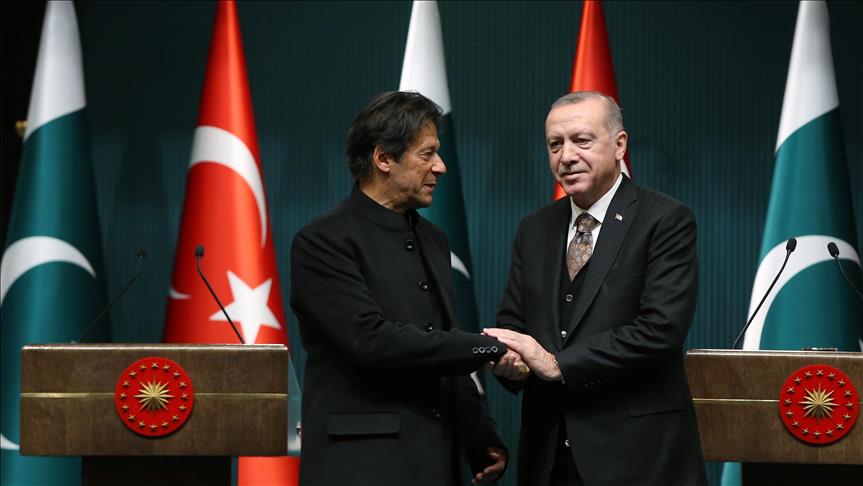
    President Recep Tayyip Erdogan has assured Turkey’s support for Pakistan’s stance on the Kashmir dispute, President Dr Arif Alvi has said.

    According to a statement by the President’s Office, the two counterparts held a telephonic conversation in which they “exchanged Eidul Azha greetings” besides discussing the Kashmir issue and the coronavirus pandemic.

    President Alvi said that occupation regimes were continuing their “extreme repression” in Palestine and Indian occupied Kashmir even during the coronavirus pandemic.

    “[The] Turkish president assured that his country would continue to support Pakistan’s stance on Kashmir as both brotherly countries have similar goals.”

    Erdogan also invited Alvi to visit Turkey after the end of the pandemic.

    While congratulating Erdogan on the reopening of Istanbul’s historical Hagia Sophia as a mosque after nearly nine decades, President Alvi “reiterated Pakistan’s steadfast support to Turkey on its legitimate interests and assured that Pakistan will continue its policy to provide Turkey with all possible support”.

    The Turkish leader also called Prime Minister Imran Khan and the two leaders shared their views on a range of issues.

    The prime minister too felicitated Erdogan on reopening of the Hagia Sophia for prayers and told him that “millions of Pakistanis watched it live on television”, according to a tweet by the Prime Minister’s Office (PMO).

    During their conversation, Prime Minister Imran recalled Erdogan’s visit to Pakistan for the sixth session of the High-Level Strategic Cooperation Council (HLSCC) in February and reaffirmed Pakistan’s commitment to “further fortify bilateral cooperation” in all areas.

    “Pakistan deeply appreciates Turkey’s steadfast support for the just cause of Kashmir, which President Erdogan reaffirmed during his address to the joint session of parliament in February 2020,” the PMO said.

    Erdogan’s contact with the Pakistani leadership comes days before the world marks one year since India revoked the semi-autonomous status of occupied Kashmir and split it into two federal territories, causing further determination in New Delhi’s ties with Islamabad.

  • Indian police ‘arrest’ goat for not wearing mask

    Indian police ‘arrest’ goat for not wearing mask

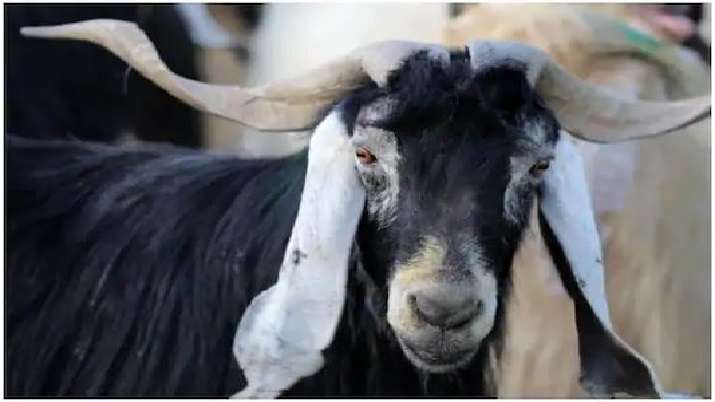
    In a bizarre incident, the Indian police ‘arrested’ a goat that was wandering in India’s Beconganj area ‘without wearing a mask’.

    The Beconganj police picked up the goat and took it to the police station in a jeep.
    When the owner of the goat got to know that the police had taken it away, he went to the police station.

    He pleaded with the cops and the police released his goat but warned him not to allow the animal to roam on the road.

    Circle officer, Anwarganj police station, Saifuddin Beg, however, said that the police had found a youth without a mask, taking the goat along.

    “When he saw the police, he ran away leaving the goat behind so the policemen brought the goat to the police station. Later, we handed over the goat to its owner,” he said.

    One of the policemen who had brought the goat admitted that they found a lockdown violation because the goat was without a mask. “People are now making their dogs wear a mask so why not a goat?” he said.

    The police apparently changed its version after people started joking about it on social media.

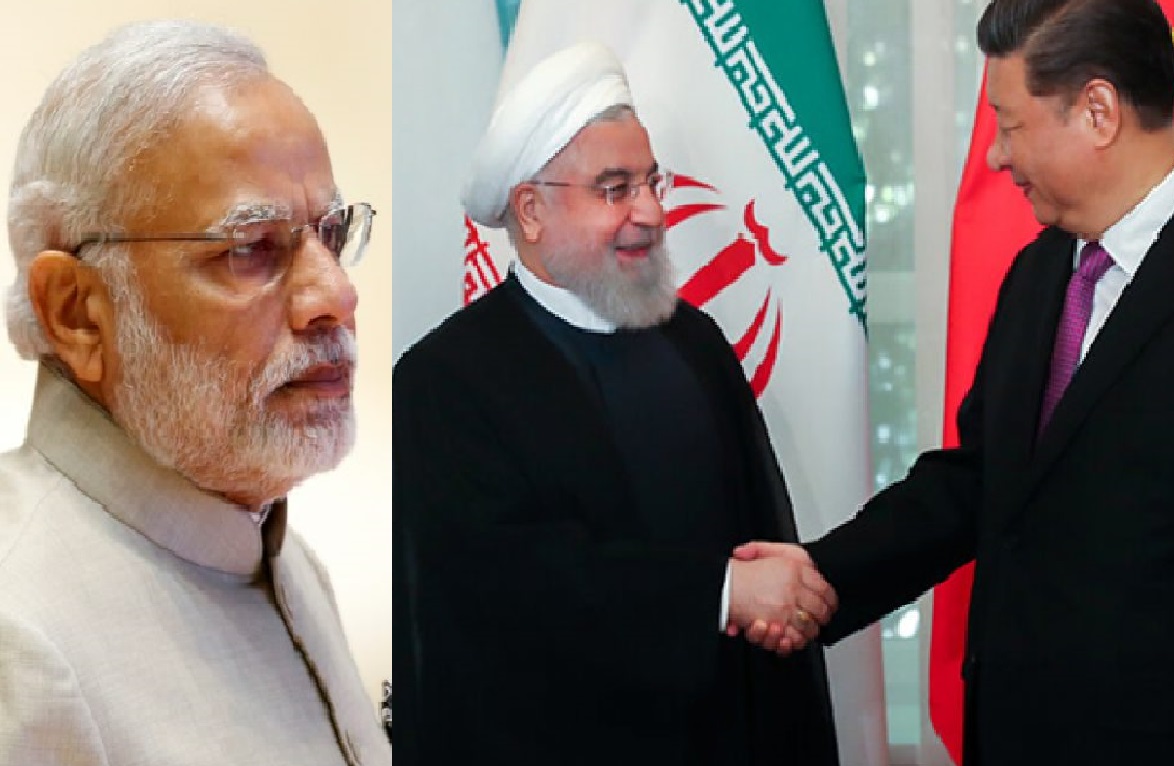
  • Friendship ended with India, now China is Iran’s best friend?

    Friendship ended with India, now China is Iran’s best friend?

    After being “dropped” from a key rail project in southeastern Iran along the border with Afghanistan, India is also set to lose an ambitious gas field project in the country that had been in the pipeline for the past 10 years. 

    India’s Ministry of External Affairs has said in a statement that Tehran would develop the Farzad-B gas field in the Persian Gulf region “on its own” and might engage India “appropriately at a later stage”.

    Last week, Masoud Karbasian, managing director of National Iranian Oil Company (NIOC), told reporters that a new operator had been roped in to develop the gas field, replacing India’s ONGC.

    The field, estimated to possess 21.7 trillion cubic feet of natural gas reserves, 12.8 trillion cubic feet of natural gas and 212 million barrels of gas condensates, was discovered in 2008 by a consortium of three Indian companies — ONGC, Oil India Limited and Indian Oil Corporation.

    According to the deal, the Indian side was supposed to develop the field but they abruptly stopped work in 2012, following the intensification of sanctions against Iran.

    After sanctions were eased in 2015 following the signing of a nuclear deal between Iran and Western countries, India showed its willingness to return to the project.

    However, things again fell apart amid the reinstatement of US sanctions on Iran in May 2018, which further “discouraged” India from making headway in the project, said sources familiar with the issue who requested not to be named.

    “By May 2018, the two sides had made tremendous progress and agreed on key details of the project,” the sources said. “However, the US sanctions played the spoilsport.”

    The two sides had disagreements among themselves as well, particularly on the number of pipelines to be laid and financial investment in the development plan, according to reports.

    In May 2019, Iran’s oil minister, Bijan Namdar Zanganeh, said his ministry had devised a plan to finance the development of the Farzad-B gas field.

    The NIOC had asked the Indian side to submit a financial plan for the field’s development. However, Tehran was “not impressed” with the plan and asked for a new one, said the sources. India had reportedly made a $5.5 billion investment plan

    In August 2019, after slow progress by the Indian side to submit a new plan, Karbasian said Iran would proceed with another operator for the project.

    India’s External Affairs Ministry, however, said the “follow-up bilateral cooperation” was impacted by “policy changes on the Iranian side”.

    This was, however, not the only blow that Iran has served to India as just earlier this week it had “dropped” India from a rail project after the Indian side showed reluctance to start work due to US sanctions.

    The memorandum of understanding to construct the 628-kilometre railway line from the port city of Chabahar to Zahedan was first discussed between the two sides in May 2016.

    It came on the sidelines of the signing of a trilateral agreement between India, Iran and Afghanistan to develop a transport and trade corridor from India to Afghanistan through the Chabahar port in southeast Iran. The port has been operational since 2016 and has been exempted from US sanctions.

    India’s External Affairs Ministry dismissed the reports that Iran excluded it from the rail project as “speculative,” saying Tehran was to “nominate an authorised entity to finalise outstanding technical and financial issues”. The matter, it said, was “still awaited”.

    “IRCON was appointed by [the] Government of India to assess the feasibility of the project. It was working with CDTIC, an Iranian company under their Ministry of Railways in that regard. IRCON has completed the site inspection and review of the feasibility report,” the ministry said in a statement on Thursday, referring to the state-run Indian infrastructure firm undertaking the project.

    “Detailed discussions were thereafter held on other relevant aspects of the project, which had to take into account the financial challenges that Iran was facing. In December 2019, these issues were reviewed in detail at the 19th India-Iran Joint Commission Meeting in Tehran.”

    An official from Iran’s Ports and Maritime Organisation has also denied the reports. However, he said Iran “has not inked any deal with India” for the construction of the Chabahar-Zahedan railroad.

    Both the developments come amid China-India tensions over a territorial dispute in the Ladakh region and as Beijing, sensing America’s internal political difficulties amid social justice protests and poor COVID-19 response, reportedly approves a $400 billion economic and security deal with Tehran.

    In addition to massive infrastructure investments, the agreement envisions closer cooperation on defense and intelligence sharing, and is rumored to include discounts for Iranian oil. If finalised, China would gain massive influence in this geopolitically critical region.

    The US is likely to push back against this partnership, which threatens its security and energy interests in the Middle East and Eurasia. According to Forbes, it is an open secret that Washington’s foreign policy interests constantly clash with those of Tehran and Beijing.
  • Indian man travels 1200 kilometres to meet girlfriend in Pakistan

    Indian man travels 1200 kilometres to meet girlfriend in Pakistan

    An Indian man hailing from Maharashtra, Siddiqui Mohammad Zishan, travelled nearly 1200 kilometres to meet a girl from Shah Faisal town in Karachi, Pakistan. According to details, Zishan, who is an engineering student, befriended the girl on Facebook and had been communicating with her over social media including Facebook and Whatsapp. Zishan wanted to cross the border and come to Pakistan using Google Maps.

    However, the 20-year-old’s plans were cut short when the Indian Border Security Force (BSF) caught him in Gujarat’s Rann of Kutch while he was trying to cross over to the other side of the border on foot. The young man revealed that he had travelled nearly 1200-odd kilometres to meet his friend.

    According to reports, he was found by BSF personnel in a dehydrated condition and had fainted.  An ATM card and other documents like Aadhaar card helped security officials identify him.

    During the search operation, the BSF also found a bike that the youth had abandoned when he reached close to the border. He had used the bike to travel from his hometown in Maharashtra. The young man was caught about 1.5 kilometres away from the Indo-Pakistan international border based on information shared by the Crime Branch of Maharashtra Police. The police added that Zishan had started walking towards Pakistan after his motorcycle got stuck in the sand.

    The Maharashtra Police had informed the Gujarat Police about a missing complaint that had been filed by the parents of the man. The Gujarat Police with the help of the Border Security Force personnel traced the young man by tracking his mobile phone.

    The BSF has handed over the young man to the police for further investigation and so that his story can be verified.

  • Photography obsessed man builds camera-shaped house, names his sons Canon, Nikon & Epson

    Photography obsessed man builds camera-shaped house, names his sons Canon, Nikon & Epson

    A man in Belgaum, India expressed his love for photography by making a house that resembled a camera.

    According to details, Ravi Hongal loved photography ever since he was a child and used to go to the nearby rural areas to take pictures.

    The 49-year-old is so passionate about photography that he even named his sons after the famous camera brands. He named his sons Canon, Nikon and Epson which are also written on the house.

    Ravi spent approximately Rs 15953750 to build the three-story house. The exterior of the house consists of a lens, a flash, a showreel, a memory card and a viewfinder. Also, the ceilings and walls inside the home resemble various parts of the camera.

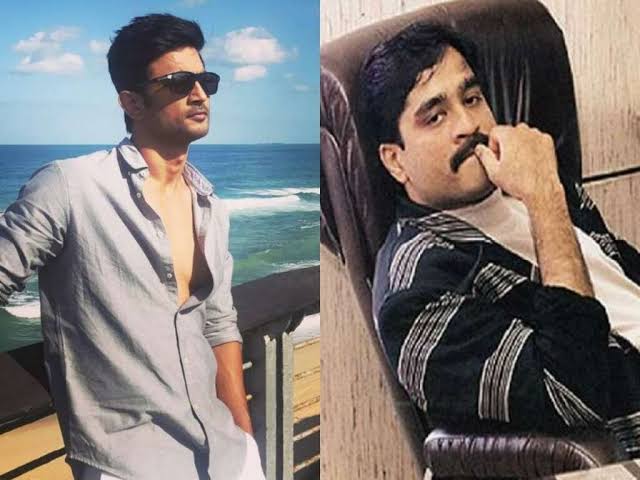
  • VIDEO: Ex-RAW officer says Dawood Ibrahim murdered Sushant Singh

    VIDEO: Ex-RAW officer says Dawood Ibrahim murdered Sushant Singh

    Bollywood actor Sushant Singh Rajput’s suicide case has become a mystery with various theories being linked to it.

    Amid speculations regarding sudden death of the actor, a former officer of the Research and Analysis Wing (RAW) — India’s foreign intelligence agency — has claimed that Sushant was “murdered by [notorious Indian crime boss and drug dealer] Dawood Ibrahim”.

    According to NK Sood, Sushant was murdered by Dawood with a “foolproof plan”. In a widely-shared video, the ex-RAW officer stated that though Dawood doesn’t live in Mumbai now but still has a strong hold over the city and Bollywood.

    “Many B-town celebrities participate in the events organised by Dawood’s team abroad and help the gangster earn money which is used for funding terrorism. The celebrities also receive a huge sum of money in return,” said Sood.

    Sushant was reportedly getting death threats over the phone before his demise, and thus the actor had even changed his SIM almost 50 times. The actor was so scared for his life that he had even slept in his car at a remote place fearing that someone might kill him at his house.

    Sood claimed that Sushant was murdered by professional criminals and that was why the CCTV cameras at his apartment complex were shut off a day before his demise and the duplicate keys of his room were also misplaced.

    All this evidence is enough to conclude that the actor was murdered, said the ex-RAW officer and added that Sushant’s girlfriend Rhea Chakraborty, his close friend Sandeep Singh and his domestic help were well aware of the trouble brewing in Sushant’s life.

    “But they chose to stay away from it and leave the actor alone.”

    He also alleged that the police were trying to put up a show that they were probing the case sincerely, but in reality, they were trying to save the culprit.

  • Honda City in Pakistan vs in India; hardly any price difference but the comparison will blow your mind

    Honda Cars India has revealed all upgraded specs of 6th-generation City in India which will come in both petrol and diesel engine, has more technological features, is larger as compared to its predecessors and is due to hit the roads next month.

    Amid a sense of buzz that has returned to the rather sedate sedan segment in India, car enthusiasts in Pakistan are also keeping an earnest eye out as the 6th-generation offers a slew of upgrades — both in terms of style and drive capabilities, Hindustan Times reported.

    Honda City is quite a popular model in Pakistan but the car has not received much in terms of facelifts and upgrades over the last few years. In a recent comparison between the upcoming City in India and the existing model doing the miles in Pakistan, PakWheels pointed out the glaring differences while also highlighting that the price difference is next to negligible.

    According to the automotive blog, the existing City in the country lacks some of the most basic features that are now almost standard in cars sitting in a much lower segment in the Indian market, as well as in the previous generation City there. The absence of airbags, cruise control, LED headlights, LED taillights, remote entry, rear AC vents, one-touch sunroof are some of the key features that the model in Pakistan skips altogether. Quite obviously then, the City in Pakistan also does not have new features that the sixth-generation model incorporates like Lane Watch camera, Alexa compatibility and Tyre Pressure Monitoring System (TMPS) display.

    While Honda Cars India will officially launch the new City on July 15, Honda Atlas Cars is not expected to launch it in Pakistan anytime before 2021. And even when launched, the car could be priced a lot more than its Indian counterpart because of factors such as vastly different demand scales, production scales and tax structuring etc.

  • Jadhav refuses Pakistan’s offer to challenge conviction in IHC

    Jadhav refuses Pakistan’s offer to challenge conviction in IHC

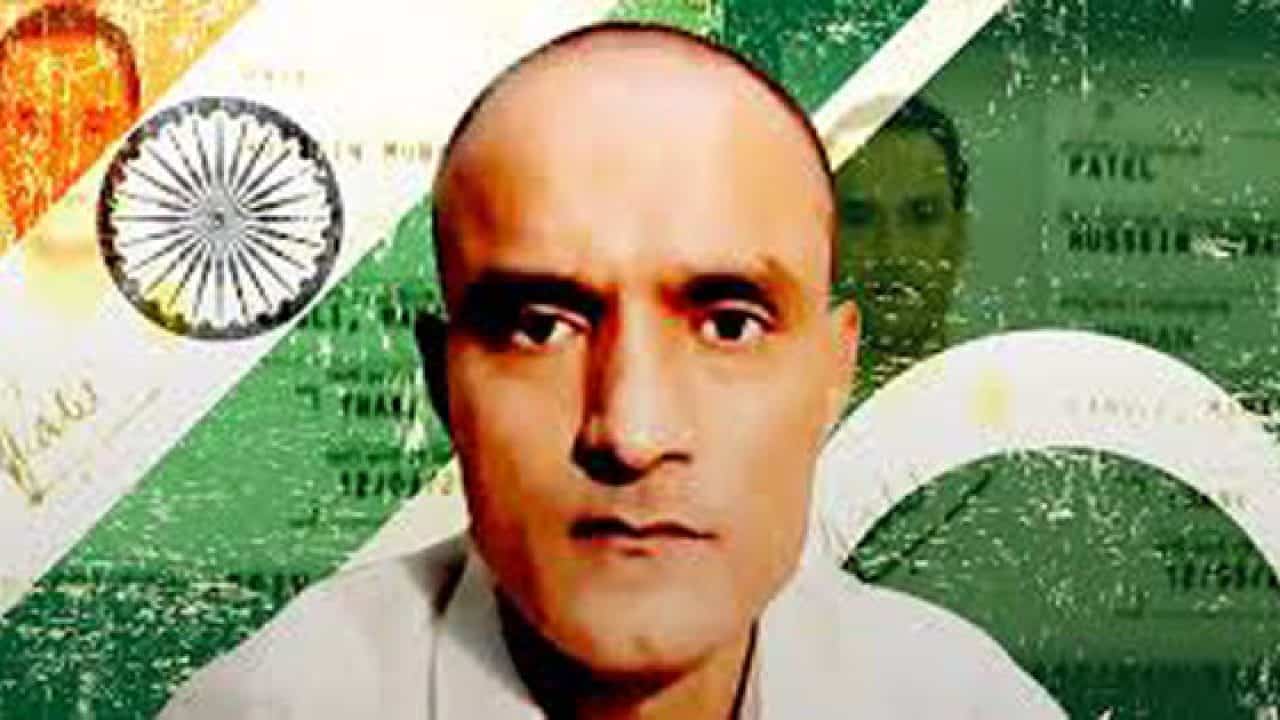
    While refusing Pakistan’s offer to file an appeal in the Islamabad High Court (IHC) against his conviction, Indian spy Kulbhushan Jadhav has decided to apply for a mercy petition, the Foreign Office (FO) has said.

    Jadhav alias Hussein Mubarak Patel — a serving commander of the Indian Navy associated with Indian spy agency Research and Analysis Wing (RAW) — was arrested on March 3, 2016, from Balochistan while attempting to crossover into Pakistan through the country’s border with Iran. Subsequently, in April 2017, a Field General Court Martial (FGCM) handed him death sentence on charges of espionage and terrorism.

    In a press conference in Islamabad on Wednesday, Additional Attorney General (AAG) Ahmed Irfan and Director General (DG) (South Asia & SAARC) Zahid Hafeez Chaudhry said that an ordinance was promulgated by the government on May 20, which allowed the Indian government, Jadhav and his legal representative to file a review petition in IHC within 60 days, which expire on July 19.

    According to Dawn, they said Indian authorities had requested to appoint an Indian lawyer to advocate for Jadhav but if an appeal is filed in the IHC, only a lawyer that holds a license of the respective court would be able to represent the spy. Therefore, an Indian lawyer cannot advocate for the convicted spy but they may be allowed to assist Jadhav’s counsel.

    The Pakistani government had allowed consular access to Jadhav twice in the past and has offered to do so again, the officials said. Authorities have also offered to arrange Jadhav’s meeting with his father and wife, they added. The AAG and DG (South Asia & SAARC) expressed hope that the Indian government will respond positively to this offer.

    Both officials recalled that Pakistan had earlier allowed Jadhav’s mother and wife to meet him and said that the government had complied with the verdict of the International Court of Justice (ICJ) passed last year.

    They said Pakistan had provided evidence of Indian state terrorism to the international community multiple times and will continue to do so.