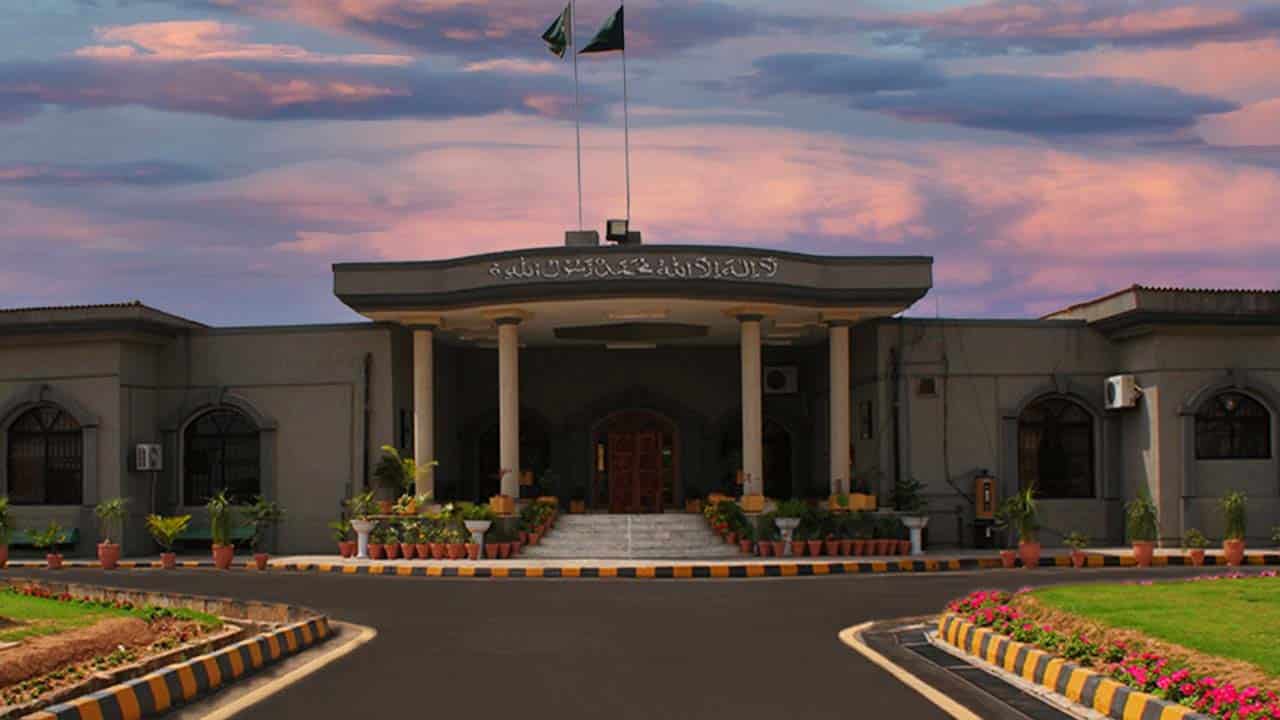
Tag: Islamabad High Court

  • Jail trial of Imran Khan in Cipher case approved by caretaker cabinet

    Jail trial of Imran Khan in Cipher case approved by caretaker cabinet

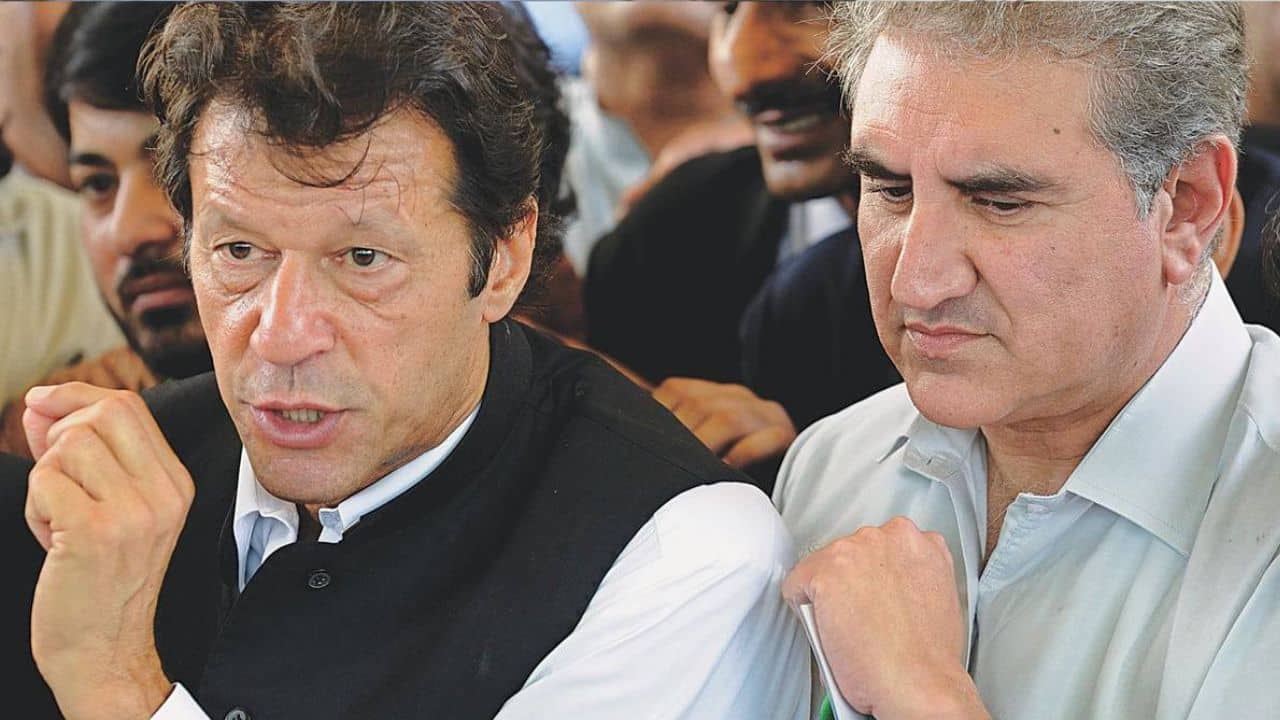
    The caretaker federal cabinet has given the green light for the jail trial of Pakistan Tehreek-e-Insaf (PTI) Chairman Imran Khan and Vice Chairman Shah Mahmood Qureshi in the cipher case, as per Geo News.

    The decision comes in response to security concerns, prompting the Ministry of Law to issue a no-objection certificate (NOC) for the trial on August 29, following requests from the Interior Ministry and Judge Abual Hasnat Zulqarnain.

    The Ministry of Law emphasized that the jail trial for the PTI chairman was deemed necessary due to security considerations.

    This approval sets the stage for an intra-court appeal filed by Imran Khan against the trial, scheduled to be heard by the Islamabad High Court (IHC) on November 14. The court has invited arguments from the attorney general.

    Imran Khan, who was ousted from the prime minister’s office in April last year through a no-confidence motion, initially contested the jail trial through a petition in the IHC.

    However, the court’s single bench, led by Chief Justice Aamer Farooq, dismissed the appeal on October 16, citing no apparent malice in conducting the jail trial and advising Khan to address his concerns in the trial court.

    The cipher case, invoking the Official Secrets Act 1923, was registered against Khan and Qureshi in August of this year by the Federal Investigation Agency (FIA), using Section 5 of the aforementioned law.

    The case revolves around a missing diplomatic cable allegedly containing a threat from the United States to overthrow the PTI government, according to the former ruling party.

    Both Imran Khan and Qureshi face allegations under the Official Secrets Act 1923 in the cipher case, related to a missing diplomatic cable, and are currently detained in Adiala jail.

    The IHC had earlier suspended Imran Khan’s three-year sentence in the Toshakhana case on August 29.


  • ‘Nawaz Sharif cannot play without his own umpires’: Imran Khan

    ‘Nawaz Sharif cannot play without his own umpires’: Imran Khan

    The legal saga surrounding Pakistan Tehreek-e-Insaf (PTI) Chairman Imran Khan’s jail trial and the controversial cipher case took center stage in Islamabad this week.

    On Tuesday, three witnesses provided their testimonies against the PTI chief and his party’s Vice Chairman, Shah Mahmood Qureshi.

    Judge Zulqarnain presided over the proceedings at Adiala jail under the special Official Secrets Act court. PTI legal representatives included Barristers Salman Safdar, Taimur, and Gohar Ali Khan, while special prosecutors comprised of Shah Khawar, Zulfikar Abbas Naqvi, and Raja Rizwan Abbasi.

    During the proceedings, PTI’s lawyer, Salman Akram Raja, representing Khan, raised concerns over the trial’s confined space within the jail premises, emphasizing that it wasn’t in line with legal protocols.

    Family members met the two leaders before witnesses’ statements and cross-examination were conducted; legal teams consulted with Khan and Qureshi. The PTI chief met with his wife Bushra Bibi and sisters Aleema Khan, Noreen Khanum, and Uzma Khan, within the jail premises.

    Qureshi’s daughter, Meharbano, was also present during the trial. She also spoke with the media outside the jail, and demanded justice and a fair trial for her father.

    “Let the family in; no one can have security concerns from their family. Fair trial is my father’s right and as a daughter, I have the right to see the trial,” she added.

    Contempt of court petition

    Adiala jail superintendent responded to the contempt of court petition filed by Khan on Wednesday, requesting the court to dismiss the contempt of court petition.

    “Can’t even think of disobeying the court order,” he stated in his reply.

    The superintendent told the court there is no permanent facility to make phone calls abroad on WhatsApp. He informed the court that the PTI chief spoke with his children on October 18, after the jail took special measures to make the call possible.

    “Arrangements are made for prisoners to speak with family and lawyers at the jail PCO,” he said, adding that the court can direct the Punjab Home Department to amend the rules with regard to making phone calls.

    The court, meanwhile, adjourned the hearing of the contempt petition till Monday due to the absence of Judge Abual Hasnat Zulqarnain.

    Islamabad High Court

    Islamabad High Court’s Justice Miangul Hassan Aurangzeb asked the Attorney General of Pakistan to ensure that the cipher case trial was not conducted in an inappropriate manner, otherwise, it might collapse like a house of cards.

    An IHC bench, comprising Justice Aurangzeb and Justice Saman Rafat Imtiaz, heard the intra-court appeal filed by Khan against his jail trial and the appointment of the special court’s judge in the cipher case.

    The court adjourned the proceedings to November 14, allowing time for the attorney general to present arguments.

    Nawaz wants his own umpires

    Talking to media persons outside Adiala Jail, Imran Khan’s lawyer Barrister Umair Niazi said the PTI chief had criticised PML-N supremo Nawaz Sharif and PPP Chairman Bilawal Bhutto-Zardari and also rejected the trial of civilians in military courts.

    The PTI lawyer quoted Mr Khan as saying that Nawaz Sharif cannot play without his own umpires and is again looking towards them. All political parties, except the PML-N, are calling for a level playing field, he added.

    Khan expressed concern over the fresh wave of terrorism in the country and said this was because of a “weak” Afghan policy as Mr Bhutto-Zardari, being the foreign minister, did not visit Kabul to address the issue of terrorism.

  • Nawaz Sharif’s legal team all set to file protective bail

    Nawaz Sharif’s legal team all set to file protective bail

    Former Prime Minister Nawaz Sharif’s legal team is gearing up to file three petitions seeking protective bail in the Avenfield, Al-Azizia, and Toshakhana cases.

    These petitions are expected to be submitted to the Islamabad High Court (IHC) as per sources of Dawn’s reporter Malik Asad.

    It is pertinent to mention that Nawaz Sharif is set to address a public gathering at Minar e Pakistan on October 21, after spending almost four years in the UK for his ‘medical treatment’.

    Nawaz Sharif had previously faced convictions in the Avenfield and Al-Azizia references, along with being declared a proclaimed offender in the Toshakhana case, which is currently being heard in an accountability court in Islamabad. During his time abroad, he had been granted bail in these cases.

    The decision to approach the IHC for protective bail appears to have been influenced by prior instances where the court had granted protective bail to individuals who were declared proclaimed offenders, including Sharjeel Inam Memon, Arbab Alamgir, and Asma Arbab, without the requirement of surrender beforehand.

    Sources close to the proceedings disclosed that there would be at least two court hearings – one before Nawaz Sharif’s return and another where he would surrender himself before the court.

    Following this surrender, he would be required to pursue pending appeals against his convictions in the Avenfield Apartment and Al-Azizia references, as well as address the ongoing Toshakhana vehicle case.

    The Toshakhana case, previously put on hold under NAB amendments, was reopened following a Supreme Court ruling to revive corruption cases.

    In 2018, Nawaz Sharif was convicted in two cases – the Avenfield Apartments and Al-Azizia references. However, he was acquitted in the Flagship reference. The late Judge Arshad Malik, who presided over the Al-Azizia reference, later claimed to have authored the judgment under duress.

  • Notices issued to Bajwa and Faiz over ‘controversial’ interviews

    Notices issued to Bajwa and Faiz over ‘controversial’ interviews

    The Islamabad High Court (IHC) has issued notices to former Army Chief General (retired) Qamar Javed Bajwa and former ISI Chief Lieutenant General (retired) Faiz Hameed over allegations of violating rules by giving interviews after their retirement, where they are accused of misrepresenting events.

    The notices were issued in response to a complaint filed by a private citizen named Atif Ali.

    The petition says that journalists Shahid Maitla and Javed Chaudhry conducted interviews with Bajwa and Faiz for the sake of viewership which had a “negative impact” on society. The petitioner said that he had been taken aback when he saw the articles as they could “pollute” society. It added that the garb of freedom of expression was used for a “criminal act”.

    The petition further alleges that events were misrepresented in the interviews and that the “criminal act” was conducted through connivance between the journalists and the generals.

    The petition says that the interviews portrayed a negative image of the institution and tried to create a rift between it and the people of Pakistan. Copies of the articles have also been attached to the petition.

    In addition to Gen. Bajwa and Lt. Gen. Hameed, notices have also been issued to the Pakistan Electronic Media Regulatory Authority (PEMRA) and the Press Association of Pakistan. Two journalists, Shahid Maitla and Javed Chaudhry, who conducted the interviews in question, have also been summoned by the court.

    Islamabad High Court’s Chief Justice, Aamer Farooq, in a written order issued on Monday, expressed dissatisfaction with the Federal Investigation Agency (FIA) for not responding to the petitioner’s repeated requests to file a complaint.

  • What does Bushra Bibi want to give Imran Khan in jail?

    What does Bushra Bibi want to give Imran Khan in jail?

    Imran Khan’s wife, Bushra Bibi, has approached the Islamabad High Court seeking protection for her husband and expressing concerns about his safety in jail. She has requested permission for homemade food for Imran Khan, while his legal team has claimed that his life is in danger.

    The IHC has issued notices to respondents in Bushra Bibi’s case and is considering her request to provide homecooked food to Imran Khan. The court has adjourned the hearing until next week.

    Imran Khan, the Chairman of PTI, has taken his case to the Islamabad High Court (IHC) in an effort to suspend a trial court’s verdict in the Toshakhana case. This move comes after the IHC previously suspended his three-year sentence in the same case about a month ago.

    In August, a trial court in Islamabad found Imran Khan guilty of “corrupt practices” related to concealing details of state gifts and sentenced him to three years in prison. While Additional District and Sessions Judge Humayun Dilawar had ordered the capital police chief to arrest Imran, he was instead arrested by the Punjab police, who took him to the Attock district jail. The Supreme Court later acknowledged “procedural defects” in Imran’s conviction by the trial court, suspending his sentence.

    Following the suspension of his Toshakhana case sentence, Imran Khan was detained in the cipher case and has been in judicial remand, which was extended until October 10. Recently, he was moved to Adiala jail from Attock jail under the IHC’s directives.

    Imran Khan, represented by senior lawyer Sardar Latif Khosa, has filed a petition with the IHC seeking the rectification of the order that suspended the Toshakhana case verdict. The petition requests the suspension of the order until the final appeal decision and also seeks permission to make the state a respondent in the appeal.

    The petition argues that the IHC has the authority to suspend the impugned order and sentence under the relevant sections of the Criminal Procedure Code. It highlights an omission in recording the counsel’s request for suspension of the trial court verdict, which has affected Imran Khan’s rights, including his disqualification from elections by the Election Commission of Pakistan (ECP).

    The petition further alleges mala fide intentions on the part of the ECP in disqualifying Imran Khan and mentions attempts to remove him from the leadership of PTI and prevent him from participating in general elections.

    In a related development, the Special Court (Official Secrets Act) handling the cipher case against Imran Khan and former foreign minister Shah Mehmood Qureshi is expected to indict both leaders on October 9. The case involves the disclosure of classified diplomatic information.

    During the trial behind bars, the prosecution requested in-camera proceedings, but the judge ruled that the trial would commence after framing charges against the suspects and that proceedings were already being conducted inside Adiala Jail. The IHC rejected the FIA’s request for an in-camera hearing of their post-arrest bail petitions in the cipher case.

  • IHC summons Toshakhana case records for PTI Chairman’s Trial

    IHC summons Toshakhana case records for PTI Chairman’s Trial

    The Islamabad High Court (IHC) has taken steps to obtain the records of the Toshakhana case involving the imprisoned Pakistan Tehreek-e-Insaf (PTI) chairman, Imran Khan, who is currently serving time in Attock Jail.

    The division bench of the IHC, comprising Chief Justice Aamer Farooq and Justice Tariq Mehmood Jahangiri, issued the directive in response to Imran’s appeal against his conviction in the Toshakhana case.

    In an official statement released today, the IHC has issued an order to the district election commissioner of Islamabad which states, “Notice to the respondent. Office is directed to requisition the record of the learned Trial Court.”

    On August 5, a District and Sessions Court gave a three-year prison sentence to the PTI chairman as part of the Toshakhana criminal case.

    The court also imposed a fine of Rs 100,000 on Imran Khan. Additionally, the former prime minister was prohibited from holding any public office for a duration of five years.

    The court’s verdict emphasized that the former prime minister had knowingly provided false information regarding Toshakhana gifts to the ECP and was found guilty of engaging in corrupt practices.

    Subsequently, he was arrested from his residence in Zaman Park, Lahore, and transferred to Attock Jail.

  • Pakistan Stock Exchange surpasses 46,000 mark for the first time in 15 months

    Pakistan Stock Exchange surpasses 46,000 mark for the first time in 15 months

    The Pakistan Stock Exchange’s (PSX) benchmark KSE-100 index experienced significant gains on Friday, rising by over 500 points and closing just below the 46,000 mark.

    The index reached 46,073.61 points at 3:47 pm, showing a notable increase of 675.30 points from the previous day’s closing of 45,398.31. However, by the end of the day, it closed at 45,920.73, up by 522.42 points or 1.15 per cent.

    According to Dawn, Ahsan Mehanti, the Director of Arif Habib Corporation, mentioned that foreign capital was actively buying shares in the energy sector. He attributed the stock market rally to favorable financial results, the Islamabad High Court’s ruling declaring the imposition of a super tax on various companies unlawful, and reports indicating the policy rate would remain unchanged.

    As a result of these factors, the index reached the 46,000 mark after a gap of 15 months, signaling an overall improvement in all sectors. Mehanti also pointed out the positive impact of the recently announced standby agreement with the International Monetary Fund (IMF).

    Looking ahead, if the market continues to close above 46,000, it is expected to see further growth. Amir Shehzad, Director of First National Equities Limited, referred to the recent market fluctuations as a “technical correction” and expressed optimism that the market could surpass the 47,000 point barrier in the coming week. He believed that maintaining an unchanged monetary policy by the central bank would likely have a positive effect on the market, possibly leading to new record levels.

  • Islamabad High Court deems super-tax on high-income businesses unconstitutional

    Islamabad High Court deems super-tax on high-income businesses unconstitutional

    The Islamabad High Court (IHC) has invalidated the imposition of a super-tax on high-income businesses, ruling it as unconstitutional. Justice Sardar Ejaz Ishaq Khan delivered the verdict on Thursday after a reserved decision. The court declared all notices of demand and recovery associated with the controversial tax null and void, providing relief to the affected businesses.

    Furthermore, the court struck down Section 4C of the Income Tax Ordinance, effectively negating the legal basis for the super-tax. The petitioners, who challenged the validity of this tax, were represented by prominent legal counsel, including Salman Akram Raja and Adnan Haider Randhawa, among others. They argued that the imposition of such a tax was unjust and detrimental to the growth of high-income businesses.

    The origin of this tax can be traced back to the budget speech of Finance Minister Ishaq Dar, wherein he announced the implementation of the super tax last month. Initially, the tax was proposed to be levied on individuals earning Rs500 million annually or more, but the conditions were later relaxed from the original proposal, which targeted those earning Rs300 million per annum.

    It is worth noting that the Supreme Court had previously approved the imposition of the super-tax, setting it at 4 per cent for all industries in February. The government had initially imposed a 10 per cent rate for some industries and 4 per cent for others.

    While the Lahore High Court also approved the tax, it added a caveat that the rules did not allow a tax rate higher than 4 per cent. However, the recent ruling by the Islamabad High Court has effectively struck down the super-tax altogether, providing significant relief to high-income businesses affected by the proposed tax.

  • Intraday update: Pakistani rupee plunges to historic low of Rs290 against dollar amid political turmoil

    Intraday update: Pakistani rupee plunges to historic low of Rs290 against dollar amid political turmoil

    On Wednesday, the Pakistani rupee (PKR) reached a historic low against the US dollar, falling to Rs290 during intraday trading at the interbank foreign exchange market. This decline is a major setback to Pakistan’s economy, as the rupee lost Rs5.16 in a single day compared to the previous day’s closing rate of Rs284.84.

    The previous record low of Rs288.43 was set in April. The sharp decline in the Pakistani rupee raises concerns about the country’s financial stability, and several factors have contributed to this depreciation.

    The arrest of former Prime Minister Imran Khan on corruption charges has led to increased uncertainty and added pressure on the Pakistani rupee. This political turmoil has negatively impacted investor confidence and the value of the local currency.

    Furthermore, the uncertain status of the International Monetary Fund (IMF) loan programme has further exacerbated the decline of the Pakistani rupee. Although the government had anticipated an installment of $1.2 billion under the Extended Fund Facility (EFF) program, delays in loan disbursement and recent developments in negotiations have raised concerns about Pakistan’s ability to meet its financial obligations. These doubts have put additional strain on the rupee’s value.

    Currency experts are closely monitoring these developments and expressing caution about the future outlook of the Pakistani rupee. The government must take decisive measures to stabilize the currency and restore investor confidence. This may involve implementing effective economic policies, addressing corruption concerns, and ensuring a more transparent and predictable investment environment.

    It is crucial for the Pakistani government to engage in constructive dialogue with the IMF to secure the much-needed loan program. Demonstrating a commitment to fiscal discipline, structural reforms, and good governance can potentially alleviate concerns surrounding the economy and enhance the rupee’s value in the international market.

    While the situation appears challenging, it is important to note that currency fluctuations are not unique to Pakistan. Several emerging economies have faced similar issues in recent years. The government’s response and its ability to address the underlying causes of the rupee’s depreciation will be critical.

  • Islamabad High Court provides relief to Khan, extends bail

    Islamabad High Court provides relief to Khan, extends bail

    The Islamabad High Court (IHC) on Thursday approved an extension in Pakistan Tehreek-e-Insaf (PTI) Chairman Imran Khan’s bail in nine different cases.

    The former Prime Minister appeared before the court after travelling from Lahore to Islamabad amid tight security as a warning from the court of bail revocation over his continuous absence loomed ahead.

    Khan entered the court in a wheelchair. On the previous day, his doctors had advised him to bed rest, citing insufficient healing of his injured leg.

    Earlier in the day, the PTI chief revealed in a video message that he was the target of a second murder attempt on March 18 in the judicial complex in Islamabad.

    In a video message, the former Prime Minister said, “If anything happenes to me, I believe Dirty Harry and his gang will be responsible,” adding that he is not under threat by an outside enemy.