Tag: Karachi

  • Celebrities express outrage over condition of brown bear in Karachi Zoo

    Celebrities express outrage over condition of brown bear in Karachi Zoo

    Just when we breathed a sigh of relief after it emerged that Islamabad Zoo’s lone elephant Kavaan will soon head to Cambodia, where he will retire at an animal sanctuary, videos and pictures of a brown bear in dreadful conditions at the Karachi Zoo have sparked furor and outrage on social media. Celebrities including Ushna Shah, Armeena Khan and Mashal Khan expressed their distress over the condition of the bear and urged authorities to shut down the zoo.

    In a message penned in Urdu, Ushna said that zoo culture should be completely eliminated and that citizens should actively campaign for them to be shut down.

    “If you like looking at animals, go observe them in their natural habitat. When you come and look at them in zoos, you add to their agony”, said the actor.

    “Raise your voice for those who can’t speak,” she added.

    https://www.instagram.com/p/CFqZ11hhKDw/

    Armeena urged her followers to help the brown bear or else he would die.

    Mashal Khan said that she is “sick to my stomach after learning of this poor baby in Karachi zoo, being jailed without food, water, health care”. She asked her followers to raise their voice for the bear and help end her ordeal.

    https://www.instagram.com/p/CFpMZ1yA2s2/

    Later, the actor shared that she and her friends are filing a Constitutional Petition in the Sindh High Court to rescue the baby bear and have her transferred to Skardu where she can be reunited with her family.

    https://www.instagram.com/p/CFrSJyBgPe0/

    Meanwhile, Karachi Metropolitan Corporation (KMC) Administrator Dr Iftikhar Ali Shallwani slammed the claims and said that the bear is “hale and hearty” at the zoo. Sharing a video of the bear playing in his enclosure as well as a report on its condition, Dr Shallwani said: “The KMC is trying it’s best to give natural habitat to the animals at Karachi Zoo.”

    https://twitter.com/Shallwani/status/1311036764744802304?s=20

    However, reports have suggested that all is not well as the administrator has claimed. According to a senior Sindh Wildlife Department (SWD) official, the bear is not used to living in Karachi’s hot weather conditions, especially during this time of the year when it needs to hibernate in freezing temperature.

    Another SWD official said that Karachi Zoo’s management was responsible for the bear’s dreadful condition. He said that the animal does not belong in the zoo and that she needed to be kept in an air-conditioned room, in darkness.

    After the pictures of the bear went viral on social media, a picture of a malnourished and underfed lion was also widely circulated with people criticising the Karachi Zoo administration for mistreating animals.

    https://www.instagram.com/p/CFuxCefnd6s/

    However, it later emerged that the picture of the lion was not from Karachi Zoo.

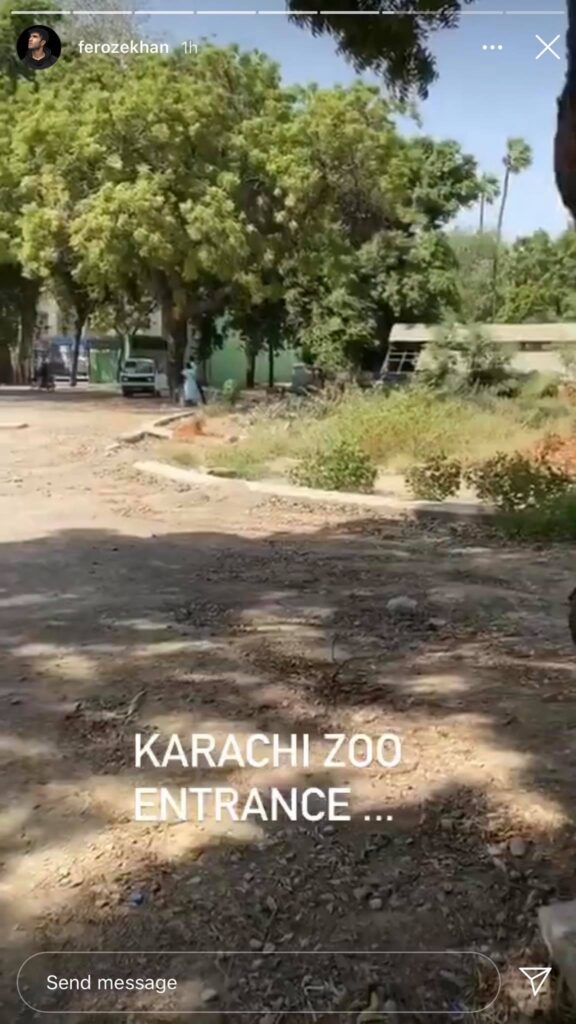
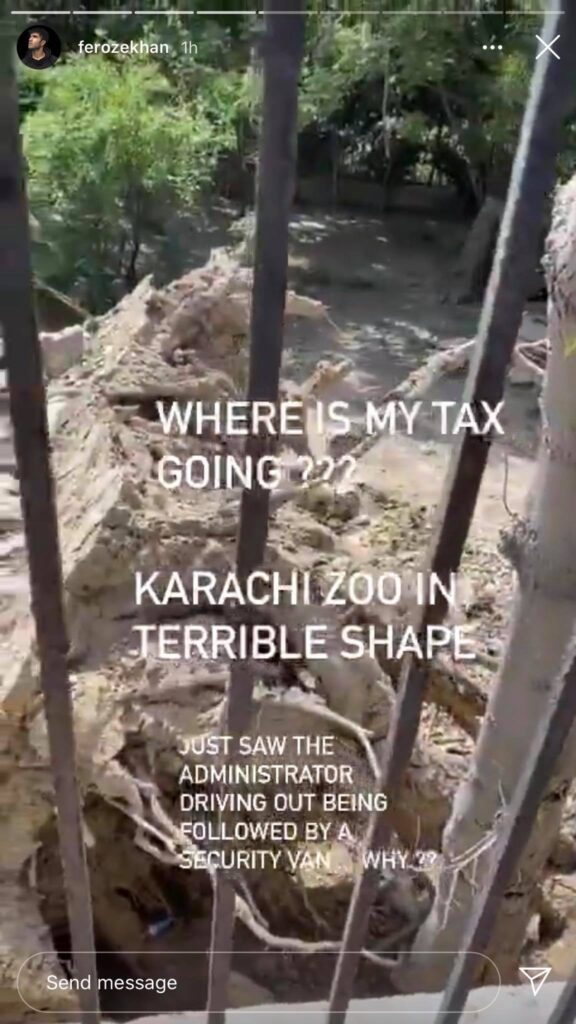
    Last week Feroze Khan had also posted pictures of Karachi Zoo’s dilapidated conditions and had questioned where his taxes were going.

  • VIDEO: Electronics shop owner teaches daughters to repair things

    VIDEO: Electronics shop owner teaches daughters to repair things

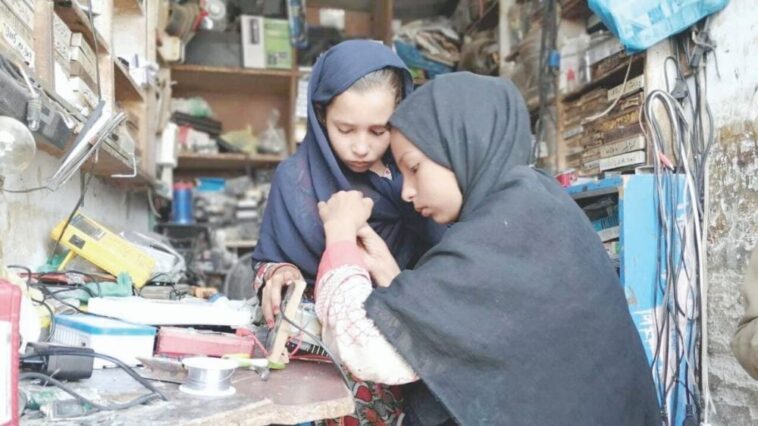
    Naseeb Jamal, who runs an appliances repair shop in Qasba Colony, Karachi, has taught and trained his daughters to repair different things.

    In an interview with Urdu News, Jamal, who has eight daughters and one son, shared that he trained six of his daughters to fix and repair electronic devices, adding that he believes women are fast learners. 

    Talking about breaking the stereotypes, Jamal said: “People would gossip and called me a rebel. Even my mother said to me that what I was doing was not in line with our traditions and that it was not good for [my] girls to sit at the shop.”

    “I trust my daughters and want to equip them with skills in my supervision. What is wrong in that,” he questioned.

    “This is the way to strengthen women. They should not just be educated, but skilled as well. If they are skilled, they would bring more pride to their parents, to their country and also to their area,” he added. 

    https://www.facebook.com/UrduNewsCom/posts/2026777044126065
  • Three men drown in Karachi while filming TikTok video

    Three men drowned in a huge pond while making a TikTok video in Karachi’s Rais Goth on Sunday.

    According to reports, three friends, residents of Kemari Town, went to Rais Goth for a picnic where they decided to film a TikTok video at the bank of a pond situated near a stone crushing plant in the area.

    One of the friends slipped and fell into the pond. His friends then jumped into the pond to rescue him but unfortunately, they all drowned. 

    Also Read: VIDEO: Police arrest TikToker for risking his life for TikTok video

    After receiving emergency calls, police and rescue officials hurried to the spot and recovered their bodies from the pond which were then shifted to the hospital for medico-legal formalities.

    The deceased were identified as Shehzad, Sajjad and Zubair.

    https://www.youtube.com/watch?v=UJvdsrb_RIg&feature=emb_title

    Earlier on July 21, a boy had drowned in the Khanpur Dam while trying to take a selfie. The 20-year old was taking a selfie at the edge of the dam. According to details, a 20-year-old was attempting to take a selfie while standing at the edge of the dam when he suddenly lost his balance and fell into the dam. 

  • COVID-19: Will a second wave hit Karachi?

    COVID-19: Will a second wave hit Karachi?

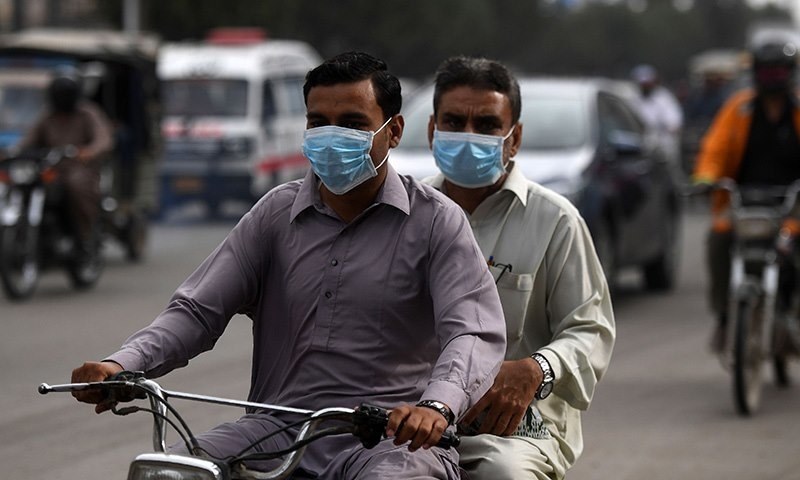
    A study published in Oxford University Press’ Journal of Public Health has found that 36% of Karachi’s residents have coronavirus antibodies and if current trends continue, there is lower chance of a second wave hitting the city due to the masses having achieved herd immunity.

    Herd immunity is a form of indirect protection from a contagious disease that occurs when a sufficient percentage of a population has become immune to an infection, whether through vaccination or previous infections, thereby reducing the likelihood of infection for individuals who lack immunity.

    Herd immunity develops when a significant chunk of the population has developed antibodies of a disease following infection, thereby reducing the chance of passing it on to others, which the researchers say is 60-70% of the population.

    According to the study, conducted between May and July, if 36% of the adult population of Karachi is supposed to be seropositive (positive for COVID-19), then it can be assumed that in the next two-to-three months “∼60% of general population will become seropositive”.

    “This assumption or theory if proven right then it will reduce the chance of a second wave in Karachi and increase the possibility of acquiring herd immunity,” the paper adds.

    Anadolu Agency quoted lead researcher, Dr Samreen Zaidi, as saying that further studies show that the seroprevalence rate has reached 60%, as was expected.

    “We, on the basis of a gradual drop in cases, and other relevant factors, assume that there are low chances of a second wave of coronavirus,” Zaidi told Anadolu Agency.

    However, she acknowledged: “Assumptions are assumptions.”

    “The only limitation of this study is that our sample size is small. Therefore, we have recommended further and wide-ranging research on the government level to double-check the results of this study,” she said.

    Hematologist and head of NIBD, Dr Tahir Shamsi, also claimed that the country has “almost” attained herd immunity, indicating that there are low chances of a second wave of the pandemic.

    “The data this study shows is until July. We are in September now, and the latest statistics, and testing results suggest that the seroprevalence or immunity rate is almost 60% now,” Shamsi told Anadolu Agency.

    He said the latest findings would be published after a month.

  • Marwah rape case: Five-year-old assaulted even after death

    Marwah rape case: Five-year-old assaulted even after death

    The two men who confessed to raping a minor girl earlier this month in Karachi continued the sexual assault even after the five-year-old was dead.

    The child’s burnt body was found from a garbage dump two days after she was reported missing. The girl had gone to buy some sweets from a neighbourhood shop in the Old Sabzi Mandi area when she was kidnapped.

    Officials investigating the rape and murder case said the arrested suspects had done this heinous crime on the roof of a house, adding that they have confessed to their crimes.

    “This is not just a rape case but a gang-rape case,” a police officer familiar with the investigation said, adding that the fingerprints of both suspects had also matched.

    The two prime suspects, Faiz and Abdullah, lived in the same area where the girl’s house is located. While Faiz is a tailor by profession, Abdullah is a garbage collector of Afghan origin. Abdullah has also been reportedly deported from the UK after seven years. Faiz was the one who first kidnapped the child but both men had raped her.

    Faiz has been involved in the same crime before and lived alone a few houses away from the child’s residence in the same street. Abdullah, on the other hand, lived on a footpath in the area. Faiz had revealed the name of his accomplice after he was taken into custody.

    Faiz informed police that they had kidnapped the minor girl and brought her to his house, before raping her one by one, during which she died. He also confessed that the two had continued raping the child even after she died before wrapping her body in a waistcoat and stuffing it in a gunny bag to dump at the garbage site at Milk Plant plot in the PIB Colony police station’s jurisdiction.

    While both had confessed to the crime on Thursday, officials said they now had the fingerprint report that pointed towards Faiz and Abdullah’s involvement in the gang-rape and murder. However, a DNA report was yet to be released.

    One of the investigators in the Esa Nagri case said Faiz’s house is located across the girl’s.

    “The piece of cloth wrapped around [her] body was taken from Faiz’s shop,” the official said.

  • ‘Police in Pakistan now have an anti-eggary unit to save kids from eating too many eggs’

    ‘Police in Pakistan now have an anti-eggary unit to save kids from eating too many eggs’

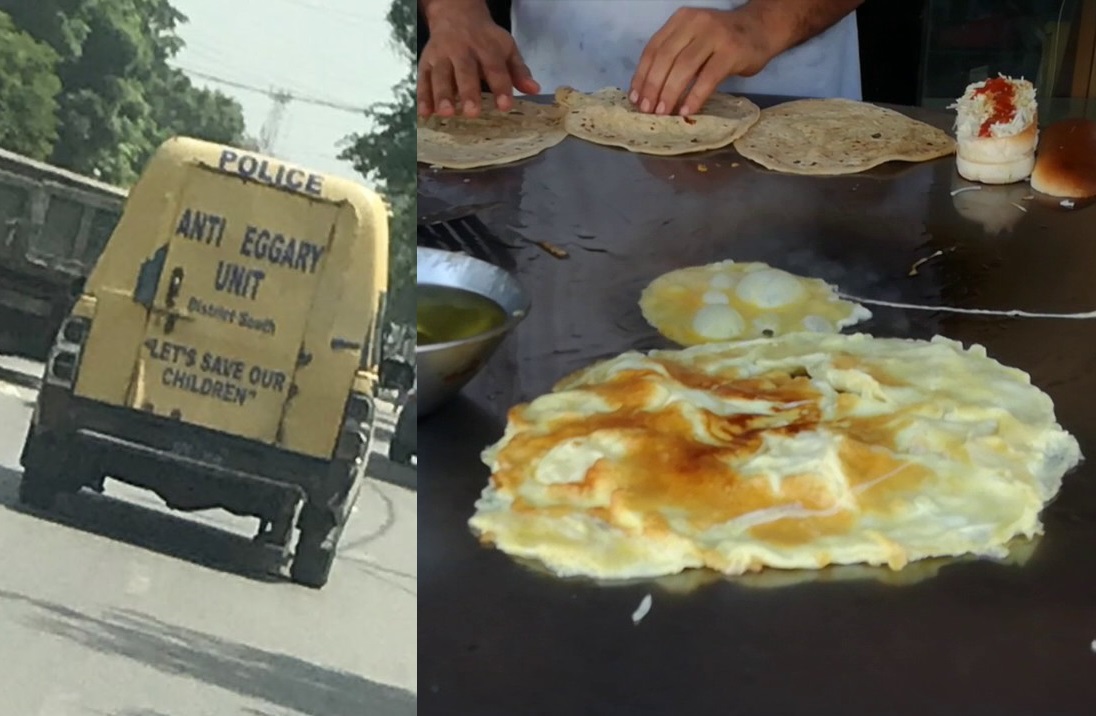
    Senior journalist Kamal Siddiqui has poked fun at the police for “having an anti-eggary unit to save our children” by making sure that “they do not eat too many eggs”.

    “So in Pakistan, we have a special police unit that saves children from eating too many eggs,” he jokingly wrote while tweeting a picture of an anti-beggary unit mobile minus the ‘B’.

    “Let’s save our children” could also be seen inscribed on the Sindh police vehicle.

    CRACKDOWN ON BEGGARS IN SINDH:

    In line with Sindh cabinet’s ban on child beggary and directions to the social welfare department to pick up children begging at traffic intersections and in streets and rehabilitate them at welfare centres, the aim of the anti-beggary unit is to tackle beggary, especially in the port city of Karachi.

    According to the findings of a committee on the issue of beggary, there are enough laws available to deal with the issue such as Section 7 of the West Pakistan Vagrancy Ordinance 1958 that prohibits beggary.

    A 2018 report of the committee said that beggars have also been seen with children who they use to create empathy in the givers’ eyes. This is a violation of Section 49 of Sindh Child Act 1955.

    It pointed out that in 2011, the Sindh assembly had passed the Sindh Child Protection Authority Act 2011 which called for ensuring the rights of the children in need of special measures and to provide matters ancillary thereto.

    Sindh Chief Minister (CM) Murad Ali Shah, in consultation with the cabinet, had earlier decided to ban beggary all across the province. He had also directed the Social Welfare Department to launch a special drive against child beggary.

    He had directed the district administration and the police to help the Social Welfare Department in the drive and round up the child beggars and send them to Sweet Home and Street Children Centre, Korangi, where they would be rehabilitated.

  • Karachi’s rain mess: A case of governance failure, corruption and political turf wars

    Karachi’s rain mess: A case of governance failure, corruption and political turf wars

    “The curious case of this city is that it is administered by a mix of federal and provincial controlled landholding associations, cooperative housing societies, military-run cantonments, the navy, the railways and the industrial area authorities to name a few.”

    A commercial port city with more than 20 million residents, Karachi has continued to suffer decades of civic mismanagement, gaps in urban planning and development given the lack of adequate governance, corrupt civic agencies and political parties vying for power. None of the myriad agencies that control resources and management in this city have honestly bettered the city and the lives of its people.

    Take the tussle between the PPP and the MQM that has not only brutally destroyed the socioeconomic fabric of districts such as Lyari, a sprawling slum settlement turned into a hotbed of violence, guns and drugs when rival gangs were patronised by the city’s two political parties, but also resulted in turf wars affecting the running of civic institutions. The political bifurcation of jurisdictions within this city has, therefore, resulted in a complete breakdown of basic service provision over years – lack of clean drinking water, electricity, housing, security are just a few municipal services that should be under the local government system but this is not the case. Even an elected mayor has no jurisdiction over certain areas of this city. When a city’s history is rooted in ethnic and identity-based politics building urban infrastructure, providing municipal services, or even intervening in areas that are essentially administered by a particular political party is near to impossible.

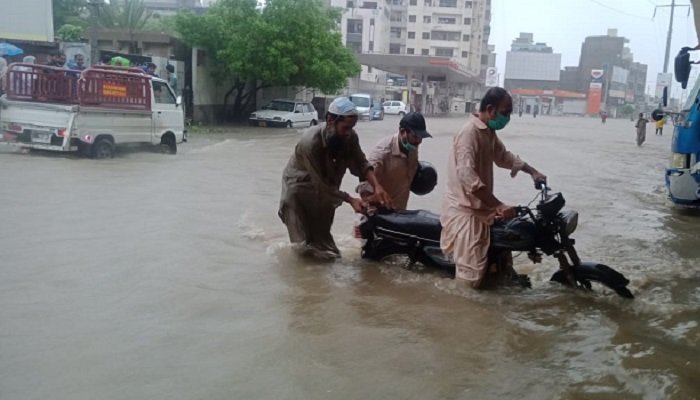
    Last week, Karachi was submerged in 230mm of rainfall in less than 12 hours, the most ever recorded, according to the Pakistan Metrological Department, exposing again glaring gaps in urban development, especially in low-income and vulnerable communities. Wealthy residential areas were not spared where drainage channels were choked. One such densely populated urban settlement with poor access to water and sanitation, Lyari is located about 15 minutes from the city’s business hub at I.I. Chundhrigar Road where you’d find most of the banking sector is headquartered. Streets were inundated with rain and sewerage water for days and later cleared up by residents because no government assistance reached these communities. Similarly, homes, businesses and streets in the city’s old quarter of Kharadar – a symbol of pre-colonial history which becomes the centre for Muharram processions (near Mithadar where the Edhi main office is located and adjacent to Jodia Bazaar) – literally drowned in a mix of rain, putrid sewerage water and floating garbage, increasing the risk of diseases, such as dengue and malaria. Some commercial/residential areas remain flooded with no electricity almost a week after the downpour in this city; sewerage water has collected in empty plots according to residents in different areas of Karachi where gutters are broken.

    First let’s be clear here: vulnerable neighbourhoods with already inadequate urban and social infrastructure have long been neglected by the ruling political powers and whomsoever authority is in charge of a given district. Then, the urban poor in Karachi are like none other. I recently read on Twitter: ‘The Lebanese people are like kids who’ve had to raise themselves because the parents were never around to take care of them.’ Now apply that to Karachi and it makes sense. Migration from rural to urban, and from the north has meant living in overcrowded, unsafe environments with little access to education, health, or sanitation, and with the COVID-19 crisis having reduced livelihood opportunities even further because of mobility restriction and decreased economic activity, natural disasters have the potential to decimate lives and homes. So why no focused body that can fix Karachi? The curious case of this city is that it is administered by a mix of federal and provincial controlled landholding associations, cooperative housing societies, military-run cantonments, the navy, the railways and the industrial area authorities to name a few. Many question the absence of the relevant authorities responsible for civic provisions, such as drain clearing before the annual monsoons, sewerage repairs and garbage collection. In fact, it was army personnel, volunteer rescuers, and even volunteers from the Islamist group Tehreek-e-Labbaik who rescued and evacuated people from many inundated residential neighbourhoods — some using boats for rescuing residents living in the newly constructed Naya Nazimabad area while some families waded through waist-high water. 

    Floating cars and destroyed homes: an apocalyptic sight

    Moreover, substandard construction in the city and informal settlements, built close to water draining channels or nullas, were perilously flooded or sunk during these rains given their poor physical infrastructure. This kind of urban flooding is to be expected as climate patterns change experts warn. And we have witnessed urban flooding in the past in Karachi. Warnings from the late Perveen Rahman, Orangi Pilot Project’s director, of the possibility of urban flooding if the mangrove plantation was removed on either side of Mai Kolachi because it served as a catchment area that could prevent flooding, were never heeded.

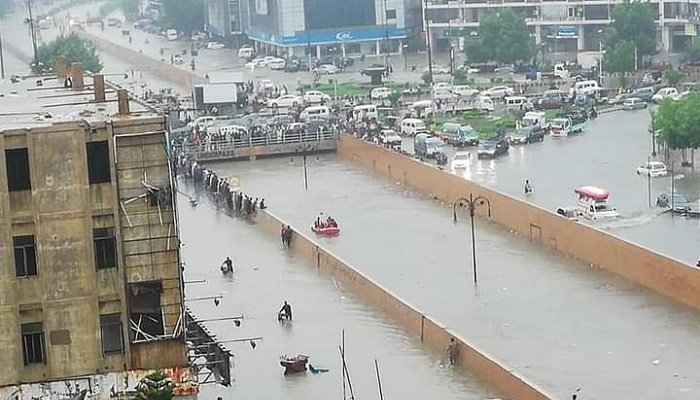
    The human toll of the recent rain tragedy has left Karachi’s residents reeling with more anger than ever and rightly so. I use the term tragedy here because rain in Karachi is hardly romantic or calls for a relaxing cup of tea and pakoras – rather it’s become synonymous with loss of lives, homes and livelihoods that could have been avoided had the concerned authorities prioritised rain preparations by declogging stormwater drains beforehand or constructing drainage facilities where none exist. Hundreds of people were forced to take shelter in the homes of relatives while scores of cars and other vehicles caught in the torrential downpours either remained submerged in water, many seen floating away as the water began flowing akin to a river developing rough currents. Scenes captured and shared as photographs and videos on social media were as if this city had been hit by a passing meteor and destroyed with a vengeance. Main thoroughfares and all seven newly constructed underpasses were submerged under several feet of water; children and motorcyclists drowned in waterlogged underpasses; young men slipped into storm drains (nullahs); 21 bodies were pulled out of just one water channel near Korangi; cars were seen stranded or floating everywhere in the city; underpasses resembled swimming pools turned nasty, and electricity was cut in areas for over five days to save people from getting electrocuted because this city has a surplus supply of unnecessary wires dangling on electric poles or lying unattended on roads and pavements. All this while empty shipping containers placed to block streets during the ninth and tenth of Muharram were seen dangerously floating down Zaibunissa street in Saddar jostling calmly for space with cars and buses. In the case of a police van caught in moving water currents on the main Sharah-e-Faisal thoroughfare that leads to Jinnah International airport – images of which went viral on social media – around five policemen were rescued by passersby who threw a rope ladder at them. Where were the authorities, the rescue services other than volunteers such as Edhi and Chippa to help in this disastrous monsoon deluge is a question we need to ask the provincial/federal government.

    And it was not just Karachi that witnessed the monsoon rains this year but images from the interior of Sindh are heartbreaking – entire villages have drowned, mud homes entirely washed away with families having lost their meagre belongings, hungry children huddled together under the open skies – and these are communities that persistently suffer from drought, malnutrition, lack of healthcare, unemployment. Again, why has this government neglected its most vulnerable people needing protection, shelter and food? According to the NDMA, troops using boats evacuated 300 people from the rain-hit district of Dadu in Sindh, while 1,245 people were evacuated from Karachi’s rain-hit areas last week, where residents lost their life’s savings when businesses were destroyed and homes flooded with sewerage water, especially where the city’s outdated drainage and waste systems were overwhelmed by an unprecedented spell of heavy rain. That is not to say urban flooding was unexpected. Although flood warnings were issued, it appears authorities in charge of overseeing the city’s basic services and infrastructure were at their usual lethargic best without formulating any kind of preemptive response.


    When DHA drowned in sewerage water

    This year’s monsoon rains did not distinguish between slum settlements and the wealthy Clifton and Defence Housing Authority (DHA) neighbourhood. Given DHA is a housing authority for the rich and famous, in the aftermath of these rains that didn’t appear so – the sprawling area that comprises DHA was inundated with water as aerial views shared on social media revealed not a dry patch. Originally founded in 1953 as Pakistan Defence Officers Housing Authority, Zia-ul-Haq passed a Presidential Order in 1980 to create DHA, a civic authority run by the powerful military controlling five per cent of urban land in this city. It is a private enterprise given a governing body run by chiefs of defence institutions, essentially administered by serving brigadiers under the direct command of corps commanders. It was decided then that DHA would have its own rules and essentially not adhere to the local government system that oversees the municipal provisions of the city. This Presidential Order divided the Karachi Cantonment – the southern side named Clifton Cantonment that was given DHA Phase 1. In other words, DHA and Cantonment Board Clifton (CBC) do not come under the mayor of the city who cannot control the drainage, water supplies and planning for this area.

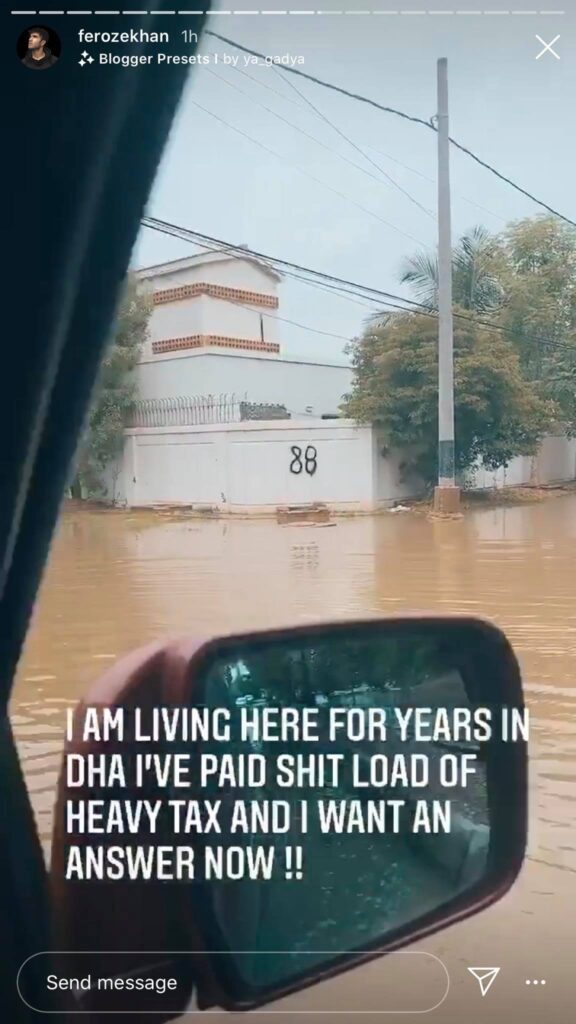
    Residents from DHA, one of the largest landholding bodies in this city, were hard hit this year when scores of houses were flooded in the city’s posh district home to politicians, ministers, entrepreneurs and industrialists. No one from this authority emerged to apologise for the putrid mess that was open gutters and collected rainwater measuring over five feet in certain areas and no one attempted to provide assistance for those vulnerable residents trapped in their homes without electricity, food, water and medicine; some even at the risk of drowning. Many took to twitter cussing the electricity supplier, the Sindh government and the DHA authorities, as they witnessed green streets drowning mercilessly with such rainwater intensity that gated homes were left in utter disarray; heavy metal gates flung wide open with currents of the free-flowing water, expensive cars floating aimlessly or submerged and basements of homes flooded with expensive paintings and books destroyed in some homes. The urban middle-class deprived of basic amenities, clean water and electricity for years intermittently, say they watched this side of the Clifton bridge as they term the elite, drowning and waited for a reaction. The point being if you pay your taxes, water taxes included, and get nothing in return, because you’re compelled to buy your water, electricity and security, something has to give – and these rains meant no one was going to sit back and take the callousness suffered over years.

    Residents mobilised over Facebook and protested outside the office of the CBC, DHA’s sister organisation, to register their anger at having paid taxes for years but not having received any services, such as solid waster management disposal – the city actually has no plan for waste disposal – or running water without having to purchase water tankers and pay a whopping Rs 7,000 for one tanker. Furthermore, the stormwater drains clogged with garbage in DHA and elsewhere in the city, have not been removed as a preemptive move before the summer rainfalls. Hundreds of residents protested outside the offices of the CBC demanding the authorities clear the water hours, and present their audit for the past five years. Despite a legitimate right to protest, the organisers are now faced with police charges for rioting — and for shaking the CBC head out of his lethargic stupor. Fed-up with the city administration, other protests happened, in the days to follow, including all Karachi residents irked by years of neglect. A friend who said she’d stopped the water from seeping into her dining room and flooding her house, calling the city a disaster zone, a death trap. I can’t worry unless something hits me in the face, she said. Or else I’d die of anxiety. And I forgot to mention if you have a generator, which most Karachiites at home and for their businesses would do, finding a petrol station at 4 am was a nightmare when you ran out of petrol or diesel. 

    In certain residential and commercial areas of this city, even as I write this, electricity is yet to return; roads are filled with water, and sewerage, despite the Sindh government’s representatives, including the chief minister rolling up their sleeves and supervising water drainage. Draining the water from main roads has largely been left to volunteers and the Sindh government (read Sen Murtaza Wahab’s twitter updates) when the concerned authorities were unable to move in swiftly and do their job. Businesses have been gutted; supplies worth hundreds of thousands lost all over this destitute city, but who is listening to these troubles? Who will work or represent the interests of this city and its people? All of Karachi deserves greater attention because it has suffered years of neglect and economic hardship despite generating maximum revenue. No city can function with multiple agencies and multiple service provision jurisdictions. According to a paper on landownership in Karachi authored by Arif Hasan, Noman Ahmed and others, this city is governed by 13 different land management authorities which resultantly means no consensus is achieved and there is no coordinating mechanism, because of clashing interests. Over the years this has translated into a lack of low-income housing, amenities and utilities.

    Making Karachi liveable

    So while it is critical for megacities like Karachi where urban sprawl has not been able to keep up with the growing population needs to focus resources on immediate management and response to natural disasters or an urban crisis, attention must be paid to how long-term measures can be implemented to build a more sustainable and liveable city. This approach is imperative after an intensely destructive monsoon season countrywide that has revealed how unprepared and clueless we are when it comes to managing disasters of this unprecedented scale – natural disasters intensifying over the years as unusual weather patterns emerge clearly warning of the impact of climate change (Karachi’s extreme heatwave in 2015 is yet another example) If climate change is not addressed adequately by this government, without a disaster management infrastructure and expertise to match, severe weather will cause loss of lives and livelihood. Mitigating the effects of climate change  (on agriculture, for example) is imperative, especially in vulnerable areas, rural districts in Sindh, even KP and Balochistan, where the capacity to sustain climate change shocks is non-existent, and where disaster prevention is unaddressed.

    Karachi’s woes require a serious reorganisation of administrative duties so whomsoever civic agency is responsible gets the job done without political and commercial interference (especially in the use of land to their own advantage) while keeping at the fore the impact of climate change (droughts, floods, rain intensity will adversely affect water and food security in the near future) Governance must no longer be compromised because of conflict between stakeholders at the expense of the people. Strengthening local bodies is critical. As a party, the PPP has never allowed for that because it becomes a political issue whereas the PML-N gets voted on its governance track record in Punjab, so it must keep to a standard when it comes to civic services.

  • Karachi rains: Mehwish Hayat, Ayesha Omar express anger, demand accountability

    Karachi rains: Mehwish Hayat, Ayesha Omar express anger, demand accountability

    As Karachi continues to suffer after record rains, residents of the city are taking to the streets and social media to express their anger and rage and are demanding accountability of those responsible for the mess.

    Among those lashing out at the government and authorities are celebrities including Mehwish Hayat, Ayesha Omar, Aijaz Aslam, Sanam Jung, Sanam Saeed and Feroze Khan.

    “My anger knows no bounds,” wrote Mehwish. “How can a modern city like Karachi not have the infrastructure to cope with rain in today’s age?”

    Demanding accountability, the actor added, “Enough is enough!”

    “It’s time for accountability. It’s time to speak up. It’s time to take ownership. It’s time to demand our rights. Its time to heal. It’s time,” wrote Ayesha on Twitter.

    Aijaz Aslam, Sanam Saeed and Sanam Jung voiced similar concerns and demanded answers from the authorities.

    https://www.instagram.com/p/CEhEpVSj_vR/
    https://www.instagram.com/p/CEhRBEoDRzy/

    Anoushey Ashraf, Mansha Pasha and Fahad Mirza also expressed their distress and disappointment and called out those in power for making false promises.

    https://www.instagram.com/p/CEgy-8TJ504/

    Feroze Khan wanted to know where his tax money went.

    Meanwhile, residents of Defence Housing Authority (DHA) on Monday gathered within the premises of Cantonment Board Clifton (CBC) to protest against the lack of monsoon infrastructure and the administration’s failure to provide them basic amenities.

    “We wish to register our legitimate right to get the supply of basic amenities of potable water, stable electricity, effective discharge and flow of drains and sewerage, elimination of hanging electricity wires & data cables, fixing of broken poles, providing of security [as well as] repair and re-carpeting of broken roads,” read a statement by the residents of DHA Karachi ahead of Monday’s protest.

    A second protest for later this week has also been announced by the aggrieved residents to take up their demands with DHA outside the Phase-I office on September 3 at 12:30 pm.

    On the other hand, Prime Minister Imran Khan has announced that both the centre and Sindh will be working together to bring much-needed relief to the people of Karachi.

  • Karachi: Resilient no more

    Karachi: Resilient no more

    A city once known as the ‘city of lights’ has now been without electricity for almost three days and counting.

    Karachi resembles a dump now with dilapidated roads, virtually no sewerage system, no government public transport, buildings on top of each other without following any safety laws, no emergency response system, nothing. Recent visuals on our television screens, social media and WhatsApp following the monsoon rains in Karachi are horrendous. Cars floating around, houses drowning in sewerage water and rainwater, people being electrocuted, no electricity, no food, no relief in sight. A wheelchair-bound woman drowned in her house due to the mismanagement of those in power, someone who had a heart attack could not reach the hospital in time due to flooding…each story is worse than the other. More than 80 people have so far lost their lives.

    The ‘resilience’ of the people of Karachi has been taken for granted but Karachi has had enough!

    The Pakistan People’s Party (PPP) has been in power in Sindh for the last 12 years. In those 12 years, we have not seen the provincial government take any responsibility whatsoever for the woes of the provincial capital. Blaming the Muttahida Qaumi Movement (MQM) because it ruled Karachi for almost a decade before the PPP government came to power can only be done so much. If the Opposition parties tell the ruling PTI to stop blaming past governments and focus on their own performance, then the same rule should apply in Sindh. The MQM may not have done as much as it should have back then but it is no excuse for a government that has been ruling the Sindh province for over a decade now.

    It will also not paper over the fact that the local bodies system is so weak that no city government can be blamed for anything catastrophic. If the PPP wants to shift the blame, it should have had a fully empowered local bodies system in place. When a government does not want to devolve power and then not do anything itself, then who is to blame? Climate change may be another reality but it is not something that has come out of the blue. Where is the emergency relief system to work in times of natural disasters? If it were not for the Edhi foundation and Chhipa and other private organisations, the city of Karachi would have been an orphan city. Private citizens are helping each other out rather than the government. Where is the empathy of the rulers? Some of the tweets by provincial ministers are full of apathy towards the people of Karachi; clearing a few roads of rainwater do not make the problems of Karachi go away.

    Now that a committee has been formed with all stakeholders to address the issues plaguing the largest city of Pakistan, it is hoped that regardless of their political affiliations, all stakeholders would work towards reaching a solution and not play politics at the cost of innocent lives. The people of Karachi have witnessed ethnic warfare, sectarian killings, mafias, crime and much worse. They deserve a break now. The Sindh government and all other stakeholders need to work together in order to bring some semblance of normalcy back to a city that is the heart of Pakistan. 

  • Five organisations collecting funds for Karachi flood victims

    Five organisations collecting funds for Karachi flood victims

    The urban flooding in Karachi has shattered the city and many colonies and slums have been swept away by the rain leaving scores homeless with no basic necessities of life.

    The Current has listed a few organisations that are working to help flood victims in the port city.

    Edhi Foundation

    Website: https://edhi.org/

    Al Khidmat Foundation

    Website: https://alkhidmat.org/

    https://www.facebook.com/alkhidmat.org/posts/3059215384201913

    JDC Foundation

    Website: http://jdcwelfare.org/index.html

    Noble Foundation

    https://www.instagram.com/p/CEZIuz5gZcB/?utm_source=ig_web_copy_link

    Corona Ration Project

    https://www.instagram.com/p/CEZW-rsJqdO/?utm_source=ig_web_copy_link