Tag: Kashmir

  • ‘If a woman is wearing very few clothes, it will have an impact on men, unless they are robots,’ says PM Khan

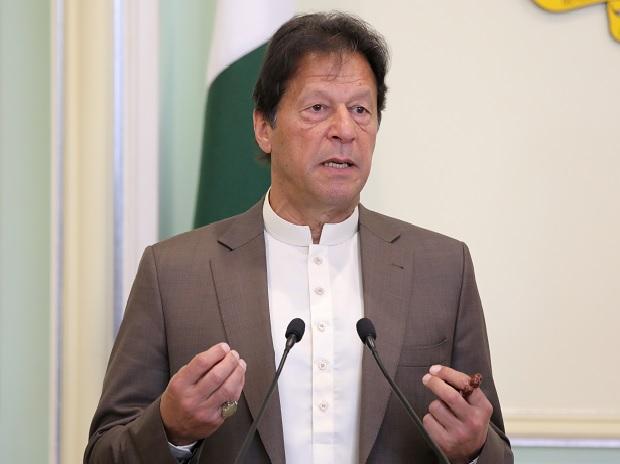
    In an interview with “Axios on HBO” with Jonathan Swan, which aired at 3am PST on Monday morning, Prime Minister Imran Khan said that “if a woman is wearing very few clothes, it will have an impact on the men, unless they are robots”.

    Prime Minister Khan discussed various issues in his interview with Axios’ Swan ranging from US withdrawal from Afghanistan to Pak-US relationship, Uyghur Muslims in China and sexual violence in Pakistan.

    Rape and sexual violence

    Swan asked PM Khan about his previous comments pertaining to rape and vulgarity, PM said that it is “such nonsense”.

    “I said that the concept of purdah is avoid temptation in the society. We don’t have discos here, we don’t have night clubs, so it is a completely different society, way of life here. So if you raise temptation in the society to the point and all these young guys have nowhere to go, it has consequences in the society.”

    Swan asked: “Do you think that what women wear has any affect, that that’s part of this temptation?”

    “If a woman is wearing very few clothes, it will have an impact on the men, unless they are robots. I mean it’s common sense,” replied PM.

    Swan asked if this would provoke acts of sexual violence, to which PM Khan responded, “It depends which society you live in. If in a society, people haven’t seen that sort of thing, it will have an impact on them. If you grow up in a society like you, maybe it won’t on you. This cultural imperialism, whatever is in our culture must be acceptable to everyone else. It’s not.”

    “Jonathan, it’s about my society. My priority is how my society behaves, what reactions are caused in my society so when I see sex crime going through the roof, we sit down, we discuss how we are going to tackle this. It is having an impact in my society. We have to do something about it.”

    US withdrawal from Afghanistan

    Axios’ Swan asked PM Khan if he was happy that the US military is finally withdrawing from Afghanistan after 20 years. PM said, “Happy in one way because there was never going to be a military solution in Afghanistan. Anxious that they [the US] are leaving without a political settlement, there is a possibility of civil war.” When asked what would a political settlement look like, PM said that a political settlement in Afghanistan “would mean a sort of a coalition government, a government from the Taliban side and the other side. There is no other solution”.

    Swan asked if PM Khan thinks the Americans made a mistake by saying they are getting out by September 11. The PM said they got themselves in such a big mess that they had to give some sort of timeframe. “But the moment they gave a timeframe, Taliban would have considered that a victory.” PM was asked how he felt about the prospect of the Taliban effectively controlling Afghanistan and if he is happy to welcome them into the community of nations. “As far as Pakistan is concerned, whoever represents the people of Afghanistan, we will deal with them.”

    Swan asked what if they were not democratically elected and does it not concern you on some level that this group of people is accumulating power right next door to you. PM Imran Khan said, “Look, I am not a spokesman for Taliban. For me to say, you know what they are doing or what they shouldn’t be doing is pointless. In case Taliban go for an all-out victory, there is going to be incredible amount of bloodshed. And let me tell you, the country that is going to suffer the most after Afghanistan is going to be Pakistan. We already have three million Afghan refugees here. And this could lead to another exodus so that is our biggest concern. The Americans, before they leave, there must be a settlement.”

    Relationship with the United States

    Swan asked PM Imran Khan why the American CIA Director Bill Burns made an unannounced visit to Islamabad. “Ever since 9/11, there’s constantly been in touch between our intelligence agencies.” PM Khan said he did not meet the CIA director but the head of ISI met him.

    Swan said that the Americans want to have their spies and special forces based in Pakistan to keep an eye on what is happening across the border. To a question if he will allow the American government to have CIA here in Pakistan to conduct cross-border counterterrorism missions against al-Qaeda, ISIS or the Taliban, PM Khan emphatically said, “Absolutely not.” The host interjected and asked: “Seriously?”

    “There is no way we will allow any bases, any sort of action from Pakistani territory into Afghanistan. Absolutely not. Pakistan suffered 70,000 casualties, more than any other country by joining the American war. We cannot afford any more military actions from our territory. We will be partners in peace, not in conflict,” added Khan.

    Swan said that the American military is discussing doing airstrikes potentially to support the Afghan forces against the Taliban. “Would you allow the American Airforce to use your air space for those airstrikes?”

    “We are not going to be part of any conflict anymore,” replied Khan.

    But you haven’t decided yet whether you will let them use your airspace, asked Swan again. PM Khan said this has not been discussed at all. “Why would the Americans be using bombing Afghanistan after it hasn’t worked for 20 years, why will it work again?”

    Kashmir resolution

    PM Khan said he has not spoken to US President Joe Biden since he took office. “Whenever he has time, he can speak to me. But at the moment, clearly he has other priorities.” When asked what would he say to Biden when he does meet him, PM said: “The US has a big responsibility as the most powerful nation in the world. Almost 1.4 billion people are living in the subcontinent. We are held hostage to one dispute in Kashmir. A disputed territory. According to the United Nations Security Council resolutions, there should have been a plebiscite for the people of Kashmir to decide about their own future. That has never taken place. It’s festering. If the Americans have the resolve, the will, it can be sorted out.”

    Nuclear weapons

    Prime Minister Khan that the purpose of Pakistan’s nuclear weapons “is not an offensive thing”. He said that any country that has a neighbour seven times the size as Pakistan has, “would be worried”. PM Khan said he is “completely against nuclear arms. I always have been”. Ever since the nuclear deterrence, Pakistan and India have not been to war despite three wars in the past. “We have border skirmishes but we have never faced war. The moment there is a settlement on Kashmir, I believe the two neighbours will live as civilised people. We will not need to have these nuclear deterrence.”

    Uyghur Muslims in China

    Swan asked PM Khan why he does not speak about Uyghurs in China when he is so vocal about Islamophobia in the west.

    “What our conversations have been with the Chinese, this is not the case according to them. Whatever issues we have with the Chinese, we speak to them behind closed doors. China has been one of the greatest friends to us in our most difficult times. When we were really struggling, our economy was struggling, China came to our rescue so we respect the way they are,” said PM Khan. He also questioned why the people of Kashmir are ignored and how this is hypocrisy.

    “Am I going to start talking about everything? I concentrate on what is happening on my border, in my country…that concerns me more.”
  • Relations with India would be ‘betrayal’ to Kashmir: PM

    Relations with India would be ‘betrayal’ to Kashmir: PM

    Prime Minister (PM) Imran Khan said that normalisation of terms with India would be a betrayal to the Kashmiri struggle.

    PM Imran held a live Question and Answer (Q&A) session with the public on Sunday. He said that “re-establishing ties with India would be ignoring all the struggle of Kashmiris as more than 100,000 people have martyred.”

    PM Imran said he tried to resolve problems with India through dialogue. However, it cannot be the case now as India has illegally annexed Kashmir. The normalisation of terms after this is a betrayal to the Kashmir cause, said PM Khan.

    “There is no doubt that trade will improve but all their [Kashmiris] blood will be wasted, so this cannot happen. This cannot happen that our trade improves at the cost of their blood.”

    Pakistan can resume talks if New Delhi reverses its longstanding semi-autonomous status of Indian Occupied Kashmir, he maintained.

    On August 5, 2019, Modi government revoked the status of Article 370 and other related provisions and split Kashmir into two federally controlled areas. The government also locked down the region, imposed movement restrictions while imposing communication blackout.

    In retaliation, Pakistan downgraded diplomatic ties with India while also suspending trade.

  • ’PPP not discussed in PDM’: Maulana Fazl

    ’PPP not discussed in PDM’: Maulana Fazl

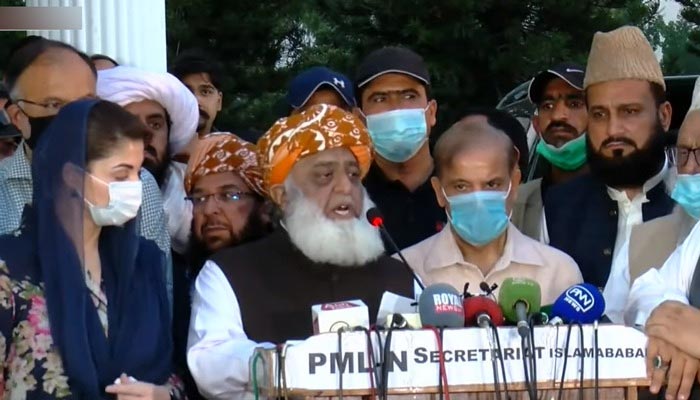
    Pakistan Democratic Movement (PDM) chief Maulana Fazl ur Rehman on Saturday said that the Pakistan People’s Party (PPP) and Awami National Party (ANP) were not discussed in the forum, as they are not part of the alliance.

    “They [PPP] can still contact the PDM leadership and apprise them about their intentions. But it is not something that we will waste time over anymore during PDM meetings,” said Maulana Fazl.

    Earlier on Friday, Shehbaz Sharif said that no party has the right to bring or kick another party out of the alliance. “PDM is a forum and decisions are taken with consensus.”

    PDM also rejected the government’s “one-sided” electoral reforms, which include the use of electronic voting machines (EVMs), and announced a fresh wave of anti-government protests.

    “PDM rejects the government’s unilateral electoral reforms ordinance, including the voting machines, and terms it as pre-poll rigging,” said Fazl.

    In this regard, the Election Commission of Pakistan, which is responsible for holding transparent elections, should call a meeting of all political parties to take a unanimous decision on reforms, Fazl added.

    The Opposition alliance announced a future course of action. On July 4, a massive anti-government protest will be held, followed by another one in Karachi on July 29.

    On the occasion of August 14, a massive protest will be held in Islamabad, with PDM showing solidarity with Kashmiris and Palestinians.

    The Pakistan Muslim League-Nawaz (PML-N) will host a budget seminar soon to form a unified strategy during the budget session, while the task to hold the event has been given to PML-N President Shehbaz Sharif.

    The PDM chief said PML-N supremo Nawaz Sharif attended the meeting via video, while other Opposition party leaders were present in person.

  • Crown Prince MBS coming to Pakistan after Eid

    Crown Prince MBS coming to Pakistan after Eid

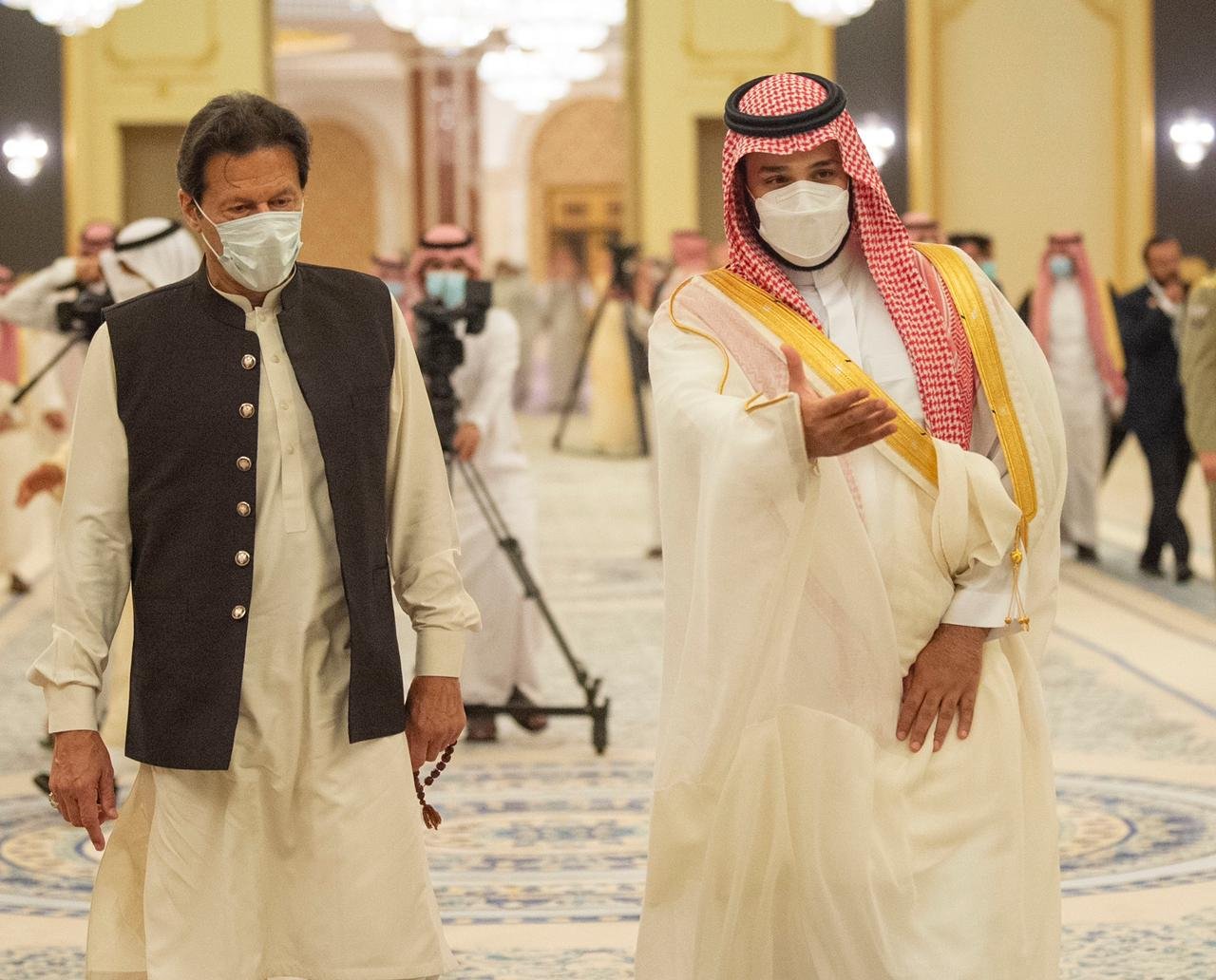
    Prime Minister Imran Khan was warmly welcomed by Saudi Crown Prince Mohammed bin Salman during his three-day visit to the Kingdom of Saudi Arabia. The Saudi Crown Prince is expected to visit Pakistan after Eid.

    In a joint statement issued by Riyadh and Islamabad, the two leaders reaffirmed the importance of the ties between the two countries. All facets of bilateral cooperation, regional and international issues of mutual interest were discussed by the two. Matters of strengthening and enhancing the economy and trade in light of the Kingdom’s 2030 vision and Pakistan’s development priorities emanating from a shift from geo-politics to geo-economics were also highlighted.


    Issues pertaining to the Islamic world were also discussed. The two leaders stressed the need for concerted efforts by the Muslim countries to confront extremism and violence, reject sectarianism, and strive to achieve international peace and security.

    The two sides reaffirmed their full support for all the legitimate rights of the Palestinian people, especially, their right to self-determination and establishment of their independent state, in accordance with the Arab Peace Initiative and relevant UN resolutions

    PM praised the role of Saudi Arabia for the resolution of crisis in Yemen, which aims at achieving peace and security in Yemen as it will result in prosperity and development of the region and its people.

    The Crown Prince acknowledged Pakistan’s facilitative role in the Afghan peace process. The two leaders agreed to continue mutual consultations on the Afghan peace process.

    The recent understanding reached between the military authorities of Pakistan and India regarding ceasefire at the Line of Control (LoC) was welcomed by the Crown Prince. The two sides emphasised the importance of dialogue between Pakistan and India to resolve issues, especially Jammu and Kashmir dispute, to ensure peace and stability in the region.

    Premier congratulated the Saudi government for successfully organising and holding the G20 summit meetings and the positive decisions that resulted from it in economic, developmental, environmental, health, energy and other fields.

    Acknowledging the leading role of the Kingdom in addressing international issues, in particular the challenge posed by climate change, the two leaders welcomed each other’s efforts towards the cause.

    PM Imran appreciated the efforts of the Kingdom and its leadership in serving the Two Holy Mosques, their pilgrims, Umrah performers and visitors despite the challenges posed by the Corona pandemic. He expressed gratitude and offered his best wishes. The Saudi Crown Prince warmly reciprocated with best wishes for health and wellbeing of the Prime Minister, and prayers for the progress and prosperity of the brotherly people of the Islamic Republic of Pakistan.

  • Feroze Khan wants you to remember Kashmir while praying for India

    Feroze Khan wants you to remember Kashmir while praying for India

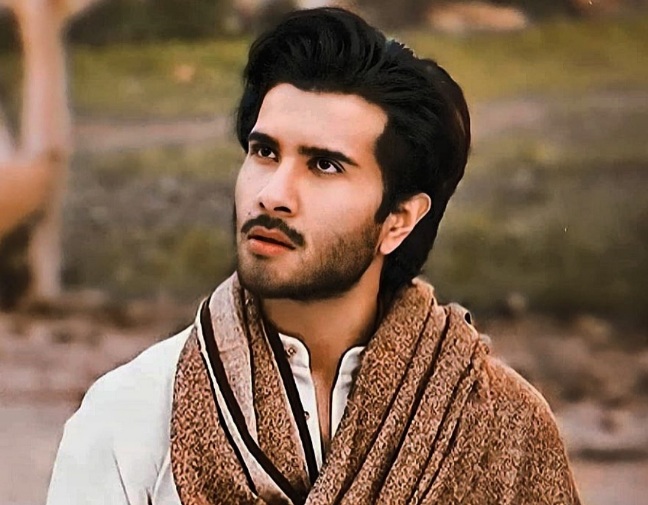
    As India battles a deadly second wave of COVID-19, Feroze Khan wants you to remember and pray for Kashmir, which has been out of oxygen “since God knows when”.

    “I am sure it’s a tough time in India and I pray for humanity everywhere. But just imagine what Kashmir has been going through and why?” wrote Khan on social media.

    When a user remarked that “this is a very wrong time to tweet this [and] most of the people suffering are innocent”, Feroze said: “What? Kashmir is out of oxygen since God knows when. They just are not nuclear power so we don’t talk much about it.”

    “They’ve been caged and killed dirty. Again I am praying for humanity in India and in Kashmir,” he added.

    When another social media user called out the actor for being “cold-hearted”, Khan said: “I have prayed for humanity there and everywhere but I would still don’t want to be quiet for a few likes and views.”

    “The drama could fail too and I would still not want innocent to be killed, suppressed and caged. Praying for everyone everywhere,” he continued.

    Responding to yet another user, Feroze said that he loves his fans “but if I bring them no real image what’s the point of this media handle?”

    Later, Feroze Khan also shared some statistics regarding the healthcare situation in Kashmir, asserting that he stands with Kashmir but is praying for everyone everywhere.

    Meanwhile, India’s healthcare system is on the verge of collapse with doctors predicting that the worse is yet to come.

    “The situation is critical right now. This pandemic is the worst we have ever seen until now. The next two weeks are going to be hell for us,” Dr Shaarang Sachdev from the Aakash Healthcare Super Speciality Hospital told Sky News.

    In some of the worst-hit cities, including the capital Delhi, bodies were being burnt in makeshift facilities offering mass services.

    Twitter in Pakistan has been trending with hashtags showing solidarity with India. Prime Minister Imran Khan and other cabinet members also extended their prayers for India while Faisal Edhi wrote a letter to Indian Prime Minister Narendra Modi offering help in tackling COVID-19 in India.

  • ‘Desire peaceful relations’ – Khan replies to Modi’s letter

    ‘Desire peaceful relations’ – Khan replies to Modi’s letter

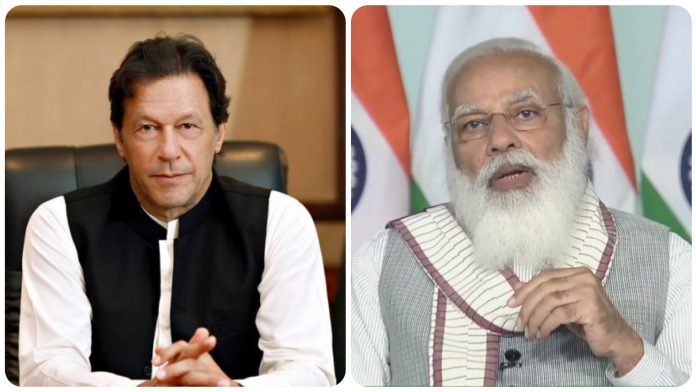
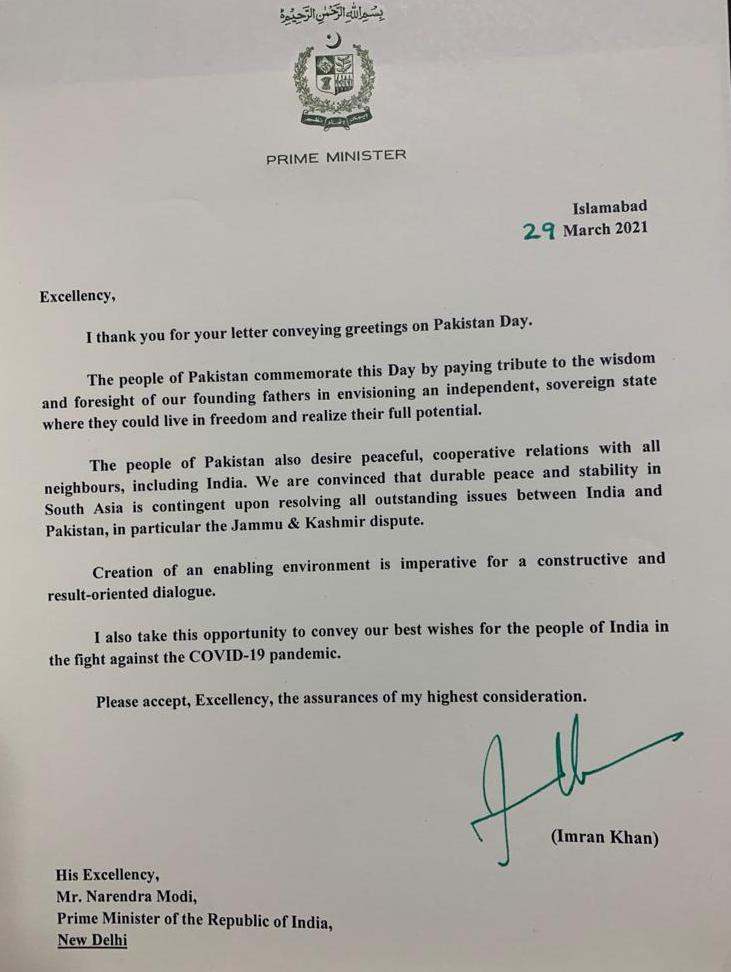
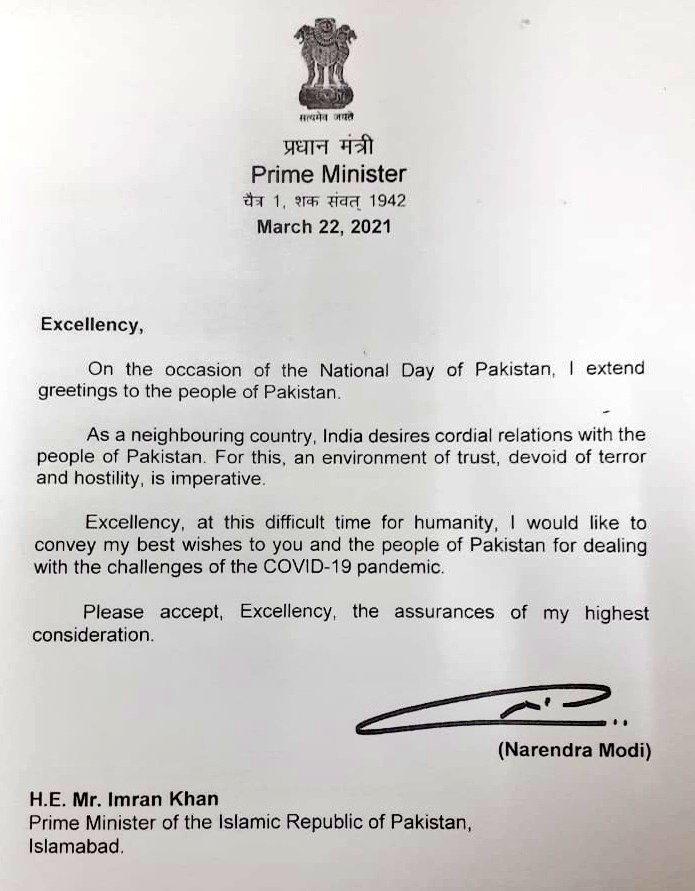
    Prime Minister Khan has responded to the letter written by his Indian counterpart Narendra Modi on Pakistan Day, telling Modi that the Pakistani people “also desire peaceful, cooperative relations with all neighbours, including India”. The letter is dated March 29, a week after PM Khan received the letter from Modi.

    PM Khan started the letter by saying, “I thank you for your letter conveying greetings on Pakistan Day. The people of Pakistan commemorate this Day by paying tribute to the wisdom and foresight of our founding fathers in envisioning an independent, sovereign state where they could live in freedom and realise their full potential,” clearly stating that Pakistan is a place where people live in freedom.

    Letter written by Imran Khan to Narendra Modi

    PM Khan said Pakistan was convinced that “durable peace and stability in South Asia is contingent upon resolving all outstanding issues between India and Pakistan, in particular the Jammu & Kashmir dispute” . He also added that the “creation of an enabling environment is imperative for a constructive and result-oriented dialogue.”

    “Please accept, Excellency, the assurances of my highest consideration,” PM Khan concluded, after conveying his best wishes to the Indian people in the fight against coronavirus.

    It should be noted that in Modi’s letter to Khan, the same phrase was used to end the letter.

    In the letter that Modi wrote to Khan, Modi stated that, “an environment of trust, devoid of terror and hostility” was necessary if both countries were to move forward.

    Social media was abuzz after the news of the letter broke, with details emerging that Pakistan and India were going to resume trade.

    Others were hopeful that maybe this time Pakistan and India might commit to a new peace.

    While some are apprehensive.

    A separate message was also sent by President Ram Nath Kovind to his Pakistani counterpart Arif Alvi. Indian government officials have told the Indian press that it is a routine letter sent every year.

  • Army chief cites unresolved disputes as reasons behind regional debt, poverty

    Army chief cites unresolved disputes as reasons behind regional debt, poverty

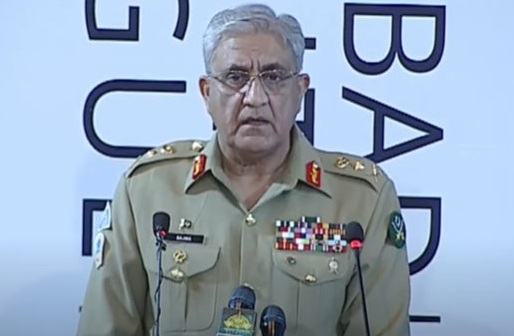
    Chief of Army Staff (COAS) General Qamar Javed Bajwa on Thursday said unresolved disputes in South Asia were dragging the entire region into debt and poverty, in a veiled reference to the Kashmir issue.

    Addressing a gathering on the final day of the Islamabad Security Dialogue, COAS Bajwa said the national security encompassed more than just matters and affairs related to strengthening the country’s security forces.

    “It included development and human security as well,” he said.

    “We feel it is time to bury the past and move forward,” he said, adding that the onus for meaningful dialogue rested with India.

    “Our neighbour will have to create a conducive environment, particularly in occupied Kashmir.”

    “The world has seen the ravages of the world wars and the Cold War, wherein polarisation and neglect of virtues blighted the future and brought catastrophic consequences for humanity,” he said.

    “Today the leading drivers of change in the world are demography, economy and technology. However, one issue that remains central to this concept is economic security and cooperation. Frayed relations between various powers centres of the globe and boomeranging of competing alliances can bring nothing but another stint of Cold War.”

    Congratulating the National Security Division on organising the dialogue, Gen Bajwa stated that the contemporary concept of national security was not just about protecting countries from an external and internal threat.

    It is also about providing a conducive environment for ensuring human security, national progress and development, he said.

    The army chief’s comments come a a day after Prime Minister Imran Khan said that India would have to make the first move to normalise ties with Pakistan.

    “We are trying, but India would have to take the first step and unless it does that we cannot move ahead,” the prime minister had said while inaugurating the Islamabad Security Dialogue.

  • ‘India has to take the first step’: PM Imran at Islamabad Security Dialogue

    ‘India has to take the first step’: PM Imran at Islamabad Security Dialogue

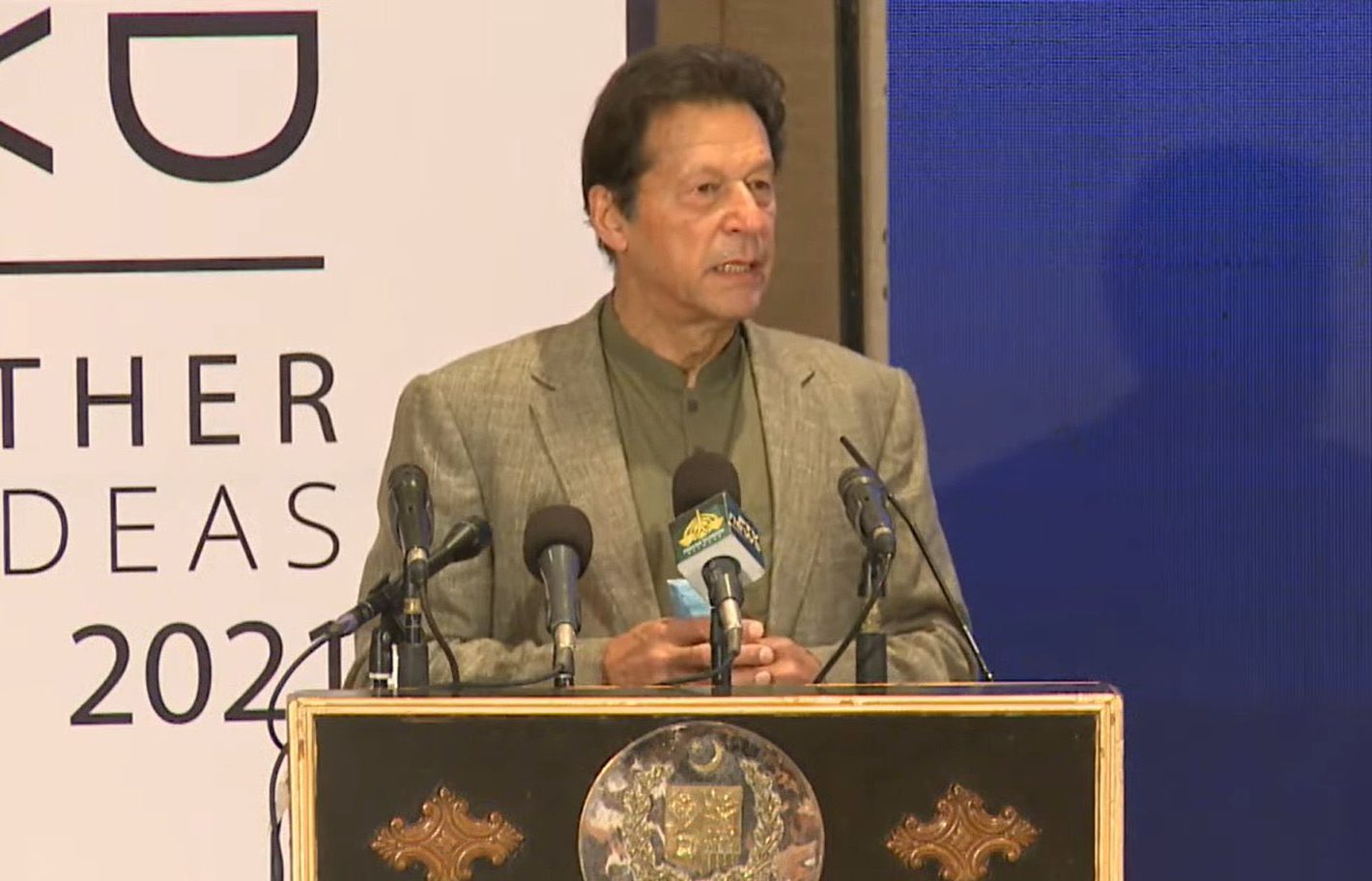
    Prime Minister Imran Khan on Wednesday launched the first Policy Advisory Portal at the inaugural session of the Islamabad Security Dialogue. The portal has been developed by the National Security Division (NSD) to engage over hundred think tanks and academia in policy making, said the Prime Minister’s Office.

    PM Khan said that when his government came to power, he tried to resolve issues with India.

    “We just have one issue, which is Kashmir,” said the premier, adding that August 5 happened, which “led to a total breakdown between both countries.”

    PM Khan said he hopes that the right of self-determination given to the Kashmiris as per UN Security Council resolution would be given to the Kashmiris.

    “It would benefit India if there is a resolution on the Kashmir issue. If we achieve peace through dialogue, it will change the entire landscape of the region. There is a lot of poverty in India. Our trading and economic ties should be strong, which will increase regional connectivity. It will help India that it can have regional connectivity up to Central Asia. India has to take the first step after August 5, otherwise, we cannot move forward.”

    While inaugurating the Advisory Portal, Prime Imran Khan appreciated the initiative and said that Pakistan has immense young talent in this country.  “This is a step in the right direction”, he said.

    The advisory portal will be a dedicated and integrated platform through which major think tanks and universities working on the subject of comprehensive national security will be able to share policy recommendations directly with the national leadership.

    “The aim of the portal is to bridge the gap between intellectuals and policymakers,” said SAPM on National Security Division and Strategic Policy Planning Dr Moeed Yusuf who conceived the portal. 

    Islamabad Security Dialogue is a two-day international conference. Two sessions of the Islamabad Security Dialogue were held on Wednesday, while three sessions will take place on Thursday. Chief of Army Staff General Qamar Javed Bajwa will inaugurate the second day. 

    Being held mostly in a virtual format, the Dialogue is being attended by officials, global and regional experts and media. The main theme of the Islamabad Security Dialogue is Comprehensive Security Framework that will enable the country to unfold its untapped potential in becoming a hub of global and regional development.

    The NSD plans to make the Islamabad Security Dialogue an annual event to parallel the world’s leading security dialogues.

  • After pigeons, India arrests Pakistani balloon

    Indian police in occupied Kashmir have taken into custody a Pakistan International Airlines (PIA) plane-shaped balloon. According to Indian news agency ANI, the balloon landed in Sotra Chak village of Hiranagar on March 9.

    While the detention of balloon with the logo of Pakistan’s national carrier seems silly, the incident was not the first of its kind. Indian security personnel have taken several pigeons and balloons into custody for their alleged links with Pakistan. A Pakistani villager had last year appealed to India to release his pigeon which was being held for spying after it crossed the border between the nuclear rivals.

    Meanwhile, on Twitter:

  • Azad Kashmir elections: PPP leaders oppose alliance with ‘rival’ PML-N

    Azad Kashmir elections: PPP leaders oppose alliance with ‘rival’ PML-N

    Even though the opposition parties have decided to contest Senate election on a joint platform, the Pakistan People’s Party (PPP), Azad Kashmir chapter, has refused to enter an alliance with its “main rival” — the Pakistan Muslim League-Nawaz (PML-N) — ahead of the elections in Kashmir.

    According to reports, the local PPP leadership has said that the PML-N is its main opponent in the region and it was not possible to field candidates under the banner of the Pakistan Democratic Movement (PDM) — a 10-party anti-government alliance — due to the very same reason.

    Geo News reported that the PPP leaders gave this answer after PPP Chairperson Bilawal Bhutto-Zardari sought recommendations from PPP Azad Kashmir on the upcoming elections. 

    “PPP Azad Kashmir’s stance is that how can the party contest the elections jointly with the PML-N when it is its main rival there?” the media outlet reported.

    The PPP, however, said there was a possibility of entering an alliance with the PML-N on 12 out of 33 total seats. 

    The central leadership of the party will make a final decision in this regard.

    Last week, after a six-hour-long meeting, PDM President Maulana Fazlur Rehman had announced that the opposition parties will contest the upcoming Senate elections on a joint platform.

    He had said that the parties decided to contest the Senate elections together and would not go against each other’s candidates. “Our candidates will be jointly decided,” he had told reporters after the meeting.

    The elections in Azad Kashmir will be held later this year, with the current assembly completing its term in July.