Tag: LHC

  • Indian citizen challenges wife’s second marriage before Lahore High Court

    Indian citizen challenges wife’s second marriage before Lahore High Court

    An Indian national has moved the Lahore High Court seeking annulment of the marriage of his wife Sarabjeet Kaur with a Pakistani citizen, claiming that the marriage was contracted without lawful dissolution of the first.

    Petitioner Kernal Singh, currently residing in the United Kingdom, filed the petition through his attorney Mahinder Pall Singh (UK). The case was submitted locally through Advocate Ali Changezi Sandhu.

    According to the petition, Sarabjeet Kaur contracted nikah with Nasir Hussain without obtaining a judicial divorce from her Indian husband. The petitioner maintains that his marriage with Ms Kaur remains valid under the law.

    Arguing the case, the petitioner’s counsel submitted that constitutional courts in Pakistan, including the Federal Shariat Court, have laid down principles governing the marriage of a married non-Muslim woman with a Muslim man after conversion. He stated that “a married non-Muslim woman must first obtain a judicial divorce under the applicable domestic laws before entering into a second marriage.”

    The counsel further argued that the law requires a married non-Muslim woman who converts to Islam to invite her non-Muslim husband to embrace Islam in the presence of two witnesses and to wait for 90 days for his response. If the husband refuses to convert, the marriage may then be dissolved, he submitted, adding that these procedures were not followed in the present case.

    The petitioner’s counsel maintained that due to non-compliance with the prescribed legal process, the marriage between Kernal Singh and Sarabjeet Kaur continues to subsist. 

    The petition also requested the court to order deportation of Ms Kaur under the Foreigners Act, 1946, alleging violations of the terms of her pilgrimage visa. It further sought annulment of the Nikah between Ms Kaur and Nasir Hussain and initiation of criminal proceedings against both respondents, as deemed appropriate by the court.

    The petitioner also requested that Ms Kaur be placed in a women’s shelter home until the matter is adjudicated.

    According to the case record Sarabjeet Kaur, aged 48, travelled to Pakistan via the Wagah border to attend the birth anniversary of Guru Nanak at Gurdwara Janamasthan, Nankana Sahib. She later converted to Islam, adopted the name Noor, and subsequently contracted nikah with Nasir Hussain.

    The petition has been fixed for hearing on Wednesday before Justice Farooq Haider.

  • Lahore High Court takes up petition seeking social media ban for children under 16

    Lahore High Court takes up petition seeking social media ban for children under 16

    The Lahore High Court (LHC) has sought replies from the federal government and other authorities on a petition seeking ban on social media for children under the age of 16.


    As per the details, the petition, filed by Aliya Saleem and others through Advocate Shiza Qureshi, was heard by LHC Chief Justice Aalia Neelum on Tuesday.


    Justice Neelum described the matter as important and noted that it raised broader policy questions that should be addressed by the government.


    The petitioner’s counsel argued that social media was causing serious harm to the mental, moral and educational development of children. 


    Qureshi added that several developed countries were considering or imposing restrictions on social media for underage users.


    The lawyer informed the court that Australia imposed a ban on children’s use of social media in December 2025, while countries including France, Norway, Malaysia and New Zealand were in the process of legislating on the matter. 

    Earlier this month, senators Falak Naz, Fawzia Arshad, Aimal Wali Khan, Saadia Abbasi and Dilawar Khan also highlighted the need to monitor social media for children under 18.


    Senator Sherry Rehman also emphasised the importance of safeguards and suggested forming a special committee in consultation with relevant ministries to address the issue.

  • Husband cannot face rape trial before legal completion of divorce: Lahore Court

    Husband cannot face rape trial before legal completion of divorce: Lahore Court

    The Lahore High Court (LHC) has determined that a husband cannot be charged with the rape of his wife unless the divorce is legally finalized under the Muslim Family Laws Ordinance (MFLO) 1961.

    This decision was made by Justice Tariq Saleem Sheikh while considering a petition filed by Jameel Ahmad, who requested the dismissal of an FIR against him at Police Station City Liaqatpur under Section 376 of the Pakistan Penal Code, which pertains to rape. 

    According to the FIR, the complainant claimed that Jameel Ahmad enticed her into living together and subsequently married her on April 22, 2024. Later, she claims, that she found out that he was already married. She claimed that when she confronted him, he divorced her on October 14, 2024. 

    The complainant said that on October 17, just three days after the divorce, the petitioner and another suspect entered her residence at night, during which the Jameel Ahmad sexually assaulted her at gunpoint. 

    Jameel Ahmad denied the claim of any live-in arrangement and claimed that the FIR was filed out of vengeance for the divorce. He acknowledged providing a written Talaq deed but contended that he retracted the divorce on December 23, 2024, during the 90-day reconciliation window mandated by law. He also informed the court of a pending petition for restitution of conjugal rights. 

    In his ruling, delivered at the LHC’s Bahawalpur bench, Justice Sheikh focused on whether the divorce was legally effective by October 17, 2024, the date the alleged incident took place. 

    The judge considered Islamic law in conjunction with the legal framework under Section 7 of the MFLO, noting that while Islamic law recognizes various forms of Talaq, Pakistani law is tied to a specified legal process. 

    According to Section 7 of the MFLO, a notice of Talaq must be submitted to the chairman of the respective union council, and a mandatory 90-day reconciliation period is required.

    The judge pointed out that the divorce does not become effective unless this period elapses without revocation. 

    Justice Sheikh remarked that although the petitioner had sent a notice of Talaq to the union council, he had revoked it prior to the conclusion of the required period. Citing Supreme Court rulings, the judge asserted that failing to comply with statutory mandates renders a divorce legally invalid, even if a Talaqnama exists under Islamic law. 

    The court observed that under Section 7(3) of the MFLO, the parties remain legally married until the reconciliation period has lapsed or the Talaq is retracted. 

    Justice Sheikh concluded that on October 17, 2024, the marriage had not been dissolved in the eyes of the law. He indicated that while the petitioner’s actions might be considered immoral or inappropriate according to religious or social standards, prosecution under Section 376 could not proceed, as the essential elements of the offence were not established based solely on the FIR. 

    The court granted the petition and annulled the FIR filed against the petitioner.

  • Judges’ Rest House staff faces action for using crockery

    Judges’ Rest House staff faces action for using crockery

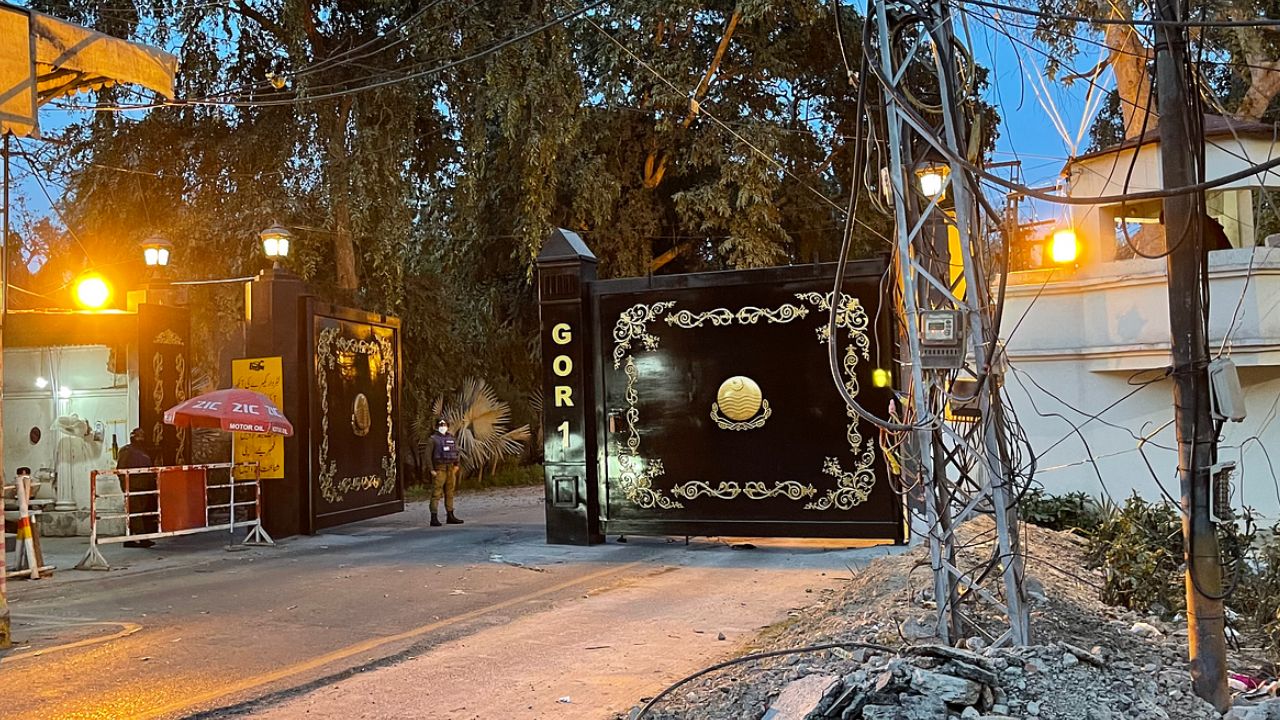
    An internal inquiry commenced by the Lahore High Court (LHC) has recommended a minor penalty of “censure” for four members of janitorial and services staff at the Judges Rest House, GOR-I (Government Officers’ Residences), for using ‘forbidden’ crockery.

    A Christian waiter, among the staff, has been issued a final show-cause of dismissal from service on another charge of ‘misconduct’.

    According to reports, the staff were found using crockery designated for the “honourable judges” on December 3, 2024, while having lunch in Suite No. 6 of the Rest House, despite prior warnings.

    Samuel Sandhu (bearer/waiter), Faisal Hayat (dusting coolie), Shahzad Masih (sweeper), and Muhammad Imran (counter staff) are among the staff who have been accused in the inquiry.


    In their defence, the staff maintained that they were having lunch on plates meant for gunmen and drivers of the judges. 

    The inquiry report suggests that waiter Sandhu also displayed inappropriate and disrespectful behaviour towards his seniors when confronted about the matter, a charge Sandhu has denied.

    The inquiry officer, Additional Registrar (Examinations) Usman Ali Awan, found Sandhu guilty of misconduct, recommending the major penalty of “Removal from Service” under Rule 23 (6) of the High Court Rules & Orders.

    While other staff members admitted to using the crockery and were recommended for the minor penalty of censure, Sandhu’s alleged aggressive behaviour and use of rude language were considered enough to justify his dismissal, it said.

    The inquiry report further stated that evidence, including witness testimonies and video footage, supported the charges against him.

    The final notice- issued on July 11- provides Sandhu with 10 days to respond and defend himself, and failure to do so will result in the presumption that he has no defense to offer, leading to the imposition of the recommended major penalty.

    The report also cites witness statements and video evidence to support the misconduct charges against Sandhu.

    Although the complainant/caretaker reiterated that a number of times instructions have been passed to the staff, an LHC official, told a leading English newspaper that no clear written policy about crockery restrictions was visible in the Rest House, adding that the rules were often enforced arbitrarily.

    The official added that the case underscores the need for clear internal protocols and equal application of disciplinary procedures to prevent both misconduct and perceptions of bias, particularly in highly sensitive environments like judicial premises.

  • ‘Women entitled to Haq Mehar after Khula in abusive marriage,’ rules Lahore High Court

    ‘Women entitled to Haq Mehar after Khula in abusive marriage,’ rules Lahore High Court

    The Lahore High Court (LHC) has ruled that the dissolution of marriage due to the husband’s misconduct does not nullify the woman’s entitlement, upholding her right to recover Haq Mehar [deferred dower] even after obtaining divorce through Khula [dissolution of marriage].

    Addressing a more critical aspect of deferred dower, Justice Raheel Kamran said that under Islamic law and the Nikahnama, the husband remained obligated to pay dower unless the wife sought Khula without any fault on his part.

    The judge, however, noted that in the particular case being heard by the court, the woman had provided credible evidence of cruelty and disrespectful conduct by her husband, which prompted her to seek separation.

    Justice Kamran observed that giving dowry articles to daughters was a deep-rooted practice in society, followed by the parents of all classes irrespective of their financial status.

    He stated that the concept of Khula was based on verses No 228 and 229 of Surah Al-Baqarah, and noted that the application of Khula was found in the lifetime of the Holy Prophet (Peace Be Upon Him) and thereafter.

    Referring to a Federal Shariat Court ruling for a wife to return dower if she seeks Khula merely on the basis of dislike for her husband, the judge said that in such cases, the amount the wife should return should be determined by a court while keeping in view facts and circumstances of the case.

    Justice Kamran said a Nikahnama was a valid and binding contract between a wife and her husband and deferred dower was a contractual obligation under the same. Unless there are valid legal grounds to deviate from the terms of this contract, the husband is bound to fulfill his obligation, the judge said.

    “The mere fact that the wife sought Khula does not automatically nullify this contractual obligation,” reports quoted the judge as saying.

    In order to determine the entitlement of a wife seeking Khula to the claim of deferred dower, the judge said, the key consideration was the reason for her seeking Khula. Where a wife seeks Khula on the ground that she dislikes her husband, without any fault on the part of the husband, she loses her right to deferred dower in the same way as in the case of prompt dower, he explained, adding that if the husband’s conduct compels the wife to seek dissolution, she retains her entitlement to Haq Mehar.

  • Punjab govt reveals total number of cases against Imran Khan

    Punjab govt reveals total number of cases against Imran Khan

    The Punjab government on Tuesday submitted a report to the Lahore High Court (LHC) regarding the total number of registered cases against the founder of Pakistan Tehreek-e-Insaf (PTI), Imran Khan, in the province.

    According to a report submitted by Punjab Assistant Advocate General Muhammad Farrukh Lodhi, 54 cases have been registered against the former premier in Punjab.

    “Out of 54 cases, 21 cases have been registered against incarcerated founder PTI in Lahore alone, 19 cases in Rawalpindi division, and seven in Sheikupura,” the report said.

    “Five cases in Faisalabad and one case in Gujranwala have also been registered against Imran Khan,” it added.

    Assistant Attorney General Sardar Ameer Hamza Dogar also submitted a report in LHC, as per which, the Federal Investigation Agency (FIA) had registered three cases against the incarcerated former PM.

    The development comes after Noreen Khan, sister of PTI founder Imran Khan, filed a petition in the LHC seeking details of the cases against her brother in Punjab.

    It may be noted that former PM Khan was arrested from his residence in Zaman Park, Lahore, shortly after his conviction in the Toshakhana case in August last year and has been in jail since then on multiple charges.

    Currently, he is held in Rawalpindi’s Adiala Jail under high security and with B-class facilities due to his status as a former prime minister.

    Earlier, the founder of PTI was also kept in Attock Jail.

    He is facing several cases, including the £190 million reference and a new Toshakhana case.

    Meanwhile, speaking to journalists on Tuesday, Barrister Salman Safdar, the lawyer of the PTI founder, claimed that Imran Khan will soon be acquitted in the Al-Qadir Trust case, noting that in the worst scenario, if the party founder was even convicted, “the sentence will be suspended within 15 days.”

    “All cases against Imran Khan have vanished, including both Toshakhana one and Toshakhana two,” Barrister Salman Safdar said.

  • Court orders removal of Parvez Elahi’s name from no-fly list

    Court orders removal of Parvez Elahi’s name from no-fly list

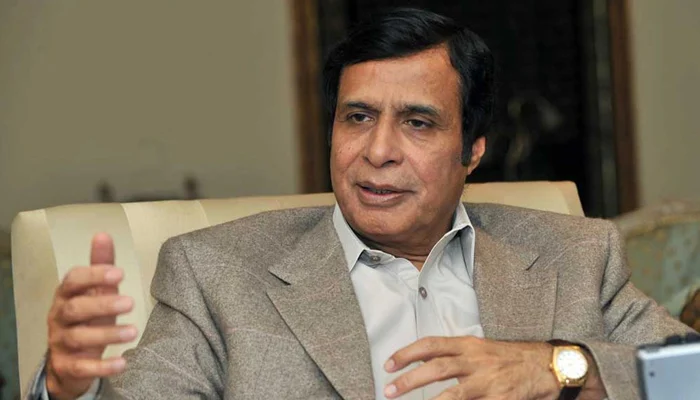
    The Lahore High Court (LHC) has granted significant relief to Pakistan Tehreek-e-Insaf (PTI) President Parvez Elahi by directing the removal of his name from the Passport Control List (PCL), as reported by ARY News on Monday.

    Justice Shams Mahmood Mirza of the LHC issued the verdict in response to a filed petition. Justice Mirza also instructed the removal of the names of Elahi’s son, Rasikh Elahi, and daughter-in-law, Zara Elahi, from the PCL.

    Earlier, Parvez Elahi had submitted a plea requesting the removal of his name from the PCL to facilitate his international travel.

    On May 21, Parvez Elahi was released from jail after spending a year behind bars.

    Following his release, the veteran politician stated, “I am thankful to Allah for giving me the courage to remain steadfast. I am also grateful to the judges who upheld the truth and supported me.”

  • Punjab Defamation Act 2024 challenged in LHC

    Punjab Defamation Act 2024 challenged in LHC

    On Wednesday, senior journalists filed a petition at the Lahore High Court (LHC) challenging the controversial Punjab Defamation Act 2024 after the bill was approved in May of this year.

    Earlier, on May 20, the Punjab Assembly passed the defamation bill despite strong protests by the opposition, journalists, and civil rights organisations.

    “The controversial Punjab Act is repugnant to the Defamation Ordinance 2002, which has been provided protection under Article 270AA under the 18th Amendment to the constitution,” read the petition.

    The petitioners argued in their petition that the Act violated fundamental rights guaranteed in Articles 10A, 18, 19, 19A, and 25 of the Constitution.

    The petition also stated that the Act aims to stifle freedom of speech and dissent, as it has affected the work of journalists due to egregious punishments.

  • LHC orders PM office to stop intelligence agencies from contacting judges

    LHC orders PM office to stop intelligence agencies from contacting judges

    The Lahore High Court (LHC) has directed the Prime Minister’s Office (PMO) to instruct all intelligence agencies not to contact any member of the judiciary.

    Justice Shahid Karim issued a four-page written interim order on Saturday in the Sargodha’s ATC judge harassment case.

    On June 12, the LHC Chief Justice took notice of the incident based on the complaint of District & Sessions Judge (D&SJ) Muhammad Abbas, who said he faced harassment from an ISI official because he refused to meet in his chambers.

    The suo motu notice was taken by former LHC chief justice Malik Shahzad Ahmad Khan on the ATC judge’s complaint. However, Justice Karim took over the proceedings after Shahzad Ahmad’s elevation to the Supreme Court.

    The written order states that no agency should “approach or contact” a judge, whether of the superior or subordinate judiciary, or any member of their staff in the future.

    Justice Karim also said that the judges of ATC across Punjab are directed to download a call recording application to record all the calls they receive.

  • Establishment’s involvement in judicial matters will end soon, says LHC Chief Justice

    Establishment’s involvement in judicial matters will end soon, says LHC Chief Justice

    Lahore High Court (LHC) Chief Justice Malik Shehzad Ahmed Khan said confidently on Friday that the security establishment’s involvement in the judiciary will be over soon.

    While addressing an event in Rawalpindi, he stated, “Interference in judiciary will have to be fought with faith that it will come to an end.”

    Justice Khan stressed that the establishment’s interference in the judiciary is a genuine issue, adding that he received letters as proof claiming the Army establishment’s involvement in judicial matters.

    “The establishment’s interference in judicial matters will end, and my experience [tells me] that it will come to an end,” said the chief justice.

    Justice Malik Shehzad Ahmed mentioned that he is happy that judicial authorities is “fulfilling their responsibilities without any fear or greed”.
    Earlier, on March 25, six Islamabad High Court (IHC) judges wrote a letter to Supreme Court (SC) blaming intelligence agencies for interfering in judicial matters.