Tag: Life Top

  • Five ways to beat the viral

    Five ways to beat the viral

    The viral flu, accompanied by a sore throat, is everywhere these days and is making everyone and their Mom miserable. While science is yet to find an instant cure for the flu, there are several natural home remedies that might help soothe flu symptoms. They may also help shorten the duration of your flu.

    Drink warm broth

    Drinking warm chicken or beef bone broth is a good way to loosen and break up nose and sinus congestion. The broth also keeps you hydrated which is necessary when you’re unwell.

    Bone broth is also naturally high in protein and minerals. Drinking broth is a good way to refill these nutrients while you have the flu.  Protein is also important for rebuilding immune cells.

    Saltwater gargle

    Saltwater gargles can soothe a sore throat. It can also help to clear mucus. Here’s how to rinse with salt water:

    1. Heat up water and let it cool until it’s warm.
    2. Mix 1/2 tsp salt to a cup of warm water.
    3. Pull the saltwater to the back of your throat and gargle it for about 10 to 30 seconds so that it rinses your mouth and throat.
    4. Spit the water into a sink and repeat 2 to 4 times.

    Note: Do not swallow the saltwater.

    Peppermint Tea

    Peppermint (podina) tea contains anti-inflammatory compounds and is extremely helpful in soothing the throat. You can make peppermint tea at home by simply adding fresh peppermint leaves in boiling water for three to five minutes, then strain off the leaves.

    Garlic

    Garlic may help fight off a common cold because it has antibacterial and antiviral properties. Garlic has long been a home remedy for colds and the flu. People can eat raw garlic, incorporate cooked garlic into meals, or take a supplement. Unless a person has a garlic allergy, it is usually safe to use.

    Foods to avoid while you have the flu

    • Milk
    • Cheese
    • Caffeine
    • Spicy foods
    • Fried and fatty foods
  • Shaheed Major Adeel was married to martyr’s widow

    Shaheed Major Adeel was married to martyr’s widow

    Major Adeel Shahid, a Pakistan Army Officer, who embraced martyrdom in an IED explosion on Friday, was married to a martyr’s widow.

    According to details, a resident of Karachi, the officer was married to the widow of his coursemate, Captain Mujahid Bashir Shaheed, who had sacrificed his life for the country a few years ago. Major Adeel also adopted his daughter who was born a few months after her father’s demise.

    Major Adeel was martyred when an IED planted by terrorists went off near the Afghan border in Mohmand district of Khyber Paktunkhwa.

    The father of 1.5-year-old twin daughters was laid to rest in Karachi on Saturday. Social media users took to Twitter to salute the widow who had sacrificed her loved one for the country.

    Major Adeel’s last visit to Karachi had been on Eid-ul Azha and he reportedly spoke to his father just two days before he was martyred.

  • VIDEO: Reporter attempts to get a comment from a dead man

    VIDEO: Reporter attempts to get a comment from a dead man

    A US reporter has become the subject of memes after a video of her saying she tried to reach a dead man for “comment” live on air.

    Sara Welch made the mistake on air saying she tried to get a comment from a dead man while reporting on a happening which involved the death of a suspect in a police chase.

    And the internet never lets anything die, social media users started trolling her.

  • Sindh govt plans to cull stray dogs

    Sindh govt plans to cull stray dogs

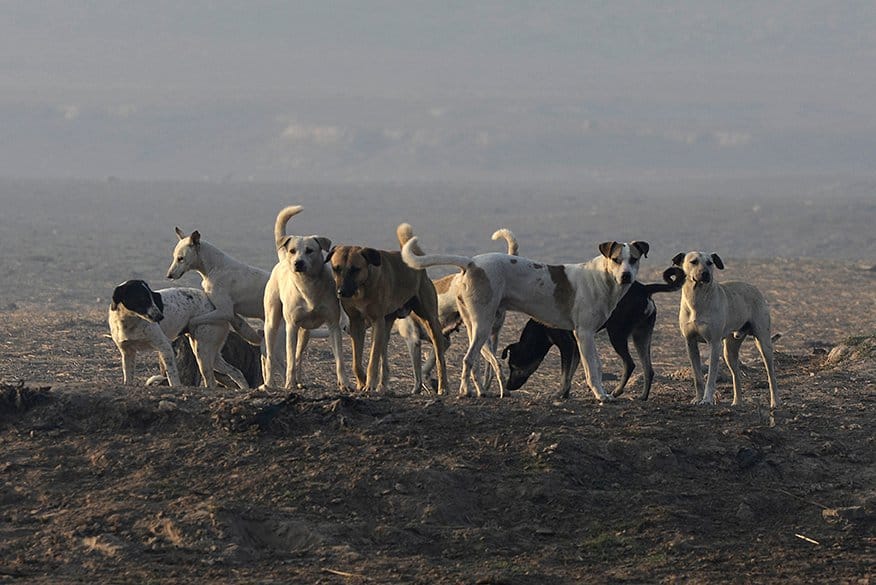
    Following multiple deaths in the province due to rabies, the Sindh Government has ordered mayors, municipal commissioners and other officials to start immediate and effective campaigns for the culling of stray dogs in the province.

    According to reports, as many as 13 people, including men, women and mostly children, have lost their lives in Sindh due to rabies encephalitis, a deadly infectious disease caused by a rabid dogs, this year, while as many as 135,000 people have been attacked and bitten by stray dogs in Sindh, including Karachi.

    However, the issue gained momentum after a video of a 10-year-old boy who passed away in his mother’s lap due to full-blown rabies in the Larkana district, went viral on social media. The public and media bitterly criticised the provincial government for failing to control the population of stray dogs and arrange anti-rabies vaccine (ARV) for those who are bitten.

    In a notification, the Sindh Local Government Department directed local bodies authorities to launch an “effective and well-coordinated campaign” in their areas on a top priority basis.

    Officials of the health department said they had been urging the authorities to direct the elimination of stray dogs for a long time but owing to pressure from animal rights campaigners, no decision had been taken.

    Meanwhile, Sindh Director General Health Dr Masood Solangi said that he was satisfied with the decision because it was difficult for Pakistan, being a poor country, to afford the expensive anti-rabies vaccine and vaccinate hundreds of thousands of people who become victim to stray dogs every year in the province. He added that the vaccine is imported from India and due to political tensions, the supple of the vaccine is affected.

  • Unskilled, juvenile labor to be paid minimum Rs17,500 in Sindh

    Unskilled, juvenile labor to be paid minimum Rs17,500 in Sindh

    The Sindh government has set a minimum wage of Rs 17,500 per month for adult unskilled and juvenile workers.

    According to an official notification, the Sindh government said that the order will be implemented under the provisions of Section 4 of the Sindh Minimum Wages Act, 2015.

    The notification further said that the order will apply uniformly throughout the province to all adult, unskilled and juvenile labour, including female workers.

    “The employers shall revise the rates of payments for piece rated workers and make sure that the worker in each piece rate occupation is enabled to earn not less than Rs.84.00 per hour in any working day,” the notification read.

  • Duke and Duchess of Cambridge announce Pakistan visit dates

    The dates of Britain’s Prince William and Kate Middleton’s visit to Pakistan have been announced.

    According to Kensington Palace’s official Twitter handle, the Duke and Duchess of Cambridge will be visiting Pakistan from October 14-18.

    The announcement also said that before their visit, the royal couple will attend a special event at the Aga Khan Centre in London on October 2, which will be hosted by His Highness The Aga Khan.

    The announcement of William and Kate’s visit to Pakistan was first announced in late June. This is their first trip to Pakistan and the first royal trip to the country in more than a decade.

    Meanwhile, the Foreign Office welcomed the decision and said that they look forward to their visit.

  • Bear cub escapes from Peshawar Zoo

    Bear cub escapes from Peshawar Zoo

    A two-month bear cub is on the loose after it escaped its cage at the Peshawar Zoo.

    According to media reports, the cub was in a cage with its mother when one of the caretakers left the door open and the cub escaped.

    Both the mother and baby had been brought to the zoo from Dir a few days ago. They had been confiscated by the wildlife department at a check post in Upper Dir a few days ago because they were being illegally brought from Afghanistan.

    The zoo administration believes that the cub is still inside the zoo and are examining CCTV footage to locate it. The cub hasn’t been seen in footage of the zoo’s exit points.

    There is currently some renovation work going on at the zoo and a lot of heavy machinery inside. Officials believe the cub could be hiding there somewhere.

    An inquiry has also been ordered and the management of the zoo has been directed to register FIR.

    While the cub doesn’t pose a threat to anyone, the zoo administration made announcements about its disappearance via local mosques.

  • Here’s how much you have to pay to stay at the ‘Downton Abbey’ castle

    Here’s how much you have to pay to stay at the ‘Downton Abbey’ castle

    We all love Downton Abbey and have always wondered what it would be like to live in that world. Well, here is your chance to do just that.

    The iconic mansion from the hit British show has now been listed on Airbnb and will be open to a select number of people for a one-night stay.

    Highclere Castle, England, is the location used in Downton Abbey. The castle’s owner, the Countess of Carnavon, has listed her home on Airbnb for one night only on November 26. This majestic mansion has 300 rooms and dates back to the 17th Century. You can book it on Airbnb for $159 per night!

    “You will get the opportunity to explore iconic rooms you know so well from Downton Abbey, such as the Drawing Room and the Library,” Lady Carnavon writes in her listing. “For one night, you can follow in the footsteps of kings and queens and enjoy life as a Lord or Lady to celebrate the upcoming motion picture event, Downton Abbey.”

    According to the Guardian, the guests will also join the earl and countess for evening cocktails in the saloon followed by a traditional dinner in the state dining room, waited on by the castle’s own butler.

    After dinner, coffee will be served in the library before the guests retire to one of the principal bedrooms with an en-suite bathroom and views over 400 hectares (1,000 acres) of rolling parkland.

    “Throughout the stay, Lord and Lady Carnarvon will immerse the guests in the rich history and heritage of Highclere Castle with a private tour of the castle, the Highclere estate,” the advert says.

    While the room is listed as coming with a hairdryer and shampoo, it will not have wifi or a TV.

    The listing says that the applicants must be verified Airbnb users with good customer reviews. The application period begins on October 1.

    So if you’re a Downton Abbey fan and are travelling to Britain at the end of November, don’t miss your chance to stay at the beautiful manor.

  • Love without boundaries: Japanese woman marries Bahawalpur man

    Love without boundaries: Japanese woman marries Bahawalpur man

    A Japanese woman came all the way to Pakistan from Japan to marry a Pakistani man in Bahawalpur, who is a jeweler.

    As per reports, Kuna and Shehzad’s love story started on social media and culminated in a marriage ceremony in Bahawalpur. Kuna also converted to Islam before marriage and changed her name to Amna.

    “I want to stay with my husband in Pakistan,” she told media outlets in Bahawalpur.

    Finding matches on social media is witnessing an increasing trend in Pakistan, as many foreign citizens have moved to Pakistan to marry their soulmates.

    Recently, a woman from the Philippines married a man from Layyah.

  • Why We March

    Why We March

    We march because the climate crisis is existential. It involves us all, but not individually.

    The United Nations General Assembly (UNGA) is to convene on September 27.  One week ahead of the run-up to the assembly, children, students, environmental activists, NGOs and the civil society are conducting a ‘Climate March’ to draw attention to the crisis.

    Not just in New York, but in hundreds of cities across the globe.

    Why? The facts are staggering. Since agreeing to reduce greenhouse gas (GHG) emissions through the United Nations Framework Convention on Climate Change (UNFCCC) in 1992, the world has only produced more GHGs.

    Global temperatures are increasing, with each month breaking historical records; carbon concentrations in the atmosphere have shot over 400 parts per million – not seen in the past 850,000 years. Back then, there was a species extinction event.  With animal, bird, insect and plant varieties in rapid decline, we are now facing the sixth extinction event.

    Just this year, there were wildfires in the arctic – something that has never happened before – and the scale of the ice melt in Greenland – 12.5 billion tonnes in one day in July, which wasn’t supposed to happen until 2070.

    We are seeing the global climate tilt and lose balance before our eyes; hence, the march.

    We are marching because the everyday discourse in Pakistan doesn’t register the climate crisis. People don’t know how bad it is or will be.

    Consider this: the half-degree difference between the limit of 1.5°C temperature increase envisioned by the Paris Agreement of 2015 and the 2°C limit envisaged by the Kyoto Protocol, means approximately 150 million deaths by 2060. That’s more than the lives lost in all the wars and battles fought in the 20th Century. And most of these deaths will be due to air pollution resulting from GHG emissions produced in the metropolitan areas of Asia and Africa.

    So unless we deal with the smog and air quality in North India, many of those 150 million lives will be lost in Pakistan and India.

    We are marching because of climate justice. By far, the responsibility of historical GHG emissions rests in the Global North, and within the hands of only a dozen or so businesses that have made, to paraphrase Greta Thunberg, obscene amounts of money by destroying the earth.

    Pakistan must stand strong with other countries and demand historical GHG inequity be addressed, but that does not relieve the country or us from our duty in the battle against the climate crisis.

    Both Pakistan and Pakistanis must realise that climate justice is just as much about equity between countries as the equity within countries. The climate crisis, worldwide, will play out not just between rich and poor countries, but between the rich and poor within every country.  The poor in Pakistan are especially vulnerable.  Nearly a quarter of the population lives below or close to the poverty line. For so many of our brothers and sisters, a climate event is all that stands between them and one meal a day.

    We march because it’s time to declare a climate emergency. We march because the climate crisis is not an “elite” issue in Pakistan or the responsibility of the developed world.  We march because students, environmental activists, academics and civil society in 22 of Pakistan’s cities are marching.  They prove that the climate crisis is well-known, that our population isn’t stupid and that the folks responsible for running the show should take the climate crisis seriously rather than focusing on the circus presently employed.

    We march, finally, because the climate crisis is existential. It involves us all, but not individually. The capitalist, consumerist and fossil fuel-driven economy that has brought us to the brink is too much for individual actions alone. The climate crisis needs collective political action. And it needs it now.

    Join the climate march at 3 pm on Friday (September 20).

    The writer is an environmental lawyer and member of the Pakistan Climate Change Council. To learn more about the march, follow @ClimateMarchPk on all social media platforms.