Tag: NULL

  • Chinese company gets license to produce liquor in Pakistan

    Chinese company gets license to produce liquor in Pakistan

    A Chinese company has received a license to manufacture liquor in Pakistan.

    According to media reports, the Chinese liquor manufacturer Hui Coastal Brewery and Distillery Limited (Ltd.) got a licence and registered with the Securities and Exchange Commission of Pakistan (SECP).

    The Excise, Taxation and Anti-Narcotics Department of Balochistan issued a license to the company for the joint venture at the Lasbela Industrial Estate Development Authority.

    Hui Coastal Brewery has vast experience in liquor manufacturing and is known for producing some of the most famous brands. With its plant in Lasbela, Hui will be the first Chinese company to manufacture liquor in Pakistan.

    https://youtu.be/dEIHb0KK3Fc

    The company plans to produce two famous liquor brands for export purposes. The entire process from manufacturing to packaging will be carried out in this plant.

  • Rare birds spotted running loose in housing estate

    Rare birds spotted running loose in housing estate

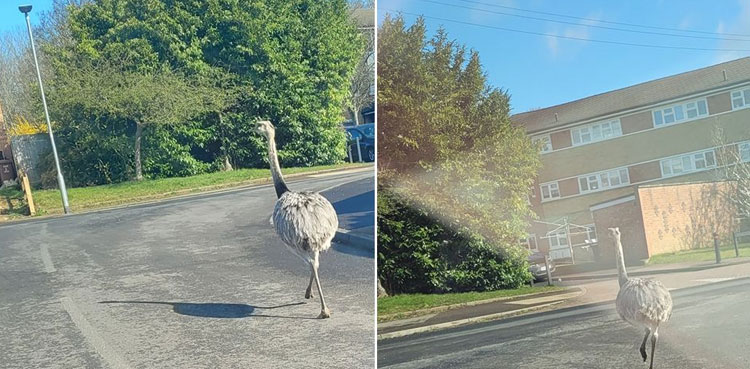
    Dozens of rare birds were spotted running wild in a Hertfordshire housing estate in the United Kingdom (UK).

    According to details, many rheas were seen running wild in residential areas and along the busy M25 road in Three Rivers District.

    The police have asked the residents not to approach the “fast” animals as they are “aggressive if cornered”.

    Rheas are native to South America and are similar to an ostrich in appearance, but a little smaller. They are sometimes kept as pets in the UK and there have been incidents of them running away from the owners in the past.

    “Many incidents have been reported of them attacking dogs and deer, so we ask that dog owners are attentive when out walking,” said the police.

    Officials said that they have been unable to find the birds’ owner or determine their origin.

    Police Constable Christian Gottmann of the Rickmansworth and District Safer Neighborhood Team said, “These birds are certainly an unusual sight on the streets of Three Rivers, and we want to reassure the public that we are working in partnership with Three Rivers District Council, Highways and our Rural Operational Support Team to come up with a plan to capture and rehome the birds to a suitable animal reserve.”

  • ‘Aasteen ka saanp’ PPP, ‘Selected’ PML-N? Sharmila Faruqi, Hina Parvez seem to be trading barbs

    ‘Aasteen ka saanp’ PPP, ‘Selected’ PML-N? Sharmila Faruqi, Hina Parvez seem to be trading barbs

    Hina Parvez Butt of the Pakistan Muslim League-Nawaz (PML-N) and Sharmila Faruqi of the Pakistan People’s Party (PPP) seem to be trading barbs over Twitter as fate of the joint opposition’s Pakistan Democratic Movement (PDM) hangs in balance amid widening cracks.

    While rumour has it that a deal has been struck, pundits believe that the PPP could soon be backstabbing the PML-N and other PDM member parties despite being on the same page to oust the government until a month ago.

    Differences have cropped between the PPP and the PDM over the issue of resignations from the assemblies and also on the election of Sherry Rehman or Yousaf Raza Gilani as leader of the opposition in the Senate. Both the PPP and PML-N — two of the largest political parties that are a part of the anti-government alliance — have intensified lobbying to win maximum votes for the slot.

    PML-N Vice President Maryam Nawaz and Jamiat Ulema-e-Islam-Fazl (JUI-F) chief Maulana Fazlur Rehman have strongly opposed Bilawal Bhutto-Zardari’s idea and asked him to stick to the original agreement agreed upon in the PDM meeting according to which the alliance had to support Yousaf Raza Gilani for the slot of Senate chairman while the PML-N would get the slot of leader of the opposition.

    With the gulf between PPP and its allies in the PDM growing, Chairman Bilawal has reportedly intensified contacts with like-minded opposition parties hinting at an independent opposition alliance in the making.

    Amid reports of trade of barbs between Maryam and Bilawal, it has emerged that other party leaders are following suit.

    “Selection does not run in our veins but then there are some who always were [selected],” PPP’s Faruqi tweeted in an apparent jibe at the PML-N, a day after Bilawal referred to a “family from Lahore that had always been selected [by the establishment to run the country]”.

    She was reacting to a tweet by PML-N’s Parvez, who had called out an “aasteen ka saanp [an ally who betrays]”.

    While the two did not take any names, the exchange falls conveniently in time for netizens to assume the insults were aimed at each other amid deteriorating ties.

  • Pakistan concerned as Sri Lanka mulls banning burqa, shutting Islamic schools for national security

    Pakistan ambassador in Colombo and a United Nations expert have expressed concerns over Sri Lanka’s proposed move to ban the wearing of burqas.

    Last week, Sri Lanka announced plans to ban the wearing of burqas and said it would close more than 1,000 Islamic schools known as madrassas, citing national security.

    Pakistan’s ambassador to Sri Lanka, Saad Khattak, tweeted the ban would “only serve as injury to the feelings of ordinary Sri Lankan Muslims and Muslims across the globe.”

    The United Nations’ special rapporteur on freedom of religion or belief, Ahmed Shaheed, tweeted that the “burqa bans are incompatible with [international] law guarantees of the right to manifest one’s religion or belief & of freedom of expression.”

    On Saturday, Sri Lanka’s minister of public security, Sarath Weerasekara, called the burqa a sign of religious extremism and said it has a direct impact on national security.

    Weerasekara signed a paper on Friday seeking Cabinet approval to ban burqas.

    The wearing of burqas in Sri Lanka was temporarily banned in 2019 soon after the Easter Sunday bomb attacks on churches and hotels that killed more than 260 people in the Indian Ocean island nation.

    Two local Muslim groups that had pledged allegiance to the Daesh group, or Daesh, have been blamed for the attacks at six locations — two Roman Catholic churches, one Protestant church, and three top hotels.

    Sri Lanka also plans to ban more than 1,000 religious seminaries, saying they are not registered with the authorities and do not follow the national education policy.
    The decision to ban burqas and seminaries is the latest move affecting Sri Lanka’s minority Muslims they make up about 9 per cent of the 22 million people in Sri Lanka.

  • Government testing 5G ‘bands’ for immediate launch in Pakistan

    Government testing 5G ‘bands’ for immediate launch in Pakistan

    The Ministry of Information Technology and Telecommunications (MOITT) is testing options available for the immediate launch of 5G in Pakistan.

    As per details, the ministry has tested seven bands to evaluate the adoption of 5G services like low bands, mid bands and high bands.

    • 700 MHz
    • 2.3 GHz
    • 2.6 GHz
    • 3.5 GHz
    • MiIIi8meter wavebands
    • C-Band (3.6 – 4.2) GHz
    • Unlicensed Backhaul Frequency bands (P2P & P2MP)

    “The Government of Pakistan aims to launch 5G services in the country by December 2022. Having 5G at disposal will open avenues for investment. It will also accelerate the progress towards achieving the goal of ‘Digital Pakistan’,” said an official of the ministry.

    Last year, the Pakistan Telecommunication Authority (PTA) permitted mobile operators to conduct tests and trials of 5G technology under a limited environment and non-commercial basis.

    PTA has also issued a framework for the Test and Development of Future Technologies, particularly 5G wireless networks in Pakistan.

    The rapid growth in the demand for mobile data traffic for a better broadband experience has led to an increasing emphasis on the upcoming fifth generation of mobile technologies.

    International Mobile Technology (IMT) 2020 is much broader than the previous generation of mobile broadband communication systems. The IMT-2020 will be a cornerstone for all of the activities related to attaining the goals in the 2030 Agenda for Sustainable Development.

  • ‘Key state institutions telling lawmakers to support PTI’s candidate for Senate chairman,’ alleges PML-N

    ‘Key state institutions telling lawmakers to support PTI’s candidate for Senate chairman,’ alleges PML-N

    With Senate chairman vote approaching, Pakistan Muslim League-Nawaz (PML-N) has brought to the fore a senator who claims to have received calls to support the ruling party’s candidate for the slot, Sadiq Sanjrani.

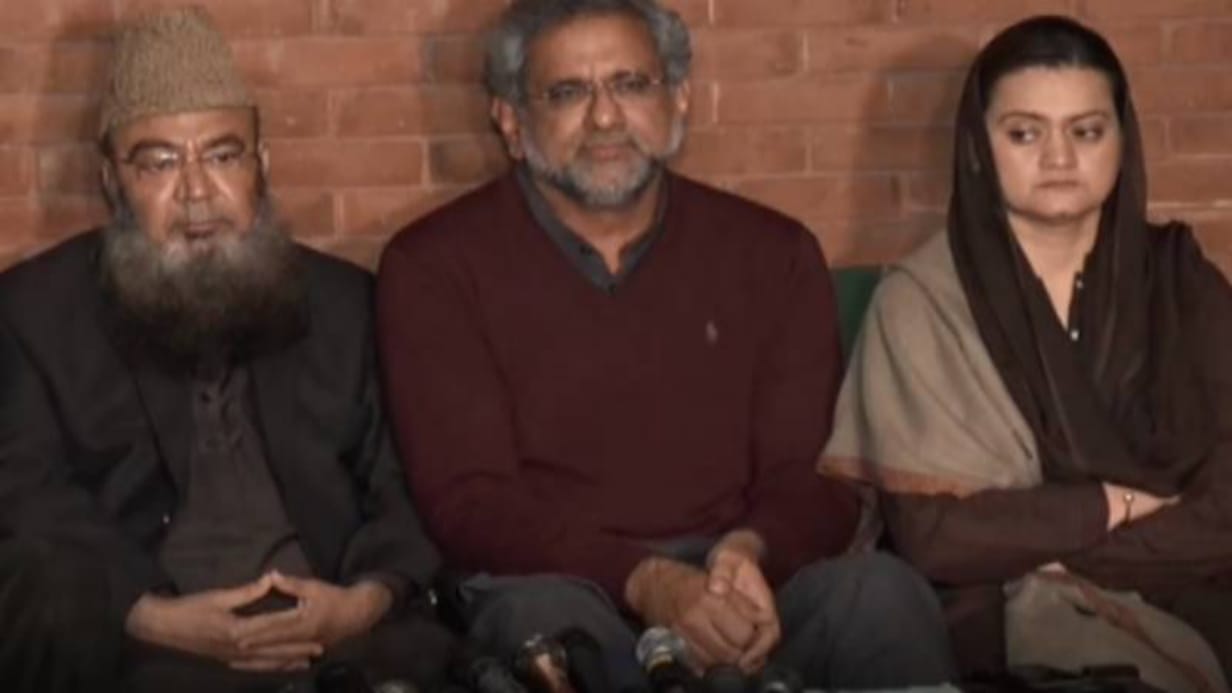
    Senator Hafiz Abdul Karim, while talking to media on Thursday, said that he received multiple telephone calls from officials of key state institutions to cast his vote in favour of Sanjrani in the election to be held through secret ballot on Friday.

    He was accompanied by former prime minister (PM) Shahid Khaqan Abbas, Marriyum Aurangzeb and Ahsan Iqbal.

    “I received the first call on March 6 but I could not attend it. Later, calls were also made on March 7 and March 9. I attended the last call when I was told to support the Pakistan Tehreek-e-Insaf’s (PTI) candidate,” he claimed.

    The PML-N senator said that he had been nominated in a four-year-old case to pressurise him, adding that he would continue to support Nawaz Sharif come what may.

    The presser came shortly after PML-N Vice President Maryam Nawaz said that her party’s senators were being contacted and told to not support opposition alliance, the Pakistan Democratic Movement (PDM), in the forthcoming elections for chairman and deputy chairman of the upper house of the parliament.

  • US bars Turkey from delivering combat helicopters to Pakistan

    US bars Turkey from delivering combat helicopters to Pakistan

    The United States (US) of America has blocked the supply of 30 Turkish-made ATAK helicopters to Pakistan, as per the statement by Ibrahim Kalin, Press Secretary to Turkish President Tayyip Erdogan.

    “The move is made to create pressure to stop Turkey from buying the Russian S-400 missile system, but the tender is likely to go to China,” he added.

    He further said that “The United States has blocked our planned sale of combat helicopters to Pakistan. This will likely lead to the fact that the tender in question will go to China, and the losers will be the United States.”

    Kalin revealed that Turkey had bought the Russian S-400 because America had refused to supply Patriot air defense systems to Ankara on favorable terms.

    The value of this contract is nearly $1.5 billion, and this contract was the largest one-time supply defence deal in history. Pakistan and Turkey had signed a deal for the supply of 30 ATAK helicopters in 2018.

    However, the move to block the supply of American weapons to Turkey has delayed the implementation of the contract as ATAK helicopters use 800-4A engines manufactured by the American company LHTEC.

    As a counter move, Turkey has announced that it will develop its helicopter engines, and has decided to continue the S-400 purchase from Russia.

  • Bangladesh’s first transgender newsreader breaks down into tears after debut on national TV

    Bangladesh’s first transgender newsreader breaks down into tears after debut on national TV

    Bangladesh’s first transgender news presenter made her debut on national television on Monday after which she broke down into tears.

    As per reports, there are almost 1.5 million transgender people in Bangladesh, who face severe discrimination and violence and are often left to live by begging, sex trade or crime.

    The experience of Tashnuva Anan Shishir, who delivered the three-minute news bulletin on the private Boishakhi TV was historic.

    Born Kamal Hossain Shishir, she learnt in her early teens she was trapped in a man’s body. She says she was sexually assaulted and bullied for years.

    “The bullying was so unbearable I attempted suicide four times. My father stopped talking to me for years,” said Shishir.

    “When I couldn’t cope with it any more, I left home … I couldn’t stand the neighbours telling my father about how I should act or walk in a masculine way.”

    She escaped her home in a southern coastal district to live alone in the capital Dhaka and then in the central city of Narayanganj.

    There she went through the hormone therapy. She did jobs working for charities and acted in theatres, while continuing her studies.

    In January she was the first transgender person to study for a master’s in public health at the James P Grant School of Public Health in Dhaka.

    Prime Minister Sheikh Hasina’s government has since 2013 allowed trans people to be identified as a separate gender and in 2018 they were given the right to vote as a third gender.

    Shishir’s broadcast coincided with International Women’s Day and followed a series of steps by public and private firms to overcome deep-seated prejudices against the community.

    Julfikar Ali Manik, a spokesperson for Boishakhi TV said the channel was determined to give Shishir an opportunity to prove herself despite the risk of backlash from some viewers in the conservative country. Her debut marked a “historic step,” he added.

    Shishir said she approached other channels for the auditions but only Boishakhi was “brave enough to take me in.”

    Ahead of going live for Monday’s broadcast she was terrified, she expressed, but managed to get the better of her fears.

    “I tried to think of stage dramas I’ve performed in and follow techniques I’ve learned there. But I was shaking inside,” she said.

    “I don’t want any members of the (transgender) community to suffer. I don’t want them to live a miserable life. I hope they will find work according to their skills,” she said.

  • Pakistan faces an unexpected dilemma: too much electricity

    Pakistan faces an unexpected dilemma: too much electricity

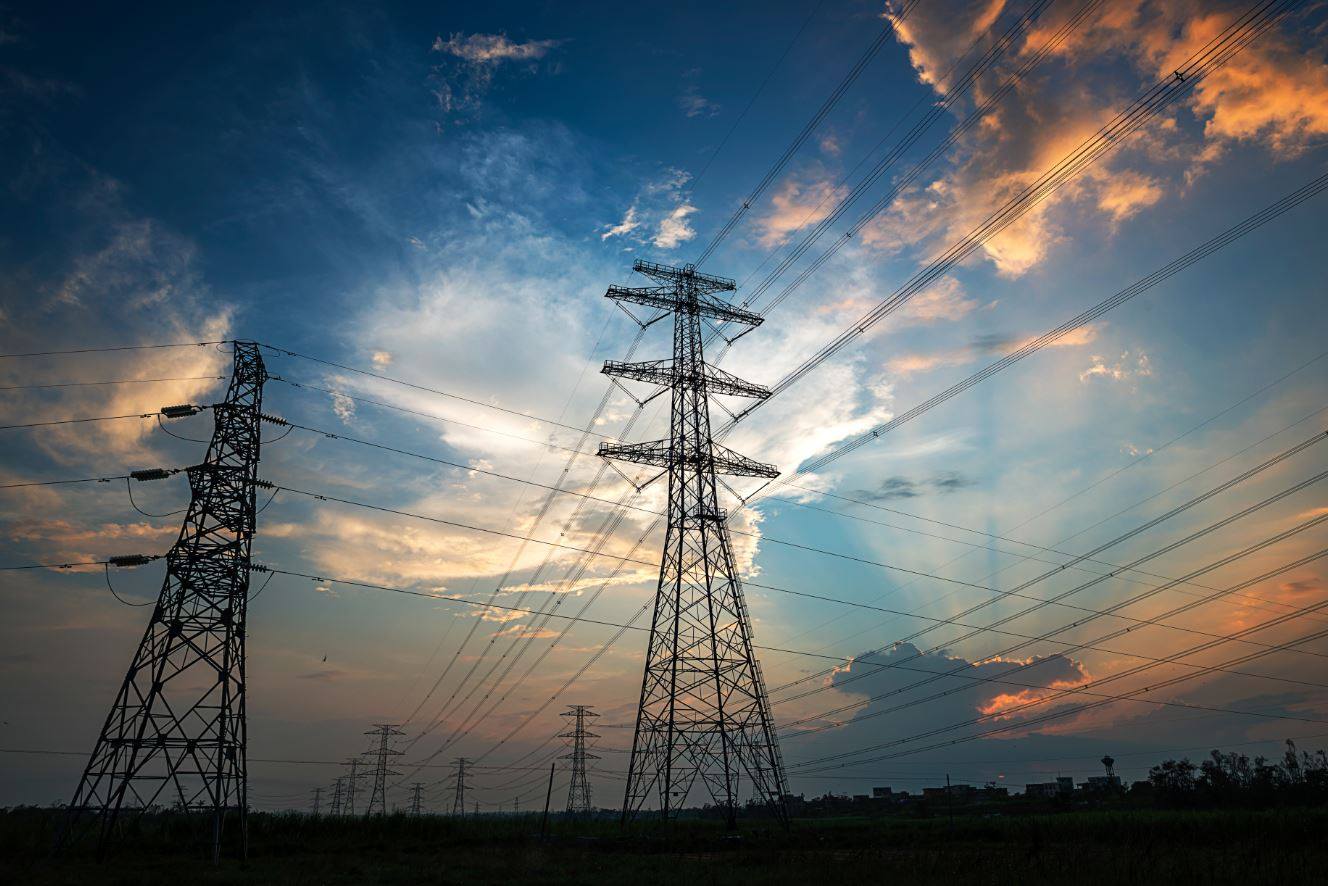
    After suffering decades of electricity shortages that left families and businesses in the dark, Pakistan finds itself with a new problem: more electrical generating capacity than it needs.

    Large-scale construction of new power plants — largely coal-fired ones funded by China — has dramatically boosted the country’s energy capacity.

    “It’s true. We are producing much more than we need,” Tabish Gauhar, special assistant to the prime minister on power, told the Thomson Reuters Foundation by telephone.

    But even as supply surges, electric power is still not reaching up to 50 million people in Pakistan who need it, according to a 2018 World Bank report, though the expansion of transmission lines is planned.

    Power outages also remain common, with a transmission problem just last month leaving many of the country’s major cities in the dark.

    Excess fossil fuel energy capacity also is boosting electricity costs — and raising questions about whether the country will now manage to achieve its climate change goals, with scientists saying coal needs to rapidly disappear from the world’s energy mix to prevent the worst impacts of climate change.

    RENEWABLES AIM?

    Last year, Prime Minister Imran Khan promised that Pakistan by 2030 would produce 60 percent of its electrical power from renewable sources.

    Currently, the country gets 64 percent of its electricity from fossil fuels, with another 27 percent from hydropower, 5 percent from nuclear power and just 4 percent from renewables such as solar and wind, Gauhar said.

    The country has already scrapped plans for two Chinese-funded coal plants — but another seven commissioned as part of the sweeping China-Pakistan Economic Corridor (CPEC) project have gone ahead, and are expected to add up to 6,600 megawatts of capacity to the grid.

    China has also funded new renewable energy but at a smaller scale, with six wind farms set to generate just under 400 MW of power, a 100 MW solar project and four hydropower plants expected to produce 3,400 MW by 2027.

    CPEC aims to boost road, rail and air transport links and trade between China, Pakistan and other countries in the region, as well as boosting energy production.

    Vaqar Zakaria, the head of Hagler Bailly Pakistan, an environmental consultancy firm based in Islamabad, said Pakistan’s coal-heavy power expansion was in line with its own former national aims.

    “I think blaming the Chinese may not entirely be fair as setting up projects on local and imported coal was our country policy and priority,” he said.

    Officials at the Chinese embassy in Islamabad did not respond to calls and emails asking for comment.

    As new largely coal-fired plants come online, Pakistan is expected by 2023 to have 50 percent more power capacity than currently needed.

    Because the government must repay loans taken to build the plants and has signed contracts to buy their power, the overcapacity is producing costs “the government has to pay to the power producers under binding contracts, regardless of actual need,” Gauhar said.

    “Our fixed-capacity charges have gone through the roof,” he added.

    Those costs currently stand at 850 billion rupees ($5.3 billion) a year, but will rise to almost 1,450 billion rupees ($9 billion) a year by 2023 as new largely coal-fired power plants still being built come online, he said.

    That is driving up rates consumers pay for power — 30 percent in the last two years, Gauhar said — a problem likely to continue unless Pakistan can find more buyers for its new generating capacity, such as by boosting manufacturing or pushing the use of electric vehicles.

    The government plans to decommission some older fossil fuel plants to cut overcapacity, he said – but it also pushing ahead to add new wind, solar and hydropower capacity to the grid to meet its climate goals.

    The government is holding talks to renegotiate tariff rates with the country’s independent power producers, including fossil fuel, hydro, wind and solar companies, he said.

    Whether it will seek similar rate renegotiations on Chinese-funded plants still in the pipeline, or longer debt repayment periods, remains unclear.

    GAINING POWER

    When electricity projects now in the pipeline are completed in the next few years, Pakistan will have about 38,000 MW of capacity, Gauhar said.

    But its current summertime peak demand is 25,000 MW, with electricity use falling to 12,000 MW in the winter, he said.

    Saadia Qayyum, an energy specialist with the World Bank, said energy over-production was a better problem to have than undersupply as it allowed for growth – but the country needed new ways to use the electricity.

    But incentivising electric transport, for instance, will be less than a green solution if a big share of the country’s new electricity is produced by coal plants, energy analysts said.

    Gauhar said the government is offering discounted electricity tariffs to industrial customers, to try to lure those now dependent on their own gas-fired plants back to the national grid.

    But demand for grid power “is a function of price, availability and reliability”, noted Zakaria, the environmental analyst – and high prices are likely to suppress demand and incentivise power theft, a serious problem in the country.

    He predicted high-end residential and commercial customers would end up footing the bill for the excess generation capacity, as industries and agriculture receive power subsidies.

    That could mean “paying customers will use less electricity, further worsening the situation”, particularly as more see an economic advantage in buying their own solar panels.

    Despite the country’s energy surplus, the World Bank is investing $450 million over the next four years in renewable power in Pakistan, to try to cut the nation’s reliance on fossil fuel imports and lower energy costs, Qayyum said.

    Gauhar said Pakistan would need some level of fossil-fuel-powered energy in coming years to help balance “intermittent” sources like solar and wind which do not generate electricity 24 hours a day.

    But he said the long-term plan, still being discussed, was to have coal plants contribute no more than 15 percent of the country’s electricity capacity.


  • Scientists achieve real-time communication with people during lucid dreams

    Scientists achieve real-time communication with people during lucid dreams

    Scientists have made a new breakthrough on a different front called the hallucinatory world inside dreams.

    A team of researchers have achieved to do real-time dialogue with people while they were lucid dreaming. Lucid dreaming is also known as ‘interactive dreaming’.

    The participants in the study were able to correctly respond to questions, like basic arithmetics. It is noteworthy that the participants were in deep sleep while they answered these questions.

    It is “a relatively unexplored communication channel that could enable a new strategy for the empirical exploration of dreams”, said the researchers’ team.

    “There are studies of lucid dreamers communicating out of dreams, and also remembering to do tasks. There’s a fairly limited amount of research on the stimuli going into lucid dreams,” said Karen Konkoly, a PhD student at Northwestern University.

    “One thing that surprised us is that you could just say a sentence to somebody, and they could understand it just as it actually is,” she added.

    The researchers experimented on 36 volunteers in laboratories located in the United States, France, Germany, and the Netherlands to enter the lucid state in which the person was aware that they are in a dream.

    The participants had entered rapid-eye-movement (REM) when electrodes were placed next to their eyes, on the scalps, and their chins. From brainwaves activity and eyeball movement, sleep experts can determine if a person is sleeping.

    These eye signals along with facial contortion were used as a means of communication during sleep sessions.

    During sleep, the researchers asked 19-years-old American participants to subtract six out of eight while he was sleeping, and he correctly answered: “two” with two eye movements from left to right.

    “It’s amazing to sit in the lab and ask a bunch of questions, and then somebody might actually answer one. It’s such an immediately rewarding type of experiment to do. You don’t have to wait to analyze your data or anything like that. You can see it right there while they’re still sleeping,” said a researcher, namely, KonKoly.

    Moreover, many participants were able to recall the interactions with the researchers after they woke up, with individuals reporting that the prompts sounded like a voiceover narrator or a radio speaker that was clearly coming from outside of their dream.

    The team plans to take this study further with more experiments that will analyse the possibilities of two-way communication with lucid dreamers.