Tag: oil prices

  • Oil prices to rise further in coming days: PM Shehbaz

    Oil prices to rise further in coming days: PM Shehbaz

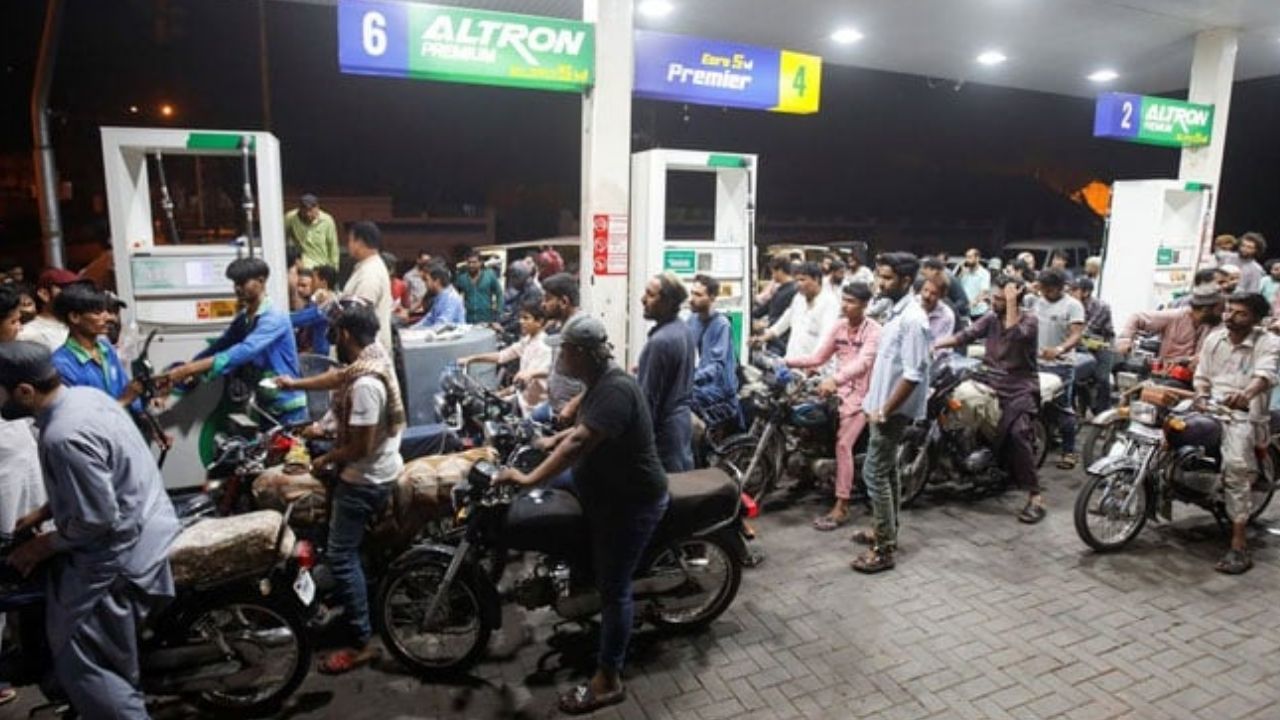
    Prime Minister (PM) Shehbaz Sharif has warned that oil prices may rise further in the coming days as the war in the Middle East rages on, prompting the government to take measures to stabilise Pakistan’s economy. 

    Addressing the nation, the prime minister said that the government was making efforts to keep the economy stable despite the evolving situation.

    He also announced that funds saved through recently introduced austerity measures will be used to provide relief to the public.

    Meanwhile, the provincial governments of Punjab, Khyber Pakhtunkhwa (KP) and Balochistan have also announced key decisions aimed at tackling the energy crisis and managing the potential impact of rising fuel prices.

    On the other hand, a meeting of the Sindh cabinet is scheduled to take place today, where important decisions are expected to be taken regarding the situation.

    The premier had earlier unveiled a series of austerity measures during a national address in response to the current regional developments and their possible economic consequences for Pakistan.

  • No immediate risk of fuel shortage, says finance minister

    No immediate risk of fuel shortage, says finance minister

    Finance Minister Muhammad Aurangzeb has assured that Pakistan’s energy supplies remain stable despite disruptions in key international shipping routes. Speaking at the meeting of the Cabinet Committee on Petrol Prices, constituted by the Prime Minister, he said national petroleum reserves are at comfortable levels and there is no immediate risk of shortages.

    The committee reviewed global and regional supply conditions, including the closure of the Strait of Hormuz and tensions around the Strait of Bab al-Mandeb. “These developments pose major challenges for global energy security and could affect Pakistan’s fuel supply chain if they continue,” the Finance Minister said.

    During the session, members analyzed trends in forward and futures prices of petroleum products, assessed the resilience of domestic and international supply chains, and considered potential short- and medium-term impacts on foreign exchange due to market volatility. 

    Officials also examined measures to prevent disruptions while maintaining uninterrupted domestic availability of petroleum products. The possible fiscal consequences of a prolonged regional conflict were also discussed.

    Aurangzeb emphasized that the committee will function as a strategic governance forum, conducting daily monitoring and structured scenario planning. Ensuring availability of energy supplies across the country is the Government’s primary objective and will remain the central driver of all decisions, he added.

    Ministries and regulatory bodies have been directed to validate stock positions, track shipments and storage, and remain prepared for any emergency situation.

    The committee also reviewed LNG and LPG supply positions, shipment schedules, terminal operations, and line-pack management. Officials were instructed to refine scenario analyses and evaluate economic and fiscal trade-offs associated with alternative fuel utilization and demand management options. 

    Any necessary adjustments to domestic fuel prices resulting from international market movements will be implemented through established mechanisms in a transparent and predictable manner.

    To maintain real-time oversight, the committee will convene daily, consolidating data on global price movements, domestic stock levels, foreign exchange exposure, and overall energy supply chain developments.

    The meeting was attended by Federal Minister for Petroleum Ali Pervaiz Malik, Federal Minister for Power Sardar Awais Ahmad Leghari, Minister of State for Finance Bilal Azhar Kayani, along with federal secretaries and senior officials from the relevant ministries, divisions, and regulatory bodies.

  • Global oil prices drop more than 3% as fears of supply disruptions ease

    Global oil prices drop more than 3% as fears of supply disruptions ease

    Global oil prices dropped more than 3 per cent as the surge driven by increasing geopolitical tensions paused, with the market anticipating a response from Israel against Iran.

    Tamas Varga, an analyst at oil broker PVM, remarked in a Tuesday report, “Oil can only continue to rise for so long based on perceptions rather than actual disruptions in supply.”

    Following Iran’s launch of approximately 180 ballistic missiles at Israel last week, oil prices had climbed nearly 13 per cent by Monday’s close, sparking concerns that Israel could retaliate by targeting Iran’s oil sector.

    President Joe Biden has openly advised Israel against targeting Iran’s oil infrastructure. According to officials speaking to The New York Times, Israel is anticipated to prioritise strikes on military and intelligence sites in Iran.

    Similarly, The Jerusalem Post has reported that Israel’s efforts will likely concentrate on these military and intelligence facilities.

    Israeli Defense Minister Yoav Gallant is set to meet with US Secretary of Defense Lloyd Austin at the Pentagon on Wednesday to discuss ongoing security developments in the Middle East, as stated by press secretary Maj. Gen. Pat Ryder during a briefing on Monday.

  • Oil prices drop again on concerns over China’s economic changes

    Oil prices drop again on concerns over China’s economic changes

    In the wake of growing apprehensions over reduced oil consumption in China, a key player in the global oil market, oil prices witnessed a consecutive decline for the second day.

    The current market scenario reveals Brent crude trading at $82.16 per barrel, marking a 0.52 per cent decrease, while West Texas Intermediate crude (WTI) is trading at $77.9 per barrel, down by 0.6 per cent from the previous close.

    China, a significant oil consumer, declared its commitment to overhaul its economic development model and address industrial overcapacity concerns.

    Alongside these initiatives, China set its economic growth target for 2024 at approximately 5 per cent, a figure consistent with last year’s goal and in alignment with analysts’ predictions, according to Reuters.

    However, achieving this growth target may prove challenging this year, as analysts point out that China’s favourable base effect in 2023, resulting from the pandemic-affected 2022, may not be replicable. This potential hurdle has raised concerns and could impact investor sentiment.

    China, being the world’s largest crude importer, also announced intentions to intensify the exploration and development of oil and natural gas resources.

    Simultaneously, there is a commitment to tighten control over fossil fuel consumption, reflecting the nation’s dual focus on energy development and environmental responsibility.

    While anxieties regarding China’s demand outlook contributed to the downward pressure on oil prices, other factors provided support.

    Major oil producers’ decisions to reduce output and geopolitical tensions arising from the Israel-Gaza conflict played a role in sustaining crude prices.

    Over the weekend, the Organisation of the Petroleum Exporting Countries and its allies (OPEC+) extended their voluntary oil output cuts of 2.2 million barrels per day (bpd) into the second quarter.

    This decision aimed to bolster prices amidst global growth concerns and increased production outside the OPEC+ alliance.

  • Pakistani rupee gains 6 paisa against US dollar, closes at Rs279.79

    Pakistani rupee gains 6 paisa against US dollar, closes at Rs279.79

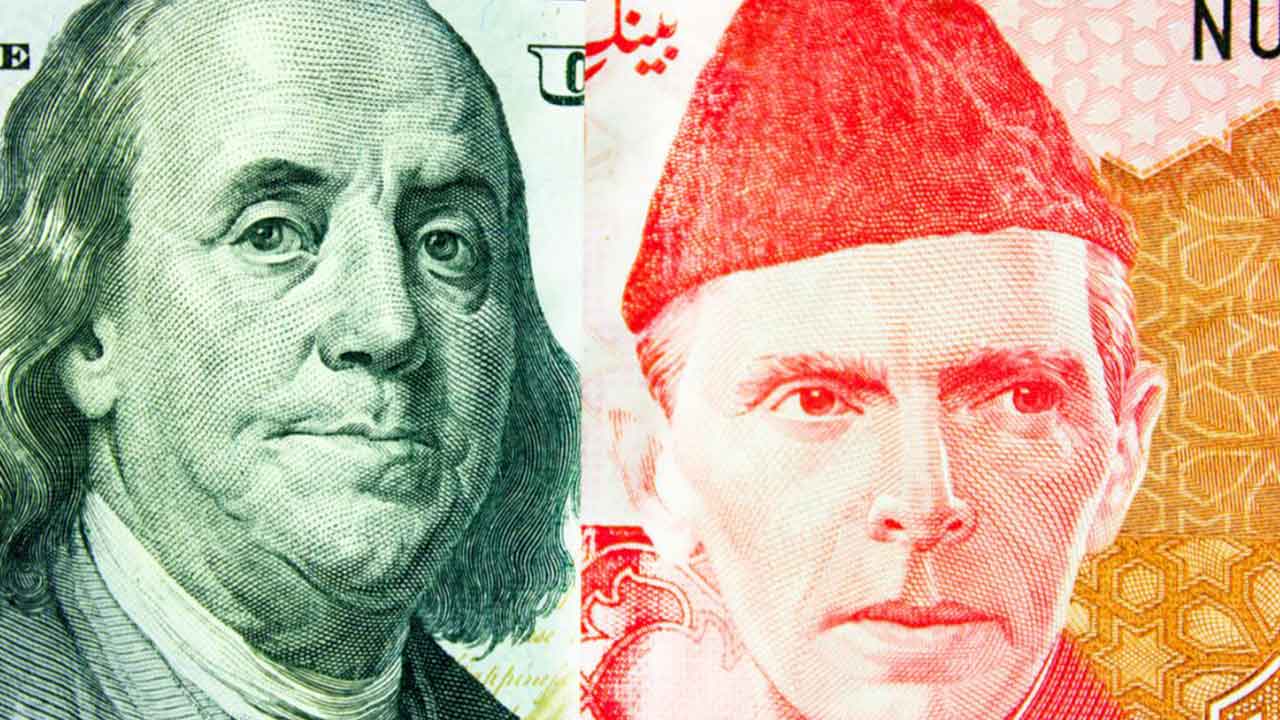
    The Pakistani rupee (PKR) continued its upward trend against the US dollar (USD) for the fifth consecutive session, appreciating by 0.02 per cent in the interbank market on Tuesday.

    Closing at Rs279.79, the local unit gained Re0.06 against the greenback.

    This follows Monday’s positive performance, where the rupee settled at 279.85 against the US dollar.

    A notable development on the economic front is the government’s active pursuit of a government-to-government (G2G) agreement with Saudi Arabia and the United Arab Emirates (UAE) for upfront foreign currency repatriation against future workers’ remittances. 

    Both Saudi Arabia and the UAE hold significant importance as countries contributing to foreign exchange through remittances from Pakistani workers. 

    Meanwhile, on the global stage, the US dollar experienced a slight easing, resulting in a 0.07 per cent increase in sterling, reaching $1.2720.

    Compared to major currencies, the Pakistani currency depreciated by 18.84 paisa against the Euro, closing at Rs305.03, as opposed to the previous value of Rs304.84.

    The British Pound strengthened, increasing by 1.02 rupees and closing at Rs356.34, compared to Rs355.33 from the previous day.

    The Swiss Franc exhibited gains of 54.58 paisa, concluding at Rs322.62, in contrast to the previous session’s value of Rs322.08.

    Against the Japanese Yen, PKR experienced a decrease of 0.98 paisa, closing at Rs1.8993 compared to Rs1.8895 a day ago.

    Conversely, the Chinese Yuan appreciated by 13.91 paisa, closing at Rs39.03 against the previous session’s Rs38.89.

  • Pakistani rupee shows marginal strength, gains 4.51 paisa against US dollar

    Pakistani rupee shows marginal strength, gains 4.51 paisa against US dollar

    In Monday’s interbank session, the Pakistani rupee (PKR) exhibited a slight appreciation of 4.51 paisa against the US dollar (USD), settling at PKR 279.85 per USD, compared to the previous closing of PKR 279.9 per USD. The intraday fluctuations showed a bid high of Rs280.1 and an ask low of Rs279.8.

    In the open market, exchange companies quoted the dollar at 279 for buying and 281 for selling. Notably, Pakistan received the second installment of SDR 528 million, equivalent to $705.6 million, from the International Monetary Fund (IMF) last week. 

    The first review report under the standby arrangement emphasised the importance of market-determined exchange rates and the gradual development of the foreign exchange (FX) market.

    Against major currencies, the PKR experienced fluctuations:

    Euro: lost 37.07 paisa, closing at 304.84 compared to the previous value of 304.47.

    British Pound: increased by 39.06 paisa, closing at 355.33 compared to 354.94 from a day ago.

    Swiss Franc: Saw losses of 20.03 paisa, closing at 322.08 compared to 322.28 in the previous session.

    Japanese yen: lost 0.19 paisa, closing at 1.8895 versus 1.8876 a day ago.

    Chinese Yuan: Lost 2.38 paisa, closing at 38.89 against 38.91 from the previous session.

    Saudi Riyal: Closed at 74.62 with a loss of 1.2 paisa from its value of 74.63 a day ago.

  • Interbank closing: PKR gains 8 paisa to close at Rs279.9 versus USD

    Interbank closing: PKR gains 8 paisa to close at Rs279.9 versus USD

    The Pakistani rupee (PKR) strengthened by 8.24 paisa against the US dollar (USD) in Friday’s interbank session, concluding the trade at PKR 279.9 per USD, surpassing the previous session’s closing rate.

    The local currency experienced an intraday high (bid) of Rs280.4 and a low (ask) of Rs279.9.

    In the open market, Exchange Companies quoted the dollar at Rs279.5 for buying and Rs281 for selling.

    Comparatively, against major currencies, the PKR gained 20.17 paisa against the Euro, closing at Rs304.47 in contrast to the previous value of Rs304.67. 

    The British Pound became more affordable by 30.06 paisa, concluding at Rs354.94 compared to Rs355.24 a day earlier. 

    The Swiss franc incurred losses of 1.38 rupees, settling at Rs322.28 compared to Rs323.66 from the previous session.

  • Pakistani rupee edges up against US dollar, marks 0.5% gain at closing

    Pakistani rupee edges up against US dollar, marks 0.5% gain at closing

    The Pakistani rupee exhibited a modest uptick of 0.1 per cent against the US dollar during the initial trading hours on Wednesday in the inter-bank market.

    At approximately 10:40 am, the local currency stabilised at Rs280.

    However, at the time of closing, the PKR experienced further appreciation against the US dollar, increasing by 0.05 per cent.

    According to the State Bank of Pakistan (SBP), the rupee concluded at Rs280.1, marking an increase of Re0.15 against the US dollar.

    In contrast, on the preceding day, the rupee experienced a dip, settling at Rs280.25 against the US dollar, as reported by the State Bank of Pakistan.

    Internationally, the US dollar index maintained a one-month high on Wednesday, propelled by comments from Federal Reserve Governor Christopher Waller that tempered expectations of a March rate cut. 

    Consequently, market projections for a March rate cut decreased from 76.9 per cent to 62.2 per cent, according to CME’s FedWatch Tool.

    Although the current market pricing aligns the Fed rate curve more reasonably, there are still a notable 157 basis points of rate cuts anticipated for 2024, suggesting potential for further adjustment.

    The dollar index, gauging the greenback against major currencies, concluded at 103.35, having reached 103.42 in the previous session—the highest level since December 13.

  • PKR sustains positive momentum, gains 0.04% against US dollar in ninth consecutive session

    PKR sustains positive momentum, gains 0.04% against US dollar in ninth consecutive session

    In the inter-bank market, the Pakistani rupee continued its positive trend against the US dollar for the ninth consecutive session on Monday, appreciating by 0.04 per cent to settle at Rs280.24, reflecting a gain of Re0.12, according to the State Bank of Pakistan (SBP).

    During the preceding week, the Pakistani rupee sustained its upward movement, appreciating by Rs1.04 or 0.37 per cent against the US dollar, settling at 280.36 in the inter-bank market.

    This surge in value is attributed to the recent announcement of a staff-level agreement (SLA) between Pakistan and the International Monetary Fund (IMF) on the first review of the $3 billion Stand-by Arrangement (SBA). Consequently, the approval of the second tranche of the package ensued.

    The IMF Executive Board completed the first review of the SBA last week, facilitating an immediate disbursement of $700 million.

    As of January 5, the foreign exchange reserves held by the State Bank of Pakistan amount to $8.15 billion, with expectations of further augmentation through IMF inflows.

    On the global front, the US dollar experienced a decline on Monday amid renewed anticipations of a Federal Reserve rate cut in March.

    Simultaneously, the Chinese yuan faced challenges, hovering near a one-month low ahead of forthcoming economic data releases.

    The likelihood of a Fed cut in March gained traction following unexpected December data indicating a decline in US producer prices, prompting a slide in US Treasury yields. The US dollar index remained stable at 102.50, exhibiting minimal fluctuations in recent sessions.

    In the realm of oil prices, a significant indicator of currency parity, a slight uptick was observed on Monday. This movement was influenced by concerns over potential supply disruptions in the Middle East, following strikes by US and British forces aimed at preventing Houthi militia in Yemen from attacking ships in the Red Sea.

  • Pakistani rupee records 9th consecutive surge, gains Rs1.04 against US dollar

    Pakistani rupee records 9th consecutive surge, gains Rs1.04 against US dollar

    In the currency markets, the Pakistani rupee (PKR) maintained its winning streak for the 9th consecutive week, appreciating by 1.04 rupees against the US dollar.

    The local unit closed at PKR 280.36 per USD, showcasing resilience in the face of economic fluctuations. During today’s trading session, the PKR experienced fluctuations, reaching an intraday high bid of 279 and a low ask of 281.5.

    Exchange companies in the open market quoted the dollar at 279.15 for buying and 281.50 for selling, reflecting the ongoing strength of the PKR against the greenback.

    Notably, the PKR also demonstrated gains against major currencies, gaining 78.58 paisa against the Euro, closing at 307.85.

    The British Pound saw a decrease of 58.38 paisa, settling at 358.18, while the Swiss Franc experienced losses of 1.41 rupees, closing at 329.08.

    However, the Japanese yen posed a slight challenge, as the PKR lost 0.09 paisa, closing at 1.934 against 1.933 from the previous session.

    Overall, the PKR’s robust performance against the US dollar and several major currencies underscores the resilience and stability of Pakistan’s currency in the global financial landscape.