Right now, it looks like the Pakistani film industry is morphing, with a string of upcoming movies that cover a range of diverse topics. Babylicious is gearing up for release, an exes-to-lovers story. Kukri which explores the story of serial killer Javed Iqbal. And now, director Azfar Jafri is developing an adaptation called ‘Umro Ayyar: A New Beginning’ from the Urdu novel “Dastan-e-Amir Hamza”.
The beloved Urdu novel, is based on the Persian folklore written by Ghalib Lakhnavi in 1855. It is an epic tale about the legendary exploits and adventures of Amir Hamza and his crew. Umro Ayyar, the central character of this film, is described as a thief who is known for his cleverness and steals from the rich to help the poor.
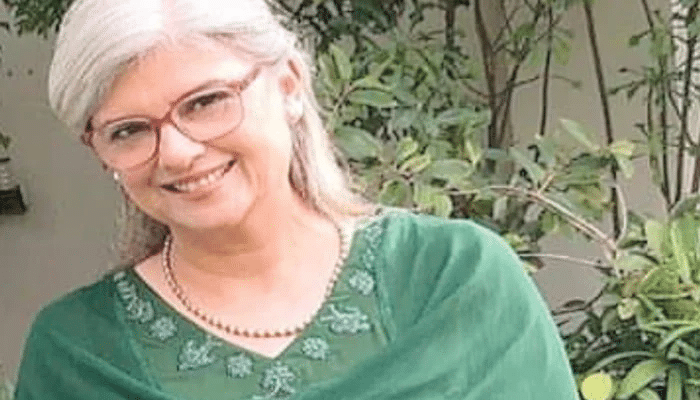
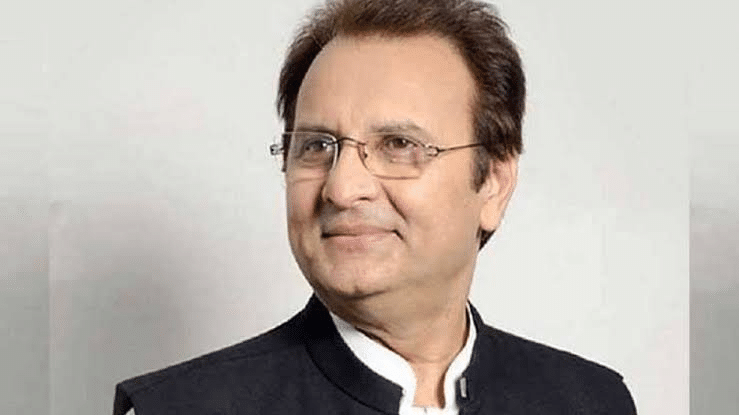
The upcoming film will star Usman Mukhtar, Sanam Saeed, Adnan Siddiqui, Ali Kazmi and veteran actor Simi Raheal.
The Current reached out to Mukhtar to ask why he chose to take part in such a project, and spoke about his love for the original novels:
“I chose this project because I have loved Umro since I was a child, and have read all of its books. I was very excited when I became a part of this film.”
Mukhtar also talked about the need to familiarise today’s generation with stories like Umroo Ayyar.
“I think that it’s about time. I think there are so many stories we have in the sub-continent, in our own culture, that are un-explored that we don’t make films about. I honestly don’t understand why producers don’t focus on our own stories. I think it’s about time that it’s happening and I’m really excited and I hope people, when they watch the film, they like it.”
Mukhtar last appeared in ‘Sinf-e-Ahan’ along side Sajal Aly and Kubra Khan. In 2022, he released his horror short film ‘Gulabo Rani’ which received rave reviews from audiences, and also received the ‘Best Short Horror Film’ Award at the Los Angeles Sci-Fi & Horror Festival.
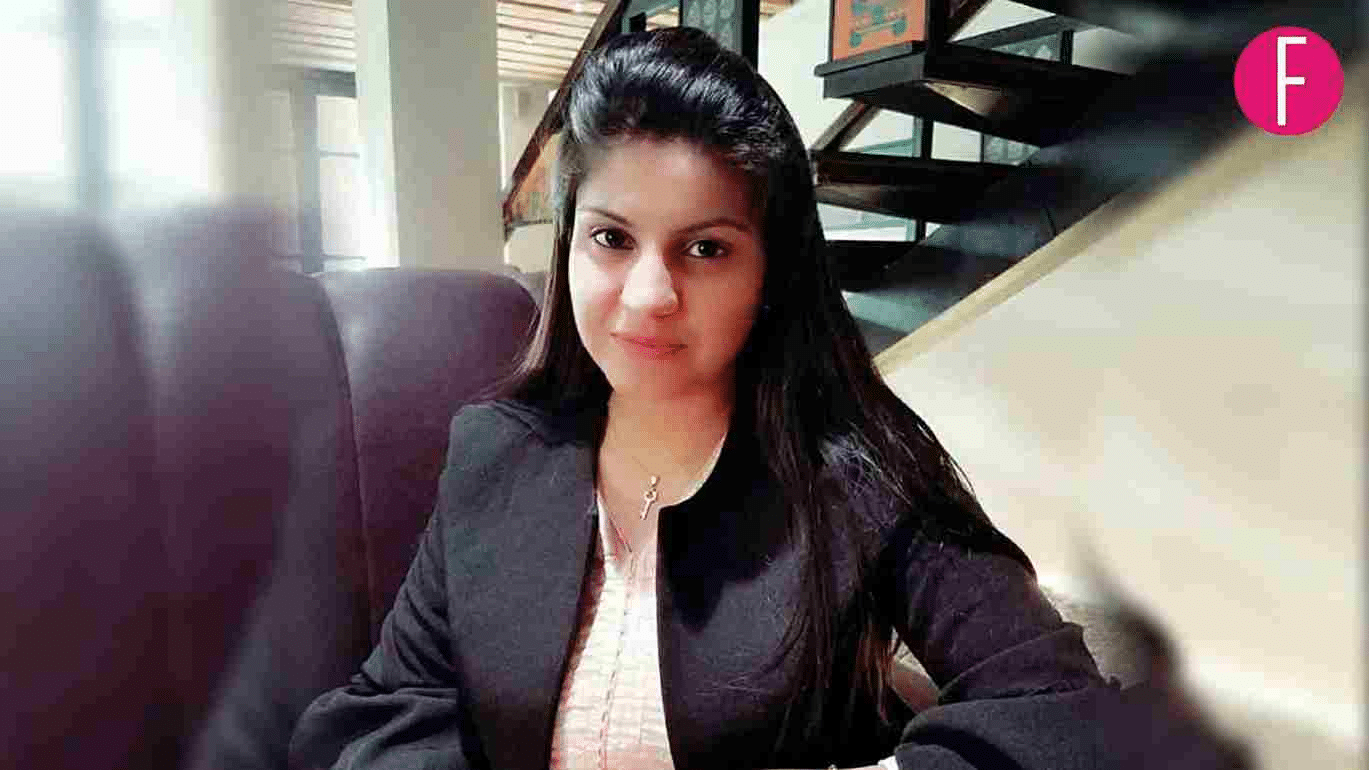
Aliya Nazir, one half the successful fashion duo behind designer brand ‘Nickie Nina’, passed away on Sunday, media outlets reported.
Publisher and Editor of Diva Magazine Rahael Rao broke the news on social media, calling the death ‘devastating’ and remembering the Pakistani fashion giant as an ‘extraordinary friend’.
“I woke up this morning to the heartbreaking news of the passing of my dear old friend, #NickieNazir, from @nickieninaofficial. Nickie was not only warm and gracious but also an extraordinary friend to have. The memories we shared together are invaluable, and the void left by their absence will be deeply felt. Nickie, your presence will be dearly missed, and the impact you made on our lives will never be forgotten. Rest in peace, dear friend.”
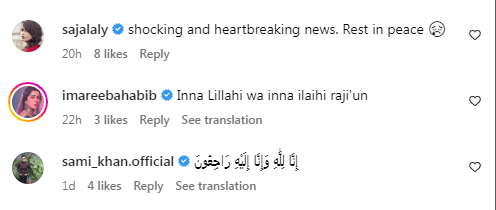
Soon, models and actors in the entertainment industry came forward to offer condolences and remember the late fashion designer. Actress Sajal Aly, Areeba Habib and Sami Khan were among them.
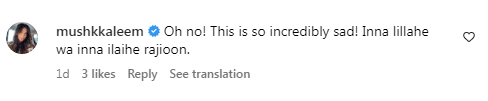
Model Mushk Kaleem was among the celebrities who sent their condolences, calling this “incredibly sad”.
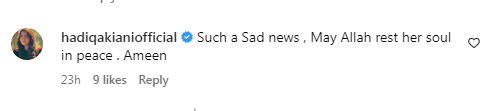
Actress and singer Hadiqa Kiani sent her condolences to the late designer’s family.
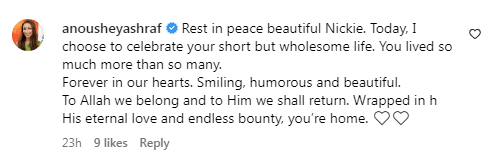
VJ and actress Anoushay Ashraf remembered the late designer as a humorous and smiling person:
“Rest in peace beautiful Nickie. Today, I choose to celebrate your short but wholesome life. You lived so much more than so many. Forever in our hearts. Smiling, humorous and beautiful. To Allah we belong and to Him we shall return. Wrapped in His eternal love and endless bounty, you’re home.”
Ushna Shah remembered the “Nickie Nina’ designer as a warm and kind person:
“This is so heartbreaking. She was such a warm and kind person. So beautiful, so graceful, so witty and so full of life. Inalilahewainaelerajiun- what terrible terrible news.”
Actress and former model Frieha Altaf mourned her late friend by sharing some past pictures with Nazir on vacation, and also sent love to her family.
On Saturday, actress Nazish Jahangir set social media ablaze when during a podcast with controversial YouTuber Nadir Ali, the model turned actor claimed that she did not identify as a feminist, because apparently “not all crying women are truthful.”
“…l believe in equality, and I still confidently say that not all crying women are truthful. I am always standing with the right person whether it is a woman or a man.”
The abysmal part of this conversation begun when Nazish Jahangir went on to address Aurat March, saying that the movement is responsible for the rise of divorces in the country, adding that it was not a solution to any problem:
“I don’t believe in these Aurat Marches. It’s not benefiting the women for whom we are fighting. They are not reaching the women they’re standing up for. Such poor women would be sitting in villages and making food while they chant slogans on the streets here. I think these fake feminist movements will never get you justice,”
“I wonder who they are protesting for then. Are they protesting for us? Because our league knows everything about it. We know our rights and we know the value of equality. The ratio of khula has also increased after these marches,” The ‘Thays’ actor claimed. “I’m not asking women to bear cruelties or abuse. They can leave their houses if they like but at least give it a shot. Our parents are the biggest example of sacrificing and surviving relationships with patience and love. Because now women are getting divorced only after one month.”
Yes this is a deeply messed up argument, there is a lot to unpack and a lot of myths to dissect which are once more churning up harmful stereotypes towards organisations working for women’s rights. Perhaps the worst statement was about Aurat March encouraging divorces in Pakistan. A sweeping statement Jahangir gave without any proof that it is true.
In reality, Aurat March is not the reason why women are choosing divorce Aurat March is the solution to a long term issue: the limited support and neglect shown towards women in a patriarchal society that demands that everything be sacrificed for the sake of a marriage.
Since Ms Jahangir is from the acting profession, and our dramas claim to know best about what women should want from a marriage, can we all collectively recall one drama that has portrayed a healthy marriage? Can we say that ‘Tere Bin’, which features a man stalking and slapping his wife was what women should look up to in order to understand how to keep their marriages intact?
Furthermore, if Ms Jahangir is claiming that women who break away from their marriages do not understand sacrifice and hard work because Aurat March tells them to be less tolerant, then she needs to be aware that more women in Pakistan have died trying to stay married. Sara Inam was murdered by her husband in Islamabad after three months of marriage, was the murder her own fault? Qandeel Baloch‘s murderer, her brother, was pardoned by the court despite confessing his crime to authorities, only because his parents pardoned him. Just five days ago, another man walked free from a court in Karachi after murdering his daughter, because he was once again pardoned by his family. Another man in Lahore murdered his wife and then sent her body back to her family via a rickshaw.
All these nameless women, the countless ways they were let down by the law and society in Pakistan. How is that we know about them, Ms Jahangir? It’s definitely not because of the family system, which continues to hide predators, and pardon them after unforgivable crimes. This heroic act solely belongs to Aurat March, which has time and time again raised placcards for countless women you claim it does not protect.
You claim to say that Aurat March cannot help the women in villages because they’re too busy shouting slogans, but it is through Aurat March that we know these women’s names. Working class women like Dua Zehra, whose parents couldn’t make an announcement at a mosque because she was a Shia, and who was slammed by media organisatons, who claimed she had disohonored her family. It was local activists who pressurised authorities to take child abduction seriously, helping her come back home.
Claiming that you’re unaware about a topic is one thing, but making sweeping generalisations about women’s rights, especially during a time when laws seek to further restrict women’s access to escaping abusive marriages, and more feminist activists are being trolled onine, it is incredibly disheartening to see a public figure as yourself talking without properly fact checking yourself.
If you are still confused about how to be a well informed and articulate public figure, then take an example from Ayesha Omar and Kiran Malik, who carefully broke down why watching the rise in divorce rates is a good sign that more women are learning to stand up for themselves and escape their abusive marriages.
Period dramas are all the rage now days, with Queen Charlotte becoming Netflix’s biggest hit this year, and more film adaptations like ‘Lady Chatterley’s Lover’, ‘Macbeth’ releasing in the last few years. But what we have yet to see, and are patiently waiting for, is Pakistani writers picking up their pen and writing a desi adaptation of a popular period book.
Because as we all know, there is literally no difference between societies during the Victorian era, and how women in Pakistan are treated today. We’re still told that marriage is our biggest accomplishment, restricted to our homes and only allowed to visit relatives rather than travel independently on our own.
So this idea flouted around the internet, when a twitter user Aimun asked how in the world has there not been a good Pakistani adaptation of Jane Austen’s popular novel ‘Persuasion’.
“So much discourse on Pakistani dramas but imagine a desi adaptation of Persuasion,” she wrote.
so much discourse on Pakistani dramas but imagine a desi adaptation of Persuasion 😭
If you’re living under a rock and have poor reading taste, let us treat you to some culture. Persuasion revolves around a woman, Anne, who is in her late twenties and living with her family. When she was 18, she had rejected the marriage proposal of her true love, Frederick Wentworth, because of her family’s elitist assumptions that he wasn’t fit to marry into their family, a decision that breaks her heart and because of which she decides to remain single. But years later, when Wentworth becomes rich and comes back in town in search for a bride, both of them chose to avoid each other, yet cannot deny that they’re in love with each other.
And like the rest of Twitter, we are down with the idea, infact we are pitching in our own idea about who we feel should direct, write and act in this adaptation.
Marina Khan is the perfect choice for directing the project.
Why? Because Marina Khan knows how to play powerful, independent and strong-minded women from dramas like ‘Tanhaiyaan’ and ‘Tum Se Kehna Tha’. So who better than her to take on Jane Austen and give the book the justice it deserves?
For screen writing: Sarah Majeed
For someone who wrote such a compelling and gorgeous drama like ‘Fairy Tale’, we would be anticipating the project with glee if she decided to take on this drama and rewrite it for the Pakistani audience.
For our broody and lovelorn Wentworth, we think no one but Ahad Raza Mir can capture the character.
As for the leading lady, we think Dur-e-Fishan Saleem would capture the tenderness and warmth of Anne so well.
When it comes to Anne’s father, Sir Walter Elliot, who would capture his snobbery and entitled attitude better than Behroze Sabzwari?
As for Anne’s confidant and best friend, Lady Elliot, who helps her navigate coming out of her shell and becoming brave enough to go after what she wants, we think Saba Qamar would do this character justice.
As for the villain, William Elliot, who aspires to marry Anne in order to steal her wealth, Bilal Abbas would be a great choice.
If you’re chronically online like us, then you’ve heard the phrase floating around on this internet a lot – “written by a woman”.
This phrase is used to describe a male character from a book or a drama who is not toxic or misogynistic. He does not pass degrading remarks about women; instead, he is kind and supportive towards them. Which means he was written by a woman.
There are a lot of beloved characters from our television screens that could fit this description, like the Hot Priest from ‘Fleabag’, Otis from ‘Sex Education’ and King George from ‘Queen Charlotte’. But in Pakistan, can we say that male characters written by women are non-problematic and wholesome?
There are female screenwriters like Nooran Makhdoom and Umera Ahmed who seem to be in a competition to see who can horrify their audience the most with the most unbearable male character.
However, very rarely, women screenwriters in Pakistan have written some of our favorite, wholesome and well-rounded male characters who won audiences with charm and attention to female characters.
Farjaad Bahadur from ‘Fairytale’
Farjaad starts off as a warning flag in ‘Fairytale’ as a grumpy businessman who is dismissive of people unimportant to him, sticks to a strict routine. That means when he and Umeed meet, he comes of as a jerk who dismisses her as ‘spoilt’ and not capable of meeting his standards. However, when he starts falling in love with Umeed, we come to see how much Farjaad is a green flag because of the way he immediately reforms to help empower and never wants to tame or control her. Mr I-can’t-come-to-my-own-birthday-because-I’m-working to following the love of his life around and giving her flowers. He drives to a police station in the middle of the night because Umeed is stuck there, then successfully gets her out of there without complaining? Settles arguments without gaslighting or demeaning Umeed, but instead takes her on a chai date?
Who were we before Sarah Majeed introduced this absolutely wholesome character in our lives? We’re glad we don’t know either.
2 Zain from ‘Tanhaiyaan’
No one can talk about the phrase ‘written by a woman’ without mentioning the beloved writer Haseena Moin, who set high standards for men with her beloved dramas like ‘Tanhaiyaan’ and ‘Ankahi’. A key token of her dramas were the strong, empowered women who took destiny in their own hands, refused to sit around and wail to be saved, and the men in their lives respected their power rather than shunning them. Zain from ‘Tanhaiyaan’ was a beloved male character because he respected Zara’s ambition, was caring and considerate to her sister Suniya, and chose not to impose his love on her but respectfully walk away until she was ready to love him back.
3 Maahir from ‘Doobara’
There is a settled notion within Pakistani dramas that a romance must take place between some balding dude who is a self-declared bad boy and some sheltered, naive girl who is barely in her twenties, who must shift between being a full-time therapist, punch bag and mommy to her lover. But rarely do we see this toxic trope switched and audiences are given a beautiful love story like Mehrunnisa and Mahir’s in ‘Dobara’.
Although he is younger than her, Maahir works hard to prove that despite the setback he receives from Mehrunnisa’s family, he is worthy to be her husband. He works hard to get a job, empowers Mehru to start taking life in her own hands and do the things she was always restricted from doing, never standing in the way of her dreams. Kudos to Sarwat Nazir for giving us this absolute gem of a character
4 Adam from ‘Hum Tum’
Saima Akram Chaudhry already won hearts with ‘Suno Chanda’, but we feel that it was ‘Hum Tum’ that was one of her best works and also her most feminist drama because of how it introduced us to empowered female characters, and men who are more ‘female-centric’. We have women who have impressive careers like working in psychology, chemistry and computer science, but it is the men like Adam (played by Ahad Raza Mir) who take care of the chores around the house, is attentive and kind to his little sister and his elder brother Sarmad is a successful chef, a trait mostly associated with women.
Nadia Jamil took to Twitter to share how her parents, famous businessman Abdul Jalil Jamil and Nusrat Jamil, met and came to fall in love.
The powerhouse actress, who lost her father after a long illness in May, wrote down her parents’ love story for her followers.
Ami was 16 & Abu was 18 when he saw walking up a path in Nathiagali. He was sitting under a pine tree. It was 1964. Years later we all went to visit the famous tree & he asked Ami to walk up the path again as he sat under the tree with us. And she did, giggling like a little girl pic.twitter.com/gpooc1qJeB
“And then they married…4 years after they met. Ma raised in an army family, Abu an old Delhi Saudagran Business family man. Ami down to Earth,practical, political, an activist who loves 2 dance. Abu a poet,philosopher,Sufi lover of Allah & nature! Both avid lovers of literature.”
And then they married…4 years after they met. Ma raised in an army family, Abu an old Delhi Saudagran Business family man. Ami down 2 Earth,practical,political,an activist who loves 2 dance,Abu a poet,philosopher,Sufi lover of Allah & nature! Both avid lovers of literature❤️ pic.twitter.com/MGZWaVbeWl
Only a year after ‘Kanna Yaari’ burst on our screens, there’s no stopping Eva B. The Lyari based rapper is setting milestones with her performance at the Grammy’s ‘Global Spin’ show with her song ‘Sunrise in Lyari’.
The Global Spin is a platform where international artists are highlighted. Her track is described as ‘an infectious rap song about her roots in Karachi.” She had also exclusively written the song for the platform.
Sharing the achievement on her Instagram page, the ‘Rozi’ rapper called this achievement a ‘testament to the power of dreams and the relentless pursuit of excellence.”
“In this moment, I’m overwhelmed with a mix of awe, gratitude, and a burning desire to represent my roots. Being a Pakistani woman to hit the Grammy GlobalSpin stage is a testament to the power of dreams and the relentless pursuit of excellence. “
Eva B had won hearts across Pakistan with her upbeat hit ‘Rozi’ which she sang for the ‘Ms Marvel’ soundtrack and later featured alongside with actress Sonya Hussyn for ‘Khoon Hai Karachi Ka’ for the crime thriller film ‘Daadal’
Its been 26 years since Nusrat Fateh Ali Khan passed away, leaving the country in such deep mourning that it hasn’t ended yet.
And though his nephew Rahat Fateh Ali Khan became a star in his own right, the Nusrat sized hole in our souls remained hollow.
Until now.
A viral video showing Rahat’s son Shahzaman, has taken social media by storm, astonishing users because of how similar the son sounds to the original maestro, Nusrat.
A twitter user Dan Qayyum, shared the video, shot at a concert in the USA.
Maybe I'm getting overly excited but Rahat Fateh Ali Khan's son sounds like a very young Nusrat Fateh Ali Khan, the OG!
Soon fans of the Qawalli singer from both Pakistan and India showered praises on young Shahnazam’s talent, proving that by the end of the day music does truly transcend borders!
Nusrat saab was another league but still I would say that he is carrying forward the legacy !! https://t.co/sZVRkIeWJ9
Shahnazam does not have an official Instagram account, but many users have spotted him in concert rehersals with his father, where he once even wrote a caption:
What a great dad he is! Lets me occupy his seat as he takes mine. Knowing that i still have to earn this seat but still how willingly he wants to see me on this seat. How blessed I am to have a father & an Ustad like my dad❤️ – Shahzaman Ali Khan “
A backstage video filmed at the Texpo Fashion Week, showing an alleged altercation between models Hasnain Lehri and Nimra Jacob has gone viral on social media.
According to sources, female model Nimra Jacob had been assaulted by Lehri, after which she can be seen demanding from show organisers to take models’ safety seriously. At one point in the video, Lehri is seen being restrained by a few men present backstage.
Pakistan’s top most fashion models Hasnain Lehri and Nimra Jacob involved in a clash following Texpo Fashion Show in Karachi. According to the eye witnesses, Lehri took Jacob’s mobile for allegedly filming him at the backstage and Jacob accused Lehri for raising a hand on her.… pic.twitter.com/HiRRM8I66C
— Times of Karachi (@TOKCityOfLights) May 27, 2023
Since the video went viral, Jacob has addressed the incident on Instagram, demanding better treatment for models working in the fashion industry:
“You cannot mistreat me. You can’t bully me. And you surely will not put your hands on me without consequences. We, in the fashion industry, have seen too much abuse, disrespect, and complete, utter negligence for our safety to tolerate it anymore. I have no space in my heart for forgiveness when it comes to abuse, harassment, bullying, assault, etc. Without any plausible cause, threats were made at me. I was verbally abused, and physically assaulted. My property was taken and used to blackmail me. My female colleagues were harmed in the process of trying to protect me.
“This all happened at work,” the super model continued. “Where I made sure to bring it to the attention of the management that I was being threatened by the perpetuator before he even became violent. The management should have taken action the first time I mentioned concern for my safety. I’m lucky there were eye witnesses to this man’s horrific actions, there were people who witnesses it all. As traumatized as I am, I’m not standing alone.”
“I refuse to let anyone abuse, threaten, intimidate, or belittle my colleagues or myself in any way.
“Today I stand to let you know that I will call out these abusers, harassers, bullies for exactly who/what they are. Every single one of them. If we want the industry to be a safe space, we need to collectively take a stand and check disrespect at the door. We need to demand accountability for those who are supposed to ensure our safety at work. And demand zero tolerance for the perpetuators involved in spewing such violence and aggression at the workplace. I’m done with this toxic, abusive culture. No more! Enough is enough!”
Soon other notable fashion figures like designer Kamiar Rokni condemned the incident as well as toxic male behavior on his Instagram account, stating that he was standing in solidarity with female models:
“Toxic male behaviour needs to be addressed in the fashion industry. Violence against girls backstage at a fashion show is a new low. This cannot be allowed to happen again it is up to us to come together and make this a safe space for our girls. Our models are an invaluable part of our industry and we can’t stand around while they are abused.”
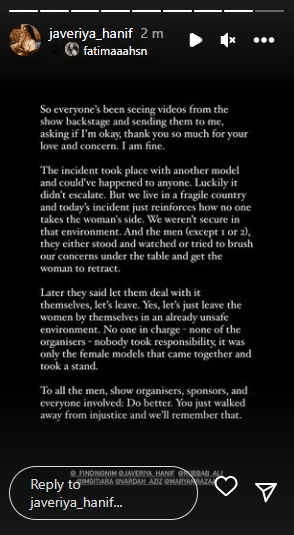
Model Fatima Ahsan, who was also spotted in the viral video, took to Instagram to address the incident, and demanded that show organizers and sponsors make safer environments for their models:
“So everyone’s been seeing videos from the show backstage and sending them to me, asking if I’m okay, thank you so much for your love and concern. I am fine. The incident took place with another model and could’ve happened to anyone. Luckily it didn’t escalate. But we live in a fragile country and today’s incident just reinforces how no one takes the woman’s side. We weren’t secure in the environment. And the men (except for 1 or 2), they either stood and watched or tried to brush our concerns under the table and get the women to retract. Later they said let them deal with it themselves, let’s leave. Yes, let’s leave the women by themselves in an already unsafe environment. No one in charge – none of the organisers – nobody took responsibility it was only the female models that came together and took a stand.
To all the men, show organisers, and everyone innvolved. Do better. You just walked away from injustice and we’ll remember that.”
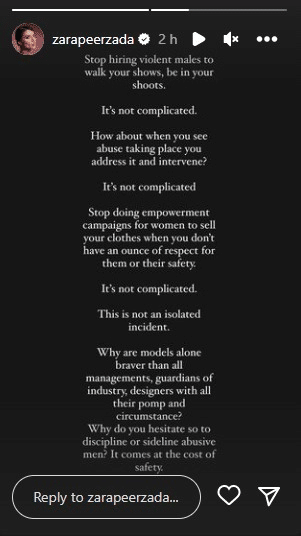
Model Zara Peerzada called out the organisers who hire toxic men for their shows, and asked designers to stop being complicit:
“Stop hiring violent males to walk your shows, be in your shoots. It’s not complicated. How about when you see abuse taking place you address and intervene? It’s not complicated. Stop doing empowerment campaigns for women to sell your clothes when you don’t have an ounce of respect for them or their safety. It’s not complicated. This is not an isolated incident.”
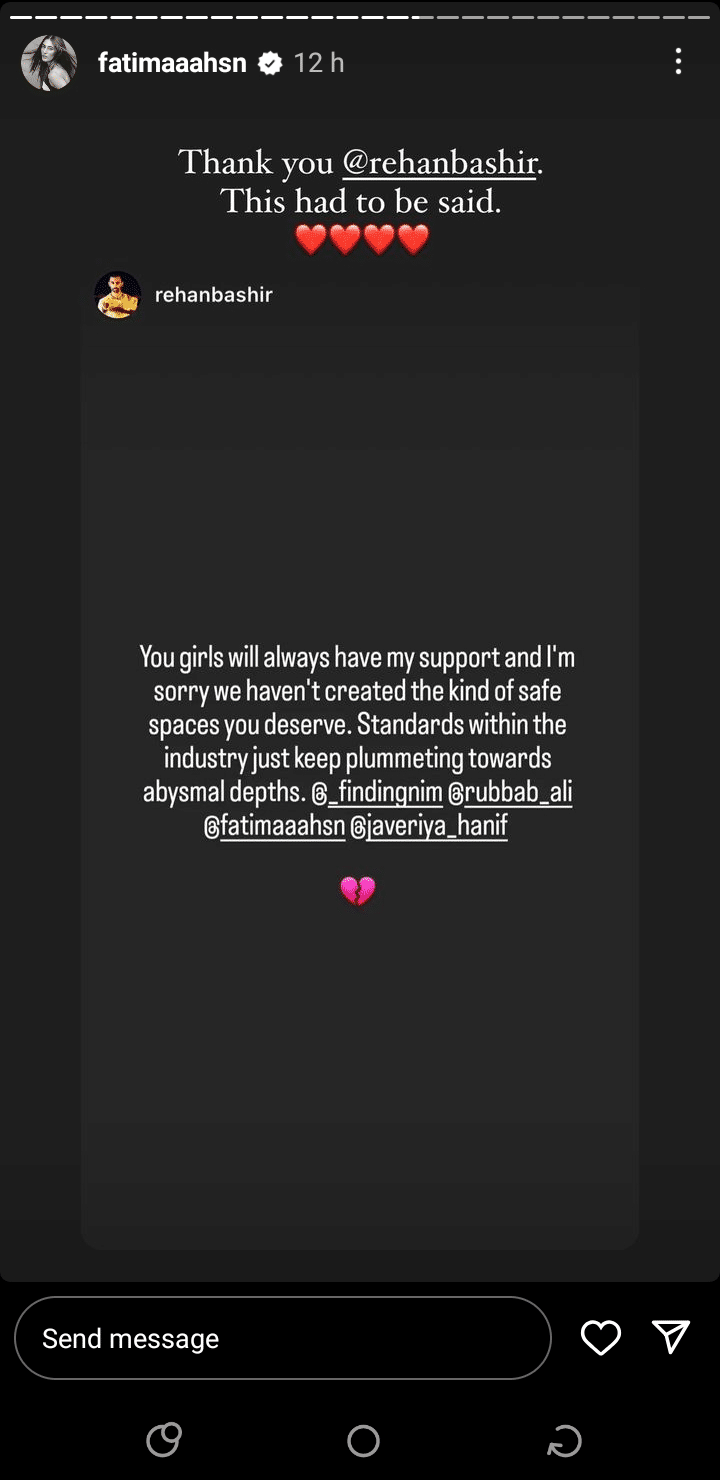
Visual artist and designer Rehan Bashir called this a case that showed how “standards within the industry keep plummenting towards abysmal depths”, and expressed solidarity with female models
Arooj Aftab has everyone in a pickle with a tweet where she asked her followers to stop associating her with Pakistani music, or calling her an ‘Urdu singer’.
The Grammy award winning singer had tweeted:
“Pakistani singer arooj aftab…… Urdu singer arooj aftab….. arooj Aftab’s amazing Urdu singing… like. It’s fine I guess? But can a person of color musician ever just get to be without this tag to whatever someone else is presuming is our root or heritage.”
Pakistani singer arooj aftab…… Urdu singer arooj aftab….. arooj Aftab’s amazing Urdu singing… like. It’s fine I guess? But can a person of color musician ever just get to be without this tag to whatever someone else is presuming is our root or heritage
Twitter users were confused by this because as some pointed out, she had built up fame in Western countries using Urdu ghazals like ‘Mohabbat’.
One user had written:
“Nobody calls you an urdu singer in pakistan. they call you that in majority english speaking countries, where your claim to fame was an urdu ghazal. your lyrics didn’t come to that audience naturally. they recognize you geographically. we all do that with foreign language music.”
nobody calls you an urdu singer in pakistan. they call you that in majority english speaking countries, where your claim to fame was an urdu ghazal. your lyrics didn’t come to that audience naturally. they recognize you geographically. we all do that with foreign language music.
Don't get what's wrong w being called an Urdu / Pakistani singer when you're performing in US/UK etc. Obv an American singer isn't gonna be called an American singer when they're performing in US but they would in another country. Has nothing to do w being a person of color. https://t.co/kJlAnXEgwm
I’m not familiar with her work but a quick Google search tells me that covering Urdu Ghazals, sung by old Pakistani artists, is her shtick. If she loathes being associated with the tags Pakistani and Urdu then maybe giving up nods to both in her performance will be very helpful. https://t.co/jmqKNePDrQ
But Aftab had to clarify in her next tweets that she was not being anti-Pakistani, nor was she criticising her own roots, but her tweets were addressing the Western media who push her into a georgraphical context, which makes it easier for her to be gate-kept.
“Oh f***k this tweet really awakened the “she’s anti Pakistani!!!” sentiment. Great. I’m not talking about erasing or disowning roots and heritage. while touring eu/uk at the moment, I feel like pushing back on being ONLY allowed to exist in a geographic and linguistic context. This makes it easy for them to other-ize, exclude us and overlook what is achieved, and to gate keep/ glass wall what is further achievable.”
pushing back on being ONLY allowed to exist in a geographic and linguistic context. This makes it easy for them to other-ize, exclude us and overlook what is achieved, and to gate keep/ glass wall what is further achievable.