Tag: PIA

  • PIA suspends Fujairah flights for 48 hours amid Gulf security concerns

    PIA suspends Fujairah flights for 48 hours amid Gulf security concerns

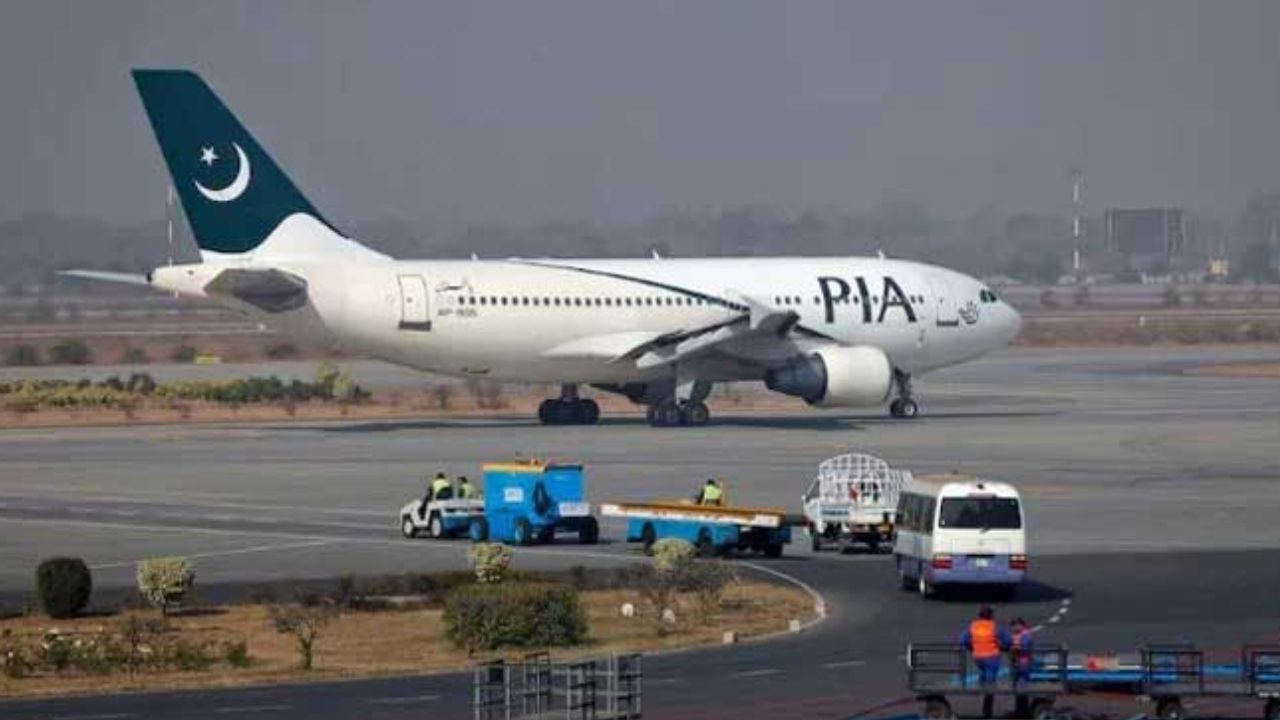
    Pakistan International Airlines (PIA) has suspended flights to Fujairah in the United Arab Emirates (UAE) for the next 48 hours due to the ongoing security situation in the Gulf region.

    In a notification issued on Wednesday, the airline confirmed that operations to Al Ain would continue as scheduled. “For now, Al Ain will remain the only destination in the UAE where PIA flights will operate,” the notification said.

    The temporary suspension follows fresh attacks by Iran on the UAE on Tuesday. The strikes led to a fire at the port of Fujairah, a major export terminal where oil loading by state firm ADNOC was halted. The incident comes amid a crisis that has already pushed energy prices higher.

    Since the start of the US-Israeli war on Iran on February 28, Gulf Arab states, including the UAE, have been subjected to more than 2,000 missile and drone attacks. These attacks have targeted US diplomatic missions, military bases, oil infrastructure, ports, airports, and residential and commercial buildings.

    The disruption has extended to Pakistan’s air travel network, with a total of 83 flights to Middle Eastern destinations cancelled in a single day. Flight operations to Fujairah have been completely suspended from Islamabad, Lahore, and Peshawar, where all eight scheduled flights were cancelled.

    From Karachi, 18 flights to destinations including Doha, Bahrain, Baghdad, Dubai, Sharjah, and Abu Dhabi were cancelled. Lahore saw another 18 flights grounded to Kuwait, Sharjah, Doha, Bahrain, and Dubai. Additional cancellations included 26 flights from Islamabad, 11 from Peshawar, six from Sialkot, and four from Multan.

    However, flights from Faisalabad remained unaffected, with all nine scheduled operations to Jeddah, Dubai, Sharjah, and Madinah proceeding as planned.
  • Arif Habib to consider buying remaining 25% stake in PIA

    Arif Habib to consider buying remaining 25% stake in PIA

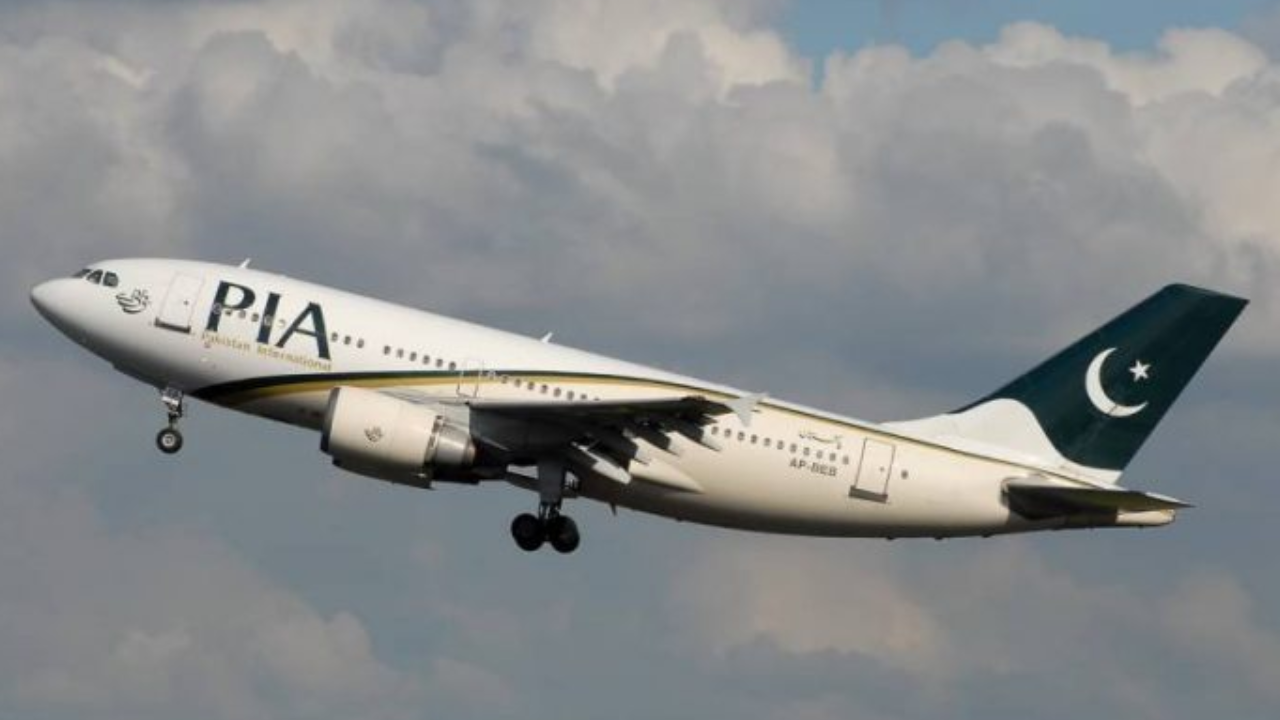
    Pakistan International Airlines (PIA) has been acquired by a consortium led by Arif Habib Group, with plans to potentially purchase the remaining 25 percent stake within 90 days.

    Speaking to a private media outlet a day after the national flag carrier was auctioned, Arif Habib, chairman of the Arif Habib Group and chief executive of Arif Habib Corporation Limited, said the group was initially interested in buying 100 percent of PIA. 

    “Our intention is there, and we have a 90-day window to exercise the option for the remaining 25 percent,” he added.

    The auction, held on December 23, saw the Arif Habib Consortium emerge as the sole bidder after the process narrowed from three bidders to one. 

    The consortium purchased a 75 per cent stake in PIA for Rs135 billion, of which Rs10 billion will go to the government. 

    The remaining 25 per cent, if acquired, will cost Rs45 billion, with the full amount payable to the government rather than being invested in the airline.

    Fauji Fertilizer Company has also joined the consortium, Arif Habib said. He outlined plans to expand PIA’s fleet, with 38 aircraft in the first phase and up to 64 in the second phase.

    The chairman also highlighted the airline’s financial position, stating that it has liabilities of Rs190 billion and assets valued at Rs180 billion. 

    He added that the consortium aims to rebuild the airline and restore it as a strong national carrier, which, he said, would also benefit Pakistan’s economy.

    Arif Habib confirmed that internal discussions within the consortium are ongoing, and a final decision regarding the acquisition of the remaining 25 percent will be made within the stipulated 90-day period.

  • PIA enters sixth day of flight delays, cancellations amid alleged management-engineers dispute

    PIA enters sixth day of flight delays, cancellations amid alleged management-engineers dispute

    Flight disruptions persisted for the sixth straight day on Sunday as alleged conflicts between Pakistan International Airlines (PIA) leadership and its aircraft engineers continued unresolved. 

    Sources indicate that nine flights were cancelled and 18 were delayed throughout the day due to technical issues and lack of spare parts. The impacted routes consisted of various international and domestic flights.

    Among the international flights, the cancelled ones included Abu Dhabi-Peshawar, Dubai-Karachi, Faisalabad-Dubai, Dubai-Faisalabad, and Peshawar-Dubai routes.  Domestic cancellations encompassed Gilgit-Islamabad, Islamabad-Gilgit, Skardu-Islamabad, and Islamabad-Skardu. Flight PK-143 from Islamabad to Al Ain took off nearly 10 hours behind schedule.

    In total, 18 flights, both domestic and international, experienced delays ranging from three to ten hours. By 5 p.m., nine flights had been cancelled and 18 had been delayed, largely due to engineering-related problems. 

    In a statement to the press, a PIA spokesperson refuted claims that the cancellations were the result of a strike by engineering staff, explaining that the recent disruptions were due to schedule adjustments, weather factors, or other operational challenges.

    The dispute between PIA management and the Society of Aircraft Engineers of Pakistan (SAEP) reportedly originated on November 6, when the airline’s CEO dismissed the SAEP president and secretary general for conducting a press conference and revealing official information.

    On October 10, PIA engineers had claimed that poor management decisions and maintenance shortcomings had decreased the airline’s operational fleet from 34 aircraft to 12.

    The PIA Air League and the Senior Staff Officers Association later voiced their support for the SAEP, denouncing the termination of its representatives and labeling it as administrative victimization.

    The SAEP also accused PIA management of targeting engineers who insisted on upholding international safety standards. 
    In a statement, it mentioned that the engineering department had begun retaliatory measures against staff members who raised maintenance issues.

    PIA management dismissed the accusations, labeling the engineers’ statement “false” and “misleading.” The spokesperson asserted that the data provided by the engineering society was incorrect and aimed at gaining unwarranted attention on international platforms.

  • Free tickets, 95 percent discounts; PIA freebies cost treasury Rs9.43 billion over six years

    Free tickets, 95 percent discounts; PIA freebies cost treasury Rs9.43 billion over six years

    Pakistan International Airlines (PIA) caused a staggering Rs9.43 billion loss to the national treasury in just six years, driven by the distribution of free and heavily discounted tickets, an audit report has revealed.

    According to the report, between 2011 and 2016, a whopping 258,990 free tickets were issued, while over 116,273 tickets were sold at a 95 percent discount to “non employee passengers” on both domestic and international routes.

    As per the audit, the average fare was 26,411; however, after the discount, passengers were charged only 1,321.


    Details show that in 2011 alone, 58,861 free tickets were issued, while 51,692 were given in 2012. Similarly, 56,815 tickets were distributed in 2013, 43,077 in 2014, 21,816 in 2015, and 26,729 in 2016.

    The report highlighted that the management failed to obtain approval from the Chairman or Managing Director for the “fare concessions”. Despite repeated reminders, no meeting was convened on the matter until 2023.

    “Audit recommends immediate withdrawal of the free-ticket policy to prevent misuse and minimize financial losses,” the report reads.

    According to the findings, the practice of allowing free tickets to passengers other than employees reflects “weaknesses in financial prudence, misuse of discretionary powers, inadequate internal controls and lack of transparency and accountability as the management disregarded the corporation’s financial well-being”.

    A PIA spokesperson has said that free tickets had been completely discontinued since 2018 after a Supreme Court order, adding that the tickets highlighted in the audit were issued under a sales incentive scheme for travel agents.

    He further claimed that the audit paragraph was nine years old and was being revived under pressure from certain quarters. “Reviving such an old audit para appears to be an attempt by certain quarters to exert pressure,” the spokesperson added.

  • UK lifts long-standing ban on Pakistani airlines

    UK lifts long-standing ban on Pakistani airlines

    In a major development for Pakistan’s aviation sector, the United Kingdom (UK) has officially lifted its long-standing ban on the country’s airlines.

    As per the details, the decision was on Wednesday announced by the UK’s Air Safety Committee after sustained technical cooperation with Pakistan’s Civil Aviation Authority (PCAA) and a thorough review of aviation safety standards.

    It merits a mention that the ban by UK and European aviation authorities was imposed five years ago following May 2020’s deadly Pakistan International Airlines (PIA) PK-8303 crash in Karachi, and the subsequent fake pilot licenses scandal.

    The then federal aviation minister, Ghulam Sarwar Khan, had in June 2020 told the National Assembly that out of 860 pilots, 262 had “manipulated their professional exam results by impersonation”. “They [262 PIA pilots] were issued fake degrees and fake licenses. Pilots lack flying experience,” Sarwar had said, adding that the pilots were recruited based on patronage.

    While the removal from the list after half a decade marks a significant milestone, Pakistani carriers would still need to secure individual operating permits from the UK Civil Aviation Authority before flights can actually resume.

    In a statement, the British High Commission said that the move was expected to ease travel for the estimated 1.6 million people of Pakistani origin living in the UK, as well as support trade ties between the two countries.

    Pakistan was first added to the UK’s Air Safety List in 2021 over serious safety concerns. Since then, officials on both sides have worked together to address shortcomings, the statement added.

    British High Commissioner to Pakistan Jane Marriott welcomed and confirmed the removal of the ban on Pakistani airlines, saying, “I’m grateful to aviation experts in the UK and Pakistan for their collaborative work to meet international safety standards.”

    “While flights won’t resume overnight, I look forward to flying with a Pakistani airline once services restart,” she added.

    In November 2024, the European Union (EU) had also lifted the ban on PIA and other operators from flying to different European destinations.

  • Which large company is interested in purchasing PIA?

    Which large company is interested in purchasing PIA?

    Pakistan International Airlines Corporation Limited (PIACL) may finally get privatised as Lucky Cement Limited (LUCK) has reportedly announced its participation in a consortium seeking to purchase a majority stake in the airline. According to reports, the consortium also includes notable companies such as Metro Ventures (Private) Limited, Hub Power Holdings Limited, and Kohat Cement Company Limited.

    Reports indicate that the consortium has already put forth a Statement of Qualification and Expression of Interest to acquire 51 percent to 100 percent of PIACL. The consortium intends to acquire managerial control of the airline as well.

    Reports reveal the Privatisation Commission has already qualified and shortlisted a number of parties, including the aforementioned consortium, to partake in legal, financial and technical analyses on PIACL. Following the shortlisting process and the completion of analyses by interested parties, a competitive bidding process is expected to follow.

    Reports suggest that the bidding process will follow privatisation laws and that authorities are expected to ensure that no party is given an unfair advantage in the privatisation process. However, neither the consortium nor Lucky Cement have made a binding agreement with the federal government to purchase a stake in PIACL.

    It merits a mention that Pakistan International Airlines (PIA) recently posted its first profit after logging losses for 21 consecutive years. PIA logged an operational profit of Rs3.9 billion in 2024, with net profit remaining at a healthy Rs2.26 billion.

    A spokesperson from PIA claimed that the airline enjoyed an operating margin of over 12 percent. According to the spokesperson, the national carrier’s financial performance was in line with that of some of the best airlines in the world. PIA has been able to achieve this feat after making major changes to its business operations and structure.

    These changes allowed PIA to lift the suspension that had been placed on its flights to major destinations, such as Europe and the United States. This moratorium on PIA’s services came about as a direct consequence of a post-crash speech by then-Minister Ghulam Sarwar, who had claimed without any evidence that 40 percent of PIA’s pilots were flying with fraudulent licenses. Sarwar’s speech detrimentally impacted the airline’s credibility, and the airline lost its goodwill with customers, which it had earned over the years. 

    With PIA having regained its reputation and working tirelessly to adhere to security regulations, it has regained the right to fly lucrative routes to Europe. Moreover, the airline continues to lease out its slots to airports to which it is barred from flying, such as London Heathrow airport. 

    In addition to boosting revenues, the airline has focused on cutting costs, as reports indicate that annual expenditures fell considerably during 2024. PIA was able to slash its manpower while suspending flight operations to non-profitable routes. These developments have allowed investors to perceive the airline as a good investment.

  • Federal govt approves four potential bidders for debt-ridden PIA

    Federal govt approves four potential bidders for debt-ridden PIA

    The federal government said on Tuesday that it had approved four parties, including business groups, to potentially bid for a stake in debt-ridden Pakistan International Airlines (PIA), Reuters reported on Tuesday.

    If the flag carrier gets privatised, it would be the country’s first major privatisation in nearly two decades.

    The government has been seeking to sell a 51-100 percent stake in the struggling national airline to raise funds and reform cash-draining State-Owned Enterprises (SOEs) as envisaged under a $7 billion International Monetary Fund (IMF) programme.

    Among the four bidding groups, one is a consortium of major industrial firms: Lucky Cement, Hub Power Holdings, Kohat Cement, and Metro Ventures.

    Another is led by investment firm Arif Habib Corporation, and includes fertiliser producer Fatima Fertiliser, private education operator The City School, and real estate firm Lake City Holdings (Private) Limited.

    Additionally, Fauji Fertiliser Company and Pakistani airline Airblue have been approved to bid for PIA.

    “The pre-qualified parties will now proceed to the buy-side due diligence phase,” the Advisor to the Prime Minister (PM) on Privatisation, Muhammad Ali, said in a statement.

    The country’s privatisation ministry said that the Cabinet Committee on Privatisation approved the transaction structure for the PIA-owned Roosevelt Hotel located in New York, including options for both outright sale and long-term lease.

    The ministry further said that Pakistan is expecting over $100 million as a first payment during this year for the Roosevelt Hotel. 

    During the last attempt, the minimum price of Rs85.03 billion with a Rs45 billion negative balance sheet had been set by the government to privatise PIA in October last year. However, the attempt failed because the government ended up with only one bidder, real-estate development company Blue World City, offering Rs10 billion for a 60 per cent stake.

    Meanwhile, media reports citing Ali said that PIA’s bidding is now expected to take place in the last quarter (October-December) of this year.

  • PIA to launch flights to Uzbekistan amid boost in bilateral tourism efforts

    PIA to launch flights to Uzbekistan amid boost in bilateral tourism efforts

    In a bid to boost ties with Uzbekistan, Prime Minister Shehbaz Sharif has issued orders for Pakistan International Airlines (PIA) to begin flights to the Central Asian country. As per credible reports, private airlines could also be “engaged” to facilitate tourism ventures between the two nations.

    A high-profile meeting has occurred with senior officials from both sides, realising gains from collaboration in the tourism sector. Reports indicate that Uzbekistan’s Minister for Tourism, Umid Shadiev, and Ambassador to Pakistan, Alisher Tukhtaev, discussed avenues of collaboration with Haroon Akhtar Khan, who serves as Special Assistant to the Prime Minister on Industries and Production.

    Haroon Akhtar reportedly reiterated Pakistan’s willingness to collaborate with Uzbekistan to boost people-to-people exchanges, expand tourism-related links and safeguard the joint heritage of both nations. He outlined the wealth of economic growth prospects that Pakistan can enjoy by establishing greater ties with central asian countries.

    While PIA is to begin flight operations to Uzbekistan in the near future, Haroon has highlighted the federal government’s intent to engage with privately owned airlines to increase connectivity. If the demand for commercial flights between the two countries remains strong, PIA might witness a growth in its profit margins.

    Until recently, the national carrier’s financial performance was not enviable as the airline posted staggering losses for 21 consecutive years. However, recent reports suggest that the airline managed to log an operational profit of Rs3.9 billion, with net profit remaining at a healthy Rs2.26 billion in 2024.

    According to PIA’s spokesperson, the national carrier’s financial performance is now in line with that of some of the best airlines in the world. PIA has been able to achieve this feat after making major changes to its business operations and structure.

    Reports indicate that authorities are actively attempting to lubricate bilateral tourism by simplifying visa application processes. A multitude of Memoranda of Understanding (MoUs) have also been inked by both sides to help grow Pak-Uzbek ties.

    The aforementioned developments could allow a greater number of residents to obtain visas, enabling Pakistani airlines to compete in catering to the rising demand along this travel route. However, airlines will not be the sole beneficiaries for an increase in passenger flows between the two countries, as catering and hospitality services could witness a rise in demand as well.

  • PIA records profit after 21 years

    PIA records profit after 21 years

    After 21 long years of remaining locked in a financial nosedive, Pakistan International Airlines (PIA) has successfully posted its first profit. According to credible reports, PIA has logged an operational profit of Rs3.9 billion, with net profit remaining at a healthy Rs2.26 billion.

    The national carrier’s board of directors approved financial results for 2024, which showed the airline’s improving financial health. A spokesperson from PIA claimed that the airline enjoyed an operating margin of over 12 percent.

    According to the spokesperson, the national carrier’s financial performance is now in line with that of some of the best airlines in the world. PIA has been able to achieve this feat after making major changes to its business operations and structure.

    These changes allowed PIA to lift the suspension that had been placed on its flights to major destinations, such as Europe and the United States. This moratorium on PIA’s services came about as a direct consequence of a post-crash speech by then-Minister Ghulam Sarwar, who had claimed without any evidence that 40 percent of PIA’s pilots were flying with fraudulent licenses. Sarwar’s speech detrimentally impacted the airline’s credibility, and the airline lost its goodwill with customers, which it had earned over the years. 

    With PIA now regaining its reputation and working tirelessly to adhere to security regulations, it has regained the right to fly lucrative routes to Europe. Moreover, the airline continues to lease out its slots to airports to which it is barred from flying, such as London Heathrow airport. 

    In addition to boosting revenues, the airline has focused on cutting costs, as reports indicate that annual expenditures fell considerably during 2024. PIA was able to slash its manpower while suspending flight operations to non-profitable routes.  

    Lawmakers have taken to social media to celebrate improvement in PIA’s financial health. Defence Minister Khawaja Asif posted on X (formerly Twitter) and outlined how the profit would boost the chances of the airline getting privatised.

    However, many question if it would be a good idea to privatise the national carrier right as it’s beginning to take off again. Reputable institutions have highlighted how the airline would previously witness frequent flight cancellations and plane seizures at airports.

    The airline’s poor financial health was responsible for the aforementioned incidents. As per reports, PIA was teetering on the edge of default and would run annual deficits, prompting Islamabad to consider privatising the state-owned enterprise.

    Previous privatisation attempts ended in failure as the government unsuccessfully attracted a bid that was far below the minimum price of $306 million for part of the airline.

  • PIA’s second privatization attempt underway as govt moves to offload shares

    PIA’s second privatization attempt underway as govt moves to offload shares

    In an attempt to sell off loss-making State Owned Enterprises (SOEs), the board of the Privatisation Commission has advocated for authorities to pursue selling off most of the government’s shares in Pakistan International Airlines (PIA). As per credible reports officials are also exploring a partial sale of the SOE as opposed to privatising it entirely.

    As per a press statement, Muhammad Ali, the advisor to the Prime Minister on matters pertaining to privatisation, has reportedly suggested the Cabinet Committe on Privatisation, to sell off 51 to 100 percent of PIA’s equity that is currently held by the federal government. If the committee acts on Muhammad Ali’s advice, Islamabad will lose managerial control over the company.

    However, the decision on the amount of equity the government is willing to give up will be decided after key officials and authorities engage with potential investors. The government recently attempted to privatise the national carrier which remained unsuccessful as many of the six chosen parties were hesitant to partner with the government due to its excessive control over decisions. 

    If the government can successfully negotiate the sale of over 50 percent of the company, reservations regarding the government making decisions will dissipate – as private entities will gain decision making power. These reservations hold merit as officials running the national carrier, arguably, have a bad track record when decision making is concerned. The bloated workforce is one of the many administrative inefficiencies PIA faces. 

    However, privatising PIA has become a matter of great urgency in the past few weeks. As per credible reports, Islamabad has to privatise PIA to appease the International Monetary Fund (IMF) as the government has made assurances to the international creditor that it will sell off the airline by July 2025. 

    While the general public has historically been against privatisation of PIA, it could relieve significant pressures on the national exchequer. Since PIA is owned by the government, any losses that the company incurs has to be borne by the government. These costs are ultimately borne by taxpayers who have to finance PIA’s losses to keep it operational.

    However, many believe that the government may have to sell the company without the liabilities that the company has accrued over time. While this may attract more buyers, it could result in tax payers being stuck with a 45 billion rupee charge – an amount that could take years to pay off.