Tag: PKR

  • Pakistani rupee snaps 10-day depreciation streak against US dollar with 0.02% gain

    Pakistani rupee snaps 10-day depreciation streak against US dollar with 0.02% gain

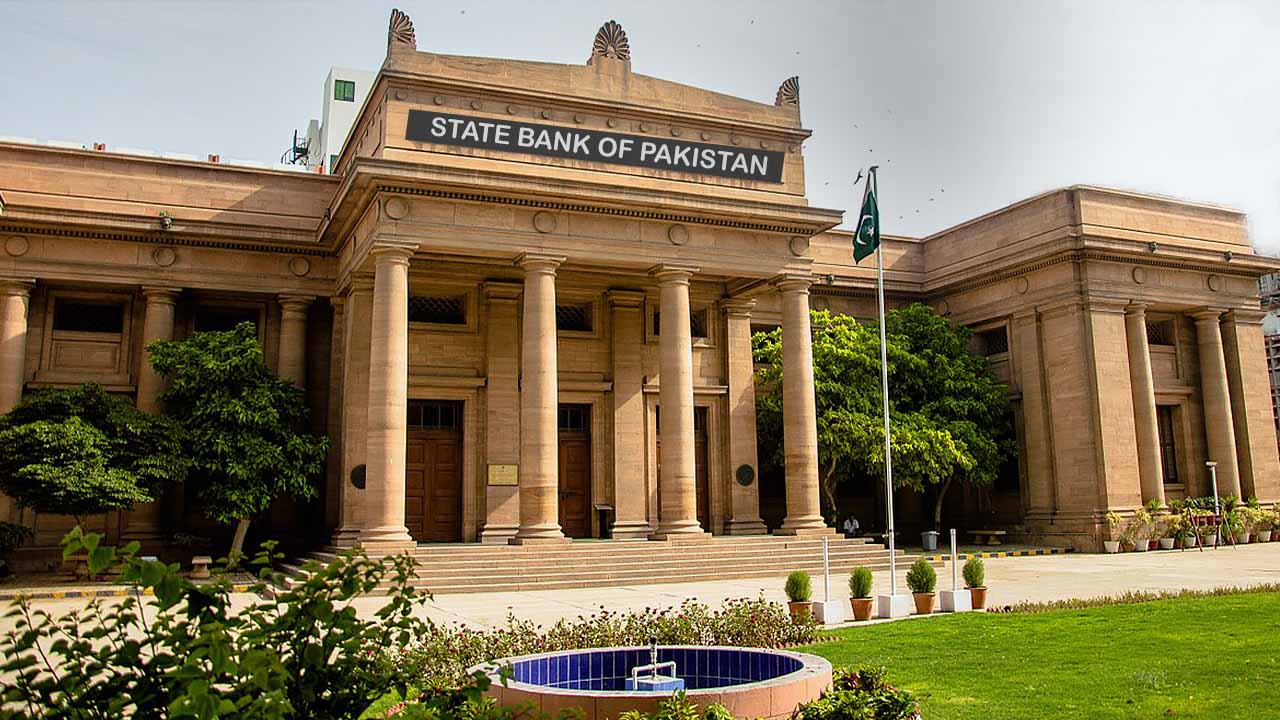
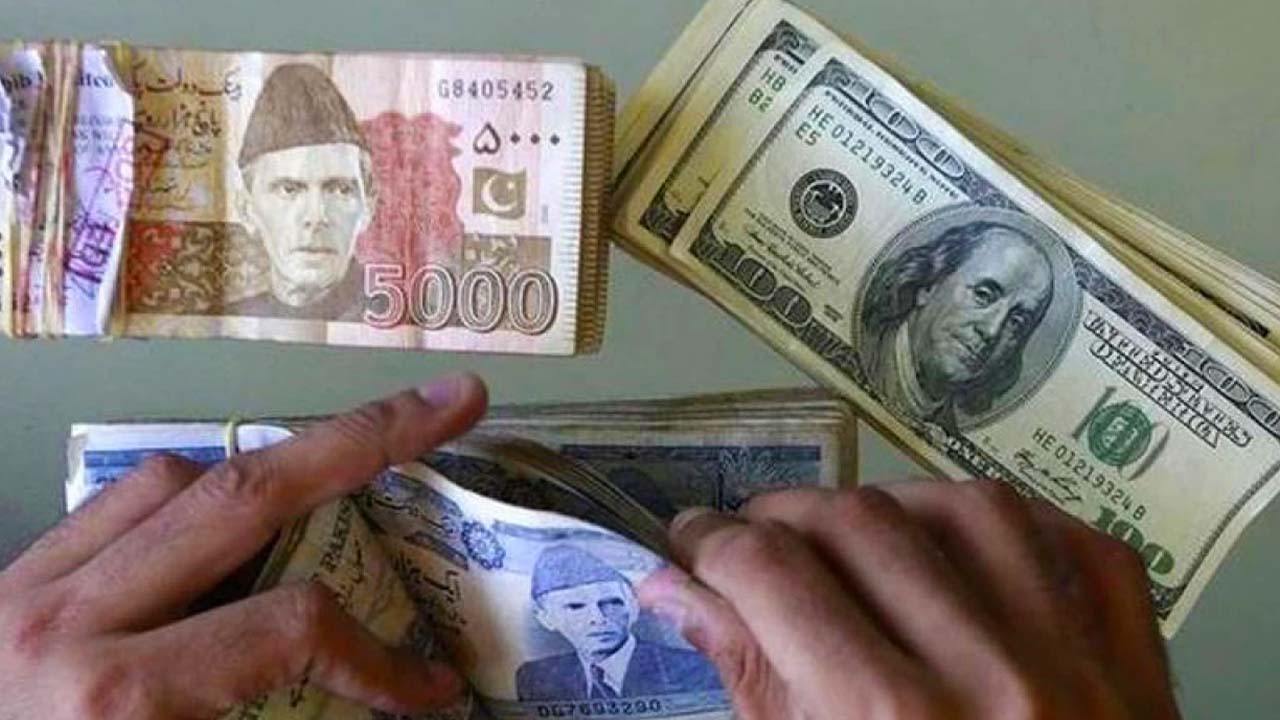
    The Pakistani rupee (PKR) finally terminated its ten-session depreciation streak against the US dollar on Friday as the local currency concluded trading at Rs305.47 versus the greenback. The State Bank of Pakistan (SBP) reported a modest appreciation of Re0.07, or 0.02 per cent, when compared to the previous day’s closing rate.

    Thursday had marked a historic low for the PKR, with a closing rate of Rs305.54 against the US dollar in the inter-bank market. This decline had raised concerns about the currency’s stability and its impact on the nation’s economy.

    However, the SBP made a significant announcement on Friday. It categorically rejected reports circulating in the media about an emergency meeting of the Monetary Policy Committee (MPC). The central bank termed these reports as completely baseless and emphasized that it would be premature to forecast the future policy rate.

    According to the central bank, only the MPC, an independent statutory body, holds the authority to make decisions regarding the policy rate. The next scheduled meeting of the MPC is set for September 14, 2023.

    Internationally, the US dollar has faced challenges as it attempts to maintain its winning streak against major currencies. Traders are closely monitoring the pivotal monthly US jobs report, which is expected to shape Federal Reserve policy in the coming months.

    The US dollar index, which measures the currency against a basket of six developed-market peers including the euro, sterling, and yen, saw a slight decline of 0.05 per cent to 103.58 on Friday. This marks a cumulative decline of 0.53 per cent for the week.

    Additionally, oil prices, a significant indicator of currency parity, remained above $87 a barrel. Crude prices are showing signs of snapping a two-week losing streak, driven by expectations of tightening supplies.

    The Pakistani economy remains closely tied to global economic developments, making these currency fluctuations and international economic indicators crucial for policymakers and market participants. The nation will continue to monitor these trends closely in the days and weeks ahead.
  • Petrol price increased to historic high of Rs305.36 per litre

    Petrol price increased to historic high of Rs305.36 per litre

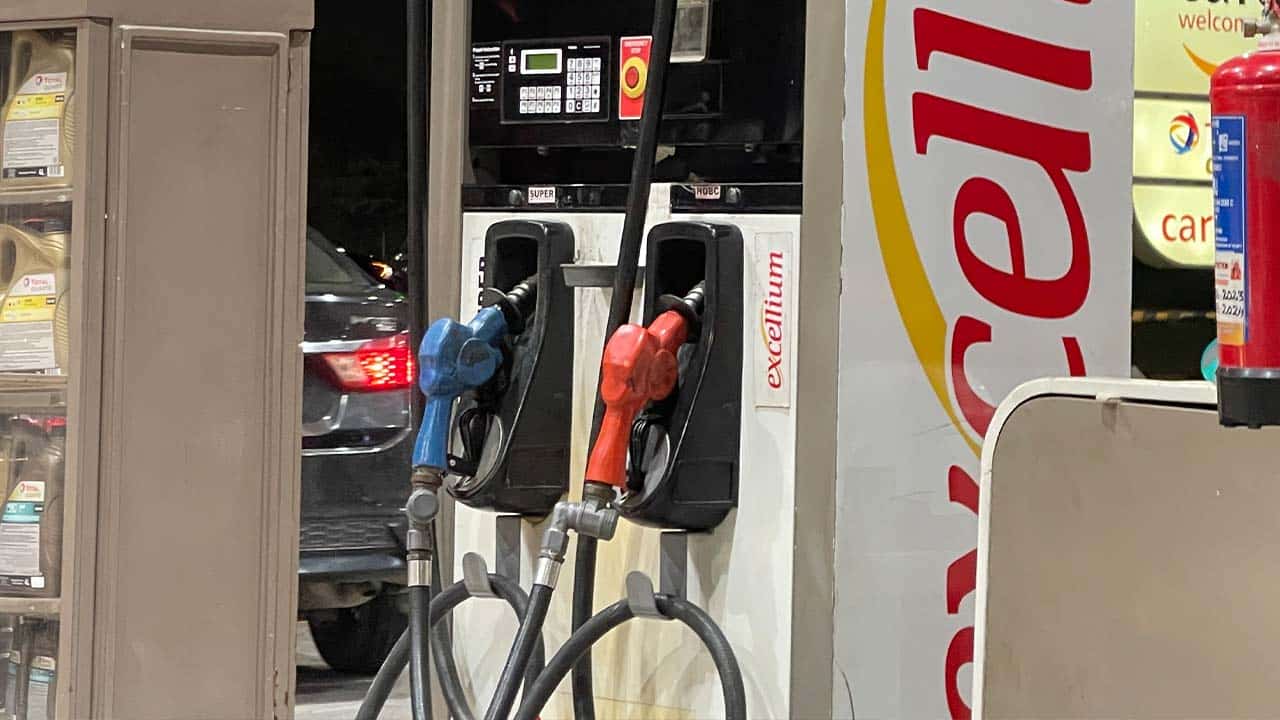
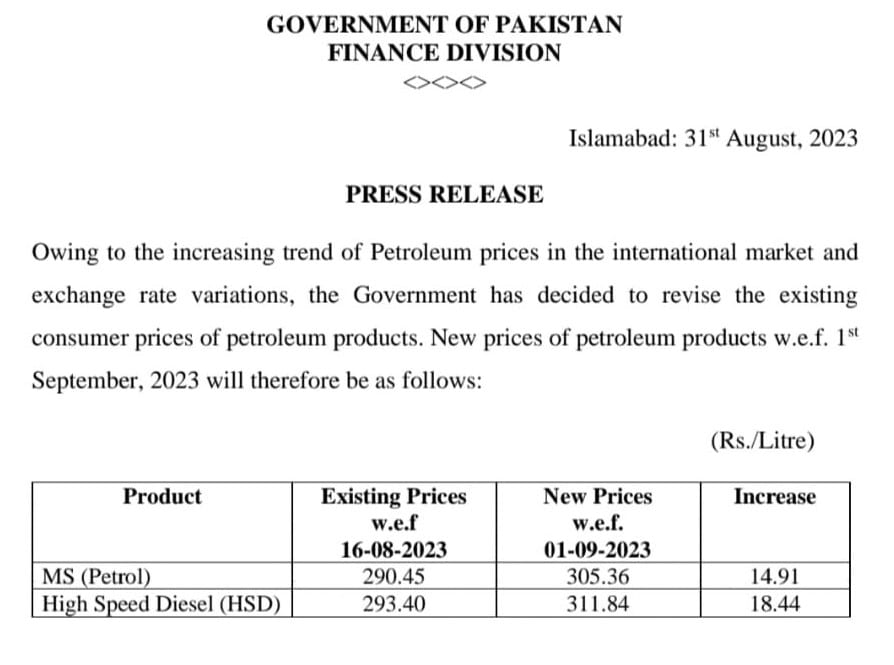
    For the first time in Pakistan’s history, the price of petrol has crossed the Rs300 mark due to a recent hike of Rs14.91. This brings the new petrol price to Rs305.36 per litre. The diesel price has also increased by Rs18.44, now at Rs311.84 per litre.

    The government has attributed these revisions to the upward trajectory of global petroleum prices and the consequential fluctuations in exchange rates.

    A statement issued by the finance ministry highlights that due to the escalating trend of petroleum prices in the international market and the subsequent shifts in exchange rates, the Government has opted to recalibrate the prevailing consumer prices of petroleum products.

    In the days ahead, the effects of these significantly heightened petrol and diesel prices will become evident. These price fluctuations are poised to have a substantial impact on individuals who rely on personal vehicles, such as bikes and cars, as well as those who depend on public transportation services.

  • SBP likely to hike key policy rate by up to 300 basis points next month

    SBP likely to hike key policy rate by up to 300 basis points next month

    The Monetary Policy Committee (MPC) of the State Bank of Pakistan (SBP) will likely meet at its upcoming meeting to decide on the key policy rate, and the market anticipates a possible rate increase of up to 300 basis points.

    According to the analysts contacted by the Brecorder, the SBP is likely to increase the rate from its current historic high of 22 per cent. As per the advance calendar issued in July, the SBP is currently slated to hold its MPC meeting on September 14.

    Notably, the central bank has previously taken the initiative to declare changes in its key policy rate through ’emergency’ meetings, similar to what occurred in June.

    Market speculation hints that the central bank might adopt a more patient approach this time, making an emergency meeting less probable.

     Tahir Abbas, the Head of Research at Arif Habib Limited (AHL), foresees a rate hike ranging between 100 and 150 basis points.

    He emphasised, the inflation rate is projected to remain elevated not only in August but also in the upcoming months. Furthermore, the persistent depreciation of the currency might compel the SBP to push interest rates upwards.

    Abbas added, “We expect a policy rate hike of around 100-150 bps.”

    In a previous report, AHL stated that headline inflation is expected to climb higher in August, surpassing the 28.3 per cent figure recorded in July 2023.

  • Pakistani rupee ends the day at another record low of Rs305.54 versus US dollar, losing Rs1.09

    Pakistani rupee ends the day at another record low of Rs305.54 versus US dollar, losing Rs1.09

    The Pakistani rupee (PKR) persisted in encountering downward pressure against the US dollar, with a recorded depreciation of 0.36 per cent. The day concluded with the rupee settling at Rs305.54, having incurred a loss of Rs1.09 in the interbank market, as reported by the State Bank of Pakistan (SBP).

    In the preceding session, the rupee had concluded at a historic low of Rs304.45 against the US dollar in the inter-bank market.

    IMF deviation risks dollar inflow halt

    In a session of the Senate Standing Committee on Finance held on Wednesday and chaired by Senator Saleem Mandviwalla, interim Finance Minister Dr Shamshad Akhtar conveyed that the interim government’s financial leeway for subsidies was limited. However, she mentioned that a proposal was being deliberated upon to discontinue electricity provisions for privileged segments.

    Dr Akhtar voiced apprehension that a deviation from the International Monetary Fund’s (IMF) stipulations could lead to a halt in dollar inflows, exacerbating the economic challenges facing the nation. She acknowledged that certain governmental actions had adversely affected the economic landscape. She specifically noted that the Federal Board of Revenue’s revenue collection was not meeting expectations while expenditures remained elevated.

    The Senate committee expressed its reservations about the escalating exchange rate fluctuations, the unprecedented cost of electricity, and the 22 per cent interest rate, all of which collectively pose difficulties for existing businesses to sustain and prosper.

    As a pivotal gauge of currency equilibrium, oil prices moderated on Thursday in response to data indicating a decline in China’s manufacturing activity. Additionally, investors were attentively awaiting the forthcoming US personal consumption expenditure report scheduled for later in the day.

    KSE-100 crash

    Moreover, the Pakistan Stock Exchange (PSX) remained firmly under the control of bears on Thursday as the benchmark index experienced a substantial drop of nearly 4 per cent, reflecting concerns about the country’s deteriorating economic situation.

    Investors responded with a sense of panic to the escalating rupee-dollar parity, choosing to divest from shares due to apprehensions surrounding an imminent economic crisis.

    Right from the commencement of trading, the KSE-100 index experienced a sharp decline, plummeting by over 1,700 points and breaching the 45,000 level. A prevailing negative sentiment among investors is preventing the index from making any headway into positive territory.

  • Pakistani rupee hits new all-time low of Rs304.445 after declining by Rs1.38 against US dollar

    Pakistani rupee hits new all-time low of Rs304.445 after declining by Rs1.38 against US dollar

    In the interbank session held on Wednesday, the Pakistani rupee (PKR) exhibited a decline of 1.39 rupees against the US dollar (USD). The closing exchange rate for the day stood at Rs304.445 per USD, in contrast to the concluding rate of Rs303.052 per USD observed in the preceding session.

    Throughout the trading day, the currency displayed a fluctuation, reaching an intraday high bid of Rs304.75 while also touching a low ask of Rs304.6.

    On a parallel note, within the open market, Exchange Companies set the buying rate for the dollar at Rs320 and the selling rate at Rs323.

    In the ongoing fiscal year, the Pakistani rupee has experienced a depreciation of 18.45 rupees against the dollar, amounting to a 6.06 per cent decrease. Concurrently, within the current calendar year, the PKR has depreciated by 78.01 rupees, reflecting a substantial decline of 25.63 per cent.

  • Interbank market: US dollar reaches all-time high against Pakistani rupee, surpassing Rs300 mark

    Interbank market: US dollar reaches all-time high against Pakistani rupee, surpassing Rs300 mark

    The US dollar reached a new high against the Pakistani rupee, going past Rs300 in the interbank market on Thursday. At 11:15 am, it was at Rs300.4 as per the Forex Association of Pakistan. In the open market, it was valued at Rs314.

    The day before, the dollar ended at Rs299.64 and went up to Rs315 in the open market. The Exchange Companies Association of Pakistan (ECAP) reported buying and selling prices at Rs309 and Rs312.

    As the dollar keeps going up, experts are asking the government to do something about the black market. Saad bin Naseer from Mettis Global said that even though it’s hard to find dollars in the interbank market, they’re easily available in the open market at higher prices.

    Naseer didn’t like that the central bank kept the interest rate at 23 per cent because people prefer investing in foreign currencies over the local economy. Malik Bostan, who leads the Forex Association of Pakistan, warned against hoarding dollars, thinking their price will keep rising.

    Bostan noticed regular people buying dollars thinking they’ll become more valuable due to the increase in the interbank market. He also mentioned that removing import restrictions from the IMF made the rupee weaker.

    Zafar Paracha, from the Exchange Companies Association of Pakistan, blamed the rupee’s decline on more unnecessary imports. He agreed with Bostan and urged people not to buy more dollars during this uncertain time for the rupee.

  • Pakistani rupee declines to new historic low of Rs299 per US dollar

    Pakistani rupee declines to new historic low of Rs299 per US dollar

    The Pakistani rupee continued its downward trend on Tuesday, closing at an all-time low of Rs299.0070 against the US dollar. This represents a decline of 0.63 per cent or Rs1.873.

    On Monday, the rupee continued to struggle against the US dollar, closing at Rs297.13. This drop in value is due to several reasons. One is the country’s current account deficit, which has widened because it’s now easier to open letters of credit. This change has affected the availability of foreign exchange, putting pressure on the rupee’s value in the local market.

    Another factor is the lack of foreign exchange coming into the country. This shortage has also contributed to the rupee’s decline.

    Experts say that the increase in import payments is tied to the International Monetary Fund’s (IMF) demand to remove import restrictions. This has led to a higher demand for the US dollar.

    Political uncertainty is also playing a role in the rupee’s decline. There are concerns that the general elections might be delayed. This delay could also mean a hold-up in fulfilling promises made to the IMF and other international lenders. With a caretaker government in place, questions arise about who will invest in and lend money to the country.

    To add to these challenges, there’s a need to bridge the gap between the rates in the inter-bank and open markets, which has been getting wider lately.

  • Pakistani rupee drops to Rs295 against US dollar

    Pakistani rupee drops to Rs295 against US dollar

    It appears that the Pakistani rupee is poised to shatter previous records and reach an new all-time low, as the local currency continued its decline against the US dollar on Wednesday, decreasing by 1.16 per cent in the inter-bank market.

    By the end of the day, the rupee settled at Rs294.93 against the US dollar, marking a decline of Rs3.42, as reported by the State Bank of Pakistan (SBP).

    This represents its lowest point since May 11 of this year, when it hovered near Rs299.

    Just one day prior, on Tuesday, the rupee also experienced a setback against the US dollar, concluding at Rs291.51.

  • US dollar surges against Pakistani rupee for eighth consecutive day in interbank market

    US dollar surges against Pakistani rupee for eighth consecutive day in interbank market

    The US dollar has been steadily appreciating against the Pakistani rupee for eight consecutive days, showing a continued upward trend in its value. On Tuesday, the currency further strengthened in the interbank market.

    At the start of the daily trading session in the interbank market, the American currency gained Rs1.8, reaching a value of Rs289 against the local currency. Over the course of the last eight days, the US dollar has gained Rs12.50 against the rupee in the interbank market.

    Interestingly, on Monday, despite receiving financial support from the International Monetary Fund (IMF) and other friendly countries, the Pakistani rupee depreciated even further against the US dollar.

    According to the State Bank of Pakistan (SBP), the dollar’s rate increased by Rs1.1 on Monday, with a closing rate of Rs287.92. In comparison, it had closed at Rs286.81 on Friday, showing a 0.39 per cent decline in the value of the rupee against the US dollar.

  • Pakistani rupee maintains upward trend for fourth consecutive day, closes at Rs285.15 against dollar

    Pakistani rupee maintains upward trend for fourth consecutive day, closes at Rs285.15 against dollar

    According to the State Bank of Pakistan (SBP), the Pakistani currency has maintained its upward trend against the US dollar for the fourth consecutive working day in the interbank market.

    The local unit (PKR) has recovered Rs0.59 against the USD, closing at Rs285.15, while the US dollar closed at Rs285.74 on the previous day.

    In contrast, the open market has seen the dollar being sold at over Rs300. Last week, the rupee reached a record low of Rs298.93 against the US dollar.

     Experts attribute the fluctuation in the dollar rate to the deadlock over the IMF deal and ongoing political unrest in the country.

    Due to the delay in the revival of the $6.5 billion International Monetary Fund (IMF) bailout programme, Pakistan is now seeking additional funding from friendly nations.

    The staff-level agreement between the International Monetary Fund and Pakistan, initially scheduled for February 9, has been postponed.