Tag: PML-N

  • Bilawal urges people to vote for “arrow” if they want to stop lion

    Bilawal urges people to vote for “arrow” if they want to stop lion

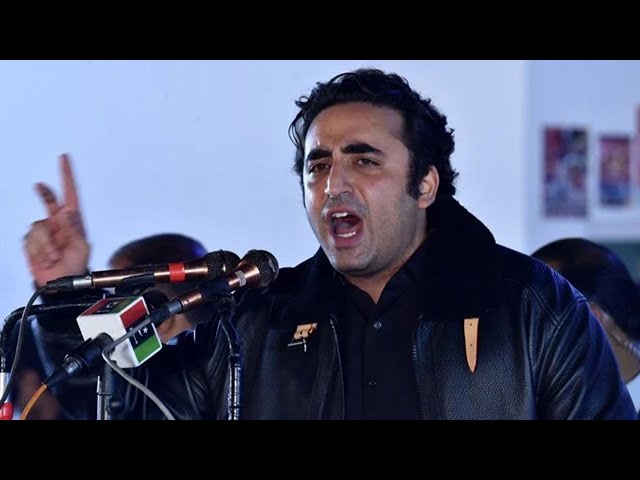
    Just days before the February 8 general elections, Pakistan People’s Party (PPP) Chairman Bilawal Bhutto-Zardari launched criticism at all opposing political parties as election campaigning reached its peak.

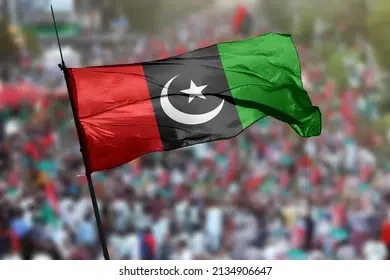
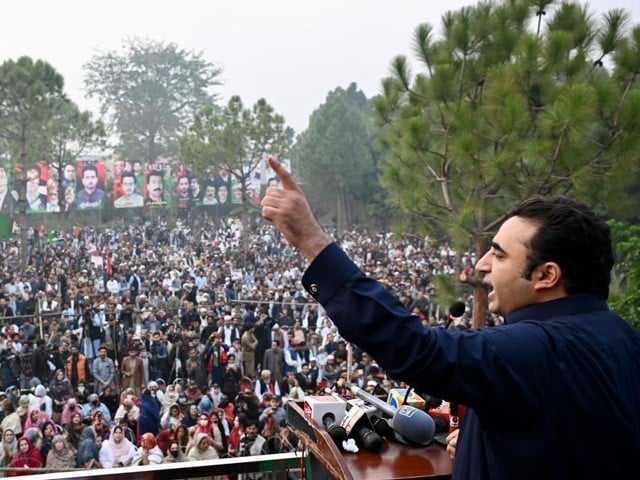
    While addressing an election rally in Hyderabad, Bilawal asked his audience to vote for arrow, the symbol of the PPP, if they want to block the lion, the symbol of Pakistan Muslim League-Nawaz (PML-N).

    Stressing the need for hard work, the ex-foreign minister asked the participants, “You just get PPP to win [elections]. I will handle this lion.”

    The PPP chairman also criticised the Muttahida Qaumi Movement-Pakistan (MQM-P). “If people ask you to vote for ‘kite’, then tell them, ‘We will not vote for those who raise anti-Pakistan slogans.’”

    Reply that the kite will be ripped apart, he added. The PPP leader urged the people not to waste their vote on any independent candidate — an apparent reference to Pakistan Tehreek-e-Insaf (PTI)-backed candidates.

    PTI candidates are taking part in the upcoming general elections as independent candidates after the Election Commission of Pakistan (ECP) didn’t allot them their election symbol (bat).

  • ‘Real youth, not ‘mummy daddy’ ones, support PML-N, says Nawaz Sharif

    ‘Real youth, not ‘mummy daddy’ ones, support PML-N, says Nawaz Sharif

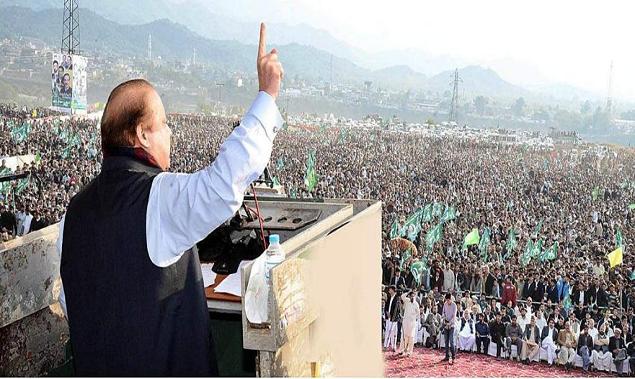
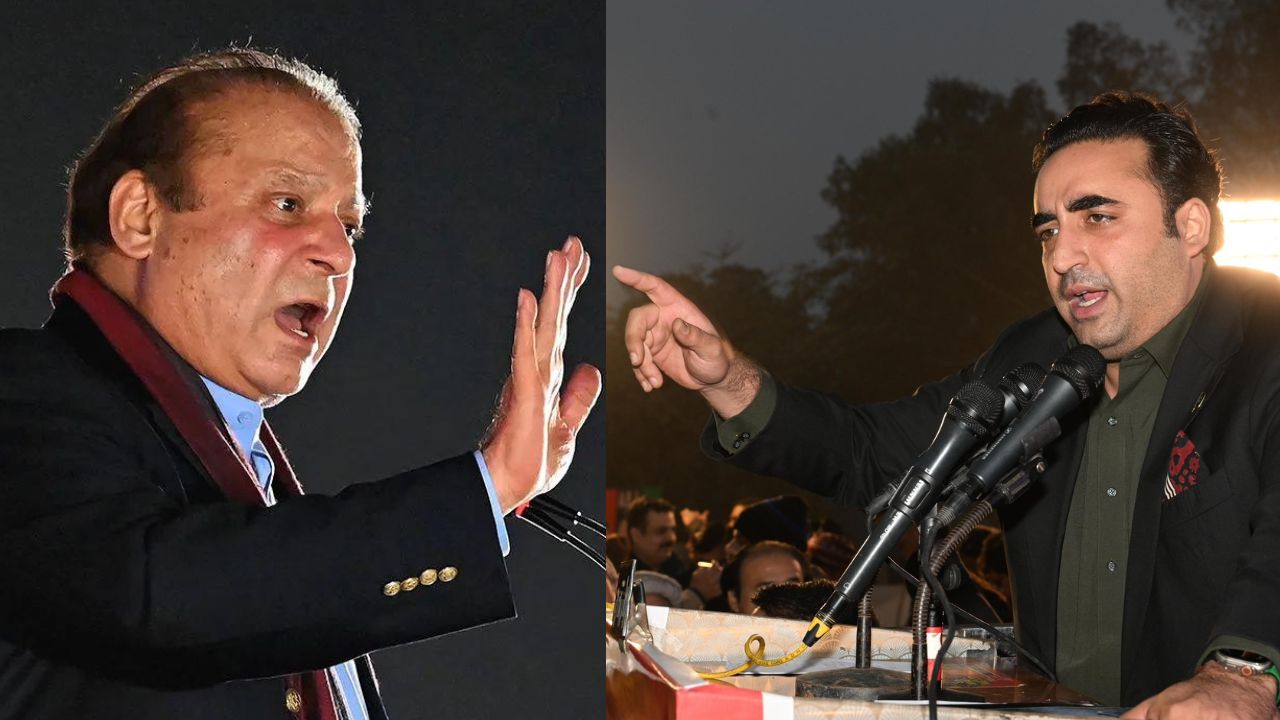
    Pakistan Muslim League-Nawaz (PML-N) supremo Nawaz Sharif criticised supporters of Pakistan Tehreek-e-Insaf (PTI), saying in a rally that the country’s “real youth” stands behind his party, if not the “mummy-daddy” ones.

    PML-N and other political opponents have always accused PTI of attracting “privileged youth” or “wannabes,” who they say lack traditional values and commitments. They use phrases like “mummy-daddy” to suggest that the party’s supporters aren’t genuine.

    “Some people say the youth support someone else. But no, youth, not the mummy-daddy ones, are with Muslim League Noon. The real Pakistani youth. That’s why Nawaz Sharif loves you,” the ex-prime minister told a rally in Faisalabad on Friday.

    Nawaz Sharif is aiming to become prime minister for the fourth time, after receiving legal relief from courts in multiple cases. After the Supreme Court’s (SC) decision, the PML-N supremo is now eligible to contest elections.

    The competition in the upcoming general elections is seemingly between PML-N and its former ally, the Pakistan People’s Party (PPP), as the popular PTI is seemingly out of the election race, with it’s candidates contesting as independents. The founder of PTI, Imran Khan, is currently in Adiala jail.

    Earlier, an accountability court sentenced former Prime Minister Imran Khan and his spouse, Bushra Bibi, to 14 years in prison in the Toshakhana reference.

  • Actions speak louder than symbols

    Actions speak louder than symbols

    Elections are just around the corner. There has been a lot of debate and discussion brimming with political hubris in the months running up to it. As usual, nothing of substantial interest to the people – no concrete plans to try to put the economy on a path to recovery; no public schemes that can mature in the months after the election; nothing for an ordinary Pakistan.

    For months, the political arena has been abuzz with hours of ‘political debate’ on non-issues and as already mentioned, nothing to do with the people of Pakistan. Political parties have focused on everything and anything – as usual – that is important for their leaders. The most important discussion all through December 2023 was on the allocation of political symbols, with some parties afraid their ‘traditional’ symbols would be given to someone else. Can you blame them? These symbols are the only way their voters can identify them on the ballot paper, as a majority are either politically blind or illiterate. The political symbols are like a book with pictures that help everyone to their conclusions about the story regardless of the accompanying words.

    Most parties know the way to their followers’ votes is through their emotions rather than intellect. This helps them since most have not done anything for the people that can be used to woo the voter. Political workers have a special affinity with their party’s symbol, and it works. Many political parties lack substantial projects or even indications that they even attempted to begin any people-friendly projects; therefore, it is better to rile up emotions than logic. Logical voters ask too many questions. Hence the importance of political symbols.

    Promises made during elections are old ones- regurgitated and patched up – echoing for decades without any action to back them up. The only way voters can determine who to vote for is to study a party’s manifestos past and present, which should have been released weeks or months before the polling.

    The main Pakistani political parties launched their manifestos in the last week of January 2024 for elections to be held on February 8, 2024. There is no explanation or apology for this delay, maybe because the parties are aware of how their voters think and behave – at least devoted loyalists will believe anything they promise as a tradition of Pakistani politics.

    They have not impressed critics who commented that the manifestos “lack substance and fail to address the pressing realities of Pakistan”, adding that they rely on promises without offering concrete implementation plans. Others commented that “some have promised much, but most have not bothered at all”.

    Why isn’t this a surprise?

    The main reason for this is that parties know their voters won’t demand to see manifestos – past and present – which allows them space to play as they like.

    Even though the political parties have not given their voters much time – less than 10 days – it wouldn’t hurt for people to do a comparative study of these manifestos with past ones of not only their own party but the others as well.

    A manifesto is an extremely important document that informs voters what to expect from someone they elect to run the country for many years. It should be the first thing to be launched and made available to the public. It is the resume of the party vying for the reins of the country.

    People should not only question parties about what they have planned to make the public’s life better and hold governments accountable throughout their tenure on the promises they had made in their manifesto.

    They should ask what policies and plans has the government made to shield people from miseries; what they planned to stop people from murdering their children and partners, and committing suicide; to provide them employment in the country so that they don’t fall prey to human traffickers; to protect the rights of vulnerable groups like religious minorities; allocating funds to provide basic health and education.

    But this is too much to ask. Voters are indifferent, which is quite dangerous for society and the country. The only beneficiaries are those in power.

    However, it would make an interesting study to see why there is so much public indifference. One reason for this could be the unnatural public devotion to political leaders, some of whom have become demigods. Devotees flock around them regardless of their flaws. It is almost as if they are members of a cult – a political cult. They follow their leader with blank minds, no queries, or interests of their own, believing the mere presence of the leader will solve everything.

    This is not a new phenomenon in Pakistan or global politics, political cult behaviour takes root over years, weakening a conscious society and forcing it to stop asking questions. It has also damaged the political process and democracy itself.

    Like other cults political cults revolve around a personality and their agenda, with followers believing everything and anything, even if it is detrimental to the very structure of society.

    Commenting on the political cult behaviour, Bethany Burum, a research scientist in psychology who teaches a Harvard course on cult behaviour, said in an interview (The Harvard Gazette):

    “Cults manage to shift people’s beliefs rapidly away from the broader society and away from the beliefs they had before they joined. The second thing I emphasize is that cult members act against their own interests and their families’ interests quite strikingly.”

    Pakistan’s political history is a good example cult politics throughout the decades – one person calling the shots devoutly followed by thousands of people from the entire social spectrum and different backgrounds.

    The cult followers don’t care about the larger consequences that directly affect their lives, all they care about are the leader’s words and promises that hold an almost divine value for them. If their leader fails to fulfill a promise, the devotees blame the failure on other forces because their political (cult) leader cannot do wrong.

    And it doesn’t help that the political (cult) leaders provide quick fixes that are temporary but enough to reinforce their powers among the followers.

    Unfortunately, decades of political cults in Pakistan have done nothing to improve the society and bring prosperity to the people. It has only damaged the social psyche and ingrained hopelessness in the people forcing them to wait for the next and ‘real’ messiah. And begin following anyone who promises to break the status quo but never intended to do so.

    Pakistani voters seem to have reached a certain level of complacency that allows them to tolerate the superficial political claims from inefficient people running the country in the name of politics. They rather watch an argument around the allocation of political symbols than worry about what their leader(s) has promised them. It seems they rather believe in miracles than expect change, as that has never really worked out for them.

    It will take decades for the voter to understand the importance of the written manifesto and that actions speak louder than political symbols.
  • ‘Vote ko Izzat Do’ with a new twist

    ‘Vote ko Izzat Do’ with a new twist

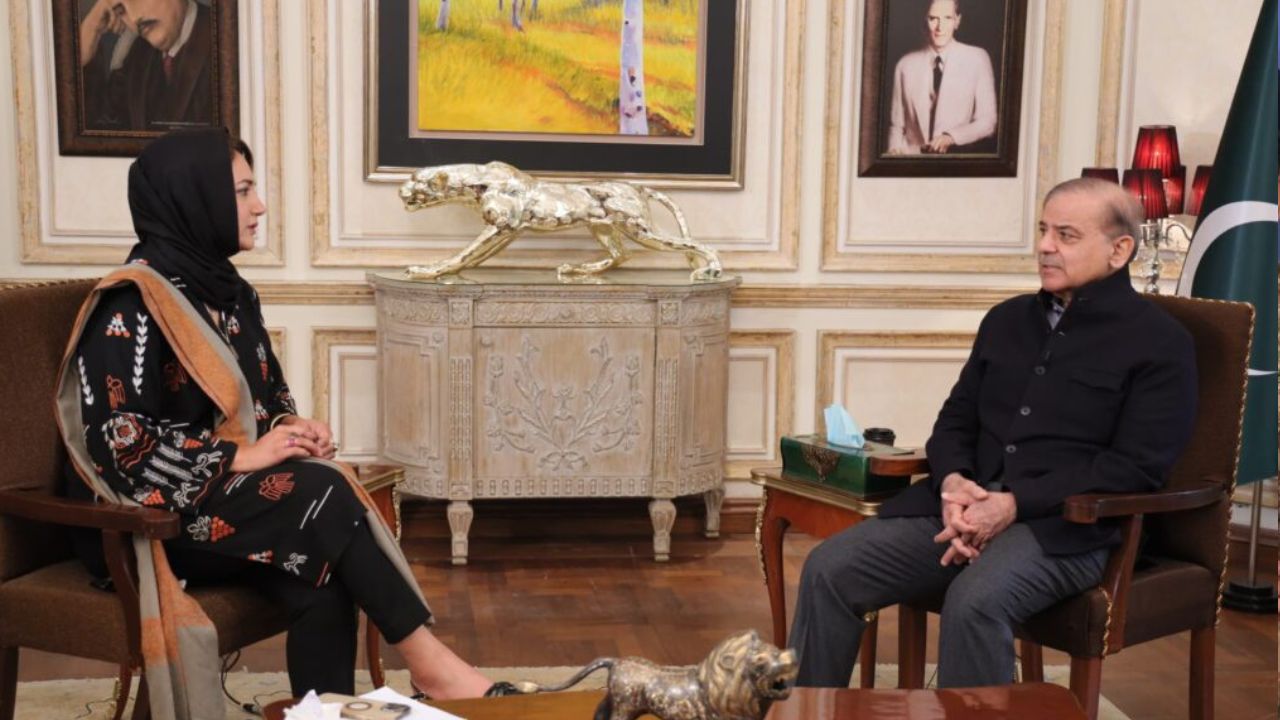
    In a recent appearance on the Hum News program ‘Faisala Aap Ka with Asma Shirazi,’ Pakistan Muslim League Nawaz (PML-N) President Shehbaz Sharif stated that ‘Vote Ko Izzat Do’ has a different meaning.

    When asked why the civilian supremacy narrative of ‘Vote ko Izzat do’ can’t be heard anymore, he said, “It means respecting the person who voted for me and fulfilling the trust they have shown in me.”

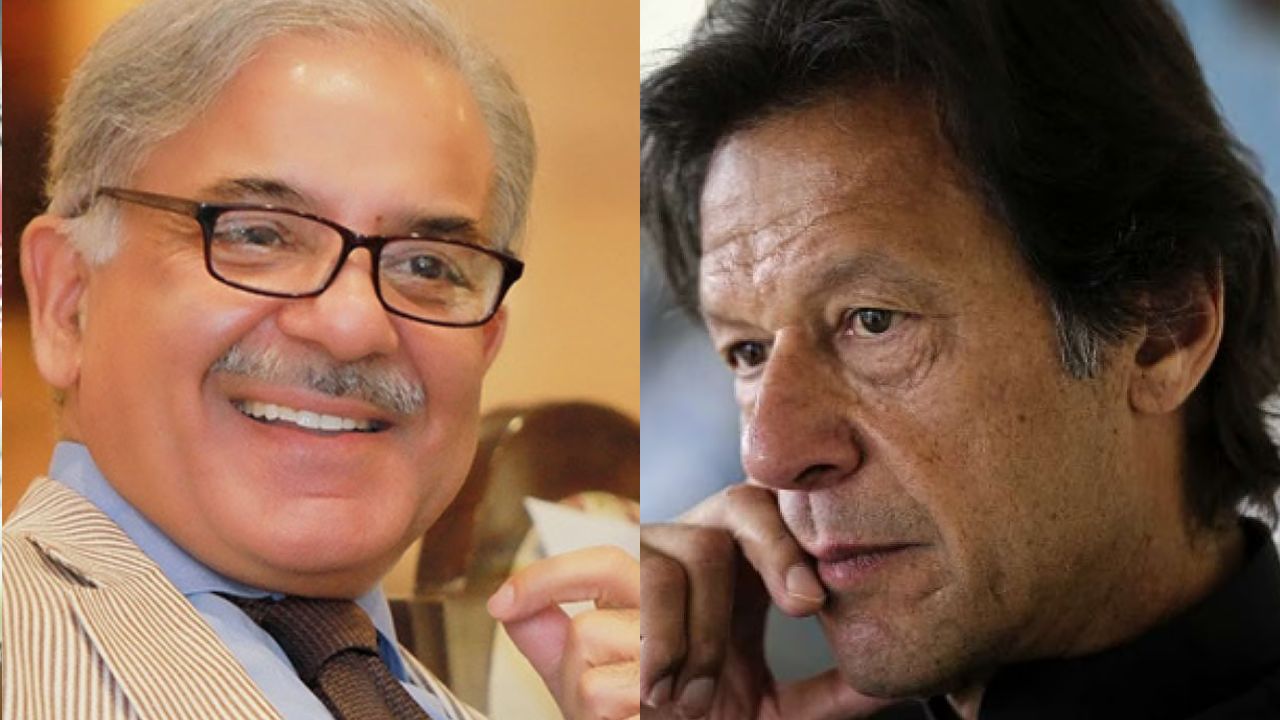
    He claimed that the May 9 riots were a deliberate conspiracy against Chief of Army Staff General Asim Munir, masterminded by Imran Khan, the founding chairman of Pakistan Tehreek-e-Insaf (PTI), and his party.

    Shehbaz Sharif highlighted the distinction between statements and conspiracies. He alleged that on May 9, the founder of PTI and his team conspired to create divisions within the military, leading to betrayal against Pakistan. He criticized PTI for diverting the nation from progress to chaos.

    Sharif expressed his views on various matters, including the loss of PTI’s iconic electoral symbol ‘Bat,’ attributing it to the party’s missteps. He also commented on Imran Khan’s recent 10-year jail sentence, emphasizing that the issue is about upholding the law, irrespective of whether decisions are perceived as good or bad.

    Responding to a question about PPP chairman Bilawal Bhutto’s invitation for a public debate, Shehbaz Sharif said, “I’m in favor of Bilawal’s debate challenge but let him extend the invitation in his province for a fair comparison.”

    Regarding political decisions, Shehbaz Sharif mentioned that if the majority is not attained through elections, consultations would be held. He confirmed that Nawaz Sharif would be the candidate for the premiership, subject to consultation, and the decision on the Chief Executive of Punjab would be made through consultation with Nawaz Sharif. The decision for the presidency would be made by the parliament.

    Stressing the importance of political and economic negotiations, Shehbaz Sharif called for the completion of the five-year term in Parliament. He recounted an incident during tensions with India, where the founder of PTI allegedly refused to attend a meeting, leading the then head of the army, General Bajwa, to return in disappointment.

  • Imran’s government more corrupt than Shehbaz Sharif’s: Transparency International

    Imran’s government more corrupt than Shehbaz Sharif’s: Transparency International

    During the Pakistan Democratic Movement (PDM)-led government in 2023, Pakistan made improvements in its ranking on the Transparency International (TI) Corruption Perceptions Index (CPI).

    The improvement in ranking shows that corruption decreased during the Shehbaz Sharif-led government as compared to Pakistan Tehreek-e-Insaf (PTI) founder Imran Khan’s tenure from 2018–2022.

    According to TI’s previous report, corruption in Pakistan increased since 2018.

    Imran Khan promised to wipe out corruption in Pakistan when he came into power. However, during his tenure, Pakistan’s ranking on the global corruption index went down, the opposite of what he had promised.

    According to a TI report released on Tuesday, Pakistan is now on number 133 among 180 countries.

    The previous report ranked Pakistan at 140, while the country’s overall score fell to 27 in the same year — the lowest since 2012.

    The recent report from TI indicates that Pakistan’s score on CPI increased by two points from 27 to 29. Additionally, the country’s rank has improved by 7 positions.

  • Bilawal Nawaz Debate: Who do you think will win?

    Bilawal Nawaz Debate: Who do you think will win?

    PML-N President Shehbaz Sharif has called on PPP Chairman Bilawal Bhutto-Zardari to avoid escalating political tensions and refrain from taking political rivalries to extremes.

    The appeal comes in response to Bilawal’s proposal for a debate between him and PML-N supremo Nawaz Sharif ahead of the February 8 general elections.

    Bilawal, during his election trail, has been critical of the PML-N, prompting responses from the top leadership of the opposing party. On Friday, Bilawal proposed a televised debate between him and Nawaz Sharif, citing the global practice of such debates to provide voters with crucial insights into candidates’ plans.

    Shehbaz Sharif, in apparent response to the challenge, suggested that it would have been more meaningful if the invitation had been extended to Nawaz Sharif for an inspection of Sindh rather than a debate.

    In a subsequent exchange, Bilawal demanded clarification on the city and date for the proposed debate. He also suggested Nawaz Sharif could visit Gambat in Khairpur to inspect the Gambat Institute of Medical Sciences and compare it with Punjab’s hospitals.

    “Mian Nawaz Sharif can debate with me in Gambat, Khairpur. He can come and visit the Gambat Institute of Medical Sciences, a hospital that surpasses any hospital in Punjab, and where all treatment is absolutely free,” Bilawal said.

    He claimed that despite being the prime minister thrice, Nawaz had never once visited Gambat. “Or perhaps he would prefer to come to Tharparkar, where we can also inspect the infrastructure, and compare Thar with Cholistan. The coal project in Thar, which you and your brother opposed, is providing cheap electricity not to Karachi, but to Faisalabad,” he said.

    In an interview on the Dawn News show ‘Live with Adil Shahzeb’ aired on Saturday night, Shehbaz Sharif commented on Bilawal’s proposal, acknowledging him as an educated youngster with a future in the country but cautioned against making the political situation tense and taking rivalries too far.

    “I feel that the real thing to do at the end of the day is what we are thinking about the public and what will we end up doing for them. This is what people want to hear from us. They don’t want to hear someone bashing his rivals,” he said.

    “The poor man is drowning in poverty and unemployment. He has been crushed and this is a ‘do-or-die situation’ for Pakistan,” Shehbaz concluded.

    Shehbaz suggested that Bilawal could take Nawaz Sharif on a tour of Sindh instead of a formal debate, allowing for a discussion and comparison of the province. He emphasized the importance of focusing on the public and addressing their concerns, urging political discourse that revolves around the welfare of the people.

    Responding to Shehbaz’s comments, Bilawal Bhutto-Zardari, on Sunday, reiterated his challenge for a debate and requested information on when and where Nawaz Sharif wishes to engage. He affirmed his readiness for any debate and scrutiny, asserting that deflecting from the challenge would not be effective.

    In a post on X (formerly Twitter), Bilawal emphasized the global norm of televised debates and the transparency they provide to voters. He stated that such transparency is crucial for an informed electorate before the voting process. The challenge for a debate continues to add a dynamic element to the political landscape as the general elections draw closer.

  • PPP claims police detained Bilawal Bhutto’s supporters in NA-127 Lahore

    PPP claims police detained Bilawal Bhutto’s supporters in NA-127 Lahore

    The Pakistan People’s Party (PPP) has written a letter to Chief Election Commissioner (CEC) Sikandar Sultan Raja, claiming that police are arresting their supporters in Lahore’s NA-127 constituency, where party Chairman Bilawal Bhutto Zardari is contesting in the February 8 elections.

    PPP Secretary General Taj Haider wrote a letter to ECP claiming that detention of PPP supporters by the police has instilled fear in the constituency.

    The letter mentioned that the police arrested Shahbaz and Shahzad, workers of the Pakistan Tehreek-e-Insaf (PTI), for joining the PPP. They also arrested Khalida Parveen, a former counsellor of the Pakistan Muslim League-Nawaz (PML-N), for supporting the PPP. When they reached out to the police, they were told that Parveen had been arrested in a case filed against her four months ago.

    Haider said PPP’s Zulfiqar Badar contacted high officials for the release of the party activists, but to no avail. He feared that the fascist measures would multiply if police were not stopped.

    The PPP leader requested that the CEC issue an order for releasing PPP workers and take action against the culprits.

    The PPP chairman is contesting elections from the same constituency against PML-N’s Atta Tarar.

  • Bilawal shows the ‘reality’ of NA 127

    Bilawal shows the ‘reality’ of NA 127

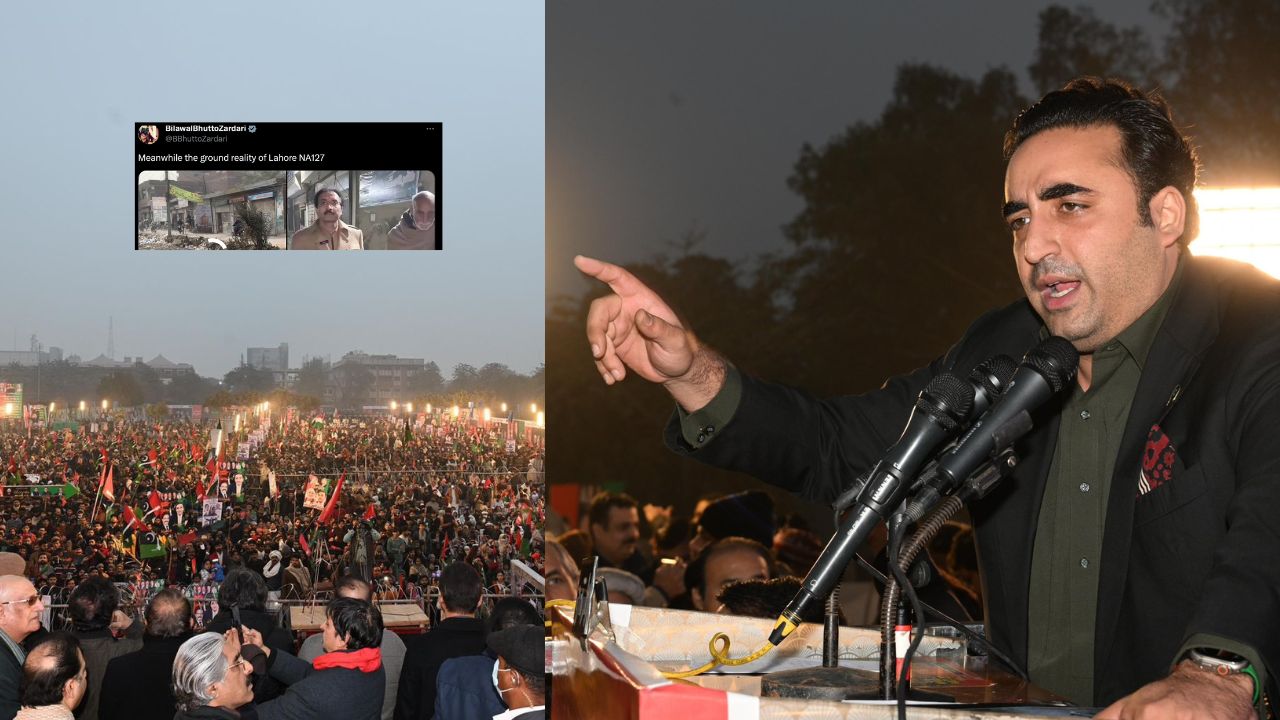
    In an interesting interaction on X (former Twitter), Pakistan Peoples Party (PPP) chairman Bilawal Bhutto Zardari shared videos highlighting the ‘reality’ of NA 127, an important constituency in Lahore.

    Elections are around the corner and candidates from different constituencies are using social media platforms to convince voters to vote for them. Journalist and anchor person Mansoor Ali Khan took to X and shared an image of a banner.

    “Banners displayed in Bilawal’s constituency,” the tweet said while banner stated, “Karachi nahi Lahore Chahiye”.

    Bilawal quote tweeted this with two videos stating, “Meanwhile the ground reality of Lahore NA127.”

    The videos showed debris and garbage in the constituency along with sewerage issues.

    https://twitter.com/BBhuttoZardari/status/1750825107382300907?s=20
  • After PTI, Bilawal wants PML-N workers to vote for PPP

    After PTI, Bilawal wants PML-N workers to vote for PPP

    Pakistan People’s Party (PPP) Chairman Bilawal Bhutto Zardari urged Pakistan Muslim League-Nawaz (PML-N) supporters to vote for his party; earlier he had requested the same from Pakistan Tehreek-e-Insaf (PTI) voters.

    As the elections approach, Bilawal is branding himself as a leader willing to bridge the gap between political actors, vowing to ensure that no person becomes a “political prisoner” during his government if he is voted into power, and putting an end to the “old ways” of political revenge.

    The former foreign minister asked the crowds at a political rally in Gujrat to stamp on the ‘arrow’ if they want to see “real democracy” in Pakistan.

    “Today the lion is sucking people’s blood. Those who said that the PPP is no match for them are now obsessed with the PPP,” Bilawal Bhutto said while taking a jibe at his political opponents.

    He asserted that “the lion is not coming out to prey” for a reason.

    The PPP chairman also criticised PML-N supremo Nawaz Sharif for his fourth attempt to become prime minister.

    Bilawal had also said in a recent interview with Reuters that Nawaz Sharif wants to come into power again via a backdoor.

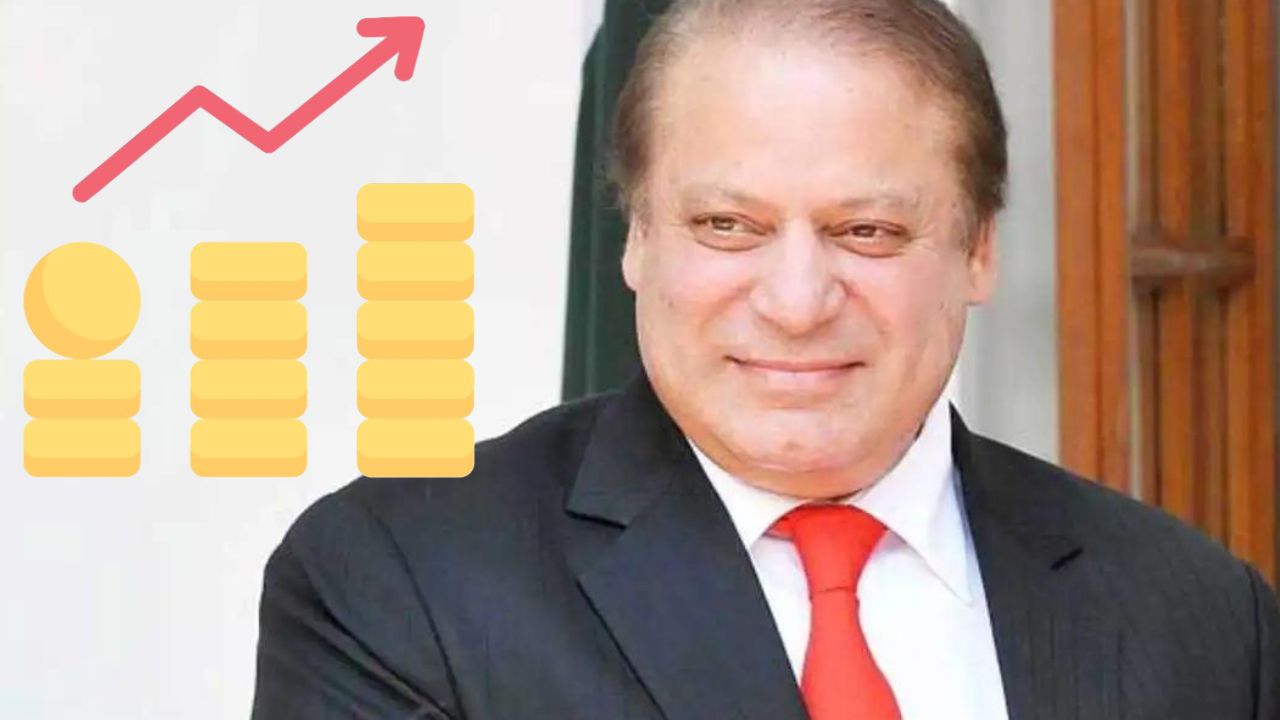
  • ‘Pakistan’s economy performed best under Nawaz Sharif’: Bloomberg

    ‘Pakistan’s economy performed best under Nawaz Sharif’: Bloomberg

    An analysis by Bloomberg Economics reveals that Pakistan’s economy witnessed its best performance in the past three decades under the leadership of Nawaz Sharif, who served as Prime Minister thrice.

    The report compares economic indicators during Sharif’s tenure with those of his rivals, including Imran Khan’s Pakistan Tehreek-e-Insaf (PTI) and Bilawal Bhutto Zardari’s Pakistan Peoples Party (PPP), using a misery index that combines inflation and unemployment rates.

    According to Bloomberg Economics, the analysis utilized an average of the misery index values over the years when each major political party ruled Pakistan since 1990.

    The results indicate that Sharif’s Pakistan Muslim League (PML-N) outperformed both PTI and PPP in managing economic challenges.

    With general elections scheduled for February 8, Bloomberg suggests that Nawaz Sharif seems poised to return to power for the fourth time, especially as Imran Khan faces legal issues and incarceration.

    Despite Khan’s popularity, with a 57% approval rating according to a recent Gallup poll, Sharif has experienced a surge in popularity from 36% to 52% in the past six months.

    The past three decades saw the PML-N rule Pakistan four times under Sharif and his younger brother Shehbaz Sharif. The PPP under the Bhutto dynasty has held power three times, while Khan was in office for a four-year term ending in April 2022 when he was ousted from power in a parliamentary no-trust vote.

    “Bloomberg Economics used an average of the index values over the respective years when each of the major political parties ruled the country since 1990. A higher value indicates more economic hardship for citizens,” the publication said, explaining its conclusions.

    Bloomberg Economics Misery Index Results for Pakistan showed the Pakistan Muslim League scored 14.5 percent, Pakistan Tehreek-e-Insaf 16.1 percent, and the Pakistan Peoples Party 17.2 percent.

    Pakistan is currently grappling with economic challenges, including seeking a financial bailout from the International Monetary Fund (IMF).

    Inflation is close to 30 percent in Pakistan, the currency was Asia’s worst performer last year and foreign exchange reserves have slumped.

    The incoming government, as per IMF conditions, will need to implement potentially unpopular policies such as withdrawing subsidies and raising taxes. The IMF forecasts a 2% growth in Pakistan’s economy for the current fiscal year after experiencing a contraction in the previous year.

    Despite the positive economic indicators during Sharif’s governance, the report underscores the formidable tasks awaiting the new government in addressing the country’s economic hardships.