Tag: PML-N

  • Punjab govt gives 25-acre army land to 47 civilian officials

    Punjab govt gives 25-acre army land to 47 civilian officials

    An approval has been given for the allotment of up to 25 acres of state land, which was meant for the families of the martyred soldiers and war veterans under the Army Welfare Scheme (AWS), to 47 civilian government officials instead.

    According to Dawn, the Punjab government has made the allotments without legal sanction on the orders of former military ruler Gen (r) Pervez Musharraf in contravention of merit and law. The report also quoted two officials at the Chief Minister’s (CM) Secretariat also confirming this on the condition of anonymity.

    The Pakistan Muslim League-Nawaz (PML-N) government had cancelled the allotment, which had been ordered by the former dictator during January 2004 and May 2008 in alleged violation of the Colonisation of Government Land (Punjab) Act 1912 and the allotment policy framed in 1962 under it for the AWS.

    After the cancellation order, the PML-N government had also rejected multiple summaries put up to former CM Shehbaz Sharif for ratification. The land branch of General Headquarters (GHQ) had first approached the Punjab government in April 2009 to not revoke the allotments. The military was of the opinion that the “allotments made to the civil officials may be treated as closed chapter” and offered to work out allotment modalities for the future in consultation with the provincial government and the provincial Board of Revenue (BoR). However, Shehbaz had not obliged.

    CM Secretariat reportedly said that around 837 acres of the AWS land had been allotted to civilian officials without consulting the provincial government. The land had been allotted in districts of Bahawalpur, Pakpattan, Khanewal, Sahiwal, Muzaffargarh, Bahawalnagar, Rahim Yar Khan and Sadiqabad.

    The former CM rejected another summary prepared by the BoR in February 2012, as the then Punjab chief secretary noted that it didn’t augur well for the civil service and the overall good governance.

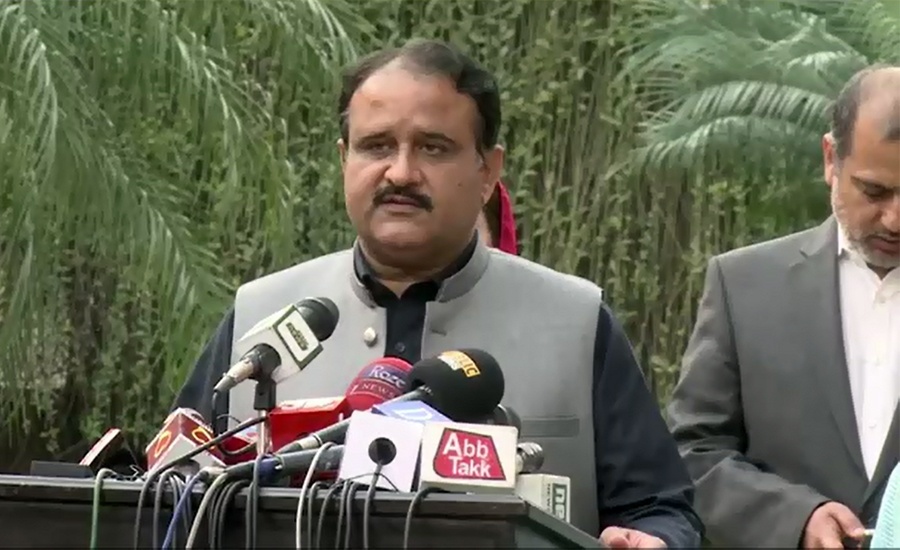
    According to the fresh summary approved by the Usman Buzdar government to restore and validate the allotments, the Shehbaz government had cancelled the allotments and retrieved the allotted land from the beneficiary officials in 2010, because the land was actually allotted to the military for a specific purpose under the law.

    Those who had sold the land allotted to them were told by the Shehbaz administration to deposit the sale proceeds to the provincial treasury. The provincial officials who had benefited from the GHQ’s decision were suspended while the matter of the three DMG officers who got the land was sent to the Establishment Division. Apparently, the Establishment Division did not take any action against them.

    The prominent beneficiaries include DMG officers – Sardar Ahmed Nawaz Sukhera (currently the federal cabinet division secretary), Dr Faisal Zahoor and Syed Imtiaz Hussain Shah. Ex-PCS officials who will benefit from the government decision include Mohammad Zahid Ikram, Sikandar Ali Bokhari, Syed Najaf Abbas Bokhari, Malik Mohammad Ramzan, Mohammad Ashraf Yousufi, Abdul Ghafoor Virk, Dur Mohammad Khan, Irshad Mohyuddin, Syed Zahid Hussain Jilani, Mohammad Ashfaq, Mohammad Akram Bhatti, Amir Karim Khan (currently PSO to CM Buzdar), Mushtaq Ahmed Anjum and Mohammad Azam Khan. The remaining officials mostly included district revenue officials.

    Eight beneficiary officers then filed a petition with the Lahore High Court (LHC) against the cancellation order of the Punjab government. In June 2013, the court directed the BoR member (colonies) to set aside the cancellation order and decide the matter afresh in accordance with the law after considering all the legal and factual submissions made by the parties and after following the due process as per law.

    The GHQ then cancelled the allotments in October 2013 in its papers.

    Officials at the CM Secretariat said as long as Shehbaz was there, no one dared to bring the matter up again.

    Later in November 2019, the DG Lands at GHQ wrote to the Pakistan Tehreek-e-Insaf (PTI) government led by Usman Buzdar for the restoration of the allotments, stating that “all the orders of president/chief executive of Pakistan were subsequently given constitutional protection and also upheld by the Supreme Court of Pakistan in the Tikka Iqbal case”.

    Strangely enough the DG Lands did not mention that the said judgement was overturned by a 14-member bench in July 2009 in the PCO Judges case.

    Two days after the receipt of the DG Lands’ letter, the BoR member (colonies) initiated a fresh summary for the Punjab CM, requesting Buzdar to “take an explicit decision whether to withdraw the order cancelling the impugned allotments”. The CM referred the matter to the standing committee of the cabinet on legislative business that in February endorsed the viewpoint of the DG Lands, GHQ.

    The CM later approved the allotments “as recommended by the standing committee subject to ratification by the cabinet” given last week.
  • VIDEO: PTI, PML-N lawmakers join hands to flout social distancing at funeral of colleagues’ mother

    In a rather shocking development, lawmakers from both Pakistan Tehreek-e-Insaf (PTI) and its rival Pakistan Muslim League-Nawaz (PML-N) among other political parties have come together to attend the funeral of two of their colleagues’ mother, flouting social distancing as well as the ban on public gatherings to curb the spread of coronavirus in the country.

    As per the details, the mother of PTI MPA from Gojra Bilal Asghar Warraich and PML-N MNA Khalid Javed Warraich passed away on Friday. With her funeral prayers being held on Saturday morning, scenes from the venue in Gojra city of Toba Tek Singh district showed violation of the government-ordered ban on public gatherings to deal with the COVID-19 outbreak that has so far claimed 144 lives with 7,654 infections across the country.

    WATCH VIDEO:

    Hundreds of participants at the funeral also included prominent personalities such as senior PTI leader and lawmaker Riaz Fatyana.

    A day earlier, a lack of consensus between religious leaders and the government saw congregational prayers still being held at some mosques across the country, in defiance of government guidelines on social distancing.

    In the federal capital, hundreds gathered at the Red Mosque, led by hardline religious leader Abdul Aziz, to offer prayers, standing shoulder-to-shoulder and filling the mosque’s main hall to capacity.

    Reports indicated that congregational prayers were also held at major mosques in other cities, with varying levels of social distancing.

  • ‘Disgruntled’ Aleem Khan to be re-inducted to Punjab cabinet days after ‘contacting PML-N’

    ‘Disgruntled’ Aleem Khan to be re-inducted to Punjab cabinet days after ‘contacting PML-N’

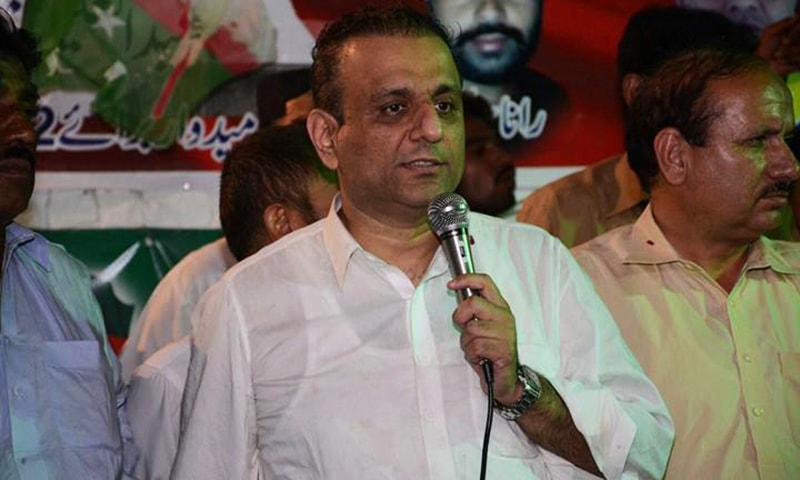
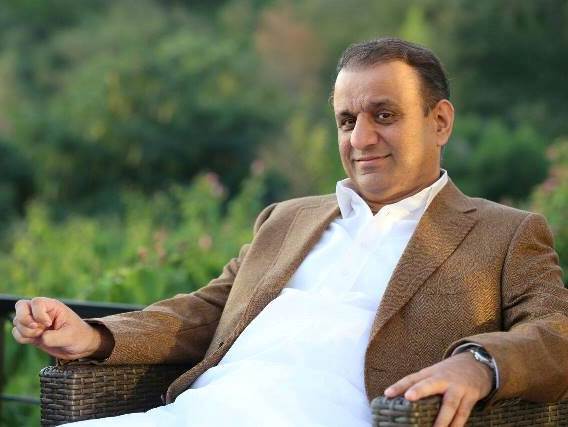
    After a break lasting over a year, senior member of the ruling Pakistan Tehreek-e-Insaf (PTI) and former Punjab minister Aleem Khan, who according to reports was “disgruntled” ever since a National Accountability Bureau (NAB) investigation was launched into his assets, is making his way back to the provincial cabinet, coincidentally days after he contacted the rival Pakistan Muslim League-Nawaz (PML-N).

    As per the details, the development comes after a meeting between Aleem and Punjab Chief Minister (CM) Sardar Usman Buzdar on the behest of Prime Minister Imran Khan, which had followed a telephonic conversation between the “disgruntled” PTI leader and PML-N Punjab President Rana Sanaullah to  discuss the fast-changing political scenario, especially in Punjab.

    Sanaullah had immediately brought the conversation to the attention of party chief Shehbaz Sharif, who had reportedly told him to wait for orders regarding befriending Aleem for any changes in the provincial house where the PTI sits on the treasury benches following a neck-and-neck with the PML-N and owing to the support of Chaudhrys of Gujrat’s Pakistan Muslim League (PML) as well as independent lawmakers.

    Sources had last week informed The Current that the PML-N leadership would assess all political options but was likely to keep a safe distance from “segments of PTI allegedly involved in the wheat or sugar crises” and who had allegedly made billions through government subsidies and subsequent price hike.

    When contacted, PML-N leader Rana Sanaullah had confirmed having a detailed telephonic conversation with Aleem and that the two discussed the current political situation in the country. To a question, he had said it was too early to say if the PML-N and the disgruntled PTI group led by Aleem would put in any efforts to bring in-house changes in Punjab because his party had a principled stance in that respect.

    “First we want electoral reforms and then we seek fresh general elections but there can be an interim arrangement till the completion of these goals,” Sanaullah had said, adding that if someone said that Aleem had the support of only 20 to 25 PTI lawmakers in the Punjab Assembly, they would be underestimating him.

    “I personally know his real strength among the ranks of the PTI.”

    The little telephonic conversation between the PML-N and disgruntled PTI leader had followed a meeting between PML-N’s Khawaja brothers and Punjab Assembly speaker Chaudhry Pervaiz Elahi — an important ally of the PTI government in Punjab.

    With reports claiming that the fate of PTI’s Buzdar administration in Punjab was hanging in balance, it has been learnt that Aleem would soon be re-inducted to the provincial cabinet.

    “It was quite obviously an attempt to keep Aleem and friends from joining hands with the PML-N for any changes in the Punjab Assembly,” sources said and added the PML-N, however, seemed confident about the bond it was forging with the PML to turn tables on the ruling party.

    While Aleem has neither confirmed nor denied claims regarding his re-induction to the cabinet, The Current has learnt that he will be handed back his previous position of senior minister or “de facto provincial chief executive” along with the reins of the Local Government Department.

    He is also likely to be given the control of the Punjab Food Department and an additional charge of the Planning and Development (P&D) Department, sources said and added that Aleem will be administered oath within a day or two.

  • ‘Disgruntled’ Aleem Khan to befriend PML-N, turn tables on PTI in Punjab?

    ‘Disgruntled’ Aleem Khan to befriend PML-N, turn tables on PTI in Punjab?

    Senior member of the ruling Pakistan Tehreek-e-Insaf (PTI) and former Punjab minister Aleem Khan, who according to reports is “disgruntled” ever since a National Accountability Bureau (NAB) investigation was launched into his assets, has telephoned rival Pakistan Muslim League-Nawaz’s (PML-N) Punjab President Rana Sanaullah to discuss with him the fast-changing political scenario, especially in Punjab, The News reported.

    According to reports, Aleem contacted the PML-N stalwart and told him that he wanted to discuss “some important issues in the context of the fast-changing political scenario”, which Sanaullah immediately brought to the attention of party chief Shehbaz Sharif.

    “PML-N leader Rana Sanaullah immediately informed PML-N president Shehbaz Sharif about this political development. He [Sanaullah] was told to wait until he gives him directives in this regard,” the report quoted sources as saying.

    They said the PML-N leadership would assess all political options but is likely to keep a safe distance from “segments of PTI allegedly involved in the wheat or sugar crises” and are being accused of making billions through government subsidies and price hike, the report stated.

    “Aleem Khan had also approached Rana Sanaullah in the past when he was practically sidelined due to his growing differences with Prime Minister (PM) Imran Khan over the state of affairs in Punjab,” sources told The News and added that when Sanaullah was arrested in the controversial narcotics case, the PTI member had back then also sent him text messages, saying he hoped that the PML-N leader comes out clean.

    When contacted, PML-N leader Rana Sanaullah confirmed that he had a detailed telephonic conversation with Aleem and the two discussed the current political situation in the country.

    To a question, he said it was too early to say if the PML-N and the disgruntled PTI group led by Aleem would put in any efforts to bring in-house changes in Punjab because his party had a principled stance in this respect.

    “First we want electoral reforms and then we seek fresh general elections but there can be an interim arrangement till the completion of these goals,” Sanaullah said, adding that if someone said that Aleem had the support of only 20 to 25 PTI lawmakers in the Punjab Assembly, they would be underestimating him. “I personally know his real strength among the ranks of the PTI.”

    To another question, he said some PTI members from Punjab had contacted the PML-N in the past as well but the leadership had decided that it would be useless to participate in power politics without having any people-oriented political agenda.

  • Bilawal ‘hopes’ PML-N hasn’t ‘struck a deal’

    Bilawal ‘hopes’ PML-N hasn’t ‘struck a deal’

    Pakistan People’s Party (PPP) chief Bilawal Bhutto-Zardari has hoped that the prolonged stay of Pakistan Muslim League-Nawaz (PML-N) President Shehbaz Sharif in London with his brother and convicted former prime minister (PM) Nawaz Sharif, and the “silence” of the latter’s daughter, Maryam Nawaz, are not because a deal has been struck.

    “Every political party has a role to play. I hope that all this is not part of any deal or understanding. Everyone should make efforts to fulfil the wishes of the people of Pakistan. As the PPP chairman, I am here in the country and will not run away,” Bilawal said in an exclusive conversation with Dawn, to a question regarding rumours that Maryam was not issuing any statements because of some kind of understanding with the establishment for her to leave the country despite the cases against her.

    When asked about reports of a “London plan” due to the presence of some prominent personalities in the United Kingdom, Bilawal said he did not know anything. “I believe these are conspiratorial talks. Only the people of Pakistan should be decision-makers.”

    He also expressed ignorance about any possible agreement between Jamiat Ulema-e-Islam (JUI-F) chief Maulana Fazlur Rehman and the establishment at the time of the party’s sit-in in Islamabad in October last year, saying that his party had categorically stated even during the sit-in that it would not support any such agreement nor would it back any kind of deal in future to oust the rulers.

  • The inconvenient truth about Pakistan’s economy

    The inconvenient truth about Pakistan’s economy

    Battle of narratives confuses ordinary citizens who are less interested in politics and are more keen to know where the economy is actually heading, what they should expect in terms of growth and whether Pakistan can offer them a prosperous future.

    Economy is the hottest subject these days. Political zealots from opposing sides pick and choose data snippets of their choice, build an argument and relentlessly attack the other party.  On one hand, the Pakistan Tehreek-e-Insaf (PTI) social media machine keeps focusing on massive current account deficit and export decline during Pakistan Muslim League-Nawaz’s (PML-N) tenure, while the PML-N social media warriors rely on abundant ammunition provided by high inflation and slowing down economy.

    This battle of narratives, however, confuses ordinary citizens who are less interested in politics and are more keen to know where the economy is actually heading, what they should expect in terms of growth and whether Pakistan can offer them a prosperous future.

    Let’s first understand the origin of the present economic crisis.

    For years, Pakistan’s foreign exchange inflows — earned through exports, foreign direct investment, remittances and official development assistance — have been lagging behind its forex outflows required to pay for its imports. But this gap increased considerably in recent years, thereby forcing the country to excessively rely on external borrowing. The problem was further compounded by the overvalued exchange rate that was held artificially high during the last government’s term. This overpricing made imports cheaper and exports expensive, further enhancing the trade deficit. As a result, the current account deficit went as high as about $1.5 to 2 billion a month, which became unsustainable. The PTI government sought help from friendly countries like Saudi Arabia and China and managed to get more than $6 billion in loans or deferred payments. But without working on reducing the current account deficit, even this didn’t last long.

    The situation was no better on the fiscal front. Pakistan has been generating far less revenue than what it was spending, leading to huge fiscal deficits, which were again financed through borrowing. The state-owned enterprises kept on draining the exchequer and the circular debt kept on piling up, crippling the government. This unsustainable financial situation compelled Pakistan to knock at the doors of the International Monetary Fund (IMF).

    IMF is considered the lender of last resort and provides a bailout to a country to avoid an economic crisis when no other lender is willing to step in. But in return, it puts down certain conditions for the borrower, to put its house in order. The same happened with Pakistan.

    Pakistan has a resilient economy on the back of its 200+ million-strong population, abundant natural resources and a vibrant private sector. About two-thirds of the Pakistani population is youth, making it the youngest country in South Asia and skilling this workforce can do wonders for the country.

    To immediately curtail the current account deficit, Pakistan had to significantly devalue its exchange rate to bring it in line with its market value. But this sudden devaluation overnight made imports expensive, including petrol, leading to a round of imported inflation. Along with consumer goods, industrial goods and raw materials also became expensive. Many industries such as automotive had to pass this increase on to consumers, putting their products out of reach of many, slowing down the consumer demand for them.

    The government also had to raise prices of gas and electricity to reduce the fiscal deficit, fueling inflation. Mismanagement leading to food supply disruptions, such as wheat and flour crisis, also played its part in further pushing the inflation higher. In anticipation of the inflationary pressure, the government had already increased the interest rates. But these high interest rates, while curbing inflation, made borrowing expensive for the businesses, thus taking a further toll on their growth.

    Factories had to cut down production. Unemployment rose. And the economy started to slow down. It was as if an over-heated engine was suddenly sprayed with a splash of cold water.

    The tight fiscal and monetary policies, which were unavoidable to reign in out of control current account and budget deficits, also brought in inadvertent consequences making life hard for the people. And this is how the government ended up where it is right now. The inflation is still rising, growth is nowhere in sight and the government keeps on mulling over ways to cut corners to meet stringent IMF conditions.

    The dark night of economic hardship will be over soon. But what matters is if we can take some hard decisions during this time, correct the imbalance between our public sector spending and income, develop our export base and pull Pakistan out of its perpetual reliance on foreign and domestic borrowing.

    But all is not doom and gloom. Pakistan has a resilient economy on the back of its 200+ million-strong population, abundant natural resources and a vibrant private sector. About two-thirds of the Pakistani population is youth, making it the youngest country in South Asia and skilling this workforce can do wonders for the country. Not only does the country have 10+ million expats, forming the sixth-largest diaspora in the world, but their remittances have also been growing. Since the year 2000, remittance inflows to Pakistan have grown by 19-20 times in real terms. Moreover, in recent years, China has pumped in billions of dollars, as part of the China-Pakistan Economic Corridor (CPEC), improving Pakistan’s infrastructure and putting it on the Belt Road Initiative (BRI) map. The improved connectivity can yield sizeable trade and investment dividends for Pakistan.

    Given this tremendous economic potential, it is quite likely that as soon as the government will ease out the fiscal and monetary policies, the economy will rebound. But that growth can only be sustained if our trade deficit does not go out of control, our manufacturing sector has the capacity to expand and we can generate enough investments to sustain the growth momentum. And for this to happen, our public sector needs to be more efficient and give more space to the private sector to grow. It also requires that the government should reduce its non-productive expenditure and increase public investments, broaden the tax base and use the tax money effectively to stimulate the economy and stop using state-owned enterprises like Pakistan International Airlines (PIA) and Pakistan Railways (PR) for patronage and instead make them self-sustainable and profitable entities.

    The dark night of economic hardship will be over soon. But what matters is if we can take some hard decisions during this time, correct the imbalance between our public sector spending and income, develop our export base and pull Pakistan out of its perpetual reliance on foreign and domestic borrowing.

  • REBUTTED: Gen Bajwa, ex-ISPR chief meet Sharif family in London

    A report in The News has rebutted claims regarding Chief of Army Staff (COAS) General Qamar Javed Bajwa and former Inter-Services Public Relations (ISPR) director general Major General Asif Ghafoor meeting the Sharif family in London, which had earlier led to intense speculations and discussion about the ongoing political situation as well as the future of the same back in Pakistan.

    A few Twitter accounts had claimed that the army chief and Maj Gen Ghafoor were in London, holding important meetings.

    The tweets had spread like wildfire as they also claimed that the military leadership was staying in a hotel on a walking distance from Avenfield Flats — the London residence of former prime minister (PM) Nawaz Sharif and his sons Hasan and Hussain Nawaz.

    The report quoted both official and Pakistan Muslim League-Nawaz (PML-N) sources as saying that the tweets were factually wrong as neither the COAS nor the former ISPR chief was in London. Both Gen Bajwa and Maj Gen Ghafoor have not been in London for several months, in fact, the latter was in Saudi Arabia to perform Umrah around the time of speculation, it added.

    Sources said that a few serving and retired military officers were in London to take part in a few seminars on security on South Asian by a leading think-tank in London and for a few official meetings, but none of the military leaders, as claimed, were in London.

    The delegation stayed in London for a week and then left for Pakistan on the weekend. A PML-N source termed it unfortunate that social media was used to spread news as if the military leadership was engaged in discussions with Nawaz or his brother and PML-N chief Shehbaz Sharif, both of whom are in London.

    The PML-N source further told the English daily that Nawaz was in London for medical treatment and was not holding any talks with anyone. Shehbaz, on the other hand, has reportedly not held any meeting with anyone on Pakistani politics.

  • PTI to reintroduce patwari system in Punjab experiment

    PTI to reintroduce patwari system in Punjab experiment

    After vilifying it over the past couple of years and turning the term ‘patwari’ into a slur for leaders and supporters of its rival Pakistan Muslim League-Nawaz (PML-N), the Pakistan Tehreek-e-Insaf (PTI) government, in what is being called another “U-turn”, has decided to reintroduce patwari system in land revenue departments.

    A patwari is one of the most resourceful persons in any area or town despite having the lowest grade in official ranking. The reason for his immense power lies in the fact that he is responsible for land records and related issues. He is also responsible for many social, political and administrative tasks, including the record-keeping of weather and crop harvest, reporting village crimes and updating voters’ registers.

    While the PTI had risen to power after promises of getting done with patwari system, which it had back then accused of facilitating PML-N in making Punjab its stronghold, according to Dawn, a senior Punjab Land Revenue Authority (PLRA) has said that the Punjab Board of Revenue has asked divisional commissioners to allocate two revenue circles — known as kanungoi — in each district that will be controlled by a tehsildar and patwaris and serve as a model.

    In Rawalpindi, Mandra and Chakri were chosen in response to a letter from the Punjab Board of Revenue to the divisional commissioner at the end of January, and the PTI-led Punjab government’s reforms will be introduced there on an experimental basis in these two circles.

    The official said that the manual land records system had burdened the entire legal system because it could be altered by patwaris and field revenue officials, which was brought to an end by the computerised system. He said the Punjab bureaucracy is trying to persuade the government that the manual system was better than the computerised alternative.

    The report also quoted Punjab Law Minister Raja Basharat as saying that reviving the patwari system had been proposed, but the government had not made a decision yet.

    He said they were completing their homework on the proposal, which would create parallel systems of manual and computerised land records systems in the province. However, he added, it would not be possible to run two parallel systems for land revenue records, and praised the project to digitise land records.

  • As Dar’s residence is converted into Panahgah, Musharraf’s farmhouse remains untouched

    As Dar’s residence is converted into Panahgah, Musharraf’s farmhouse remains untouched

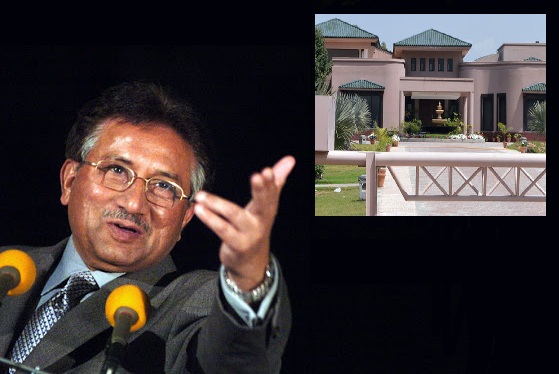
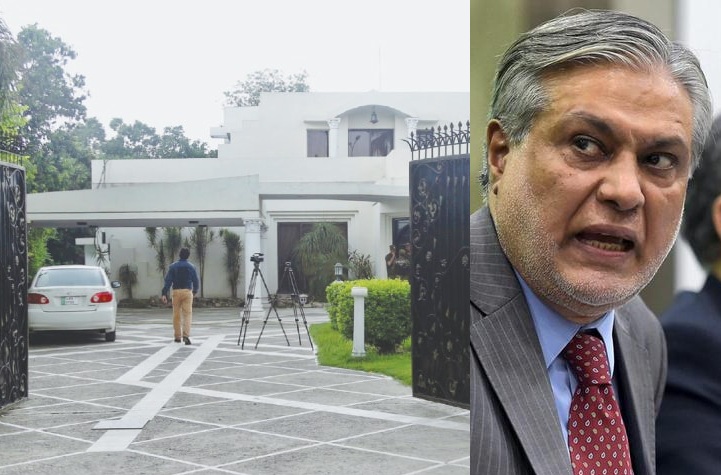
    The conversion of Pakistan Muslim League-Nawaz (PML-N) leader and former finance minister Ishaq Dar’s Lahore residence into a Panahgah [shelter home] by the Punjab government is reminiscent of the military rule of Gen (r) Pervez Musharraf, who had turned Sharif family’s Model Town residence into Gosha’aye Aafiat — an institution for elderly destitute people — nearly two decades back; while the former dictator’s own farmhouse remains untouched under the ruling Pakistan Tehreek-e-Insaf (PTI).

    While this was also pointed out by senior journalist and analyst Hamid Mir, it was reported by The News that such an act was last carried out by a military dictator out of vengeance against the Sharifs, who had then departed for Saudi Arabia to live in exile for seven years.

    The present dispensation is a civilian arrangement that has taken the instant decision. While a quick action has been taken against Dar’s property, Musharraf’s Chak Shahzad farmhouse attached by two courts separately has not been touched by authorities to convert it into a shelter home for the poor although he has been sentenced to death and declared a fugitive.

    In November 2016, an Islamabad district and sessions judge attached Musharraf’s farmhouse as the special court trying the dictator for high treason declared him an absconder. The special tribunal ordered the confiscation of his movable and immovable properties.

    According to the details submitted to the special court by the Interior Ministry, he operated nine bank accounts and owned seven immovable properties, including the farmhouse, land in the Army Housing Scheme in Karachi, Khayaban-e-Faisal, Defence Housing Authority (DHA) Karachi, Beach Street, DHA Islamabad and DHA Lahore.

    Musharraf’s wife claims ownership of the farmhouse just like Dar’s spouse does about the Gulber residence, but the latter’s plea has not been accepted.

    In January 2017, the Islamabad district administration had informed a district and sessions court that Musharraf’s properties have been attached in compliance with court orders after he had been declared as a proclaimed offender and absconder in the murder case of Lal Masjid cleric Abdur Rashid Ghazi, the report said.

  • Ishaq Dar to take govt to court for turning his residence into shelter home

    Ishaq Dar to take govt to court for turning his residence into shelter home

    Pakistan Muslim League-Nawaz (PML-N) leader and former finance minister Ishaq Dar has accused the federal and Punjab governments of contempt of court for turning his Lahore residence — seized as part of the National Accountability Bureau’s (NAB) action against him in an assets beyond means case — into a shelter home.

    “They have violated the decision of the Islamabad High Court (IHC) and I will take them to court for it,” Dar said in a video message tweeted by the PML-N.

    Dar’s 4 kanal 17 marla residence in Lahore’s posh Gulberg area was seized on July 27, 2019, on NAB’s orders and was to be auctioned last month.

    “The government had raided my residence in Lahore and wanted to auction it in January, but the court had on January 27 barred it from doing so,” Dar said in the video, adding that when the government failed to auction it, it decided to convert the house into a shelter home.  

    He termed the conversion of his residence as “state terrorism”, and maintained that he had proof of his innocence. “I can show it to the world in a global conference but I’m waiting for the right time.”

    Dar had left Pakistan in 2017 to seek medical treatment abroad and hasn’t returned since. On May 8, 2018, he was ordered by the Supreme Court (SC) to return to the country and Pakistan had even sought Interpol’s help for the same, however, on November 7, 2019, Interpol had said there was insufficient evidence against Dar for his extradition.

    His house is going to be inaugurated as a shelter home by Punjab Social Welfare Department on Saturday. As many as 40 people will be given a place to stay in the house, and beds have been set up in what was once a living room. Each room is air-conditioned and separate rooms for women have also been set up.