Tag: Prime Minister Imran Khan

  • EXCLUSIVE: Fawad reveals why he is no longer friends with Mubasher Lucman

    EXCLUSIVE: Fawad reveals why he is no longer friends with Mubasher Lucman

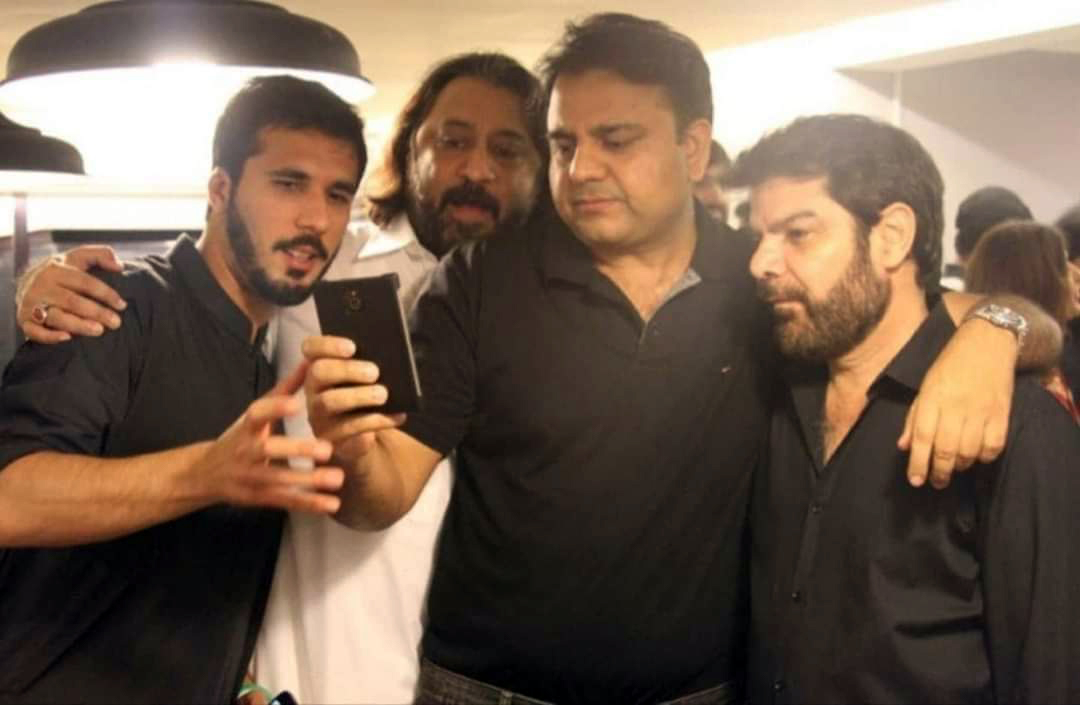
    Federal Minister for Science and Technology Fawad Chaudhry, who made headlines for slapping journalist Mubasher Lucman on Sunday, has shared as to why is he no longer friends with the anchor he was once seen sharing rather fun moments with.

    “It was Prime Minister (PM) Imran Khan’s maiden interview and only six journalists could be invited for it,” Fawad said in an exclusive conversation with The Current, as he started to shed light on how it all started.

    The former information minister said that senior anchorperson Kamran Shahid was coincidentally present in the federal capital at the time of Imran’s first interview as the country’s chief executive, and was invited. “Mubasher got upset because he was excluded,” Fawad said as he explained what later became a bone of contention between the two.

    When asked if journalists and politicians should be friends, he said the two should be like “colleagues”.

    Fawad further said that he would discuss the issue on the floor of the National Assembly later in the day, which he was doing by the time this report was filed.

    FAWAD SLAPS MUBASHER:

    On Sunday, the federal minister slapped the anchor during a spat over Lucman’s allegations against Fawad regarding TikTok star Hareem Shah.

    According to reports, Geo News bureau chief for Lahore, Raees Ansari, said the event took place at the wedding reception of Punjab Irrigation Minister Mohsin Laghari’s son. The ruling Pakistan Tehreek-e-Insaf’s (PTI) leaders, Jahangir Tareen and Ishaq Khakwani, were also present at the event.

    Ansari revealed that Tareen and Fawad were talking about the allegations that Lucman had levelled on the minister during a TV show, salaciously linking the federal minister to Shah, who recently made headlines after accusing government officials, including lawmakers, of sending her indecent pictures.

    It was at that moment that Lucman arrived at the event, triggering a war of words between him and Fawad over the issue. The federal minister reportedly protested against the claims, later slapping and shoving the anchor. The altercation stopped when people intervened and broke up the fight.

    Soon after, both Fawad and Lucman left the event.
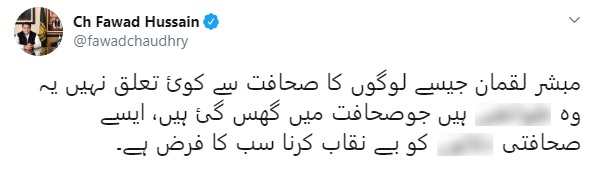
    Chaudhry tacitly admitted to the act, slamming the TV anchor on Twitter, saying: “People like Mubashir Lucman have nothing to do with journalism… they are [sexual slur] who have barged into journalism.”

    “It is everyone’s duty to expose [such journalists],” he tweeted.

    FIR AGAINST FAWAD:

    Meanwhile, Lucman, who had refrained from publicly commenting on the incident, has submitted an application to register a First Information Report (FIR) against the minister.

    According to Dawn, Lucman, in his application submitted to the Model Town police station late Sunday night, said he was attending the event along with Punjab Chief Minister (CM) Usman Buzdar, Governor Chaudhry Sarwar, Tareen and various federal and provincial ministers.

    He said he was talking to his friends when Fawad attacked him along with 10-12 of his “mussala ghundas (armed goons)”.

    “They subjected me to severe violence,” the anchorperson said, adding that after threatening him of serious consequences and of murder, they left the site of the incident.

    He claimed that prior to this incident, the federal minister had called and threatened to have him killed if he did not stop his allegations.

    Lucman further stated in the application that a case should be registered against Fawad and others, while the federal minister says he would move the cyber-crime wing of the Federal Investigation Agency (FIA) against the journalist.

    As per an application submitted to Punjab inspector general of police (IGP) by the minister’s protocol officer, an FIR against the journalist for defaming and threatening Fawad, as well as his protocol officer, has also been sought.
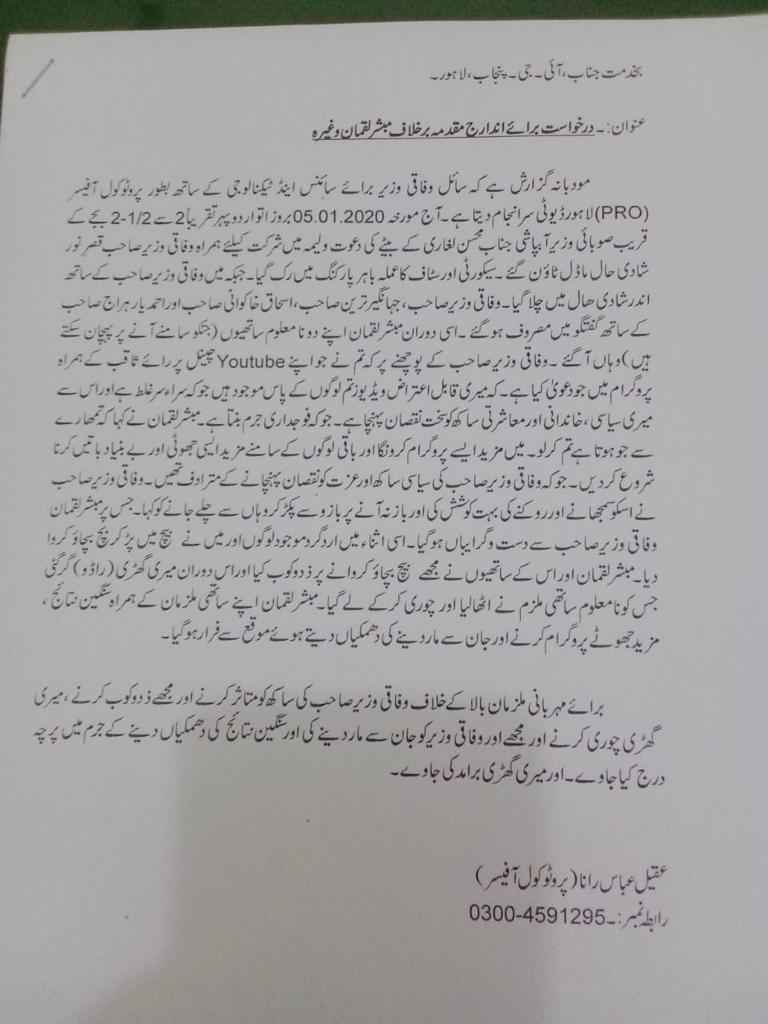
    The protocol officer has also accused Lucman and his accomplices of stealing his wristwatch.

    Repeated attempts were made to contact journalist Mubasher Lucman, but he was unavailable.
  • Robbers who looted PM Imran’s nephew’s house arrested

    Robbers who looted PM Imran’s nephew’s house arrested

    Three men who robbed Prime Minister Imran Khan’s nephew’s house have been arrested by the police.

    According to reports, the Crime Investigation Agency (CIA) also recovered the looted valuables from their possession.

    PM Khan’s nephew’s Shershah Khan’s house was robbed in the early hours of Saturday.

    According to the FIR registered by Shershah, three unidentified persons entered his house around 4 am and stole a Rs3 million cheque, jewellery and an old pistol that belonged to his grandfather. The FIR added that the robbers forced Shershah’s wife to sign the cheque.

    Police had suspected the involvement of the gardener’s son and media reports had suggested that the robbers entered through a door that was accidentally left open.

    Shershah is the younger son of PM Khan’s sister Aleema Khan.

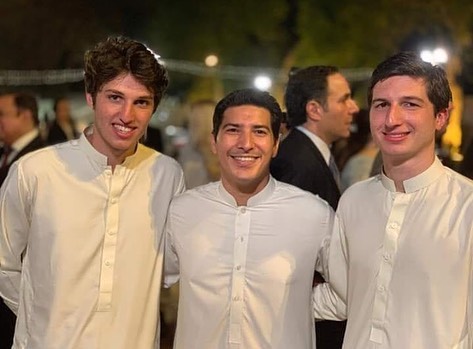
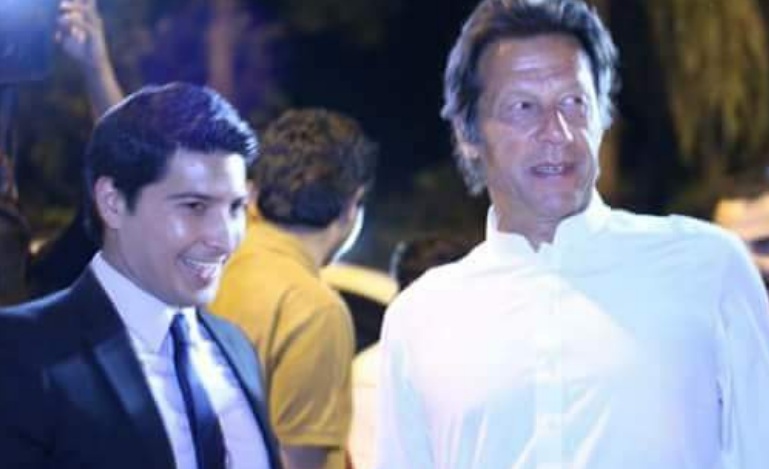
    Shershah Khan with PM Imran’s sons at a family wedding
  • ‘Why not Imran?’ asks Twitter as US State secy calls Gen Bajwa on Iran tensions

    ‘Why not Imran?’ asks Twitter as US State secy calls Gen Bajwa on Iran tensions

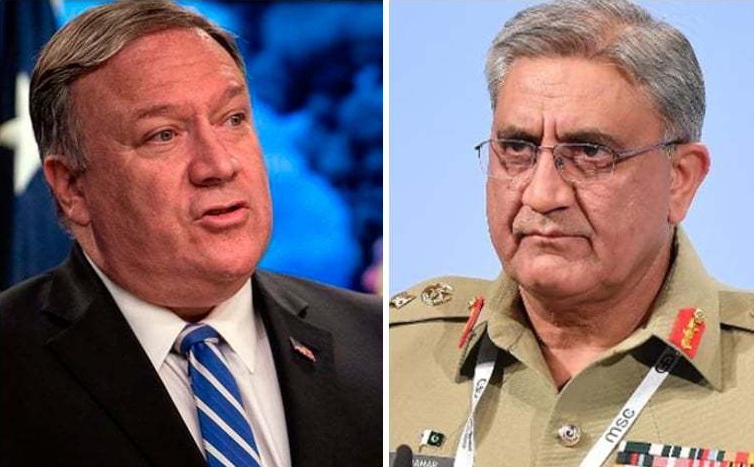
    With United States (US) Secretary of State Mike Pompeo calling Chief of Army Staff (COAS) General Qamar Javed Bajwa to discuss heightening tensions with Tehran following the killing of top Iranian military leader Qassem Soleimani, Twitterati are wondering why did Pompeo choose the army chief over Prime Minister (PM) Imran Khan or Foreign Minister (FM) Shah Mahmood Qureshi.

    The telephonic conversation came after Iran’s top security body vowed to retaliate in the “right place and time” following Revolutionary Guards commander Soleimani’s death in an airstrike ordered by US President Donald Trump on Friday.

    “America should know that its criminal attack on General Soleimani has been the country’s biggest mistake in west Asia, and America will not avoid the consequences of this wrong calculation easily,” the Supreme National Security Council said in a statement.

    The dramatic escalation and subsequent fears of “World War III” were followed by both Washington and Tehran alerting their allies.

    “#Pakistan’s Chief of Staff General Bajwa and I spoke today about U.S. defensive action to kill Qassem Soleimani. The #Iran regime’s actions in the region are destabilizing and our resolve in protecting American interests, personnel, facilities, and partners will not waver,” Pompeo tweeted on Friday.

    In another tweet, Pompeo disclosed he spoke to Afghan President Ashraf Ghani as well about Soleimani’s killing “to protect American lives at stake”.

    ‘MAXIMUM RESTRAINT’:

    Separately, Inter-Services Public Relations (ISPR) disclosed that the army chief and the US secretary of state discussed “regional situation including possible implications” after the escalation in the Middle East. 

    “COAS received telephone call from US Secretary of State Mike Pompeo. Regional situation, including possible implications of recent escalation in Middle East, was discussed,” the military’s media wing tweeted.

    “COAS emphasised need for maximum restraint and constructive engagement by all concerned to de-escalate the situation in broader interest of peace and stability. COAS also reiterated the need for maintaining focus on success of Afghan Peace Process,” read another tweet.

    ‘WHY NOT IMRAN?’:

    Meanwhile, Twitterati took to Twitter to ask as to why had Pompeo not called PM Imran or FM Qureshi at such a time.

    https://twitter.com/BILAL_GHARSHEEN/status/1213341499171233792

    The tweets came as Indian journalists such as The Hindu Editor Suhasini Haider pointed out the same.

    While Pakistan’s Foreign Office (FO) has advised both the US and Iran to refrain from taking “unilateral action” against each other and abide by the United Nations (UN) Charter to respect each other’s territorial integrity, the premier has not yet made any statement.

  • VIDEO: Imran Khan finds aloo gosht at Panahgah ‘better than PM House’

    VIDEO: Imran Khan finds aloo gosht at Panahgah ‘better than PM House’

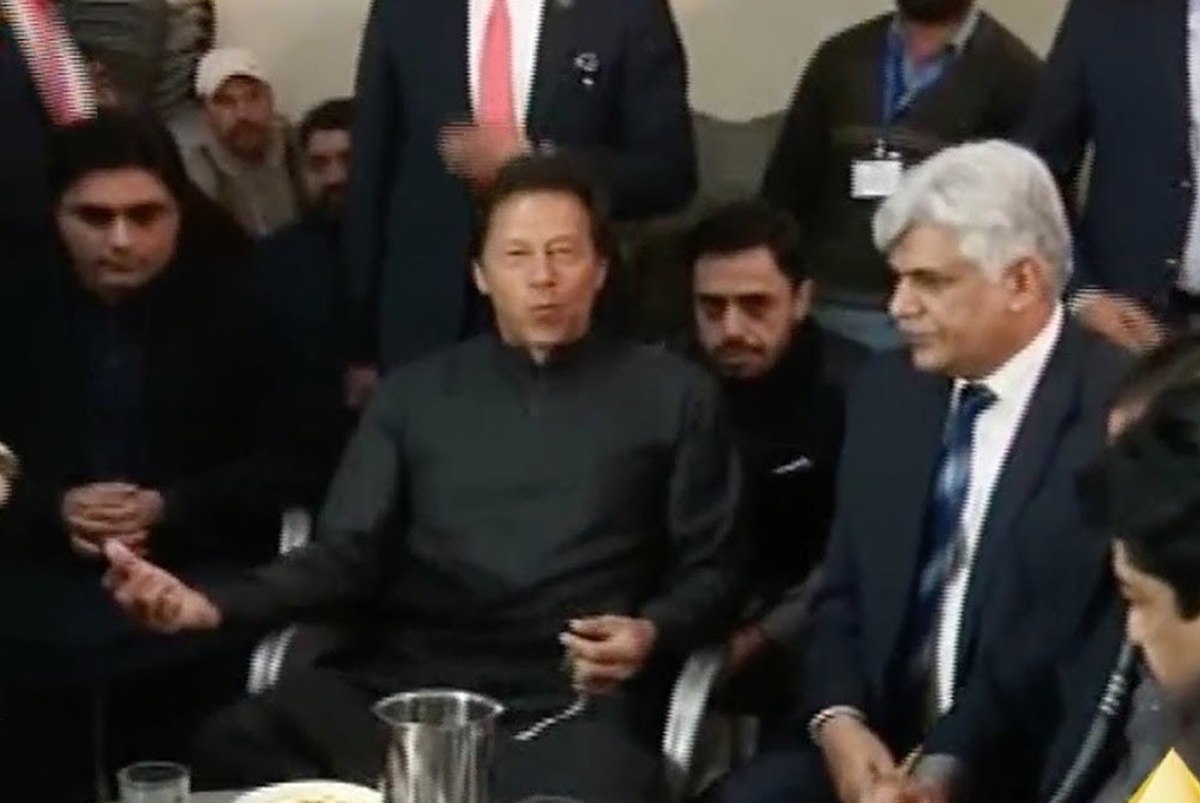
    Prime Minister (PM) Imran Khan and Federal Minister for Planning and Special Initiatives Asad Umar have found the aloo gosht [potato-meat curry] served to them at Faisalabad Panahgah [shelter home] “even better than the one at PM House in Islamabad”.

    This was revealed by Umar, who on Friday tweeted:

    “Got a chance to dine at the shelter home in Faisalabad during our visit. Both I and the prime minister really liked aloo gosht. The premier said it was [even] better than the one he gets to have at PM House,” he wrote.

    The tweet came hours after PM Imran and a few members of his team reached Faisalabad to inaugurate the first shelter home in the city, which has been constructed over a four kanal area as part of the government’s flagship Panahgah initiative.

    WATCH VIDEO:

    Accompanied by Punjab Chief Minister (CM) Usman Buzdar, the premier toured the shelter home to review the facilities being provided by the provincial government to homeless people, and received a briefing by the administration.

    Last week, he had directed the chief ministers of Punjab and Khyber Pakhtunkhwa (KP) to take steps to provide temporary shelters and food to every person in their respective province in the wake of harsh cold weather.

    “Given the extremely cold weather conditions, I have asked CMs of Punjab and KP to ensure that no person is left out without a shelter; and their administrations must take immediate action to provide temporary shelters plus food for those who cannot be accommodated in existing Panah­gahs (shelter homes),” the PM had tweeted.

    Earlier on Friday, the premier also broke ground on the state-of-the-art Allama Iqbal Industrial City that has been planned over an area of 4,000 acres.

    The industrial city is a mega project of the Special Economic Zone of Faisalabad Industrial Estate Development and Management Company (FIEDMC) under the China-Pakistan Economic Corridor (CPEC).

  • Hospital attack case: Court rejects bail of Imran’s nephew for arriving late

    Hospital attack case: Court rejects bail of Imran’s nephew for arriving late

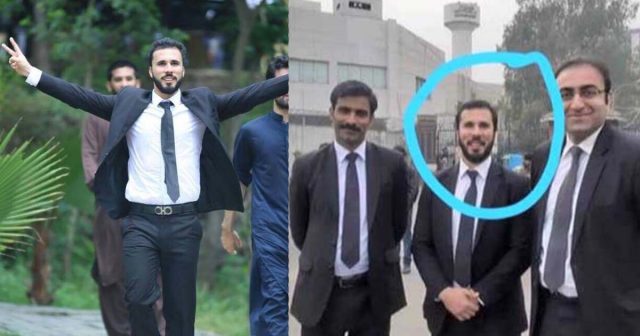
    An anti-terrorism court (ATC) on Thursday rejected the bail of Prime Minister (PM) Imran Khan’s nephew, Barrister Hassaan Khan Niazi, in the case pertaining to lawyers’ attack on Punjab Institute of Cardiology (PIC) in Lahore last month.

    According to ARY News, Niazi turned up late for the hearing, irked by which, ATC Judge Arshad Hussain Bhutta cancelled the former’s interim bail, regretting he showed up late despite being a lawyer.

    With Niazi then offering an unconditional apology and filing a new bail application, he and nine of his colleagues were granted bail until January 6.

    The bail was granted subject to submission of a surety bond worth Rs100,000.

    A group of more than 200 lawyers, who had an ongoing “tussle” with the doctors of the PIC, had stormed the hospital last month, vandalised property and damaged dozens of vehicles besides setting a police van on fire.

    At least 52 lawyers were arrested and dozens of others booked after the attack during which at least four patients lost their lives.

  • Indo-Pak war odds-on if soldiers are attacked in Kashmir again: report

    Indo-Pak war odds-on if soldiers are attacked in Kashmir again: report

    A transnational non-profit organisation, International Crisis Group, has warned that any militant attack on Indian forces in held Kashmir could set off an escalation between Pakistan and India, saying that pro-freedom militants were lying low in the troubled vallet, but they were still active.

    “India’s heavy-handed military operations in Kashmir over the past few years have inspired a new homegrown generation, whose ranks are likely to swell further after the latest repression,” read its report titled “10 conflicts to watch in 2020”.

    Indian fighter planes had violated Pakistani airspace after a pro-freedom militant attack that killed at least 40 paramilitary soldiers in Pulwama on February 19, 2019. In retaliation, Pakistan had shot down two Indian jets over Kashmir on Feb 27, and captured an Indian pilot as well. He, however, was released by Prime Minister (PM) Imran Khan’s government as a “gesture of peace”.

    The Crisis Group, which describes itself as “working to prevent wars and shape policies that will build a more peaceful world” , has warned that any Pulwama-like attack on Indian forces in Kashmir would precipitate Indian action against Pakistan.

    “In a worst-case scenario, the two nuclear-armed neighbours could stumble into war,” the report said.

    The Crisis Group asked New Delhi to lift the communication blackout and release political prisoners in the occupied valley, and asked Pakistan to take action against militants allegedly operating from its soil.

    It further urged the international community to push Pakistan and India for talks “before it is too late”.

  • Billion Tree Tsunami: NAB detects Rs462 million loss to exchequer

    Billion Tree Tsunami: NAB detects Rs462 million loss to exchequer

    A loss of Rs462 million to the public exchequer has been detected by the National Accountability Bureau (NAB) as it conducted its initial inquiry into the Billion Tree Tsunami Project of the Pakistan Tehreek-e-Insaf (PTI), The News reported.

    NAB Chairman Justice (r) Javed Iqbal had authorised the inquiry against the flagship project in March last year.

    “The NAB regional office has recommended to the headquarters for upgrading the inquiry along with authorisation for separate investigations and six inquiries to unearth the mega scam in Khyber Pakhtunkhwa (KP),” the report said.

    Meanwhile, an officer was quoted as saying that NAB officials “had checked only 10 to 20 per cent of only one region out of three, which is the smallest region as compared to Hazara and Swat.

    In 2014, the then PTI-led KP government had started the Billion Tree Tsunami Project with Rs14.32 billion utilised for the project execution by the Forest Department.

    Allegations of ghost labour, misappropriation and embezzlement of daily wages, enclosures failure and payments against ghost plantations were received by the anti-graft body at its Peshawar bureau earlier.

    According to official documentsduring the initial inquiry based on proceedings conducted so far, a loss of Rs462 million has been detected. The NAB reports further disclosed that due to the shortfall in the hectare-wise plantation area in Dera Ismail Khan, a loss of Rs80.044 million has been detected.

    The regional NAB office has recommended the headquarters to convert the ongoing inquiry into a proper investigation to probe the case. It further recommended four investigations against the divisional forest officer and others regarding misuse of authority, embezzlement, corruption and corrupt practices.

    Furthermore, six additional inquiries were also recommended against the officers and officials of the KP Forest Department and others regarding embezzlement, misappropriation, corruption, and corrupt practices in procurement of seeds, polythene bags, machinery, vehicles and office equipment in forest region 1, 2 and 3.

    While NAB sources were quoted as confirming that the matter is under scrutiny as per law, media has reportedly been requested to avoid speculations in this regard.

  • ‘Smart performance’: Pakistan’s debt falls to 84.7pc of GDP

    ‘Smart performance’: Pakistan’s debt falls to 84.7pc of GDP

    Pakistan’s general government debt, including guarantees and the International Monetary Fund (IMF) loan, have declined to 84.7 per cent of the GDP, Dawn reported.

    According to details, a recently published IMF report has revealed that the decline in debts was a consequence of the government’s smart performance in reducing expenditures, registering primary budget surplus and increasing tax and non-tax revenues during the first five months of the current fiscal year.

    “In the first quarter of 2019-20, budget execution by the incumbent government improved considerably, registering a primary surplus of 0.6pc of GDP and an overall deficit of 0.6pc – about 1pc of GDP better than programmed,” the report added.

    It said the over-performance was driven by stronger than expected non-tax revenues, accompanied by double-digit growth in tax revenue net of refunds.

    At the same time, due to import compression, customs receipts and other external sector-related taxes have suffered (up only 6pc year-on-year), the report said, adding that spending, including by the provinces, has remained prudent.

    However, the document observed that in FY19, the budget registered a primary deficit of 3.5pc of GDP and an overall deficit of 8.9pc, against its target of 1.8pc and 7pc, respectively.

    Revenue collection at the federal level came in at 2pc of GDP, lower than expected, while total expenditures and provincial fiscal balances were in line with projections, it added. Around three-fourth of the revenue shortfall were due to one-off factors, which are not expected to carry over into FY20.

    In particular, delays in renewing telecom licences, a temporary delay in the sale of state assets, and weaker than expected amnesty proceeds contributed around 1pc of GDP, while a shortfall in the transfer of State Bank profits to the budget, stemming from losses related to the exchange rate depreciation in late FY19 added an additional 0.5pc of GDP.

    As a consequence of the fiscal slippages and the exchange rate depreciation, but also the government’s decision to increase cash deposits considerably to provide a financing cushion against potentially unfavourable market conditions, government debt (including guarantees and IMF borrowing) rose to 88pc of GDP.

    With respect to government’s performance in revenue collection, the report observed that with 34pc nominal growth, compared to 1QFY19, total revenue over-performed the programmed projections by 0.2pc of GDP.

    On account of tax policy measures implemented at the beginning of FY20, the domestic component of tax revenue collected by the FBR, recorded robust growth of 25pc.

    Growth was particularly strong in sales and direct taxes, where most measures were targeted (including removal of tax exemptions, zero and reduced rates). At the same time, taxes collected at the import stage were impacted by substantial import compression, with a decline in all revenue categories except of sales tax.

    Given that more than 40pc of total tax revenue in Pakistan is collected at the import stage, this shortfall had a notable impact on overall tax revenue performance 0.2pc of GDP lower than programmed.

    One-off tax revenue inflows (around Rs30bn) also contributed to the overall result and are related to tax advances and tax amnesty receipts that were not collected at the end of FY19 but were realised in the first quarter of 2019-20 instead. Tax revenues collected at provincial level were also strong, increasing by 18pc.

  • PTI govt approves Rs11.7 billion for special military projects

    The Pakistan Tehreek-e-Insaf (PTI) government has approved a supplementary budget for military allowances worth Rs11.7 billion as the Economic Coordination Committee (ECC) met on Monday.

    According to The Express Tribune, the meeting headed by Adviser to the Prime Minister (PM) on Finance, Dr Abdul Hafeez Shaikh, approved the allowances under three technical supplementary grants for Special Security Division (North), Internal Security Duty Allowance and construction of bunkers.

    Of the Rs11.7 billion, Rs6.2 billion have been allocated for the recurring cost of the Special Security Division of Pakistan — for protection of China Pakistan Economic Corridor (CPEC)-related projects — whereas Rs4.966 billion have been set aside for Internal Special Duty Allowance for troops deployed on the western border, a Ministry of Finance handout revealed.

    While the remaining Rs500 million has been reserved for the construction of community bunkers, the heads for the supplementary grants from where the budget will be diverted, have not yet been specified by the Finance Ministry.

    Earlier, the ECC had directed that the cost of providing protection to the CPEC and other important installations by the military should be made part of the regular defence budget instead of meeting it through supplementary grants.

    The Defence Ministry had requested a supplementary grant for paying the recurring cost of the Special Security Division and Internal Security Duty Allowance to the troops deployed on the western border.

  • MQM to quit PTI’s ruling coalition, help opposition topple Imran govt?

    MQM to quit PTI’s ruling coalition, help opposition topple Imran govt?

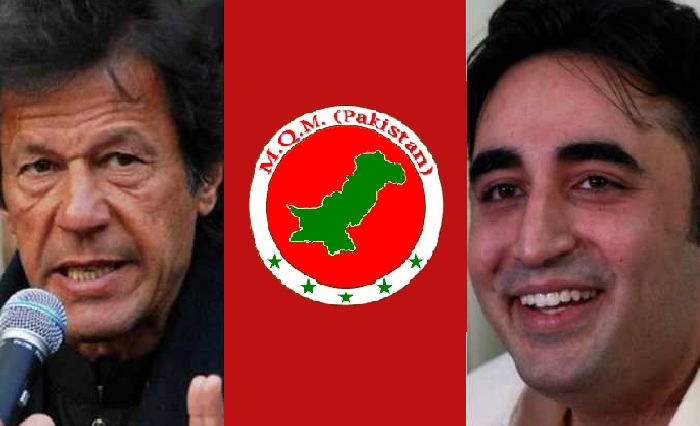
    Soon after Pakistan People’s Party (PPP) chief Bilawal Bhutto-Zardari asked the Muttahida Qaumi Movement-Pakistan (MQM-P) to break away from the ruling Pakistan Tehreek-e-Insaf (PTI) government in centre and join the Sindh government, the MQM-P has expressed dissatisfaction over the federal government’s performance.

    According to The News, Bilawal had on Monday offered PTI’s ruling partners, the MQM-P, stakes in the Sindh government, saying Sindh and Karachi could only get their share of development if Imran’s government collapsed.

    “You can stop this injustice being done with Karachi and Pakistan by breaking your alliance with the PTI and toppling Imran Khan’s government to save Karachi, and we will fully support you. For the sake of Karachi, for the sake of the people of Karachi, we are ready to offer to the MQM[-P] in Sindh, as many ministries as they have in the centre today,” a very charged PPP chief had said while addressing the inaugural ceremony of four mega development projects in Korangi.

    While extending his offer, Bilawal had repeatedly called for toppling Imran’s government as he tried to persuade the MQM-P to break its alliance with the PTI in centre. He made the unexpected offer while Mayor of Karachi Waseem Akhtar — who belongs to the MQM-P — was attending the inaugural ceremony along with Sindh Chief Minister (CM) Syed Murad Ali Shah.

    It wasn’t later that the MQM-P reacted to the offer by saying that they “hadn’t joined the PTI for ministries”.

    Dunya News quoted an MQM-P spokesperson as clarifying that the alliance with PTI “was for the benefit of Karachi and not to get ministries”. He further said that MQM-P’s politics were all about serving people; however, he reportedly expressed dissatisfaction over the performance of the federal government.

    “Transfer powers to local governments instead of making offers of ministries,” the spokesperson was quoted as saying soon after Mayor Waseem Akhtar said that the MQM-P “could join anyone for the betterment of the people”.

    RULING COALITION:

    The PTI and its allies on one side and opposition parties on the other have closely contested their positions in the National Assembly.

    Given their respective numerical strengths, the ruling coalition has around 225 lawmakers while the opposition has nearly 221 members and the simple majority of the total lawmakers of 446 (342 MNAs and 104 senators) comes to 224.

    The PTI has 156 members of the National Assembly. Its allies have varying numbers. The Pakistan Muslim League-Q (PML-Q) and Balochistan Awami Party (BAP) have five members each; Muttahida Qaumi Movement-Pakistan (MQM-P) has seven MPs; Grand Democratic Alliance (GDA) has three lawmakers; Balochistan National Party-Mengal (BNP-M) has four MNAs and Awami Muslim League and Jamhoori Watan Party have one member each besides the support of two independents.

    They all come to 184.

    In the Lower House of Parliament, the PML-N has 84 MNAs; Pakistan People’s Party (PPP) has 55 MPs; Muttahida Majlis-e-Amal (MMA) has 16 members; and Awami National Party (ANP) has one lawmaker. Two independents stand with the opposition parties. In the Senate, the PTI is supported by 15 legislators, the MQM-P by 5 senators, the BAP by two MPs, and BNP-M and PML-Functional by one each. If the decisive number of 16 senators, including those elected from the erstwhile tribal areas are placed in the government pocket, the total strength of the PTI and its allies comes to 39 senators.

    With BNP-M likely to defect from the ruling coalition and the MQM-P being offered ministries in Sindh, any changes to the hung parliament in favour of the opposition parties could be fatal for the PTI government.