Tag: Sri Lanka

  • Finance Ministry hits out at Atif Mian’s ‘nonsensical’ label for Pakistan’s economic policies

    Finance Ministry hits out at Atif Mian’s ‘nonsensical’ label for Pakistan’s economic policies

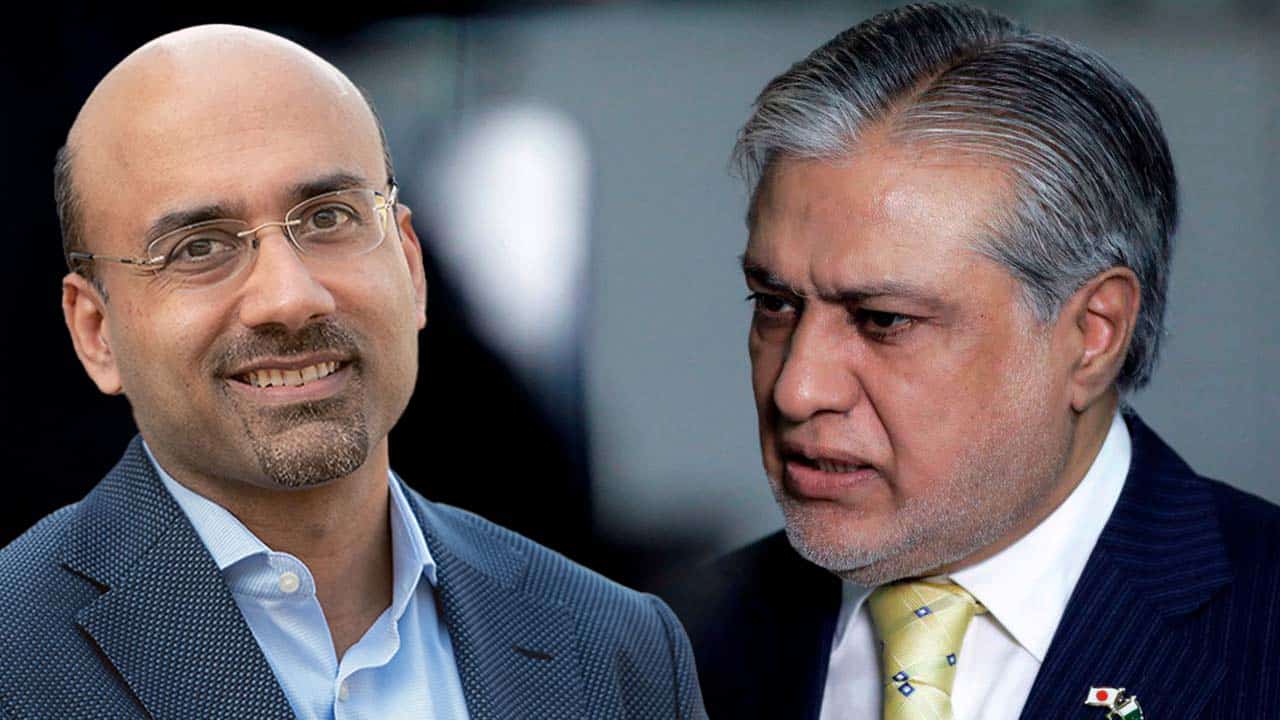
    The Ministry of Finance strongly responded on Saturday to recent remarks made by Pakistani-American economist Atif Mian, criticising his lack of practical understanding of economics.

    Mian had labelled the government’s economic policies as ‘nonsensical’ and suggested that Pakistan should take decisive actions to restructure its economy, citing Ghana and Sri Lanka as examples. In response, the Ministry of Finance dismissed Mian’s comments as a veiled suggestion of default and argued that his critique was purely theoretical, lacking practical insight into economics.

    The ministry refuted Mian’s comparison of Ghana and Sri Lanka, pointing out that Pakistan’s economy and population are significantly larger, making the analogy misplaced.

    Regarding Pakistan’s debt structure, the ministry clarified that less than 10 per cent of the debt consists of commercial bonds/sukuks, with the next maturity due in April 2024. The majority of the debt is owed to multilateral and bilateral creditors, who have not indicated any risk of default.

    The ministry expressed disappointment that Mian overlooked the significant reforms undertaken by Pakistan in the past nine months. These reforms included market exchange rate adjustments, interest rate modifications, mid-year taxation to improve the fiscal position, levies on petroleum products, and non-monetisation of the fiscal deficit. These actions were implemented under an unprecedented IMF programme.

    Despite the delay in reaching a staff level agreement with the IMF, the ministry assured that Pakistan’s economy would continue on the path of reform towards stability and sustainable growth.

    The ministry dismissed Mian’s unwarranted comments on nominal exchange rates, stating that Pakistan’s real exchange rate is estimated to be 15 per cent undervalued, reflecting improving fundamentals.

    In terms of petroleum prices, the ministry highlighted that historically, Pakistan has sold petroleum products at significantly lower prices compared to regional countries. Imposing additional taxes on consumers, especially given the recent price hikes and rising inflation, would be unwise.

    The ministry attributed Pakistan’s current economic crisis to international shocks, including the COVID-19 pandemic, the Ukraine war, and devastating floods. It emphasised that the present government has successfully overcome the challenges inherited from an overheated economy and breached IMF conditionality. The current account deficit has been significantly reduced, indicating progress in balancing payments.

    Lastly, the ministry pointed out that Mian failed to consider the unprecedented political challenges faced by Pakistan. It concluded by expressing optimism that with the likelihood of political stability emerging soon, a major economic turnaround is expected.

    Overall, the Ministry of Finance strongly rebutted Mian’s criticism, emphasising the government’s commitment to reforms and the resilience of Pakistan’s economy.

  • Sri Lanka is not sending elephants to Pakistan

    Sri Lanka’s High Commission in Pakistan has denied reports that the island nation plans to give two elephants to the country.

    Media reports had stated last week that Sri Lanka was gifting two elephants to Pakistan, after the demise of the Karachi Zoo’s Tanzanian elephant Noor Jehan. The pachyderm died after a very public battle with illness exacerbated by neglect from Zoo officials.

    The news was met with backlash from Pakistani social media users, including celebrities like Nadia Jamil, who took to Twitter to condemn the possibility, pointing out that Pakistan had no proper policy about the well-being and care of Zoo animals, which had led to Noor Jehan’s death.

    However, a tweet posted by the Sri Lankan High Commission has put the rumors to rest.

    “Sri Lanka has not taken action or discussed in providing Elephants to the Zoo’s in Karachi or Lahore, neither Government of Pakistan has made any such request. This post indicate the correct position in view of certain articles in media and discussions on going on social media.”

    The post did clarify that there was some truth to the claims, because the Sri Lankan Honorary Counsel in Lahore Yasin Joyia, had discussed the possibility of providing elephants to Pakistan, but he did not hold any authority to execute such decisions.

  • World Bank lowers Pakistan’s growth forecast tighter financial conditions

    World Bank lowers Pakistan’s growth forecast tighter financial conditions

    Pakistan’s current-year growth forecast has been significantly reduced by the World Bank due to tighter financial conditions and limited fiscal space. The country’s economy is now expected to grow only 0.4 per cent in the current year, compared to the October 2022 forecast of 2 per cent growth.

    This bleaker forecast assumes that an agreement is reached with the International Monetary Fund for bailout funds. Pakistan’s fiscal year runs from July to June, and the country expects its economy to grow 2 per cent in FY23, although the country’s central bank chief has warned that this forecast could face downward pressure.

    Pakistan has been in economic turmoil for months, with an acute balance of payments crisis. Talks with the IMF to secure $1.1 billion in funding as part of a $6.5 billion bailout agreed upon in 2019 have not yet yielded fruit. Lower economic output and high prices in Pakistan have led to stampedes and looting at flour distribution centres set up across the country. The World Bank attributed the greater food insecurity for South Asia’s poor to elevated global and domestic food prices.

    The World Bank also lowered its 2023 regional growth forecast to 5.6 per cent from 6.1 per cent in October, citing rising interest rates and uncertainty in financial markets as putting downward pressure on the region’s economies. Most countries have raised interest rates at a rapid pace since the war in Ukraine last year led to choking supply chains and stoked inflation globally.

    Sri Lanka’s economy is forecast to contract by 4.3 per cent this year, reflecting the lasting impact of the macro debt crisis, with future growth prospects heavily dependent on debt restructuring and structural reforms. In January, President Ranil Wickremesinghe said Sri Lanka’s economy could contract by 3.5 per cent or 4.0 per cent in 2023 after shrinking by 11 per cent last year.

    The World Bank also lowered its forecast for India’s economic growth in the current fiscal year to 6.3 per cent from 6.6 per cent, due to the expected negative impact of higher borrowing costs on consumption. The current fiscal year began on April 1.

  • World Bank cuts Pakistan’s GDP growth forecast from 4% to 2%

    World Bank cuts Pakistan’s GDP growth forecast from 4% to 2%

    Due to the unstable economy and floods, the World Bank predicted that Pakistan’s economic growth would drop by half, falling by 4 per cent to 2 per cent, during the current fiscal year.

    According to the Bank’s latest report, “Global Economic Prospects,” Pakistan is experiencing growing economic woes, especially those caused by the recent flooding as well as ongoing policy and political uncertainties.

    “Pakistan faces mounting economic difficulties and Sri Lanka remains in crisis. In all regions, improvements in living standards over the half-decade to 2024 are expected to be slower than from 2010-19,” the World Bank stated in Global Economic Prospects released on Tuesday.

    Pakistan’s currency declined by 14 per cent between June and December, and its national risk premium climbed by 15 per cent over this same time frame due to the nation’s low foreign exchange reserves and rising sovereign risk.

    It went on to say that growth is anticipated to pick up to 3.2 per cent in the fiscal year 2023–24 (FY24), still under previous forecasts, as the country implements policy measures to stabilise macroeconomic conditions, inflationary pressures subside, and reconstruction after the floods gets underway.

    According to the analysis, Pakistan’s recent floods are thought to have cost the country damage equal to 4.8 per cent of GDP.

  • Nomura warns seven countries including Pakistan are at high risk of currency crisis

    Nomura warns seven countries including Pakistan are at high risk of currency crisis

    The biggest brokerage and investment bank in Japan, Nomura Holdings, has issued a warning that seven nations, including Egypt, Romania, Sri Lanka, Turkey, the Czech Republic, Pakistan, and Hungary, are now at high risk of experiencing currency crisis.

    According to Reuters, the Japanese bank reported that 22 of the 32 nations covered by its internal “Damocles” warning system had witnessed an increase in risk since its last update in May, with the Czech Republic and Brazil experiencing the biggest rises.

    It indicates that since May, the total of the model’s scores for all 32 grew significantly from 1,744 to 2,234 points.

    “This is the highest total score since July 1999 and not too far from the peak of 2,692 during the height of the Asian crisis,” Nomura economists said, calling it “an ominous warning sign of the growing broad-based risk in EM currencies”.

    The model computes an overall score based on eight important variables, including a nation’s foreign currency reserves, exchange rate, financial soundness, and interest rates.

    Nomura calculates that a score above 100 implies a 64 per cent likelihood of a currency crisis in the next 12 months based on data from 61 prior EM currency crises that have occurred since 1996.

    Egypt currently has the lowest score at 165 after devaluing its currency significantly twice already this year and applying for an IMF programme.

    Romania, which has been using interventions to support its currency, is listed next on page 145. Both Turkey and Sri Lanka, which frequently has currency crises due to default, have ratings of 138, while the Czech Republic, Pakistan, and Hungary receive scores of 126, 120, and 100, respectively.

    The Damocles model was also applied by Nomura to the G7 group of advanced countries. The results showed that all but Japan now had Damocles scores over the 100-point barrier, with the United States and Britain leading the way.

    EM economies continue to be increasingly fragile. Due to their incomplete recovery from the COVID-19 epidemic, the majority of countries are currently dealing with high inflation, a finite amount of fiscal room, negative real interest rates, a weakened balance of payments, and reduced FX reserve cover.

    “It is somewhat surprising that there have not been more full-blown EM currency crises this year,” Nomura added.

    “Then again, EM challenges are far from over… The late Professor Rudiger Dornbusch once said, A crisis takes a much longer time coming than you think, and then it happens much faster than you would have thought”.

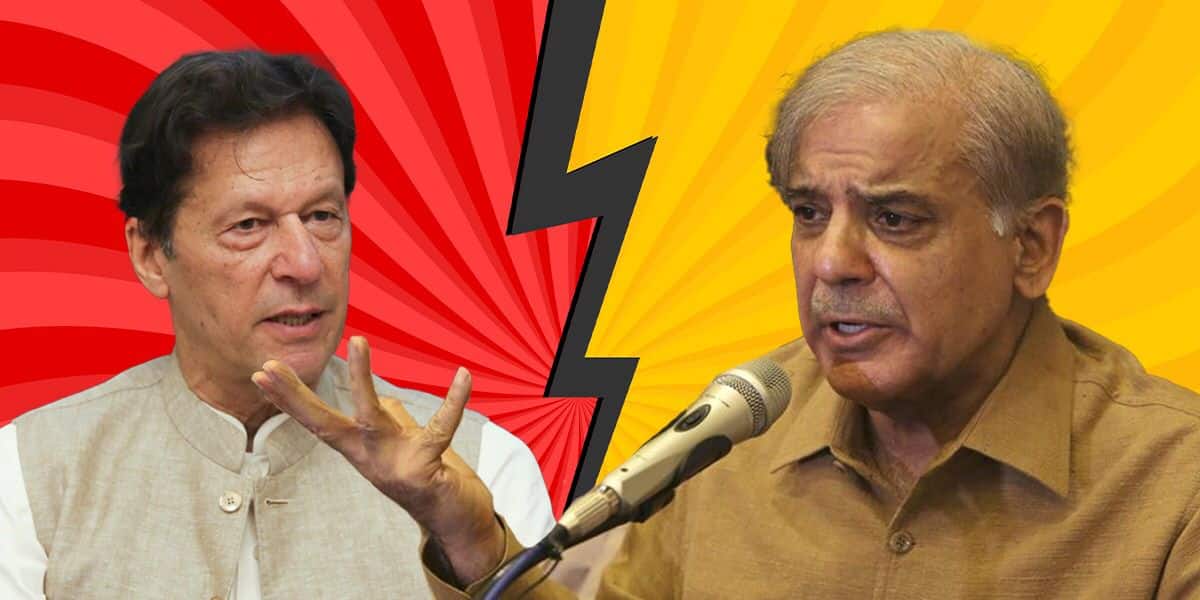
  • ‘A bigger enemy of Pakistan than Imran has not been born’: PM Shehbaz

    ‘A bigger enemy of Pakistan than Imran has not been born’: PM Shehbaz

    Prime Minister (PM) Shehbaz Sharif did not mince his words when talking about Pakistan Tehreek-e-insaf (PTI) Chairman Imran Khan.

    “Thank God Pakistan was saved from default. Imran Khan wanted Pakistan to become Sri Lanka. Look at his real face,” said the PM on Thursday. He stated that after the crucial International Monetary Fund (IMF) programme restarted for Pakistan, the country was able to stand back on its feet.

    “I was sitting in a meeting when the minister of finance gave me the news [of the IMF bailout package], so I told him in front of everyone that Pakistan was saved from default,” he said.

    “But at least we were saved from a default which is what Imran Khan wanted. A man who gets letters written just so that the IMF programme could fail […] tell me, is there a worse way to show hatred with the country?”

    Shehbaz Sharif was referring to Khyber Pakhtunkhwa Finance Minister Taimur Khan Jagra’s letter to the finance division, asserting that it had proven PTI chief’s intention to sabotage the country’s fate.

    Shehbaz went on to say that only thinks about himself and said, “Imran Khan kay sur par main sawar hon, aur uski apni main sawar hai tu Pakistan ka kya banay ga? [What will become of Pakistan if he only keeps thinking of himself?]”

    The premier further said that a bigger liar, cheater, deceiver and enemy of Pakistan than Imran Khan had never been born.

    The prime minister said that when he was in the opposition, Imran Khan conspired to send his members to jail, but they did not create a fuss. “Now everyone should look at Khan’s language.”

    PM Shehbaz said that the exemption for fuel adjustment charges (FAC) in August’s billing will apply to consumers who use under 300 units of electricity.

  • Pakistan to overcome $4 billion external financing gap soon: SBP

    Pakistan to overcome $4 billion external financing gap soon: SBP

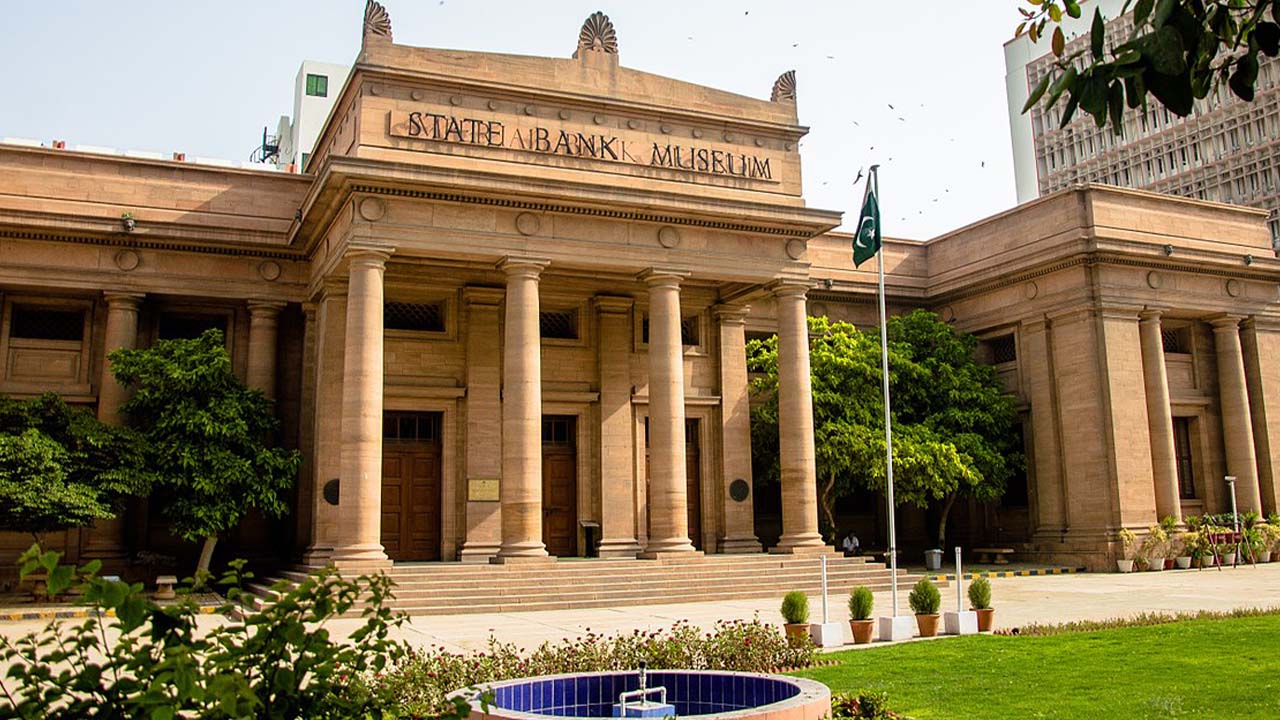
    In the midst of intense pressure on foreign currency reserves, Pakistan will soon close its $4 billion shortfall in external finance with the assistance of friendly nations under IMF conditions, according to Acting Governor of the State Bank of Pakistan (SBP) Dr Murtaza Syed.

    He also acknowledged that inflation will continue to be higher for the ensuing 11 to 12 months, which is why the central bank was aiming for an average inflation target of 18 to 20 per cent for the current fiscal year 2022–2023

    According to The News, acting SBP Governor Dr. Murtaza Syed stated that Pakistan has already met its gross external financing requirements of $34 to $35 billion.

    However, Islamabad is also attempting to secure confirmation of $4 billion in inflows from friendly nations like Saudi Arabia, the UAE, and Qatar. According to him, these extra dollar inflows will be used to boost foreign currency reserves and build a safety net in case of a crisis-like circumstance.

    He resisted providing a specific timeline but assured that the $4 billion finance deficit will be closed quickly. He argued that urgent attempts were being made by the government and IMF high-ups to secure confirmation from their respective nations.

    Denying that the scenario was similar to Sri Lanka, he praised Bangladesh and claimed that nation performed properly, chose to return to the IMF, and also increased utility costs while maintaining enough levels of foreign exchange reserves.

    Speaking of increasing inflation, he believed that supply interruptions abroad had set the way for a global super cycle of commodities, leaving Pakistan with no choice but to concentrate on agriculture productivity in order to secure food security.

    According to Murtaza Syed, people would have to deal with this challenging moment because there is no immediate magic wand to manage increased inflation. He said that while it is a challenging time, there is no alternative way to prevent the country from entering a more challenging situation if nothing was done.

    According to the official, the SBP has loosened the cash margin requirements for opening L/Cs for imports and offers incentives to individuals who do so. According to him, the IMF opposed trade restrictions and took action to prevent the depletion of foreign exchange reserves.

    The current pressure on foreign reserves is now anticipated to end within the next two months. He also promoted energy saving as a way to ease the burden of high import costs.

    The senior official believed that as long as the economy’s structural issues persisted, Pakistan will continue to see boom and bust cycles. He gave a recent example in which the nation’s GDP increased by 6 per cent, indicating that the overheating of the economy led to imbalances known as the budget deficit and current account deficit. Although a recession is not imminent, he continued, the economy must be managed carefully.

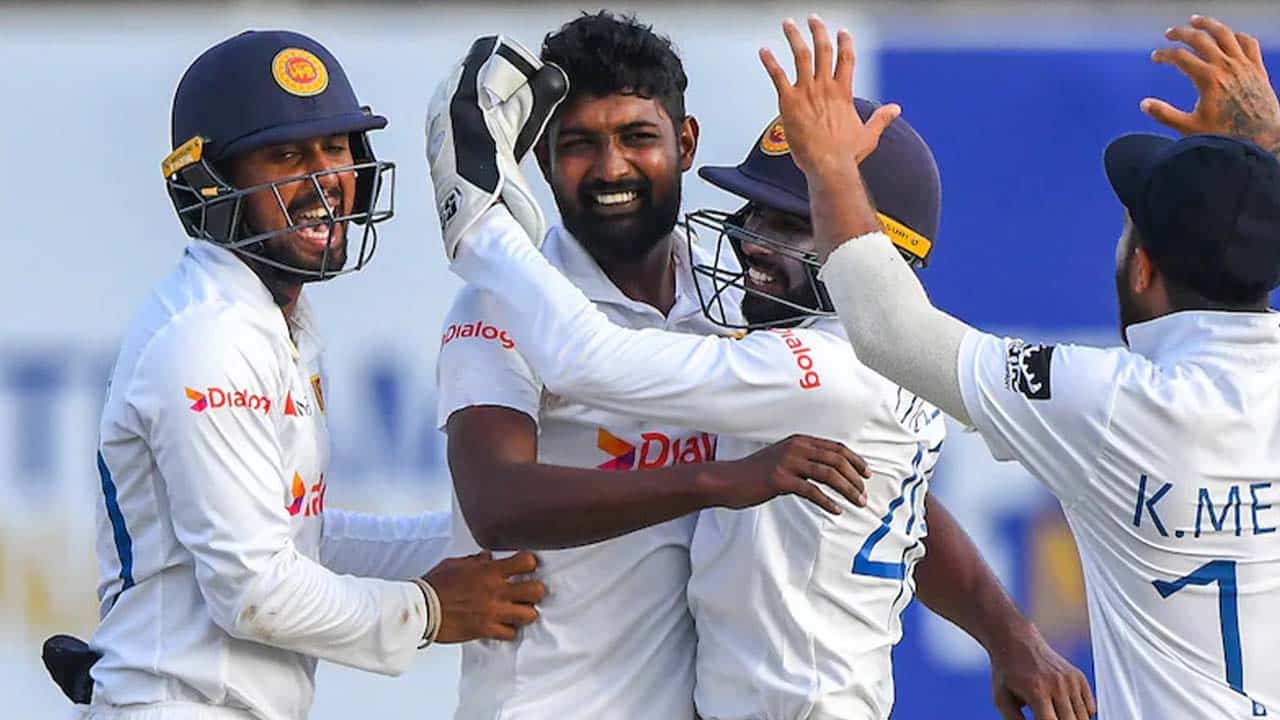
  • Sri Lanka defeats Pakistan in second Test to end the series 1-1

    Sri Lanka defeats Pakistan in second Test to end the series 1-1

    After losing the second Test match against Sri Lanka, Pakistan dropped to fifth place in the most recent World Test Championship points standings.

    Both sides won one match each in the two-Test series between the two countries, which has been entertaining. With a four-wicket victory in the first Test, Pakistan took a 1-0 lead in the series. By chasing 342, the visitors improved their hopes of competing in the World Test Championship final the following year, moving up to third place in the standings, while Sri Lanka fell to No. 6.

    After their victory over the Men in Green to tie the series, Sri Lanka rose from sixth to third place. Australia holds down the coveted second slot in the league while South Africa continues at the top.

    Pakistan’s heroics from the first Test were not repeated as they lost in the second innings despite attempting to reach a record-breaking 508-run mark. The Men in Green gave Sri Lanka a 147-run lead going into the second innings by being dismissed for 231 in their first innings.

    In the second innings, Sri Lanka made the most of their advantage by completely dominating Pakistan’s bowling attack. In the last innings, Pakistan was given a target of 508 after Dhananjaya de Silva’s brilliant century.

    Despite having a strong beginning to their innings, Pakistani hitters lost their way halfway through. Before Pakistan’s mini-collapse stopped them and secured a draw, captain Babar Azam produced yet another half-century. Sri Lanka destroyed the batsmen as they defeated their opponent by 246 runs.

  • Pakistani rupee falls to Rs233 per US dollar in the interbank market

    Pakistani rupee falls to Rs233 per US dollar in the interbank market

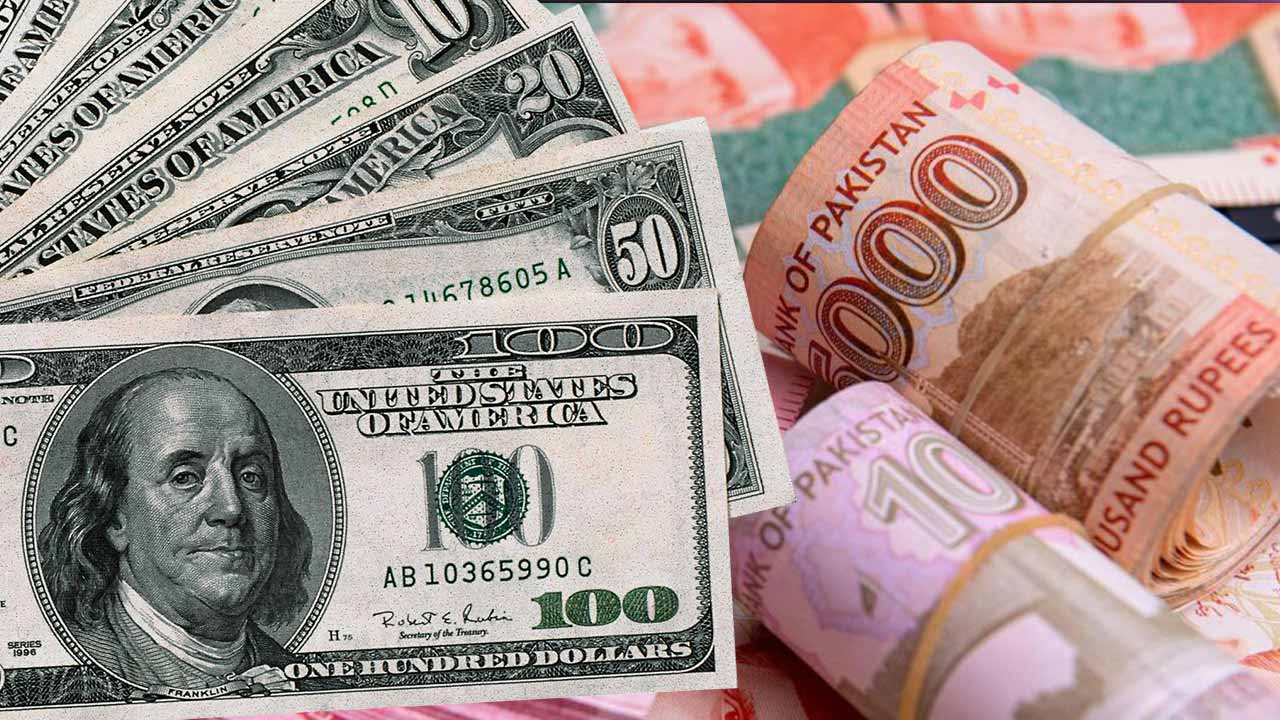
    The Pakistani rupee (PKR) continued to fall on Tuesday as the country’s political turmoil worsened, trading at Rs233 to the dollar in the interbank market.

    Today, the US dollar gained Rs3.12 versus the local currency, compared to the previous day’s finish of Rs229.88, which was an all-time high at the time.

    The local currency has been under pressure for the past week due to increased political tensions in the country following the July 17 by-elections in Punjab, which the PTI easily won. Also, the rupee has been one of the world’s worst performers, falling 30.2 per cent since the beginning of 2022.

    PKR had its worst week in more than two decades, ending on July 22, highlighting investor fear that a $1.2 billion loan tranche from the IMF approved last week could not be enough to alleviate the balance of payment crisis.

    Fears of Pakistan defaulting on its foreign repayments remain in the market, despite the central bank’s guarantee that the country would comfortably cover its funding obligations as long as an International Monetary Fund (IMF) loan programme remained in place.

    The rupee fell by nearly 8 per cent last week, the most in a single week since October 1998.

  • Not in a position of hosting Asia Cup 2022, says Sri Lanka Cricket

    Not in a position of hosting Asia Cup 2022, says Sri Lanka Cricket

    Amid the ongoing economic and political crisis, Sri Lanka has withdrawn from hosting the upcoming Asia Cup 2022. This news came after Sri Lanka decided to postpone the third edition of the Lankan Premier League (LPL).

    Sri Lanka Cricket (SLC) informed the Asian Cricket Council (ACC) about their decision that they are not in a position of hosting the Asia Cup because of the current political situation.

    The venue is yet to be decided. It could either be the United Arab Emirates (UAE) or any Asian country, including India.

    Sri Lanka will reportedly consult the UAE Cricket Board, requesting them to provide a venue to host the event. Sri Lanka Cricket will remain the official host of the Asia Cup, but the tournament is set to be played in Dubai and Sharjah between August 27 and September 11, according to ESPNcricinfo.

    The 2022 edition of the Asia Cup is scheduled to be a T20I tournament. Pakistan, India, Sri Lanka, Bangladesh, Afghanistan, and one other team from the qualifiers will be competing against each other in the T20 format at the Asia Cup 2022. UAE, Kuwait, Singapore, and Hong Kong will compete with each other in the qualifier rounds to get the spot as the sixth team in the tournament.

    Since 1984, 14 Asia Cups have taken place. India won the Asia Cup title seven times. Sri Lanka is second to India with five cups to their name while Pakistan has won this title two times.