Tag: Taliban

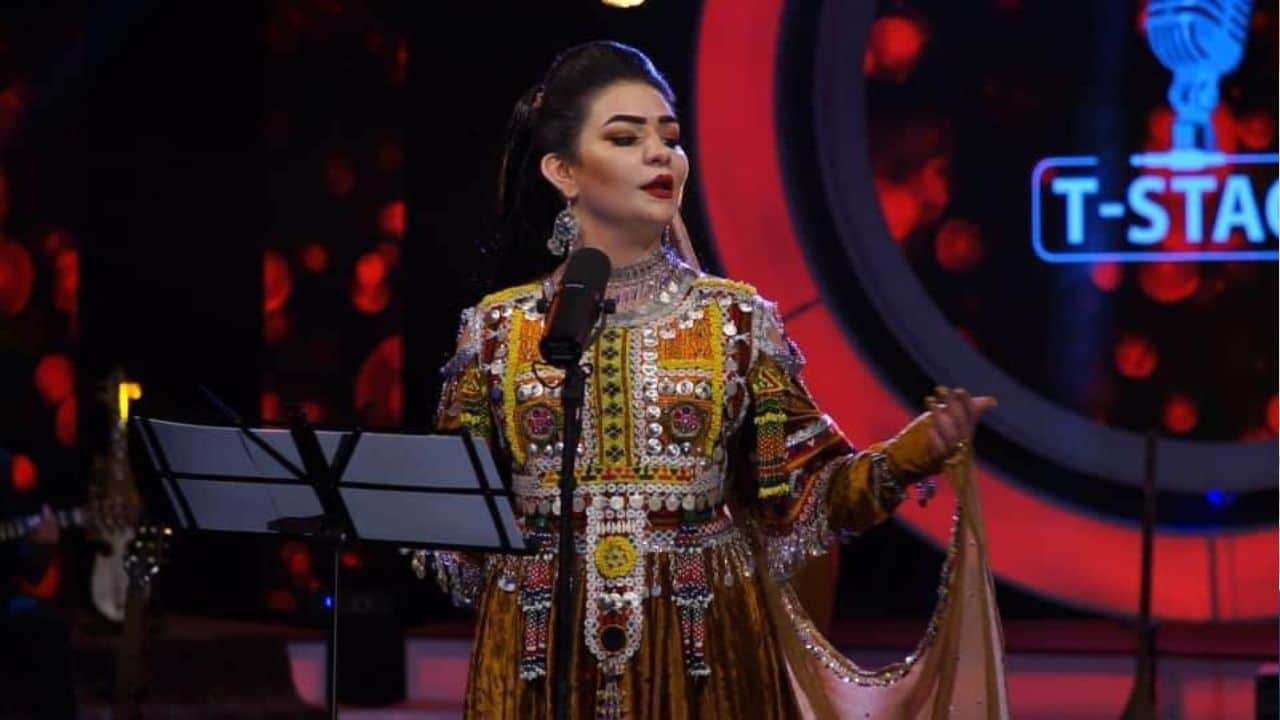
  • Factcheck: Is Afghan singer Hasiba Noori dead?

    Factcheck: Is Afghan singer Hasiba Noori dead?

    Claim: Afghan singer Hasiba Noori had been killed in Peshawar

    On Monday, social media was ablaze with news that Afghan singer Hasiba Noori had passed away in Pakistan under mysterious circumstances, having taken refuge here after the takeover of the Taliban in Afghanistan. Conflicting news reports emerged on social media where accounts said she had passed away in Peshawar, while others said that she had been killed in Quetta.

    A journalist, Izharullah, shut down rumors of Noori’s death in Peshawar, saying that there was no such information available with the police.

    However it was senior journalist Iftikhar Firdous who took to his Twitter account to say that the news was fake, and the Afghani singer is alive and well in Quetta.

    The Current spoke with Firdous on how he reached out to the Afghan singer, and he revealed that he had managed to get in touch with Noori after contacting at least 300 people for 12 hours. Firdous had a video call with Noori, which confirmed that his source was reliable and the news that she died was fake.

    On the viral picture of Noori’s alleged corpse lying in a hospital bed, Firdous revealed that it was taken after a surgery in Karachi, the singer had clarified.

    Currently, Noori is in Quetta, and has informed Firdous that she will post a video to squash these rumors.

    The claim is false.

    The singer also shared a video on her TikTok account to silence the rumors.

  • Taliban praises Twitter’s freedom of speech and credibility amidst Threads launch

    Taliban praises Twitter’s freedom of speech and credibility amidst Threads launch

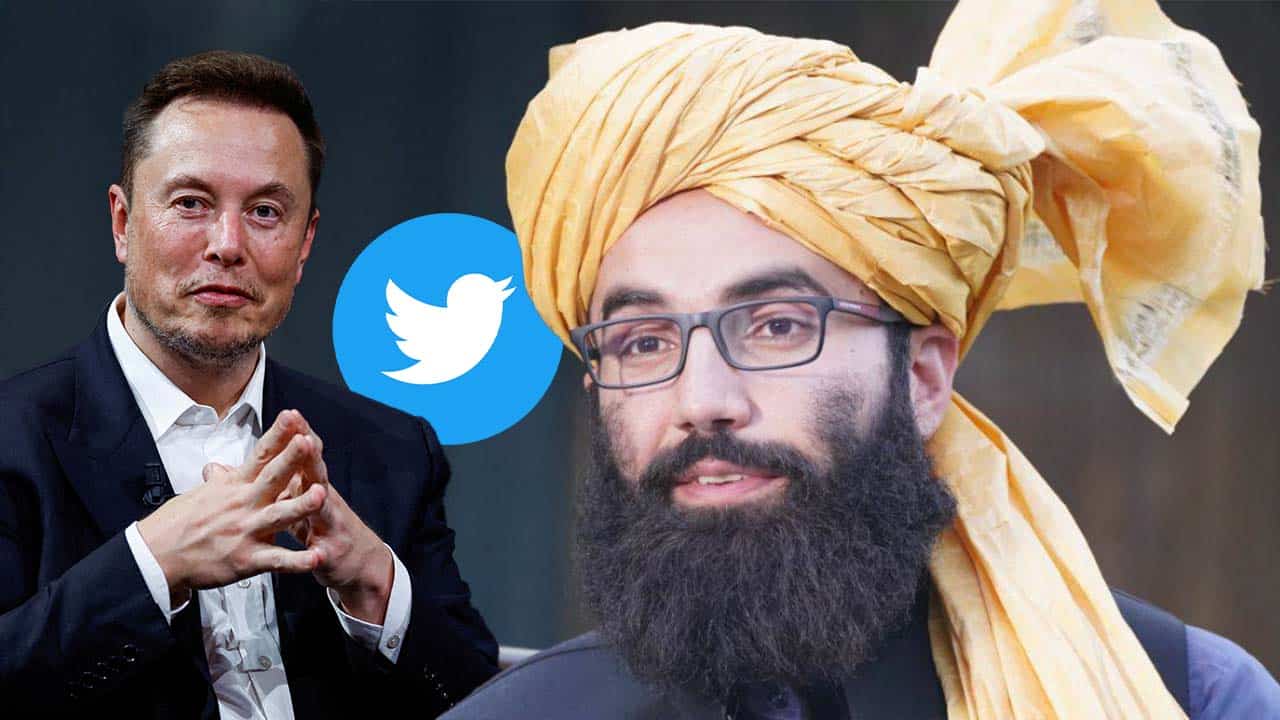
    Twitter’s challenges in attracting advertisers, maintaining site functionality, and retaining users have been widely discussed. However, amidst these struggles, an unexpected endorsement has emerged from an unlikely source—the Taliban. Anas Haqqani, a prominent figure within the Taliban, recently expressed his appreciation for Twitter in light of Meta’s Threads, a rival platform that gained over 100 million users within a few days of its launch.

    Haqqani, in justifying his decision to remain active on Twitter, highlighted two key advantages the platform offered. “The first privilege is the freedom of speech,” he stated. “The second privilege is the public nature & credibility of Twitter. Twitter doesn’t have an intolerant policy like Meta. Other platforms cannot replace it.”

    Meta, the parent company of Threads, has made it clear that the new platform will adhere to the same content guidelines as its sister app, Instagram. This includes a stipulation that explicitly prohibits support or praise for terrorism, organised crime, or hate groups.

    Elon Musk’s involvement in Twitter’s operations has been marked by a series of seemingly arbitrary policy decisions, the loosening of moderation guidelines and enforcement capabilities, resulting in chaotic circumstances, and a focus on prioritising paying users. Under Musk’s leadership, instances of hate speech have surged, and ad sales for the platform have experienced a significant decline of 59% since the previous year.

    It is difficult to argue that having members of the Taliban celebrate the extent to which they can exploit the platform does not present a compelling case for potential ad buyers. Twitter, grappling with these challenges, must now confront the task of restoring confidence in its ability to provide a safe and appealing environment for both users and advertisers alike.

  • Taliban refuse to let women work and go to school

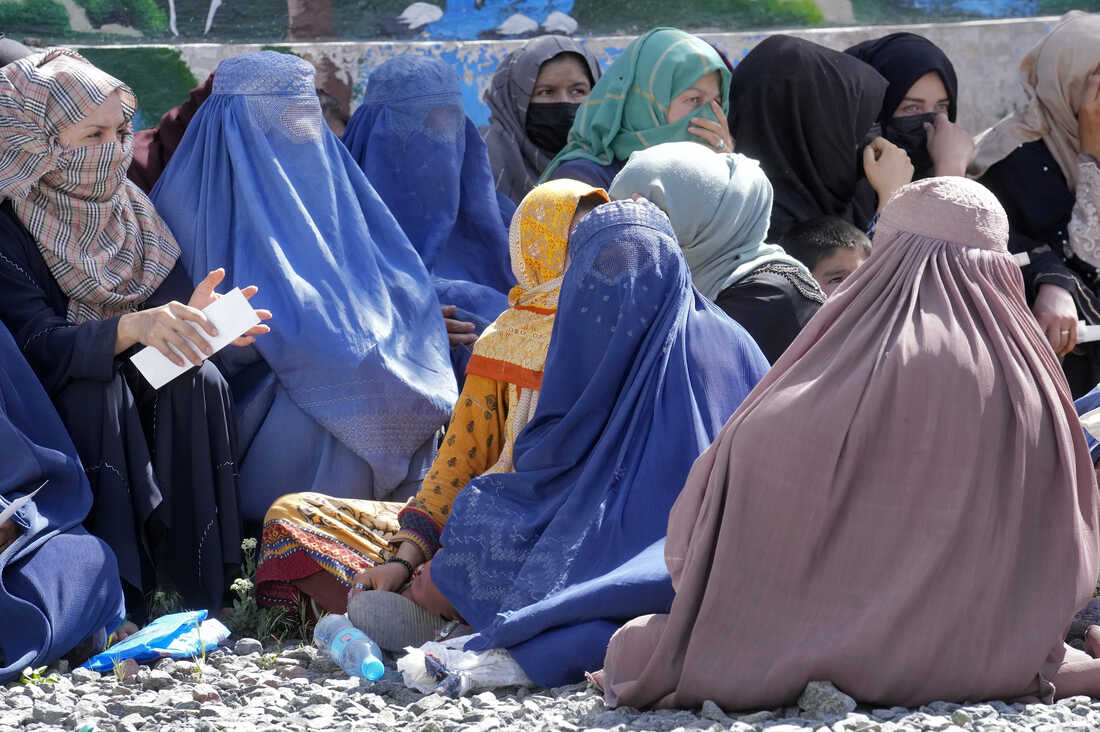
    Afghan Taliban have once again rejected international calls to lift the ban they imposed on women’s work and education, after the United Nations sanctions committee concluded in Doha without formally recognising the administration in Afghanistan.

    Suhail Shaheen, head of the Taliban political office in Doha pointed out that the meeting’s decisions cannot be accepted or implemented when the government in Afghanistan is not part of the process.

    In a meeting where over 20 countries’ representatives were present, the Taliban administration was not invited.

    When asked by a journalist if there will ever be a situation when he will meet the Taliban directly, UN Chief António Guterres said: “If the time is right, I will not deny the possibility.”

    Afghan Foreign Minister (FM) Amir Khan Muttaqi will reportedly visit Pakistan in a couple of days.

  • TTP uses US weapons left behind in Afghanistan for terrorism in Pakistan, claims report

    TTP uses US weapons left behind in Afghanistan for terrorism in Pakistan, claims report

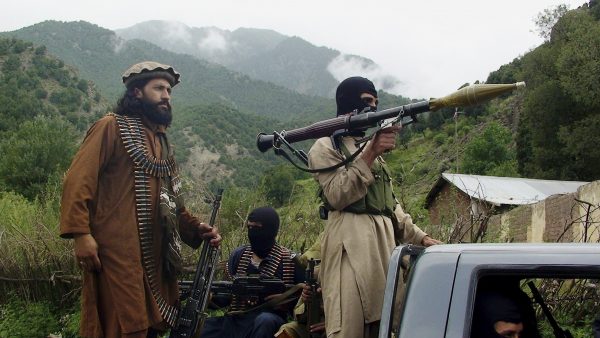
    Military weapons worth $7 billion that were left behind by the United States (US) after its exit from Afghanistan are being used by banned Tehreek-e-Taliban Pakistan (TTP) and Baloch separatist groups for terrorism in Pakistan, claimed a report by Radio Free Europe.

    The report said that the US left behind firearms, communications gear and armored vehicles which gave the militants a “vast war chest”.

    The Taliban government has rejected claims that it has supplied TTP fighters with US weapons and equipment, however, the report stands contrary to their assertion.

    Abdul Sayed, a Sweden-based researcher who tracks the TTP, said the group’s access to sophisticated combat weapons has had a “terrifying” impact, especially on the lesser-equipped police force in Pakistan.

    Since government talks with the TTP broke down in November, the militant group has intensified its attacks across Pakistan including attacks on the police.

    According to statistics released by the Pakistan Institute for Conflict and Security Studies (PICSS), January 2023 remained one of the deadliest months for terrorism since July 2018.

  • Taliban shut down women-run radio station for ‘playing music’ during Ramzan

    Taliban shut down women-run radio station for ‘playing music’ during Ramzan

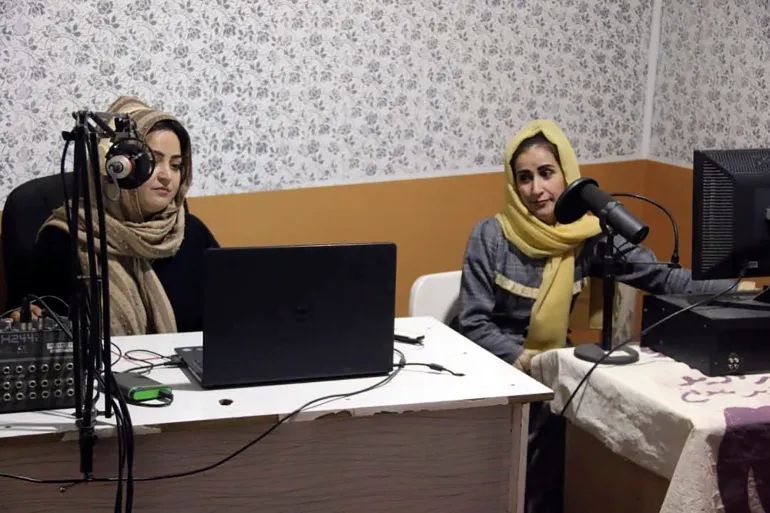
    Taliban have shut down a women-run radio station in Afghanistan for playing music in the month of Ramzan.

    The radio station named ‘Sadai Banowan’ employed eight staff members, six of them female.

    The women-run radio station was started 10 years ago.

    According to Moezuddin Ahmadi, the director for Information and Culture in Badakhshan province, the station was shut down for repeatedly violating “laws and regulations of the Islamic Emirate”.

    “If this radio station accepts the policy of the Islamic Emirate of Afghanistan and gives a guarantee that it will not repeat such a thing again, we will allow it to operate again,” he added.


    However, station head Najia Sorosh has denied any violation, calling it a ‘conspiracy’.
    The Taliban “told us that you have broadcast music. We have not broadcast any kind of music,” she said.

  • ‘Moved from a small jail to a bigger one’: Asia Bibi reveals hardships, poverty in exile

    Asia Bibi has given her first interview since 2020 to New Lines Magazine. She left for Canada in 2019 after being acquitted by the Supreme Court of Pakistan in a false blasphemy case that led to a death sentence.

    Ailia Zehra writes that despite claims from right-wing groups that Bibi received funding from anti-Pakistani groups to live a comfortable lifestyle in Canada, the truth is far from it.

    Bibi was a farm labourer residing in the Nankana Sahib district in Punjab. In 2010, she was arrested under the blasphemy laws after an argument with her Muslim neighbours. In 2010, she was arrested and sentenced to death by a judge in Sheikhupura, while the verdict was upheld by the Lahore High Court.

    Local politicians like Salmaan Taseer, who was then the Governor of Punjab, and Shahbaz Bhatti, who was the Federal Minister for Minority Affairs and also a Christian, had condemned this arrest. Both were outspoken critics of the blasphemy law and vowed to release Bibi from prison. However, Taseer was shot dead by his bodyguard in 2011, while Bhatti was also assassinated the same year by the Pakistani Taliban.

    In 2018 when Bibi was cleared of blasphemy charges by the Supreme Court of Pakistan, Bibi was kept under protective custody for six months and then flown to Canada in secret where she reunited with her husband and two daughters.

    However, in this interview Bibi reveals that despite getting international support from organizations for her release, since her arrival in Canada she had not received financial support for her ailing husband and two disabled daughters. She works 14 hours a day at a menial job which is not able to cover her expenses. Her health is deteriorating because of a joint ailment.

    Bibi said that she was not able to bring her other three children with her. Her husband is unemployed and needs heavy medication without which he could get extremely sick. Bibi also got teary-eyed by opening up about not being able to visit her parents, as her mother passed away while she was in prison and her father is still in Pakistan.

    “My biggest sorrow is that I could not get to meet my father before coming to Canada. I will carry this grief in my heart for the rest of my life,” she said.

    Bibi also disclosed that there are no organizations to reach out to in order to get her children currently in Pakistan back to her, because the support she was offered at the time of her departure was limited.

    Since the three years Bibi and her family have been staying in Canada, she confessed that it has been incredibly hard to adjust to a new lifestyle because of the cultural and language barriers, especially the limited support from Pakistani authorities:

    “My husband and I are illiterate,” she confessed. “Our children could not get an education either. You could imagine how hard it would be for someone like us.”

    The article explained that although there are many government programs that provide facilities for refugees like Asia and her family, going through the process is over whelming as Bibi was not used to carrying out such procedures. On whether the Pakistani Consulate in Canada had reached out to help with facilities, Bibi said she couldn’t expect them to support her as she is still regarded as a criminal in Pakistan with extremist groups still targeting Christian communities:

    “Tehreek-e-Labbaik was asking the government to kill me,” Bibi said. “Under such circumstances, how can the government offer me support?”

    Although there was an outpouring of international support, after her escape to Canada media attention faded away and left her with little support to fend for herself and her family:

    “Many individuals who used my name to make money have also forgotten me…After my release, I felt like I had been moved from a small jail to a bigger one. During the six months I spent in protective custody, I feared I would be killed or sent back to jail.”
  • Kaproon say accent tak: leave Malala alone

    Kaproon say accent tak: leave Malala alone

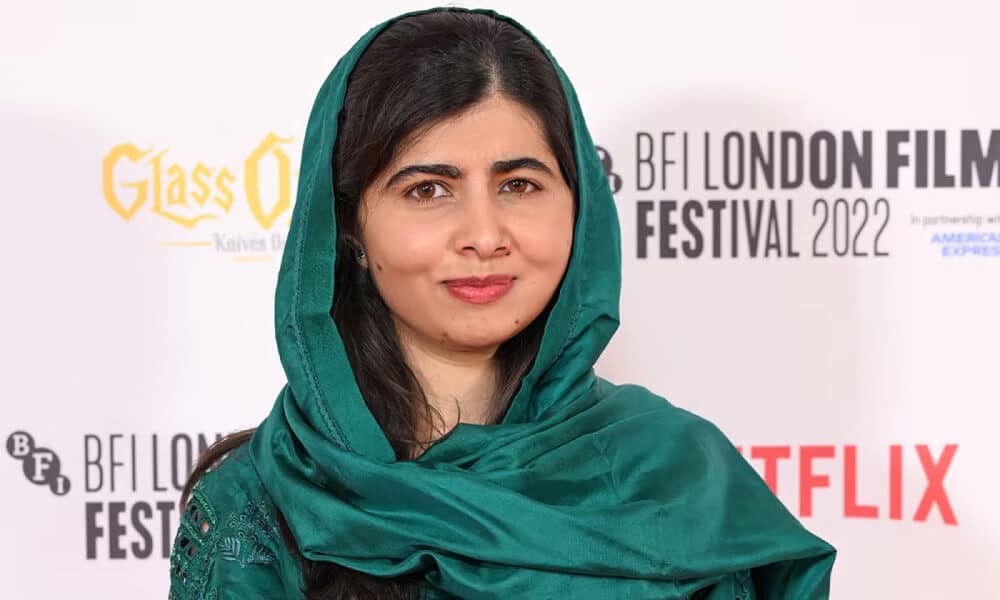
    Malala has managed to become an irreplaceable part of national discourse. She hasn’t said anything controversial aside from speaking up on causes close to her heart – gender activism and education – yet the women-hating awaam loves nit-picking every bit of her existence and somehow escalating it to the point that it becomes an emergency national topic. If she laughs too much, shame. Did she say she doesn’t want to get married? Lanat behjo. Malala was spotted celebrating Holi with her friends? Publicly shame her.

    Once again without even lifting a finger, Malala was dragged into the public spotlight over the most simple thing: her accent. A video on Twitter went viral where she was seen speaking to a host at the Oscars, and in the caption a user was mocking the Noble Prize activist for having lived in Britain all this time, but still having a Pakistani accent.


    Behen ji, would you have not criticised her had she spoken in a British accent? Had she shown up wearing a sleeveless gown and no hijab, would Pakistanis hold back for a second to label her as a traitor, bane of our existence and the reason why women in this country have gone astray? And when did speaking in a fluent British accent become one of the ways to judge aNoble Prize winner? It certainly never has held her back.

    Putting aside the obvious racism that is reeking from this comment, when was the last time the public didn’t drag Malala? If she chooses not to get married: she’s a traitor who is challenging Pakistani values. When she did get married: she betrayed feminist values. Why can’t she ever win with Pakistanis?

    Because the simple truth to the entire matter is that our ever firmly anti-woman Bannistan considers hunting famous women a beloved public sport. And Malala is simply forced to bear the brunt of misogynist and racist jokes because she managed to overcome the dead woman trope and is living a complete and happy life in Britain with the rest of her family. When she was fourteen years old, Malala had been shot by the Taliban when she stood up to their regressive stance against girl’s education, and soon had to leave for Britain with the rest of her family because of the death threats she was being sent. Had she not survived this tragedy and had passed away, the country would have declared they are holding ‘Malala Day’ once a year and moaned about how she could have become something had there been a chance, and then moved on to hunting the next famous woman out there.

    Malala’s biggest crime isn’t the fact that she wore jeans or got married or even spoke in a Pakistani accent: it’s the fact that she is thriving despite the most powerful forces out there trying their best to take her down. Whether it was the Taliban, or the brutal treatment of Pakistani awaam, we have heard tragedies on a daily basis of the numerous women and girls who lost their lives and their dreams to these two forces. Malala happened to succeed in defeating them, and living peacefully abroad with her goals still intact and remaining cheerful as ever is what irks us so much.

    So please, for the love of Allah. We’re on our knees here. Stop obsessing over Malala so much. She won’t give up on doing what she loves, regardless of how much you beg her to do so. Divert the nitpicking to issues like climate change, poverty and political instability. Trust us, its a much more worthy way to waste your time.

  • Divorced women fear imprisonment under Taliban regime

    The Taliban regime in Afghanistan has modified divorce laws, now requiring both parties, husband and wife, to be present in court in order to get a divorce.

    Under the previous Afghan government, women were granted the right to get ‘one-sided divorces’ in order to help them escape abusive marriages, according to The Washington Post.


    Women could testify about suffering abuse at the hands of their husband, even if he had refused to make an appearance in court.


    The Post clarified that the Taliban had not commented on ‘one-sided divorces’ being nulled or whether a woman can be married after gaining a divorce in such a manner. However, Taliban spokesperson Zabihullah Mujahid has said that both parties must appear before a judge to request a divorce under the Taliban’s interpretation of Islamic law.

    Under the Taliban regime, it has become more difficult for women to seek refuge after escaping an abusive marriage. A psychologist told The Post that local aid groups providing counselling and relief to abused women have been shut down. She also elaborated that under the new law, it has become more difficult to prove domestic violence.


    “Under the new law, women need to first go to the police station and provide multiple witnesses to prove abuse or if their husband is addicted to drugs,” she said.


    Women face more problems to find legal counseling as the Taliban have banned women from working as lawyers and judges. A lawyer speaking to the Post revealed that more women will find it harder to leave their abusive marriages if they cannot find proper legal representation to help them escape domestic violence:


    “The Taliban have created the perfect situation for men seeking revenge. The courts have lost their effectiveness and instead we see on the news women receiving [public] lashings for adultery.”

    Previously the Taliban regime caused international outcry after enforcing a policies that restricted women’s movement. Women were banned from attending high school and college, couldn’t travel anywhere without a male guardian and were restricted from attending parks, fairs or gyms.

    The United Nations received a report on the state of human rights in Afghanistan, which had criticized the Taliban regime for pursuing a policy ‘tantamount to gender apartheid’.

  • Military, civilian leadership has put full stop on Khan’s appeasement policy on terrorists: Bilawal

    Military, civilian leadership has put full stop on Khan’s appeasement policy on terrorists: Bilawal

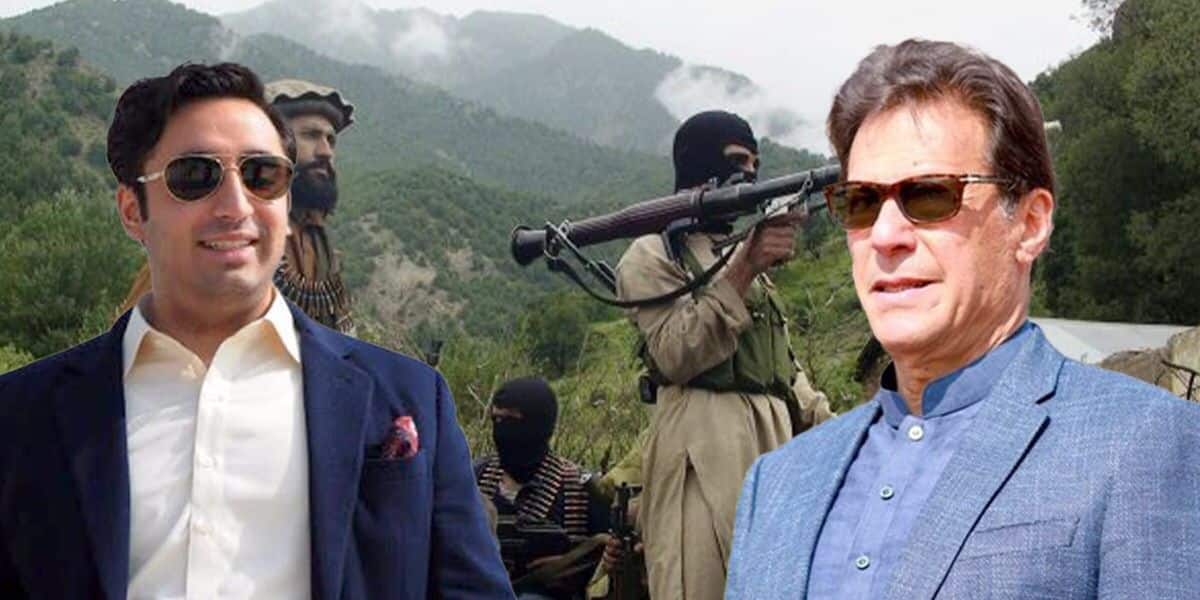
    Foreign Minister Bilawal Bhutto-Zardari has said that negotiating with those people who don’t accept Pakistan and its constitution is not in favour of the country or it’s people.

    In an interview with German broadcaster DW Urdu, the foreign minister said that the previous government was asking the interim Afghan government to facilitate reconciliation with the Tehreek-e-Taliban Pakistan (TTP) and had plans to resettle the militants in Pakistan.

    “Every Pakistani was saying that terrorists who were involved in heinous attacks such as the Army Public School massacre could never be our friends”, said Bilawal.

    Earlier in an interview with CNBC, Bilawal said, “Unfortunately, following the fall of Kabul, the government that preceded ours started negotiating with these very same terrorist groups and without preconditions such as disarming.”

    The foreign minister said that the Pakistan Democratic Movement (PDM) coalition government and military leadership have “put a full stop to the policy of appeasement”.

    Citing the porous border with Afghanistan, the Foreign Minister said that the new government doesn’t have the capacity to man it.

    “We are confident that we’ll be able to take on the terrorist groups that are functioning within Pakistan,” he said.

    Discussing Pakistan Tehreek-e-Insaf (PTI) Chairman Imran Khan, Bilawal said that if he strives to pursue a democratic path and commits to play a constitutional role, he can have a future, adding that Khan’s ouster through a vote of no-confidence motion was the first time parliament removed a prime minister in a democratic way.

    However, since his ouster, Khan has been asking the army for help in getting back to power, the foreign minister alleged.

     “If the military says it wants to change its controversial conduct constitutionally, it should be welcomed.”

    While responding to a question regarding the statement about Pakistan’s bankruptcy made by Defence Minister Khawaja Asif, Bilawal said: “He was talking in a political context at a political gathering and he was referring to the harsh economic times rather than speaking technically. He was talking in the overall context of the country.”

  • US restricts visa for Taliban for anti-women policies

    US restricts visa for Taliban for anti-women policies

    United States (US) Secretary of State Antony Blinken announced new visa restrictions against the Taliban on Wednesday in response to the Afghan administration’s prohibitions on women’s employment and education.


    “I am taking action today to impose additional visa restrictions on certain current or former Taliban members, members of non-state security groups, and other individuals believed to be responsible for, or complicit in, repressing women and girls in Afghanistan,” Blinken said in a statement.


    The Taliban have put several limitations on Afghan women since regaining power in August 2021, including prohibiting them from holding public office, going to secondary and higher education institutions, or visiting parks.


    They forbade NGOs from working with Afghan women towards the end of December, causing a number of organisations to halt their operations.