Tag: terrorism

  • Polish deputy PM hits out at India after Jaishankar criticises his Pakistan visit

    Polish deputy PM hits out at India after Jaishankar criticises his Pakistan visit

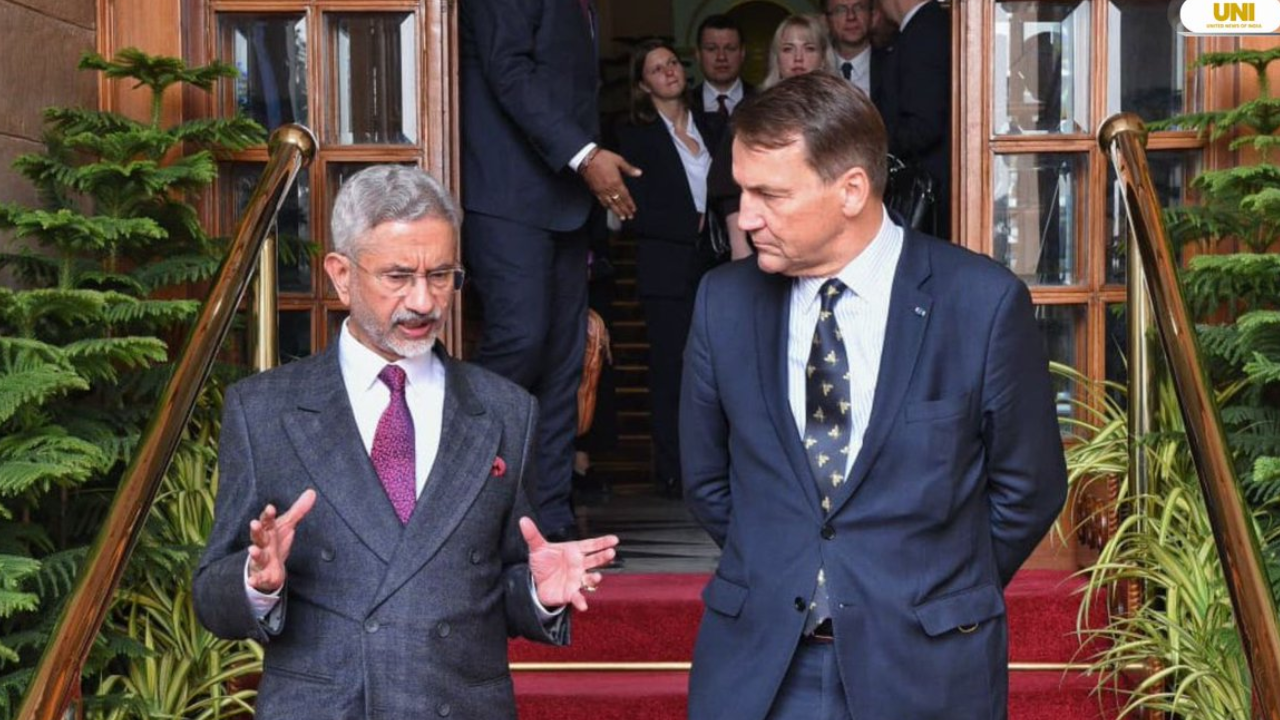
    Polish Deputy Prime Minister Radoslaw Sikorski has said that discussions with India on regional issues were “frank”, while raising concerns over New Delhi’s participation in military exercises with Russia, following Indian External Affairs Minister S. Jaishankar’s remarks linking Pakistan to terrorism.

    Speaking to reporters after talks with Jaishankar in New Delhi on January 19, 2026, Sikorski said India and Poland were of “one mind” on terrorism but added that India’s participation in the “Zapad-2025” military exercises in Russia was viewed as “threatening”.

    “We all have regional concerns and we all have neighbours, and with neighbours you have opportunities and challenges,” Sikorski said. “We also have concerns. India took part in the Zapad exercises in Russia that we find threatening.”

    The exchange followed Jaishankar’s comments during the meeting, where he referred to Poland’s engagement with Pakistan and urged Poland not to help “fuel terrorist infrastructure” in India’s neighbourhood.

    In televised opening remarks at Hyderabad House, Jaishankar said he wished to “discuss some of Mr. Sikorski’s recent travels to the region”, a reference to the Polish foreign minister’s visit to Pakistan in October 2025, during which he met Pakistan’s senior leadership.|

    The Indian minister’s remarks on Pakistan had earlier triggered a reaction among Pakistani social media users after a video of the comments circulated online. In the clip, Jaishankar told Sikorski that Poland was “no stranger to our region” and called on it to “display zero tolerance for terrorism”.

    The remarks came in the context of Pakistan–Poland discussions held in October 2025, where both sides had stressed the importance of resolving conflicts peacefully in accordance with international law and the United Nations Charter.

    Following the circulation of the video, Pakistani users criticised India’s position. One user wrote, “Lol, what does India think it is? A superpower or economic power or some shit so it thinks it can dictate the world?” Another said, “India can not dictate world and their governments on their foreign policy.”

    Other users questioned whether similar language would be used towards the United States, while some accused India of attempting to influence the foreign policy decisions of other countries and alleged that Jaishankar routinely makes statements directed at Pakistan.
  • ISPR chief links KP terrorism to ‘political-criminal-terror nexus’

    ISPR chief links KP terrorism to ‘political-criminal-terror nexus’

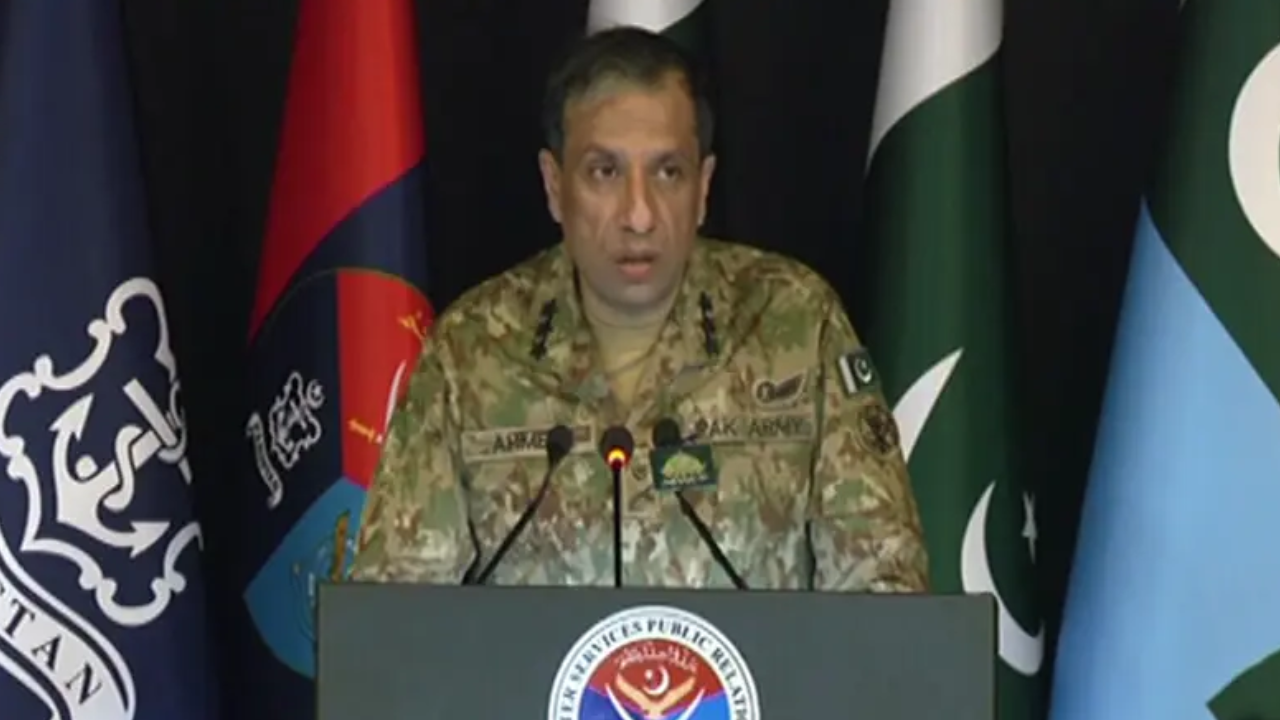
    Director-General of the Inter-Services Public Relations (ISPR), Lieutenant General Ahmed Sharif Chaudhry, on Tuesday said that Khyber Pakhtunkhwa remained the worst terrorism-affected province, linking the trend to what he described as a “political-criminal-terror nexus”.

    Addressing a press conference to brief the media on the country’s security situation, the ISPR chief said 71 percent of terrorist incidents reported in 2025 occurred in Khyber Pakhtunkhwa.

    “The primary reason for this is a politically conducive environment and the flourishing political-criminal-terror nexus which is flourishing there,” he said.

    Videos of Sohail Afridi were played during the briefing. Responding to statements by the Khyber Pakhtunkhwa government that military operations were not the solution, Lt Gen Ahmed Sharif Chaudhry questioned the alternative being proposed.

    “Then what is the solution?” he said, while reiterating that the prevailing political environment in the province had enabled militant networks to operate.

    In his opening remarks, Lt Gen Chaudhry said the purpose of the briefing was to provide a detailed overview of counterterrorism measures taken over the past year, which he termed a “landmark and consequential year” in the fight against terrorism.

    Sharing data on counterterrorism operations, the ISPR chief said law enforcement agencies conducted 75,175 Intelligence-Based Operations (IBOs) across the country in 2025. Of these, 14,658 were carried out in Khyber Pakhtunkhwa, 58,778 in Balochistan, while 1,739 operations were conducted in other parts of the country.

    He said a total of 5,397 terrorism incidents were reported nationwide during the year. According to the breakdown shared at the briefing, 3,811 incidents occurred in Khyber Pakhtunkhwa, 1,557 in Balochistan, and 29 incidents were reported from the rest of the country.
    Lt Gen Chaudhry said 2,597 terrorists were killed during counterterrorism operations over the past year.

    Video confessions of arrested militants were shown during the presser. 

    Referring to the Jaffar Express attack, the ISPR chief said 21 civilians were martyred and added that the incident would not fade from public memory. He also cited an attack on a civilian bus in Noshki and said an assault on the Frontier Corps headquarters in Quetta resulted in the martyrdom of eight civilians.

    .

    “This is a war of the nation, a war of every single child,” he said, rejecting a narrative that frames counterterrorism as solely the military’s responsibility.

    “A narrative is built suggesting this is the army’s war. This is not true,” he added.

    Addressing relations with Afghanistan, the ISPR chief said Pakistani border posts had come under attack by the Afghan Taliban regime, after which “whatever was needed was done, and a hard message was given”.

    “Afghanistan has become the centre of terrorist operations in the region,” he said.

    He said the Afghan Taliban regime had found a “new hero” in Indian Prime Minister Narendra Modi and added that the nexus between Fitna al-Khawarij and India became fully exposed in 2025.

    “If Afghanistan and India wish to confront Pakistan, they are welcome to do so,” he said, adding, “We will fulfill their desire.”

    Lt Gen Chaudhry said Pakistan had targeted terrorists along the Afghan border in October 2025 and that “dozens of Afghan posts were eliminated within hours”.

    Recalling the 2020 Doha agreement, he said the Afghan Taliban had assured that terrorism would not be allowed to operate from Afghan soil, adding that Afghanistan remained a base for Fitna al-Khawarij and Fitna al-Hindustan.

    “All terrorist organisations are based in Afghanistan and are being nurtured there,” he said.

    The ISPR chief also rejected claims that the Pakistan Army uses drones during counterterrorism operations, saying armed quadcopters were first used by Fitna al-Khawarij and the TTP.

    He said India provides support to these groups and that a dedicated militant wing operates armed quadcopters for attacks. According to him, militants use mosques, public places, and residential homes, and deploy women and children as human shields.

  • Pakistan sees 34 percent rise in terror attacks in 2025

    Pakistan sees 34 percent rise in terror attacks in 2025

    According to Pak Institute for Peace Studies, Islamabad (PIPS), Pakistan saw a significant rise in terrorist activity in 2025 despite record militant deaths, with attacks rising by 34 percent and fatalities by 21 percent. 

    At least 1,034 people were killed and 1,366 injured in 699 attacks that tore through towns, villages, and security checkpoints across the nation. 

    Of these deaths, 354 were civilians deaths highlighting the front-line nature of the conflict, while security forces bore the heaviest burden, with 437 soldiers martyred. 


    The burden of this violence fell heavily on security and law-enforcement personnel, who accounted for over 42 percent of all terrorism-related fatalities. 

    Meanwhile, 243 militants were killed, either in suicide attacks that they carried out or during retaliatory strikes by security forces. 

    The conflict remained intensely regionalised, with over 95 percent of attacks concentrated in Khyber Pakhtunkhwa (KP) and Balochistan.

    Violence remained concentrated in Khyber Pakhtunkhwa and Balochistan, accounting for over 95 percent of the attacks. KP alone recorded 413 attacks, a 40 percent rise, driven by the banned Tehreek-i-Taliban Pakistan (TTP) and its affiliates. 

    The province endured not only more frequent attacks but increasingly complex assaults, including a coordinated wave across 11 districts on Independence Day, symbolically challenging state authority. 

    In Balochistan, militants shifted from hit-and-run raids to high-impact operations, targeting highways, economic infrastructure, and state symbols. 

    The province saw 254 attacks, resulting in 419 deaths and 607 injuries, as groups like the Balochistan Liberation Army (BLA) and Balochistan Liberation Front (BLF) sought to amplify their political message.

    Sindh recorded 21 terrorist attacks, including 16 in Karachi, two in Shikarpur, and one each in Hyderabad, Jacobabad, and Jamshoro, leaving 14 dead and 17 injured. 

    Punjab saw seven attacks, killing five people including four militants and one policeman and injuring two policemen. 

    A suicide blast outside the judicial complex housing Islamabad district and sessions courts killed 12 people, claimed by Jamaatul Ahrar, a faction of the banned TTP. 

    In Gilgit-Baltistan (GB), three attacks were reported, claiming the lives of three security personnel, including two Scouts and one Frontier Corps official, and injuring six others.

  • Militants kill nine Punjabi passengers in Balochistan

    Militants kill nine Punjabi passengers in Balochistan

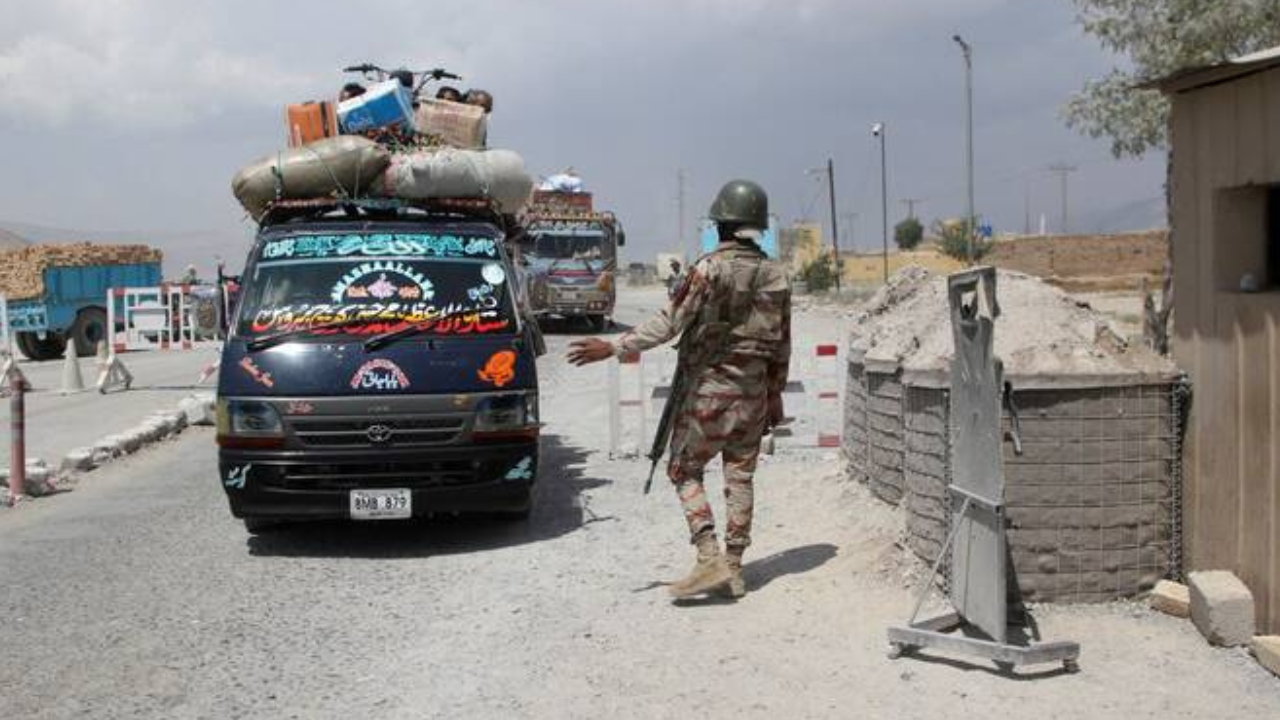
    Nine people travelling from Balochistan to Punjab were kidnapped and murdered on Thursday night after armed assailants stopped two coaches in the Sarha Dakai region, located along the national highway between Loralai and Musakhel in Balochistan. The attackers reportedly checked the passengers’ identification cards and forcibly took them away at gunpoint.

    According to Loralai Division Commissioner Saadat Hussain, the armed men approached the buses and forcibly abducted ten passengers after verifying their identities. One survivor told the Levies Force that gunfire was heard following the abductions. The law enforcement agency later discovered nine bodies in a nearby mountainous region during their search operation.

    The Balochistan government stated that the assault was carried out by terrorists belonging to Indian proxy Fitna-e-Hindustan. Provincial spokesperson Shahid Rind indicated that the same group had been involved in coordinated attacks in Mastung, Kakat, and Sarha Dakai.

    The deceased belonged to cities in Punjab: Irfan from Dera Ghazi Khan, Sabir Hussain from Kamoke, Asif Sultan from Chok Qureshi, Ghulam Saeed from Khanewal, Junaid from Lahore, Bilal from Attock, Bilawal from Gujrat, and another man from Dunyapur, Lodhran, who was traveling to attend his father’s funeral.

    Their bodies were transferred to Rakhni and subsequently delivered to Punjab officials at the Bawata border. Deputy Commissioner Muhammad Usman and Commandant Asad Chandia were present to receive them. Following directives from Punjab Chief Minister Maryam Nawaz, the bodies were sent to their hometowns, with district officials designated to facilitate the transfers.

    The Balochistan Liberation Front, a prohibited separatist organisation, subsequently took responsibility for the murders. A spokesperson for the group stated that the roadway connecting Musakhail-Makhtar and Khajuri had been obstructed for the operation.

  • Students ‘inciting violence’ can face cancellation of their identity cards, passports

    Students ‘inciting violence’ can face cancellation of their identity cards, passports

    The Interior Ministry has announced that strict measures will be taken against students involved in or promoting violent activities, including their names being added to the Fourth Schedule.

    According to Section 11EE of the ATA, the Fourth Schedule is to include “any person who is an activist, office-bearer or an associate of an organisation kept under observation … or proscribed … or … affiliated with any group or organisation suspected to be involved in terrorism or sectarianism.”

    If an individual’s name is added to the Fourth Schedule, many of his/her constitutional rights are suspended, such as the cancellation of the identity cards and passports, prohibition from leaving their city, and denial of character certificates from any educational institution.

    The notification issued by the Interior Ministry emphasised that departments should be ready for action against potential troublemakers, The News reported.

    Last week, Pakistan Tehreek-e-Insaf (PTI) announced that it would launch a movement for the restoration of the Constitution and revival of the student unions in the country.

  • 2,080 police personnel martyred in Khyber Pakhtunkhwa’s anti-terrorist war

    2,080 police personnel martyred in Khyber Pakhtunkhwa’s anti-terrorist war

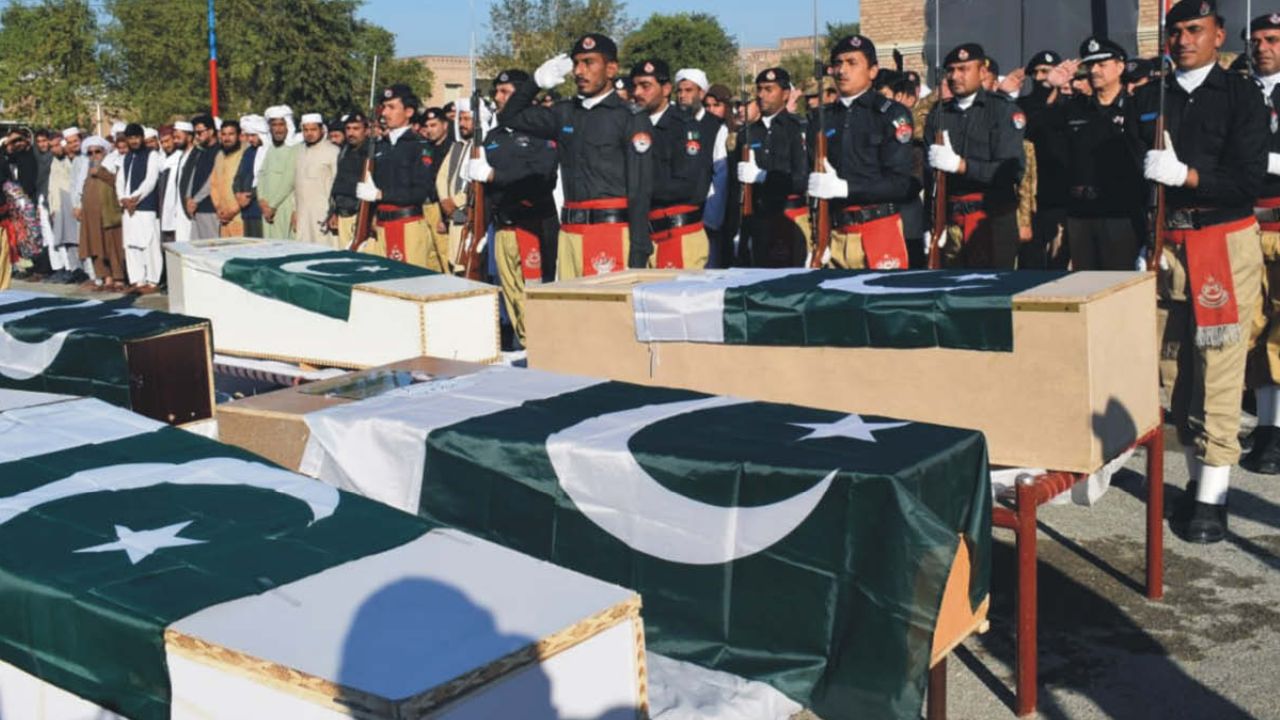
    So far, 2,080 policemen and officers have been martyred in the war against terrorism in Khyber Pakhtunkhwa.

    According to police documents, the highest number -367 – have been martyred in Peshawar.

    Data provided by the police shows that 239 officers and personnel were martyred in Bannu, 234 in Dera Ismail Khan, 121 in Mardan, and 104 in Swat.

    The document also states that 111 elite force personnel were martyred across the province.

    One policeman was martyred in Karam district, two in Torghar, two in Kohistan, and four in Mohmand district.

    A memorial event will be held in Khyber Pakhtunkhwa, including Peshawar, on August 4 to honor the memory of the police martyrs.

  • 108 people die in July in terrorist attacks

    108 people die in July in terrorist attacks

    An Islamabad-based think tank has revealed that terrorist violence surged across the country in July following a slight decline in June.

    The Pakistan Institute for Conflict and Security Studies (PICSS) reported that 79 militant attacks took place in July, resulting in 108 deaths and 71 injuries.

    Attacks rose by 14 per cent, while deaths surged by a staggering 80 per cent, and injuries increased by nine per cent from June.

    In response to the rising violence, security forces intensified their operations and killed at least 50 terrorists in July, a 56 per cent increase from June.

    Most of the terrorist attacks occurred in Khyber Pakhtunkhwa and its merged tribal districts (formerly FATA), with 36 attacks reported in Khyber Pakhtunkhwa, resulting in the deaths of 60 people and 27 others injured. In the tribal districts of the province, 30 people died in 26 attacks.

    In Balochistan, 12 terror attacks resulted in 12 deaths and 24 injuries. Sindh experienced five attacks, leading to 6 deaths and two injuries.

    A significant development in July was the arrest of Al-Qaeda leader Aminul Haque by Punjab’s counter-terrorism unit on July 18.

    Security forces also killed 6 key commanders of the outlawed TTP in various operations based on secret information. This included Najeeb alias Abdul Rahman and Ashfaq alias Muawiya in the Tirah Valley of Khyber tribal district, Irfanullah alias Adnan in Bajaur, Shah Faisal in the Diamar district of Gilgit-Baltistan, and Noor Rehman in North Waziristan and Peshawar, where the shadow governor of the banned TTP was also targeted.

  • Rising terrorism threat in Pakistan: UN report

    Rising terrorism threat in Pakistan: UN report

    A new United Nations report highlights an increase in the terrorism threat in Pakistan.

    According to the report, Pakistan faces threats from Fitnah-ul-Khawarij (TTP) and other militants who have sought refuge in Afghanistan, with Fitnah-ul-Khawarij (TTP) intensifying its attacks in Pakistan.

    The UN report also raises concerns about Fitnah Al-Khawarij (TTP) potentially increasing cooperation with Taliban and Al-Qaeda.

    In 2024, Pakistan has witnessed an increase in terrorism. The South Asia Terrorism Portal reveals 300 terrorism-related deaths so far this year.

    During the first six months of this year alone, dozens of Pakistani security personnel have been killed in militant attacks and counterterrorism operations.

  • CTD operations in different cities lead to arrest of 38 terrorists

    CTD operations in different cities lead to arrest of 38 terrorists

    The Counter-Terrorism Department (CTD) Punjab has arrested 38 terrorists in various operations across different cities of the province this month.

    According to a CTD spokesperson, the 38 terrorists were apprehended in 449 intelligence-based operations conducted by CTD in various cities of Punjab this month.

    During this period, a trained terrorist affiliated with the banned TTP was also reportedly arrested in Lodhran and a main commander of Daesh was captured in Bahawalpur.

    Operations were also carried out in Lahore, Rahim Yar Khan, Narowal, Rawalpindi, and Multan.

    Intelligence-based operations were conducted in Jhang, Sargodha, Khanewal, Wahari, Bahawalpur, Lodhran, and Bahawalnagar resulted in the recovery of explosive materials, hand grenades, weapons, mobile phones, and cash from the terrorists.

    The spokesperson further disclosed that the arrested terrorists were planning attacks on law enforcement agencies and important installations.

  • NADRA’s appeal against restoration of Hafiz Hamdullah’s identity card scheduled for hearing

    NADRA’s appeal against restoration of Hafiz Hamdullah’s identity card scheduled for hearing

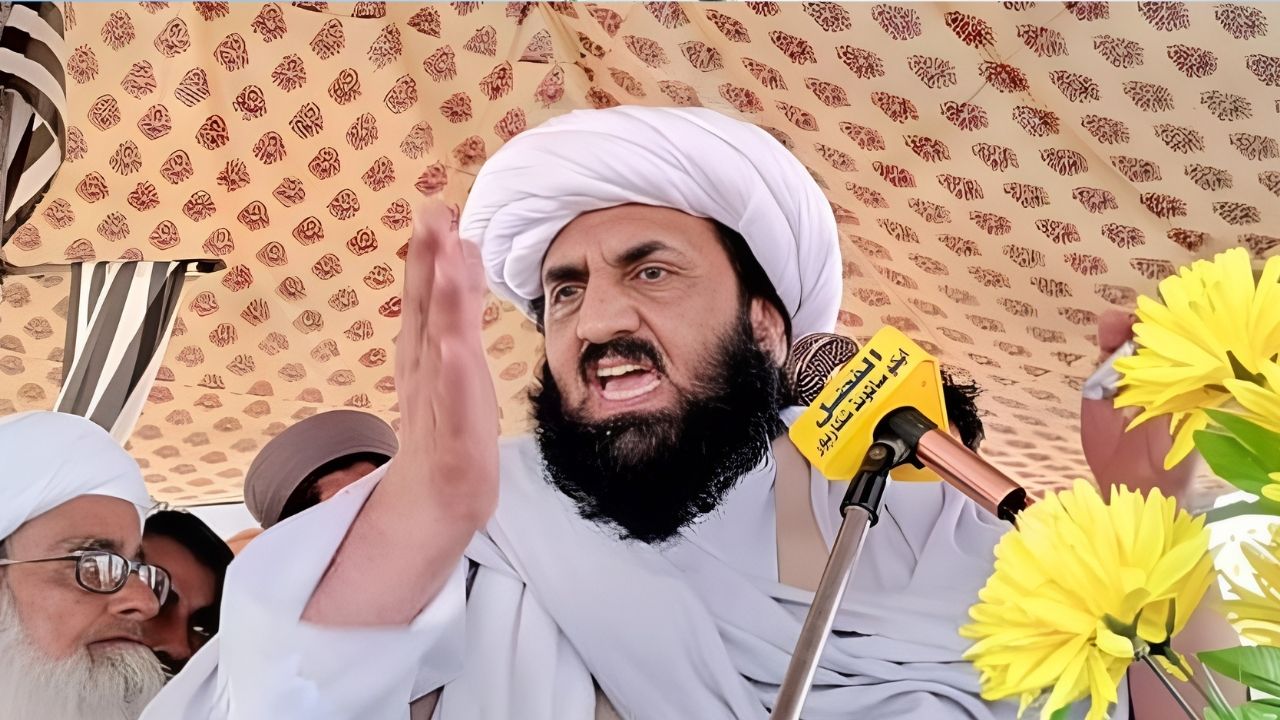
    The Supreme Court of Pakistan has scheduled the hearing of NADRA’s appeal against the restoration of the identity card of Jamiat Ulema-e-Islam leader Hafiz Hamdullah.

    A two-member bench headed by Justice Muneeb Akhtar of the Supreme Court will hear the case on July 10.

    NADRA had cancelled the identity card on grounds of Hamdullah being a foreigner.

    The Islamabad High Court declared the cancellation of Hafiz Hamdullah’s identity card null and void and ordered its restoration.

    NADRA has now filed an appeal in the Supreme Court against the decision of the Islamabad High Court.