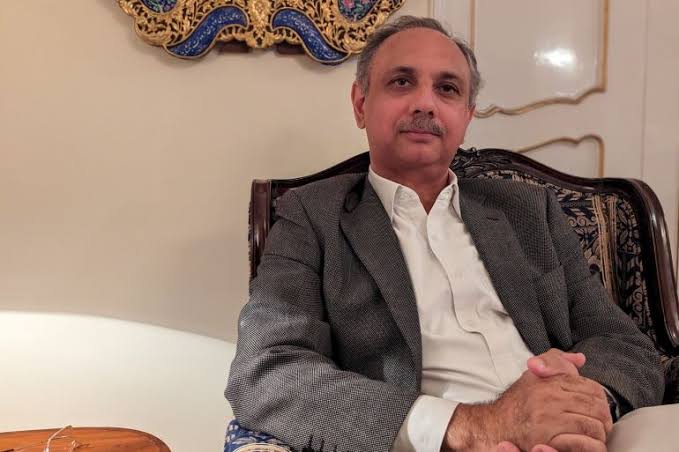
Pakistan Tehreek-e-Insaf (PTI) Secretary General Omar Ayub lashed out at military and spy agencies on Saturday, calling on the state institutions to “stay within limits.”
“Politicians are also bound to do their politics within the constitutional parameters,” said the PTI leader while talking to media in Lahore.
He also clarified that no deal has been struck between Imran Khan and the establishment, blaming the ruling coalition for trying to create rifts between the army and the nation.
Meanwhile, another top PTI leader, Shah Mahmood Qureshi, said in a conversation with reporters at Kot Lakh Pat jail that he has been in politics for 41 years. However, not a single case had been registered against him. But after 9 May, he faced several cases.
“A dozen cases were lodged against me in a year. Whether anyone likes it or not, Imran Khan is a reality. There will be no stability if they do not accept this reality.”
Commenting on cooling political heat, the former foreign minister said national leaders should bar themselves from calling their rivals ‘’traitors’’.
He further stated, ‘’We have been distributing traitors certificates for 75 years.”
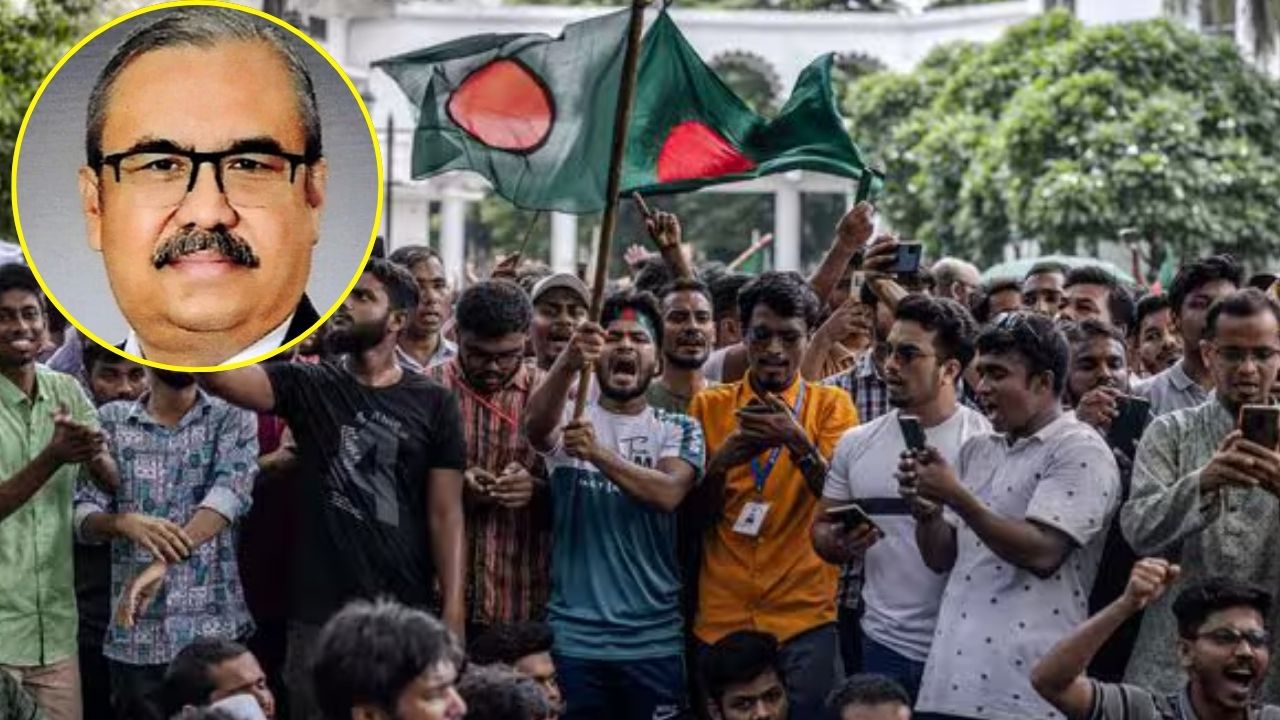
Following pressure from Bangladeshi student protesters, the Chief Justice of Bangladesh, Obaidul Hasan, has decided to resign “in principle.”
Local media reports that hundreds of protesters surrounded the Supreme Court in Dhaka and gave Chief Justice Obaidul Hasan a one-hour ultimatum to resign.
The protesters had announced that they would storm the judges’ residences if they did not resign.
Justice Obaidul Hasan will submit his resignation after consulting the President this evening.
He called for a full court meeting with the judges of both divisions.
On the other hand, Bloomberg’s report states that Bangladesh Bank Governor Abdul Rauf resigned from his position yesterday. However, he resigned for personal reasons.
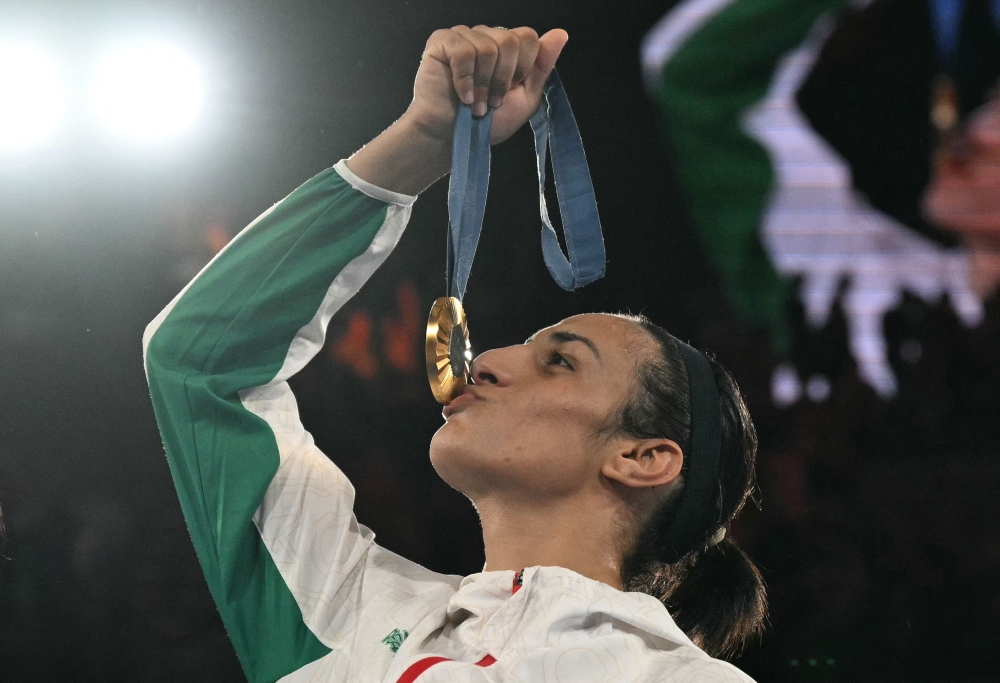
The poor, rural hometown of Algerian boxer Imane Khelif erupted in joy on Friday as she won gold at the Paris Olympics in the face of a major gender controversy.
Cheers of Khelif’s name and the country’s famous chant “one two three, viva l’Algerie” broke out in Biban Mesbah, a town of around 6,000 people.
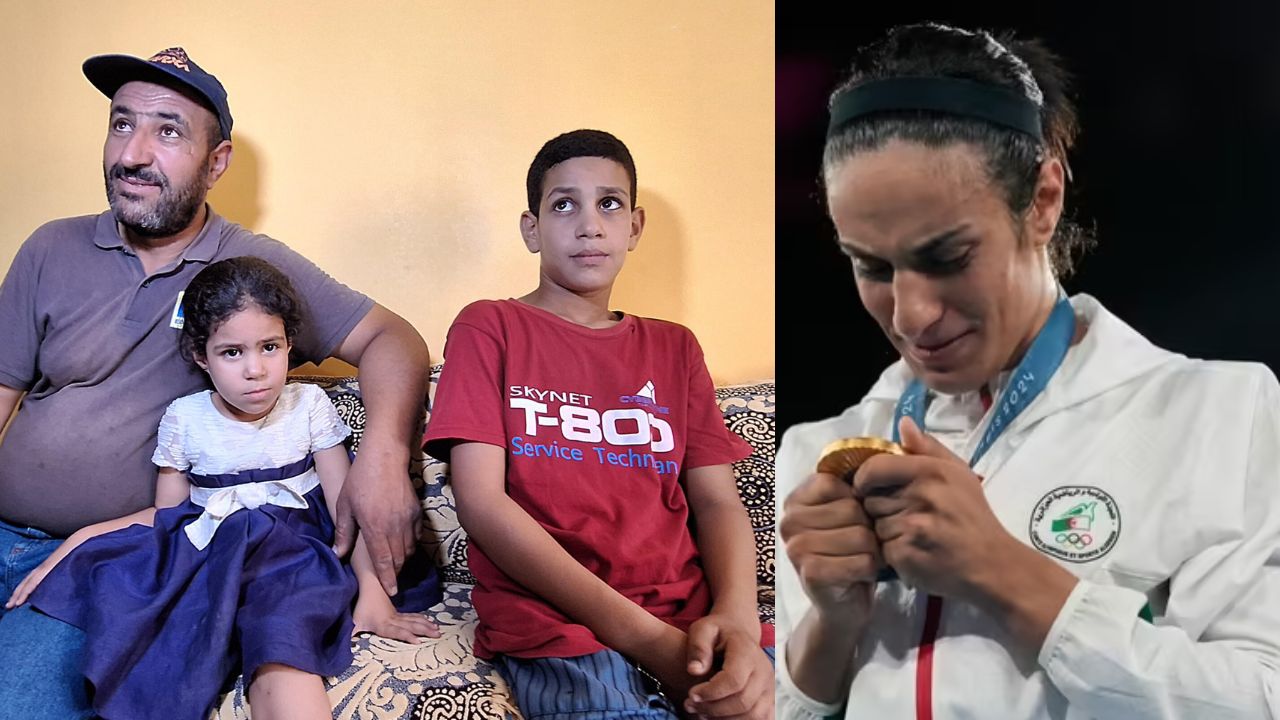
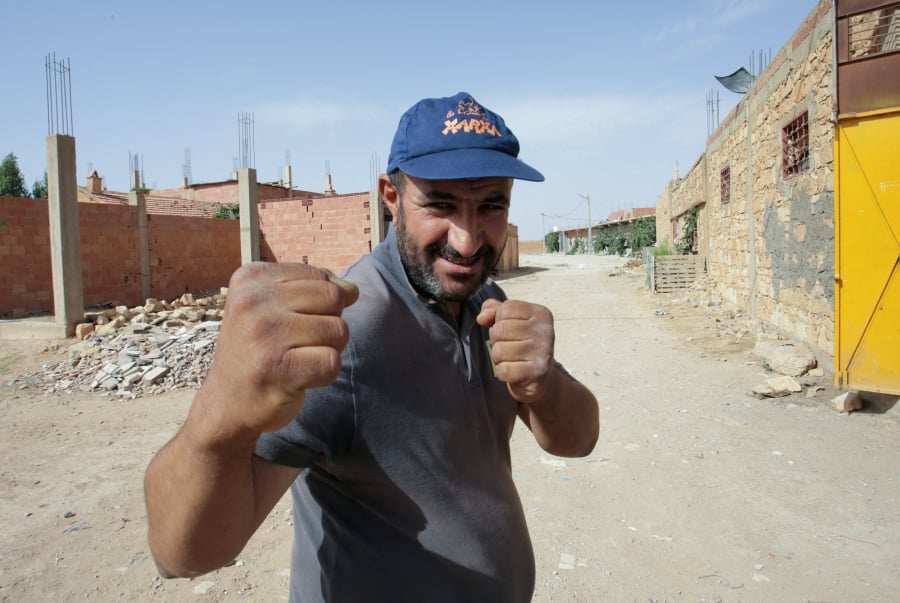
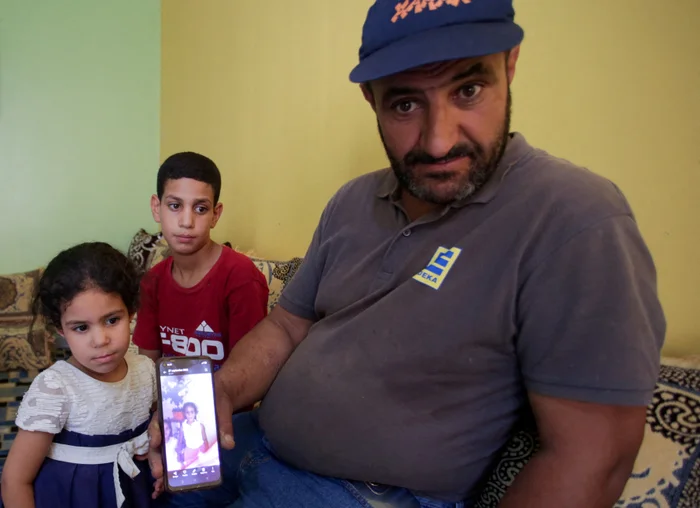
“It’s Algeria’s victory,” her father, Omar Khelif, told reporters as he watched the fight on a giant screen along with the rest of the village around 300 kilometers (185 miles) southwest of Algiers.
Villagers fired shots into the air in honour of 25-year-old Khelif’s first Olympic medal following her victory over China’s Yang Liu in the women’s 66kg final.
Imane after winning a Gold medal
The jubilation also spread to the capital Algiers, where crowds invaded the city center, celebrating the victory with fireworks and a chorus of car horns.
Algerian President Abdelmadjid Tebboune joined the celebrations on social media site X, saying: “We are all proud of you, Olympic champion Imane, your victory today is Algeria’s victory and your gold is Algeria’s gold.”
Ahead of Khelif’s fight, hundreds of volunteers turned out in Biban Mesbah to help prepare for the big night.
Despite scorching temperatures of 46 degrees Celsius (114 degrees Fahrenheit), the men carried out a vast clean-up operation while dozens of women were busy cooking a giant couscous.
“We agreed to give the village a new face and breathe new life into it, with the victory of Imane Khelif,” her cousin Mounir Khelif, 36, told AFP.
“We all helped each other, some bringing couscous, others oil and vegetables, while those who couldn’t help with provisions helped with the preparation,” said Amina Saadi, 52, a mother of six.
“We are all united behind Imane Khelif, who has honored Algeria, that’s the least we can offer her,” she said.
The boxer has been the victim of a social media hate campaign that portrays her as a “man fighting women.”
“I’m a strong woman with special powers. From the ring, I sent a message to those who were against me,” she said Friday after her win.
The gender controversy ignited in the French capital when Khelif defeated Angela Carini in 46 seconds in her opening bout, the Italian reduced to tears and abandoning the fight after suffering a badly hurt nose.
Algerians from all walks of life have showed their solidarity with Khelif, irritated that her father was forced to show her birth certificate to journalists to prove she was born a girl.
Amar, father of Algerian boxer Imane Khelif, gestures during an interview with Reuters outside his house, in Tiaret province, Algeria, on Friday. – REUTERS PIC
Khelif’s international career took off with her participation at the Covid-delayed Tokyo Olympics in 2021, where she finished fifth in her weight class.
In 2023, she made it to the semifinals of the world championships in New Delhi.
But then she was disqualified following gender eligibility testing by the International Boxing Association, which is not recognized by the International Olympic Committee and is not running the sport in Paris.
From a family of limited means, she spoke before the Games of the difficulty of her life in “a village of conservative people” in semi-desert surroundings. Imane said that her father initially found it difficult to accept her boxing.
Imane’s family
“I came from a conservative family. Boxing is not a widely practiced sport by women, especially in Algeria,” she told Canal Algerie a month before the Games, smiling readily and her voice soft.
In an interview with UNICEF, she said she used to sell scrap metal and her mother sold homemade couscous to pay for bus tickets to a nearby town.
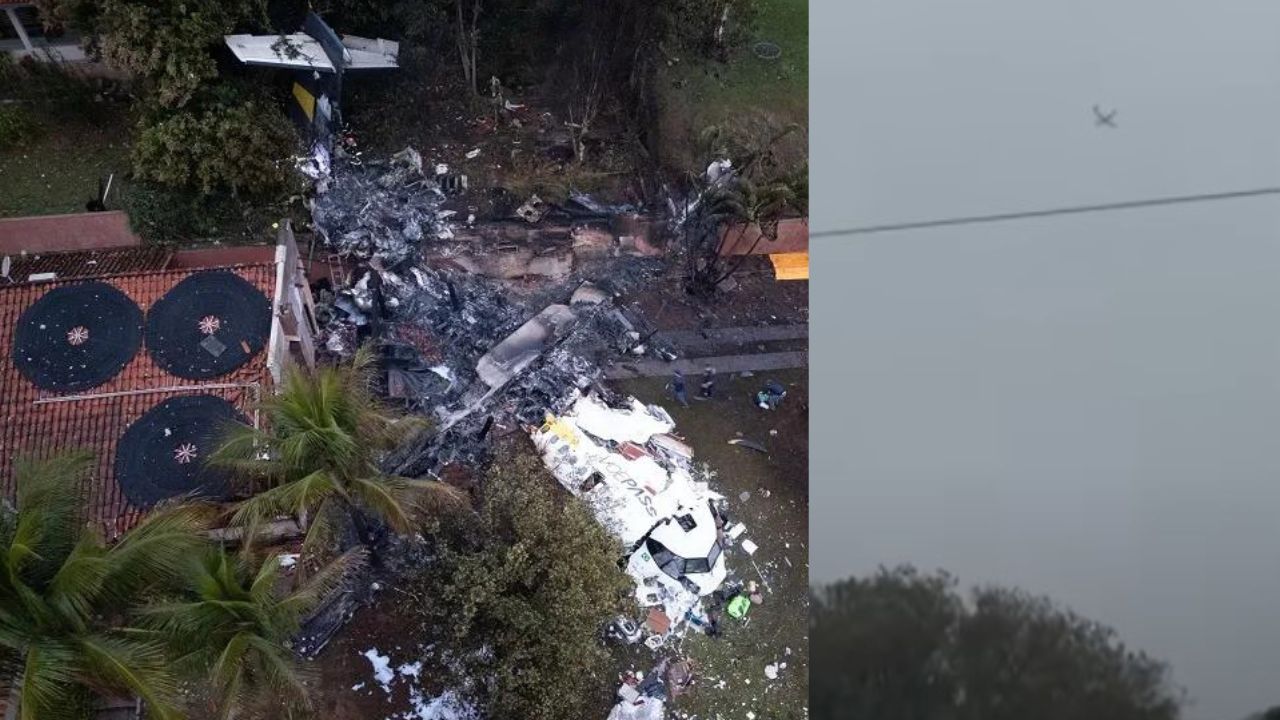
An airplane carrying 57 passengers and four crew crashed Friday in Brazil’s Sao Paulo state, killing everyone on board, the airline said.
The aircraft, an ATR 72-500 operated by Voepass airline, was traveling from Cascavel in southern Parana state to Sao Paulo’s Guarulhos international airport when it crashed in the city of Vinhedo.
Voepass initially said the plane was carrying 58 passengers, but a statement on the airline’s website later revised the figure to 57.
Images broadcast on local media showed a large plane spinning as it plummeted almost vertically, while other footage showed a large column of smoke rising from the crash site in what appeared to be a residential area.
“There were no survivors,” the city government in Valinhos — which was involved in the rescue and recovery operation in nearby Vinhedo — said in an to AFP.
Vinhedo, with about 76,000 residents, is located approximately 80 kilometers (50 miles) northwest of Sao Paulo.
Recovery of the victims’ remains for “identification” has begun and “will continue throughout the night,” Sao Paulo State Governor Tarcisio de Freitas told reporters at the scene.
President Luiz Inacio Lula da Silva declared three days of mourning.
Voepass said it was cooperating with authorities to “determine the causes of the accident,” while giving full assistance to families of the victims on flight 2283.
The plane, a twin-engine turboprop, took off “without any flight restrictions, with all its systems operational,” the company said.
Brazil’s CENIPA aviation accident agency has launched an investigation.
ATR, a Franco-Italian aircraft maker and Airbus subsidiary, said its experts were working to help investigators.
Truck driver Martins Barbosa, 49, was working when he learned of the plane crash, which occurred 150 meters (500 feet) from his home.
“I thought it might have fallen on my house, with my son inside,” he told AFP, adding he felt despondent before learning his family was okay.
Nathalie Cicari, who lives near the crash site, told CNN Brasil the impact was “terrifying.”
“I was having lunch, I heard a very loud noise very close by,” she said, describing the sound as drone-like but “much louder.”
“I went out on the balcony and saw the plane spinning. Within seconds, I realized that it was not a normal movement for a plane.”
Cicari was not hurt but had to evacuate her house, which was filled with black smoke from the crash.
“I arrived at the scene and saw many bodies on the ground — many of them,” another witness, Ricardo Rodrigues, told local Band News.
Firefighters, military police and state civil defense were deployed at the scene.
Military police told local media the accident had not caused any casualties on the ground, and that the fire sparked by the crash had been brought under control.
The plane’s black box “has already been found, apparently preserved,” Sao Paulo state security official Guilherme Derrite told reporters at the scene.
The doomed plane recorded its first flight in April 2010, according to the website planespotters.net.
Air safety has improved dramatically in recent decades, with deadly passenger plane crashes becoming ever-more rare worldwide, though more frequent in developing nations.
Excluding Friday’s crash, CENIPA data shows Brazil has recorded 108 aircraft accidents so far this year, resulting in 49 deaths. Over the last ten years, 746 people have died in 1,665 accidents in the country.
In January 2023, another ATR 72 operated by Yeti Airlines crashed after stalling in Nepal, killing all 72 on board.
Nepalese authorities attributed the incident to pilot error.
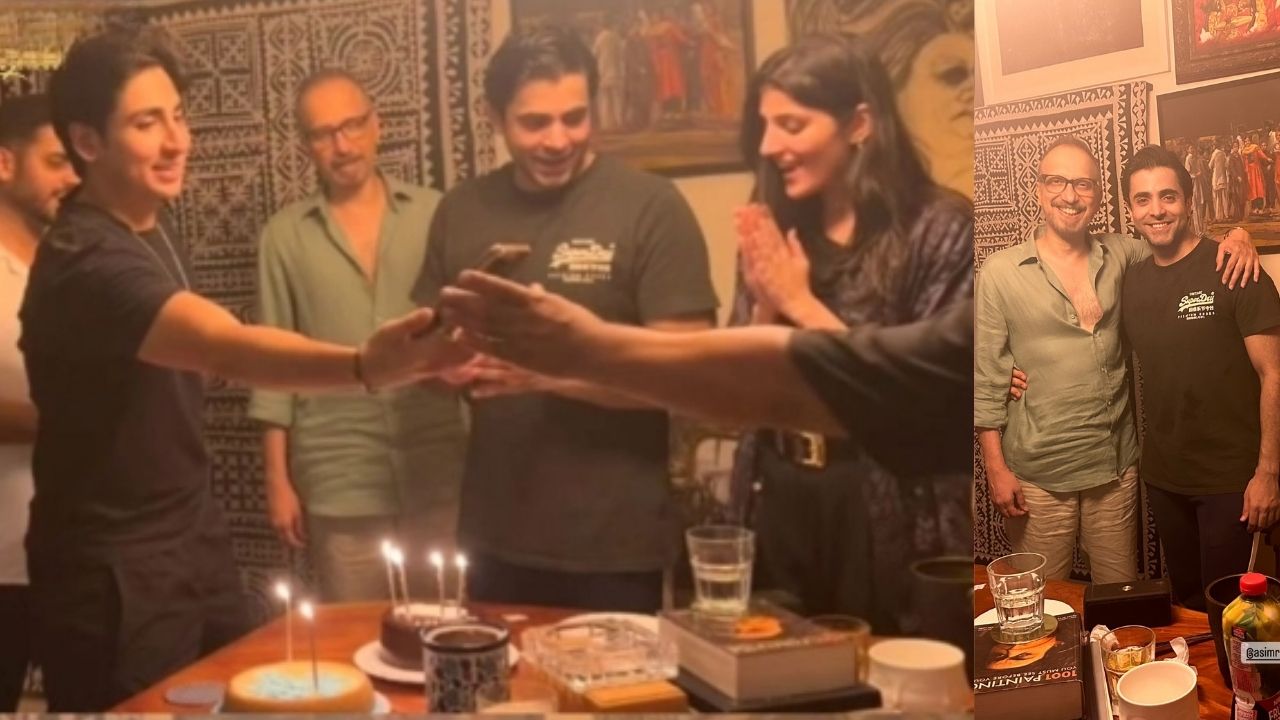
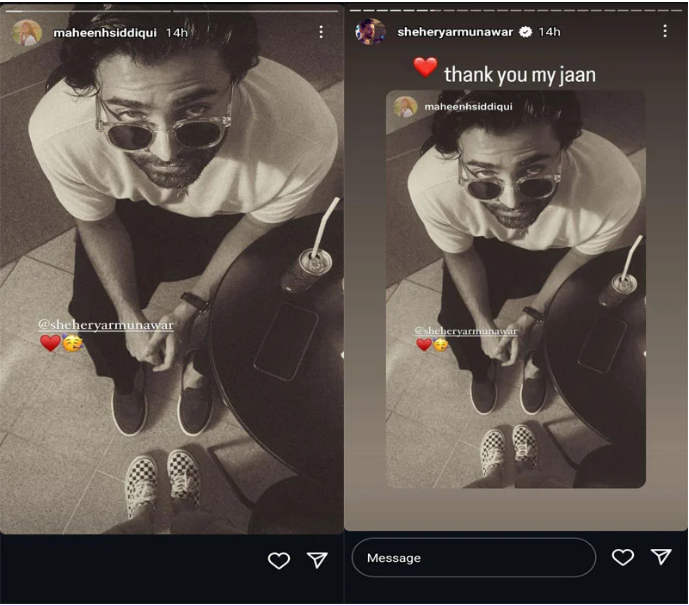
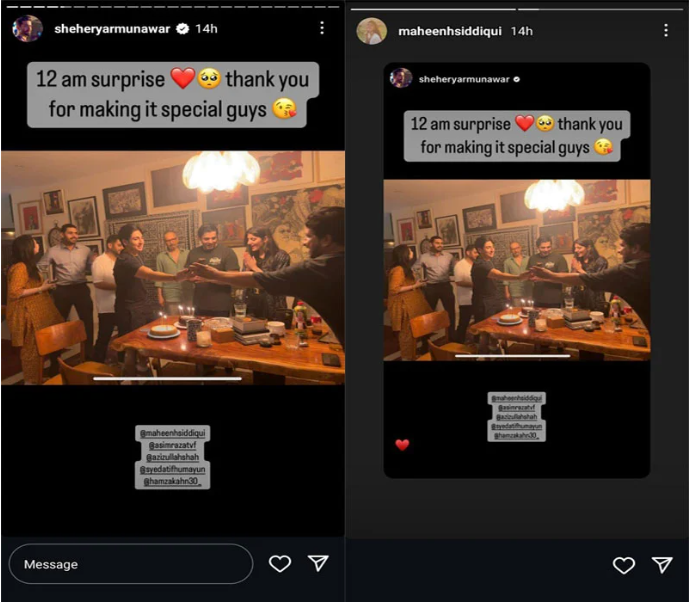
Heartthrob Sheheryar Munawar has finally given fans a peek into his love life with a surprising Instagram post. After months of speculation, the popular actor has shared a heartfelt post showing affection for actress Maheen Siddiqui, calling her his “jaan” (beloved).
In the post, Sheheryar shared photos from his birthday celebration, where close friends, including Maheen, surprised him late at night. Maheen was the first person he tagged in the post. She responded by resharing the post with a red heart emoji.
In another story, Sheheryar reposted Maheen’s post with the sweet caption “meri jaan” (my beloved), thanking her for making his birthday extra special. This public display of affection has fans talking, especially since rumors have been circulating that the two might get married in December.
Earlier this year, Sheheryar hinted at someone special in his life during a podcast, but he didn’t share any details until now.
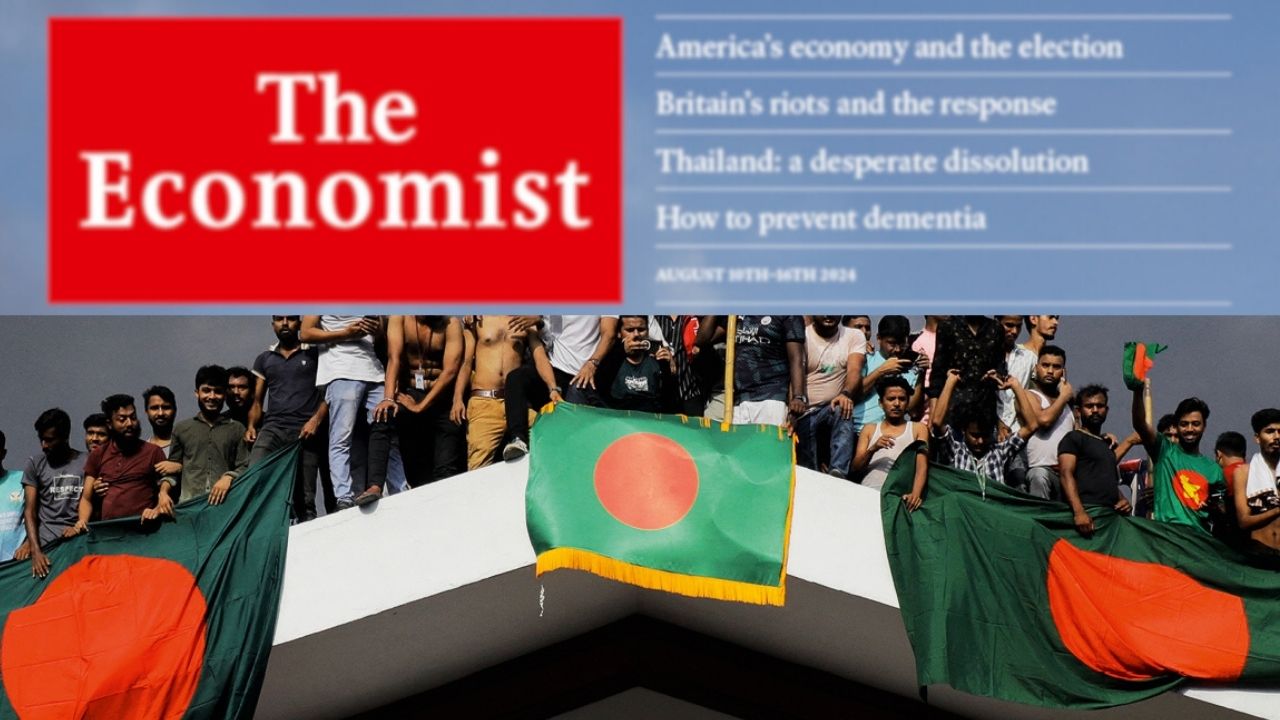
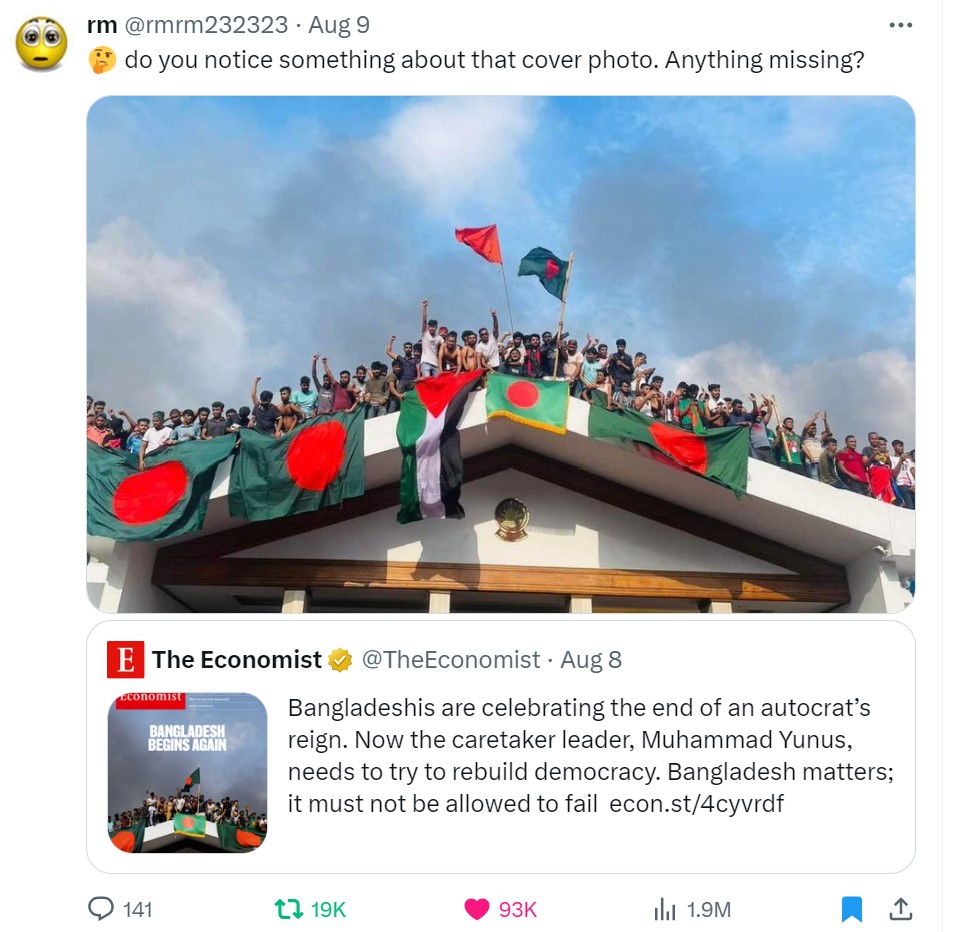
The Economist, a British weekly news magazine, published this week’s issue with a picture of the Bangladesh students’ protest on the front page of its magazine, alongside the headline, “Bangladesh Begins Again.”
However, social media users pointed out a significant difference between the pictures used by the magazine and the same pictures available on the internet. The picture that wasn’t used by The Economist had protestors raising a Palestine flag along with the Bangladesh flag.
Earlier this week, the Prime Minister of Bangladesh, Sheikh Hasina, resigned and fled the country as massive protests gripped the nation. The protests, which initially started as student protests against civil service job quotas, spiralled into demands for Hasina to quit after more than 200 people were killed in the violence.
Social media was abuzz with footage of Bangladeshi youth tearing down the statues of their country’s founding father, Sheikh Mujeeb ur Rehman, marking the end of Hasina’s almost 15 years of rule.
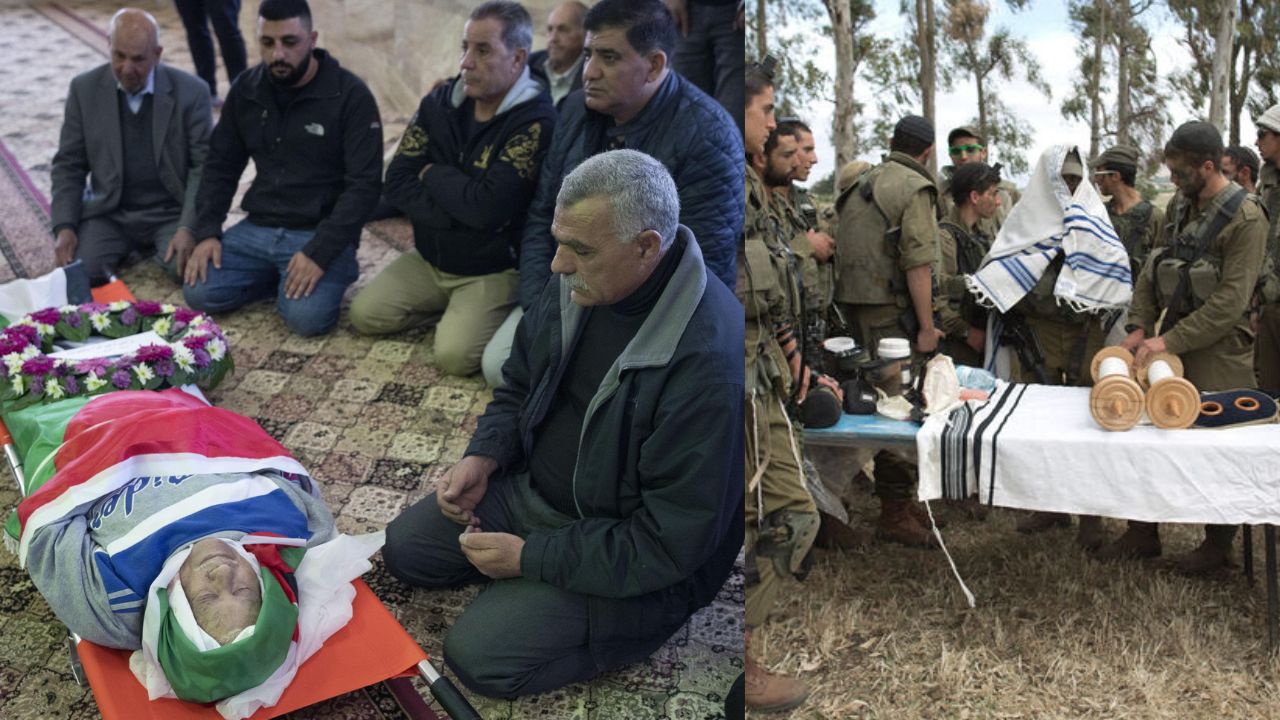
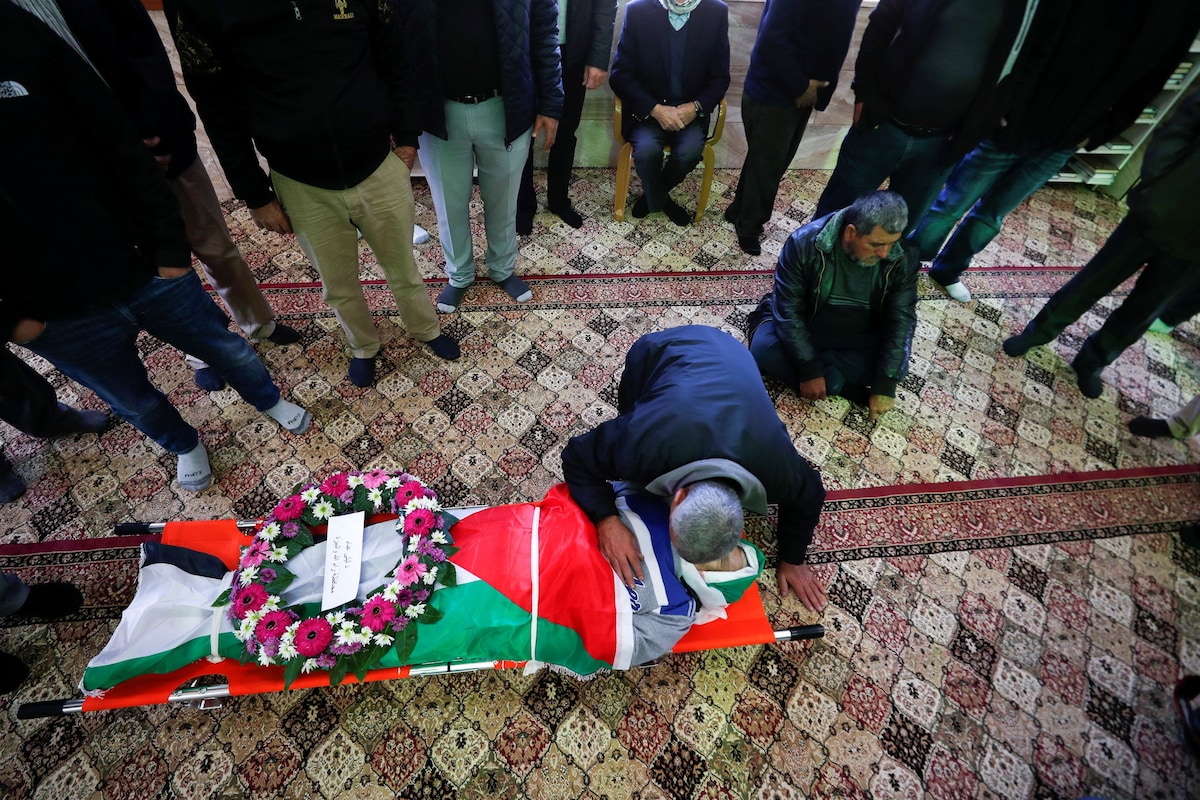
America defends giving aid to an army unit involved in the killing of a Palestinian-American by saying Israel had already taken remedial action.
Omar Assad, 78, a grocer who spent most of his adult life in Milwaukee, was on a return visit to the West Bank in January 2022 when he was handcuffed, gagged and blindfolded, dying after lying on the ground for more than an hour on a cold winter night.
The incident was linked to the Israeli army’s Netzah Yehuda, a unit founded in 1999 to encourage recruits from the ultra-Orthodox community, which is largely exempt from compulsory military service.
A State Department panel decided against imposing sanctions on the unit after being presented with information by the government of Israel, which has vocally opposed action against its military amid the ongoing war with Hamas in the Gaza Strip.
“After thoroughly reviewing that information, we have determined that violations by this unit have also been effectively remediated,” State Department spokesman Vedant Patel said.
“This unit can continue receiving security assistance from the United States of America,” he said.
A US official said that two soldiers involved in the incident, while not ultimately prosecuted, were removed from combat positions and have left the military.
The military has also taken steps “to avoid a recurrence of incidents,” including enhanced screening of recruits and a two-week educational seminar specifically for the unit.
Experts say that Netzah Yehuda has mostly drawn ultra-Orthodox youths who see the military as a way to integrate into Israeli society. Still, it has also attracted fervent nationalists from the West Bank.
The West Bank, which Israel has occupied since 1967, is home to three million Palestinians alongside some 490,000 Israelis living in settlements considered illegal under international law.
The army concluded that Assad’s death was the result of “a moral failure and poor decision-making on the part of the soldiers.”
It said Assad “refused to cooperate” when stopped by soldiers in the village of Jiljilya and that soldiers tied his hands and gagged him without checking on him later.
It was unclear why soldiers stopped Assad. The Palestinian official news agency Wafa said he died from a stress-induced heart attack.
Additionally, US is all set to give $3.5 billion to Israel to purchase American weapons and military equipment from a $14.1bn supplemental bill approved by Congress in April.
“On Thursday, August 8 the Department notified Congress of our intent to obligate $3.5bn in FY 2024 Foreign Military Financing using funding provided by the Israel Security Supplemental Appropriations Act,” said a State Department spokesperson as reported by CNN.
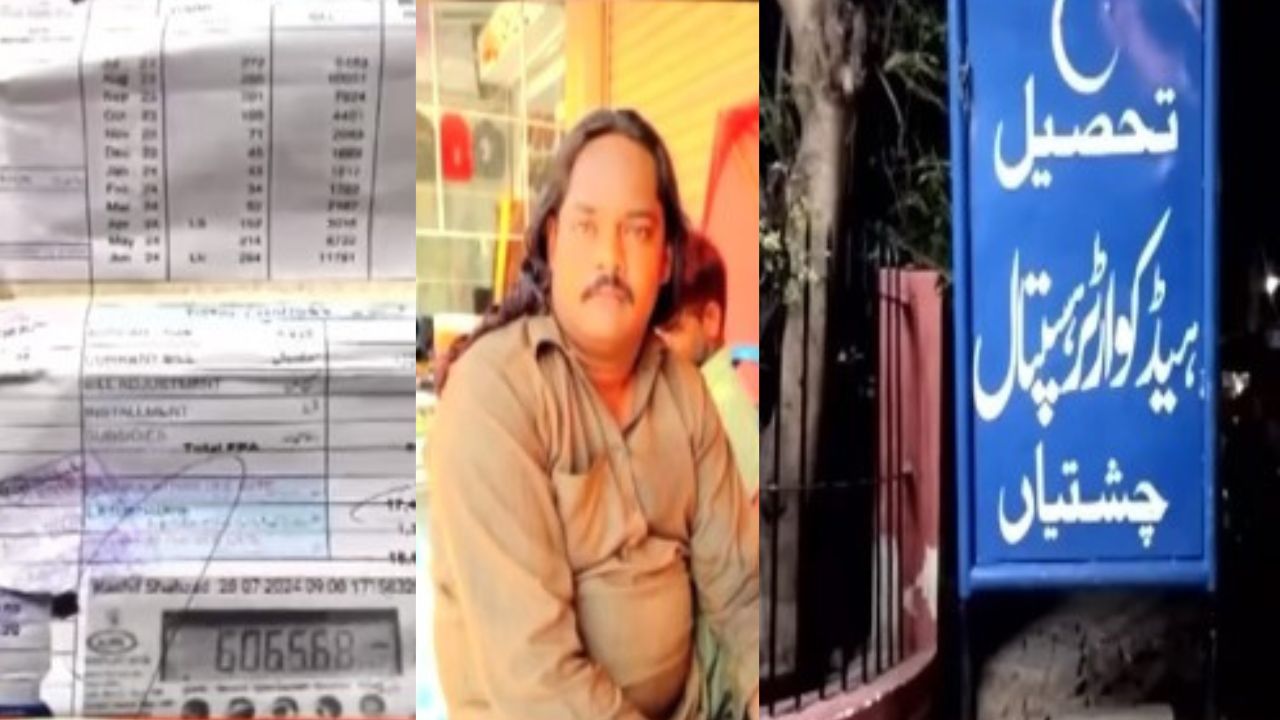
Sajid, a father of three, has committed suicide in Chishtian after receiving a high electricity bill.
ARY News has reported that Muhammad Sajid, a resident of Chishtian’s Mehboob Colony, took his life after arguing with his brothers over a high electricity bill.
Sajid was reportedly the family breadwinner, a father of three who worked as a vegetable vendor. He fought with his brothers after they received an electricity bill of 17,000 rupees.
Sajid committed suicide after consuming poison.
His last words, as quoted by his brother, were, “I am a poor man. How can I pay the bill of 17,000 rupees?”
Such incidents are now seen happening at a regular pace. Previously, a 65-year-old woman, Razia Bibi, suffering from a hernia, jumped into a drain after her family received a high electricity bill.
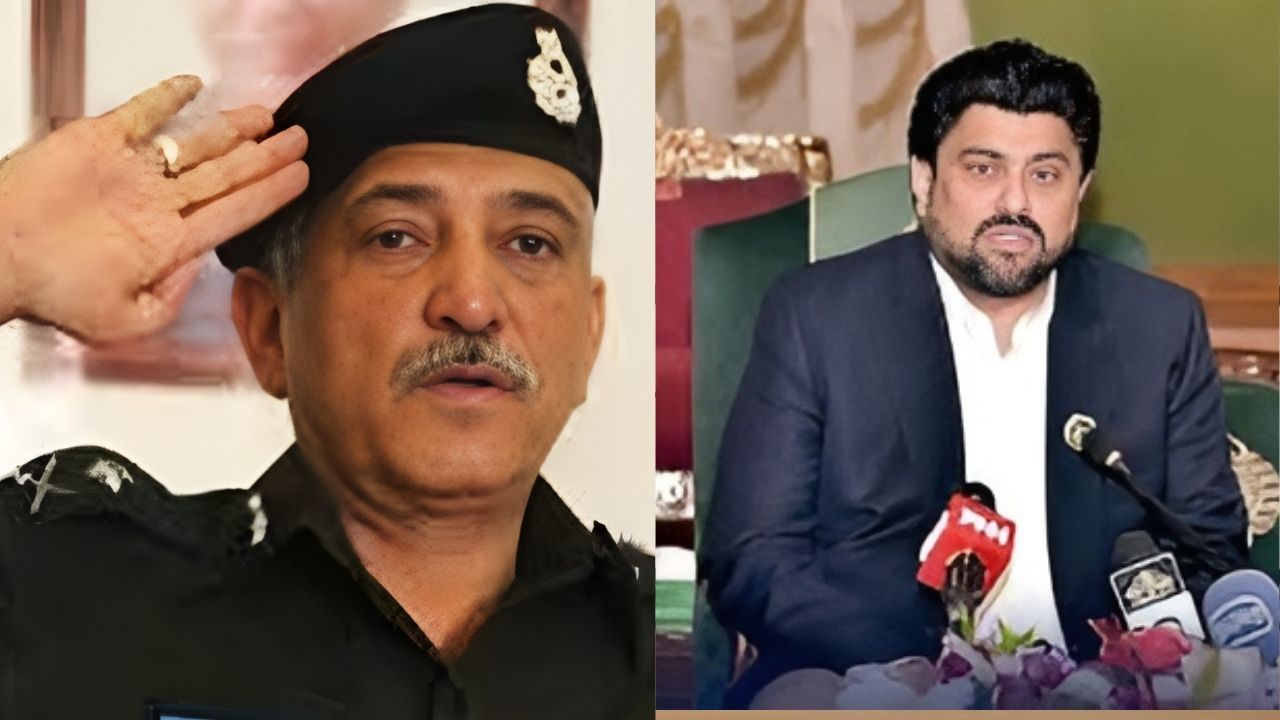
Pakistan Muslim League Nawaz (PMLN) and its coalition government ally, the Pakistan People’s Party (PPP), have agreed to change the Governor of Sindh, Kamran Khan Tesori.
According to a Geo News source, the incumbent Sindh governor could be replaced by PML-N Sindh president and former head of Federal Investigation Agency (FIA) Bashir Memon.
While responding to the report, MQM denied that the Governor will be changed.
A spokesperson of MQM said, ‘’The Centre has not contacted us yet in this regard’.”
PPP Sindh General Secretary Waqar Mehdi said, ‘’Kamran Tessori better go on leave until the PMLN chooses the new Governor of Sindh’’.
In April this year, sources made similar claims that former Sindh caretaker chief minister Justice (retired) Maqbool Baqar could be appointed governor of Sindh.
On a balmy evening in August 2022 at Birmingham’s Alexander Stadium, the largest athletics grounds in the United Kingdom, a packed crowd was following the drama unfolding in the men’s javelin competition.
Arshad Nadeem, the Pakistani athlete, was preparing for his fifth and penultimate throw.
Moments earlier, Grenada’s Anderson Peters, a two-time world champion, had delivered a mighty 88.64-metre (291ft) throw, propelling himself to the gold medal position and pushing Nadeem down to second place.
Nadeem took hold of his bright yellow javelin and strode towards the beginning of his run-up, holding up his arms and clapping at the crowd, which cheered back enthusiastically.
Until Peters’s throw, Nadeem had led the competition, already surpassing the 85-metre (279ft) mark three times with his longest throw at 88 metres (289ft).
As the crowd’s clapping and cheering picked up, Nadeem, his throwing arm lined with pink therapeutic tape, took long strides before launching the javelin with a low grunt.
Beneath Birmingham’s pink and blue dusk sky, the spear soared through the air for about five seconds, then landed beyond the 90-metre (295ft) mark. The crowd roared as Nadeem held up his arms triumphantly, a gentle smile on his face before hugging a smiling Peters.
Shortly after, with no other competitor matching Nadeem’s record in their sixth and final attempt, his victory became official.
Nadeem’s throw was a new event record and also Pakistan’s first gold medal in track and field in six decades. He also became the first South Asian and only the second Asian man to surpass the 90-metre mark in the javelin throw.
Nadeem, now 27, calls that throw the best of his career so far.
“I was in good rhythm,” he recalled on a June afternoon after training. “I was confident [the earlier throws] would enable me to win the gold.
“Usually, by the third or fourth throw in any event, you have an idea who will emerge on top. Then Peters sent his fifth throw and went past 88 metres. But I was not nervous. By the grace of God, despite pain in my right elbow, I somehow managed to pull off my personal best,” he recounted.
Nadeem is Pakistan’s biggest hope for a medal in the 2024 Paris Olympics, which began on July 26.
The nine-time international medallist and four-time gold medallist came fifth at the 2020 Tokyo Olympics. In Paris, he hopes to secure the country’s first medal in 32 years after it won bronze in field hockey at the 1992 Barcelona Olympics.
“I feel strong and fit,” Nadeem said, “and quite hopeful of a strong performance in Paris.”
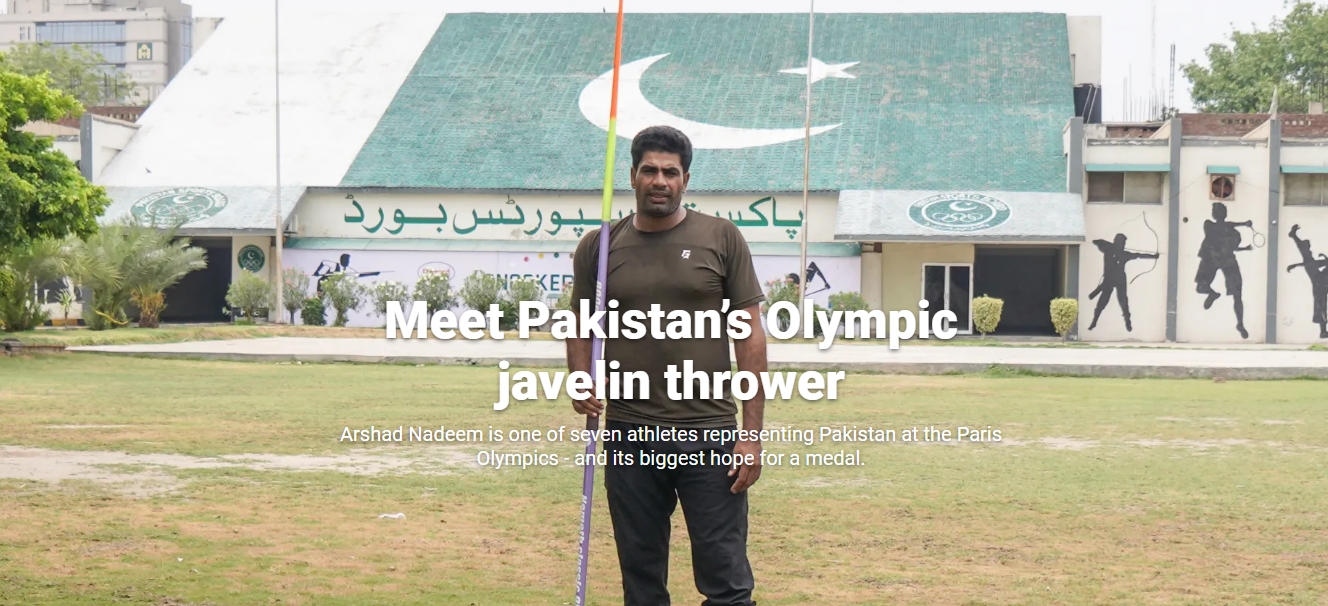
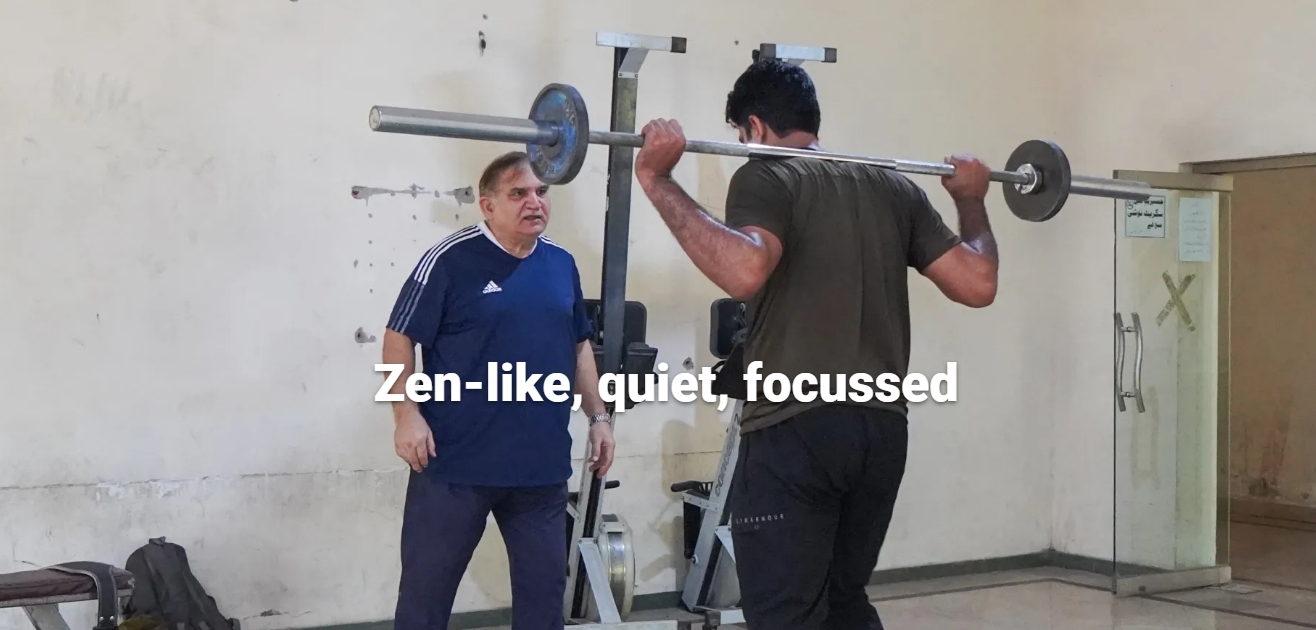
A month before the games were scheduled to start, Nadeem arrived shortly after 8am at the University of the Punjab gymnasium in Lahore for a day’s training.
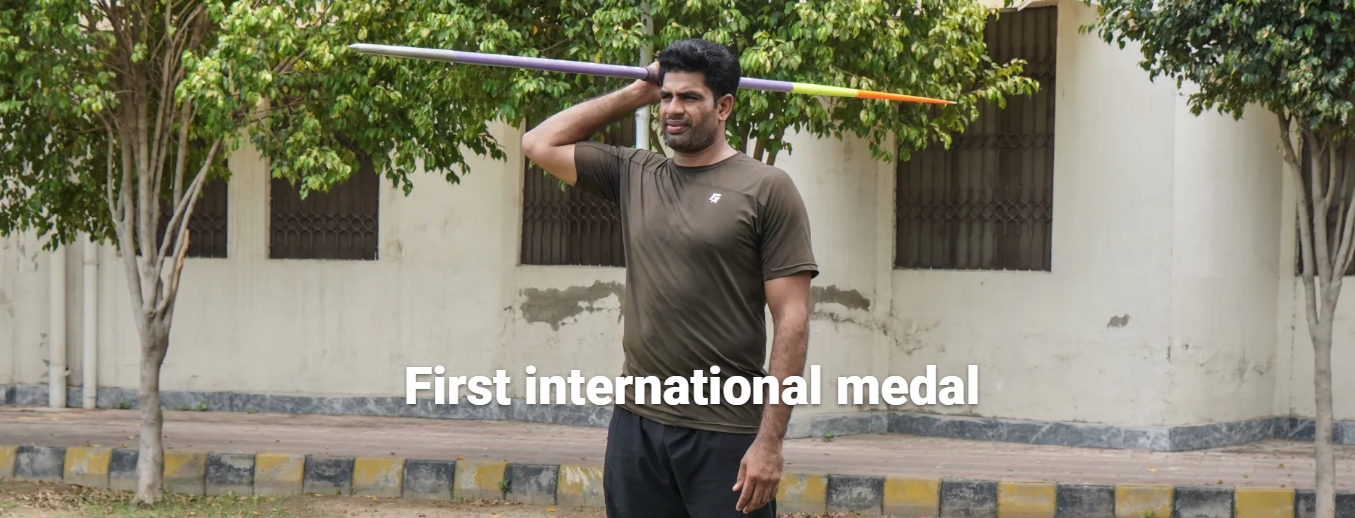
Wearing an olive green T-shirt and black pants, the broad-chested, 1.92m-tall (6ft-3-inch-tall) athlete began his routine by stretching in the sparse room.
On a day when the temperature would reach 41 degrees Celsius (105 degrees Fahrenheit), the gym was stiflingly hot without air conditioning, and four fans did little to ease the heat.
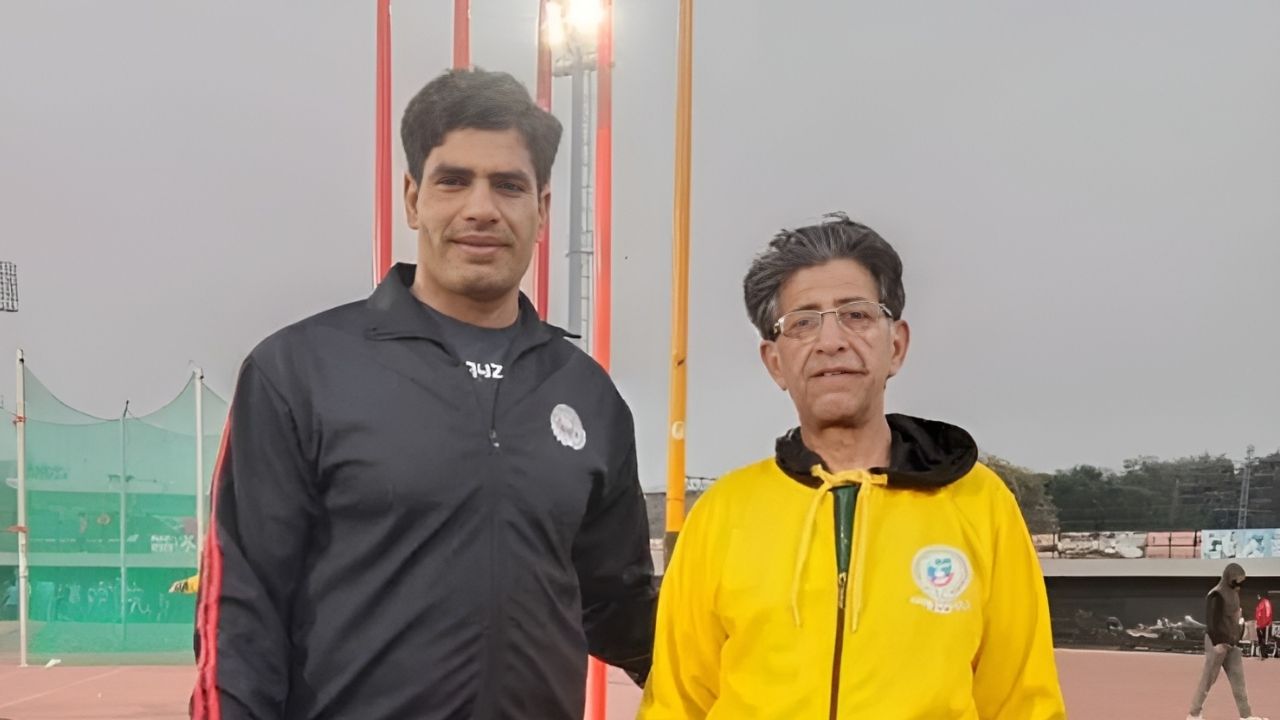
Nadeem’s coach, Salman Iqbal Butt, 66, himself a former national-level discus thrower, led the training.
The coach, a stout man with a gentle demeanour, has worked with Nadeem for the past four years, helping him win two gold medals and one silver.
Butt, a two-time silver medallist in the South Asian Games in 1989 and 1991, remarked that things were better in the decades he competed because there was more institutional support and resources for athletes.
There was a strong grassroots network within schools, the coach explained, which helped identify young athletes, provide them with opportunities to explore various sports, compete and progress to the national level. Until the early 2000s, Pakistan would send a squad of about 30 members to compete in the Olympics. In Paris, it is sending seven.
Nadeem added weight plates to a barbell. As he lifted it under his coach’s watchful gaze, Nadeem kept his eyes focused ahead while beads of sweat formed on his forehead.
“Last week, Arshad felt some pain in his right knee, so we are taking it lightly for the next few days where he will just focus on mobility and weights, but no running or throwing,” Butt said.
He added that they needed to look after Nadeem’s fragile knees and elbows – a common concern for javelin throwers, given the stop-start motion of the run-up and the strain of repeated throwing. In the past two years, Nadeem has had multiple surgeries, most recently in February this year.
While Nadeem said his body heals quickly, he was mindful not to push himself too much and drank water frequently. He also avoids the hottest hours by training for three hours in the morning and three in the evening.
But on practice throwing days, there was no choice but to train outdoors under the blazing sun. Still, Nadeem said he’s used to the conditions.
A video in May on Nadeem’s Instagram profile showed him throwing in 45C (113F) weather. “45°C fuels my passion for success,” he wrote.
Nadeem was born on January 2, 1997, in a small village near the city of Mian Channu in southern Punjab state, about 300km (186 miles) southwest of the megacity of Lahore.
The third of seven siblings, Nadeem grew up in a household that struggled to make ends meet. His father, Muhammad Ashraf, a retired construction worker, was the sole breadwinner.
Nadeem’s older brother Shahid Azeem, 32, said their family would get to eat meat only once a year, during Eid al-Adha.
“It would be a lucky day for the family if we ate anything more than lentils or vegetables,” Shahid told Al Jazeera in a phone interview.
As a child, Nadeem towered over his classmates. By the time he was 14, he was almost 6ft (183cm) tall. It was a “gift”, Shahid said, from their father, who is also more than six feet tall.
Nadeem saw Shahid compete regionally in track and field events and became interested in sports, diving into football, hockey, badminton, kabaddi – a 900-year-old contact sport that originated in South Asia – and cricket, Pakistan’s most popular sport.
Cricket was his first love. “I used to be a very good bowler and would participate in a lot of tournaments,” Nadeem said.
“He was famous in the village for his bowling,” Shahid recalled. “He could single-handedly get teams out. If he’d have continued to play, I am sure he could have become as fast as Shoaib Akhtar,” he said, comparing Nadeem to one of Pakistan’s fastest bowlers, who retired in 2011.
But Nadeem’s father and two older brothers discouraged him from pursuing cricket.
“My father never liked cricket. He’d say, ‘You do all the hard work to win the match, but your teammates leave it all on you but don’t deliver. You should do something else,’” Nadeem recalled.
Shahid also told a teenage Nadeem that it would be difficult to break through the ranks of a popular sport like cricket. So with his brother’s encouragement, Nadeem, who was quick and well-built, started to compete in school athletics events, including sprints, long jump, triple jump, discus throwing and javelin.
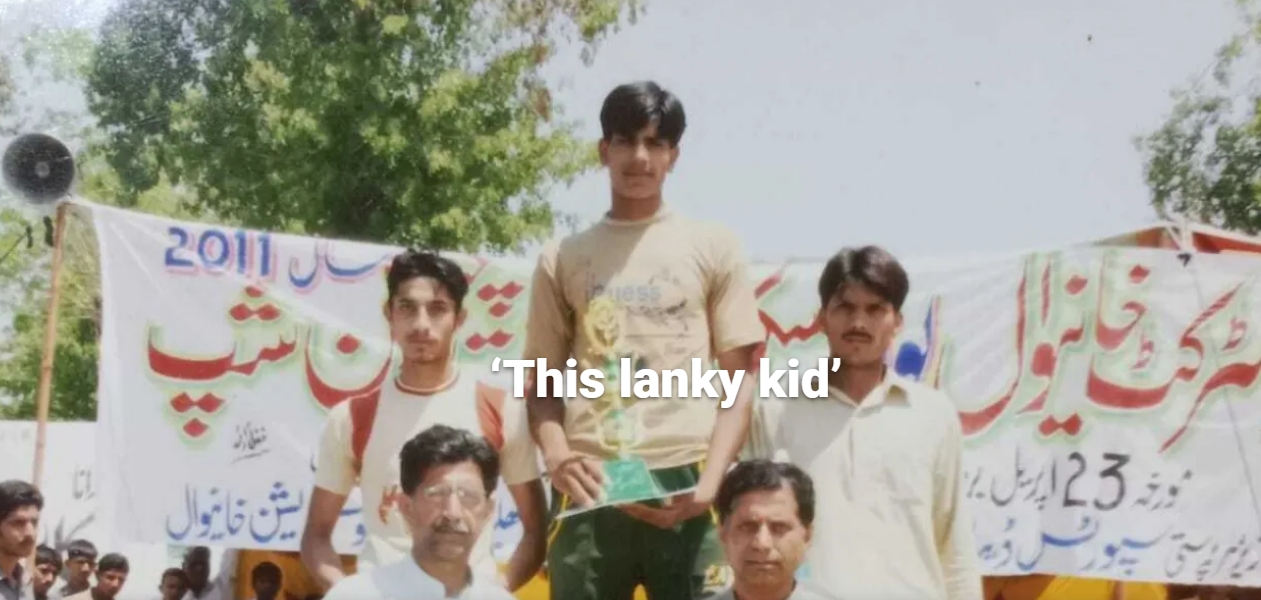
Then in 2011, Rasheed Ahmed Saqi, a hotelier and resident of Mian Channu who scouts and invests in new athletic talent, saw Nadeem compete.
“I was a member of the Punjab Athletic Federation, and there was a local competition I organised where I saw this lanky kid who made quite an impression in track and field games, especially javelin and shot put. I noticed he was strong. He ran well. So I thought, maybe if I can help train him, he could make a difference,” said the 69-year-old, who had competed on the provincial level in track and field, including in javelin throw, in the 1960s and 1970s.
Two weeks after the event, Saqi, was sitting in a hotel he owns in Mian Channu when Ashraf brought his son to his office. “Arshad is your son and your responsibility from today,” Ashraf told him.
“And from that day onwards, I have taken him under my wings,” said Saqi, who became Nadeem’s first coach and mentor.
Around this time, Shahid started working as a police officer while his eldest brother joined the army.
They urged Nadeem to pursue javelin throwing. “He has always been a shy, quiet person who often keeps to himself. We both knew that he liked the sport but never spoke about it publicly,” Shadid said. “We told him, ‘Do not worry about money. We have jobs. We can support our home.’”
With Pakistan’s sports structure revolving around public sector organisations that offer employment opportunities to talented athletes, Nadeem’s athletic exploits generated attention locally, and various departments sought him out a few years later.
In 2015, an army representative came calling. “I flat out refused them,” Saqi recalled. “I told him, ‘Your training will ruin my athlete.’” He was worried about Nadeem doing both army and sports training.
“He is basically working extra hard without any recovery period. You cannot force or flog a player and say working for long hours is part of training,” Saqi explained.
Saqi, who trained Nadeem until 2015, still maintains close ties with the athlete.
Saqi believes the most important factor behind Nadeem’s success is his humility and said he has not been “tainted” by fame or money.
“He displays no arrogance or pride. When he comes to Mian Channu to see me, he makes sure he walks behind me. He ensures he opens the doors for me and waits till I sit,” Saqi said.
Recalling an incident from a few years ago, the hotel owner said Nadeem was at a training camp in Islamabad when Saqi was taken to the hospital for a heart complication.
“Somehow, he found out, and he left the camp to come and see me within a day’s notice. I had to scold him, despite my health, telling him to go back to training,” Saqi recalled with a chuckle.
Nadeem refers to Saqi as his “spiritual father”. A decade ago, when he did not even know specific spikes for javelin throwers existed, let alone owned them, it was Saqi who bought him his first pair.
The athlete also said it was thanks to Saqi that he secured employment at the sports department of the Water and Power Development Authority (WAPDA), a government-owned public utility that pays him a monthly retainer.
“WAPDA was holding trials for its sports department when Saqi sahib arranged for my entry there, and I managed to throw 56 metres [184ft] there, which made everyone pay attention,” Nadeem recalled.
Within two months of joining WAPDA, Nadeem, then 18, became Pakistan’s 2015 national champion.
“We were down to the sixth and the last throw, and by that time, I was fifth in the competition with an army athlete having thrown 69 metres [226ft]. Everybody thought that the competition was over. But somehow, I managed to push myself and threw a 70-metre [300ft] throw, which got me the gold medal,” Nadeem recounted with a brief, shy smile.
Nadeem was then selected for the 2016 South Asian Games in India, his first international competition.
The sporting event, which took place in Guwahati, India, was also the first time Nadeem competed against the then-emerging Indian star Neeraj Chopra.
Nadeem, who went into the tournament with a niggle in his throwing elbow, still managed a throw of 78.33 metres (257ft), winning his first international medal, a bronze, with Chopra securing gold.
“The previous Pakistani record lasted for nearly two decades, so I was very pleased with my effort,” Nadeem reflected.
Spears were once hurled as weapons for hunting and fighting. As a sport, it was one of the original disciplines at the ancient Olympic Games in Greece.
In its modern iteration, the sport has been part of the games since the 1908 London Olympics.
Over the decades, the spear has gone through various changes.
The most important change to the javelin, however, was made in 1986 after the feats of East German athlete Uwe Hohn, who in 1984 threw the spear an astonishing distance of 104.8m [343.8ft], raising safety concerns. The javelin at that time would also fall flat instead of on its tip, often resulting in arguments over the validity of the throw.
Consequently, the spear was redesigned to bring the centre of gravity 3cm (1.2 inches) forward, ensuring the javelin landed tip first and also reducing the flight range.
Only 24 male athletes have thrown beyond the 90-metre mark, some multiple times. Czech athlete Jan Zelezny, considered the greatest javelin athlete of all time, retains the world record with a throw of 98.48 metres (323ft) in 1996 using the redesigned spear.
Zelezny went on to launch more than 30 throws that crossed the 90-metre mark.
While Nadeem has managed one throw of more than 90 metres in his career, he remains quietly confident in his abilities and talent.
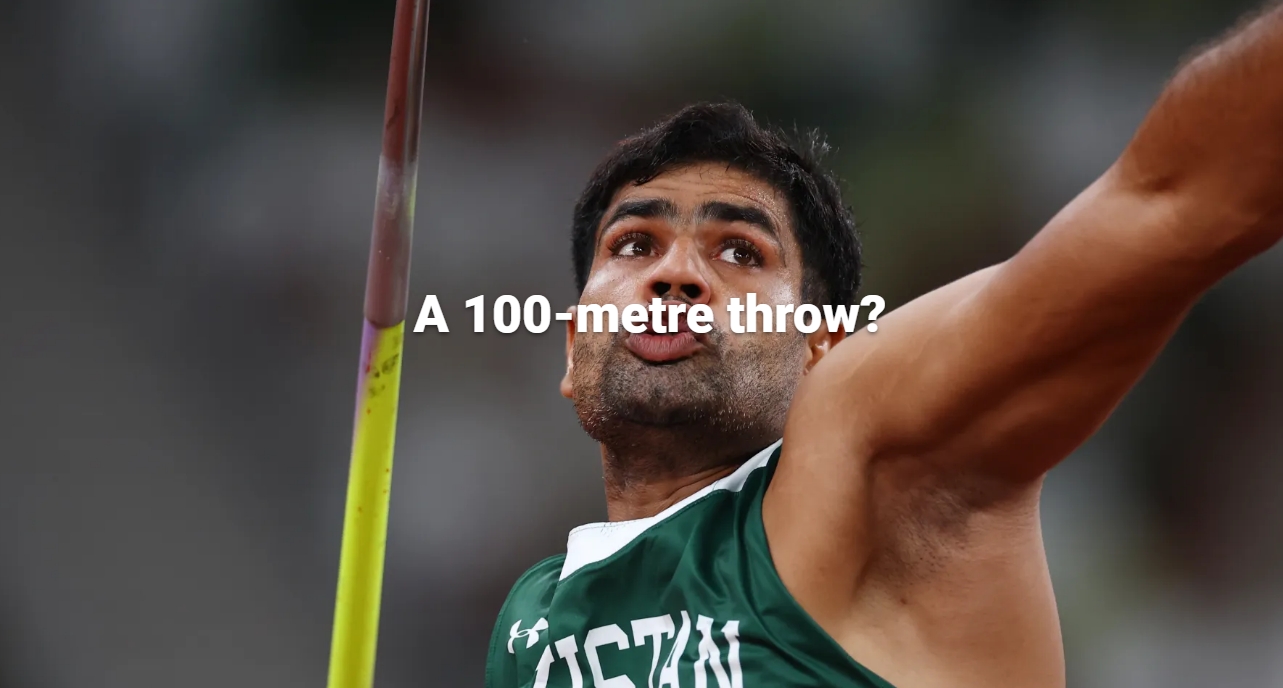
“People have seen me throw long distances, and I have also heard chatter that I can go close to 100 metres [328ft]. But I don’t want to appear too ambitious. If I have crossed 90 once, my next attempt is to touch 92,” he explained.
“From the beginning, I just tell myself to keep a simple approach, make small changes and hope for the best, and it has worked out for me.”
On July 7, Nadeem participated in the Diamond League competition in Paris, his first international event since his surgery in February.
Wearing a white vest emblazoned with “Nadeem”, the Pakistani athlete managed a best throw of 84.21 metres (276ft) on his fifth attempt, which landed him in fourth position.
Grimacing after every throw, it was evident that Nadeem was easing his way into a rhythm, something his coach confirmed later.
“The first and foremost aim was to see how well the rehabilitation has been, and now we can work on making small tweaks in training and just fine-tuning,” Butt said.
Nadeem credits his coach with helping his quick recovery.
“In the world of elite athletics, it all comes down to your support system and who is looking out for you. In Pakistan, even though our overall structure might not be the best, coaches like Butt sahib really make a difference,” he said.
Nadeem and Butt said the Pakistani authorities do what they can, including helping finance medical trips to the United Kingdom. But when he travels for competitions, Nadeem pays for part of the trip while the Athletics Federation of Pakistan and the Pakistan Sports Board finance the rest. Nadeem earns a living from his three sponsors, a clothing, shoe and car manufacturer in Pakistan, as well as his modest WAPDA stipend.
In August 2023, Nadeem won silver at the World Athletic Championships in the Hungarian capital, Budapest, guaranteeing him a place on the Paris Olympic squad. He also won $35,000 in prize money, but competitions such as the Olympics, Asian Games and Islamic Games do not award cash prizes. Instead, it is at the discretion of the home country or sports authorities to give such prizes.
However, from the 2024 Olympics, gold medal winners will receive a $50,000 reward, and from the Los Angeles Olympics in 2028, prize money will also be awarded to silver and bronze medal winners.
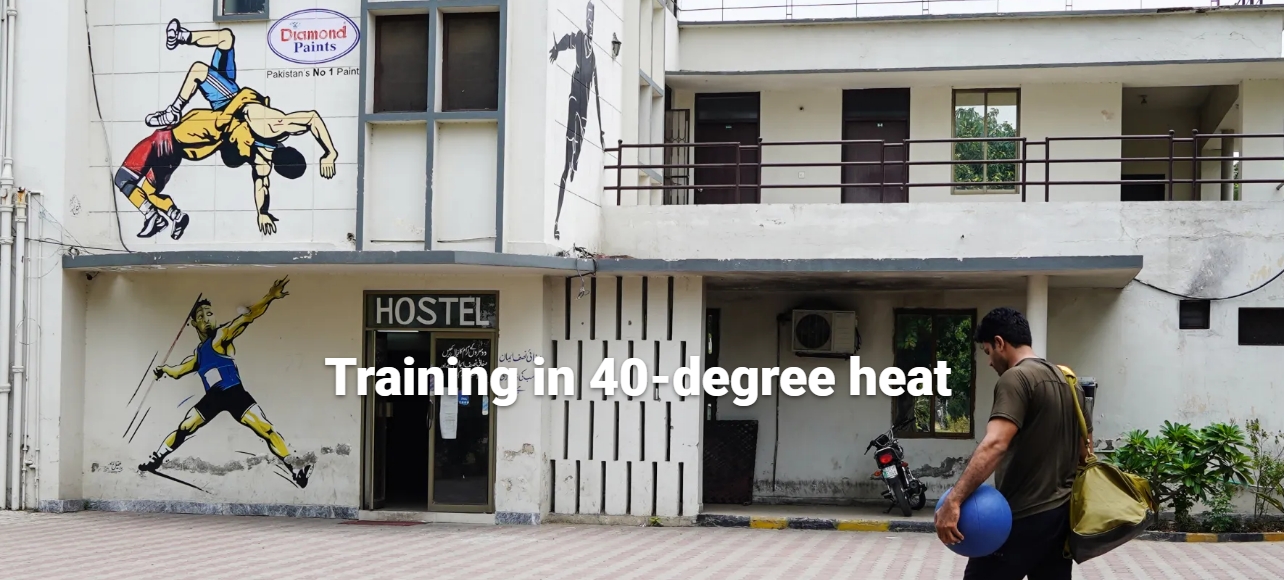
While training, Nadeem spends time away from his wife, two sons and a daughter, who live in Mian Channu, and stays in the Punjab sports board’s hostel for athletes.
“I do not have many friends. I keep to myself, and besides training, I stay indoors. I just keep telling myself that I cannot go into a negative spiral and try to look at the positives,” he said.
Butt chimed in, saying Nadeem’s mental strength is his “superpower”, adding that in his decades of coaching, he has not met another athlete with the same level of focus as Nadeem, who bows his head as he hears his coach’s words.
“He is Zen-like. He is quiet. He is focused, and no matter the setback, he does not let it linger. This is one of the most incredible things about Nadeem, and you cannot really teach it either,” his coach said.
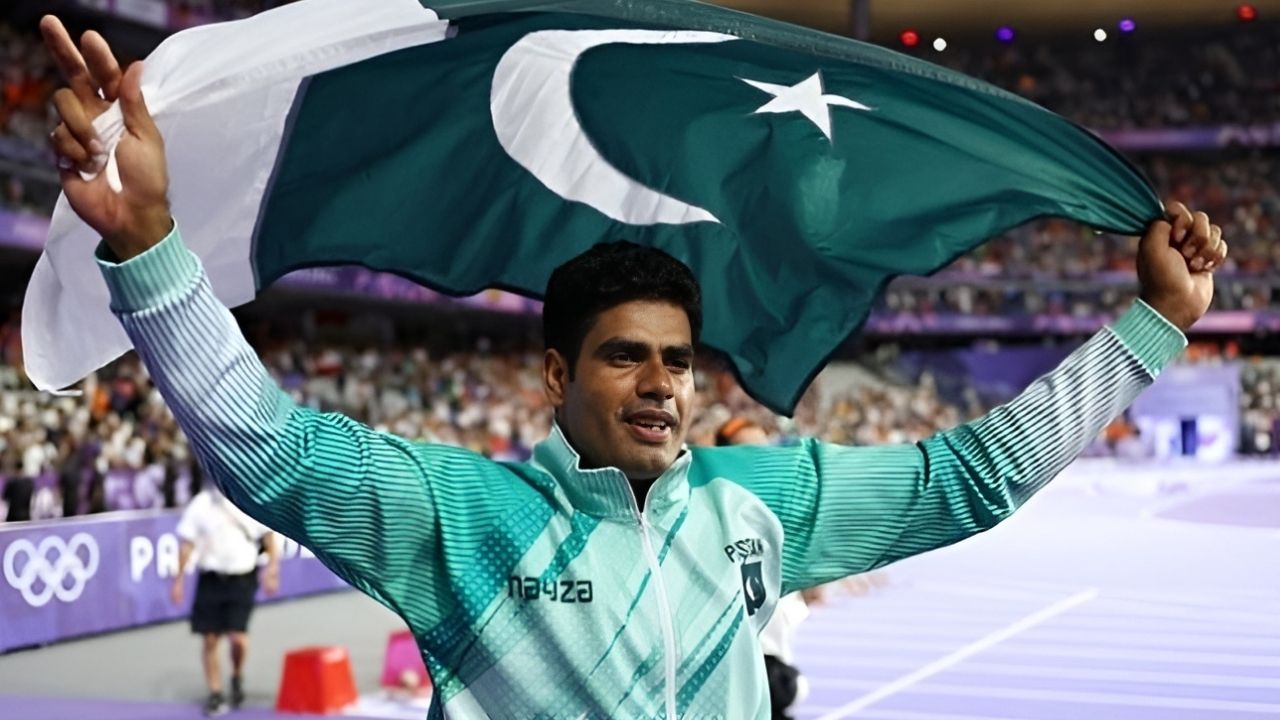
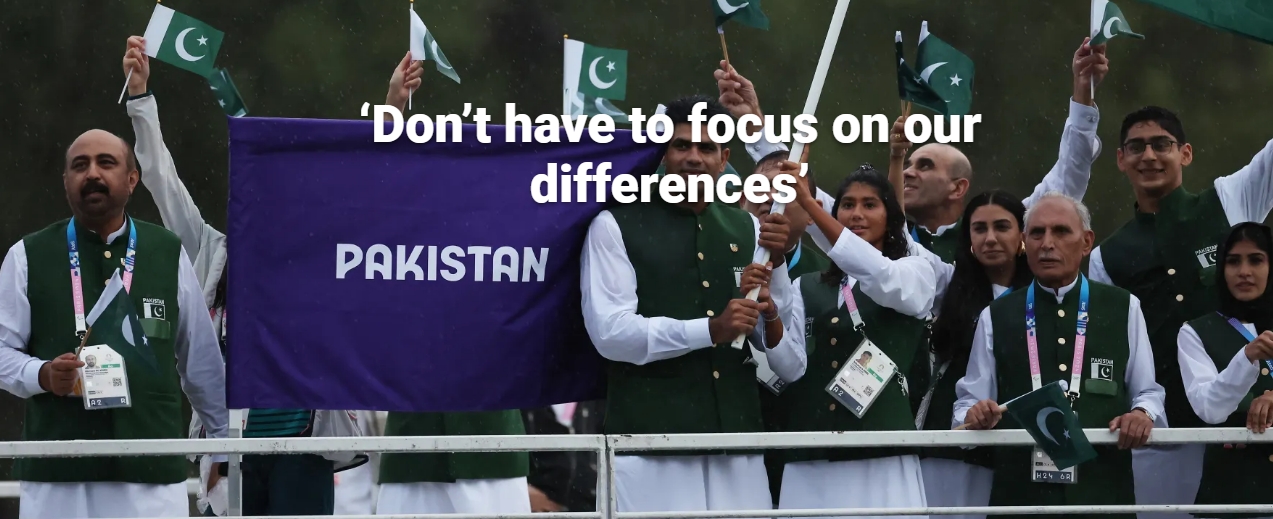
At the opening ceremony of the Olympics on July 26 in Paris, Nadeem carried the Pakistan flag along with swimmer Jehanara Nabi.
“This is something straight out of a dream to be able to carry your country’s flag at the Olympics and a huge honour. But this is not the only thing for me. My main objective is to see my country’s flag being raised and the anthem being played if I get the gold,” Nadeem told Al Jazeera about a week before the Olympics began.
Among his competitors will be India’s Chopra, a now 27-year-old who has won seven gold medals. When they competed against one another at the 2020 Tokyo Olympics, people on social media fanned the flames of the traditional rivalry between the South Asian countries and criticised Nadeem for being distracted and not winning a medal while Chopra won gold.
But Nadeem speaks fondly of his rival from India.
“Neeraj and I are on very good terms. Whenever we are abroad in training or an event, we always talk to each other and stay in touch, but when it comes to competition, then you only think of yourself,” the athlete explained. “Look, India is our neighbour. People on both sides say a lot of things about each other’s country, but this is what sports teaches us – to be friendly and that we don’t have to focus on our differences.”
He continued: “I know I have great rivals like Chopra or Peters or others, but ultimately, I compete against myself.”