How happy are we that superstar Fawad Khan is out and about promoting a new project? Very very happy!
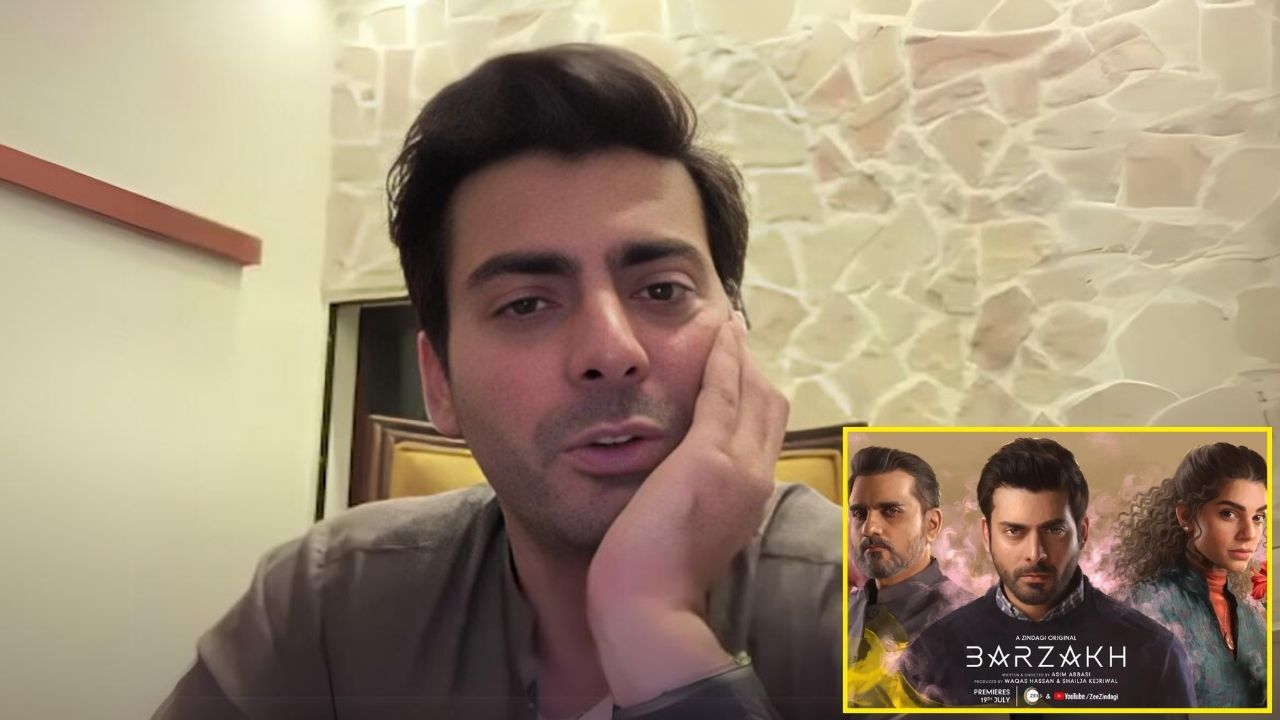
The former rock star and now famous actor is always in the spotlight. His new supernatural web series, ‘Barzakh,’ will be released online on July 19. In an interview with Pinkvilla, Fawad discussed his latest project and the special appeal of Pakistani dramas.
Fawad said he knew ‘Barzakh’ was a great project after reading the script. “When I read the script, I was sold,” he shared. “The script, the team, and especially the director, Asim Abbasi, were amazing. I’ve seen his earlier work, and he is a fantastic director.”
Fawad recalled shooting for his role and laughed about how “unhinged” his character, Sheheryar the psychiatrist, becomes as the show goes on. “He’s a candidate for therapy himself! I’m laughing about it now, but shooting it was emotionally disturbing on many levels.”
After their successful show ‘Zindagi Gulzar Hai,’ Fawad was excited to work with Sanam Saeed again. “She is an incredible actor,” he said warmly. “I feel very comfortable working with her. As actors, our job is about reacting to each other, and she makes it so much easier.”
Islamabad High Court’s (IHC) Justice Miangul Hassan Aurangzeb on Thursday emphasised the “inappropriate language” used by Pakistan Tehreek-e-Insaf’s (PTI) activist Sanam Javaid.
“[I] saw [Sanam] Javaid using inappropriate language on the internet,” Justice Aurangzeb stated while hearing the PTI activist’s plea seeking her release.
During the plea hearing against her arrest today, the PTI activist’s lawyer assured the court that his client would not indulge in improper use of language in future.
The authorities had imprisoned Sanam Javaid in multiple cases related to May 9 violence – triggered by the arrest of former Prime Minister Imran Khan last year.
She currently faces twelve cases, out of which she’s been acquitted in four while successfully getting bail in the remaining eight cases, Geo News reported.
On Monday, she secured significant relief after the high court ordered her release and prevented the police and other law enforcement agencies from arresting her till Thursday (today).
The Court has disposed the plea and declared her recent arrest “illegal”.
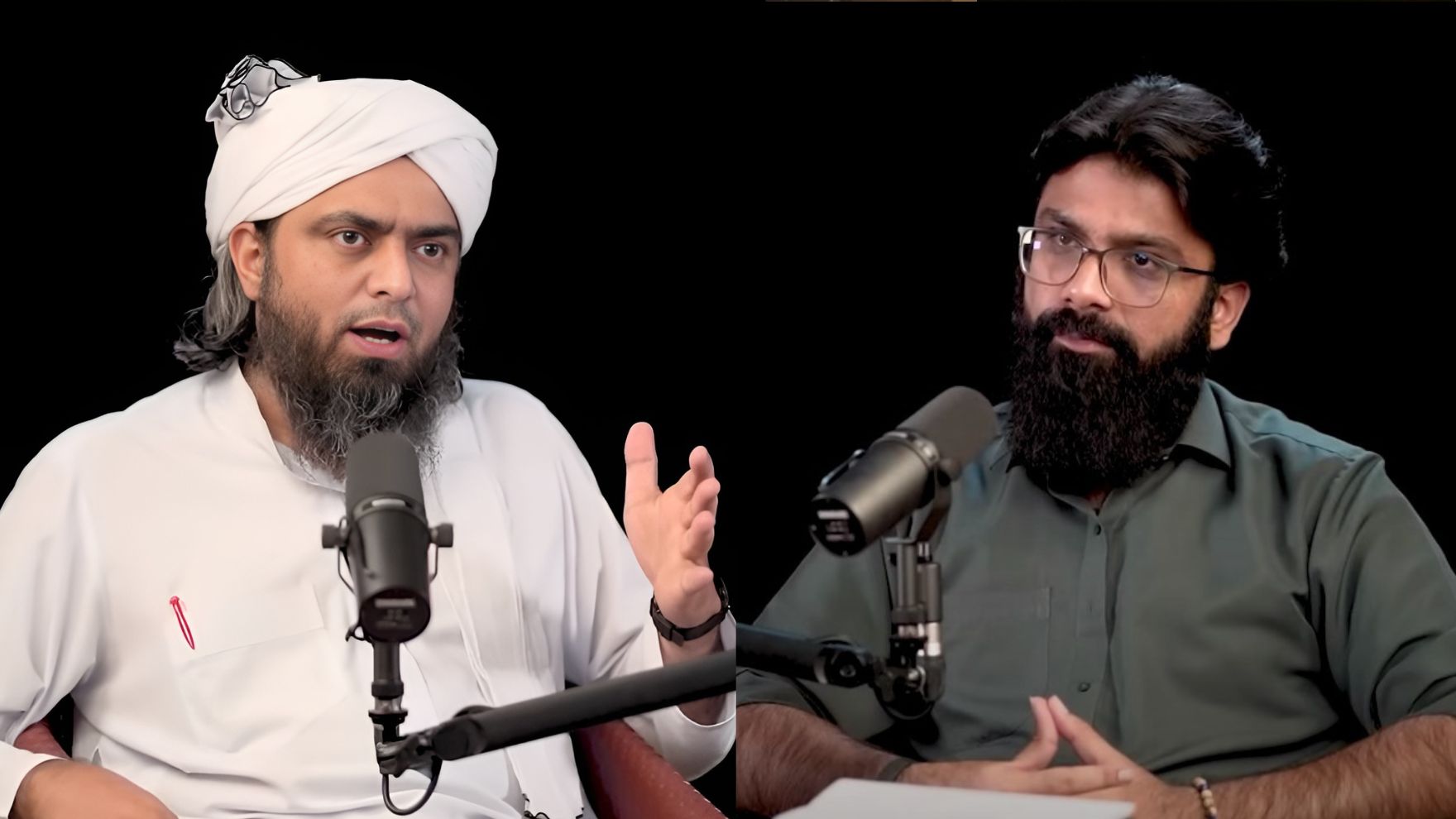
Renowned Islamic scholar and YouTuber Muhammad Ali Mirza has stated that if former Prime Minister Imran Khan were to get out of prison, “there would be no stability in the country.” Talking on a podcast with Talha Ahad on his YouTube channel, Mirza said, “The army knows about this and wants a guarantee for his behaviour, but there is nobody to do that.”
Mirza is known for lectures on his interpretation of the Quran, religious debates, and focus on sectarianism within Islam. He commands a wide following within the country.
“For them [Army], they know things will be uncontrollable if he gets out of prison or goes abroad because he can create such instability sitting in the prison,” said Mirza.
Princess Shaikha Mahra of Dubai announced her divorce from Sheikh Mana on Instagram. The couple had a daughter just two months ago. Shaikha Mahra (Princess) posted a picture with the caption, “Dear Husband, As you are occupied with other companions, I hereby declare our divorce. I divorce you, I divorce you, and I Divorce You. Take care. Your ex-wife.”
Social media response to her announcement was divided; some praised her choice, others believed it should remain secret. The princess is the daughter of Sheikh Mohammed bin Rashid Al Maktoum, the ruler of Dubai.
Sheikh Mana and Princess Shaikha Mahra tied the knot on May 28, 2023. The princess has unfollowed her ex-husband on Instagram and deleted some of their shared photos.
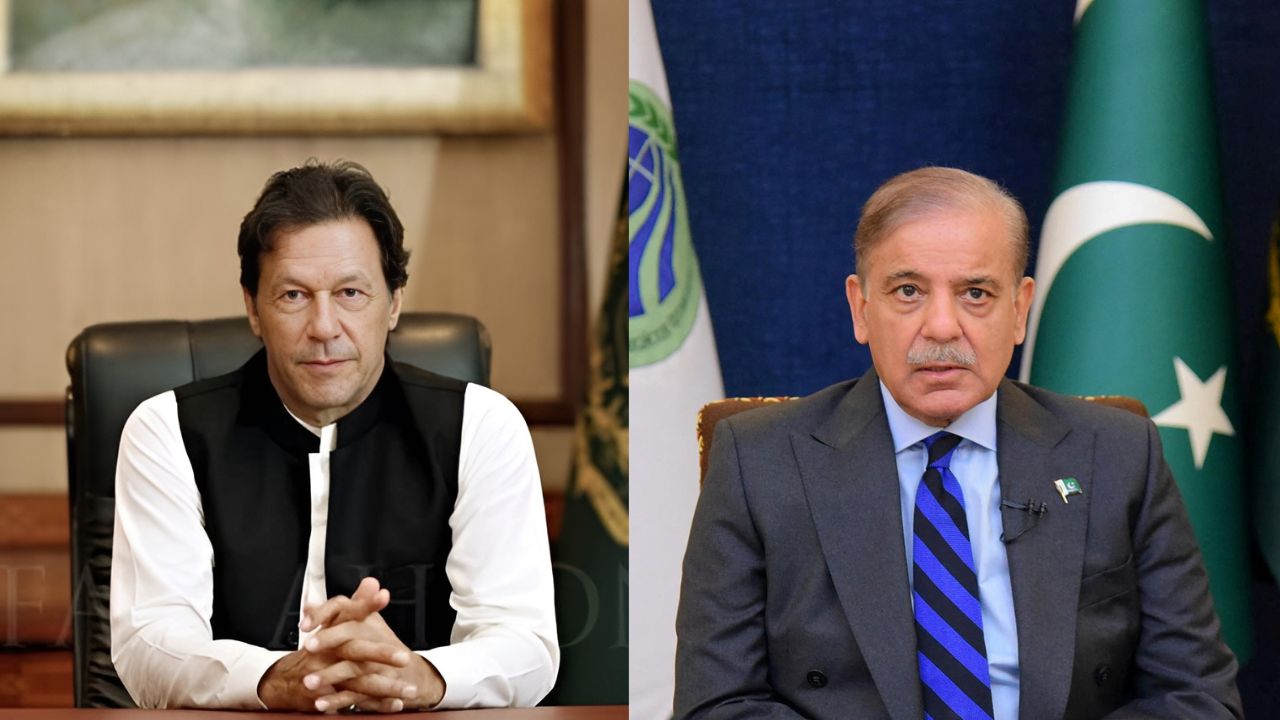
The Defence Minister of Pakistan has stated that there is a danger of constitutional meltdown in the country and agreed with the recent Fitch report about the collapse of the current government in 18 months. He said, “People are ready to join the technocratic government now.”
Previous
BMI, a Fitch Solutions company, has forecast an unstable economic-political situation in Pakistan with its prediction that Imran Khan, the founder of Pakistan Tehreek-e-Insaf (PTI), is unlikely to get out of prison soon.
“We expect that the Pakistan Muslim League-Nawaz (PML-N)-led government will remain in power over the coming 18 months and will succeed in pushing through with International Monetary Fund (IMF) mandated fiscal reforms,” predicted BMI, in its Pakistan Country Risk Report for the fourth quarter of the calendar year 2024.
Interestingly, the Fitch Solutions company also predicted that “in the unlikely event that the government is replaced, the most likely alternative is a technocratic administration rather than fresh elections.”
Regarding the country’s economic situation, it stated that negative events or factors affecting future growth are more likely than positive ones.
“Given that 40% of Pakistanis work in agriculture, another flood or drought would pose a significant risk to the economy. The country’s fragile political situation could also derail the recovery,” the risk evaluator said.
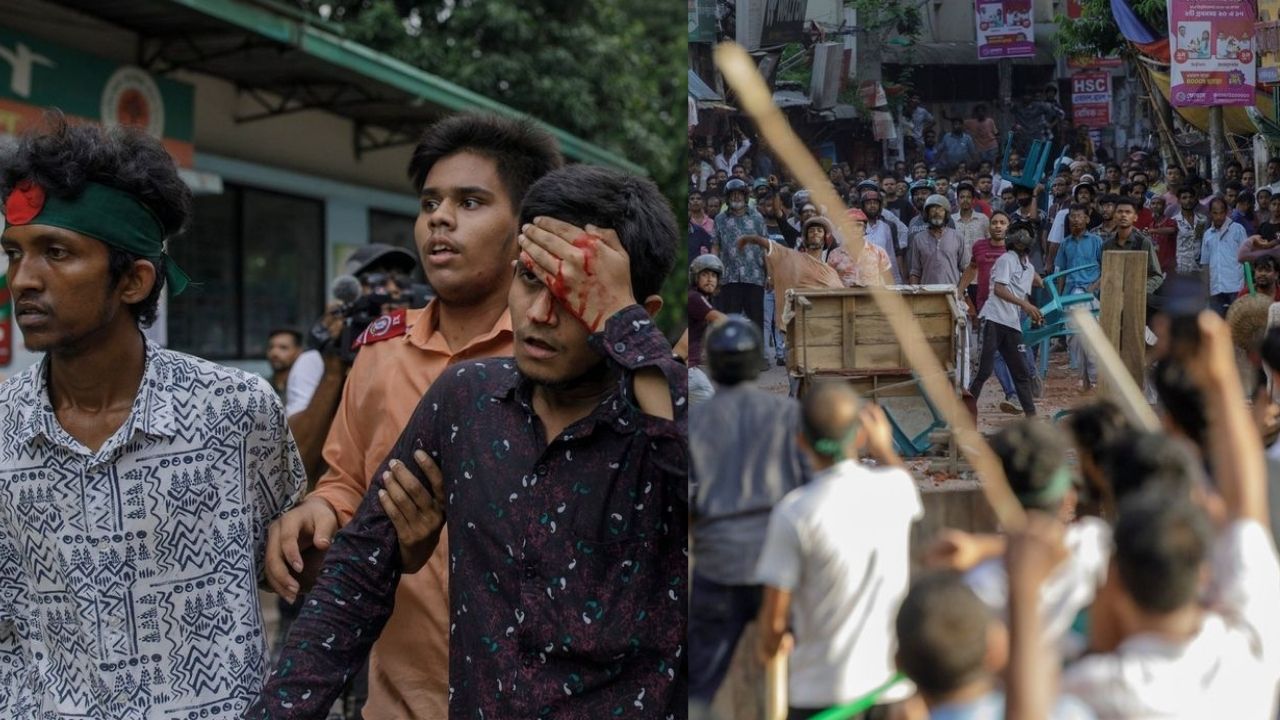
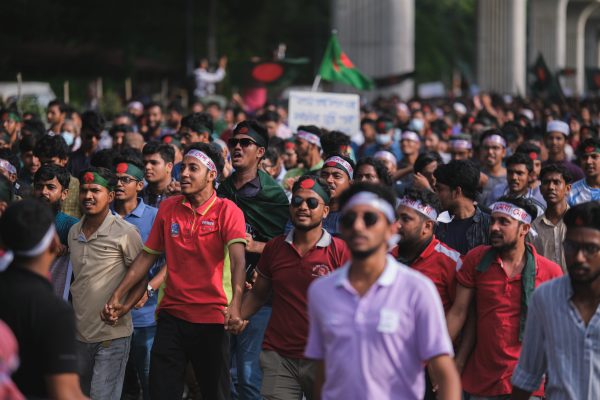
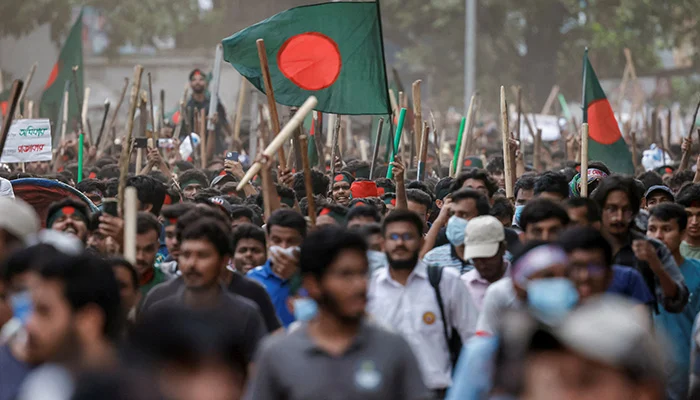
Bangladesh ordered schools across the country on Tuesday to close indefinitely after six students were killed as protests over quotas for coveted government jobs turned into deadly clashes, prompting the mobilisation of paramilitaries to keep order.
Following escalating demonstrations against civil service hiring policies, every high school, Islamic seminary, and vocational education institute in the country was told to remain shut until further notice.
Tuesday saw a significant escalation in violence as protesters and pro-government student groups attacked each other with hurled bricks and bamboo rods, and police dispersed rallies with tear gas and rubber bullets. Demonstrators mobilised in cities, defying earlier calls by Prime Minister Sheikh Hasina and the Supreme Court to return to class.
Three died in Chittagong and had signs of “bullet injuries”, hospital director Mohammad Taslimuddin said, adding that another 35 had been injured during clashes in the port city.
Border security force deployed in Dhaka, Chittagong and three other cities as protesting students demand end to job quota system
Another two died in Dhaka, where rival student groups threw bricks at each other and blocked roads in several key locations that ground traffic to a halt in the megacity of 20 million.
Police inspector Bacchu Mia confirmed the deaths to AFP, saying one had succumbed to head injuries, while at least 60 people were also injured.
In the northern city of Rangpur, police commissioner Mohammad Moniruzzaman said a student had been killed in clashes there. He did not give details as to how the student died, but said police had fired rubber bullets and tear gas to disperse protesters.
Rangpur Medical College hospital director Yunus Ali said the “student was brought dead to the hospital by other students”.
Tauhidul Haque Siam from Rokeya University told AFP that ruling party supporters had attacked anti-quota protesters, while police fired rubber pellets from shotguns. “Police opened fire from their shotguns on the protesters,” Siam said, adding he had been injured.
He said the dead student had been “killed in the firing”. But it was not possible to independently verify his account.
As the day wore on and with some key highways around the country blocked by the protesters, authorities deployed the paramilitary Border Guard Bangladesh (BGB) force in five major cities, including Dhaka and Chittagong.
They had been tasked with controlling “the law and order situation in view of the quota protests”, a BGB spokesman said.
‘Violence against peaceful protesters’
Tuesday clashes came a day after confrontations between anti-quota demonstrators and members of the ruling Awami League’s student wing that left over 400 people injured in Dhaka.
“We are not here to do violence,” said a protester in Dhaka who declined to give their name for fear of reprisal. “We simply want our rights. But the ruling party goons are attacking our peaceful protests.”
Near-daily marches this month have demanded an end to a quota system that reserves more than half of civil service posts for specific groups.
Critics say the scheme benefits children of pro-government groups that back PM Hasina, 76, who won her fourth consecutive election in January after a vote “without genuine opposition”.
Amnesty International afterwards urged Bangladesh to “immediately guarantee the safety of all peaceful protesters”.
US State Department spokesman Matthew Miller also denounced the “violence against peaceful protesters”, prompting a rebuke from Bangladesh’s foreign ministry.
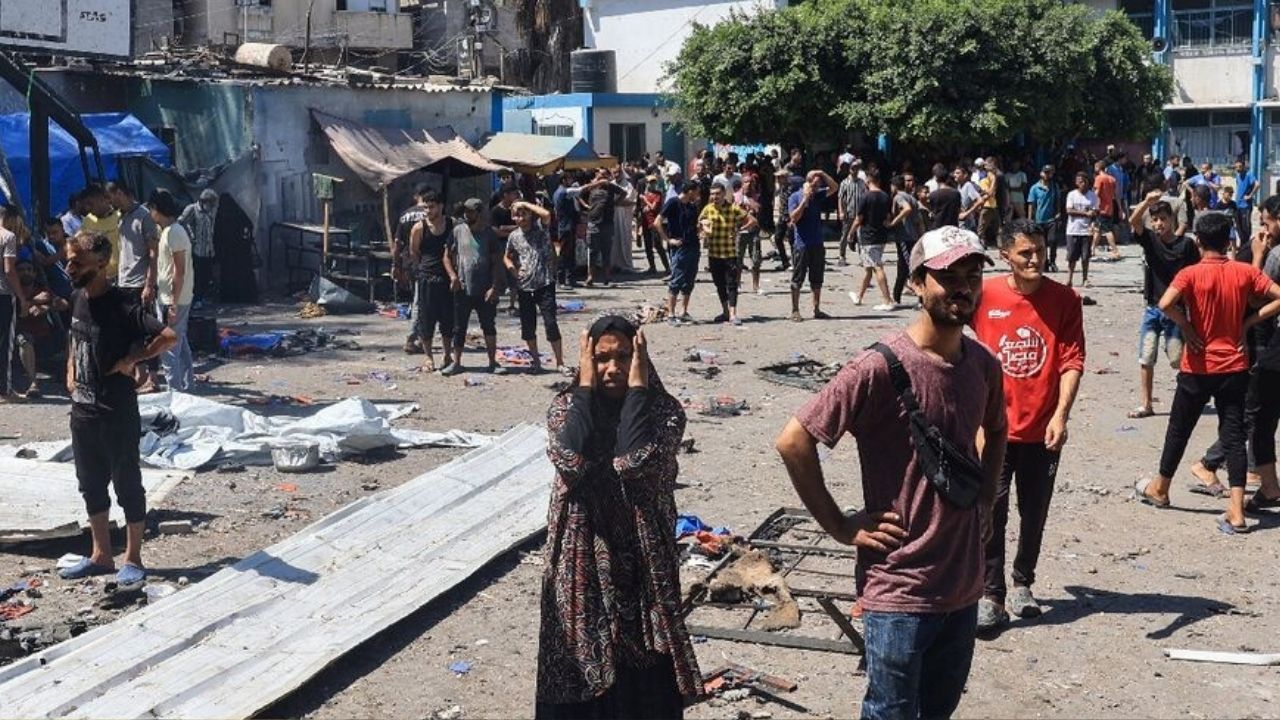
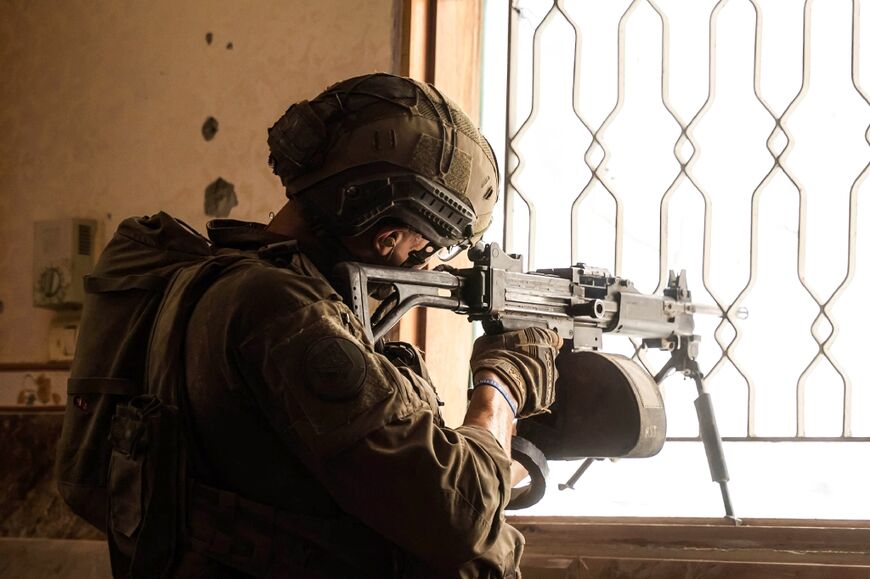
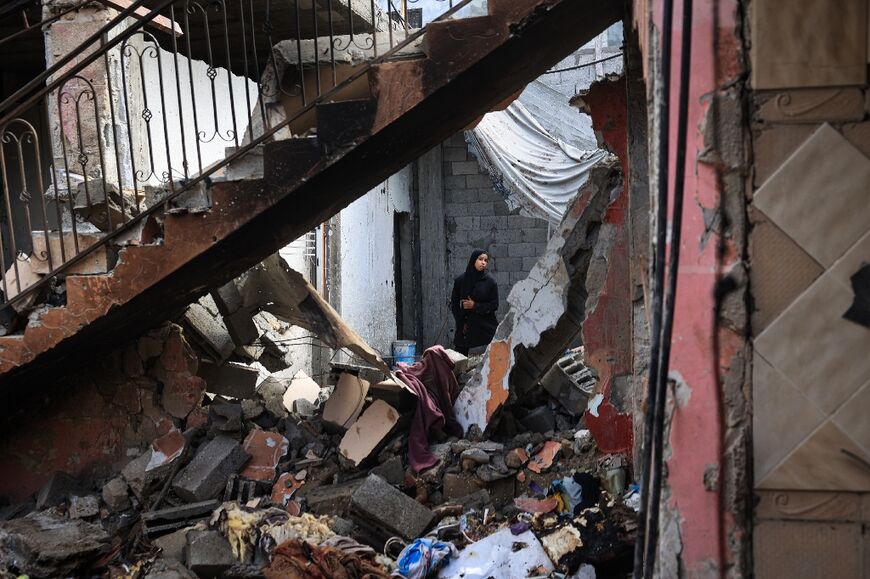
Authorities in Gaza said dozens of Palestinians were killed in three separate strikes, as Israel pounded the territory despite renewed US criticism of the high civilian toll.
Gaza civil defence spokesman Mahmud Bassal said the three air strikes killed at least 44 people and wounded dozens within an hour across the war-torn Palestinian territory. Israel confirmed it carried out two of the strikes.
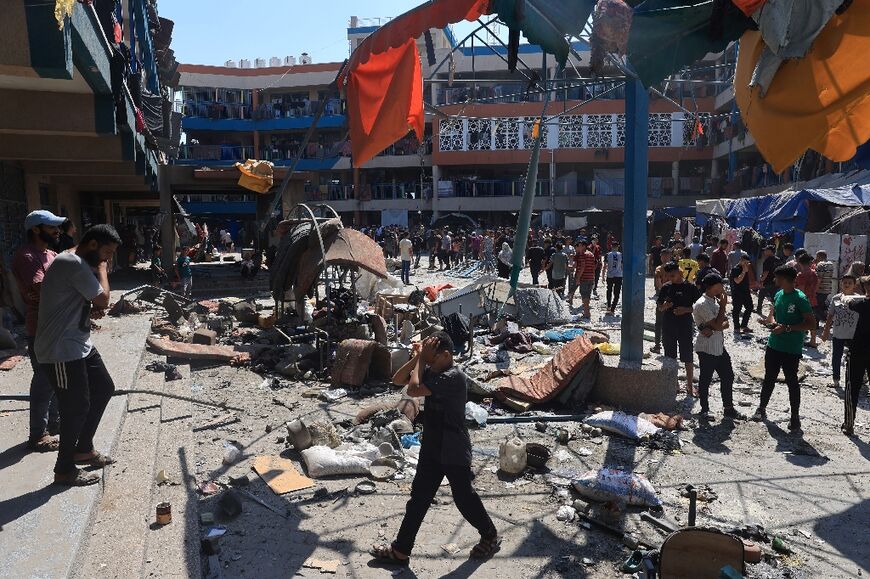
The health ministry said a strike on a fuel station in Al-Mawasi in southern Gaza killed 17 people, and the Palestinian Red Crescent said a separate strike almost simultaneously hit the UN-run Al-Razi School in the Nuseirat refugee camp in central Gaza, killing five people.
The civil defence agency said the third strike was on a gathering of people near a roundabout in northern Gaza, but did not provide a breakdown of casualties.
US Secretary of State Antony Blinken earlier conveyed Washington’s “serious concern” to two senior Israeli officials regarding deadly Israeli strikes in Gaza, his spokesman said.
“We have seen civilian casualties come down from the high points of the conflict… but they still remain unacceptably high,” spokesman Matthew Miller said after Blinken met Strategic Affairs Minister Ron Dermer and National Security Adviser Tzachi Hanegbi.
Washington has been pushing for a truce between Israel and Hamas.
A senior Hamas official said Sunday the group was pulling out of indirect talks for a deal in protest at Israeli “massacres”, including a major strike that Gaza’s health ministry said killed at least 92 people on that day.
Hamas was ready to return to the indirect talks once Israel “demonstrates seriousness in reaching a ceasefire agreement and a prisoner exchange deal”, he said.
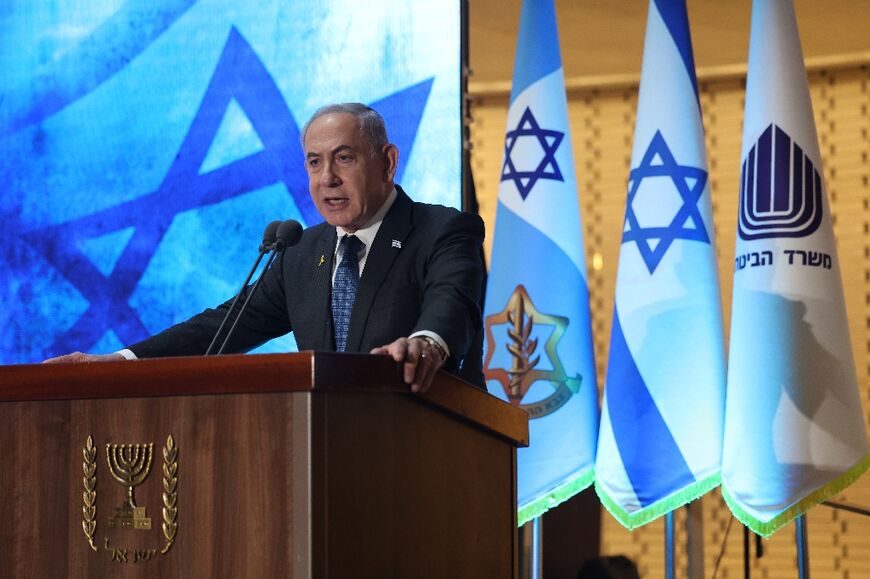
On Tuesday, Israeli Prime Minister Benjamin Netanyahu vowed to ramp up pressure on Hamas.
“This is exactly the time to increase the pressure even more, to bring home all the hostages -– the living and the dead –- and to achieve all the war objectives,” he said.
Prisoner abuse allegations
Israel’s military said aircraft struck about “40 terror targets” in Gaza, including “sniping posts, observation posts, Hamas military structures, terror infrastructure, and buildings rigged with explosives”.
It said troops were continuing targeted raids in the southern city of Rafah and in central Gaza.
The UN humanitarian office OCHA said multiple strikes across Gaza on Tuesday killed and wounded dozens.
Hamas seized 251 hostages after October 7, 116 of whom are still in Gaza including 42 the Israeli military says are dead.
Israel has killed at least 38,713 people, also mostly civilians, according to figures from the Gaza health ministry.
Israel’s military has also detained scores of Gazans, who have made allegations of torture, rape and other abuses in custody that Israeli authorities have denied.
Palestinian lawyer Khaled Mahajna said Monday that prisoners had recounted guards using “electric prods” on inmates.
In one prisoner’s case, a “fire extinguisher tube was inserted into his buttocks and the fire extinguisher was turned on,” Mahajna said after visiting detained Palestinian journalists.
Mass displacement
Indirect talks on ending the devastating war have been brokered by Qatar and Egypt, with US support, but months of negotiations have failed to bring a breakthrough.
At the end of May, US President Joe Biden outlined a ceasefire roadmap he said had been drawn up by Israel that triggered an intensification of the talks.
But despite meetings in both Cairo and Doha, there has been no sign of progress on how this might be implemented.
Critics in Israel, including tens of thousands of demonstrators demanding a deal to bring home the hostages, have accused Netanyahu of prolonging the war.
The conflict has forced 90 percent of Gaza’s 2.4 million people to flee their homes. Many have sought refuge in UN-run schools, seven of which have been hit by Israeli strikes since July 6.
“Why do they target us when we are innocent people?” asked Umm Mohammed al-Hasanat, sheltering with her family at a UN-run school in Nuseirat, which was among those hit.
“We do not carry weapons but are just sitting and trying to find safety for ourselves and our children.”
The war has also sparked near-daily exchanges of fire between Israeli forces and Lebanon’s Hezbollah movement, which says it is acting in support of Hamas.
Lebanese official media said Israeli strikes Tuesday on southern Lebanon killed five people, including three Syrian children, with Hezbollah announcing rocket fire at Israel in retaliation.
Meanwhile near Tel Aviv ultra-orthodox Jewish protesters fought police, hours after the Israeli military said it would begin issuing draft notices for men in the community from Sunday.
Historically exempt from compulsory military service, ultra-Orthodox seminary students are being called up as the Gaza war and potential conflict with Hezbollah sap resources and fuel resentment against those who do not have to serve.
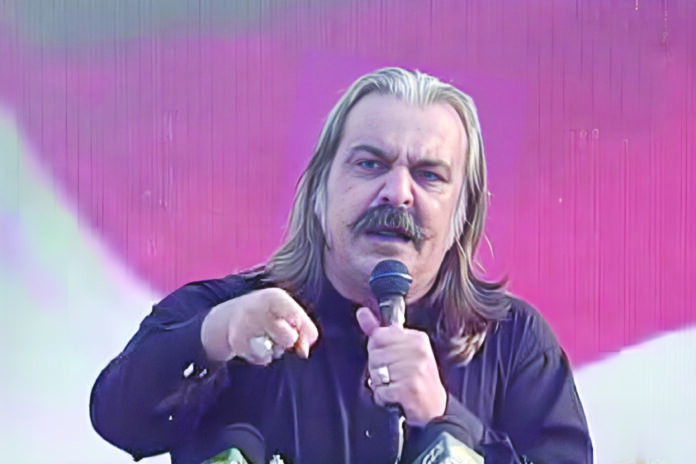
As the federal government finds little support amongst allies for its recent controversial move to ban the single largest party in the National Assembly by number of seats, Pakistan Tehreek-e-Insaf (PTI), Khyber Pakhtunkhwa (KP) Chief Minister Ali Amin Gandapur clapped back at the government saying, “No one can dare to ban the PTI.”
The statement was said in a press conference in Peshawar yesterday while visiting the supreme Command Post Kohati Gate with the Peshawar commissioner, the KP Assembly speaker, the CCPO, and others to review security arrangements for Muharram processions.
Gandpur remarked that the current rulers “stole the mandate” to get into power referring to the ruling coalition federal government.
“They are talking about banning a political party [PTI] that secured the highest number of votes,” said the Chief Minsiter criticising the government.
Faisalabad’s Chak Jhumra police on Monday arrested a so-called faith healer who allegedly raped the 16-year-old daughter of his disciple. The girl was reportedly working at his residence.
A city police spokesperson said a police team arrested the suspect in a raid on a place in Faisalabad where he was hiding.
Police say that the girl, the daughter of a follower of the suspect, was left at his house to work as a house-help.
The victim told the police that the suspect had been raping her for the last four months.
Her medical examination also revealed that she was pregnant.
Dawn reports that Punjab Women Protection Authority (PWPA) chairperson Hina Pervez Butt visited the survivor on behalf of the chief minister.
The Sindh Food Authority (SFA) has ordered a private company to immediately withdraw 11 packaged snacks from the market after a laboratory test declared them “unfit” for human consumption.
“— Slanty Vegetable, Snackers Hot Masala, Snackers Pizza, Twitch Classic, Potato Sticks, Cheese Ball Masala, Cheese Balls Cheese, Kai Korean Hot, Kai Spicy Mala, Kai Mala Wok and Kai Korean Kimchi have been found by examination not fit for human consumption,” told SFA Director General Muzamil Hussain Halepoto to Imtiaz Ali from Dawn.
Mr Halepoto directed the management of the said company to withdraw the products from the market within three days.
He asserted that after the deadline, legal action would be taken against the company.
He said around two and a half months ago, the said company had submitted 24 products for registration. The SFA had submitted its samples to the Food Testing Laboratory established at the Department of Food Science and Technology, University of Karachi, which had declared 11 of them unfit for human consumption.
The products were submitted for testing on March 6.
“It was found by examination of the test reports dated April 19 that the products did not meet the minimum required safety and quality standards and, therefore, were not fit for human consumption and pose a potentially significant health hazard to the public and it is also a serious violation of the law and regulations,” said the letter addressed to the private firm on Monday.
The SFA chief has issued an order for “initiating full food recall” against the products.
The DG’s order also provides a ‘remedy’ to the accused person /company. “If it feels aggrieved by such order, (the company/person) may pursue appropriate remedy i.e. appeal under relevant law of the said Act to the SFA Board within a period of one week,” says the letter.
Halepoto called for other provincial food authorities to look into the issue in their respective jurisdiction for the safety of public health.