Tag: Wahaj Ali

  • ’22 Qadam’ is the long awaited sports drama Pakistan truly needed

    ’22 Qadam’ is the long awaited sports drama Pakistan truly needed

    It’s no surprise that Pakistan is bursting with stories that desperately need to be told on the big screen, but our attention always falls back to the same old ‘saas bahu jhagray’. But this time, Green Entertainment is proving that good, diverse story telling is back in the game with a series of dramas released last week that have been receiving praise from audiences. Among them ’22 Qadam’ looks like a real game-changer because it is truly the first time that we’re getting a good sports drama, that too about women.

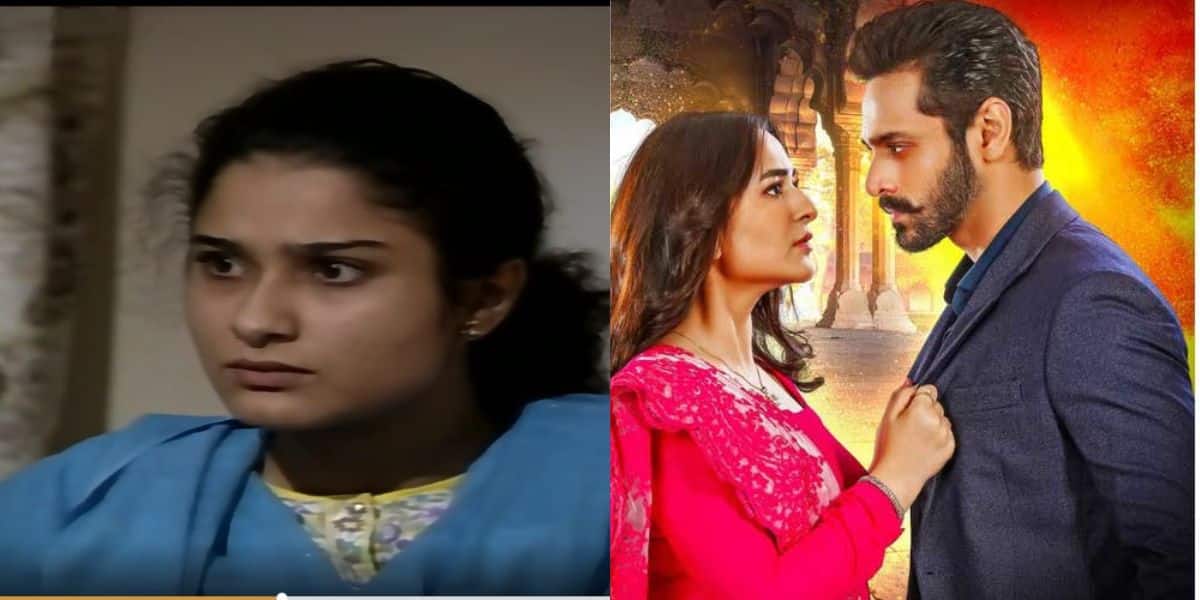
    There haven’t been good sports biopics made on Pakistani players, considering how impressive the list of icons is. There was the rare gem of a telefilm ‘Bhaag Amina Bhaag’ released in 2011, starring Amina Sheikh as female Pakistani athlete Naseem Hamid, who won a gold medal at the 11th South Asian Games in Bangladesh. Since then, a biopic on Shoaib Akhtar was in the works but the former cricket star announced that he was leaving the project. It’s disappointing how no attempt was made by our entertainment industry to explore the lives of sports stars, but it feels like ’22 Qadam’ is taking a step in the right direction. The story revolves around a woman’s passion for cricket, leading her to becoming a national player.

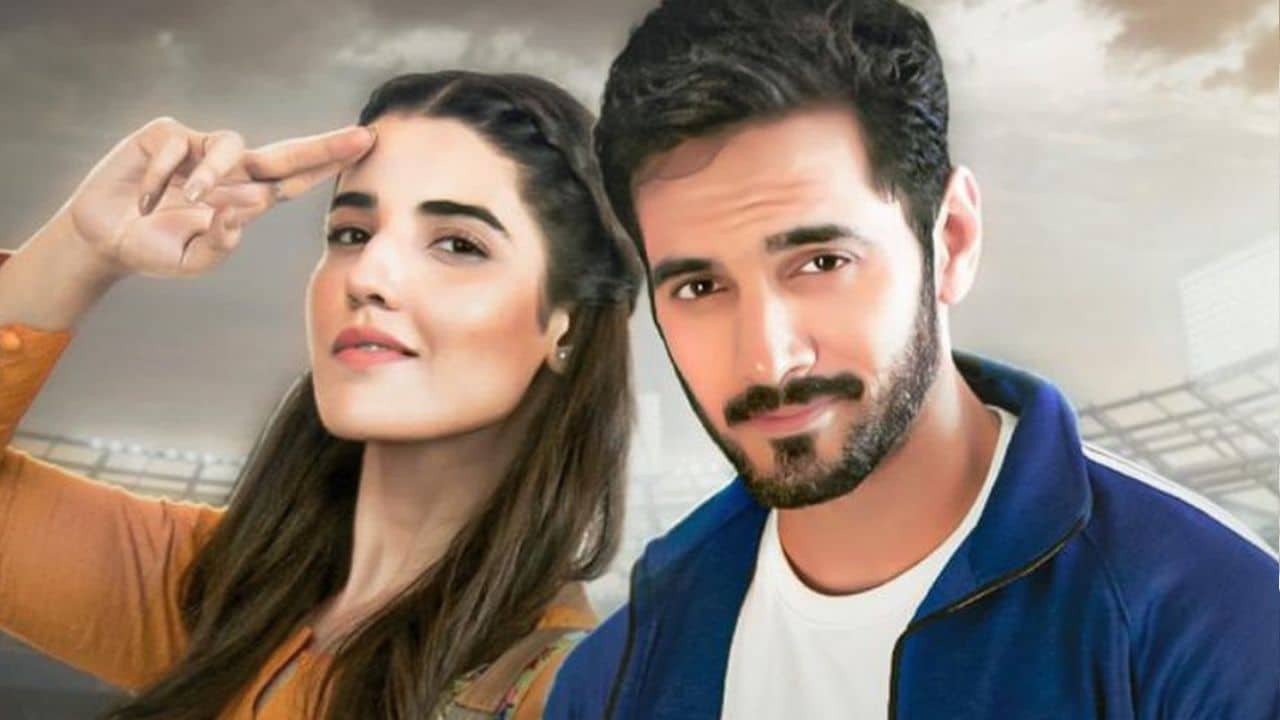
    Helmed by the powerful performances by Hareem Farooq and Wahaj Ali, ’22 Qadam is for all those who grew up loving the Bollywood film ‘Chak De! India’ and how it championed women in sports, a long neglected issue that remains pushed out of the spotlight because of patriarchal assumptions that women can’t play sports, and how underfunded this issue remains. The series focuses on a spirited, confident woman Fari who dreams of becoming a cricket player, and her luck turns around when she gets an opportunity to meet the famous cricket player Sana Mir, who makes a cameo in the second episode as a visitor in a girl’s college, and advises Fari to never give up on her dream. As Fari is climbing up the ladder to success, the series alternates with the story of Jimmy, a former cricket star who after an injury, was forced to give up on the game and take a back seat.

    “When we came up with this concept,” Farooq told The Current when the series was announced. “The thought behind it was that we need to empower women in the best way possible and there is no way better than projecting women in sports. Cricket, especially being the most loved sport in South-Asia.”

    She also stressed on the importance of such a drama that would not only be enjoyed by people, but also educate them about breaking stereotypes, calling ’22 Qadam’: ‘the voice of the unheard’.

    Since the two episodes went up on social media, clearly online audiences share our joy because the feedback has been nothing but positive.

  • Want to know how to talk about domestic violence? Tere Bin has nothing on 1990’s Aahat

    Want to know how to talk about domestic violence? Tere Bin has nothing on 1990’s Aahat

    In a triggering scene, a house helper is seen violently beaten, dragged across the floor by her hair as her husband screams at her to give him more money. The woman keeps refusing, since the man is a drunkard who steals all their money to gamble it away. When the house help begins crying for help, another woman steps outside from her apartment and stands between them to protect her. The drunkard orders her to leave, as its a personal matter between a husband and his wife. But the woman refuses to do so, threatening to call the police. She takes the beaten woman inside her house.

    Did this scene come from a recent hit drama like ‘Tere Bin’, or from a forgotten, classical drama from the 90’s which talked about post- partum depression, pressure to give birth to sons and struggles of a working class family to make a living for their three daughters? Haseena Moin’s ‘Aahat’ was decades ahead of its time when it came to discussing sensitive topics, giving women the catharsis they need that decades later, ‘Tere Bin’ glorified with toxic relationships.

    In several ways, Aahat was ahead of its time when it pulled back the curtain to reveal the struggles Pakistani women underwent, talking about the things that today’s television dramas would have been called ‘vulgar’. It explores the struggles of Rabiya, who gave birth to a fourth daughter, and is being pressurised by her mother-in-law to give her a son, or her husband must marry another woman. Rabiya’s pain is nothing new for Pakistani women, who bear the brunt of family problems, and the drama never shies away from being blunt about the pain: like a scene where Rabiya is made to isolate herself from her children in a room until she is able to give birth to a healthy son, under the orders of a peerni. Or the taunts for only giving birth to daughters which puts pressure on her health as she toils around the house, regardless of the warnings of her doctor and friend.

    But most importantly, what makes ‘Aahat’ the exemplary drama that proved Haseena Moin knew what Pakistani women yearned for, better than the writers today, was how she crafted female friendships that rose from the pains women shared with each other. Rabiya’s friendship with the brilliant and witty Naheed (played by Talat Naseer) is what guides her to take a stand for herself and eventually for her children. Naheed’s boldness and selfless love for Rabiya rescues her in moments when her post-partum depression make the worst of her, like in the first episode, she immediately begins working around the house after undergoing a critical surgery, because her mother-in-law refuses to take care of her three daughters, calling them a burden. Or the humiliation Rabiya endures because of the limited money her husband makes, that eventually push her into making shocking decisions. It was Naheed who offered her safety, and eventually proved that the drama was a love letter to the magic of female friendships.

    In an episode when Rabiya has to make a critical decision, Naheed reminds her that she will never be granted a place on the table, but she needs to keep raising her voice to make it happen.

    “Hum aurtoon kay pass koi jagah nahi hoti’ she urges. “Mein isliee har dafa chala rahi hoti hoon kyun kay mujhay pata hai kay istarhaan meri awaaz koi sunay ga. Islie apni awaaz uthaya karo ta ke log tumhein sunien.”

    Would this message remain evergreen in the years ahead ? Tere Bin, currently rated as a critical hit drama on Pakistani screens, proved that the enduring message of friendships and female empowerment has been lost forever. For 58 episodes, the drama stomped out any effort Moin made to give Pakistani women the space they needed to find their voice; instead glorifying the opposite with a clueless storyline featuring two toxic characters, and an even toxic slutty savitri who plotted to break them apart. From the first five episodes, Meerub was slapped for refusing to marry Murtasim, lead a toxic storyline of stalking, abuse, harassment, and even marital rape to a point. What was once a space crafted by the gentle and clever writing of Haseena, is now bombarded with 45 minutes of Haya plotting to make sure Murtasim catches Meerab in a scene that makes him slap her and then divorce her so Haya could become his wife.

    The wound left behind by the passing of Haseena bleeds anew when we come to realise that what television dramas show on our screens is what even female drama writers today staunchly believe is what the audience needs. When the writer of Tere Bin Nooran Mahkdoom, had been questioned about the controversial marital rape episode, she defended it as ‘a demand of a serial’, a complete 180 from the time when a decades old drama written in the times of Zia had not only condemned domestic abuse and rape, but even made sure that the message that abusers should be punished is given to the audience.

    The problem never was just about Tere Bin, but the complete decline in the quality of our dramas, pushed by an industry that now considers that any show featuring one of out the following: domestic violence, wailing women, a satti savitri desperately wanting a man’s attention. Pick one of them and you have a hit on your hands, even get a Pride of Pakistan award ready. Take a stand and make a drama like ‘Udaari’ that talks about child abuse and sexual assault, PEMRA is at your doorstep ready to call you a traitor for going against the Islamic Republic of Pakistan.

    In a time even Pakistani women can’t find a place to be still, with the economy ravaging, human rights violations growing even worse by the day, public spots becoming hunting grounds for rapists and harassers, the grief we carry in our bodies is understood by no one better than Haseena Moin, and the prevailing message that becomes relevant as currently a hit drama featuring two cousins falling in love features a scene accusing women for falsifying rape accusations for the sake of attention. It’s no surprise that more women are turning to classical dramas because the gentleness and sharp writing of Moin will keep outshining whatever dumpster bin dramas we’re fed in the name of ‘hit dramas’.
  • Pakistani dramas, stop treating topics like sexual harassment so lightly

    Pakistani dramas, stop treating topics like sexual harassment so lightly

    Ab ye hi reh gaya tha?

    Pakistani dramas have a strict formula. To make sure that a drama turns into a hit. They try not to even think about emphasising the understanding of social issues or for once making a drama that is not about sass bahu jhagray. The problem is that they include scenes like women being abused, exploited, and even flip the narrative by trying to justify that women make up harassment scandals just to entrap men.

    ‘Mujhay Pyaar Hua Tha’ decided to take the cake after showing two cousins getting married, a weird love triangle, father getting paralysed after daughter tries to rebel, now the good-at-heart male lead is getting trapped by another woman, who falsely accuses him of harassing her, because obviously women don’t get sexual harassed or assaulted in the Islamic Republic of Pakistan. They just make up stories, right? So wrong.

    https://twitter.com/eliteclownn/status/1675888756648464386?s=20

    In this scene, a woman shows up to Saad’s office, threatening him that she has personal pictures of his wife Maheer (played by Hania Amir) and her ex-lover Areeb (Zaviyaar Nauman Ijaz), which she will leak on social media unless Saad visits her house. When he arrives there, she hands him coffee which she had drugged with something that makes him unconscious. When Saad awakens, the woman calls the police and re-arranges the scene to make it look like she was sexually assaulted, and Saad is arrested and taken away.

    We hope that the makers of ‘Mujhay Pyaar Hua Tha’, its writer and the lead actors understand that sexual harassment is a serious crime, and not a made up fantasy that women endorse just to make money and trap innocent men. If it’s so hard for the lead actors to understand why being well aware about social issues is important when working in dramas, take an example from Mawra Hocane when she revealed that she refused to work in the drama ‘Qisa Meherbano Ka’ which was depicting marital rape, that after discussing this issue with the producer Momina Duraid and the director Iqbal Hussain, they all agreed to re-write the scene and then shot it.

    Twitter users had to condemn Pakistani dramas for once more proving that we could take one step forward, but in exchange we’ll go several steps back.

    “It’s extremely irresponsible to show false rape allegations in countries with rape culture,” one user wrote. “I hope makers realise they are feeding victim complex of Desi men for lukewarm twists.”

  • Creative and intriguing, here are four reasons why you should go watch ‘Teri Meri Kahaniyaan’

    Creative and intriguing, here are four reasons why you should go watch ‘Teri Meri Kahaniyaan’

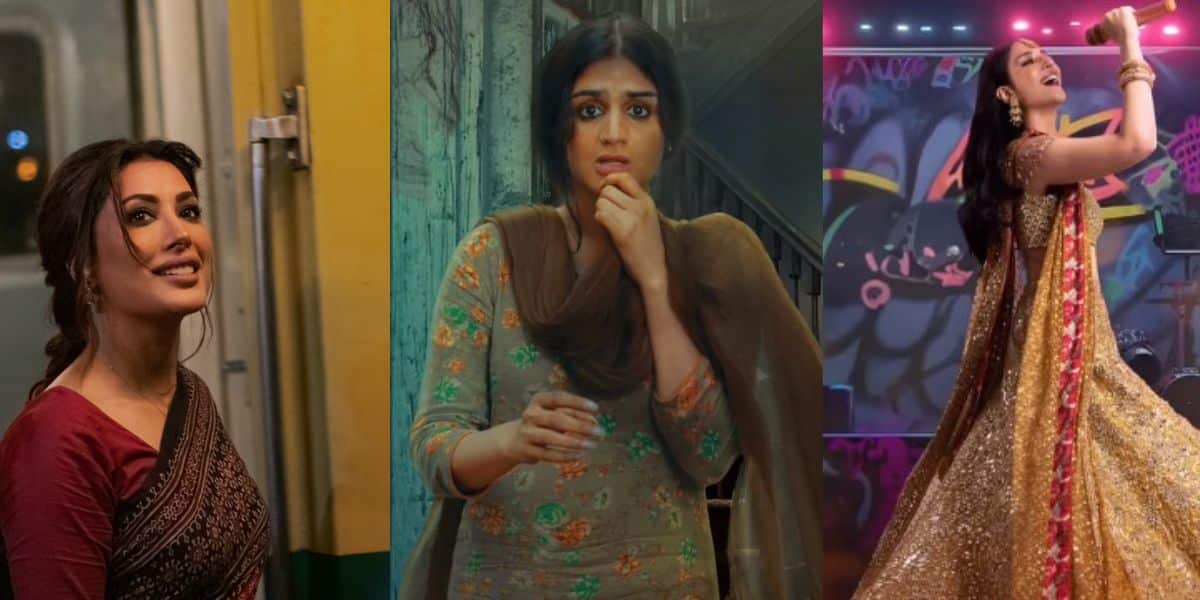
    ‘Teri Meri Kahaniyaan’ has been hailed by critics and filmmakers as a progressive step, citing its three unique stories with stellar performances by actors like Wahaj Ali and Mehwish Hayat.

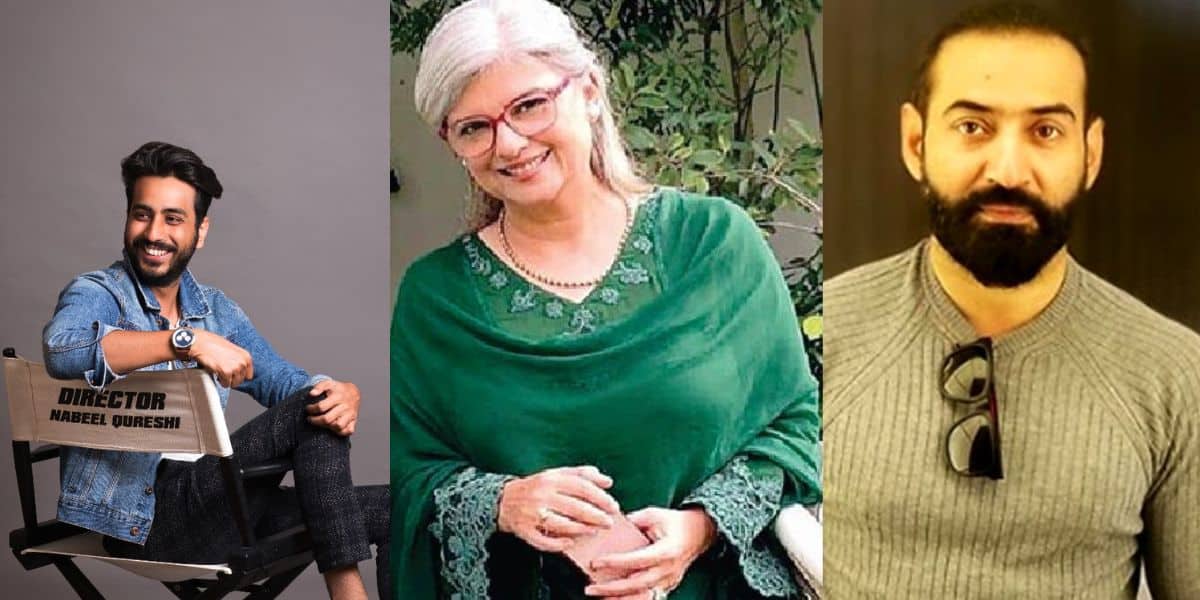
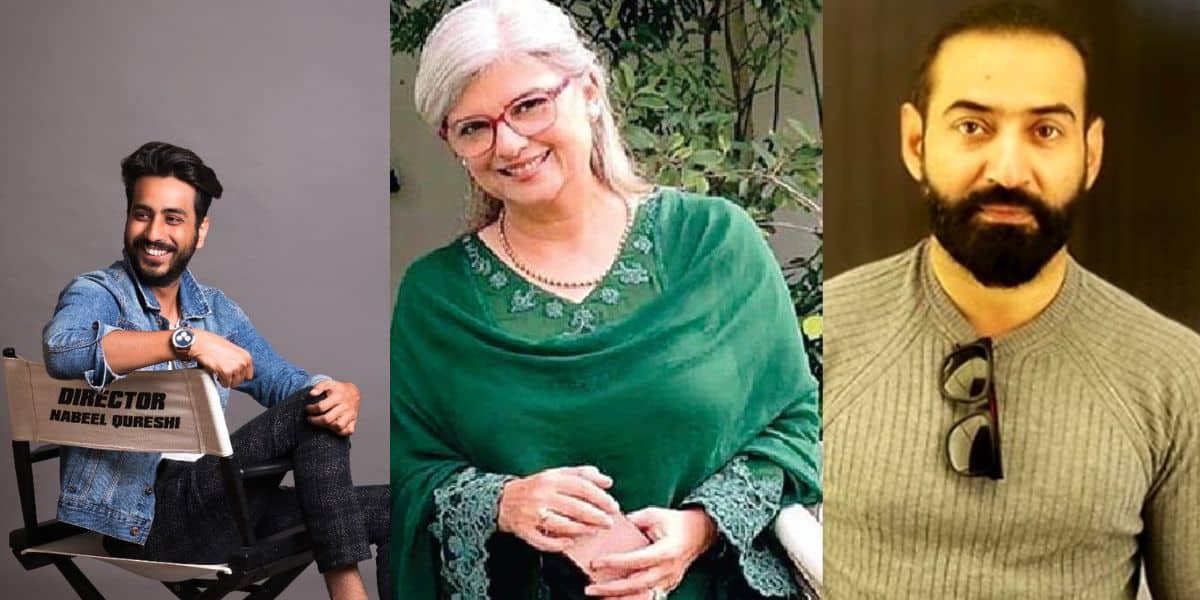
    The anthology film comprising of three stories directed by Nadeem Baig, Marina Khan and Nabeel Qureshi, is at heart an ode to celebrating creativity and the complexity of human nature, with plenty of twists and turns to keep you hooked till the credits roll.

    Here are four reasons why this film should definitely be on your watch list:

    1 Marina Khan knocks it out of the park with a wholesome rom com ‘Pasoori’

    We all remember Marina Khan from beloved classics like ‘Tanhaiyaan’ and ‘Dhoop Kinare’ but her powerful direction in helming this feminist comedy to life is something the Pakistani cinema truly needs, more women led movies that do not center around men. Pasoori revolves around the upcoming wedding of Salman (played by Shehryar Munawar) and Romaisa (Ramsha Khan), who receives an opportunity on her nikkah to perform at a talent show. With its hilarious side characters and Munawar’s ability to incite laughter and tears with his emotions, this was a well directed story.

    2. The hilarious comedy of ‘Jin Mahal’

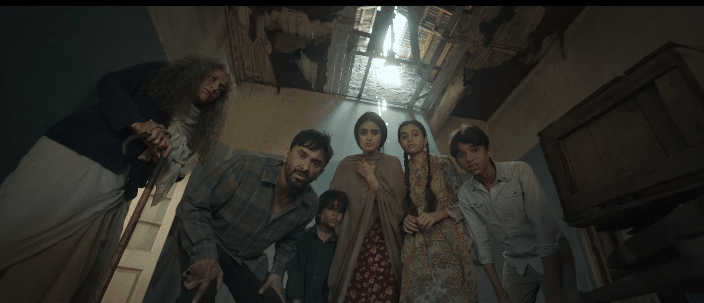
    Jin Mahal, penned by Ali Abbas and Basit Naqvi and directed by Nabeel Qureshi, starts of with a tragedy as a couple is forced to live in an abandoned train after being forcefully evicted from their home. It still churns out golden moments thanks to stellar performances by Hira and Mani, as their characters Shehenshah and Mumtaz fight to keep their home by tricking others to believe a jinn resides there.

    3. Khalil ul Rehman’s engrossing ‘Aik Sau Taeeswan’

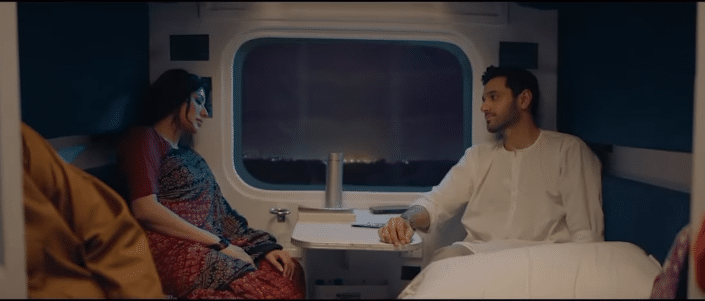
    A gripping tale about possessiveness, betrayal and the complex thing that is love, with gorgeous visuals and a powerful performance by the icon that is Mehwish Hayat, the third and final film is a masterstroke in why we need more films like ‘Teri Meri Kahaniyaan’. With a span of only 35 minutes, the tale dives into the glory of love, and its dark side as two married people sitting in a train confide their marriage woes to each other.

    4. The sizzling chemistry between Mehwish Hayat and Wahaj Ali

    When we spoke to Nadeem Baig, who directed ‘Aik Sau Taeeswan’, about why he picked Mehwish and Wahaj to star in his short film, he revealed that although the two had not shared the screen before, it was interesting to see how their chemistry would work out. In this film, their electrifying chemistry keeps the audience gripped. Hayat keeps the audience in control with her commanding performance as a married woman who is aware of her failing marriage, but refuses to let herself succumb to it. Equally compelling, Wahaj Ali keeps viewers engaged as the screen shifts from their playful flirting dynamics, to guilt and complete shock as the tables turn.

  • Ranking the most absurd plot twists in Tere Bin

    Ranking the most absurd plot twists in Tere Bin

    Warning: spoilers

    Yes, you’ve heard of ‘Tere Bin’. Your momma has too, as has the paros walli aunty. Even bechara Irffan Khan ka beta apnay aap ko iss say bacha nahi saka.

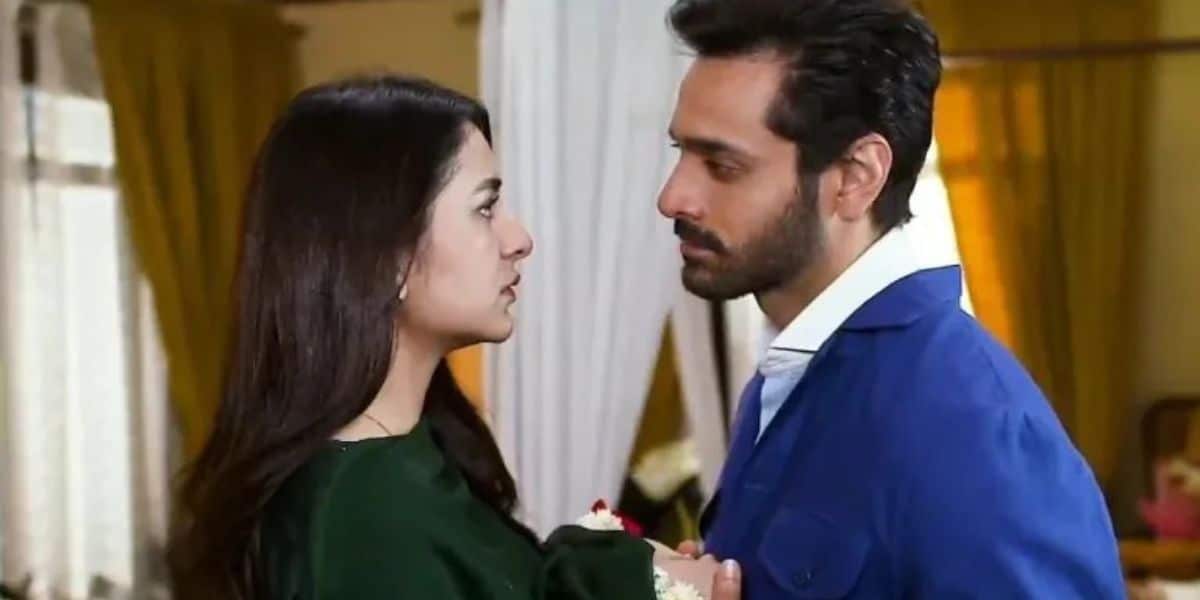
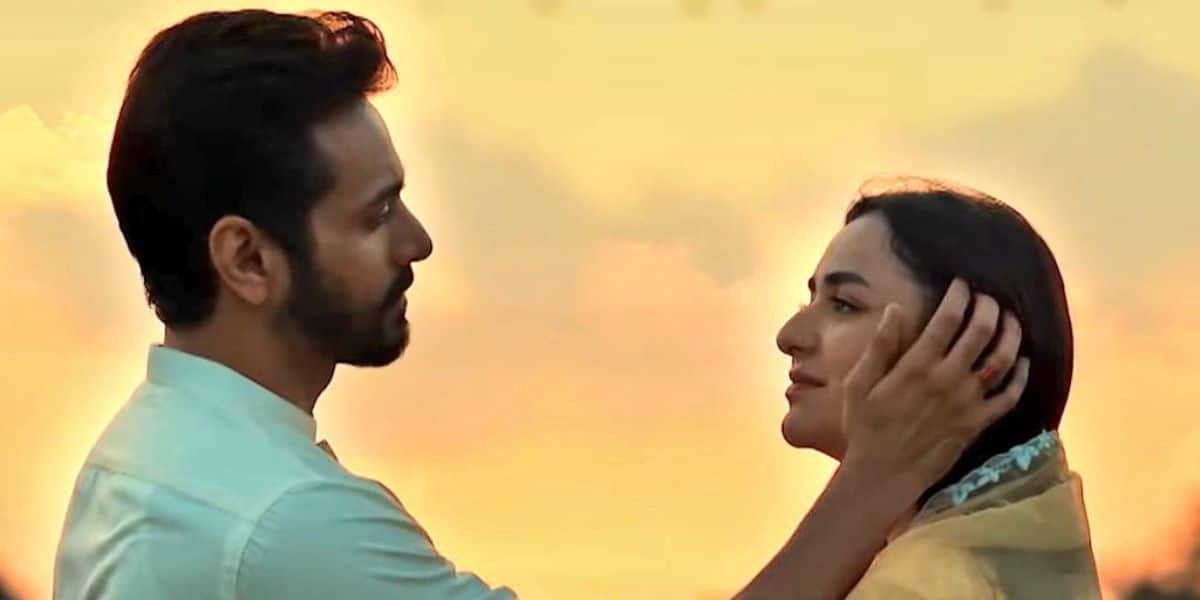
    ‘Tere Bin’ has us all in a trance, but perhaps we don’t want to remain in it. Yet there we are, every Wednesday and Thursday, hooked to our screens. These two days could be now renamed ‘Tere Bin days’ and we’re honestly thinking this drama should be studied by psychologists because no matter what absurd plot twist is thrown in, the fanbase remains dedicated as ever. Is it because of the appeal of the main leads, Wahaj Ali and Yumna Zaidi? Or is it because as a post-colonial nation, we’re addicted to hate watching? Does any scientist out there care to explain how we’ve gone from this couple fighting to falling back in love to faking a pregnancy to then back to shouting and crying and going all over again back to lovers? We’re 53 episodes in, give us a break!

    But we did as a nation get some hilarious plot twists and pearl clutching moments that even got PEMRA looped in. So let’s break down some of the ways Tere Bin decided to throw logic out of the window

    1 Starting with the more recent: Meerab’s pregnancy announcement.

    Episode 53 opens with a mind blowing twist: that apparently doing it only once in your marriage with your frenemy husband gets you immediately pregnant. Fans first got to watch their favorite couple in torment because they broke their rules and decided to have sex, and then mope around when Meerab decides to run away, and now the cherry on top is her realising that the same husband she ran away from is the one who got her pregnant?

    2 Abba saying shaba khair

    There is a hilarious trope in Pakistani dramas that every time a daughter decides to rebel by divorcing the man she’s been forced to marry, the dad immediately becomes an obstacle in her path by dying from a heart attack. Ye abba je ko convenient waqt nahi milta apni manmani karwanay kay liye? And why play up the daughter’s guilt when she is escaping an unhappy marriage? We saw this with ‘Mujhay Pyaar Hua Tha’, that the father immediately passes away, guilt shaming Maheer further for not wanting to remain married to her cousin, Saad.

    In episode 50, after finding out that his daughter Meerab has run away from her home and left her belongings behind, her father searches for her and then passes away outside her friend’s house.

    3 Haya dancing at Murtasim’s wedding

    If a villain goes down in history for messing with the nation’s mind so much that even the actress performing this role was sent hate mail, it would be Haya, palyed by Sabeen Farooq. We have to give credit to Farooq’s brilliant acting that makes Haya such a hateful character, and yet someone whom the audience can’t turn away from despite how cringey she looks trying to trap Murtasim. Perhaps the most Haya she has ever been was in episode 8, when she dances in a seductive manner at Meerab and Murtasim’s mehendi, something we’d not even do even if a gun was put to our head.

    4 Malik Zubair aka Anas

    Sirf Meerab, Murtasim aur Haya kaafi nahi thay, that even Mariam bechari had to be dragged into such a messed up love affair with the man who attempted to harm her brother? We discover in episode 40, that Anas is actually Malik Zubair, Murtasim’s biggest enemy. The episode also drew a lot of backlash from audiences for portraying the female characters of the show as helpless and clueless about the person whom Murtasim repeatedly refers to throughout the show as his biggest enemy.

    5 The pregnancy confusion

    ‘Tere Bin’ did everything in its power to win the ‘most brainless show’ competition and they led the polls with episode 24. Murtasim promising his wife that he doesn’t think of Haya as anything but a sister, and then deciding to go to the village with her? Maa Begum becoming gynecologist and deciding Meerab is pregnant, without our headstrong lead even bothering to correct this assumption? Allah madad kar.

  • Is there hope for ‘Tere Bin’? Fans laud Murtasim’s powerful stand against Ma Begum, Haya

    Is there hope for ‘Tere Bin’? Fans laud Murtasim’s powerful stand against Ma Begum, Haya

    Warning: spoilers

    The latest episode of the GEO’s drama serial ‘Tere Bin’ is getting praise from fans on social media because finally, Murtasim managed to do something we’ve been aching to watch: take a stand for his wife.

    The previous episodes showcased Meerab’s dismay over being treated with cruelty by Haya and Ma Begum, who regularly taunted her for her outspoken attitude, her refusal to be a submissive wife, and Haya’s attempts to drive a wedge between the couple by spying on Meerab, driving her to leave the house.

    But in this episode, Murtasim is seen grieving over Meerab’s loss as he can’t find her, and Ma Begum taunts her for dishonoring the family by running away. When she suggests to Murtasim that he divorce Meerab and cut of all connection with her, he refuses to follow her commands, and declares in a powerful stand that he would keep searching for his wife, regardless of what it takes.

    The episode comes right after ‘Tere Bin’ was panned for using marital rape as bait to keep viewers engaged. The serial has gone through highs and lows, becoming a fan favourite as soon as it launched, then repulsing fans, and now sucking them right back in for all the right reasons.

    Let’s hope the serial stays true to its original storyline and doesn’t jump the shark again.

    https://twitter.com/WahajAlixlover/status/1666850523721478149?s=20

    ‘My heart is beating so fast’ one user wrote.

    https://twitter.com/tmn_nia/status/1666844581521158146?s=20

    Many praised the fact that finally, we got the old Murtasim back who was a certified wife guy.

    Other Twitter users also praised this episode for providing flashbacks to some of the best moments between Meerab and Murtasim, which helped a lot because of the angsty turn the drama had taken.

  • See Prime’s ‘Teri Meri Kahaniyaan’ is Pakistan’s biggest creative ensemble with three directors

    See Prime’s ‘Teri Meri Kahaniyaan’ is Pakistan’s biggest creative ensemble with three directors

    The upcoming anthology film ‘Teri Meri Kahaniyaan’ is bringing together a star-studded cast with some of the biggest directors and actors for three short films which will be directed by Nadeem Baig, Nabeel Qureshi and Marina Khan.

    The film will feature diverse tales from the minds of storytellers like Khalil-ul-Rehman Qamar, Vasay Chaudhry, Ali Abbas Naqvi and Basit Naqvi. Pakistan’s biggest stars like Wahaj Ali, Mehwish Hayat, Shehryar Munawar, Ramsha Khan, Hira and Mani are cast in lead roles, making it one of Pakistan’s biggest creative collaborations.

    The Current spoke to veteran actress, director and producer Marina Khan, one of the directors helming the project. We asked her how this collaboration came into being, and she revealed that originally, Qureshi had made a short film for See Prime. But the production house decided to expand it into an anthology film by reaching out to Baig and then her:

    “Nabeel had been making a short film for See Prime, which turned out nicely, and they did not want to only upload it on YouTube. So the team of See Prime approached Nadeem for the second film, who reached out to me for the third film.”

    The film features three unique stories with a different cast. Nadeem Baig will be narrating a classical love story “Aik Sau Taeswaan” written by Khalil-ul-Rehman Qamar, which will star Mehwish Hayat and Wahaj Ali. Nabeel Qureshi will helm a ghost story “Jin Mahal” which will feature celebrity couple Hira and Mani, while Khan will be directing a modern love story “Pasoori” which will star Ramsha Khan and Sheheryar Munawar. Speaking on what her short film is about, the ‘Dhoop Kinare’ actress revealed:

    “It is the story of a girl whose childhood dream has come true. But, she now has to make a choice between the dream or her wedding day.”

    Nadeem Baig was also contacted by See Prime for the idea of an anthology film. Speaking to The Current, he said he was also looking forward to watch it in the theatre.

    Discussing the casting choice behind his short film, which will feature a classical love story between the main leads, the ‘Kuch Ankahi’ director revealed that he felt that there would be good chemistry between Mehwish and Wahaj:

    “I thought Wahaj would suit the character and I thought he and Mehwish would have quite interesting chemistry, and I hope it works for the audience as well.”

    The film will release on Eid-ul-Azha in theatres across Pakistan. Watch the complete trailer below:

  • In the latest really messed up development of ‘Tere Bin’ it turns out that Meerab, Murtasim did it consensually

    We all know that the latest act in the cesspool that is the Pakistani drama circus was the controversial promo of ‘Tere Bin’ which aired last week. The trailer implied that female lead Meerab (played by Yumna Zaidi) was raped by her husband Murtasim (played by Wahaj Ali).

    Twitter users were shocked, tagging the actors, production staff and even the writer, Nooran Makhdoom herself, to criticise the development as deeply misogynist and horrifying. But then, instead of reassuring the audience, Makhdoom decided to fan the flames even more with controversial statements given to Arab News, defending the marital rape by saying that it has been going on for a long time on Pakistani screens.

    Mmmm.. still not a good reason though.

    Finally, the episode has aired and it turns out, the sex was not rape. It was consensual.

    Yes, you read that right.

    We are dragged through the first agonizing 15 minutes of Mariam’s marriage, and her reluctance to open her heart, yada yada.

    And then we are reluctantly led to THAT scene where our favorite toxic jori, Murtasim and Meerab, actually did the deed in a consensual manner, but even that led to a lot of ronay dhonay.

    Twitter was mostly amused but some were horrified at how a once popular show has destroyed itself by pandering to sensationalism. Kudos to them for taking out the marital rape but really, where is the plot going?

    On God this is hilarious

    Chalo iss baat mein hilarious memes tou mil gayien

    https://twitter.com/thatdumbkido/status/1661426180237525023?s=20
  • Dear ‘Tere Bin’ writer, marital rape is rape

    To Nooran Makhdoom, the writer of the drama ‘Tere Bin’.

    How you chose to write your script is your own business. But to say that a heinous act like marital rape is justified and needed for the script is completely wrong and horrifying, as well as an insight into how the Pakistani entertainment industry keeps alienating women every year.

    This spectacle started on Friday, when the promo for the upcoming episode showed that after accusing Murtasim of cheating on her with Haya, Meerab is raped by her husband as punishment. Social media users were rightfully horrified, which led to a stream of hashtags like ‘Shame on Tere Bin Makers’ and ‘Nooran’, with users beginning to withdraw their support from the once popular drama, and criticising the production team for taking such a heinous step without realising its consequences and impact.

    Instead of listening to your fans and hearing their well-justified complaints about Meerab’s rape, you, Ms. Makhdoom, have instead decided to double down on your stand and defend it. In your statement to Arab News, you said that this is just a drama, and that this had not happened for the first time, so fans should stop complaining about every single episode.

    Now, Ms Makhdoom, we have to point out that you are entirely wrong to dismiss these complaints. Because:

    a. Marital rape is a crime, and many women in Pakistan suffer from it.

    b. Films and dramas are more than just means of entertainment. They are powerful tools to influence audiences.

    Let us break down all of this to you because clearly, you are not aware about the audience you are writing for.

    Marital rape has been declared as a human rights violation by the United Nations High Commissioner For Human Rights in 1993, when they included it in the ‘Declaration on the Elimination of Violence Against Women’. However, in Pakistan where approximately 40% of women have experienced physical or emotional violence in their lifetime, there are no laws that recognise this as an illegal act.

    Already Ms. Makhdoom, you must be aware that the country you are writing dramas for, is one where women are not granted financial independence or any form of security so that if they are suffering from violence, they find some solace and escape. But because of cultural restrictions that prevent women from finding support, as well as a dilapidating justice system that refuses to help survivors, very few women live to see the day when they are able to escape their abusers with ease.

    So to stress on why saying this is ‘just a drama’ is wrong, these kinds of scenes undermine the difficult realities of women in Pakistan. It refuses to acknowledge them as individuals with the right to reject sex from men, whether or not they are married to them. And such actions being normalised by some of the top rated dramas in this country will only further erode the little progress that has improve the rights of women in Pakistan.

    Furthermore, dramas aren’t ‘just dramas’ Ms. Makhdoom, but powerful instruments of change that can influence the masses that are watching them. As a script writer, you do not get to evade the responsibility that comes with being a public figure, because ultimately the public looks up to you and is watching your dramas to learn more about the society around them. Which is why, it speaks volumes about the way our entertainment industry has continued to dig itself further and further into a hole when one of the highest rated dramas of a country which has been declared as the fourth most dangerous country for women, thinks that showing marital rape is okay.

    It’s never okay. And we urge you, Ms. Makhdoom, to stop hiding behind such baseless defences, and actually look down to see the consequences of the narrative you are promoting. Women in Pakistan are in pain. And it is only when public figures like you take responsibility for your actions and stop churning out such debauched dramas for the sake of good ratings, that we can actually progress forward.

  • ‘I stand by it’: Tere Bin writer Nooran Makhdoom defends controversial rape scene

    Trigger warning: victim blaming, discussions of marital rape, assault

    Pakistani drama ‘Tere Bin’ has been in the eye of a social media storm since yesterday a controversial scene from the drama serial went viral on Twitter. In the scene, the female lead Meerab (played by Yumna Zaidi) is raped by her husband Murtasim (played by Wahaj Ali) after she accuses him of attempting to start an affair with Haya.

    Social media users, who had already labelled the drama as problematic for past controversies like slaps, attempted suicide, stalking and poor story pacing, declared that they were dropping their support for the once-popular drama. But it turns out, the writer behind the drama Nooran Makhdoom, is not moved by the backlash, defending it as a ‘a demand of the serial’, in an interview with Arab News Pk.

    “It’s a situation which was the demand of the serial that will lead to the climax,” explained Makhdoom.

    She also went on to defend the story by saying she won’t be changing the script because of fans:

    “If the audience isn’t getting it, I can’t change it,” she said. “It’s just a drama. They should wait for the entire story to unfold instead of taking issue with every episode.”

    Makhdoom also pointed out that such a horrfiying trope is not being used for the first time, and that the entire production team or director had not objected to the scene:

    “It’s not like this has happened onscreen for the first time. It’s just that this project has received such wide recognition that people reacted strongly to the recent twist.”

    Makhdoom also shared with Arab News that she had not initially added the slap and the spit scene, which was added in before filming, but she took complete responsibility for writing the script:

    “If you speak of my social responsibility, I created a story and I stand by it,” she said. “And this is not an unusual occurrence; it has happened before.”

    This revelation has led to more backlash on social media, with hasthags like ‘Shame on Tere Bin makers’ and ‘Nooran’ trending on Twitter, and users calling for a boycott of the drama.