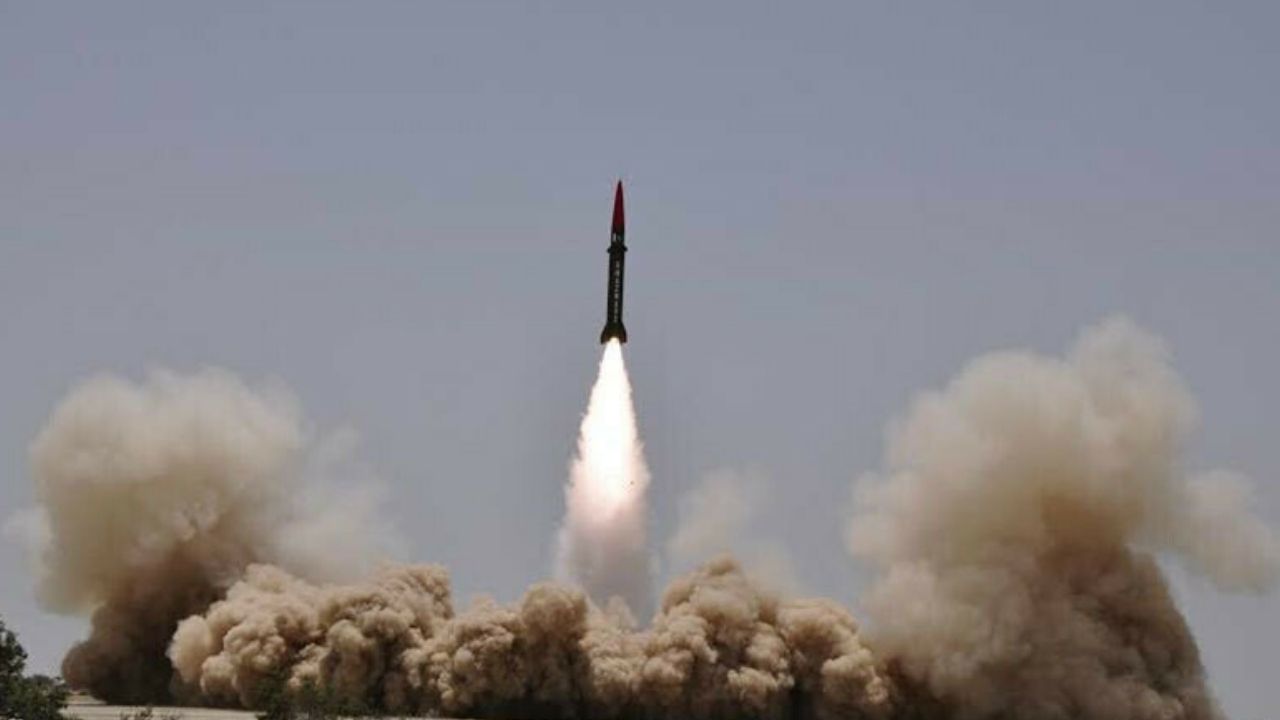
The United States of America on December 18 sanctioned four entities for their involvement in the development of long-range missiles, consequently targeting Pakistan’s ballistic missile program.
According to a fact sheet issued by the US State Department, The National Development Complex (NDC) based in Islamabad, Akhtar and Sons Private Limited, Affiliates International and Rockside Enterprise, all located in Karachi, have been identified “in light of proliferation threat of Pakistan’s long-range missile development.”
It merits mentioning that the US had previously targeted several Pakistani companies in April, October, and September of this year to disrupt Pakistan’s missile and drone programs.
The sanctions freeze any US property belonging to the targeted entities and bar Americans from doing business with them.
“The NDC has worked to acquire items in furtherance of Pakistan’s long range ballistic missile program – including special vehicle chassis intended to be used as launch support equipment for ballistic missiles and missile testing equipment. The United States assesses NDC is responsible for Pakistan’s development of ballistic missiles, including the SHAHEEN-series ballistic missiles,” stated the fact sheet released by US State Department.
Pakistan’s foreign ministry issued a press release today, calling the recent sanctions “unfortunate and biased.”
“Pakistan’s strategic capabilities are meant to defend its sovereignty and preserve peace and stability in South Asia. The latest installment of sanctions defies the objective of peace and security by aiming to accentuate military asymmetries. Such policies have dangerous implications for the strategic stability of our region and beyond,” read the press release issued by Pakistan’s Ministry of Foreign Affairs.
Meanwhile, security experts on social media weighed in on the recent sanctions with Michael Kugelman writing on X (formerly Twitter): “The US has sanctioned Pakistan’s National Development Complex over proliferation-related concerns tied to ballistic missile development. This is a big deal; unlike recent rounds of US sanctions, this targets a government entity instead of just companies.”
Another Geopolitical analyst Talha Ahmad posted on X: “Unlike the previous sanctions that targeted private companies, this time US has moved up on the ladder and now has sanctioned a government institution —Pakistan’s National Development Complex.”
Ahmad opined that Pakistan’s nature of ballistic and strategic weapons programme is mainly to counter-balance India’s threat. He further explained: “India is leading the proliferation by introducing emerging technologies and massive missile buildup with no opposition from US. The BMD and other developments add to deterrence instability. Pakistan’s strategic program has always been India-centric. Pakistan-specific sanctions indicate the ‘politically motivated sanctions’. Nevertheless, these actions would undermine the strategic balance and would achieve the opposite of what is being ‘officially’ claimed.”
“Pakistan would do whatever it takes to maintain deterrence stability. No sanctions would be able to force Pakistan to compromise on its desire for sovereignty and freedom especially in a changing security environment in the region with a Far-right expansionist regime running the show in Dehli. Pakistan will continue building on counter-force capabilities and if needed would change its strategic posture,” concluded the geopolitical analyst Talha Ahmad.
Pakistani journalist Syed Talat Hussain condemned the US policy writing on X: “US tries to hit Pakistan’s nuclear delivery systems. Announces sanctions on four entities. The real game is now coming to the fore. Now you understand what the fuss and campaign is all about.”