Tag: Pakistan

  • Kuwait assures continued fuel supply to Pakistan despite Strait of Hormuz closure

    Kuwait assures continued fuel supply to Pakistan despite Strait of Hormuz closure

    Kuwait has assured full facilitation in the supply of diesel and jet fuel to Pakistan as shipments remain affected due to the closure of the Strait of Hormuz amid the ongoing US-Israel-Iran conflict.

    Iran has allowed 20 cargoes carrying Pakistani flags to pass through the Strait of Hormuz, an announcement made earlier by Deputy Prime Minister (PM) and Foreign Minister Ishaq Dar.

    Pakistan imports more than 60 percent of its diesel from Kuwait under a long-term contract between the Kuwait Petroleum Corporation (KPC) and Pakistan State Oil (PSO).

    Alternative shipping routes, introduced after the disruption, have increased freight costs for Pakistan, according to officials.

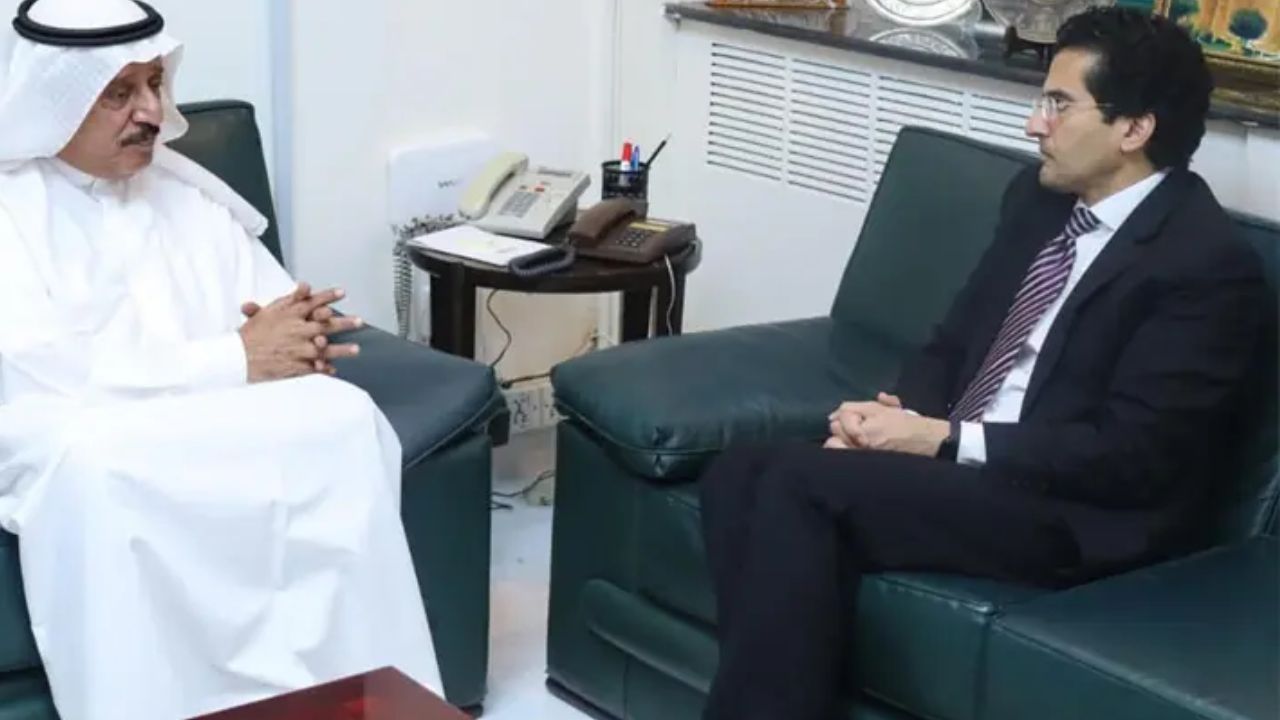
    On Monday, Minister for Petroleum Ali Pervaiz Malik met Kuwait’s Ambassador Nassar Abdulrahman Jasser Almutairi in Islamabad to discuss bilateral relations, energy cooperation and regional developments.


    According to an official statement, the minister expressed gratitude to KPC for assuring full facilitation to Pakistani-flagged vessels for any likely lifting of diesel and jet fuel from Kuwait.

    The statement added that he appreciated Kuwait’s “continued support for Pakistan despite global and regional challenges” and its contribution toward Pakistan’s energy security.

    It further said Malik highlighted that the relationship between the two countries is not only longstanding but also connected by hearts,  referring to decades of petroleum imports from Kuwait.

    The minister noted that Pakistan had been purchasing petroleum products, particularly diesel, from Kuwait for the past five decades, reflecting what the statement described as “enduring trust and partnership”.

    He also said: “Pakistan wishes to see all brotherly countries remain peaceful and secure.”

    He added that Prime Minister (PM) Shehbaz Sharif was actively working to facilitate the peaceful resolution of conflict and was “personally overseeing efforts aimed at facilitating the supply of food and essential commodities as required by the Gulf Cooperation Council (GCC) countries.”

    The Kuwaiti envoy, according to the statement, said that he appreciated Pakistan’s role during regional tensions, noting that Pakistan had demonstrated leadership in rejecting the use of force and in promoting peaceful solutions during difficult times.

    Both sides agreed to remain closely engaged to further strengthen cooperation in the energy sector and other areas of mutual interest.
  • Intellectually disabled Pakistani man shot dead by India forces

    Intellectually disabled Pakistani man shot dead by India forces

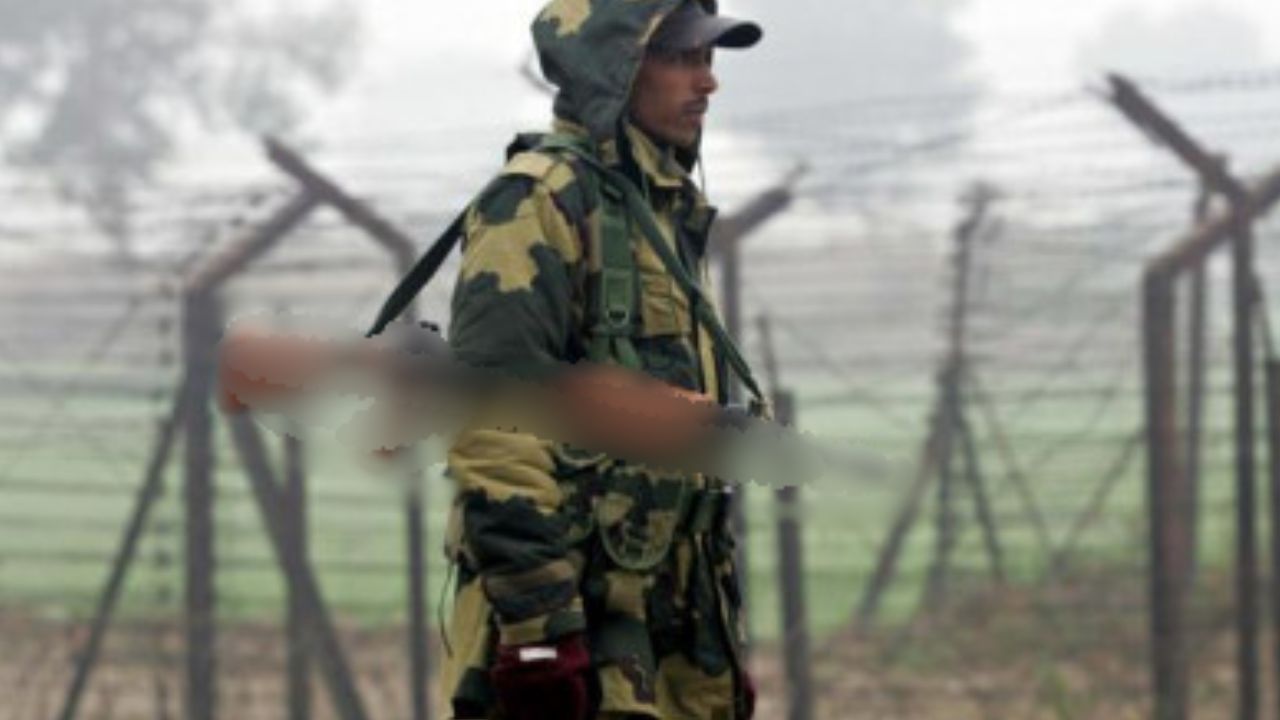
    A 35-year-old cognitively impaired Pakistani man was shot dead by India’s Border Security Force (BSF) after allegedly crossing the border by mistake.

    According to police, Mustafa Ahmed, 35, had on March 9 traveled with his family to Gadoki, located on the Zero Line in the limits of Mustafabad Police Station, to visit relatives.

    Ahmed went out at night without informing anyone and accidentally crossed the border, family members said.

    They added that BSF personnel tried to stop him, but he ignored their warnings, prompting the guards to open fire, killing him on the spot.

    Pakistani authorities demanded the return of Ahmed’s body, which was handed over and subsequently laid to rest on Saturday night in his ancestral village, Shamkot Jhugian, in the jurisdiction of Chunian Police Station.

  • Cross-border fire in Bajaur kills four civilians

    Cross-border fire in Bajaur kills four civilians

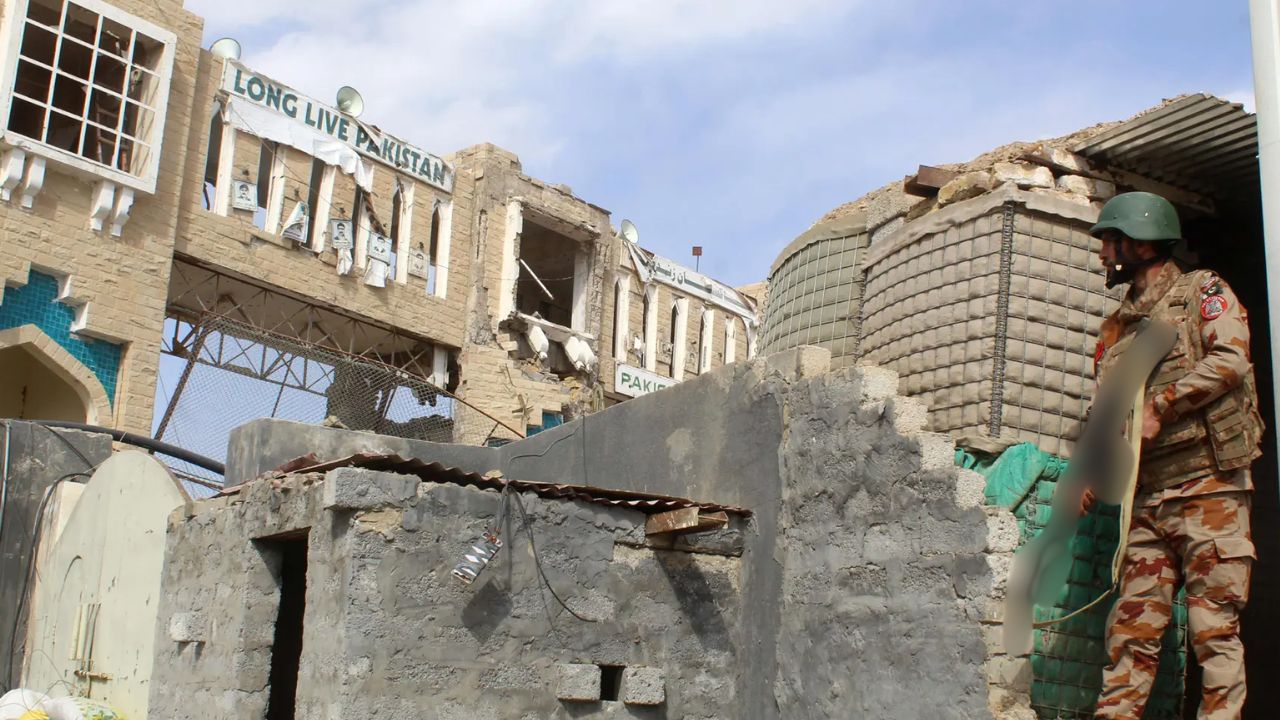
    Four civilians were killed after artillery and mortar fire from across the border hit a house in the Tabesta Letai area of Salarzai in Bajaur District, Khyber Pakhtunkhwa (KP) Information Minister Attaullah Tarar stated on Sunday.

    In a post on X, Tarar wrote: “The Afghan Taliban regime deliberately targeted the civilian population through artillery/mortar fire from across the border in Tabesta Letai, Salarzai area of KP’s Bajaur district.”


    He added: “Four innocent civilians have embraced shahadat (martyrdom) while one five-year-old child is seriously injured as a house was hit in this attack.”

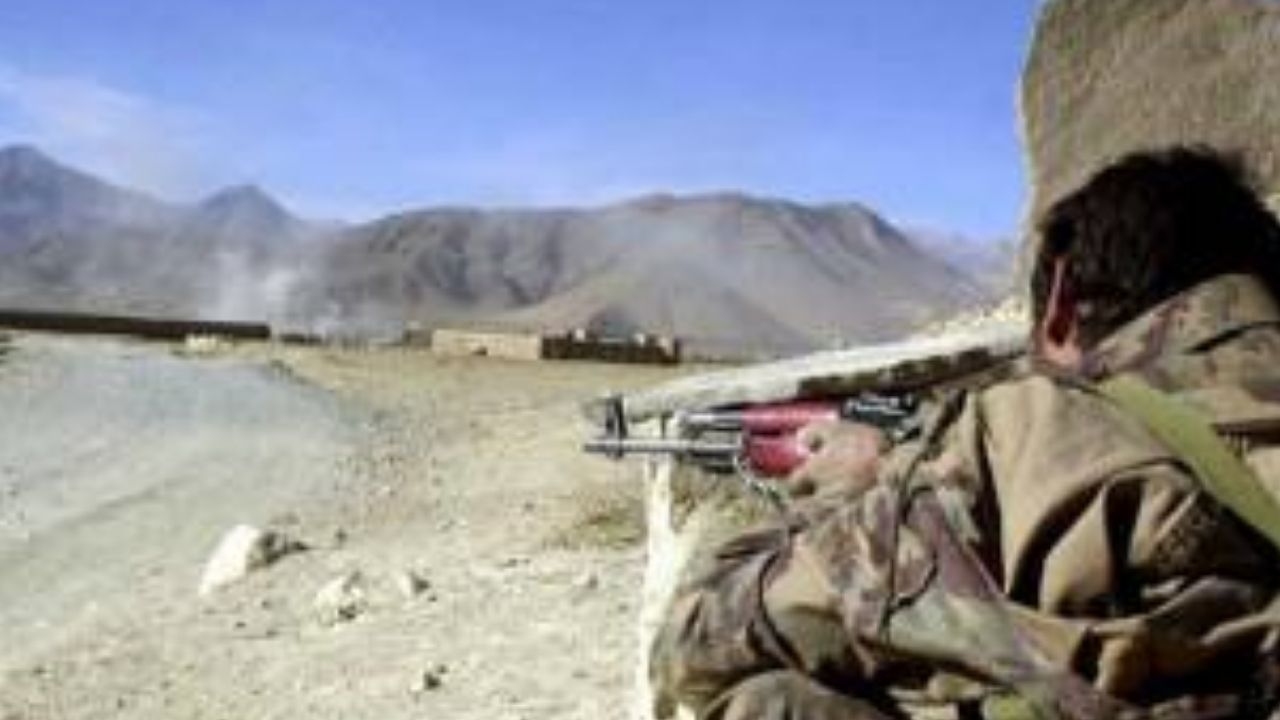
    Separately, Pakistan carried out overnight strikes in Kandahar Province, targeting “terrorist hideouts and military infrastructure” as the military continued operations against the Afghan Taliban, state-run broadcaster Pakistan Television Corporation reported on Sunday, citing security sources.

    Sharing an operational update, Tarar wrote: “On night March 14/15, Pakistan Armed Forces targeted military installations including terrorist hideouts of Afghan Taliban and Fitna al-Khawarij.”

    He added that in these attacks, Pakistan’s forces also destroyed technical support infrastructure and equipment storage facility, in Kandahar, that was being used by Afghan Taliban and terrorists against innocent Pakistani civilians.

    Tarar further stated: “A tunnel that housed technical equipment of Afghan Taliban and Fitna al-Khawarij was also destroyed in Kandahar.”

    He also wrote that similarly, in Chitral Sector, a terrorist jump off point at Badini Post of Afghanistan was destroyed through ground forces.

    Providing figures in the update, the minister stated that 684 Afghan Taliban personnel had been killed so far, while more than 912 had been injured.

    He added that 252 posts had been destroyed, while 44 posts were captured and destroyed. According to the minister, 229 tanks, armoured vehicles and artillery guns had also been destroyed.
    Tarar further wrote that “73 terrorists and terrorist support infrastructure locations across Afghanistan [have been] effectively targeted by air.”

    He also stated: “Attached video shows precision engagement by Pakistan on those installations and terrorist camps which directly / indirectly support terrorism from Afghan soil. No civilian population or infrastructure was targeted as falsely propagated by Afghan regime officials and media.”

    The minister also commented on the incident that took place in Bajaur, stating: “This cowardly and heinous deliberate targeting of civilians by Afghan Taliban regime in cohorts with terrorists organisation Fitna al Khawarij is not only a grevious violation of international law and basic human values but is also reflective of their deep frustration and desperation while facing heavy setbacks on multiple fronts by the armed forces of Pakistan through targeted attacks on terrorists and support infrastructures as part of operation Ghazab lil-Haq.”

  • Pakistan intensifies strikes on Taliban amid border tensions

    Pakistan intensifies strikes on Taliban amid border tensions

    Pakistan’s armed forces carried out overnight airstrikes against Taliban targets and terrorist infrastructure on Friday, destroying training camps, ammunition depots, and other support facilities across Afghanistan, reports quoted security sources as saying.

    “Pakistan’s Armed Forces have carried out successful airstrikes inside Afghanistan as part of the ongoing Operation Ghazab Lil Haq,” the sources confirmed. 

    Strikes reportedly hit the headquarters of the Afghan Taliban 313 Corps, the Tarawo terrorist training camp in Kandahar, an oil storage facility, and the Sher-e-Nau terrorist camp in Paktia province.

    Operations along the Pak-Afghan border in North and South Waziristan also destroyed multiple Taliban posts and forced militants to abandon positions, reports quoted sources.

    The operation was launched following unprovoked firing from across the border, with Islamabad accusing Kabul of providing space to the banned Tehreek-i-Taliban Pakistan (TTP). UN monitoring reports over the past two years have noted TTP activity in eastern Afghanistan, though the Taliban deny offering support.

    In a separate development, Pakistan security forces shot down three rudimentary drones on Friday, allegedly deployed by militants linked to Afghan Fitna-al-Khawarij, in the Kohat district. 


    Authorities said the crude drones posed a potential security threat, and debris from the downed devices injured two civilians, who were shifted to a hospital for treatment. Reports quoted security sources as saying that the militants were backed by the Islamic Emirate of Afghanistan administration.

    Amid the ongoing military operations, Pakistan is engaging diplomatically with Beijing over the border tensions. Foreign Office (FO) spokesperson Tahir Andrabi confirmed that Deputy Prime Minister and Foreign Minister Ishaq Dar recently held a call with Chinese Foreign Minister Wang Yi. He said Islamabad and Beijing “cherish a long-standing strategic partnership, founded in mutual trust and deep respect,” and that both countries share common views on Afghanistan.

    China’s ambassador to Kabul, Zhao Xing, and the special envoy Dr Yue Xiaoyong has been shuttling between Pakistan and Afghanistan to mediate and encourage both sides to return to the negotiating table. 

    According to China’s foreign ministry, the most urgent task is to prevent the fighting from expanding. Beijing’s ambassador to Kabul, Zhao Xing, met Afghanistan’s acting Foreign Minister Amir Khan Muttaqi this week, during which Afghan officials reiterated their commitment to improving security and protecting Chinese nationals in Afghanistan.

    Andrabi clarified that a visiting delegation reportedly holding talks with the Afghan Taliban was not part of any official effort, though he confirmed Dr Yue’s visit to Pakistan to discuss shared concerns, particularly terrorism emanating from Afghanistan. He also said he had no information regarding any Turkish delegation reportedly mediating between Islamabad and Kabul.

  • UN Security Council: Pakistan obliterates India over support for terror groups in Afghanistan

    UN Security Council: Pakistan obliterates India over support for terror groups in Afghanistan

    Pakistan and India exchanged sharp remarks at the United Nations Security Council (UNSC) during a debate on Afghanistan, with both sides raising concerns over cross-border attacks and terrorism.

    India’s Permanent Representative Parvathaneni Harish said that his country “reiterates UNSG’s deep concern at civilian casualties caused by cross-border violence and strongly condemns airstrikes which are flagrant violations of international law, UN Charter and state sovereignty.” 

    He also expressed “grave concern on ‘trade and transit terrorism’” and said “these vulnerabilities of Land-Locked Developing Countries should not be weaponised”.

    Naseer Ahmad Faiq, Chargé d’affaires ad interim of Afghanistan’s Permanent Mission to the UN, addressed the council. He highlighted civilian casualties in the Pakistan-Afghanistan conflict and emphasised the need to counter terrorism, but did not mention Al Qaeda, Tehreek-i-Taliban Pakistan (TTP), or other militant groups.

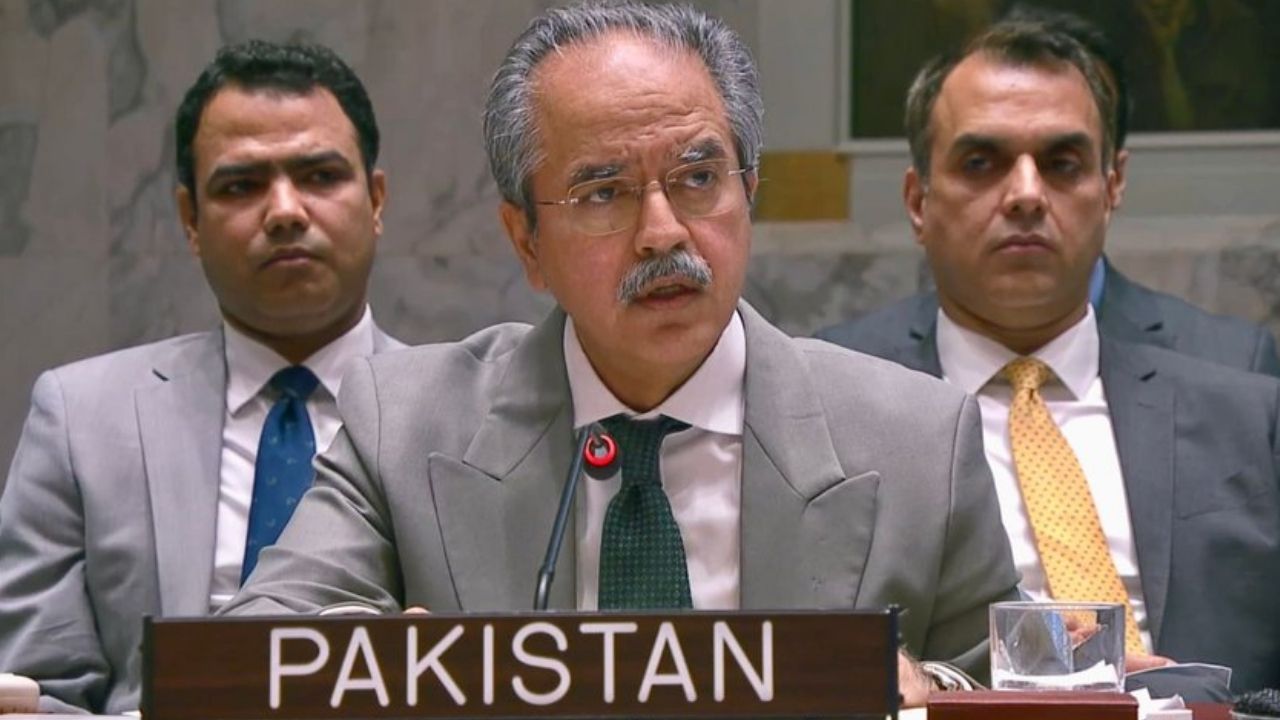
    Responding to the statements, Pakistan’s Permanent Representative Asim Iftikhar Ahmad said he felt compelled to take the floor after hearing remarks from India and Afghanistan.

    Ahmad said that given “India’s animosity towards Pakistan and the sole objective of its Afghan policy being to destabilise Pakistan, including by actively supporting and sponsoring terrorist groups, operating from Afghan soil, such as TTP and BLA,” India’s remarks were expected.

    He noted that the Indian representative spoke about civilian casualties and border clashes but “had not a word about the terrorist threat emanating from Afghanistan, which has targeted Pakistan and which many Council members have highlighted in their statements.” 

    “But there is a reason for that. It is India’s complicity in all of this,” Ahmad said, adding that Pakistan had provided “irrefutable evidence of India’s collusion with terrorist groups that are engaged in orchestrating violent attacks against Pakistan”.

    He said, “One can sense India’s pain in seeing its heavy investment in the Afghan terrorist franchise going to waste as a result of Pakistan’s precise and effective action against terrorist camps and support bases inside Afghanistan.”

    Ahmad described India as “a serial violator of international law”, accusing it of illegally occupying territory, violating the UN Charter and UNSC resolutions, carrying out state terrorism in India-occupied Kashmir, marginalising minorities, and using disinformation as state policy.

    On Faiq, Ahmad said, “The so-called representative of Afghanistan, who in fact does not represent anyone but himself, must not abuse this forum to pursue his personal agenda.” 


    He added that Faiq, “sequestered in New York”, was “completely cut off from ground realities” and had “chosen to selectively comment on some aspects of the situation, particularly with reference to Pakistan”. “Therefore, the value and credibility of his remarks are in serious doubt,” he said.


    Ahmad emphasised that Pakistan’s legitimate counter-terrorism operations are not directed against the brotherly people of Afghanistan, and are only meant to neutralise the persistent threat of terrorism emanating from Afghan soil. He added that these actions were in full conformity with the right to self-defence and international humanitarian law.

    He said Faiq “had nothing to say about cross-border terrorism from Afghanistan that is so heavily impacting Pakistan in terms of casualties among civilians, among our armed forces, law enforcement agencies and infrastructure”.

    Ahmad further said that while India had “always played the role of a spoiler in Afghanistan,” Pakistan had “engaged responsibly in promoting peace, stability and prosperity in Afghanistan”.


    He added that these objectives could only be achieved if the Taliban authorities fulfilled their commitments on counter-terrorism, inclusive governance, and the rights of Afghan women and girls.


     Ahmad urged India to “cease and desist from its policy of stoking terrorism inside Pakistan from Afghan soil, now together with their newfound friends in the Taliban regime”, adding that Pakistan would not allow “their sabotage and subversion from Afghan soil to nourish and harm Pakistan”.

  • ‘Trusting Kabul a major risk’: Kh Asif bashes pro-terror Afghan regime

    ‘Trusting Kabul a major risk’: Kh Asif bashes pro-terror Afghan regime

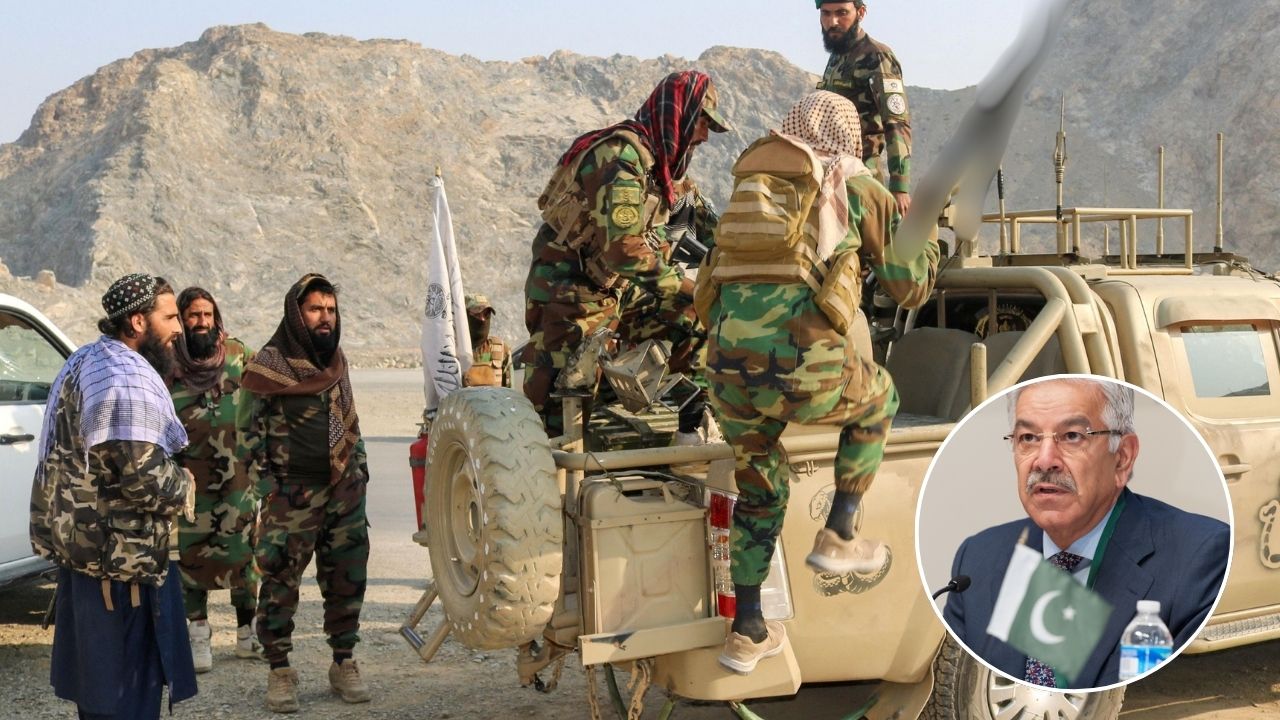
    Defence Minister Khawaja Asif has said that Afghanistan has always supported terrorism, adding that placing further trust in the Afghan government would be a risk.

    In a conversation with a private media channel, Asif said that Pakistan had made efforts to resolve issues with Afghanistan through dialogue but the pattern of the Kabul government made it difficult to rely on it. He said trusting the authorities in Kabul would be a major risk and that their conduct had not been acceptable in the past.

    Meanwhile, China has stepped in diplomatically to reduce tensions between Pakistan and Afghanistan as cross-border hostilities continue. 

    According to a statement from Afghanistan’s foreign ministry, China’s special envoy for Afghanistan Yue Xiaoyong visited Kabul on Sunday and met acting foreign minister Amir Khan Muttaqi.

    During the meeting, the Chinese envoy urged both sides to resolve disputes through dialogue and stressed the importance of preventing escalation for regional stability. The statement said Beijing remained in contact with both Kabul and Islamabad and supported resolving issues through diplomatic channels.

    In North Waziristan, a child was killed and four people were injured after a mortar shell allegedly fired from the Afghan side landed in a residential area during an exchange of fire near the border on Sunday. Police said the incident took place around 7:30pm in the Ghulam Khan area when firing erupted between both sides.

    Reports quoted police sources as saying that the mortar shell landed in the village of Golakhel and exploded in a residential locality. A minor died at the scene while four people sustained injuries. Residents shifted the injured to the Tehsil Headquarters Hospital in Miranshah where they were receiving treatment.

    Separately, Information Minister Attaullah Tarar has said that 583 Afghan Taliban operatives had been killed and more than 795 injured during the ongoing Operation Ghazab lil-Haq launched in response to what Islamabad described as actions from across the Afghan border.

    Providing an update at 4pm on Sunday, Tarar confirmed that security forces had destroyed 242 checkposts and captured and destroyed 38 others during the operation. He said 213 tanks, armoured vehicles and artillery guns had also been destroyed.

    The minister added that 64 locations across Afghanistan had been targeted in air strikes as part of the campaign.

    Separately, the Pakistan Army foiled an infiltration attempt near the Chaman sector along the Pakistan-Afghanistan border, according to security sources cited by Radio Pakistan. Officials said a group of three to four militants attempted to breach the border fence but troops responded and targeted the group as they tried to cut the barrier.

    During the exchange of fire, one militant was killed while the others fled in injured condition. Security officials said forces recovered four to five improvised explosive devices and fence-cutting equipment from the site.

    Islamabad has long maintained that TTP leaders operate from Afghan territory, an allegation that Kabul has repeatedly denied. Tensions also surged after a series of explosions in Kabul on October 9 last year. 

    Taliban forces subsequently targeted areas along Pakistan’s border, prompting Islamabad to respond with cross-border shelling. The exchanges caused casualties and infrastructure damage on both sides and led to the suspension of trade after border crossings were closed on October 12, 2025.

  • Pakistan halts imported gas supply to fertiliser plants after Hormuz disruption

    Pakistan halts imported gas supply to fertiliser plants after Hormuz disruption

    Gas supply to fertiliser manufacturers in Pakistan has been suspended as pressure mounts on liquefied natural gas (LNG) supplies. According to a report by Bloomberg, the disruption is linked to the war extending to the Strait of Hormuz, which is now, according to Iran, under their control.

    Sui Northern Gas Pipelines Limited (SNGPL), the country’s largest gas distributor, informed customers that it would stop providing regasified LNG to fertiliser plants from midnight on Wednesday. 

    The company said it had been notified of supply disruptions by Pakistan State Oil (PSO) five days after confrontations began in the Gulf.

    Authorities are also reviewing gas allocations for other industrial consumers.

    The disruption follows escalation after Israel and the United States carried out strikes on Iran, with Tehran responding through retaliatory attacks on regional bases. 

    Shipping through the Strait of Hormuz has been affected. The strait is a waterway and a key route for global energy trade, including LNG exports from Qatar’s Ras Laffan facility.

    During the previous energy crisis in 2022, triggered by Russia’s invasion of Ukraine, Pakistan faced difficulties securing LNG cargoes amid high spot prices and payment constraints.

    According to an energy expert, Masanori Odaka, the situation “could be serious” if five or more LNG shipments are affected. Odaka added that current spot prices were beyond what Pakistan was likely willing to pay and that alternatives to sourcing LNG cargoes were limited. He also said a history of deferment and payment difficulties would put Pakistan at a disadvantage.

    An LNG analyst at ICIS (Independent commodity intelligence services), Evan Tan, said Pakistan received two cargoes in March, making it possible to manage any immediate gap through domestic production and coal imports. He said the shortfall in April and May could rise to two or three shipments, which would be difficult to offset through local alternatives.

    The matter was discussed at a meeting of the Petrol Monitoring Committee chaired by Finance Minister Muhammad Aurangzeb. 

    Officials, at fhe meeting, stated that petrol and diesel reserves were at satisfactory levels.

    Aurangzeb said the government was monitoring developments related to the Strait of Hormuz.

    Officials also briefed the committee that contacts were underway with friendly countries to secure additional crude oil supplies.

    Separately, the petroleum ministry said Pakistan had requested Saudi Arabia to route oil supplies through the Red Sea port of Yanbu to ensure steady supply during the war.

    Petroleum Minister Ali Pervaiz Malik raised the issue during a meeting with Saudi Arabia’s ambassador to Pakistan, Nawaf bin Said Al-Malki, according to a ministry statement.

    The minister said most of Pakistan’s energy imports transit through the Strait of Hormuz and that the government was monitoring the situation to maintain supply continuity.

  • Ghazab lil-Haq update: 464 Taliban killed, Bagram airbase targeted

    Ghazab lil-Haq update: 464 Taliban killed, Bagram airbase targeted

    As Pakistan continues with Operation Ghazal lil-Haq in response to cross-border terror attacks from Afghanistan, Information Minister Attaullah Tarar has shared an update, revealing that as of Tuesday evening, 464 Afghan Taliban fighters had been killed and over 665 were injured. 

    In a statement, he said that 188 check posts had so far been destroyed, 31 posts captured, 192 tanks, armoured vehicles and artillery guns destroyed, and 56 locations inside Afghanistan effectively targeted in airstrikes.

    Meanwhile, reports quoted security sources as saying that the Pakistan Air Force (PAF) had also also struck the Bagram airbase.

    Citing a report issued by the Afghan defence ministry, it was claimed by media outlets that Black Hawk helicopters, a Hercules cargo aircraft, a Tucano aircraft, armoured vehicles and other military equipment were destroyed in the strike.

    It may be noted that the escalation follows months of clashes between Pakistan and Afghanistan.

    Earlier, Pakistan conducted airstrikes inside Afghanistan, targeting camps linked to the Tehreek-e-Taliban Pakistan (TTP) and Islamic State Khorasan after a series of attacks inside Pakistan, including a suicide bombing in Islamabad. Security officials said more than 80 militants were killed during said strikes.

    The strikes were followed by attacks along the border from Afghan territory, prompting further exchanges and the launch of the ongoing operation.

  • US trade office pulls controversial India map after Pakistan’s protest

    US trade office pulls controversial India map after Pakistan’s protest

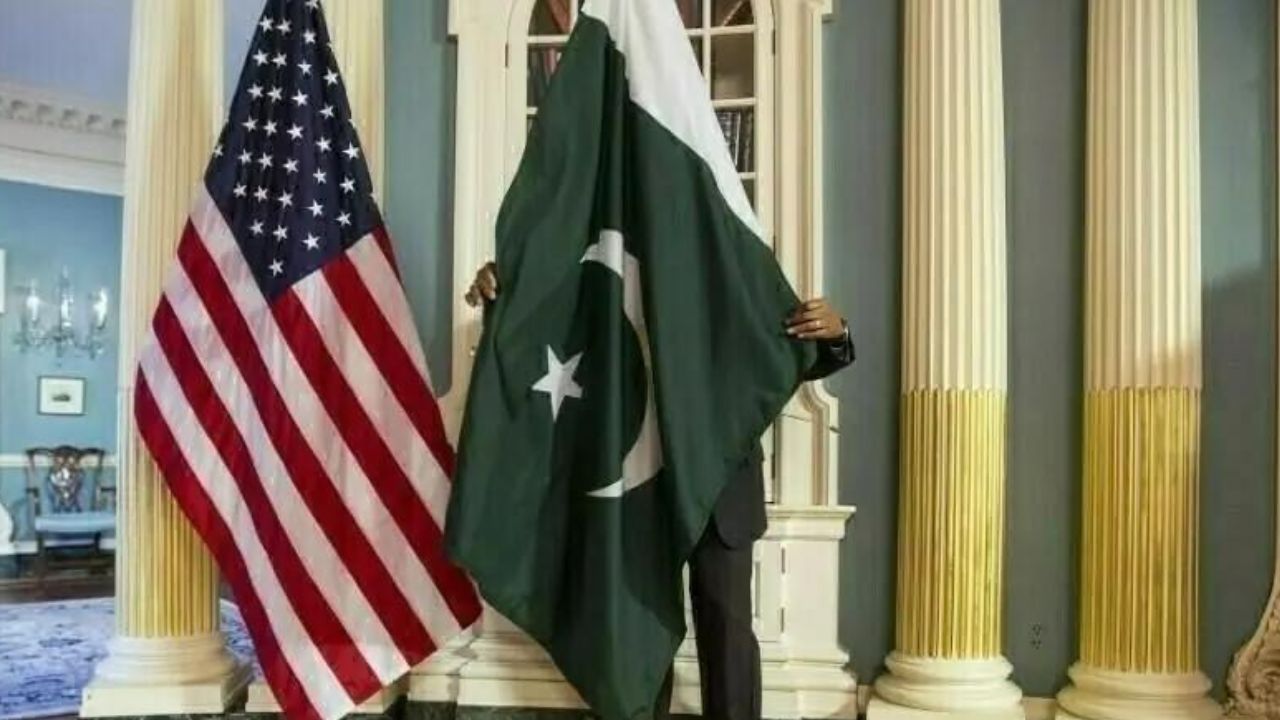
    The United States Trade Representative (USTR) has removed a map of India from its official X account following a strong diplomatic protest from Pakistan over its depiction of disputed territories, diplomatic sources told a private media outlet on Wednesday. 


    The map, posted alongside a USTR press release outlining a framework for an interim US-India trade agreement, showed the entire Jammu and Kashmir region — including Azad Jammu and Kashmir and Gilgit-Baltistan as part of India. It also depicted China’s Aksai Chin region within Indian boundaries, despite its disputed status between China and India.


    The map went live on Friday evening and was taken down by Monday evening, the first working day after the weekend. Pakistani officials said they lodged protests both through the US Embassy in Islamabad and with the State Department in Washington, emphasizing that the map contradicted the longstanding US position that Jammu and Kashmir is a disputed territory whose final status should be determined according to United Nations Security Council (UNSC) resolutions.

    Diplomatic sources familiar with the matter suggest that the map may have been sourced from Google Maps, similar to a previous instance where the USTR used a map in a trade press release on Bangladesh.


    While the map only showed territorial outlines and no labels, Pakistani diplomats stressed that even an outline carries significant political and diplomatic weight, especially on the sensitive Kashmir issue.

    Concerns escalated after Indian media highlighted the map, portraying it as a possible shift in US policy and an implicit endorsement of India’s territorial claims. Pakistani officials said this made it critical for Islamabad to immediately reaffirm Washington’s traditional position on Kashmir and prevent any misinterpretation.

    The USTR press release itself remains online, but the India map has been withdrawn. The map used for the Bangladesh trade release remains available, reinforcing the view that the India map was posted inadvertently.


    The controversy comes as Washington and New Delhi unveiled a framework for the first phase of a bilateral trade agreement, designed to boost two-way commerce. Under the agreement, the US will reduce tariffs on Indian goods to 18 percent, having already removed an additional 25 percent punitive duty, with reciprocal cuts expected for US exports to India.

  • Pakistanis bash S. Jaishankar for ‘neighbourhood terror’ remarks to Polish deputy PM

    Pakistanis bash S. Jaishankar for ‘neighbourhood terror’ remarks to Polish deputy PM

    Indian External Affairs Minister S. Jaishankar’s remarks to Poland on terrorism have sparked backlash from Pakistani netizens, with many accusing India of attempting to dictate regional and global foreign policy.


    Jaishankar told the Polish Deputy Prime Minister and Foreign Minister Radoslaw Sikorski in New Delhi that they were “no stranger to our region” and urged Poland to “display zero tolerance for terrorism and not help fuel terrorist infrastructure in our neighbourhood”. 

    The remarks referred to the discussions between Pakistan and Poland on October 2025, where both sides stressed the need to find peaceful solutions to conflicts, in full respect of the principles of international law and the UN Charter.


    After a video of Jaishankar’s remarks circulated online, Pakistani users reacted sharply. One wrote, “Lol, what does India think it is? A superpower or economic power or some shit so it thinks it can dictate the world?” Another stated, “India can not dictate world and their governments on their foreign policy.”


    Other users dismissed India’s attempts to influence other countries, questioned whether similar language would be used towards the United States, or mocked the Indian minister as desperate.


    Several reactions were more critical, accusing India of being a hostile neighbour and alleging that its foreign minister routinely makes statements targeting Pakistan.