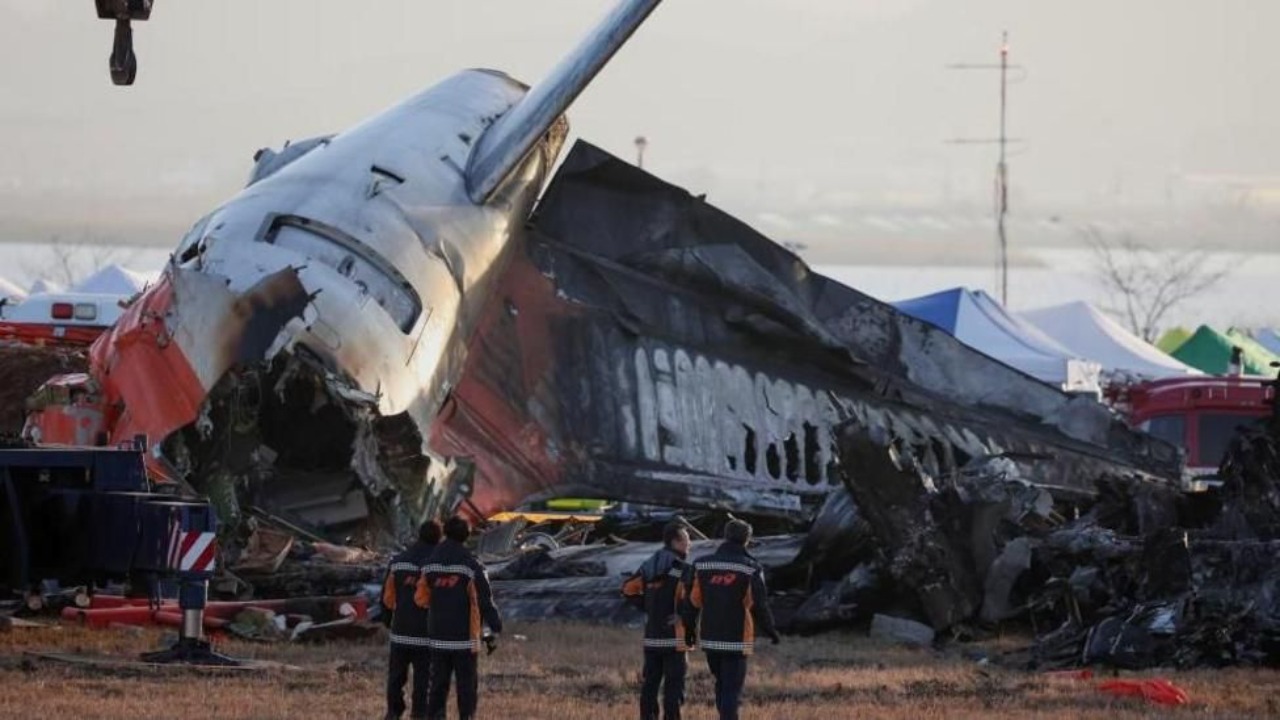
On October 12, 2023, South Korea faced one of the most tragic moments in its aviation history. A routine domestic flight turned into a deadly disaster shortly after taking off from Gimpo International Airport. The plane, bound for the scenic Jeju Island, crashed due to technical difficulties, resulting in a devastating loss of life.
The Korean airplane crash sent shockwaves through the nation and around the world. Families lost loved ones, experts began questioning safety standards, and global aviation authorities watched closely. This incident is not just a national tragedy. It’s a global wake-up call about how fragile air safety can be, even in the most advanced systems.
The Crash: What We Know So Far
The flight, operated by a major South Korean airline, took off from Gimpo International Airport with 150 people on board, including passengers and crew. The aircraft was a Boeing 737, one of the most commonly used models worldwide. There were no reported issues before the flight. Weather conditions were clear, and everything seemed normal during boarding and takeoff.
But just minutes after takeoff, the pilot reported technical problems. Witnesses on the ground later described hearing a loud engine noise, followed by an explosion. A dark plume of smoke quickly rose into the sky. The plane attempted an emergency landing but lost control and crashed near the airport’s outer boundary.
Emergency response teams rushed to the site within minutes. Despite their quick arrival, the situation was already dire. Fires had broken out, and large aircraft sections were severely damaged. Survivors were pulled from the wreckage and rushed to nearby hospitals, many with serious injuries. Officials confirmed that at least 40 people had died, while over 100 others suffered injuries ranging from broken bones to burns.
This was not just an isolated technical fault. It was a full-scale aviation disaster that demands answers.
How South Korea Responded
Immediately after the crash, the South Korean government took swift action. A national emergency alert was issued, and the area around the crash site was closed off. Rescue teams, including firefighters, police, paramedics, and military personnel, worked around the clock to recover victims and assist survivors.
President Yoon Suk-yeol expressed his condolences to the victims’ families and promised a full investigation. The Ministry of Land, Infrastructure, and Transport formed a special task force to lead the inquiry alongside the Korea Aviation Accident Investigation Board. Their first step was to recover the flight’s black box recorders that hold flight data and cockpit audio, which are essential for understanding precisely what happened in the flight’s final moments.
In addition to the technical investigation, the government promised financial and emotional support to the victims’ families. Free counseling services were made available, and compensation packages were announced. Nationwide mourning followed, with flags flown at half-mast and moments of silence observed.
Unpacking the Possible Causes
Although the final investigation report is still pending, aviation analysts have begun reviewing possible causes. The fact that the plane crashed just after takeoff suggests a few likely scenarios.
One possibility is mechanical failure. The Boeing 737 model has had a solid safety record, but no plane is immune to failure. If one of the engines malfunctioned or a key system failed, such as hydraulics or electronic flight controls, it could explain the loss of altitude and control.
Another factor being considered is human error. Although the pilots were experienced, misjudgment or delayed reaction to a warning signal could have worsened a bad situation. Fatigue, distractions, or even unclear communication with air traffic control might have played a role.
Lastly, some aviation experts are questioning the airline’s maintenance procedures. Was the aircraft appropriately checked before the flight? Were there any past reports of issues that were ignored or underreported? These are all critical questions the investigation will aim to answer.
Until then, all theories remain speculative, but what’s clear is that something went wrong, something that could potentially have been prevented.
Aviation Safety Under the Microscope
The Korean airplane crash has reignited conversations about airline safety, not just in South Korea but around the world. In recent years, global air travel has grown rapidly, and while aviation accidents are statistically rare, the consequences when they happen are devastating.
This tragedy is pushing airlines to reevaluate their procedures. South Korean carriers are now undergoing urgent safety audits. Crew training programs are being reviewed to ensure pilots and flight attendants are better equipped to handle emergencies. Even airport ground operations and air traffic control systems are under review for potential improvements.
Internationally, aviation regulators such as the FAA in the United States and the European Union Aviation Safety Agency (EASA) are monitoring the investigation closely. If flaws in the aircraft design or maintenance standards are found, new global regulations could emerge.
These changes may include more rigorous checks before takeoff, improved onboard systems for real-time diagnostics, and updated training that prepares flight crews for rare but high-risk emergencies.
The Human Cost
Beyond the technical details and investigations, it’s important to remember that this tragedy involves real people. Families are mourning parents, children, siblings, and friends. Many passengers were tourists heading to Jeju Island, one of South Korea’s most popular vacation spots. Others were returning home or traveling for work.
Stories have emerged of passengers texting loved ones just moments before the crash, not knowing it would be their last message. Survivors describe the chaos of the impact, the smell of smoke, and the sound of people crying for help. Many say they will never step on a plane again.
The emotional scars are deep, and for the families who lost someone, life will never be the same.
Why the World Is Watching
Even though the crash happened in South Korea, people in the United States and worldwide are watching closely. That’s because aviation is a global industry. Planes, parts, and pilots cross borders every day. Boeing, the company that manufactured the aircraft, is based in the U.S., and many American airlines use the same model.
Americans are also frequent travelers to South Korea for tourism, business, or military service. The U.S. government has offered assistance in the investigation, and the FAA is reviewing safety reports for similar aircraft in American fleets.
This tragic event is not just a Korean problem. It’s an international issue. What we learn from this crash could help prevent the next one.
A Chance to Make Flying Safer
While the Korean airplane crash is a painful reminder of aviation’s risks, it’s also an opportunity to improve safety across the board. Tragedies like this one often lead to significant changes. After past crashes, we’ve seen better cockpit training, stronger aircraft materials, and more innovative warning systems. The same must happen now.
Investigators need to dig deep to find out what caused this crash and ensure it never happens again. Governments and airlines must invest in technology, training, and transparency. Passengers should demand accountability and safety from every airline they fly.
Final Thoughts
The Korean airplane crash is more than just a tragic accident. It’s a global lesson in how vital airline safety is. As investigations continue and reforms begin, we owe it to the victims and their families to turn this heartbreak into action. Their loss must lead to a safer future for everyone on an airplane.
In another significant national development, four inmates were sentenced to death for raping and killing a fellow prisoner inside Adiala Jail—a case that has shocked the country. Read the full story here or visit The Current homepage for more breaking news and updates.