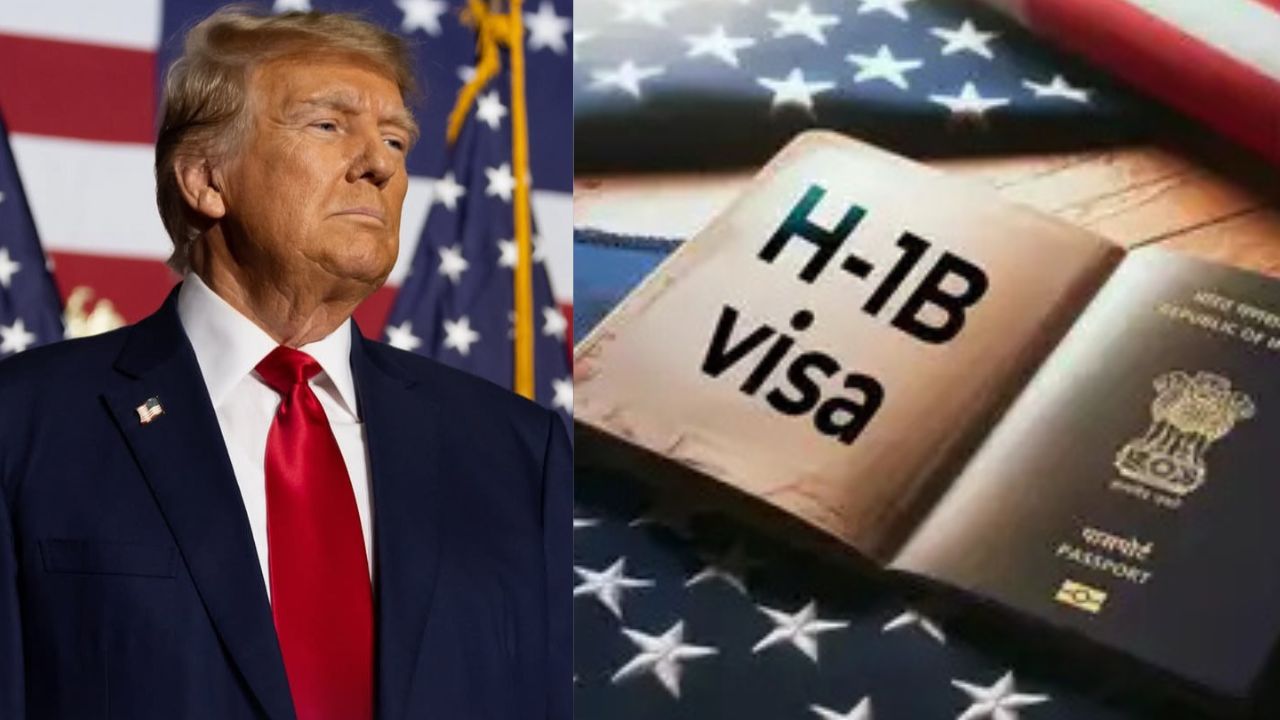
The Donald Trump administration in the United States (US) has said it plans to require companies to pay a staggering $100,000 a year for H-1B worker visas, a move that could potentially impact the technology industry, which depends heavily on skilled workers from India and China.
India was the largest beneficiary of H-1B visas last year, accounting for around 71 per cent of approved beneficiaries while China was a distant second at about 11.7 per cent, said reports, citing government data.
The H-1B programme offers 65,000 visas annually to employers bringing in temporary foreign workers in specialised fields along with an additional 20,000 visas for those holding advanced degrees.
Trump’s threat to crack down on H-1B visas has become a major flashpoint with the tech industry that contributed millions of dollars to his presidential campaign.
“If you’re going to train somebody, you’re going to train one of the recent graduates from one of the great universities across our land. Train Americans. Stop bringing in people to take our jobs,” Commerce Secretary Howard Lutnick said.
After the announcement of the new fees, Microsoft and JPMorgan advised employees holding such visas to stay in the US, Reuters reported citing an internal email.
They also advised employees on the H-1B visas outside the US to return before midnight on Saturday when the new fee structures are set to take effect.
While many technology workers maintain that the visa policy allows firms to suppress wages and sideline Americans who could do the jobs, Tesla CEO Elon Musk, among others, argued it brings in highly skilled workers essential to filling talent gaps and keeping firms competitive. Musk, himself a naturalised US citizen born in South Africa, has held an H-1B visa.
According to Deedy Das, partner at venture capital firm Menlo Ventures, said the new fees “create disincentive to attract the world’s smartest talent to the US”.
“If the US ceases to attract the best talent, it drastically reduces its ability to innovate and grow the economy,” Das said in a post on X.
Meanwhile, reports said that the move could add millions of dollars in costs for companies, which could hit smaller tech firms and startups particularly hard.