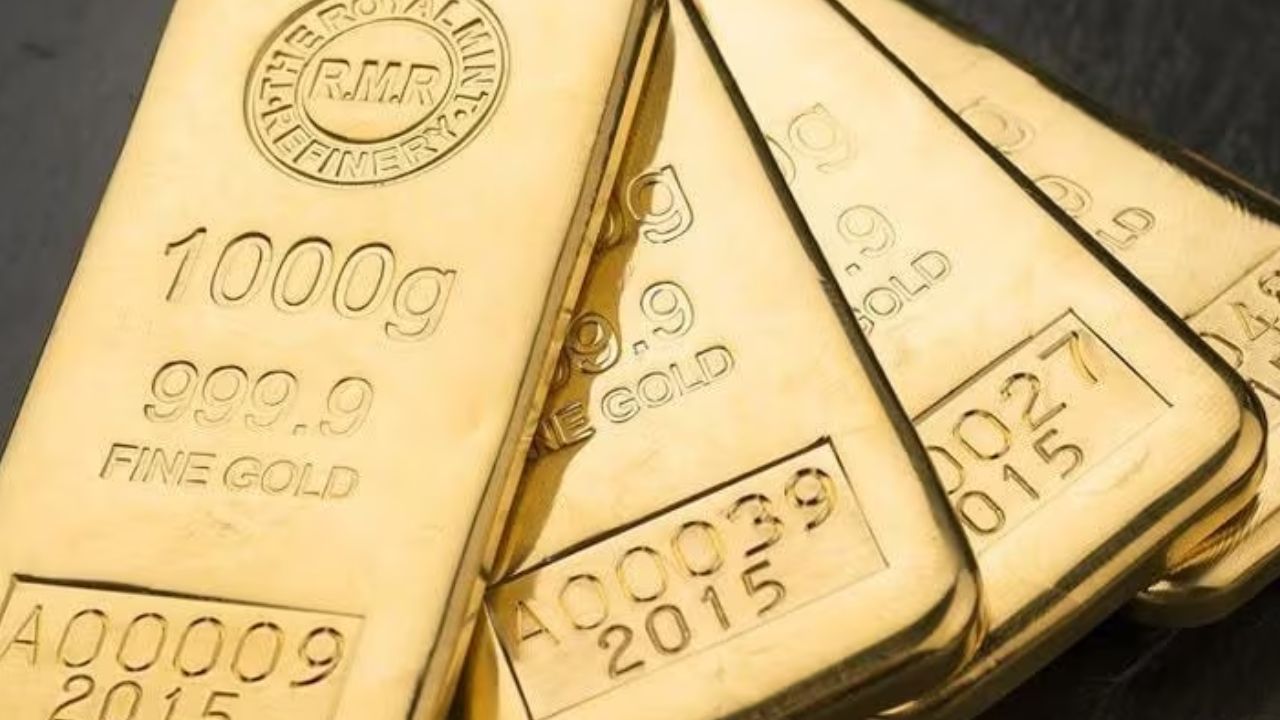
Gold prices dropped in Pakistan on Tuesday, mirroring the decline in international markets where the precious metal slid more than one percent as investors booked profits after hitting a six-week high in the previous session.
In global trading, spot gold slipped 1.4 percent to $4,173.91 per ounce by 11:09 am ET (1609 GMT). In anticipation of the US Federal Reserve’s policy meeting next week, traders are currently awaiting important US economic figures.
Local market followed the same trend. According to the All-Pakistan Gems and Jewellers Sarafa Association, the price of gold per tola fell by Rs2,700 to Rs444,162, while 10-gram gold dropped Rs2,315 to Rs380,797.
A day earlier, prices had climbed to Rs446,862 per tola after gaining Rs2,700. Silver also edged lower, losing Rs41 to settle at Rs6,004 per tola.
Adnan Agar, Director at Interactive Commodities, described the movement as a moderate correction. He said gold touched a high of $4,230 and a low of $4,163 during the session before trading around $4,191. He added that upcoming US economic releases over the next several days would shape the market’s direction.
Agar noted that gold still has “strong downside support around $4,140 and $4,100, and unless these levels are breached, the market is likely to remain biased to the upside.”
Analysts believe that US labour and inflation figures will play a crucial part in establishing expectations around the Federal Reserve’s next move, which could influence gold’s short-term trend.
The Pakistani rupee saw a 0.01 percent increase in value against the US dollar on the currency market, closing at 280.47, compared to Monday’s rate of 280.51.
Globally, the US dollar weakened further after soft manufacturing data added to speculation that the Federal Reserve may cut interest rates later this month. The US dollar index slipped to 99.408 at the start of Asian trading, extending a seven-day losing streak and touching a two-week low during Monday’s US session.
Data released Monday showed US manufacturing contracted for the ninth straight month, with the ISM manufacturing PMI dropping to 48.2 in November from 48.7 in October. New orders and employment indicators also fell, while input costs increased due to tariff pressure.
According to CME Group’s FedWatch tool, traders now estimate an 88 percent chance of a 25-basis-point rate drop at the Fed’s December 10 meeting up from 63 percent a month earlier.
Oil prices remained largely stable on Tuesday as markets assessed concerns associated to Ukrainian drone strikes on Russian energy facilities and escalating tensions between the US and Venezuela.