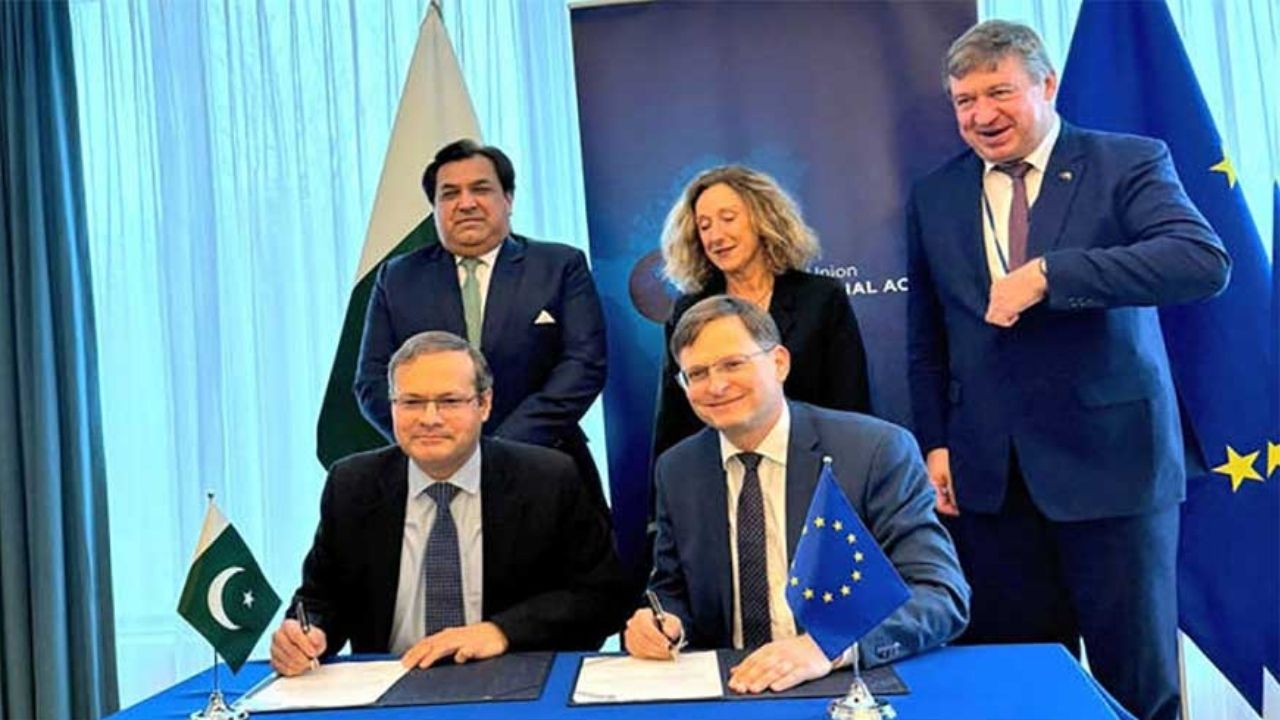
Pakistan and the European Investment Bank (EIB) have signed a €60 million loan agreement, the first such financing deal between the two sides in a decade, aimed at improving access to clean drinking water in Karachi.
The agreement, which was signed on the sidelines of the 15th Pakistan-European Union (EU) Joint Commission in Brussels, would provide funding for the Karachi Water Infrastructure Framework, an EIB-approved initiative aimed at constructing and renovating water treatment facilities throughout the port city.
The project, according to officials, is intended to increase the availability of clean drinking water and improve water security in Karachi, a city of more than 20 million people that has long suffered with unreliable and unsafe water access.
The EU announced the news on social media platform X, stating that the loan signified a new phase of cooperation with Pakistan.
“Today, the EIB signed its first loan agreement with Pakistan in a decade: a €60 million loan supporting the delivery of clean drinking water for Karachi,” it said.
The deal, according to state broadcaster Radio Pakistan, underscores Pakistan’s efforts to invest in climate-resilient infrastructure and modernise essential urban services.
It added that the deal underlined “continued momentum” in Pakistan-EU relations, particularly in areas of sustainable development, public service delivery and environmental resilience.
The funding comes against the backdrop of Karachi’s deepening water crisis.
According to a 2023 study conducted by the Karachi Water and Sewerage Corporation (KWSC), 90% of water samples taken from various locations of the city were polluted with E. coli, coliform bacteria and other harmful pathogens making them hazardous to drink.
As a result, millions of residents are forced to rely on drilled motor-operated wells, locally known as bores, despite groundwater in the coastal city being largely saline and unsuitable for human consumption.
Others depend on private water tanker operators sourcing water from a mix of legal and illegal hydrants or purchase water from reverse osmosis plants, either by filling containers themselves or through home deliveries.
Beyond immediate infrastructure needs, the agreement also carries broader implications for Pakistan-EU engagement.
The EU currently provides Pakistan with around €100 million annually in development grants, supporting initiatives ranging from green and inclusive growth to education, governance reforms, human rights and the sustainable management of natural resources.