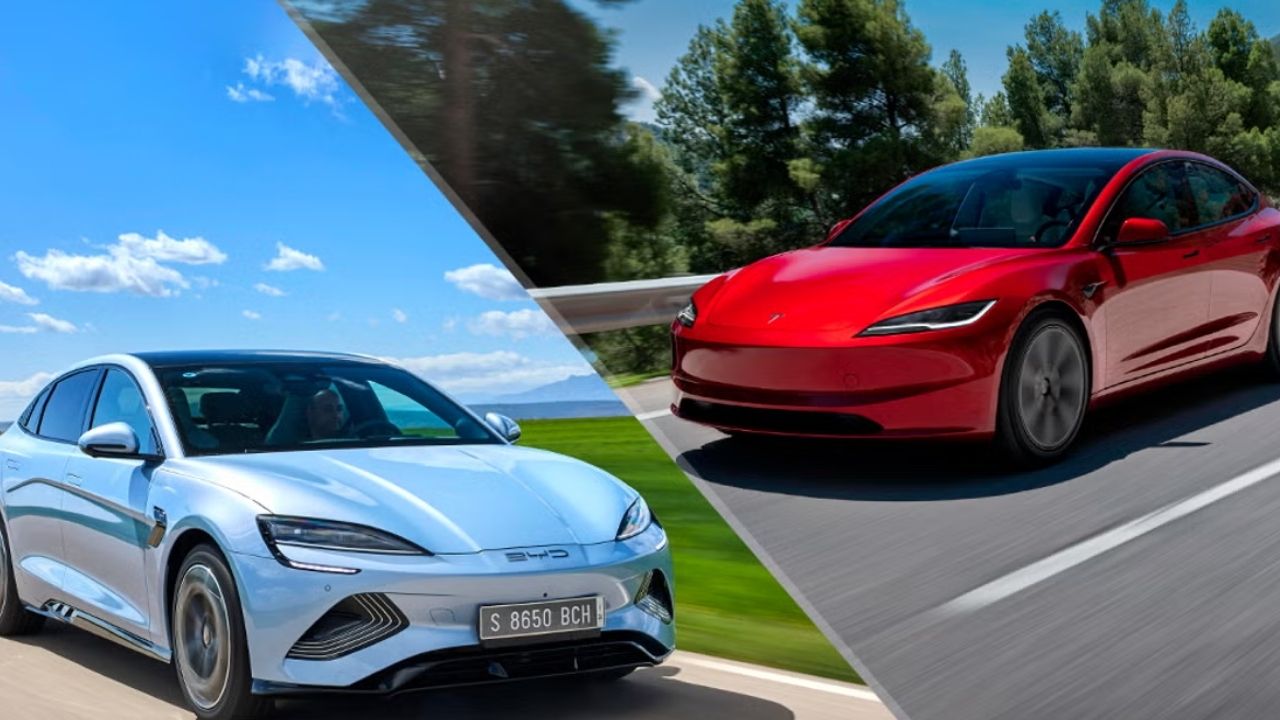
Chinese electric vehicle (EV) manufacturer BYD is on track to overtake Tesla as the world’s largest seller of EVs, marking a major shift in the global landscape.
As per the details, both companies are expected to soon unveil their final sales numbers for 2025, but figures released so far suggest Tesla is unlikely to hold onto its long-standing lead as Shenzhen-based BYD, by the end of November, had already sold 2.07 million EVs.
In comparison, Tesla had reported sales of 1.22 million EVs by the end of September.
Tesla’s third-quarter figures were temporarily boosted by a surge in demand ahead of the expiration of a US electric vehicle tax credit, which helped push nearly 500,000 vehicle sales in just three months.
The incentive, worth up to $7,500, ended under legislation supported by United States (US) President Donald Trump.
However, analysts expect Tesla’s momentum to weaken. According to a FactSet consensus, Tesla is projected to sell around 449,000 vehicles in the fourth quarter, bringing its total 2025 sales to roughly 1.65 million units with a decline of 7.7 percent year-on-year and well below BYD’s current tally.
Deutsche Bank has issued an even more cautious outlook, forecasting Tesla’s fourth-quarter sales at 405,000 units. The bank expects deliveries to fall by nearly one-third in North America and Europe, and by about 10 percent in China.
The company has faced backlash linked to CEO Elon Musk’s political positions, including his support for Trump and other far-right figures. At the same time, competition has intensified, particularly from Chinese manufacturers such as BYD, as well as established European automakers.
“We believe Tesla will see some weakness on deliveries in the fourth quarter,” said Dan Ives of Wedbush Securities.
“Sales of 420,000 would be good enough to show stable demand with Wall Street laser focused on the autonomous chapter kicking off in 2026,” Ives added, referring to plans for self-driving vehicles.
Despite its rapid global expansion, BYD has also faced headwinds at home market. Price-sensitive consumers in China have pressured profit margins, prompting the company to accelerate its push into international markets.
BYD has been proactive in establishing overseas manufacturing and supply chains, according to Jing Yang, director of Asia-Pacific Corporate Ratings at Fitch Ratings.
Chinese EV makers, including BYD, have also drawn criticism from overseas competitors over state subsidies that allow them to price vehicles aggressively. In response, Trump’s predecessor Joe Biden imposed 100 percent tariffs on Chinese EV imports – a policy that could be expanded further under Trump.
Europe has also introduced tariffs, although BYD is developing manufacturing facilities in Hungary to mitigate the impact.