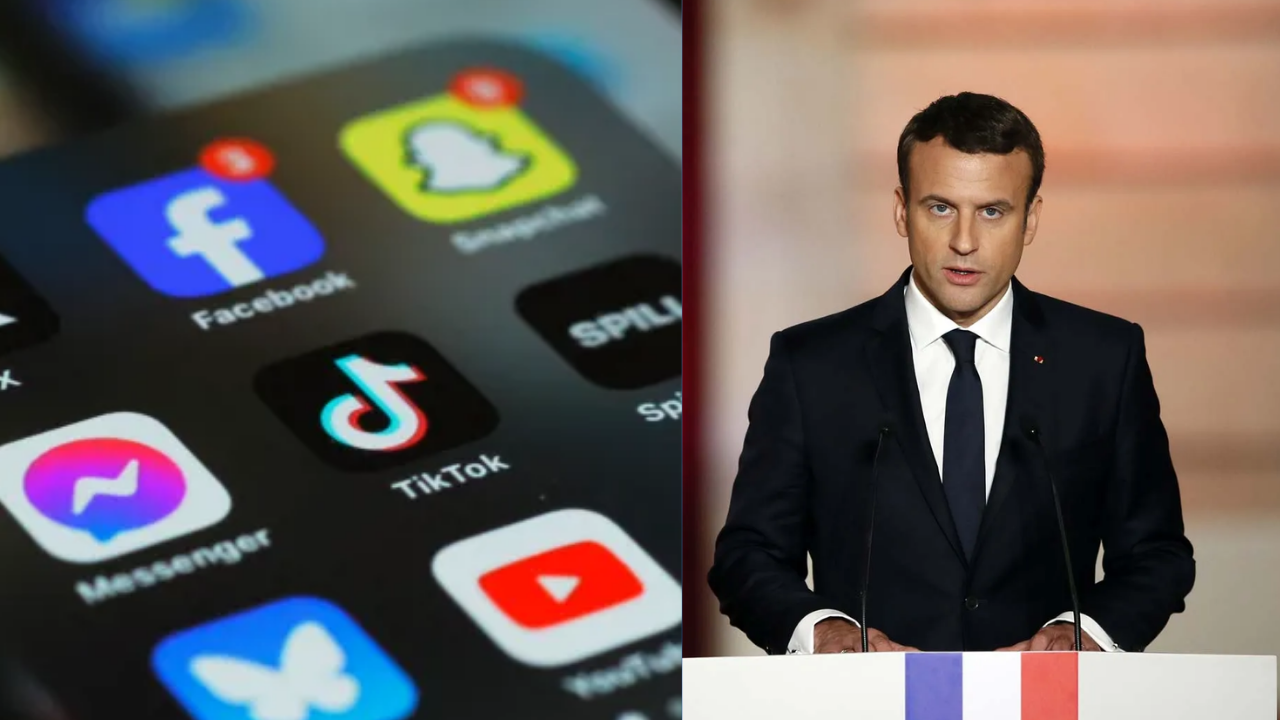
France is preparing a social media ban for children under 15, following Australia’s world-first restriction on platforms for those under the age of 16.
As per the details, a draft bill outlining the measure will be submitted for legal review before being debated in parliament, under which Facebook, Snapchat, TikTok and YouTube will be banned.
The proposal will also include a ban on mobile phones in high schools for students aged 15 to 18, while phones have already been restricted in primary and middle schools.
The draft bill cites “the risks of excessive screen use by teenagers”, including exposure to inappropriate content, online harassment and changes in sleep patterns. It states the need to “protect future generations” from dangers that threaten their ability to thrive in society.
President Emmanuel Macron has expressed support for the ban in recent weeks. At a public debate in Saint Malo, he said, “The more screen time there is, the more school achievement drops, the more screen time there is, the more mental health problems go up.”
He used the analogy of a teenager in a Formula One car, stating, “If a child is in a Formula One car and they turn on the engine, I don’t want them to win the race, I just want them to get out of the car. I want them to learn the highway code first, and to ensure the car works, and to teach them to drive in a different car.”
Anne Le Hénanff, the minister in charge of digital development and artificial intelligence, told Le Parisien that the social media ban for under-15s is a government priority. She added that the bill would be “short and compatible with European law”, referencing the EU’s Digital Services Act, which aims to combat hateful speech, misinformation and disinformation.
It merits a mention that other countries are also considering restrictions for young users. Denmark and Malaysia are aiming to introduce a ban for under-15s and under-16s, respectively, whereas Norway is reviewing similar measures for 2026.
The government in the United Kingdom (UK) has also said that “nothing is off the table” but emphasised that any ban must be “based on robust evidence”.