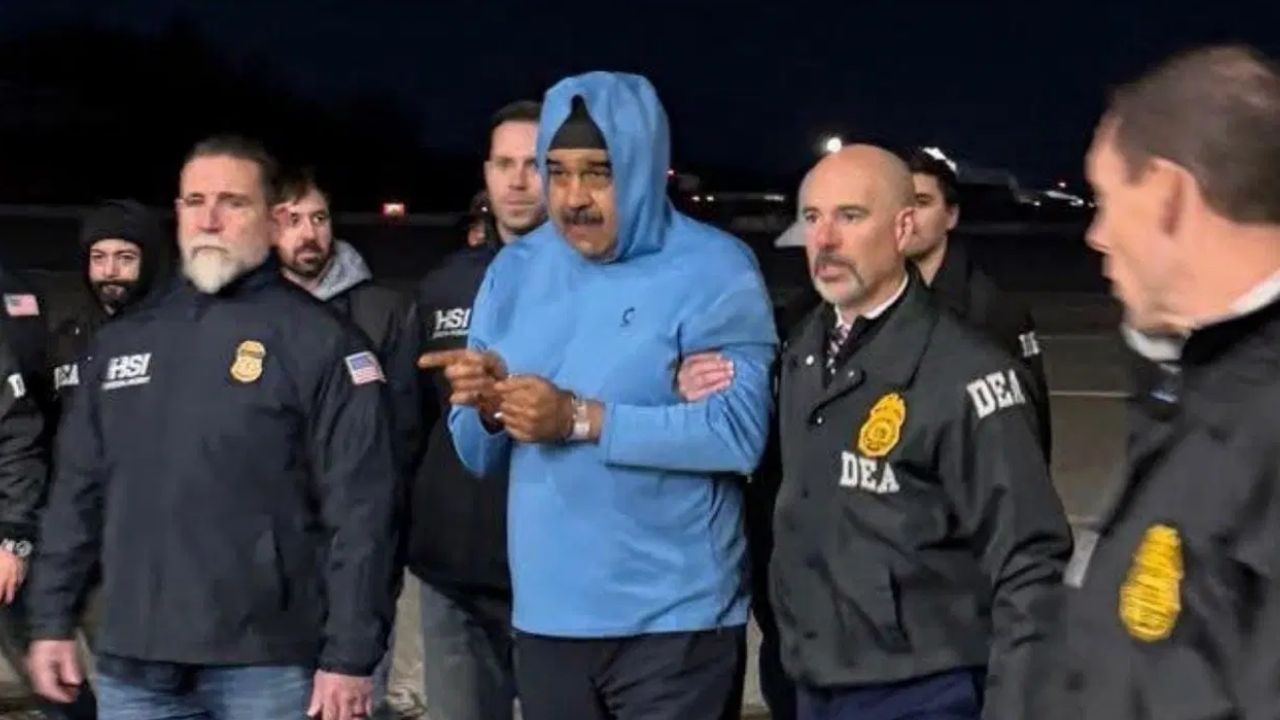
The United Nations Security Council (UNSC) will convene Monday to examine the legality of the United States’ (US) dramatic capture of Venezuelan President Nicolas Maduro, though Washington is unlikely to face strong condemnation from its allies.
US Special Forces seized Maduro in Caracas on Saturday in a raid that knocked out power in parts of the capital and struck military installations. Venezuelan officials reported casualties during the operation. Maduro, 63, was flown to New York and is being held in detention ahead of a court appearance on drug charges.
Russia, China, and other Venezuelan allies have accused Washington of violating international law. However, many US allies – long opposed to Maduro’s rule – have refrained from directly criticizing the military action.
“Judging by the reactions from European leaders to date, I suspect that US allies will equivocate exquisitely in the Security Council,” Reuters quoted Richard Gowan, director of global issues at the International Crisis Group, as saying.
UN Secretary-General Antonio Guterres warned the operation set “a dangerous precedent.” Legal experts echoed that view, arguing the raid lacked authorization from the Security Council, did not have Venezuelan consent, and failed to meet the threshold of self-defense under international law.
US Ambassador to the UN Mike Waltz cited Article 51 of the UN Charter, which affirms the right to self-defense if a member state suffers an armed attack. He described Maduro as “a drug kingpin, an illegitimate leader indicted in the United States, coordinating with China, Russia, Iran, and terrorist groups like Hezbollah.”
Yet scholars rejected that justification. “Even if Maduro were responsible for smuggling drugs into the US, such smuggling does not constitute an armed attack,” said Milena Sterio, professor at Cleveland State University College of Law. Adil Haque of Rutgers Law School added that the capture “was an illegal infringement of the inviolability and immunity of a sitting Head of State.”
The Cuban government announced that 32 of its citizens, including members of its armed forces and intelligence services, were killed during the raid. Havana declared two days of mourning, praising those who “fulfilled their duty with dignity and heroism” in resisting the attack.
Maduro was indicted in 2020 on US charges including narco-terrorism conspiracy, allegations he has consistently denied. While critics argue Washington violated international law, the US holds veto power at the Security Council, shielding it from formal accountability.