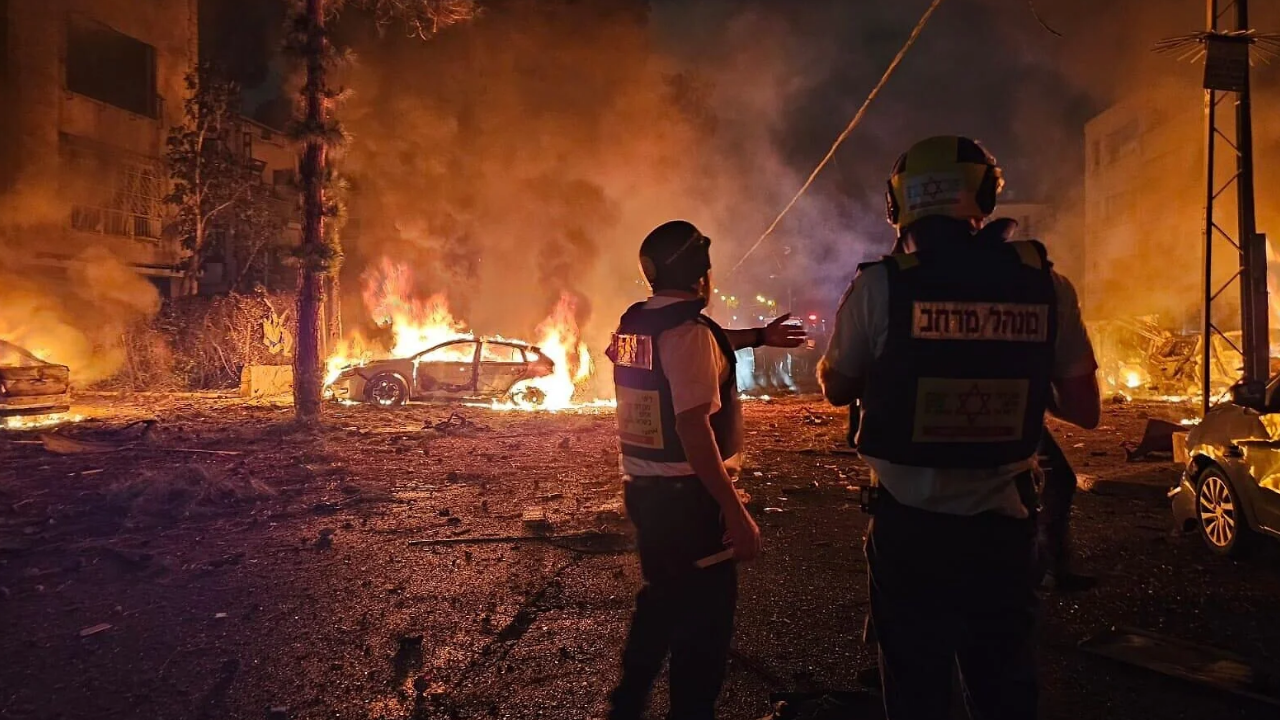
The Islamic Revolutionary Guard Corps (IRGC) has launched a new missile barrage on central Israel in retaliation against the killing of Ali Larijani, the secretary of the Supreme National Security Council.
As per the details, the IRGC confirmed the strikes were carried out to avenge Larijani and Gholamreza Soleimani, the head of the Basij paramilitary force, both of whom died in Israeli air strikes a day ago.
Iranian Army chief Amir Hatami said that the response to the assassinations would be “decisive and regrettable”. Foreign Minister Abbas Araghchi, speaking to Al Jazeera, dismissed the impact of high-level assassinations on the country’s stability.
Referring to the death of Supreme Leader Ayatollah Ali Khamenei on the first day of the conflict, Araghchi noted that the system provided a replacement immediately. “If the foreign minister were ever to be martyred, there would ultimately be someone else to take the position,” he said, adding that anyone could become a target.
The escalation comes as Israel’s military confirms it targeted Iranian command centres, missile sites and the intelligence ministry. In Tehran, the governor reported that 12,000 buildings have so far been damaged or destroyed with over 500 deaths and 5,700 injuries recorded in the province.
The conflict also continues to spread across the Gulf as Qatar’s defence ministry intercepted a missile attack over Doha on Wednesday morning. Saudi Arabia’s Defence Ministry also reported downing multiple drones approaching Riyadh’s diplomatic quarter.
In the UAE, air defences intercepted strikes targeting Al Minhad Air Base.
In Iraq, security sources reported the interception of a drone near the logistics support centre at Baghdad airport.
International maritime and nuclear watchdogs have also raised alarms as the violence reaches critical infrastructure.
The UN nuclear watchdog (IAEA) confirmed a projectile hit the Bushehr nuclear power plant on Tuesday evening, though no damage or radiation leaks were reported. IAEA head Rafael Grossi called for “maximum restrain” to avoid a nuclear accident.
Meanwhile, the situation at the Strait of Hormuz also doesn’t seem to be improving with Iranian blockades restricting global oil supply.
In London, the International Maritime Organization (IMO) is holding emergency talks to discuss the fate of ships stranded in the Persian Gulf while a proposal for a safe maritime corridor is under review as Iranian retaliation continues to impact shipping.