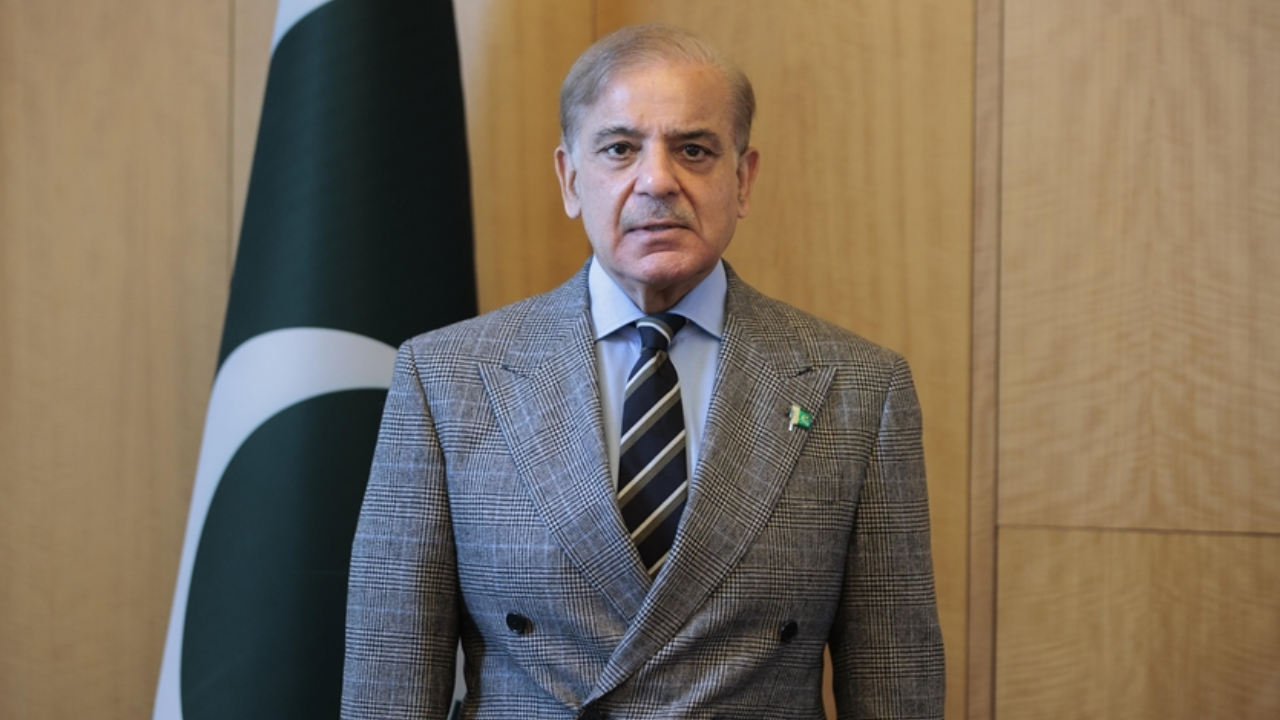
Prime Minister Shehbaz Sharif has said that he has turned down a summary proposing an increase in the prices of petrol and High-Speed Diesel (HSD), stating that the government will continue to absorb the financial impact.
Addressing the nation on Friday, the premier said that he was advised to approve an increase of Rs95 per litre in petrol and Rs203 per litre in HSD. “However, I have rejected it,” he said.
The announcement comes days after he declined a similar proposal involving an increase of Rs76 per litre for petrol and Rs177 per litre for HSD. He had earlier also referred to rejecting another recommendation following a rise in global oil prices on March 13.
The latest decision comes amid a global fuel crisis linked to the ongoing US-Israeli war on Iran that began on February 28. The government had already introduced austerity measures on March 9 and raised petroleum prices earlier in the month as part of its response.
During his address, the prime minister said that the country was facing a difficult economic environment. “Even developed countries, which have resources in abundance, are facing an extreme economic crisis,” he said.
He said that the government had taken advance steps to manage the situation, including reducing development spending. According to him, a Rs100 billion cut in the development budget and other austerity measures had helped limit the burden on the public.
Shehbaz Sharif said that the government would bear a financial burden of Rs56 billion for the current week to avoid passing the increase on to consumers. He added that based on international market rates, petrol should be priced at Rs544 per litre but was being sold at Rs322.
Similarly, he said that the price of HSD should stand at Rs790 per litre but was being provided at Rs335. He stated that over the past three weeks, the government had absorbed a total impact of Rs125 billion.
“These figures may seem mere numbers, but the government has borne the historic burden, so that you don’t have to bear it,” he stated.
He also urged citizens to limit fuel consumption, asking them to assess whether travel was necessary. “Think before travelling whether it is necessary,” he advised, adding that austerity required collective participation.
Separately, the federal and provincial governments agreed to introduce a mobile application-based quota system to provide targeted fuel subsidies to users of two- and three-wheelers.
At the start of his address, the prime minister also spoke about Pakistan’s diplomatic engagement regarding the Middle East situation. He said that Pakistan was making efforts for de-escalation through dialogue, adding that he had held discussions with leadership in Iran and Gulf countries.