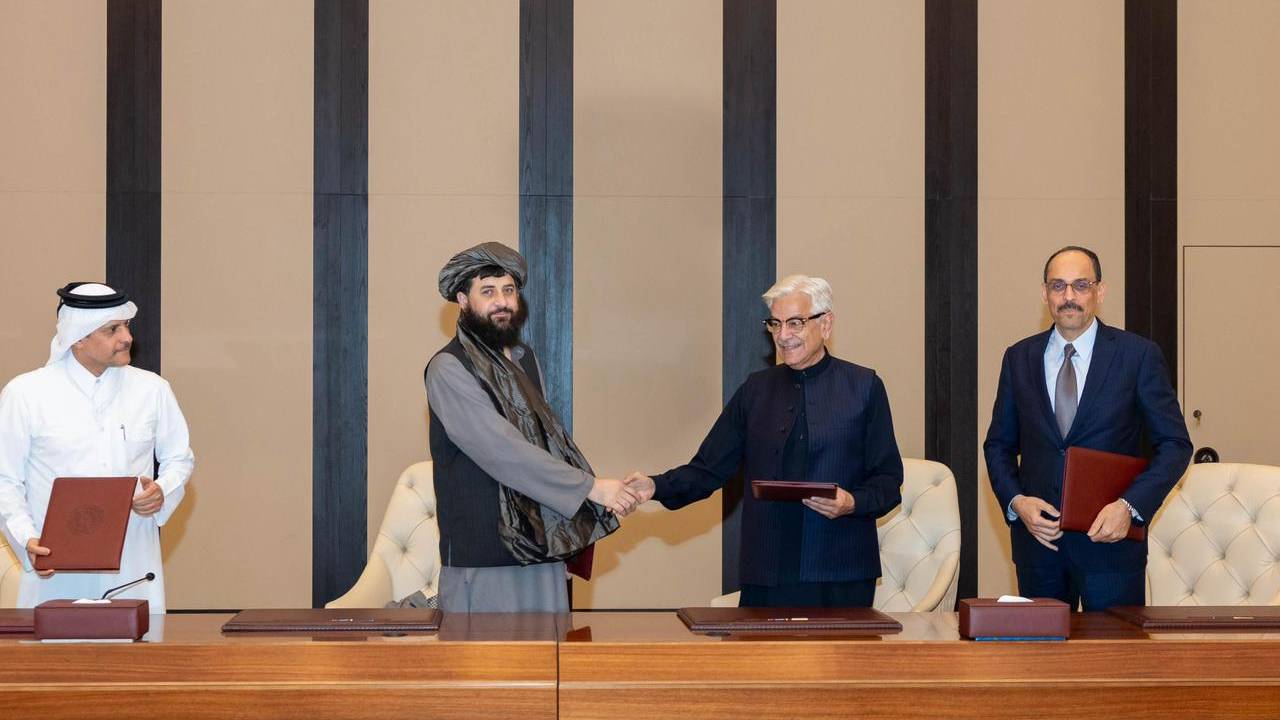
The Kingdom of Saudi Arabia (KSA) on Monday praised the ceasefire agreement between Pakistan and Afghanistan, describing it as an important step toward lasting peace and stability in the region.
In a statement, the Saudi foreign ministry said the historic deal was achieved during negotiations held in Doha.
“Saudi Arabia welcomes the signing by the Islamic Republic of Pakistan and Afghanistan of an immediate ceasefire and the establishment of mechanisms to consolidate lasting peace and stability between the two countries, during the round of negotiations held in Doha,” the KSA’s Ministry of Foreign Affairs said.
“The Kingdom affirms its support for all regional and international efforts aimed at promoting peace and stability, and its continued commitment to ensuring security that achieves stability and prosperity for the brotherly peoples of Pakistan and Afghanistan.”
The statement went on to say that it was hoped that the development would reduce tensions along the two countries’ shared border.
“The ministry also appreciates the diplomatic efforts and constructive role played by the State of Qatar and the Republic of Türkiye in this regard.”
After a week of fierce border fighting, the deadliest since the Taliban took over Kabul in 2021, Pakistan and Afghanistan said Sunday that they had negotiated an immediate ceasefire during negotiations in Doha.
The ceasefire “has been finalised”, Pakistan’s Defence Minister Khawaja Muhammad Asif posted on X on Sunday, adding that both sides would meet again on October 25 in Istanbul to discuss “detailed matters”.
The parties agreed on a comprehensive and significant ceasefire, Taliban spokesman Zabihullah Mujahid stated in a statement.
Qatar’s foreign ministry, which mediated the talks alongside Turkey, stated that the upcoming meetings aim “to ensure the sustainability of the ceasefire and verify its implementation reliably and sustainably”.
Asif and Mullah Muhammad Yaqoob, his Afghan counterpart, led the negotiations.
The recent escalation involved ground battles and Pakistani airstrikes along the contested 2,600-kilometre border. It began after Islamabad accused Kabul of failing to curb militants launching attacks from safe havens in Afghanistan.
More than 200 Afghan Taliban members and allied militants were killed by Pakistani forces in a fierce retaliation that officials called a self-defense operation. Inter-Services Public Relations reports that 23 Pakistani soldiers were martyred in the clashes.
The Taliban, however, denies harbouring militants attacking Pakistan and has accused the Pakistani military of spreading misinformation about Afghanistan and providing refuge to Daesh-linked fighters to undermine its stability and sovereignty. Islamabad has rejected these claims. Militants have long waged an insurgency in Pakistan, seeking to overthrow the state and impose their rigid interpretation of Islamic law.
The Afghan regime must rein in the proxies who have sanctuaries in Afghanistan and are using Afghan soil to perpetrate heinous attacks inside Pakistan,” the Pakistan Army chief, Field Marshal Asim Munir, said on Saturday, addressing a graduation ceremony of cadets.
The Taliban spokesperson said that at the Doha talks, “It was decided that neither country will take hostile actions against the other, and support will not be provided to groups operating against the government of Pakistan.”
In a follow-up post on X, he said it reflected the Taliban’s longstanding position that Afghanistan’s territory will not be used against any other country.
The spokesperson also clarified that the statements issued regarding the agreement did not amount to a joint declaration.