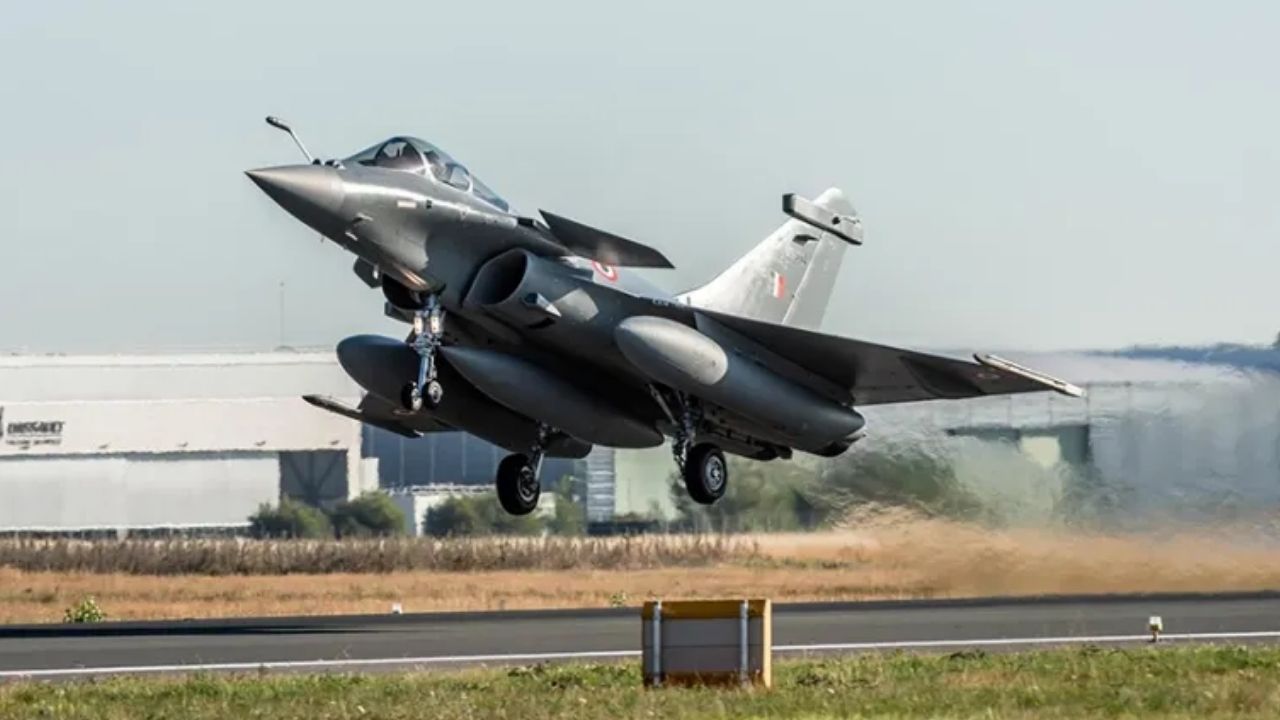
France’s defence deals for the sale of Rafale jets to Middle Eastern countries has left Indians worried over the buyers’ strong defence ties with Pakistan and China, it has emerged.
According to reports, experts in India have raised strategic concerns across defence circles over the export of Rafale to nations like Qatar and the United Arab Emirates (UAE), both of which maintain strong defence ties rooted in military and intelligence cooperation with Pakistan and China.
“The indirect route has sparked alarm over the possibility of passive technology seepage as the concern lies in exposure through joint exercises, maintenance protocols and shared operational environments. Even limited access to onboard systems and telemetry data could offer adversaries valuable insights,” Indian media reports quoted experts as saying.
At the heart of Rafale’s defensive architecture is its Spectra electronic warfare suite — an integrated system that provides comprehensive situational awareness, threat detection and countermeasures, making the aircraft exceptionally resilient against a wide spectrum of threats.
Spectra operates across multiple domains, including radar warning receivers that scan for hostile emissions, laser warning systems to detect ground-based targeting and missile approach sensors that identify incoming infrared-guided missiles.
What sets Spectra apart is its ability to fuse data from these sensors into a coherent threat picture, automatically prioritising threats and initiating countermeasures such as electronic jamming, radar decoys and infrared flares.
The Rafale’s stealth profile is further enhanced by Spectra’s management of radar emissions and electromagnetic signature, complementing its aerodynamic design and radar-absorbent materials. Unlike traditional stealth aircraft that rely solely on shape and coating, Rafale uses active electronic warfare to adapt dynamically to threats in real time.
In addition to electronic defenses, Rafale carries physical countermeasures like chaff and flares, deployed automatically or manually to mislead radar and infrared-guided missiles. These systems are integrated with missile warning sensors for precise timing and direction, maximising effectiveness.
While Rafale’s survivability is also boosted by its agility and flight performance – its delta wing and canard configuration allow for high-G turns and rapid altitude changes – its network-centric design enables secure data sharing with other platforms, airborne warning systems and ground-based radars that facilitate coordinated electronic warfare tactics.
Despite Pakistan’s massive wins against the Indian Air Force (IAF) during May’s military clashes that saw the downing of at least six Indian jets, including three Rafales, Pakistan Air Force’s (PAF) Air Vice Marshal Aurangzeb Ahmed, during a join military presser, said the French-made aircraft was a “potent aircraft if employed well”.
Experts say that Pakistan’s dominance during the clashes was attributed to superior electronic warfare, agile air tactics and strategic use of drones and networked command systems, which may or may not have included passive tech seepage.
Other factors that contributed to Pakistan’s edge during the confrontation included electronic warfare and defence systems, precision strikes and drone warfare beside an integrated command structure enabled faster decision-making and coordinated multi-domain responses.