With the 27th Constitutional Amendment making steady headway in parliament, the federal government has begun the groundwork for establishing the long-discussed Federal Constitutional Court (FCC), a specialised body meant to interpret the Constitution and resolve disputes between the federation and provinces.
According to official sources, consultations are underway over the court’s initial composition, with Justice Aminuddin Khan, who currently leads the Supreme Court’s Constitutional Bench, being considered for appointment as the first Chief Justice of the FCC.
The shortlist under consideration includes Justice Syed Hasan Azhar Rizvi, Justice Musarrat Hilali, Justice Aamer Farooq, and Justice Ali Baqar Najafi from the Supreme Court, alongside Justice K.K. Agha of the Sindh High Court and Justice Rozi Khan Barrech, the sitting Chief Justice of the Balochistan High Court.
According to sources, a presidential order will establish the FCC’s initial strength, while parliamentary legislation will be needed for a further expansion.
According to Law Ministry officials, the president will appoint FCC judges on the prime minister’s recommendation under the proposed constitutional amendments.
The move to create a separate constitutional court has been revived through the 27th Constitutional Amendment Bill, aimed at refining the Supreme Court’s jurisdiction and ensuring faster, more specialised adjudication of constitutional matters.
The government maintains that the initiative will reduce Supreme Court’s workload, expedite constitutional rulings, and strengthen judicial independence.
The idea is not new.It was first introduced in the 2006 Charter of Democracy (CoD) signed by the PPP and PML-N.
The CoD proposed forming a dedicated court to handle constitutional cases, allowing the Supreme Court to focus on final appeals. Although the proposal resurfaced in the 26th Amendment draft, it was shelved amid opposition from JUI-F and other parties.
In an effort to retain experienced jurists and preserve institutional continuity, the new plan calls for Constitutional Court judges to retire at 68, three years later than Supreme Court judges.
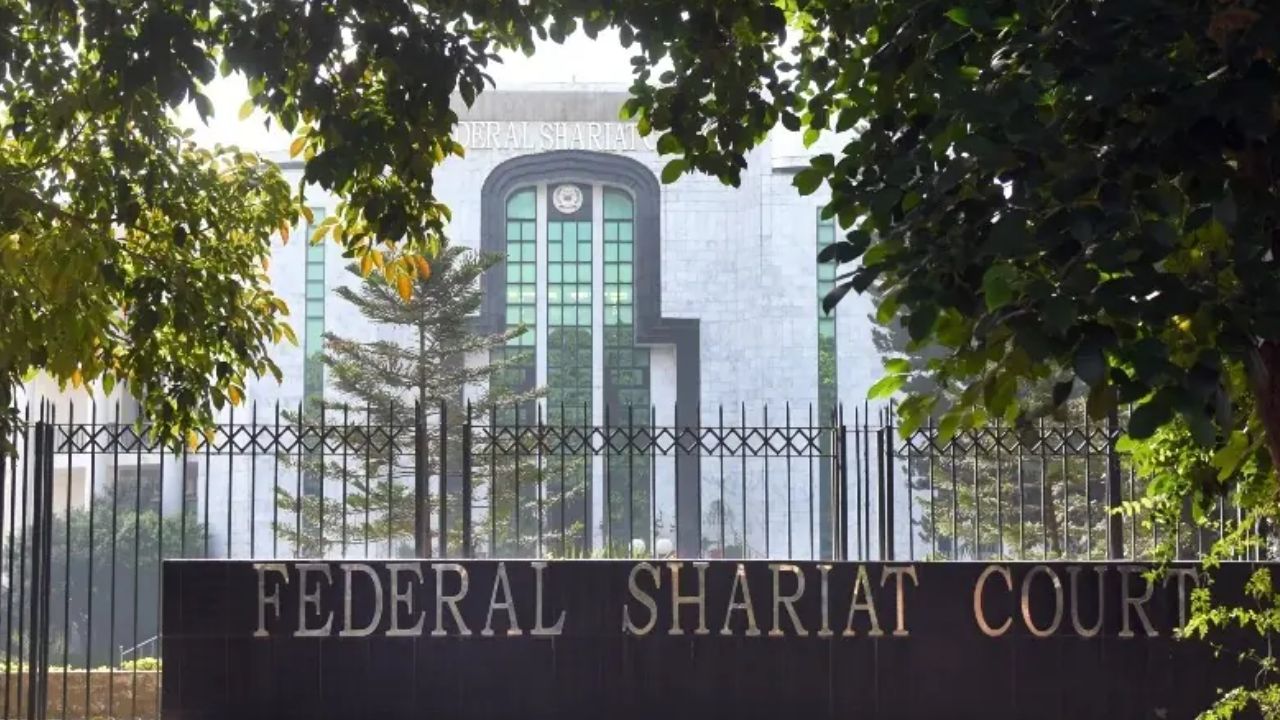
In order to provide administrative and symbolic separation from the Supreme Court and other higher courts, the Federal Shariat Court will relocate to the Islamabad High Court grounds, while the FCC will remain housed in the Federal Shariat Court’s existing building in Islamabad.
The FCC will have exclusive jurisdiction over federal-provincial disputes, constitutional interpretation, and issues directly related to constitutional provisions once it is operational.
Additionally, it will have the authority to examine questions referred by the president or Parliament, as well as presidential orders and constitutional amendments.
Justice Aminuddin Khan, born in Multan in 1960, is a second-generation lawyer who earned his LL.B. from University Law College, Multan, in 1984. Beginning his practice under his father, Khan Sadiq Muhammad Ahsan, he became an advocate of the Lahore High Court in 1987 and of the Supreme Court in 2001. Elevated to the LHC bench in 2011 and the SC in 2019, he has authored several landmark rulings in civil and constitutional law.
Justice Syed Hasan Azhar Rizvi, born in Karachi in 1962, began practising law in 1988 and joined the Supreme Court in 2023. He is recognised for his integrity and deep understanding of constitutional and administrative law.
Justice Musarrat Hilali, the first woman Chief Justice of the Peshawar High Court, was elevated to the Supreme Court in 2023. Her career spans roles as Additional Advocate General of Khyber Pakhtunkhwa and Federal Ombudsman for Protection against Harassment of Women.
Justice Aamer Farooq, former Chief Justice of the Islamabad High Court, joined the Supreme Court in February 2025. Educated in London and called to the Bar at Lincoln’s Inn, he specialises in constitutional and commercial law.
Justice Ali Baqar Najafi, who has served at the Lahore High Court, has presided over more than 37,000 cases, covering civil, criminal, and constitutional matters. He also headed the inquiry into the 2014 Model Town incident.
Justice Rozi Khan Barrech, currently Chief Justice of the Balochistan High Court, joined the judiciary in 1998, was elevated to the High Court in 2019, and assumed his current role in July 2025.
Justice K.K. Agha, a Sindh High Court judge with extensive international experience, he has previously served as a prosecutor at the UN Tribunal for the former Yugoslavia and as Senior Counsel at the Special Court for Sierra Leone.