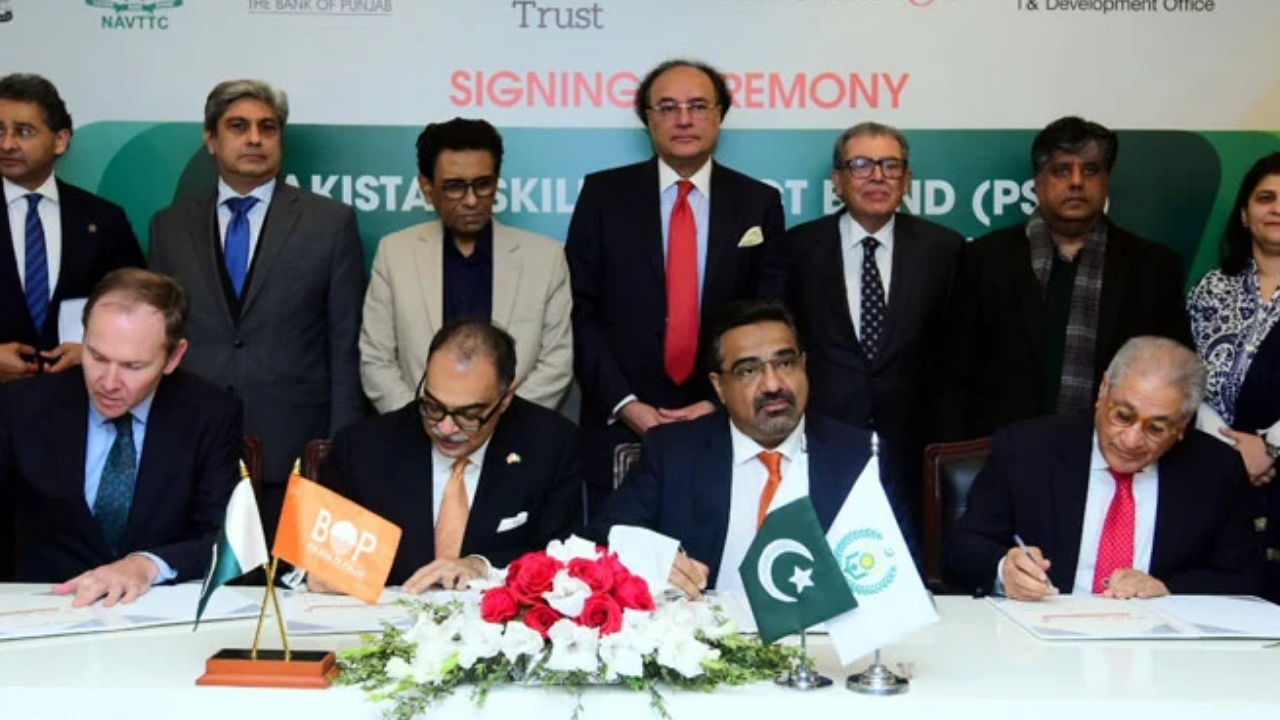
Pakistan on Tuesday launched its first private-capital-funded Pakistan Skills Impact Bond (PSIB), backed by a Ministry of Finance guarantee, to support technical skills training through a results-linked financing model.
According to reports, the bond will operationalise a Rs1 billion pilot tranche under a three-year instrument aimed at funding a scalable Technical Skills Development Programme.
The launch ceremony included the signing of financing documents, such as investor and issuer agreements, and was attended by senior government officials, development partners, private sector representatives and international organisations.
According to officials, the PSIB introduces a shift in how skill development initiatives are financed in Pakistan by moving away from traditional public expenditure models toward a structure tied to outcomes.
The bond is designed to link funding to measurable indicators, including certification, job placement and a minimum six-month employment retention period for trainees.
Under the proposed framework, the model is expected to evolve over time. Subsequent tranches may connect repayment to a nominal share of trainee salaries, a mechanism intended to create a longer-term funding cycle while supporting workforce participation in domestic and overseas markets.
Finance Minister Muhammad Aurangzeb, speaking at the event, said the launch marked “an important moment focused on education and training”. He linked the initiative to Pakistan’s economic reform agenda and broader human capital strategy.
The minister said Pakistan’s demographic dividend could only be realised through large-scale efforts to upskill and reskill young people, adding that skills development required structured financing and accountability.
He highlighted the role of the National Vocational and Technical Training Commission (NAVTTC) in advancing this objective.
Referring to global labour trends, the finance minister said the international shift toward digital skills, including blockchain-related work, had opened earning opportunities for Pakistani youth.
He also noted that Pakistan already has one of the largest freelance workforces globally.