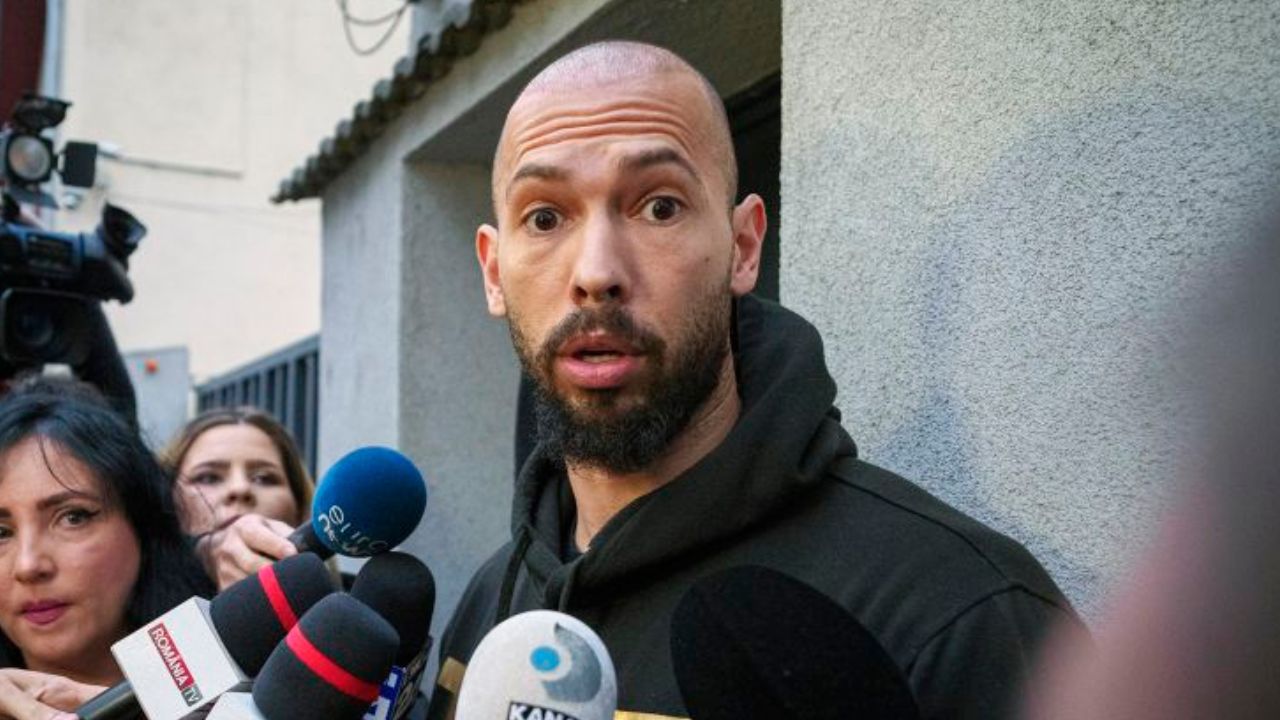
Author: AFP

  • Avowed misogynist Andrew Tate in US despite rape charges in Romania

    Avowed misogynist Andrew Tate in US despite rape charges in Romania

    Andrew Tate, a right-wing influencer charged with rape and human trafficking in Romania, arrived in the United States on Thursday — the first time he has been out of the eastern European country since his 2022 arrest.

    Romanian prosecutors allege that self-declared misogynist Tate, 38, his brother Tristan, 36, and two women set up a criminal organization in Romania and Britain in early 2021 and sexually exploited several victims.

    The brothers traveled to Florida together on a private jet, their lawyer Ioan Gilga told CNN — but received a frosty reception just before landing as state authorities said they were not welcome. The Tates have not stated publicly the purpose of this trip.

    “We live in a democratic society where it’s innocent until proven guilty, and I think my brother and I are largely misunderstood,” said Andrew Tate after arriving in Fort Lauderdale.

    “There’s a lot of opinions about us, a lot of things that go around about us on the internet. We’ve yet to be convicted of any crime in our lives ever.”

    The government in Bucharest said the Tates, who have British and US nationality and have been under judicial supervision in Romania, need to return to court on March 24 and a no-show could lead to “preventive arrest.”

    Four British women, who have accused Tate of rape and coercive control in a separate case, voiced concern last week that the US government might push Romania to ease the Tates’ travel restrictions and let them escape.

    Romanian Foreign Minister Emil Hurezeanu has said Richard Grenell, special envoy for President Donald Trump, raised the case at the Munich Security Conference earlier in February.

    But Trump denied all knowledge of any advocacy for the Tates from his administration — or help in bringing them to Florida.

    “I know nothing about that. I don’t know — you’re saying he’s on a plane right now? Yeah, I just know nothing about it. We’ll check it out. We’ll let you know,” he told reporters when asked about the visit.

    Justice Minister Radu Marinescu told AFP on Thursday he was “not aware of any pressure from anyone” and had “not received any kind of request from the US authorities.”

    A spokesperson for British Prime Minister Keir Starmer — who was visiting Trump in Washington — declined to comment on the situation or whether the UK wanted to see Tate extradited to Britain.

    “There’s an English element here so obviously it’s important justice is done and human trafficking is obviously to my mind a security risk,” said Starmer, in a brief response to a journalist’s question at the White House.

    A Romanian court has already granted a British request to extradite the Tates, but only after legal proceedings in Romania have concluded.

    Not welcome

    In a joint statement on Thursday, the four British women said they “feel retraumatized by the news that the Romanian authorities have given in to pressure from the Trump administration to allow Andrew Tate to travel.”

    The women are bringing a civil case in the UK against Tate, accusing him of rape and coercive control between 2013 and 2016.

    Matthew Jury, their lawyer, said Starmer should raise the issue “on behalf of the many British women who Tate is alleged to have raped and sexually assaulted who may now be denied justice.”

    On Thursday, a Romanian court granted the Tate brothers’ appeal to lift the seizure of their assets — properties, vehicles, bank accounts and company shares, their PR team said.

    Andrew Tate moved to Romania years ago after first starting a webcam business in the UK.

    He leapt to fame in 2016 when he appeared on the UK’s “Big Brother” reality television show, but was removed after a video emerged showing him attacking a woman.

    He then turned to social media platforms to promote his often misogynistic and divisive views on how to be successful.

    Banned from Instagram and TikTok for his views, Tate is followed by more than 10 million people on X, where his posts are often homophobic and racist.

    Last year, the Tates were sentenced in a tax fraud case in Britain.

    Florida Governor Ron DeSantis said before the brothers landed that the state was not involved in organizing their trip, did not welcome them and had been exploring legal options to prevent the visit.

    “Florida is not a place where you’re welcome with that type of conduct,” he told a news conference.


  • Next phase of Israel-Hamas ceasefire: Talks to resume in Cairo

    Next phase of Israel-Hamas ceasefire: Talks to resume in Cairo

    Talks resume in Cairo Friday on a second phase of an Israel-Hamas ceasefire that mediators hope will bring a lasting end to the genocide in Gaza, a day after Israel’s military acknowledged its “complete failure” to prevent the 2023 Hamas attack that resulted in intensified attacks by Israel.

    Mediator Egypt said Thursday that Israeli, Qatari and US delegations were already in Cairo for “intensive” talks on the next stage of the ceasefire, after a first phase only reached following months of gruelling negotiations.

    “The relevant parties have begun intensive talks to discuss the next phases of the truce agreement, amid ongoing efforts to ensure the implementation of the previously agreed understandings,” said Egypt’s State Information Service.

    The ceasefire, whose first phase is set to expire on Saturday, has largely halted the fighting that began when Hamas militants broke through Gaza’s security barrier on October 7, 2023, in an attack that resulted in the deaths of 1,218 people in Israel, mostly civilians, according to an AFP tally of official figures.

    Israel’s retaliation has killed more than 48,000 people in Gaza, according to the health ministry in the Hamas-run territory, figures the UN has deemed reliable.

    Prime Minister Benjamin Netanyahu sent negotiators to Cairo on Thursday, after Hamas handed over the remains of four hostages in exchange for hundreds of Palestinian prisoners under the truce.

    ‘Too many civilians died’

    An internal Israeli army probe into the October 7 attack, released on Thursday, acknowledged the military’s “complete failure” to prevent it, according to a military official who briefed reporters about the report’s contents on condition of anonymity.

    “Too many civilians died that day asking themselves in their hearts or out loud, where was the IDF?” the official said, referring to the military.

    A senior military official said at the same briefing that the military acknowledges it was “overconfident” and had misconceptions about Hamas’s military capabilities before the attack.

    Following the scathing probe’s release, Israel’s military chief General Herzi Halevi said: “The responsibility is mine.”

    Halevi had already resigned last month citing the October 7 “failure”.

    During their attack, militants seized dozens of hostages, whose return was a key objective of the war.

    Netanyahu vowed to destroy Hamas and to bring home all the hostages, but has faced criticism and protests at home over his handling of the war and the hostage crisis.

    ‘Murdered’

    A hostage-prisoner swap early Thursday was the final one under the initial stage of the truce that took effect on January 19.

    Over the past several weeks, Hamas freed in stages 25 living Israeli and dual-national hostages and returned the bodies of eight others.

    It also released five Thai hostages outside the deal’s terms.

    Israel, in return, was expected to free around 1,900 Palestinian prisoners.

    Israel’s Prison Service said that “643 terrorists were transferred from several prisons across the country” and released on Thursday under the terms of the truce after Hamas returned the bodies of four hostages.

    Hours after the handover on Thursday, an Israeli campaign group confirmed “with profound sorrow” the identities of the four bodies.

    Ohad Yahalomi, Tsachi Idan, Itzik Elgarat and Shlomo Mansour “have been laid to eternal rest in Israel”, said the Hostages and Missing Families Forum.

    Israel Berman, a businessman and former member of the Nahal Oz kibbutz community where Idan was abducted, said that “until the very last moment, we were hoping that Tsachi would return to us alive”.

    ‘We were in hell’

    Among those freed in exchange was the longest-serving Palestinian prisoner in an Israeli jail, Nael Barghouti, who spent more than four decades behind bars.

    He was first arrested in 1978 and sentenced to life imprisonment for the murder of an Israeli officer and attacks on Israeli sites.

    “We were in hell and we came out of hell. Today is my real day of birth,” said one prisoner, Yahya Shraideh.

    AFP images showed some freed prisoners awaiting treatment or being assessed at the European Hospital in Khan Yunis, southern Gaza, after their release.

    Several freed Palestinian prisoners were hospitalised following earlier swaps, and the emaciated state of some released Israeli hostages sparked outrage in Israel and beyond.

    After the swap, Hamas called on Israel to return to delayed talks on the truce’s next phase.

    “We have cut off the path before the enemy’s false justifications, and it has no choice but to start negotiations for the second phase,” Hamas said.

  • Bitcoin falls below $80,000 first time since November

    Bitcoin falls below $80,000 first time since November

    Bitcoin sank below $80,000 on Friday for the first time in more than three months as a sell-off in the cryptocurrency sector gathered pace amid volatility in global markets.

    The digital unit fell to as low as $79,525.88 in early Asian trade — its lowest level since November 11 and sharply down from the record above $109,000 seen just last month.

    The unit saw an eye-watering rally after Donald Trump’s election victory in November after he promised on the campaign trail to free up regulations surrounding digital tokens and pledged to make the United States the crypto capital of the world.

    Bitcoin’s gains were in line with advances across world markets but the euphoria has dulled in recent weeks as the US president has pursued a hardball policy of hammering partners with tariffs and threatening to spark a global trade war.

    His pledges to slash taxes and immigration have also fanned concerns that he could reignite inflation, forcing the Federal Reserve to keep interest rates elevated longer than had been expected, while recent data have indicated the US economy is slowing.

  • Internet reacts to Trump’s AI video imagining Gaza as luxury resort

    Internet reacts to Trump’s AI video imagining Gaza as luxury resort

    US President Donald Trump’s official social media accounts posted an apparently AI-generated video depicting war-ravaged Gaza rebuilt into a seaside resort, replete with a towering golden statue of himself.


    The video, which racked up more than 29 million views on Instagram and was shared thousands of times on Trump’s Truth Social network by Wednesday afternoon, prompted some commenters to question whether the president’s accounts had been hacked.


    The 33-second clip remained on Trump’s accounts without denial or retraction hours after the initial posting on Tuesday night.


    The video “Gaza 2025 What’s Next?” opens with people on a rubble-strewn street emerging from a tunnel onto a beach with palm trees and yachts.


    Trump has floated the idea of a US takeover of Gaza under which its Palestinian population would be relocated — a proposal met with global condemnation.


    He later appeared to soften his plan, saying he was only recommending the idea, and conceding that the leaders of Jordan and Egypt — the proposed destinations for relocated Gazans — had rejected any effort to move Palestinians against their will.


    In the social media clip, the soundtrack includes lyrics such as “Donald’s coming to set you free, bringing the light for all to see”, and “Feast and dance, the deal is done, Trump Gaza number one”.


    Seemingly AI-generated renditions of Trump and Israeli Prime Minister Benjamin Netanyahu sip cocktails in swimsuits by a pool, while other shots show what appears to be Elon Musk dancing under a shower of cash on the beach.


    A larger-than-life golden statue of Trump is also featured.


    Social media users reacted with both support and criticism, but many questioned whether Trump himself had posted the montage.


    AFP did not find any evidence the video had been shared online before it was posted to Trump’s Truth Social and Instagram accounts.

    Netizens reacted to the insensitive video circulating online, condemning the move made by the U.S. President.

    Matthew Stadlen, an English presenter, wrote on X (formerly Twitter), “The Trump Gaza video is quite possibly the most disgusting, the most shameful, the most hideous public communication by a US President in living memory.”

    Lawyer and activist, Dr Shola Mos-Shogbamimu, wrote, “President of the United States posts video of him taking over Gaza with his statue for worship, dollars raining, Trump Gaza as centrepiece as he & Netanyahu chill at the beach. Ethnic cleansing rebranded as a real estate deal. Colonialist White Supremacist Zionism. Pure Evil.”

    Another user added, “I feel physically sick at Trump’s Gaza clip. I just can’t comprehend how a human being could be so vile. Can I ask EVERYONE TO PLEASE REPOST THIS CLIP as a counter narrative. It’s essential we tell the truth about this horror show. Let your repost finger do the talking.”

    One user, sharing the screenshots of the comments noted, “Trump biggest supporters are not happy with him for posting that AI video of Gaza.”

    Dancers and beards

    One scene closely resembles an AI-generated image of Trump and Netanyahu drinking cocktails that began circulating in early February.


    Another scene shows belly dancers shimmying on the beach, sporting thick, long beards more typically worn by Islamists.


    More than 15 months of war, triggered by Hamas’s October 7, 2023 attack on Israel, have left much of the Gaza Strip in ruins and most of its population displaced from their homes.


    Senir Hamas official Bassem Naim said in reaction to the video: “Unfortunately, President Trump is once again proposing ideas and solutions that do not take into account the cultures and interests of the indigenous population.”


    In Gaza, people who watched the video were in disbelief.


    “This video of Trump is full of fallacies and shows a lack of cultural awareness… Gaza won’t become a tourist spot like Italy or Spain,” said Nasser Abu Hadaid, a 60-year-old resident of Khan Yunis in southern Gaza.


    “What I know about Trump is that he is a strange but bold president who does what he says he will do. What matters to him is money and investments — there is no humanity,” said Manal Abu Seif, a 23-year-old lawyer in Gaza City.


    “Gaza needs freedom, open border crossings and jobs for young people, and is not a playground for tourism and investment,” she added.


    UN estimates have put the cost of reconstruction at more than $53 billion.


    A fragile ceasefire, in effect since January 19, has allowed an increase in humanitarian aid into Gaza, though Hamas has accused Israel of blocking the entry of some essential supplies.

  • Couple in shock after sitting next to dead body on Qatar Airways flight

    Couple in shock after sitting next to dead body on Qatar Airways flight

    An Australian couple have criticised Qatar Airways after a blanket-draped corpse was seated next to them during a long-haul flight on their way to Venice for a vacation.


    Mitchell Ring said a passenger died part-way through the 14-hour flight from Melbourne to Doha last week.


    “They tried to wheel her up towards business class, but she was quite a large lady and they couldn’t get her through the aisle,” he told Australian network Nine News this week.


    “They looked a bit frustrated, then they just looked at me and saw seats were available beside me.”


    Ring said he was made to wait next to the corpse even after the plane landed.


    “The ambulance officers and the police came in, and the ambulance officers started pulling the blankets off the lady,” he said.


    “It wasn’t nice.”


    Ring and wife Jennifer Colin were seated next to the corpse while travelling en-route to Venice.


    “I’m not a great flier at the best of times,” said Colin.


    “There has to be a protocol that looks after the customers on board.”


    Ring said he was seated with the body for around four hours despite other empty seats.


    “They said,’Can you move over please’ and I just said, ‘Yes no problem’.


    “Then they placed the lady in the chair I was in.


    “There were a few spare seats around that I could see.”

    CNN reports that a passenger offered Colin an empty seat across the aisle from Ring, where she sat for the rest of the flight.

    “I was really shocked,” Colin told Nine Network, calling the experience “traumatic.”


    “We totally understand that we can’t hold the airline responsible for the poor lady’s death, but there has to be a protocol then to look after the customers that are on board,” she said.


    In a statement to Australian media, Qatar Airways apologised “for any inconvenience or distress this incident may have caused”.


    “First and foremost our thoughts are with the family of the passenger who sadly passed away on board our flight.”

  • Bangladeshi students, who ousted former PM Hasina, set to launch political party

    Bangladeshi students, who ousted former PM Hasina, set to launch political party

    Bangladeshi students who led last year’s protests, leading to the removal of Prime Minister Sheikh Hasina, are set to launch a political party this week, according to two sources familiar with the matter, Reuters reports.

    The Students Against Discrimination (SAD) group spearheaded the protests that began as a student-led movement against public sector job quotas but quickly morphed into a broader, nationwide uprising that forced Hasina to flee to India as the unrest peaked in early August.

    The student group is finalising plans to launch the new party during an event likely on Wednesday, said the sources who did not want to be named as they are not authorised to speak to the media.

    Nahid Islam, a student leader and adviser to the interim government that took charge of Bangladesh after Hasina’s exit, is expected to lead the party as convener, the sources said.

    Islam has been a key figure in advocating for student interests within the interim government, led by Nobel laureate Muhammad Yunus, which has been at the helm of Bangladesh since August 2024.

    He is expected to resign from his current role to focus on leading the new political party.

    Islam did not immediately respond to a request for comment.

    Yunus has said that elections could be held by the end of 2025, and many political analysts believe that a youth-led party could significantly reshape the country’s political landscape.

    Yunus has said he was not interested in running.

    Yunus’ office did not immediately respond to a request for comment on the launch of the student-led political party.

    The South Asian nation has been grappling with political unrest since Hasina left following weeks of protests during which more than 1,000 people were killed.

    Officials from Hasina’s former government and security apparatus systematically committed serious human rights violations against the protesters during the uprising, the UN Human Rights Commission said this month.


    Bangladesh arrests thousands as crime surges

    Bangladeshi security forces have arrested more than 8,600 people after a two-week crackdown targeting gangs allegedly connected to the ousted government of Sheikh Hasina, the government said on Monday.

    The arrests come as concern grows at rising crime levels in the capital, with police saying that the number of robberies has doubled since January last year.

    Jahangir Alam Chowdhury, head of the interior ministry in the interim government that took over after Hasina was ousted in the August 2024 student-led revolution, ordered officers to intensify “Operation Devil Hunt”.

    Police said security forces have arrested more than 8,600 people since the operation began on February 8.

  • Conservatives win German vote as far-right makes record gains

    Conservatives win German vote as far-right makes record gains

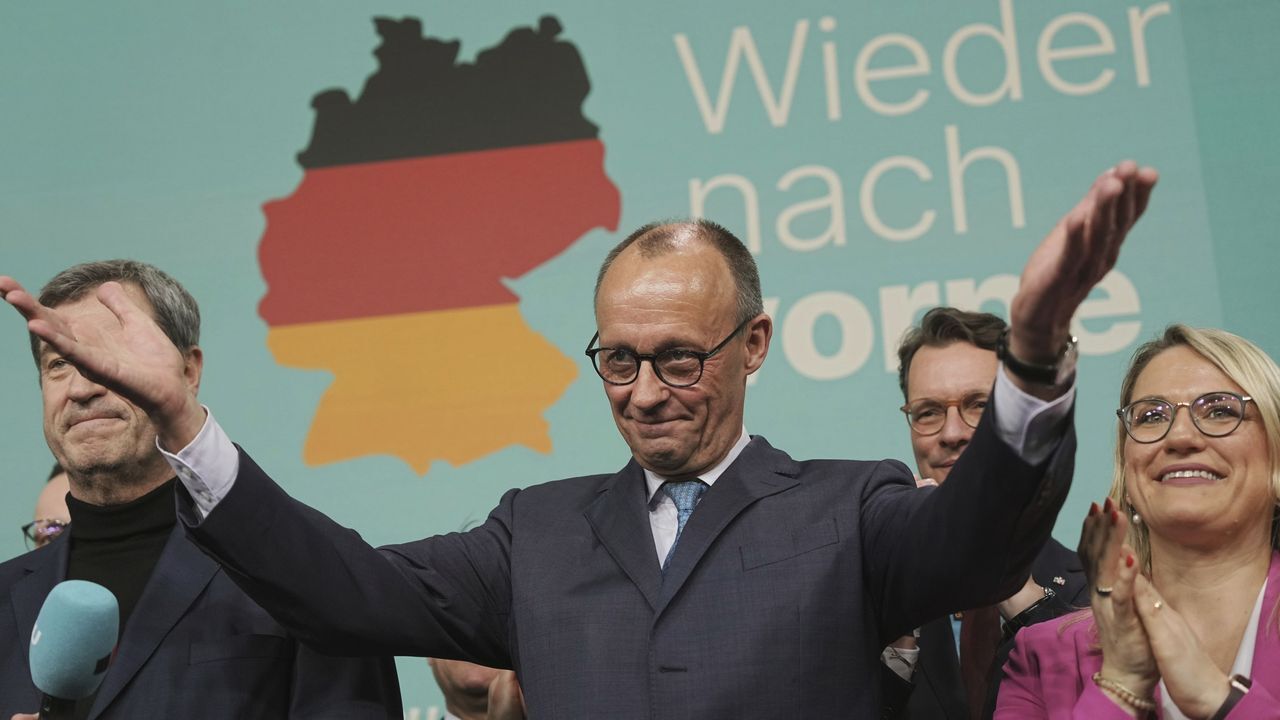
    Germany’s conservatives swept to victory in Sunday’s elections, with their leader Friedrich Merz set to become the next chancellor, followed by the far-right AfD in second place after record gains.

    Merz urged the speedy formation of a new coalition government, warning that as US President Donald Trump is driving rapid and disruptive changes, “the world isn’t waiting for us”.

    He stressed that — after Trump reached out to Russia and made comments fuelling doubts about the future strength of NATO — Europe must boost its defence capabilities and said that he has “no illusions at all about what is coming out of America”.

    The far-right Alternative for Germany (AfD) almost doubled its score to over 20 percent, boosted by fears over immigration and security after a spate of deadly attacks blamed on asylum seekers.

    Merz’s CDU/CSU alliance won more than 28 percent, according to projections at 2000 GMT, crushing the Social Democrats (SPD) of outgoing Chancellor Olaf Scholz, which were looking at a historic low of 16 percent.

    Merz — a long-time party rival of ex-chancellor Angela Merkel — has vowed a crackdown on irregular immigration. He hopes to win back votes from the AfD whose rise has stunned many in a country still seeking to atone for its dark Nazi history.

    For now, the AfD, basking in the vocal support of key Trump allies, is set to stay in opposition. All other parties have vowed to keep it out of power and behind a “firewall” of non-cooperation.

    But its jubilant leader Alice Weidel hailed the “historic” result and again said her party was ready to govern with the CDU/CSU.

    “I am very afraid of this shift to the right,” said retired teacher Hilke Reichersdorfer, 71, wearing a red scarf outside SPD headquarters. She voiced fears of a situation “like in other European countries or in America”.

    ‘Fate of Europe’

    Before Merz, 69, takes over, he will have to forge a new coalition government in Europe’s top economy, an often drawn-out process he has vowed to complete by Easter.

    This threatens to leave Berlin paralysed for weeks to come as Trump has forced head-spinning change and rattled European allies, especially over the Ukraine war.

    The German election came amid tectonic upheaval in US-Europe ties sparked by Trump going over the heads of European leaders to make a direct outreach to Russian President Vladimir Putin to end the three-year-old Ukraine war.

    “After Donald Trump’s statements in the last week it is clear that the Americans are largely indifferent to the fate of Europe,” Merz said in a post-election TV debate.

    He said his “absolute priority will be to strengthen Europe as quickly as possible so that, step by step, we can really achieve independence from the USA” in defence matters.

    To build a majority, Merz may first reach out to the SPD, though without Scholz, who apologised for his party’s “bitter” defeat.

    Merz could also approach the Greens, who scored 12 percent, although the CDU’s Bavarian sister party the CSU has so far rejected this.

    Another potential partner, the small FDP — which sparked the November breakup of Scholz’s government — stared down the barrel of narrowly missing the five-percent hurdle to return to parliament.

    This would impact the complex parliamentary arithmetic, as would the fate of the far-left BSW, which was just below the threshold late Sunday, at 4.9 percent.

    If the BSW eventually scrapes in, this will mean Merz needs two coalition allies — raising the spectre of yet another ideologically diverse alliance, like the failed alliance that was led by Scholz.

    ‘Last chance’

    In a strange twist to the polarised campaign, the AfD has basked in the support of Team Trump, which saw billionaire Elon Musk praising it as the only party that can “save Germany”.

    Merz said “the interventions from Washington were no less dramatic and impertinent than the interventions we have seen from Moscow, so we are under massive pressure from two sides”.

    The AfD, strongest in the ex-communist east, also made gains in western states for its best-ever result after Germany was shocked by a series of deadly attacks blamed on migrants.

    In December a car-ramming through a Christmas market crowd killed six people and wounded hundreds.

    A stabbing spree targeting kindergarten children followed, then another car-ramming attack, in Munich, and a knife attack at Berlin’s Holocaust memorial.

    Merz has argued that the next government must boldly address the AfD’s concerns on migration and also fix the ailing economy, warning that otherwise the far right might win next time around.

    “The stakes could not be higher”, argued political analyst and author Michael Broening.

    “Germany’s mainstream parties have consistently failed to convince voters to reject the far right, and this election could be their last chance to turn the tide.”

    Democratic forces must find solutions to the country’s problems, he added. “If Germany’s ‘establishment’ parties fail to deliver this time, they may not be the establishment for much longer”.

  • US Senate confirms Trump loyalist Kash Patel to head FBI

    US Senate confirms Trump loyalist Kash Patel to head FBI

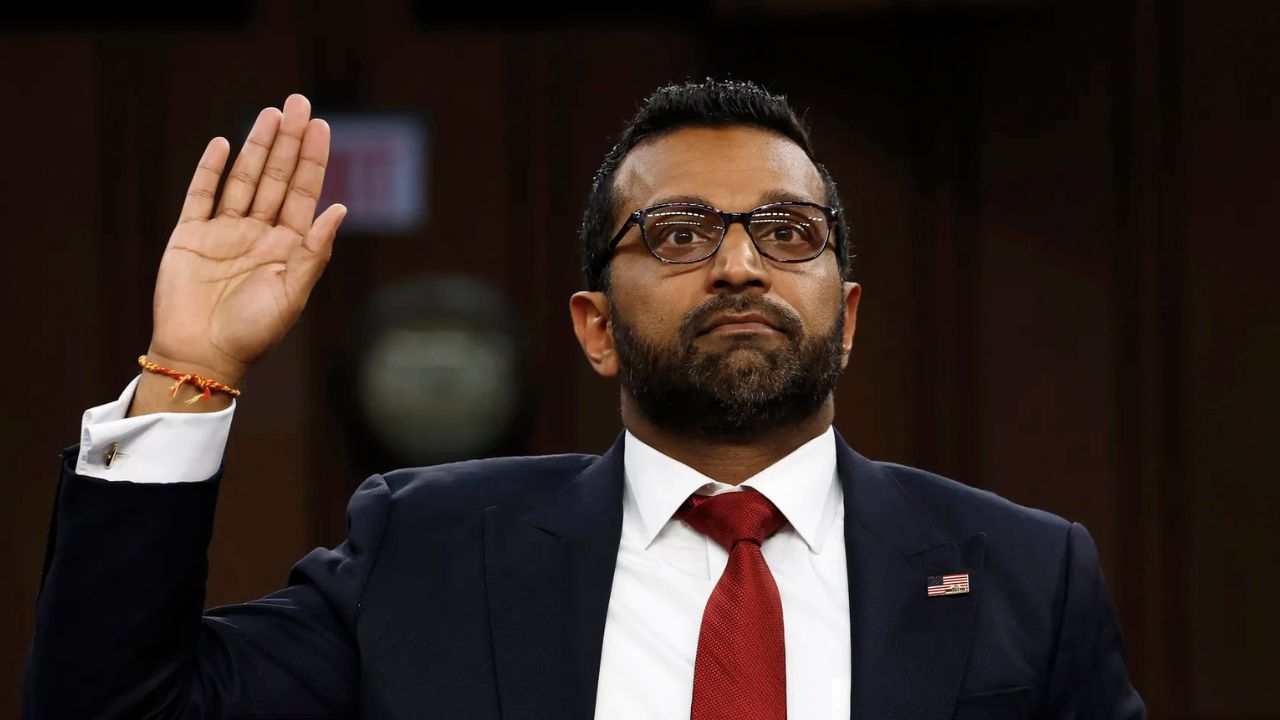
    The Republican-controlled US Senate on Thursday confirmed Kash Patel, a staunch loyalist who has threatened to go after President Donald Trump’s political enemies, as director of the FBI, the country’s top law enforcement agency.

    Patel, 44, whose nomination sparked fierce but ultimately futile opposition from Democrats, was approved by a 51-49 vote.

    The vote was split along party lines with the exception of two Republican senators, Susan Collins and Lisa Murkowski, who voted not to confirm Patel to head the 38,000-strong Federal Bureau of Investigation.

    Patel drew fire from Democrats for his promotion of conspiracy theories, his defense of pro-Trump rioters who attacked the Capitol on January 6, 2021, and his vow to root out members of a supposed “deep state” plotting to oppose the Republican president.

    Democratic Senator Dick Durbin, in a Senate speech opposing Patel’s nomination, said he is “dangerously, politically extreme” and has “repeatedly expressed his intention to use our nation’s most important law enforcement agency to retaliate against his political enemies.”

    The Senate has approved all of Trump’s cabinet picks so far, underscoring his iron grip on the Republican Party.

    Among them is Tulsi Gabbard, confirmed as the nation’s spy chief despite past support for adversarial nations including Russia and Syria, and vaccine skeptic Robert F. Kennedy Jr. to be health secretary.


    Patel, in a statement on X, said he was honored to become the FBI director.

    “The American people deserve an FBI that is transparent, accountable, and committed to justice,” he said.

    “The politicalization of our justice system has eroded public trust — but that ends today,” he added. “My mission as Director is clear: let good cops be cops — and rebuild trust in the FBI.

    “And to those who seek to harm Americans — consider this your warning,” he said. “We will hunt you down in every corner of this planet.”

    ‘Enemies list’

    Patel replaces Christopher Wray, who was named FBI chief by Trump during his first term.

    Relations between Wray and Trump became strained, however, and though he had three years left in his 10-year tenure, Wray resigned after Trump won November’s presidential election.

    A son of Indian immigrants and former federal prosecutor, the New York-born Patel served in several high-level posts during Trump’s first administration, including as senior director for counterterrorism on the National Security Council.

    There were fiery exchanges at Patel’s confirmation hearing last month as Democrats brought up a list of 60 supposed “deep state” actors — all critics of Trump — he included in a 2022 book, whom he said should be investigated or “otherwise reviled.”

    Patel has denied having an “enemies list” and told the Senate Judiciary Committee he was merely interested in bringing lawbreakers to book.

    “All FBI employees will be protected against political retribution,” he said.

    The FBI has been in turmoil since Trump took office and a number of agents have been fired or demoted including some involved in the prosecutions of Trump for seeking to overturn the 2020 election results and mishandling classified documents.

    Nine FBI employees have sued the Justice Department seeking to block efforts to collect information on agents who were involved in investigating Trump and the Capitol riot.

    In their complaint, the FBI agents said the efforts were part of a “purge” orchestrated by Trump as “politically motivated retribution.”

    Trump, on his first day in the White House, pardoned more than 1,500 of his supporters who stormed Congress in a bid to block certification of Democrat Joe Biden’s election victory.

  • Trump aide warns Zelensky to stop hurling ‘insults’, start negotiating

    Trump aide warns Zelensky to stop hurling ‘insults’, start negotiating

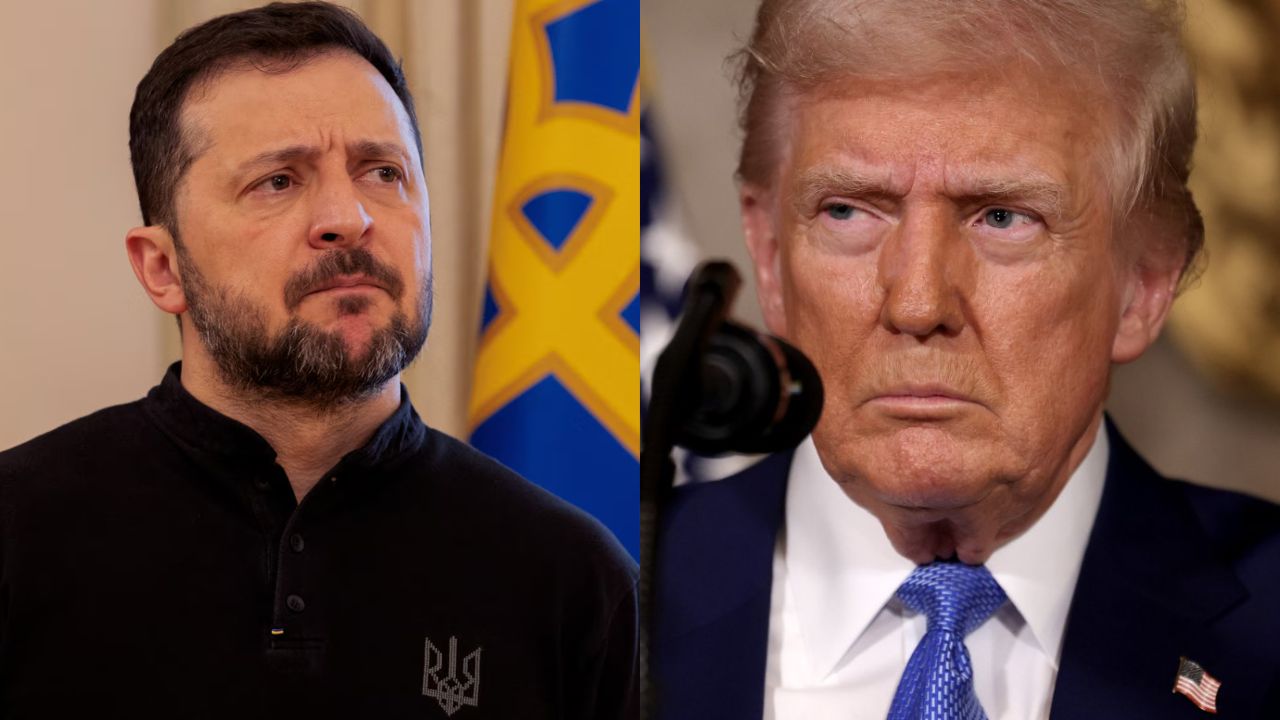
    The US national security advisor warned Ukraine’s leader to stop hurling “insults” at Donald Trump, as pressure built Friday on Volodymyr Zelensky to sign away precious mineral rights in exchange for Washington’s help defending against Russia.

    Tensions between Trump and Zelensky over the proposed mineral deal — which Kyiv has rejected — and Washington’s outreach to Moscow have exploded this week in a series of barbs traded at press conferences and on social media.

    Zelensky has warned that Trump has succumbed to Russian “disinformation”, while the US leader has accused his counterpart of starting the war and branded him a “dictator without elections”.

    “Some of the rhetoric coming out of Kyiv, frankly, and insults to President Trump were unacceptable,” US national security advisor Mike Waltz told a Thursday briefing at the White House.

    “President Trump is obviously very frustrated right now with President Zelensky, the fact that he hasn’t come to the table, that he hasn’t been willing to take this opportunity that we have offered,” he said.

    The United States is a vital financial and military supporter of Ukraine, but Trump has rattled Kyiv and its European backers by opening talks with Moscow they fear could end the war on terms that reward Russian President Vladimir Putin.

    The spat has turned personal with Trump falsely claiming Zelensky is hugely unpopular among his own people and the Ukrainian leader saying Trump lives in a Russian “disinformation space”.

    Tech tycoon and Trump backer Elon Musk weighed in Thursday, saying Ukrainians “despised” their president and that the US leader was right to leave him out of talks with Russia.

    Amid the war of words, Zelensky said Thursday he had held a “productive meeting” with US envoy Keith Kellogg in Kyiv.

    “We had a detailed conversation about the battlefield situation, how to return our prisoners of war, and effective security guarantees,” Zelensky said on social media after the meeting.

    “Strong Ukraine-U.S. relations benefit the entire world,” he added.

    However, there was no joint press conference or statements after the discussions, as would typically accompany such a visit.


    ‘Unacceptable’

    Trump is calling for Kyiv to hand over access to its mineral wealth as compensation for tens of billions of dollars in US aid delivered under his predecessor Joe Biden.

    Zelensky rejected a deal proposed by Trump as it did not include “security guarantees” — Kyiv’s key demand from its Western backers in any agreement with Russia to halt the fighting.

    The feud marks a dramatic reversal from US policy under Biden, who lauded Zelensky as a hero, shipped vast supplies of arms to Kyiv and hammered Moscow with sanctions.

    Trump has instead criticised Zelensky and blamed him for starting the war that began with Russia’s full-scale invasion three years ago.

    “A Dictator without Elections, Zelensky better move fast or he is not going to have a Country left,” he wrote on his Truth Social platform on Wednesday.

    Zelensky was elected in 2019 for a five-year term and has remained leader in line with Ukrainian rules under martial law, imposed as his country fights for its survival.

    While Zelensky’s popularity has fallen, the percentage of Ukrainians who trust him has never dipped below 50 percent since the conflict started, according to the Kyiv International Institute of Sociology (KIIS).


    Shock at Trump attack

    Trump’s invective drew shock reactions from Europe.

    German Chancellor Olaf Scholz said it was “wrong and dangerous” to call Zelensky a dictator.

    The White House said France’s Emmanuel Macron and Britain’s Keir Starmer will visit Trump next week after European leaders held emergency summits in recent days over how to deal with Trump’s threats to overhaul decades of transatlantic security ties.

    The Kremlin, buoyed by its rapprochement with Washington, has hailed Trump’s comments.

    Russia, which for years has railed against the US military presence in Europe, wants a reorganisation of the continent’s security framework as part of any deal to end the Ukraine fighting.

    Putin said Wednesday that US allies “only have themselves to blame for what’s happening,” suggesting they were paying the price for opposing Trump’s return to the White House.

    Neither Kyiv nor European countries were invited to high-level talks between top diplomats from Russia and the US in Saudi Arabia earlier this week, deepening fears they are being sidelined.

  • Arab leaders meet to counter Trump’s Gaza plan

    Arab leaders meet to counter Trump’s Gaza plan

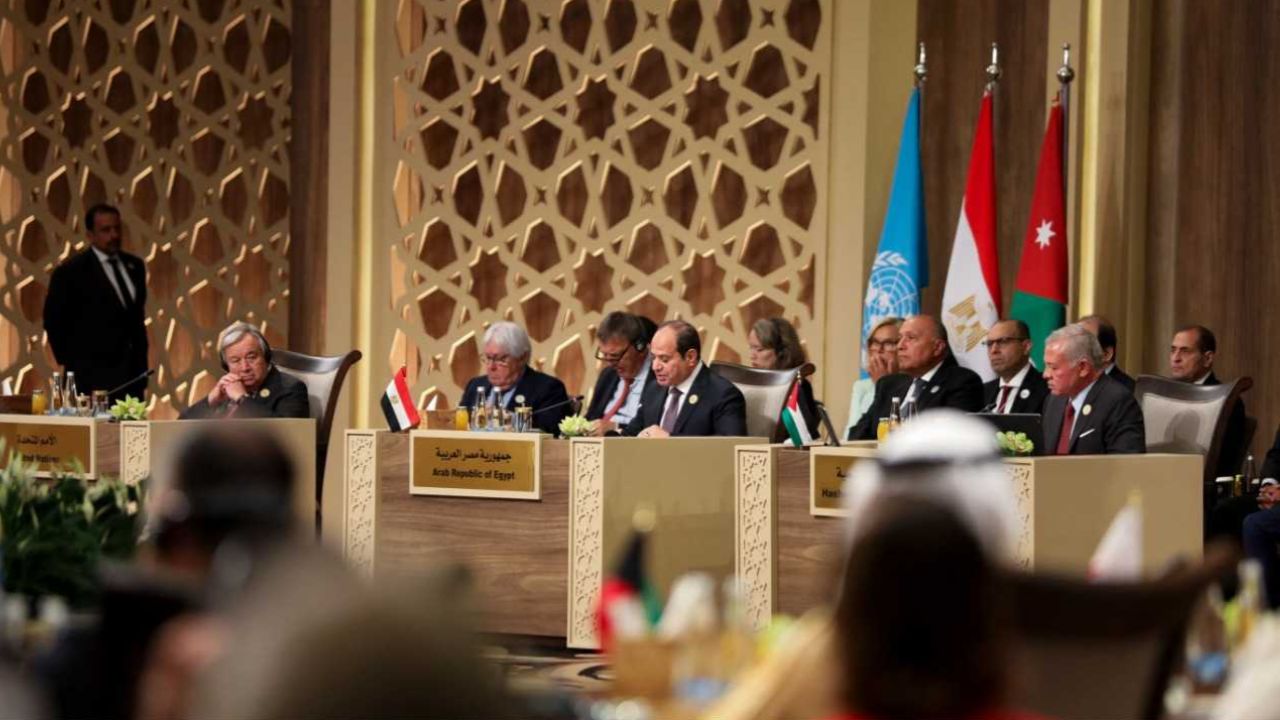
    Arab leaders will gather in Saudi Arabia on Friday to counter President Donald Trump’s plan for US control of Gaza and the expulsion of its inhabitants, diplomatic and government sources said.

    The plan stirred rare unity among Arab states which roundly rejected the idea, but they could still disagree over who will govern the Palestinian territory and who will pay for reconstruction.

    Umer Karim, an expert on Saudi foreign policy, told AFP the summit would be the “most consequential” in decades in relation to the wider Arab world and the Palestinian issue.

    Trump provoked international outrage when he announced that the United States would “take over the Gaza Strip”, moving 2.4 million Gazans living there to neighbouring Egypt and Jordan.

    A source close to the Saudi government told AFP Arab leaders would discuss “a reconstruction plan counter to Trump’s plan for Gaza”.

    Meeting with Trump in Washington on February 11, Jordan’s King Abdullah II said Egypt would present a plan for a way forward.

    The Saudi source said the talks would discuss “a version of the Egyptian plan” the king mentioned.

    Friday’s summit was originally planned for Saudi Arabia, Egypt, the United Arab Emirates, Qatar and Jordan.

    However, it has been expanded to include the six Gulf Cooperation Council (GCC) countries and the Palestinian Authority.

    For Palestinians, any attempt to force them from Gaza would have echoes of what the Arab world calls the “Nakba” or catastrophe, when hundreds of thousands of Palestinians fled in the fighting that accompanied Israel’s creation in 1948.

    Reconstruction

    Reconstruction will be a critical issue at the summit after Trump highlighted this as the key reason for moving its inhabitants out while Gaza’s infrastructure is rebuilt.

    Egypt has not yet announced its counter-initiative, but Egyptian former diplomat Mohamed Hegazy described a plan “in three technical phases over a period of three to five years”.

    The first would be a six-month “early recovery phase”, said the member of the Egyptian Council for Foreign Affairs, a think tank with strong ties to decision-making circles in Cairo.

    “Heavy machinery will be brought in to remove debris, while designated safe zones will be identified within Gaza to temporarily relocate residents,” Hegazy said.

    The second phase will require an international conference to provide details of reconstruction and would focus on rebuilding utility infrastructure, he said.

    “The final phase will oversee the urban planning of Gaza, the construction of housing units, and the provision of educational and healthcare services.”

    A UN estimate on Tuesday put the cost of rebuilding at more than $53 billion, including more than $20 billion over the first three years.

    The last phase would include “launching a political track to implement the two-state solution and so that there is… an incentive for a sustainable truce”.

    Umer Karim believes that adopting this plan would require “a degree of Arab unity not seen before in decades”.

    Finance

    One Arab diplomat familiar with the Gulf told AFP: “In the end, the biggest challenge facing the Egyptian plan is how to finance it.

    “Some countries like Kuwait will inject funds, perhaps for humanitarian reasons, but other Gulf states will set specific conditions before any financial transfer.”

    Karim said the “Saudis and Emiratis won’t spend any money if (the) Qataris and Egyptians don’t guarantee something on Hamas”.

    Egypt’s plan seeks to address the complex issue of post-war oversight for Gaza, which Hamas has controlled since 2007, with “a Palestinian administration that is not aligned with any faction”.

    It will comprise “experts” and will not be “factionally affiliated and is politically and legally subordinate to the Palestinian Authority”, Hegazy said.

    The Cairo initiative also envisions a Palestinian Authority-affiliated police force supplemented with security forces from Egypt, Arab states and other countries.

    Differences remain, however.

    Hegazy said that Hamas “will retreat from the political scene in the coming period”, while the Saudi source said Riyadh envisions a Gaza Strip controlled by the Palestinian Authority.

    Qatar, a key mediator in the war, believes the Palestinians themselves must decide Gaza’s future.

    “I think all regional actors understand that any alternative plan they propose cannot include Hamas in any form as presence of Hamas will make it unpalatable for the US administration and Israel,” Karim said.

    “So overall some things within the Strip have to fundamentally change in order for this plan to at least have a chance.”