Author: AFP

  • Sri Lanka train derailed after smashing into elephants

    Sri Lanka train derailed after smashing into elephants

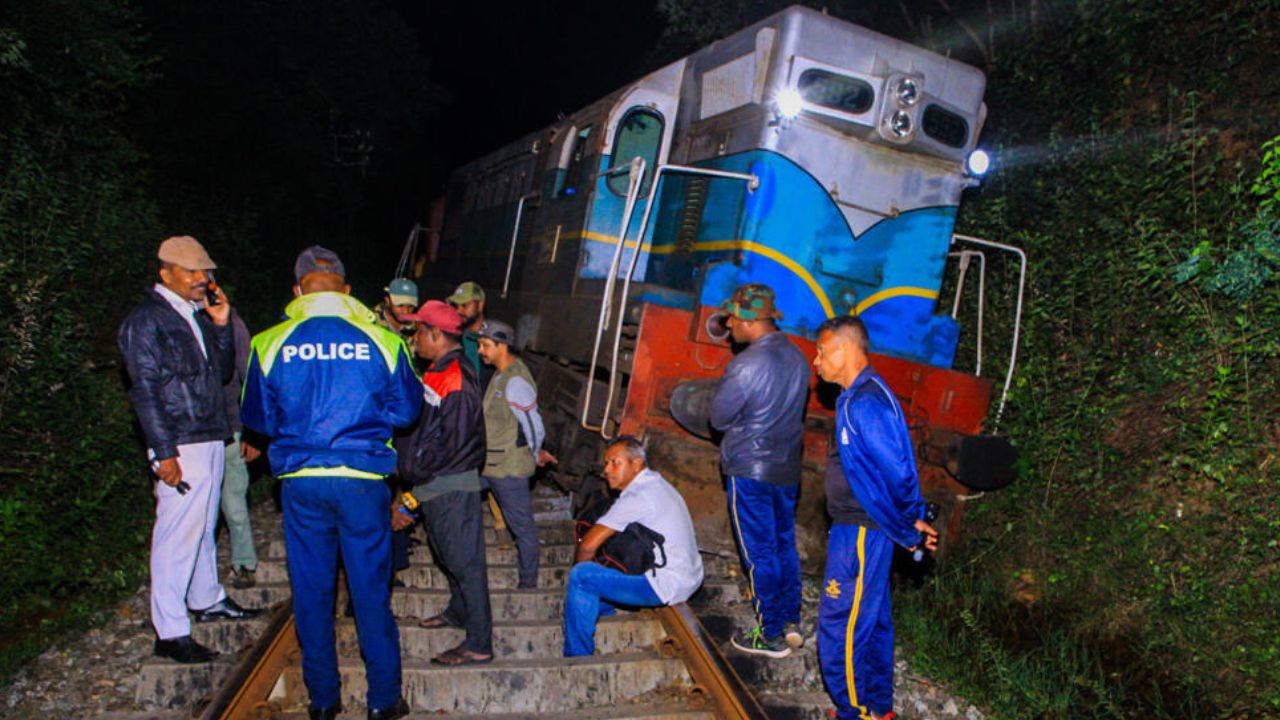
    A Sri Lankan passenger train derailed Thursday after smashing into a family of elephants, with no passengers injured but six animals killed in the island’s worst such wildlife accident, police said.

    The express train was travelling near a wildlife reserve at Habarana, some 180 kilometres (110 miles) east of the capital Colombo, when it hit the herd crossing the line before dawn.

    “The train derailed, but there were no casualties among the passengers,” police said, adding that wildlife authorities were treating two elephants who survived the crash.

    Videos shot after the accident showed one elephant standing guard over an injured youngster lying beside the tracks, with the tips of their trunks curled together.

    Killing or harming elephants is a criminal offence in Sri Lanka, which has an estimated 7,000 wild elephants, with the animals considered a national treasure, partly due to their significance in Buddhist culture.

    Two baby elephants and their pregnant mother were killed in a similar accident by a train in the same area in September 2018.

    Since then, the authorities ordered train drivers to observe speed limits to minimise injury to elephants when going through areas where they cross the lines.

    The elephant deaths comes days after the authorities expressed concern over the growing impact of conflict between humans and elephants, as the ancient habitat of the animals is increasingly encroached upon.

    Farmers scratching a living from smallholder plots often fight back against elephants raiding their crops.

    Deputy Minister of Environment Anton Jayakody told AFP on Sunday that 150 people and 450 elephants were killed in clashes in 2023.

    That is an increase on the previous year, when 145 people and 433 elephants were killed, according to official data.

    Just those two years represent more than a tenth of the island’s elephants.

    But Jayakody said he was confident the government could find solutions.

    “We are planning to introduce multiple barriers — these may include electric fences, trenches, or other deterrents — to make it more difficult for wild elephants to stray into villages,” Jayakody said.

    A study last year detailed how Asian elephants loudly mourn and bury their dead calves, in a report that details animal behaviour reminiscent of human funeral rites.

    Elephants are known for their social and cooperative behaviour but calf burial had previously only been “briefly studied” in African elephants — remaining unexplored among their smaller Asian cousins, according to the study in the Journal of Threatened Taxa.

    Asian elephants are recognised as endangered by the International Union for Conservation of Nature.

    An estimated 26,000 of them live in the wild, mostly in India with some in Southeast Asia, surviving for an average of 60-70 years outside captivity.
  • Israeli companies display weapons at UAE defence fair

    Israeli companies display weapons at UAE defence fair

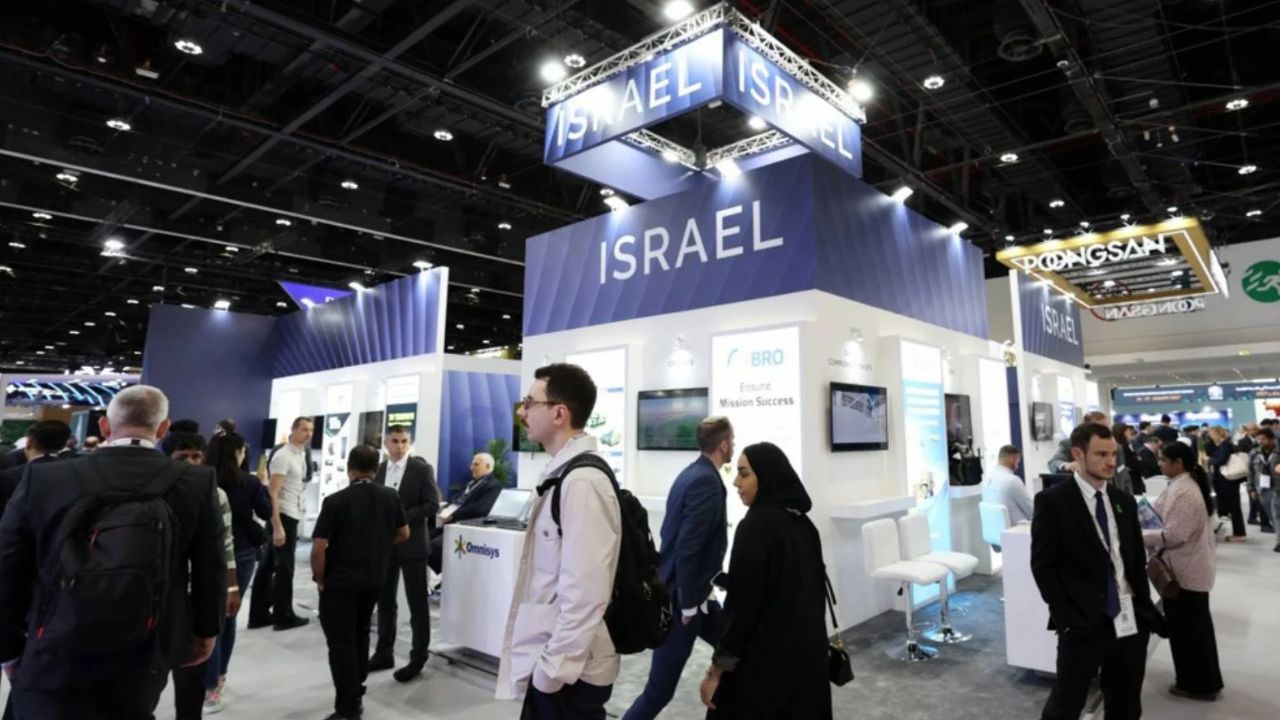
    Israeli arms manufacturers on Monday showcased their weapons and other products at a defence fair in the United Arab Emirates, amid a fragile ceasefire in a 15-month war that has devastated the Gaza Strip.

    An Israeli pavilion stands among industry giants at the International Defence Exhibition (IDEX) and the Naval Defence and Maritime Security Exhibition (NAVDEX), held in the Gulf country’s capital Abu Dhabi until Friday.

    “We are very pleased to be here,” said Boaz Levy, the president and CEO of IAI, ranked among the 100 largest arms companies in the world in 2023, according to the Stockholm International Peace Research Institute (SIPRI).

    Last year, as civilian casualties mounted in Gaza, the French government banned Israeli companies from setting up stands or exhibiting hardware at the Euronaval defence trade fair. The decision was later thrown out by a Paris court.

    According to SIPRI, the three Israeli manufacturers in the ranking, prominently featured at the Abu Dhabi show, recorded a record turnover of $13.6 billion in 2023, driven by Israel’s offensive on Gaza.

    But for Levy, this has not stopped them from collaborating with allies in the region.

    “Of course, some of our products are there (in Gaza), but we are a company that deals with technology and giving the end user the capabilities… required in the field, and that’s what we are doing on a day-to-day basis,” he said.

    The UAE normalised ties with Israel in 2020 under the Abraham Accords brokered by the United States during the first Donald Trump administration.

    Since then, Israeli arm manufacturer EMTAN has attended every defence fair in Abu Dhabi.

    “We work a lot with the Abraham” countries, said sales manager Ron Pollak, whose firm makes small arms, rifles, pistols and submachine guns.

    “We really, really enjoy the hospitality and the friendship that we encounter here in the UAE.”

  • Israel security cabinet to discuss new phase of Gaza truce

    Israel security cabinet to discuss new phase of Gaza truce

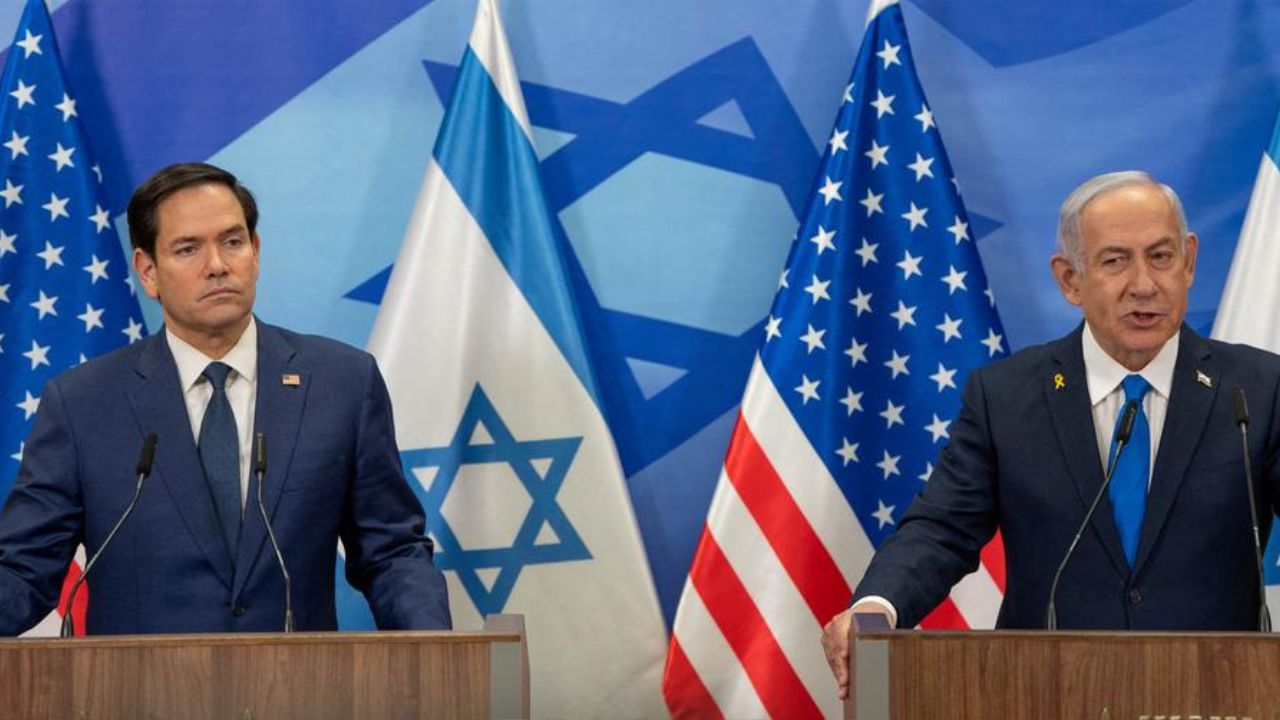
    Israel’s security cabinet was set to discuss on Monday the next phase of the ceasefire with Hamas, as top US diplomat Marco Rubio began a visit to Saudi Arabia where he will push Donald Trump’s proposal for a US takeover of Gaza.

    Rubio travelled to Riyadh from Israel, where he kicked off his first Middle East trip as Trump’s secretary of state.

    “Hamas cannot continue as a military or a government force… they must be eliminated,” Rubio said in Israel of the Palestinian Islamist group whose October 7, 2023 attack triggered a 15-month genocide that has devastated Gaza.

    Standing beside him, Netanyahu said the two allies had “a common strategy”, and that “the gates of hell will be opened” if all hostages held by militants in Gaza are not freed.

    The comments came a day after Hamas freed three Israeli hostages in exchange for 369 Palestinian prisoners — the sixth such swap under the ceasefire deal, which the United States helped mediate along with Qatar and Egypt.

    Israel and Hamas have accused each other of violating the ceasefire, which has been further strained by Trump’s widely condemned proposal to take control of rubble-strewn Gaza and move its more than two million residents out of the territory.

    “We discussed Trump’s bold vision for Gaza’s future and will work to ensure that vision becomes a reality,” Netanyahu said.

    The scheme that Trump outlined earlier this month as Netanyahu visited Washington lacked details, but he said it would entail moving Gazans to Jordan or Egypt.

    ‘The only plan’

    The United States, Israel’s top ally and weapons supplier, says it is open to alternative proposals from Arab governments, but Rubio has said for now, “the only plan is the Trump plan”.

    However, Saudi Arabia and other Arab states have rejected his proposal, and instead favour the creation of a Palestinian state alongside Israel.

    Egyptian President Abdel Fattah al-Sisi on Sunday said a Palestinian state would be “the only guarantee” of lasting Middle East peace.

    After Saudi Arabia, Rubio will also travel to the United Arab Emirates.

    The United States has been pushing for a potentially historic deal in which Saudi Arabia would recognise Israel, but Trump’s Gaza plan is complicating that effort.

    Hamas and Israel are implementing the first, 42-day phase of the ceasefire, which came close to collapse last week.

    “At any moment the fighting could resume. We hope that the calm will continue and that Egypt will pressure Israel to prevent them from restarting the war and displacing people,” said Nasser al-Astal, 62, a retired teacher in southern Gaza’s Khan Yunis.

    Since the truce took effect on January 19, a total of 19 Israeli hostages have been released in exchange for more than 1,000 Palestinian prisoners.

    Out of 251 people seized in Hamas’s October 7, 2023 attack on Israel, which sparked the war, 70 remain in Gaza, including 35 the Israeli military says are dead.

    In a statement, Rubio condemned Hamas’s hostage-taking as “sick depravity” and called for the immediate release of all remaining captives, living and dead, particularly five Israeli-American dual nationals.

    Negotiations on a second phase of the truce, aimed at securing a more lasting end to the war, could begin this week in Doha, a Hamas official and another source familiar with the talks have said.

    Netanyahu’s office said he would convene a meeting of his security cabinet on Monday to discuss phase two.

    It said the prime minister was also dispatching negotiators to Cairo on Monday to discuss the “continued implementation” of phase one.

    The team would “receive further directives for negotiations on Phase II” after the cabinet meeting, the office said.

    ‘Finish the job’

    The Gaza war has rippled across the Middle East, triggering violence in Yemen and Lebanon, where Iran backs militant groups.

    Israel fought a related war with Hamas’s Lebanese ally Hezbollah, severely weakening it before a ceasefire took effect on November 27.

    Israeli troops were meant to withdraw over a 60-day period but this was later extended to February 18.

    Hezbollah chief Naim Qassem said Sunday “Israel must fully withdraw” on the Tuesday deadline.

    “It is the responsibility of the Lebanese state” to exert every effort “to make Israel withdraw”, he said in a televised address.

    There have also been limited direct strikes by Iran and Israel against each other.

    Rubio called Iran the “single greatest source of instability in the region”.

    Netanyahu said that with the support of the Trump administration, “I have no doubt that we can and will finish the job” against Iran.

    Iran on Monday condemned Netanyahu’s remarks, calling them “a gross violation of international law and the United Nations Charter”.

    Hamas’s October 7 attack on Israel resulted in the deaths of 1,211 people, mostly civilians, according to an AFP tally of Israeli official figures.

    Israel’s retaliatory campaign has killed at least 48,271 people in Gaza, the majority of them civilians, according to figures from the health ministry in the Hamas-run territory that the United Nations considers reliable.

  • Taliban delegation visits Japan in rare trip outside region

    Taliban delegation visits Japan in rare trip outside region

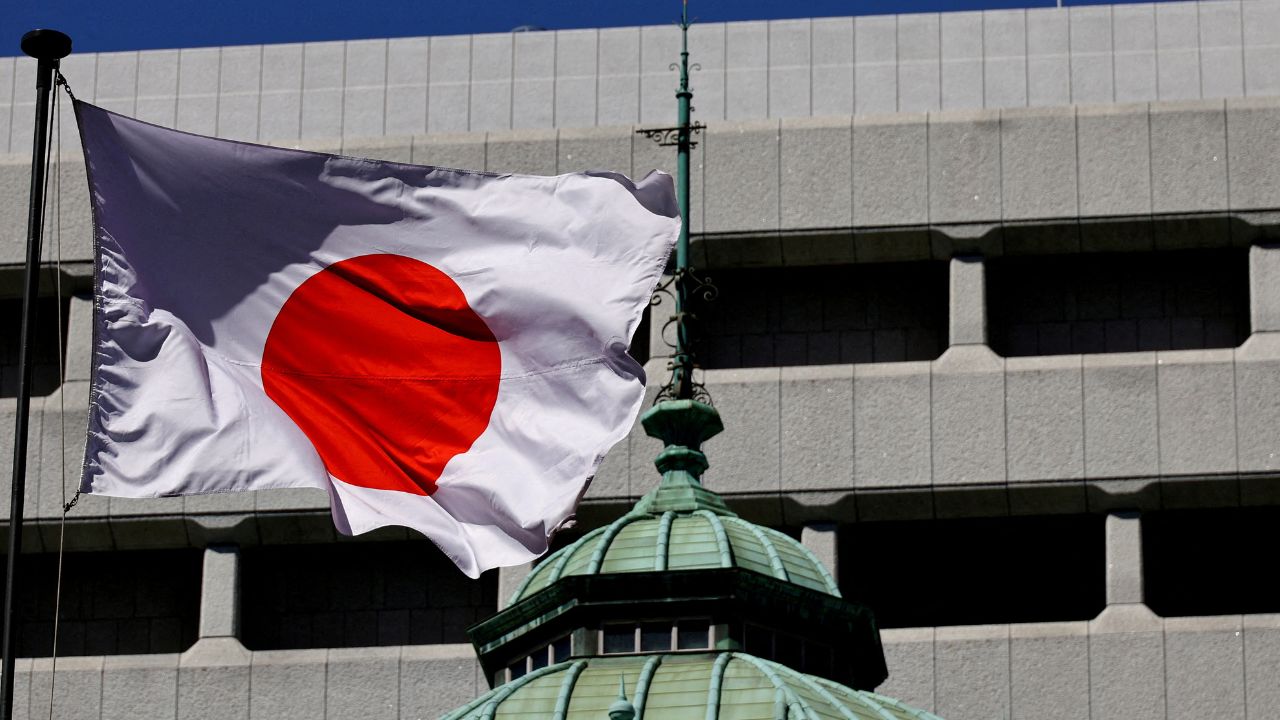
    A Taliban government delegation was visiting Japan for the first time on Monday, in a rare diplomatic visit outside of the region.

    The Afghan delegation left Kabul on Saturday, in a visit that local media said would last one week and included officials from the higher education, foreign affairs, and economy ministries.

    “We seek dignified interaction with the world for a strong, united, advanced, prosperous, developed Afghanistan and to be an active member of the international community,” Latif Nazari, a deputy minister at the ministry of economy who is part of the delegation, tweeted on Saturday.

    The Taliban government makes regular visits to neighbouring and regional countries, including in Central Asia, Russia and China.

    However, it has only officially visited Europe for diplomacy summits in Norway in 2022 and 2023.

    Japan’s embassy in Kabul temporarily relocated to Qatar after the fall of the previous foreign-backed government and the takeover by the Taliban in 2021.

    But it has since reopened and resumed diplomatic and humanitarian activities in the country.

    The Afghan delegation plans to “exchange views with Japanese government officials during their stay”, Japan’s public broadcaster NHK reported, citing unnamed Afghan diplomatic sources.

    Japan’s foreign ministry could not immediately comment on the visit when contacted by AFP.

  • Hamas hands over another three Israeli hostages to Red Cross in Gaza

    Hamas hands over another three Israeli hostages to Red Cross in Gaza

    Gaza handed three Israeli hostages over to the Red Cross on Saturday in an exchange that is also set to see the release of 369 Palestinians from Israeli custody, the latest such swap under an ongoing truce deal.

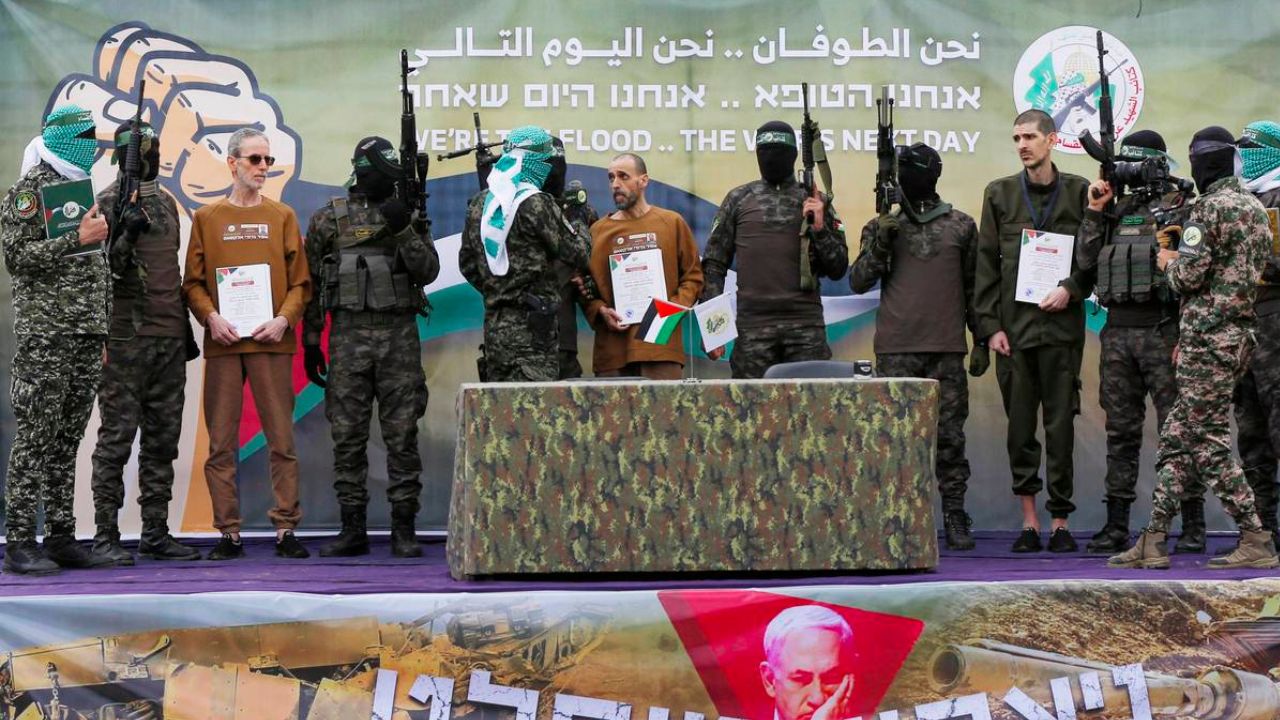
    An AFP journalist saw masked Hamas parade the hostages onto a stage in Gaza’s southern city of Khan Yunis, where they were told to address the crowd before their handover to the Red Cross.

    Clutching gift bags given by their captors and a certificate to mark the end of their captivity, the three men, flanked by fighters, called for the completion of further hostage exchanges under the ceasefire deal.

    The release, the sixth since the truce took effect on January 19, came after fears last week that the deal between Israel and Hamas was near collapse. But on Friday both sides signalled that Saturday’s swap would go ahead.

    Dozens of Hamas fighters lined up around the stage bearing the logo of the group’s armed wing, the Ezzedine Al-Qassam Brigades, as Palestinian nationalist music played.

    Sources from Hamas and Islamic Jihad said the groups had deployed about 200 militants for the handover ceremony.

    A crowd also gathered in Tel Aviv’s “Hostages Square” to watch the exchange, with many carrying Israeli flags and posters in support of the captives.

    The office of Israeli Prime Minister Benjamin Netanyahu had named the hostages as Israeli-American Sagui Dekel-Chen, Israeli-Russian Sasha Trupanov and Israeli-Argentinian Yair Horn.

    They had been held in Gaza since Hamas’s October 7, 2023 attacks.

    The Palestinian Prisoners’ Club advocacy group said Israel was to release 369 inmates in exchange, with 24 of them expected to be deported.

    Almost all of the rest are “prisoners from the Gaza Strip who were arrested after October 7”, the group said.

    After the deal had appeared to be on the brink of collapse, a Hamas official on Friday said the group expected talks on a second phase of the ceasefire to begin early next week.

    United States Secretary of State Marco Rubio, whose country is Israel’s top backer and one of the truce mediators, is due to arrive in Israel late Saturday ahead of expected talks with Netanyahu on the Gaza truce.

    Last week’s release sparked anger in Israel and beyond after the freed hostages were paraded onstage, with their emaciated state sparking concern over conditions in captivity.

    Israeli-American hostage Keith Siegel, released in a previous exchange, said he was “starved and… tortured, both physically and emotionally” during his captivity.

    There were also fears for Palestinians in Israeli custody after some prisoners required medical treatment following their release in the last swap.

    Riyadh summit

    The ceasefire has been under massive strain since US President Donald Trump proposed a takeover of the Gaza Strip under which the territory’s population of more than two million people would be moved to Egypt or Jordan.

    For Palestinians, any forced displacement evokes memories of the “Nakba”, or catastrophe — the mass displacement of their ancestors during Israel’s creation in 1948.

    The stage set up for the release on Saturday bore an illustrated poster appearing to depict the final moments of Hamas’s leader Yahya Sinwar, who was killed by Israeli forces in October. It showed the Al-Aqsa Mosque visible through a hole in the wall of a destroyed building along with the slogan: “No displacement except to Jerusalem”.

    Arab countries have come together to reject Trump’s plan, and Saudi Arabia will host the leaders of Egypt, Jordan, Qatar and the United Arab Emirates on Thursday for a summit on the issue.

    After the Riyadh summit, the Arab League will convene in Cairo on February 27 to discuss the same issue.

    A joint statement from the heads of Christian churches in Jerusalem on Saturday also spoke out against any forced displacement, saying Gazans “who have lived for generations in the land of their ancestors, must not be forced into exile, stripped of… their right to remain in the land that forms the essence of their identity”.

    Trump had warned this week that “hell” would break loose if Hamas failed to release “all” remaining hostages by noon on Saturday.

    Israel later insisted Hamas release “three living hostages” on Saturday or “the ceasefire will end”.

    Second phase

    Under the terms of the 42-day first phase of the ceasefire agreement brokered by Qatar, Egypt and the United States, negotiations for a second phase were due to start on February 3.

    Netanyahu had sent negotiators to Doha days later, but the delegation was not mandated to discuss phase two, which is meant to lay out steps towards ending the genocide.

    Hamas official Taher al-Nunu told AFP on Friday that “we expect the second phase of the ceasefire negotiations to begin early next week”.

    Another source familiar with the talks told AFP that “mediators informed Hamas that they hope to start the second phase of negotiations next week in Doha”.

    The October 7, 2023 attack on Israel resulted in the deaths of 1,211 people, mostly civilians, according to an AFP tally of Israeli official figures.

    Militants also took 251 hostages, of whom 73 remain in Gaza, including 35 the Israeli military says are dead.

    In retaliation, Israel’s genocide against Palestians has killed at least 48,239 people in Gaza, the majority of them civilians, according to figures from the health ministry in the Hamas-run territory that the United Nations considers reliable.

  • Pope Francis hospitalised with bronchitis

    Pope Francis hospitalised with bronchitis

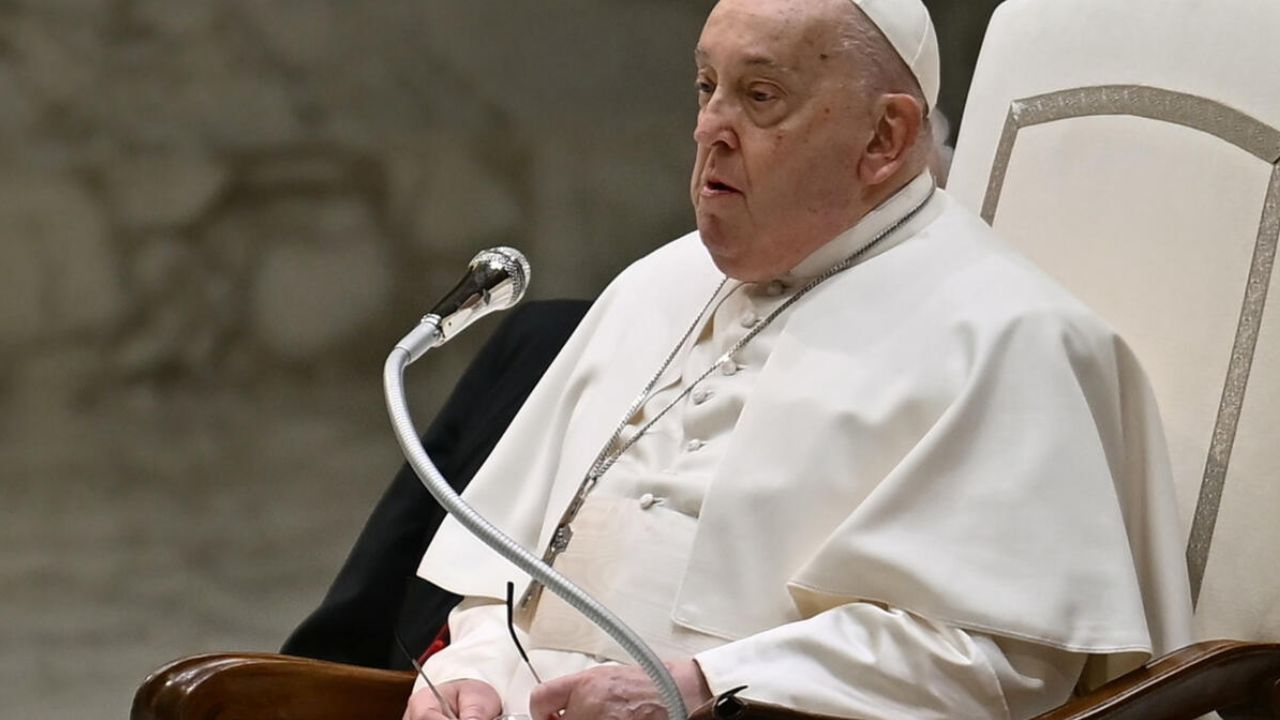
    Pope Francis was admitted to hospital in Rome on Friday for tests and treatment for bronchitis, the Vatican said, the latest in a series of health problems for the 88-year-old pontiff.

    Francis, who has been breathless in recent days and has delegated officials to read his speeches, was admitted following his morning audiences, the Vatican said.

    He was hospitalised at Rome’s Gemelli hospital for “some necessary diagnostic tests and to continue treatment for ongoing bronchitis in a hospital setting”, according to the Vatican.

    The Argentine pontiff, who took over as head of the Catholic Church in 2013, will be staying in a suite used exclusively by popes, which has its own chapel.

    The pope, who had part of one of his lungs removed as a young man, has been suffering with breathing difficulties for over a week, asking aides several times to read his speeches aloud on his behalf.

    At his weekly general audience on Wednesday, a breathless Francis said he “cannot yet” read his own speeches, adding with a smile: “I hope that next time I can.”

    He also held meetings at home on February 6 and 7 in an attempt to rest and recover.

    Francis was admitted to hospital for three nights in March 2023 with bronchitis, which was cured with antibiotics.

    And in December that year he had to cancel a visit to Dubai to participate in the United Nations COP28 climate change conference due to another bout of bronchitis.

    Defying health woes

    The Argentine pontiff has been plagued in recent years by health issues, including an inflamed colon. He also underwent surgery for a hernia.

    He has been using a wheelchair since 2022 due to persistent knee pain and uses a cane during rare moments standing up.

    He has also fallen a couple of times in the past few months, bruising his forearm in January and sporting a large bruise on his right jaw in December, caused by toppling from his bed.

    Despite his health troubles, Francis rarely rests. In September, he completed a four-nation trip, the longest of his papacy in terms of duration and distance.

    He never takes holidays and keeps a busy schedule, sometimes with a dozen meetings in one morning.

    Francis’s health issues regularly spark speculation over his future, particularly as his predecessor, Benedict XVI, quit over failing health in 2013.

    While Francis has left open the option of resigning should he be unable to carry out his duties, he has said that for now he is going nowhere.

    In a memoir published last year, Francis wrote that he did “not have any cause serious enough to make me think of resigning”.

    Resignation is a “distant possibility” that would be justified only in the event of “a serious physical impediment”, he wrote.

  • Saudi art biennale seeks to modernise Islamic tradition

    Saudi art biennale seeks to modernise Islamic tradition

    Under a vast canopy of tents in the Saudi city of Jeddah, religious artefacts are on display alongside contemporary art pieces, part of the kingdom’s bid to transform its ultraconservative image.

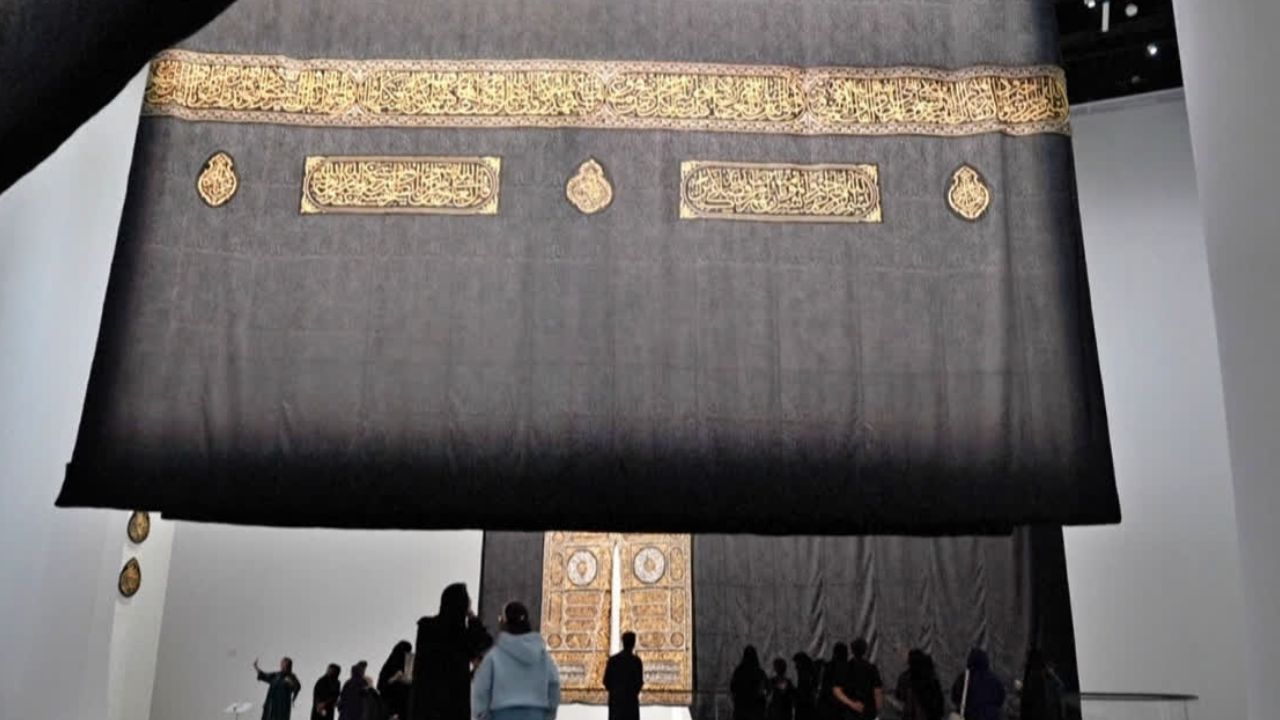
    The second edition of the Islamic Arts Biennale, titled “And All That Is In Between”, features as its centrepiece segments of the “kiswa”, the black cloth embroidered with gold and silver that covers the Kaaba, the cubic building towards which all Muslims pray.

    Hundreds more works are on display at the west terminal of King Abdulaziz International Airport in the coastal city, including valuable objects on loan from London’s Victoria & Albert Museum and the Louvre in Paris, and rare artefacts from the Vatican Library such as a medieval Quran in Hebrew script.

    “This bringing together of the contemporary and the past really emphasises the change that Saudi Arabia is going through,” said Saudi artist Muhannad Shono, curator of the exhibition.

    Home to Islam’s holiest sites, the kingdom has long been dominated by Wahhabism, a strict interpretation of Islam that prohibits the representation of human and animal figures.

    As a result of the prohibition of such depictions in most Sunni Muslim schools of thought, geometric patterns came to be widely prevalent in Islamic art.

    But the biennale in Jeddah features medieval Persian illuminations, including royal portraits, as well as a fountain designed by Yemeni-Indonesian artist Anhar Salem whose mosaic tiles, assembled by colour using artificial intelligence, are made up of avatars sourced online.


    ‘Traditional conceptions’

    “We have traditional conceptions of Islam and its history, which I feel we should begin to re-examine from a new perspective,” said visitor Abdelelah Qutub, a 31-year-old architect from Mecca.

    A few metres (yards) away, Franco-Lebanese artist Tamara Kalo had recreated the camera obscura, the precursor to the modern camera invented in the 11th century by Muslim philosopher Ibn al-Haytham (Alhazen).

    Kalo told AFP her installation, made out of copper, sought to raise the question of “what it means to see and what it means to be a witness”.

    The exhibition has also encouraged artists to be bold with scale, as can be seen from a massive disc covered in petrol — a nod to Saudi Arabia’s position as the world’s leading crude exporter — that spins endlessly.

    Its creator, Italian artist Arcangelo Sassolino, said: “For me it represents time… it’s something that keeps evolving while we’re watching the piece.”

    Under his “Vision 2030”, de facto Saudi leader Crown Prince Mohammed bin Salman has sought to transform the kingdom’s image, weighed down by decades of repression and ultraconservative.

    According to James Dorsey of the National University of Singapore, Saudi authorities are seeking to address what he described as a “reputation deficit”, having long been considered a “secretive, ultraconservative kingdom”.

    Efforts to project “openness”, including the biennale, are “key to the success of Vision 2030”, he said.


    ‘Share space with the West’

    Strategically located in a terminal adjacent to the one reserved for Muslims on a pilgrimage to Mecca, the Jeddah biennale attracts a mix of both art enthusiasts and pilgrims.

    “We had pilgrims coming from over the road here to see the Mecca and Medina pavilions last time,” said art historian Julian Raby.

    The first edition in 2023 attracted 600,000 visitors — approaching the Venice Biennale’s 700,000 visitors in 2024.

    Now, the Islamic Arts Biennale aims to exceed a million visitors, many from abroad.

    “That internationalism is exactly the opposite of how many people consider Saudi Arabia. They look at Saudi Arabia and consider it as a cloistered country,” said Raby.

    In front of her monumental sculpture, a black steel bush of roses floating above a fountain, Jordanian artist Raya Kassisieh was proud to benefit from the platform provided by the biennale.

    “We are able and at the level to converse and share space with the West,” she said.

  • Musk, with Trump at White House, says US will go ‘bankrupt’ without cuts

    Musk, with Trump at White House, says US will go ‘bankrupt’ without cuts

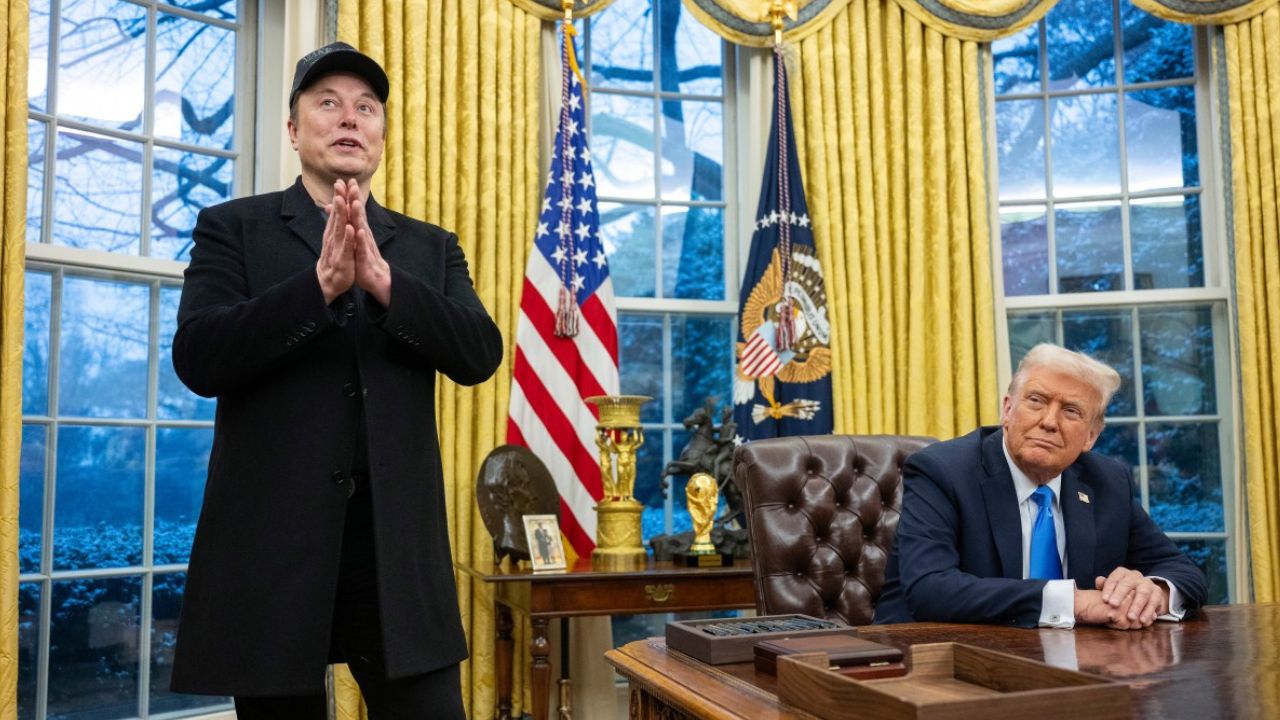
    Tech billionaire Elon Musk, who has been tapped by President Donald Trump to lead federal cost-cutting efforts, said Tuesday that the United States would go “bankrupt” without budget cuts.


    Musk leads the efforts under the newly created Department of Government Efficiency (DOGE), and was speaking at the White House with Trump, who has in recent weeks unleashed a flurry of orders aimed at slashing federal spending.

    In particular, Musk took aim at the country’s budget deficit, which topped $1.8 trillion in the last fiscal year.

    He said that reducing federal expenses was not optional.

    The remarks, however, came as the Trump administration finds itself on a collision course with the US courts, as federal judges questioned the legality of White House cost-cutting measures.

    Trump’s sweeping plans, which have effectively shuttered some federal agencies and sent staff home, have sparked legal battles across the country.
    Multiple lawsuits seek to halt what opponents characterize as an illegal power grab.

    Asked about his conflicts of interest on Tuesday, Musk, who also heads SpaceX — which has multiple US government contracts — and Tesla, said he is seeking to be as transparent as possible.

    The DOGE reform team has triggered alarm among critics as well by gaining access through the US Treasury to the personal and financial data of millions in the United States.

    Cutting on USAid

    Earlier this month, Elon Musk called for the closure of the United States Agency for International Development (USAID) as two senior security officials were reportedly placed on leave for blocking his team’s access to classified materials.

    Musk, the billionaire owner of Tesla and SpaceX who has become the president’s most powerful backer, called USAID a “criminal organisation” after reports that his team was blocked from accessing restricted areas at the agency’s Washington, DC headquarters.

    “Time for it to die,” Musk posted on his social media platform X.


    President Trump claimed the agency was “run by radical lunatics” and said he was considering its future.

    The assault on the agency tasked with humanitarian relief overseas marks a significant new front in Trump’s move to give unprecedented power to Musk to upend government departments and counter what the pair consider wasteful official spending and overreach.


    “USAID is a criminal organization,” Musk wrote on his X platform, replying to a video alleging USAID involvement in “rogue CIA work.”

    In a subsequent post, Musk doubled down and, without giving evidence, asked his 215 million X followers, “Did you know that USAID, using YOUR tax dollars, funded bioweapon research, including Covid-19, that killed millions of people?”


    He did not elaborate on the allegations, which officials in the previous administration linked to a Russian disinformation campaign.


    USAID has “been run by a bunch of radical lunatics, and we’re getting them out… and then we’ll make a decision (on its future),” Trump said without elaborating.

  • Trump insists US to own Gaza, Jordan king pushes back

    Trump insists US to own Gaza, Jordan king pushes back

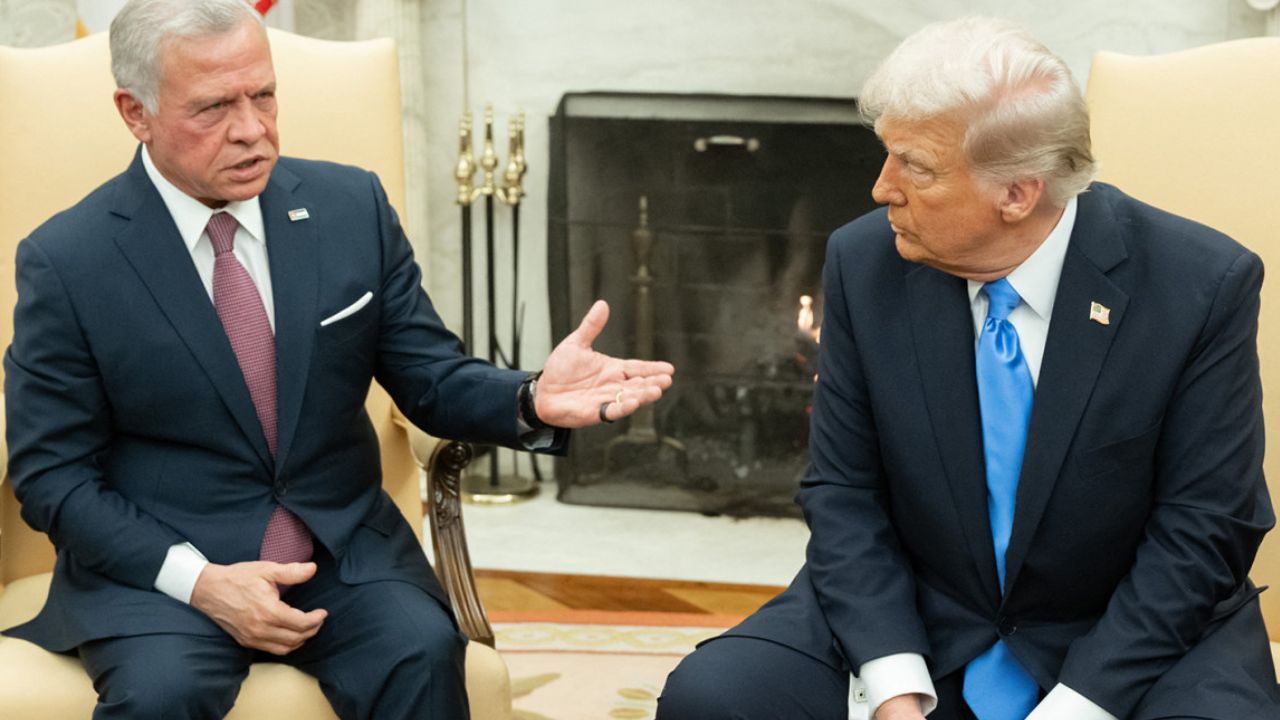
    President Donald Trump on Tuesday doubled down on his idea of exiling Palestinians and placing a rebuilt Gaza under “US authority,” but faced pushback from visiting Jordanian King Abdullah II.

    “I reiterated Jordan’s steadfast position against the displacement of Palestinians in Gaza and the West Bank. This is the unified Arab position. Rebuilding Gaza without displacing the Palestinians and addressing the dire humanitarian situation should be the priority for all,” Abdullah said on social media after the talks.


    However, he told Trump that Egypt was working on a plan for how countries in the region could “work” with Trump on his shock proposal.

    The Jordanian monarch also appeared to offer a sweetener to Trump, who the day before the visit floated the possibility of halting US aid to Jordan if it did not take in refugees.

    “One of the things that we can do right away is take 2,000 children, cancer children who are in a very ill state. That is possible,” Abdullah said as Trump welcomed him and Crown Prince Hussein in the Oval Office.

    Trump replied that it was “really a beautiful gesture” and said he didn’t know about it before the Jordanian monarch’s arrival at the White House.

    The US leader stunned the world when he announced a proposal last week for the United States to “take over” Gaza, envisioning rebuilding the devastated territory into the “Riviera of the Middle East” — but only after resettling Palestinians elsewhere, with no plan for them ever to return.

    Abdullah urged patience and said that Egypt was coming up with a response and that Arab nations would then discuss it at talks in Riyadh.

    “Let’s wait until the Egyptians can come and present it to the president and not get ahead of ourselves,” Abdullah said.

    Trump retreated from his previous talk of an aid halt to Jordan and Egypt, saying: “I don’t have to threaten that. I do believe we’re above that.”

    The Egyptian foreign ministry later said it plans to “present a comprehensive vision for the reconstruction” of the Gaza Strip that ensures Palestinians remain on their land.

    It said Egypt “hopes to cooperate” with Trump’s administration on the matter, with the goal of “reaching a fair settlement of the Palestinian cause”.

    ‘Tough guy’

    Trump, however, kept pushing his plan to “own” Gaza and place it under “US authority,” despite the fact that it is home to more than two million Palestinians who want their own sovereign state.

    “We don’t have to buy. We’re going to have Gaza,” Trump said.

    “We’re going to take it, we’re going to hold it, we’re going to cherish it.”

    But Trump, who made his fortune as a real estate tycoon did however deny that he would seek to personally develop property in Gaza. “No. I’ve had a great career in real estate,” he said.

    The meeting came as the Gaza ceasefire appears increasingly fragile, after Trump warned on Monday that “all hell” would break out if Hamas fails to release all hostages by Saturday.

    Trump said he doubted that the Palestinian militant group would abide by the ultimatum — but played down the risk of a longer threat to efforts to create a lasting peace between Israel and Hamas.

    “It’s not going to take a long time,” Trump said. “A bully is the weakest person, and they’re bullies. Hamas is bullies.”

    King Abdullah is a key US ally but last week rejected “any attempts” to take control of the Palestinian territories and displace its people.

    Egyptian President Abdel Fattah al-Sisi, who is expected to visit the White House later this week, urged on Tuesday the reconstruction of Gaza “without displacing Palestinians.”

    Analysts say the issue is an existential one for Jordan in particular.

    Half of Jordan’s population of 11 million is of Palestinian origin, and since the establishment of Israel in 1948, many Palestinians have sought refuge there.

    But Jordan is also keenly aware of the economic pressure Trump could exercise. Every year, Jordan receives around $750 million in economic assistance from Washington and another $350 million in military aid.

    On social media after the Trump talks, Abdullah stressed that his “foremost commitment is to Jordan, to its stability and to the well-being of Jordanians.”

  • Drunken Japan official loses drug dealer files

    Drunken Japan official loses drug dealer files

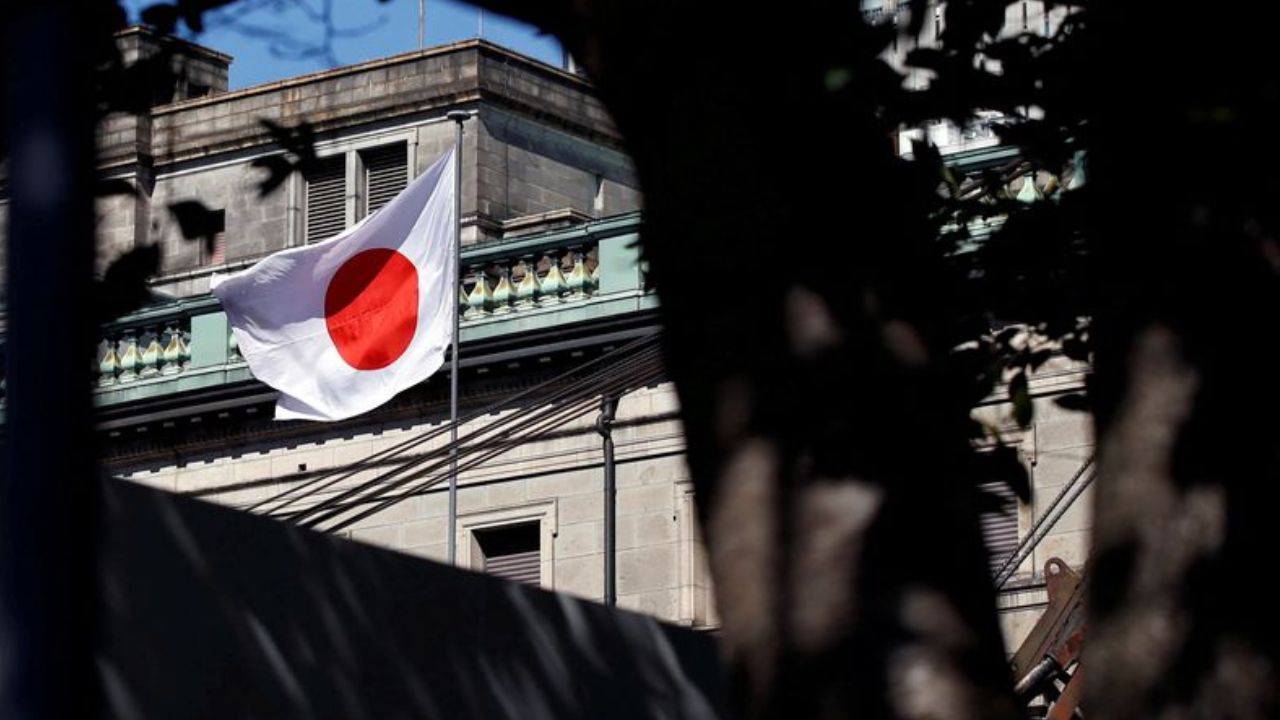
    A drunken night out led to a Japanese finance ministry official losing documents containing personal information about nearly 200 people suspected of illegal drug dealings, local media reported.

    The official with the ministry’s customs and tariff bureau guzzled nine glasses of beer on a five-hour bender last week before realising their bag was gone, public broadcaster NHK said Monday.

    In the missing bag were documents with details of 187 individuals, including names and addresses of suspected drug smugglers as well as recipients of cannabis seeds.

    The official reportedly started drinking with customs staff in Yokohama, near Tokyo, at around 6 pm Thursday.

    The incident “significantly undermined public trust in us, and we’re deeply sorry”, the ministry told local media, adding the official in question will be severely punished.

    The finance ministry could not be reached by AFP on Tuesday, which is a public holiday in Japan.