Author: AFP

  • Probe suggests Azerbaijan plane crashed due to ‘physical external interference’

    Probe suggests Azerbaijan plane crashed due to ‘physical external interference’

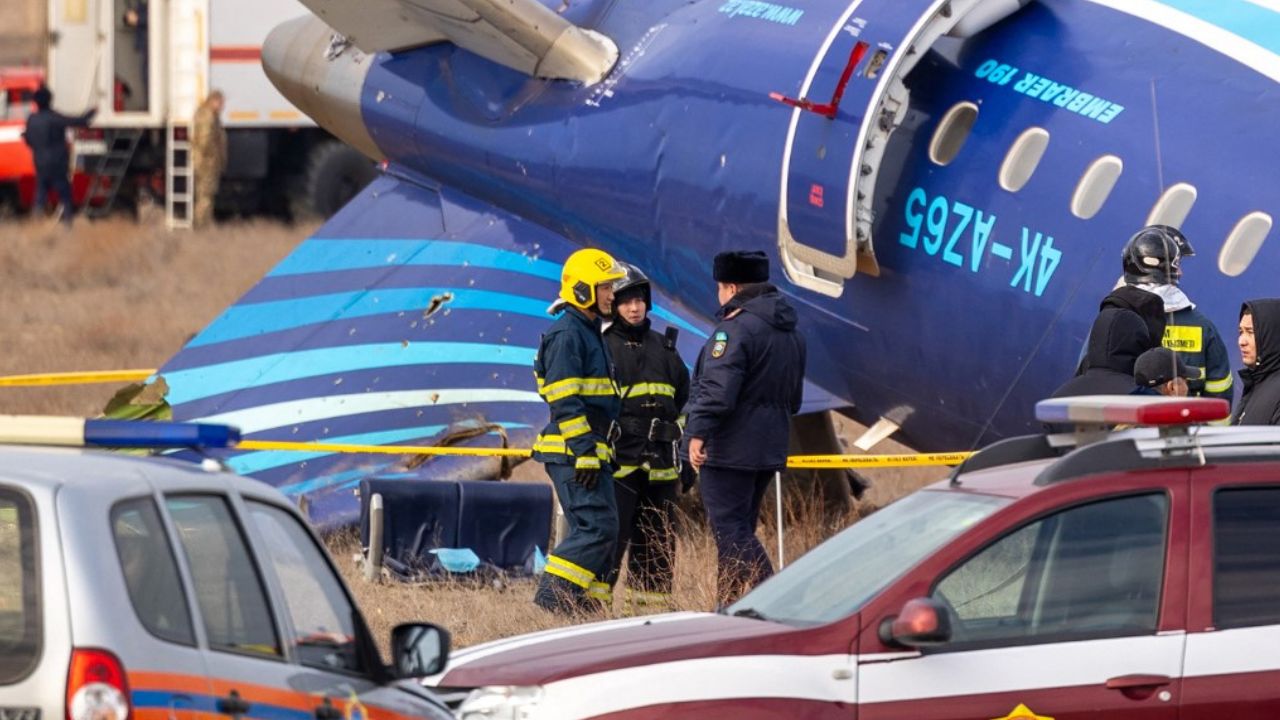
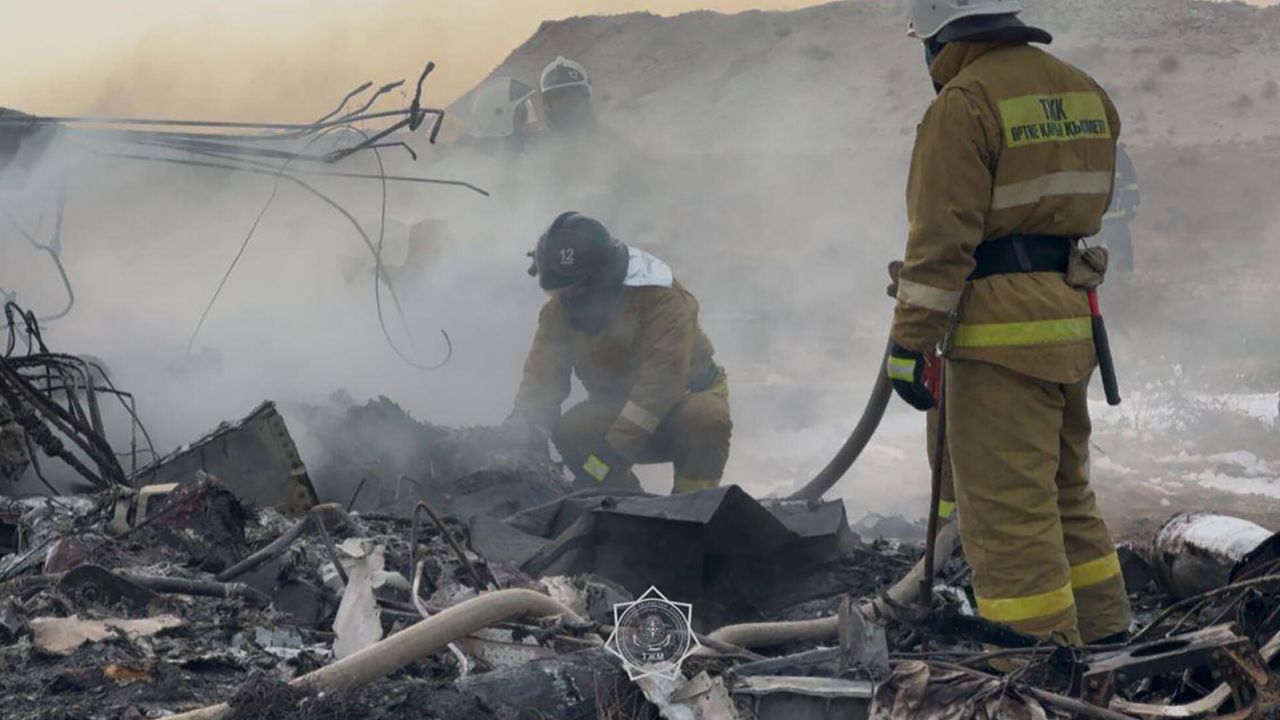
    The Azerbaijan Airlines plane that crashed in Kazakhstan this week suffered physical “external interference”, the airline and Azerbaijan’s transport minister said Friday, citing preliminary results of an investigation, adding to speculation it was hit by a Russian air defence system.

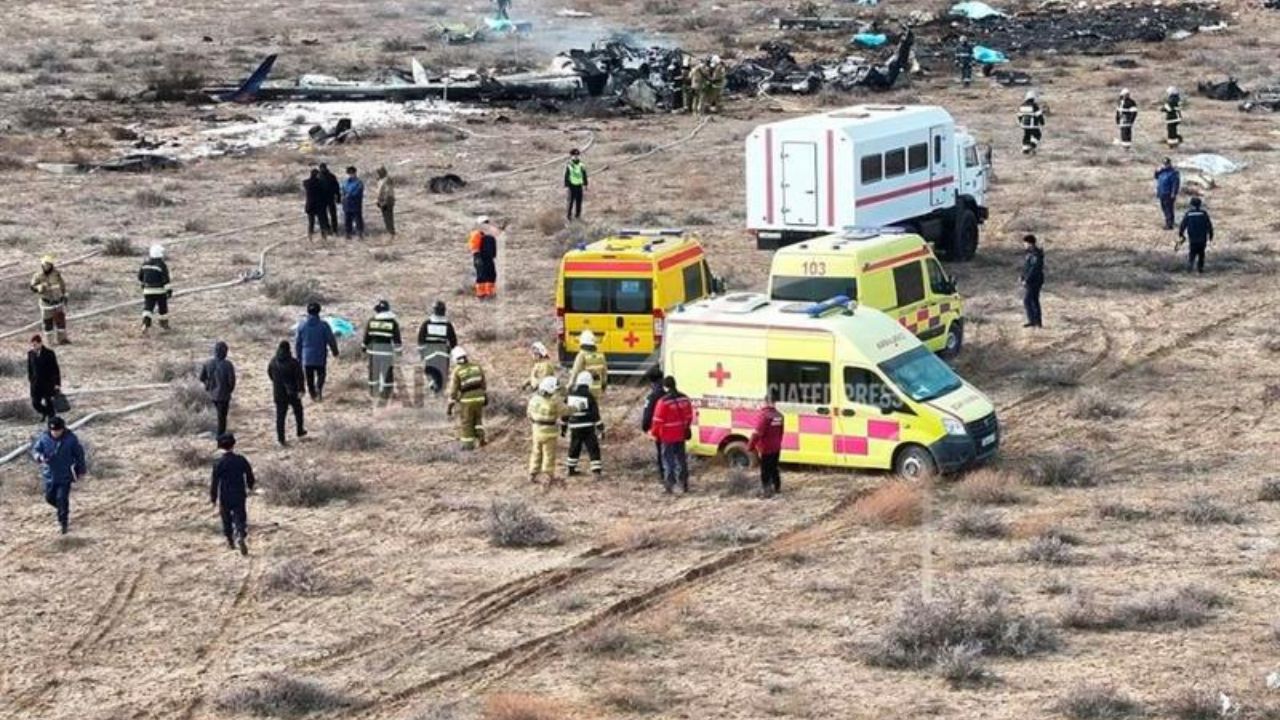
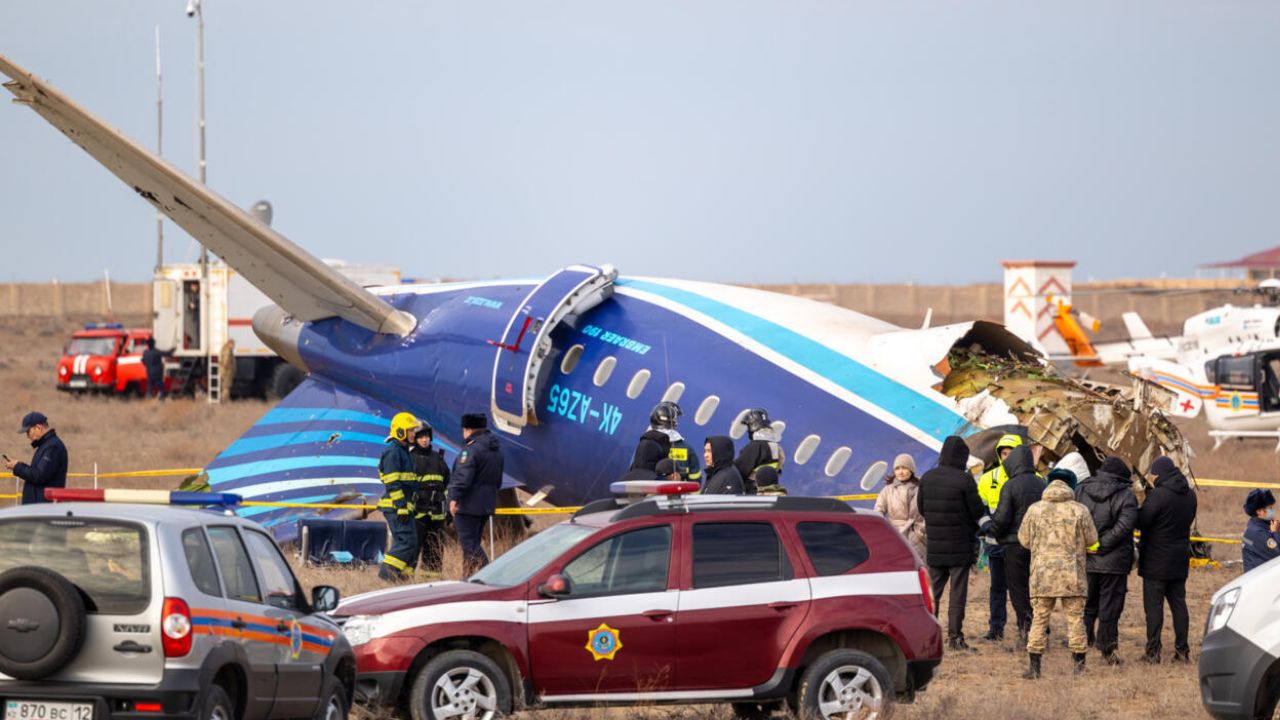
    The jet crashed near the Kazakh city of Aktau on Wednesday, killing 38 of the 67 people on board, after attempting to land at its destination in the Russian city of Grozny and then diverting far off course across the Caspian Sea.

    Russia’s aviation chief said Friday that Grozny was being attacked by Ukrainian drones at the time the plane had tried to land, but the Kremlin has declined to comment on reports the plane was accidentally shot down by Russian air defence missiles.

    Statements from Azerbaijan citing the investigation into the incident suggest Baku believes the plane was hit mid-air.

    “Based on the opinion of experts and on the words of eyewitnesses, it can be concluded that there was external interference,” Azerbaijani’s transport minister, Rashad Nabiyev, told reporters.

    “It is necessary to find out from what kind of weapon,” he added, citing reports from survivors of hearing “three explosions” as the plane was over Grozny.

    Azerbaijan Airlines said it had suspended flights to 10 Russian airports and that preliminary results suggested the crash of Baku-Grozny flight J2-8243 was “due to physical and technical external interference”. 

    The head of Russia’s civil aviation agency, Dmitry Yadrov, said in an earlier statement that “the situation on this day and at these hours in the area of Grozny airport was very complex”.

    “Ukrainian attack drones at this time were making terrorist attacks on civilian infrastructure in the cities of Grozny and Vladikavkaz,” Yadrov said, referring to a nearby city.

    He said the Azeri pilot made “two attempts to land the plane in Grozny that were unsuccessful” in “thick fog”.

    “The pilot was offered other airports. He took the decision to go to Aktau airport,” he added.

    ‘Explosion’ 

    The Kremlin earlier Friday declined to comment on the deadly crash.

    “Until the conclusions of the investigation, we do not consider we have the right to make any comments, and we will not do so,” Kremlin spokesman Dmitry Peskov told reporters.

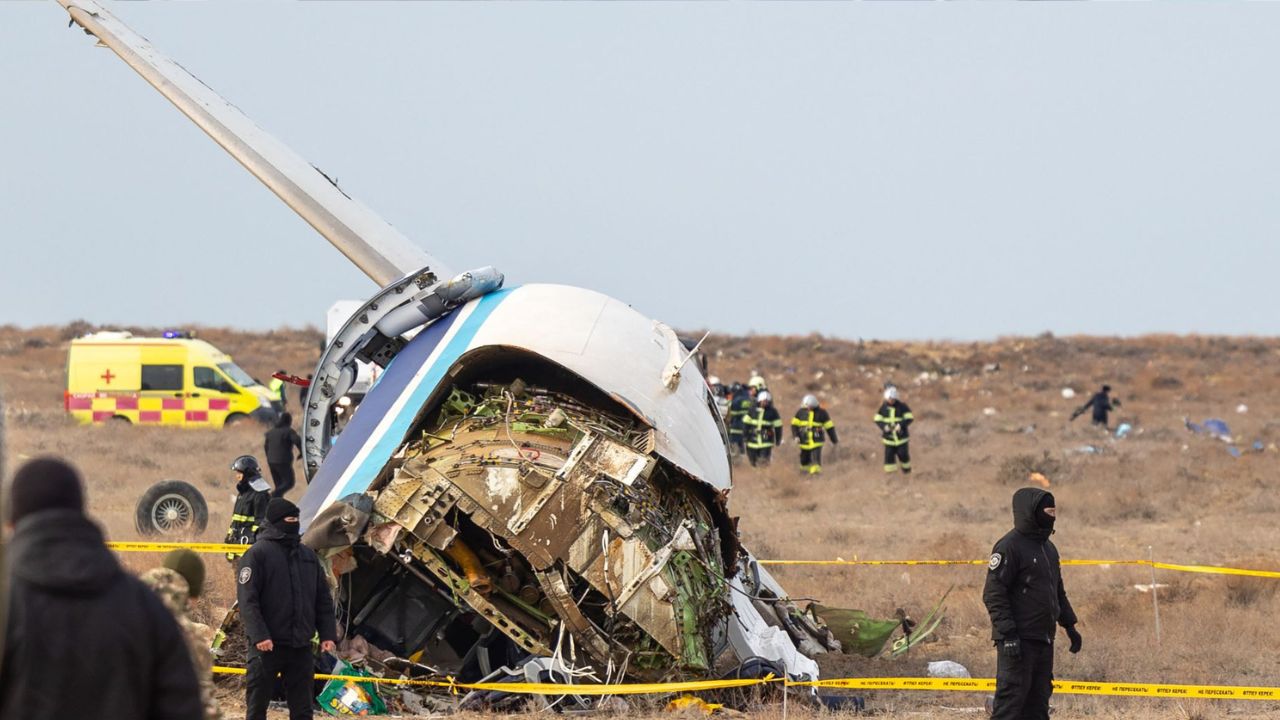
    Some aviation and military experts have pointed to signs of shrapnel damage on the plane wreckage as evidence it was hit by air defence systems.

    An Azerbaijan pro-government website, Caliber, and several other media have cited unnamed Azerbaijani officials as saying they believed a Russian missile fired from a Pantsir-S1 air defence system caused the crash. 

    Ukrainian President Volodymyr Zelensky has called for a “thorough investigation” and also pointed to Russian involvement.

    “Every loss of life deserves a thorough investigation to establish the truth. We can see how the clear visual evidence at the crash site points to Russia’s responsibility for the tragedy,” he said in a post on social media.

    A Russian survivor, Subkhonkul Rakhimov, told state broadcaster RT that an “explosion” appeared to happen outside the plane as it attempted to land in Grozny in fog, causing shrapnel to penetrate inside.

    “I wouldn’t say it was inside the plane because the skin of the fuselage near where I was sitting flew off,” he said.

    “I grabbed a life jacket and saw there was a hole in it — it was pierced by shrapnel.”

    Apology urged

    Azerbaijan’s President Ilham Aliyev said Friday that he had phoned his Kazakh counterpart Kassym-Jomart Tokayev, with both pledging that the “causes of the crash would be fully examined”, according to a statement from Baku.

    Contacted by AFP, Azerbaijani government officials did not respond to questions about the possible causes of the crash.

    But Rasim Musabekov, an Azerbaijani lawmaker and member of the parliament’s international relations committee, urged Russia to apologise for the incident.

    “They have to accept this, punish those to blame, promise that such a thing will not happen again, express regrets and readiness to pay compensation,” Musabekov told AFP. 

    He suggested the plane was not allowed to land at Grozny or a nearby Russian airport — instead being “sent far away” across the Caspian Sea to Kazakhstan — in an attempt to “cover up a crime.”
  • Russia missile suspected in Azerbaijani plane crash, Moscow warns against ‘hypotheses’

    Russia missile suspected in Azerbaijani plane crash, Moscow warns against ‘hypotheses’

    Azerbaijani and US officials believe a Russian surface-to-air missile caused the deadly crash of an Azerbaijani passenger jet, media reports and a US official said Thursday, as the Kremlin cautioned against “hypotheses” over the disaster.

    The Azerbaijan Airlines jet crashed near the Kazakh city of Aktau, an oil and gas hub, on Wednesday after going off course for undetermined reasons.

    Thirty-eight of the 67 people on board died.

    The Embraer 190 aircraft was supposed to fly northwest from the Azerbaijani capital Baku to the city of Grozny in Chechnya, southern Russia, but instead diverted far off course across the Caspian Sea.

    An investigation is underway, with pro-government Azerbaijani website Caliber citing unnamed officials as saying they believed a Russian missile fired from a Pantsir-S air defence system downed the plane.

    The claim was also reported by The New York Times, broadcaster Euronews and the Turkish news agency Anadolu.

    Some aviation and military experts said the plane might have been accidentally shot by Russian air defence systems because it was flying in an area where Ukrainian drone activity had been reported.

    A former expert at France’s BEA air accident investigation agency said there appeared to be “a lot of shrapnel” damage on the wreckage.

    Speaking on condition of anonymity, he said the damage was “reminiscent” of Malaysia Airlines flight MH17, which was downed with a surface-to-air missile by Russia-backed rebels over eastern Ukraine in 2014.

    Kremlin spokesman Dmitry Peskov told reporters: “It would be wrong to make any hypotheses before the investigation’s conclusions.”

    Shrapnel strikes reported

    Euronews cited Azerbaijani government sources as saying that “shrapnel hit the passengers and cabin crew as it exploded next to the aircraft mid-flight”.

    A US official, speaking on condition of anonymity, also said early indications suggested a Russian anti-aircraft system struck the plane.

    Kazakhstan news agency Kazinform cited a regional prosecutor as saying that two black-box flight recorders had been recovered.

    Azerbaijan Airlines initially said the plane flew through a flock of birds, before withdrawing the statement.

    Kazakh officials said 38 people had been killed and there were 29 survivors, including three children.

    Jalil Aliyev, the father of flight attendant Hokume Aliyeva, told AFP that this was supposed to have been her last flight before starting a job as a lawyer for the airline.

    “Why did her young life have to end so tragically?” the man said in a trembling voice before hanging up the phone.

    Eleven of the injured are in intensive care, the Kazakh health ministry said.

    Day of mourning 

    Azerbaijani President Ilham Aliyev declared Thursday a day of mourning and cancelled a planned visit to Russia for an informal summit of the Commonwealth of Independent States (CIS), a grouping of former Soviet nations.

    “I extend my condolences to the families of those who lost their lives in the crash… and wish a speedy recovery to the injured,” Aliyev said in a social media post Wednesday.

    The Flight Radar website showed the plane deviating from its normal route, crossing the Caspian Sea and then circling over the area where it eventually crashed near Aktau, on the eastern shore of the sea.

    Kazakhstan said the plane was carrying 37 Azerbaijani passengers, six Kazakhs, three Kyrgyz and 16 Russians.

    Bloodied survivors 

    A Kazakh woman told the local branch of Radio Free Europe/Radio Liberty (RFE/RL) she was near where the plane crashed and rushed to the site to help survivors.

    “They were covered in blood. They were crying. They were calling for help,” said the woman, who gave her name as Elmira.

    She said they saved some teenagers.

    “I’ll never forget their look, full of pain and despair,” said Elmira. “A girl pleaded: ‘Save my mother, my mother is back there’.”

    Russian President Vladimir Putin held a phone conversation with Aliyev and “expressed his condolences in connection with the crash”, Peskov told a news conference.

  • Over 10,000 Spain-bound migrants lost at sea in 2024: report

    Over 10,000 Spain-bound migrants lost at sea in 2024: report

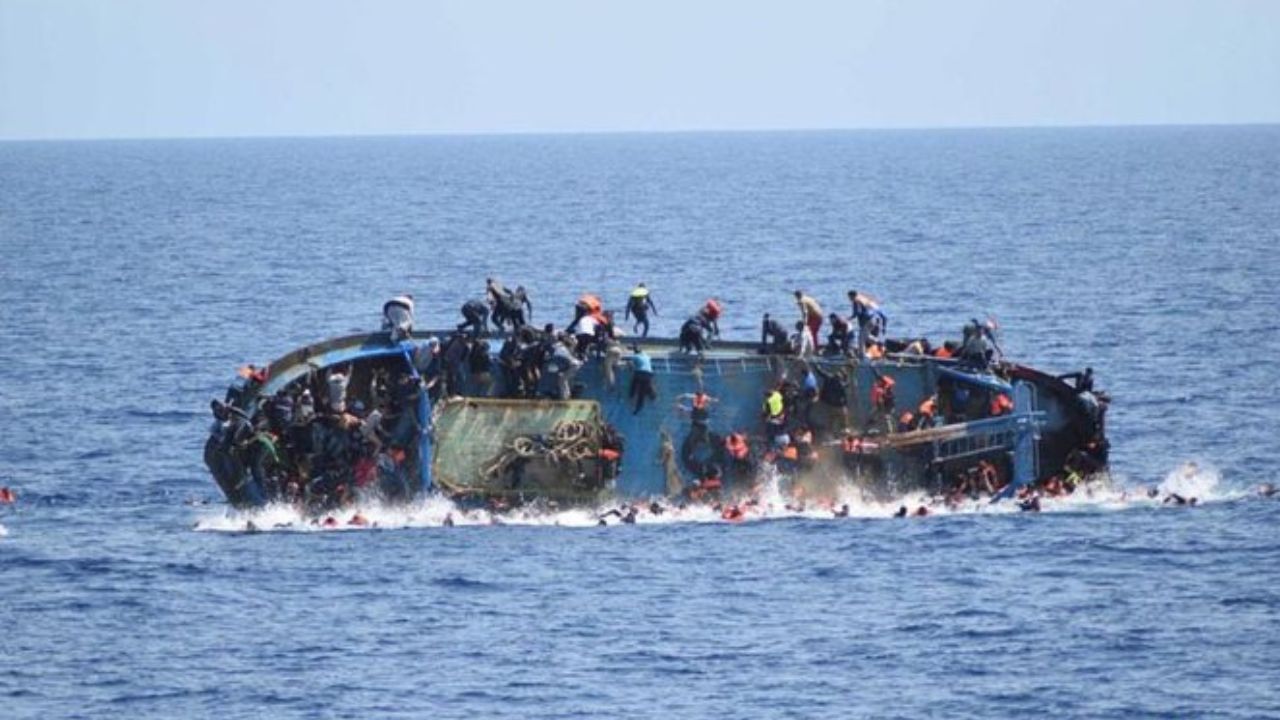
    At least 10,457 migrants died or disappeared while trying to reach Spain by sea in 2024, an NGO said Thursday, more than 50 percent more than last year and the most since it began keeping a tally in 2007.

    The 58-percent increase includes 1,538 children and 421 women, migrants rights group Caminando Fronteras or Walking Borders said in a report which covers the period from January 1 to December 5, 2024.

    It amounts to an average of 30 deaths per day, up from around 18 in 2023.

    The group compiles its data from hotlines set up for migrants on vessels in trouble to call for help, families of migrants who went missing and from official rescue statistics.

    It blamed the use of flimsy boats and increasingly dangerous routes as well as the insufficient capacity of maritime rescue services for the surge in deaths.

    “These figures are evidence of a profound failure of rescue and protection systems. More than 10,400 people dead or missing in a single year is an unacceptable tragedy,” the group’s founder, Helena Maleno, said in a statement.

    The victims were from 28 nations, mostly in Africa, but also from Iraq and Pakistan.

    The vast majority of the fatalities — 9,757 — took place on the Atlantic migration route from Africa to Spain’s Canary Islands, which has received a record number of migrants for the second year in a row.

    Seven migrant boats landed in the archipelago on Wednesday, Christmas Day, Spain’s maritime rescue service said on social media site X.

    At their closest point, the Canaries lie 100 kilometres (62 miles) off the coast of North Africa. The shortest route is between the coastal town of Tarfaya in southern Morocco and the island of Fuerteventura in the Canaries.

    But the Atlantic route to the Canary Islands is particularly dangerous because of strong currents.

    Along with Italy and Greece, Spain is one of the three major European gateways for migrant arrivals.

    According to the interior ministry, 60,216 migrants entered Spain irregularly between January 1 and December 15 — a 14.5 percent increase over the same time last year.

    The majority, over 70 percent, landed in the Canaries.

  • The real-life violence that inspired South Korea’s Squid Game

    The real-life violence that inspired South Korea’s Squid Game

    A factory turned into a battlefield, riot police armed with tasers and an activist who spent 100 days atop a chimney — the unrest that inspired Netflix’s most successful show ever has all the hallmarks of a TV drama.

    This month sees the release of the second season of Squid Game, a dystopian vision of South Korea where desperate people compete in deadly versions of traditional children’s games for a massive cash prize.

    But while the show itself is a work of fiction, Hwang Dong-hyuk, its director and writer, has said the experiences of the main character Gi-hun, a laid-off worker, were inspired by the violent Ssangyong strikes in 2009.

    “I wanted to show that any ordinary middle-class person in the world we live in today can fall to the bottom of the economic ladder overnight,” he has said.

    In May 2009, Ssangyong, a struggling car giant taken over by a consortium of banks and private investors, announced it was laying off more than 2,600 people, or nearly 40 per cent of its workforce.

    That was the beginning of an occupation of the factory and a 77-day strike that ended in clashes between strikers armed with slingshots and steel pipes and riot police wielding rubber bullets and tasers.

    Many union members were severely beaten and some were jailed.

    Many lost their lives

    The conflict did not end there.

    Five years later, union leader Lee Chang-kun held a sit-in for 100 days on top of one of the factory’s chimneys to protest a sentence in favour of Ssangyong against the strikers.

    He was supplied with food from a basket attached to a rope by supporters and endured hallucinations of a tent rope transformed into a writhing snake.

    Some who experienced the unrest struggled to discuss Squid Game because of the trauma they endured, Lee told AFP.

    The repercussions of the strike, compounded by protracted legal battles, caused significant financial and mental strain for workers and their families, resulting in around 30 deaths by suicide and stress-related issues, Lee said.

    “Many have lost their lives. People had to suffer for too long,” he said. He vividly remembers the police helicopters circling overhead, creating intense winds that ripped away workers’ raincoats.

    Lee said he felt he could not give up.

    “We were seen as incompetent breadwinners and outdated labour activists who had lost their minds,” he said.

    “Police kept beating us even after we fell unconscious — this happened at our workplace, and it was broadcast for so many to see.”

    Lee said he had been moved by scenes in the first season of Squid Game where Gi-hun struggles not to betray his fellow competitors.

    But he wished the show had spurred real-life change for workers in a country marked by economic inequality, tense industrial relations and deeply polarised politics.

    “Despite being widely discussed and consumed, it is disappointing that we have not channelled these conversations into more beneficial outcomes,” he said.

    Shadow of state violence

    The success of Squid Game in 2021 left him feeling “empty and frustrated”.

    “At the time, it felt like the story of the Ssangyong workers had been reduced to a commodity in the series,” Lee told AFP.

    Squid Game, the streaming platform’s most-watched series of all time, is seen as embodying the country’s rise to a global cultural powerhouse, part of the “Korean wave” alongside the Oscar-winning Parasite and K-pop stars such as BTS.

    But its second season comes as the Asian democracy finds itself embroiled in some of its worst political turmoil in decades, triggered by conservative President Yoon Suk Yeol’s failed bid to impose martial law this month.

    Yoon has since been impeached and suspended from duties pending a ruling by the Constitutional Court.

    That declaration of martial law risked sending the Korean wave “into the abyss”, around 3,000 people in the film industry, including Parasite director Bong Joon-ho, said in a letter following Yoon’s shocking decision.

    Vladimir Tikhonov, a Korean studies professor at the University of Oslo, told AFP that some of South Korea’s most successful cultural products highlight state and capitalist violence.

    “It is a noteworthy and interesting phenomenon — we still live in the shadow of state violence, and this state violence is a recurrent theme in highly successful cultural products.”

  • 28 survivors as Azerbaijani jet crashes in Kazakhstan

    28 survivors as Azerbaijani jet crashes in Kazakhstan

    An Azerbaijan Airlines passenger jet with 67 people on board crashed on Wednesday in western Kazakhstan after veering from its scheduled route, officials said.

    Kazakh authorities said 28 people had survived the crash of the Embraer 190 near the city of Aktau, an oil and gas hub on the eastern shore of the Caspian Sea.

    The plane was flying from the Azerbaijani capital Baku on the western shore of the Caspian to the city of Grozny in Chechnya in southern Russia.

    Azerbaijani President Ilham Aliyev cut short a visit to Russia where he had been due to attend an informal summit of leaders of the Commonwealth of Independent States, a grouping of former Soviet nations, his office said in a statement.

    “A plane doing the Baku-Grozny route crashed near the city of Aktau. It belongs to Azerbaijan Airlines,” the Kazakh transport ministry said on Telegram.

    Azerbaijan Airlines, the country’s flag carrier, said the plane had 62 passengers and five crew on board.

    It said the plane “made an emergency landing” around three kilometres (1.9 miles) from Aktau.

    The Kazakh transport ministry said that of the plane’s passengers 37 were from Azerbaijan, six from Kazakhstan, three from Kyrgyzstan and 16 from Russia.

    The Kazakh emergency situations ministry said its staff put out a fire which broke out when the plane crashed.

    “According to preliminary information, 28 survivors including two children have been hospitalised,” the ministry said.

    It said 150 emergency workers were at the scene.

    The health ministry said a special flight was being sent from the Kazakh capital Astana with specialist doctors to treat the injured.

    Aliyev’s office said “The President ordered the prompt initiation of urgent measures to investigate the causes of the disaster.”

    Local health officials earlier said 14 survivors had been taken to the regional hospital, with five put in intensive care.

    Azerbaijan’s first lady Mehriban Aliyeva, who is also the country’s first Vice President, said she was “Deeply saddened by the news of the tragic loss of lives in the plane crash near Aktau.”

    “I extend my heartfelt condolences to the families and loved ones of the victims. Wishing them strength and patience! I also wish a speedy recovery to the injured,” she said on Instagram.

    “I express my condolences to the relatives of the passengers of the Azerbaijan Airlines jet who died,” Chechen leader Ramzan Kadyrov said on Telegram.

    The plane’s course on Flight Radar showed it crossing the Caspian Sea away from its normal route and then circling over the area where it eventually crashed.

    Kazakhstan said it had opened an investigation into the crash.

  • $5bn corruption case initiated against Bangladesh’s Sheikh Hasina

    $5bn corruption case initiated against Bangladesh’s Sheikh Hasina

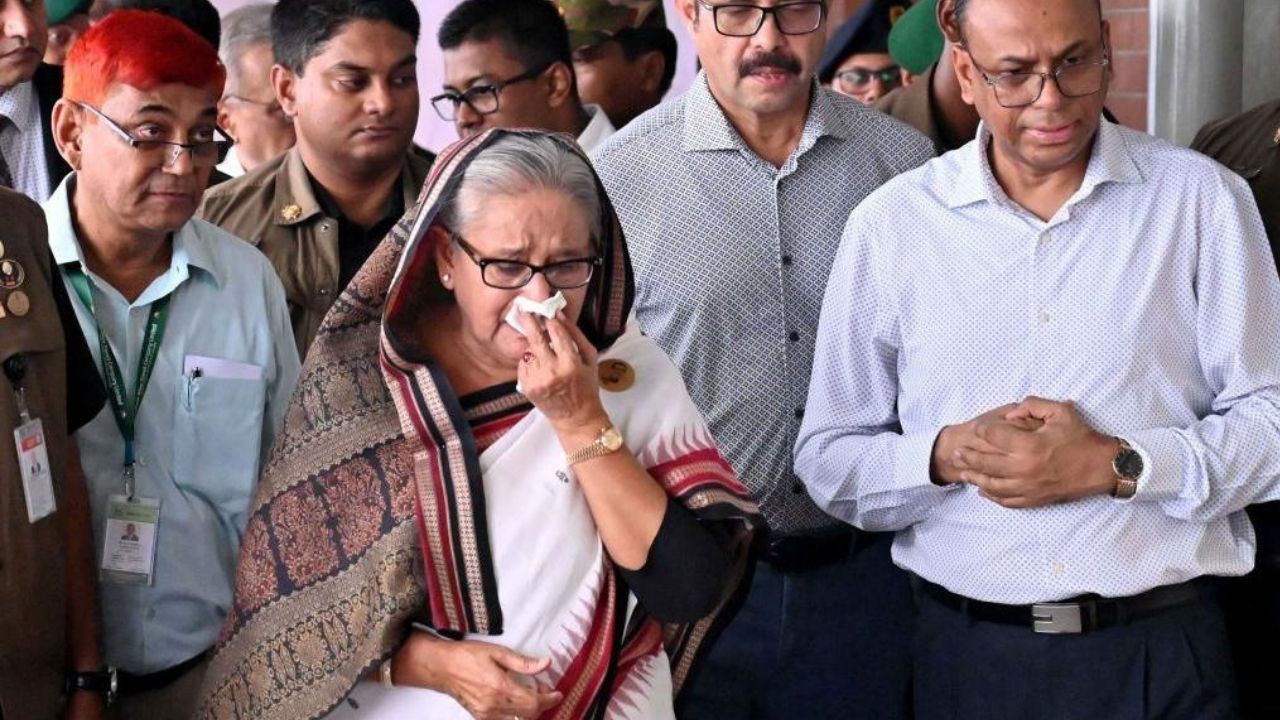
    Bangladesh has launched a probe into the alleged $5 billion embezzlement connected to a Russian-backed nuclear power plant by ousted leader Sheikh Hasina and her family, the anti-corruption commission said Monday.

    Along with Hasina, the now-former prime minster who fled to India after being toppled by a revolution in August, those subject to the inquiry include her son, Sajeeb Wazed Joy, and niece, Tulip Siddiq, a British lawmaker and government minister.

    The allegations were raised by a writ seeking an investigation filed in the high court by Hasina’s political opponent, Bobby Hajjaj, chairman of the Nationalist Democratic Movement party.

    “We seek justice through our court”, Hajjaj told AFP on Monday.

    Key allegations are connected to the funding of the $12.65 billion Rooppur nuclear plant, the South Asian country’s first, which is bankrolled by Moscow with a 90 percent loan.

    A statement Monday from the commission said it had launched an inquiry into allegations that Hasina and family members had “embezzled $5 billion” from the Rooppur plant via “various offshore bank accounts in Malaysia”.

    It said its investigations were examining “questionable procurement practices related to the overpriced construction” of the plant.

    “The claims of kickbacks, mismanagement, money laundering, and potential abuse of power raise significant concerns about the integrity of the project and the use of public funds”, the commission said.

    Graft allegations also include theft from a government building scheme for the homeless.

    Hasina, 77, fled by helicopter on August 5 into exile in India, infuriating many Bangladeshis determined that she face trial for alleged “mass murder”.

    It was not possible to contact Hasina for comment.

    Siddiq has “denied any involvement in the claims” accusing her of involvement in embezzlement, according to a statement from the British prime minister’s office.

    Joy, who is understood to be based in the United States, was also unavailable for comment.

  • Germany: Five killed, over 200 wounded in Christmas market attack

    Germany: Five killed, over 200 wounded in Christmas market attack

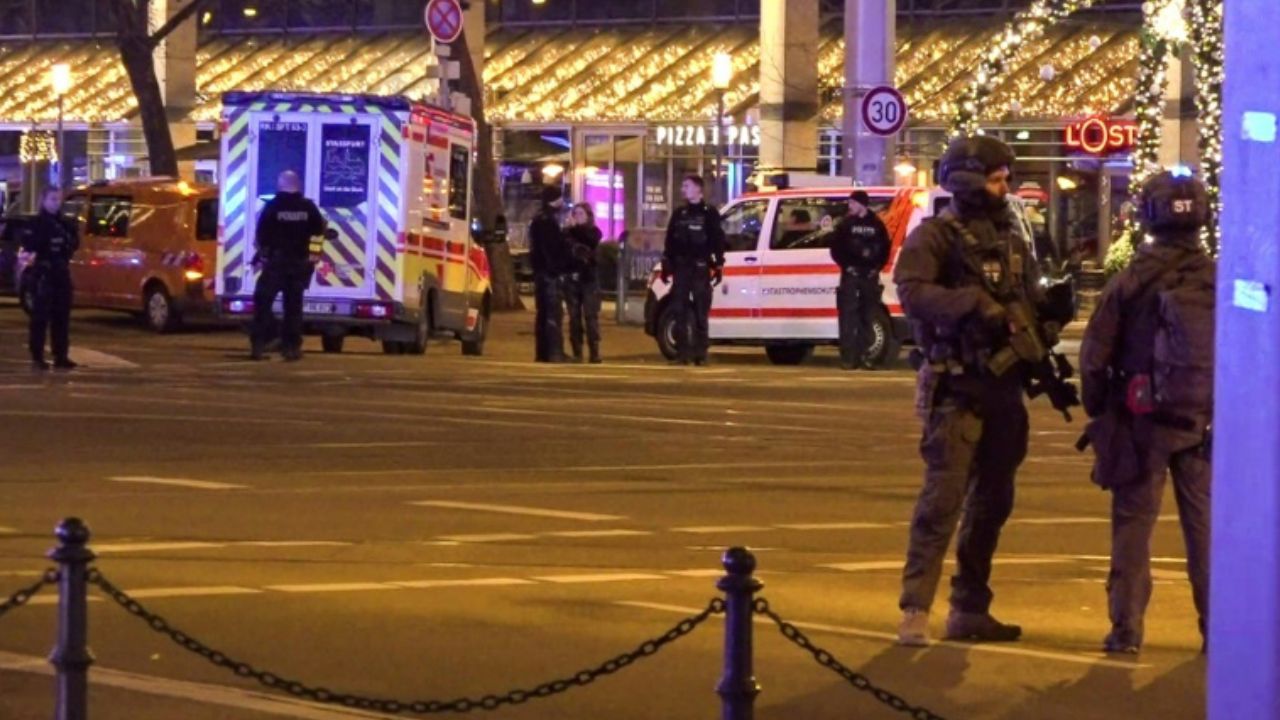
    Germany reeled Saturday from the shock of a new deadly attack on a crowded Christmas market where Chancellor Olaf Scholz was to visit the scene of the carnage.

    Police arrested a 50-year-old Saudi doctor at the scene after five people were killed and more than 200 injured when an SUV ploughed through the festive crowd in Magdeburg on Friday night.

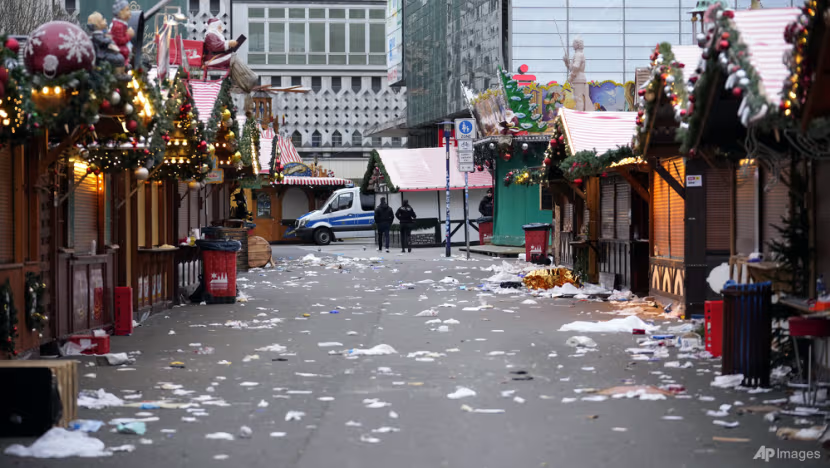
    Residents went to the Johanneskirche church, just opposite the market, on Saturday to lay candles in tribute to the victims.

    Police said it was not possible to immediately say whether the attack was inspired by radical religious or political beliefs, or linked to psychological problems. The detained suspect has voiced anti-Islam views on social media.

    The Saudi man, named by German media as Taleb A., was a psychiatric doctor who had lived in Germany since 2006 and held a permanent residence permit.

    Media pointed to his social media posts in which he expressed views critical of Islam, sympathetic to the far right and even warned of the “dangers” of an Islamisation of Germany.

    “The motives remain mysterious,” wrote Der Spiegel weekly about the latest vehicle-ramming attack to target a traditional German festival market.

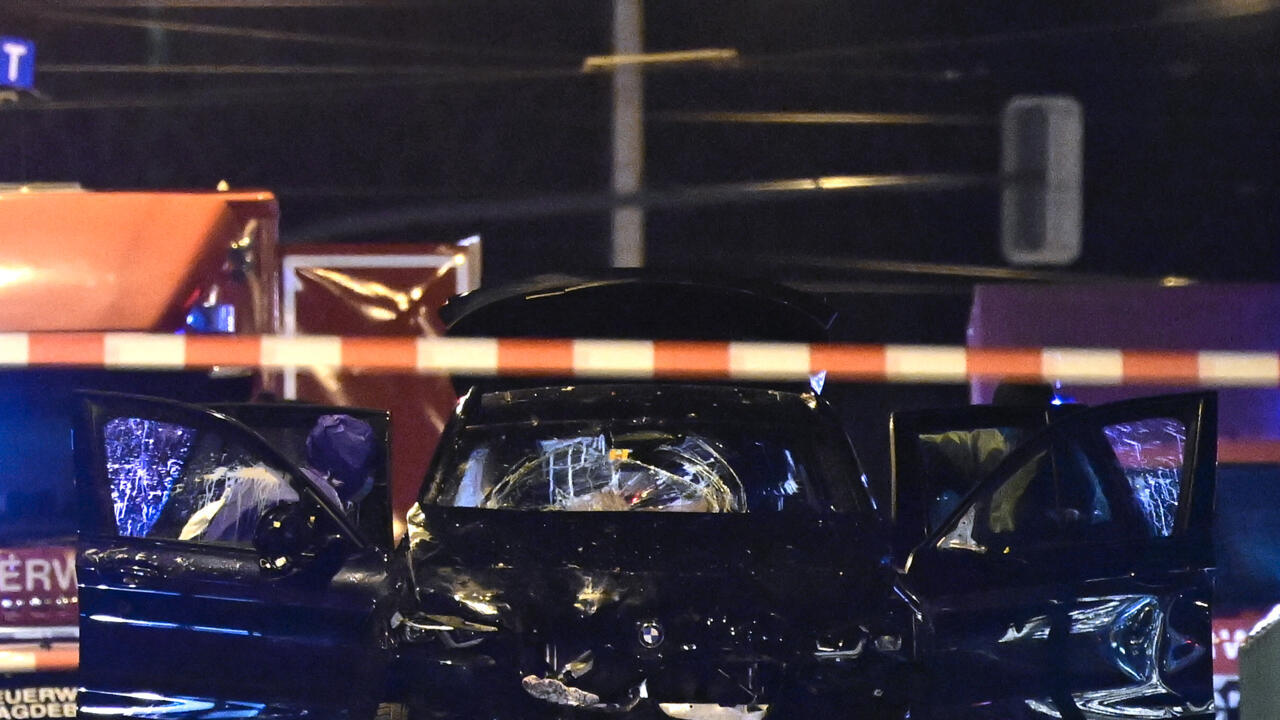
    The black BMW tore through the traditional market in the centre of Magdeburg, southwest of Berlin on Friday night.

    1734778960-I3ZD4SA8OH.jpg

    Police said the vehicle drove “at least 400 metres across the Christmas market” leaving behind destruction, debris and broken glass on the city’s central town hall square.

    The attack came almost eight years to the day after a Tunisian man drove a truck through a Berlin Christmas market, killing 13 people. It was the country’s most deadly Jihadist attack.

    The sorrow and anger sparked by the latest attack, where one of those killed was a child, seemed set to inflame a heated debate on immigration and security as Germany heads for February 23 elections.

    One woman told Die Welt daily: “I don’t know what world we’re living in, where someone would use such a peaceful event to spread terror.”

    The leader of the far-right Alternative for Germany (AfD), Alice Weidel, which has focused on jihadist attacks in its campaign against immigrants, wrote on X: “When will this madness stop?”

    President Frank-Walter Steinmeier wrote that “the anticipation of a peaceful Christmas was suddenly interrupted” but cautioned that “the background to the terrible deed has yet been clarified”.

    “What happened today affects a lot of people. It affects us a lot,” Fael Kelion, a 27-year-old Cameroonian living in the city, told AFP.

    “I think that since (the suspect) is a foreigner, the population will be unhappy, less welcoming,” he said.

    Michael Raarig, 67, an engineer, expressed his sorrow at the site, telling AFP “I am sad, I am shocked. I never would have believed this could happen here in an East German provincial town.”

    He added that he believed the attack “will play into the hands of the AfD” which has had its strongest support in the formerly communist eastern Germany.

    1734778935-RXM65EVLOF.avif

    Scholz and Interior Minister Nancy Faeser will on Saturday visit the market, where well-wishers had already left flowers of condolences.

    Several European governments expressed shock over the attack. The Saudi government highlighted its “solidarity with the German people and the families of the victims”, in a statement on social media platform X, and “affirmed its rejection of violence”.

    Faeser had recently called for vigilance at Christmas markets, although she said that authorities had not received any specific threats.

    Domestic security service the Office for the Protection of the Constitution had warned it considers Christmas markets an “ideologically suitable target for Islamist-motivated people”.

    Germany has in recent tim seen a series of suspected Islamist knife and other violent attacks which have inflamed public opinion.

    Three people were killed and eight wounded in a stabbing spree at a street festival in the western city of Solingen in August.

    Police arrested a Syrian suspect over the attack that was claimed by IS.

    In June, a policeman was killed in a knife attack in Mannheim. An Afghan national was detained.

    The government this year imposed new border controls with European neighbours and pledged to step up deportations of rejected asylum-seekers.

    Germany’s conservative opposition leader Friedrich Merz, who is ahead in pre-election opinion polls, has pledged in his campaign to show “zero tolerance” on crime and “stop illegal migration”.

  • Greece returns stolen ancient coin hoard to Turkey

    Greece returns stolen ancient coin hoard to Turkey

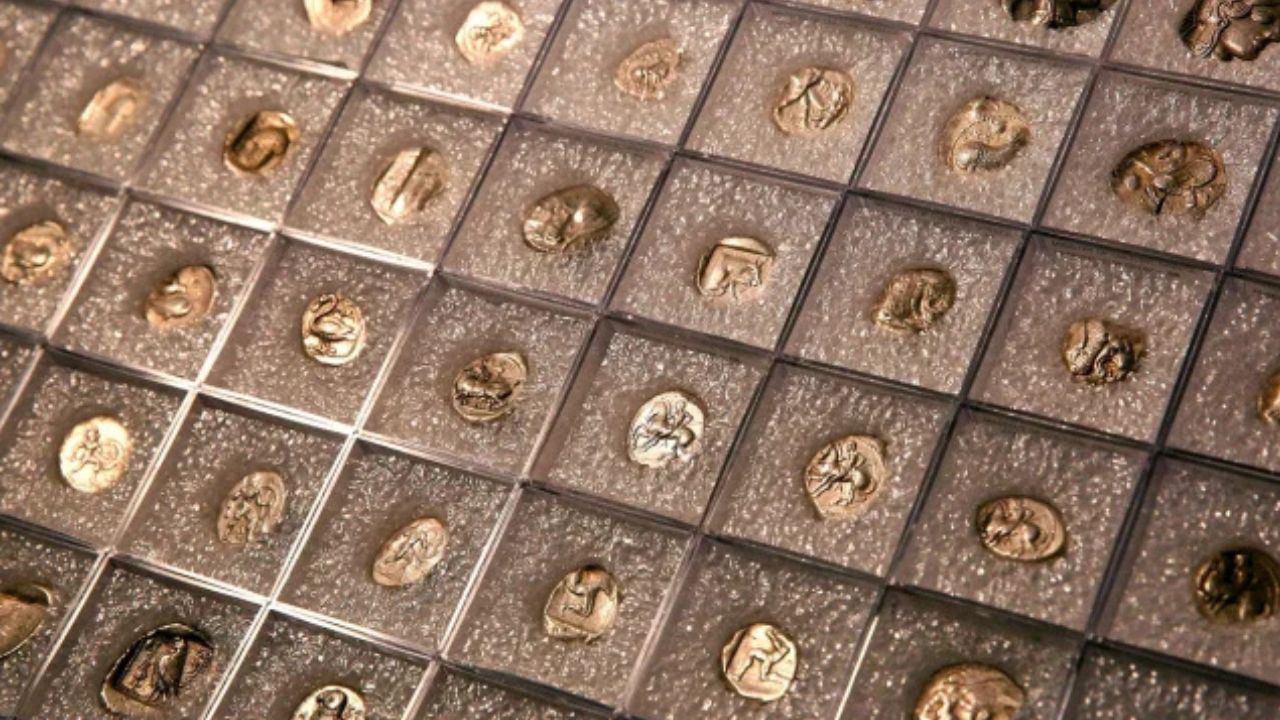
    Greece on Thursday returned a hoard of over 1,000 stolen ancient coins to Turkey in the first repatriation of its kind between the historic rivals and neighbours.

    The move came a few months after Turkey publicly supported Greece in its long quest to reclaim the Parthenon Marbles from the British Museum in London.

    Greek Culture Minister Lina Mendoni said the hoard of 1,055 silver coins had been seized by Greek customs guards on the border with Turkey in 2019.

    “These coins had been illegally imported,” Mendoni said at a ceremony at the Numismatic Museum, which specialises in currency and medal collections, in Athens.

    Greeks are “particularly sensitive” to repatriation issues, she said.

    “All illegally exported antiquities from whichever country should return to their country of origin,” Mendoni added.

    Turkish Culture Minister Mehmet Nuri Ersoy said the operation was the first repatriation from Greece.

    Greek and Turkish experts determined that the coins were part of a stock hidden in Asia Minor between the late 5th and early 4th century BCE, she added.

    While research is ongoing, it is possible the hoard was secreted in modern-day Turkey during the Persian Wars expeditions of Athenian general Cimon, a veteran of the 480 BCE Battle of Salamis, she added.

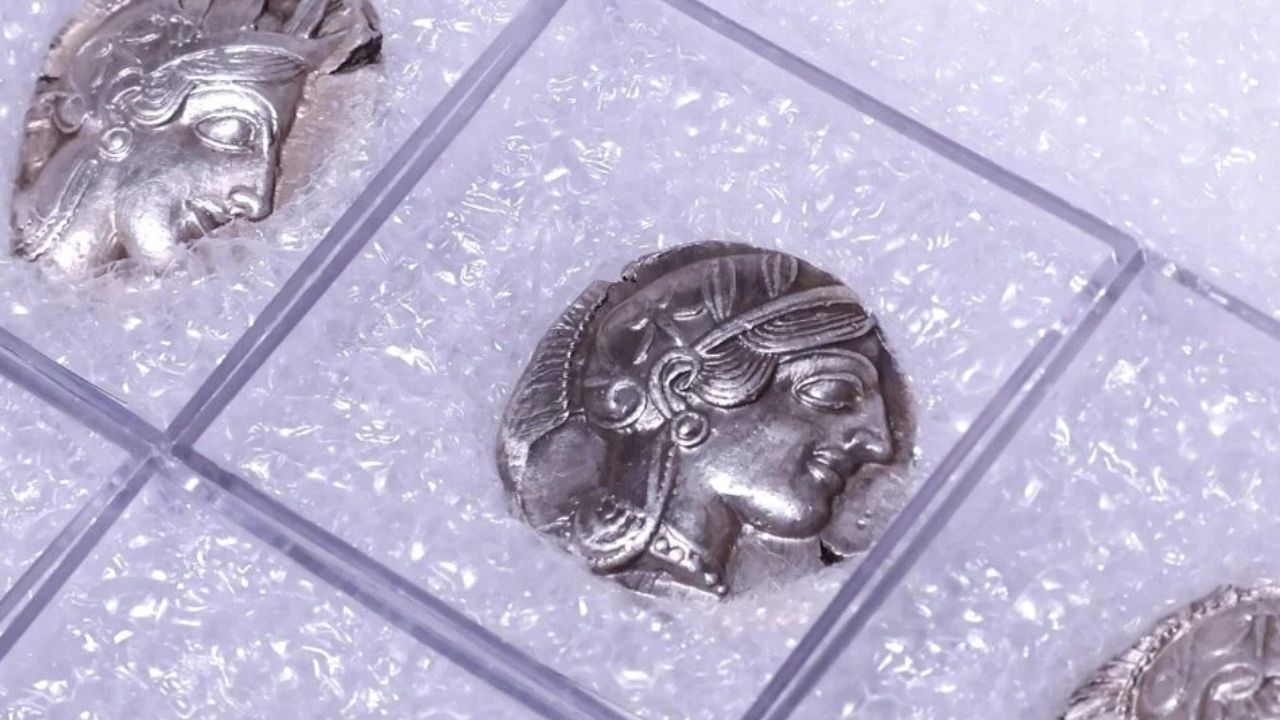
    Most of the cache were tetradrachms — ancient large silver coins — originally minted in Athens and used broadly in the eastern Mediterranean, said Museum Numismatologist Vassiliki Stefanaki, a coinage expert.

    Stamped with the image of an owl, the Athenian relics were also used locally to pay tribute to the Persian Empire, and Persian governors used them to reward their troops, she said.

    Other coins came from Cyprus, the islands of Aegina and Milos, from Asia Minor cities founded by Greek settlers, the Iron Age kingdom of Lydia, and Phoenicia in modern-day Lebanon, officials said.

    Mendoni on Thursday also thanked Turkey for supporting Greece’s campaign to secure the return of the Parthenon Marbles from London.

    The British Museum has long maintained that the Marbles were removed from the Acropolis in Athens by royal decree granted to Lord Elgin, the British ambassador to the Ottoman Empire.

    But in June, Zeynep Boz, the head of the Turkish Culture Ministry’s anti-smuggling committee, told a UNESCO meeting in Paris that no such document had been found in Ottoman archives.

    Her statement was “decisive” in favour of Greece’s position, Mendoni said Thursday.

    Ersoy through a translator said Turkey wanted “with all its heart” to see the Marbles return to Athens.

    “The Greek people should have them, they belong to them,” he said.

    Boz, who attended Thursday’s ceremony in Athens, told AFP that the timing of Greece’s return of the coins was not related to her report in June.

    The five-year delay was caused by the time required by the Greek justice system to authorise the coins’ repatriation, she said.

  • Pokemon is back with a hit new gaming app

    Pokemon is back with a hit new gaming app

    With over 60 million downloads and an estimated $180 million in revenue since late October, a new Pokemon mobile game app is enjoying worldwide success as the latest incarnation of the hit Nintendo-owned franchise.

    Released on October 30, Pokemon Trading Card Game Pocket is a virtual version of the collectible card game that has captivated schoolyards since the late 1990s.

    Developed by The Pokemon Company, a Nintendo subsidiary, it combines opening “boosters”  — the equivalent of sealed card packs — with collecting creatures and online battles.

    “Pokemon TCG Pocket is showing one of the strongest performances of any mobile game of all-time,” Sam Aune, an analyst at digital market intelligence firm Sensor Tower, told AFP.

    The group estimates it generated around $180 million through the Apple and Google app stores in just six weeks.

    Developed by the Japanese games studio Creatures Inc., Pokemon TCG Pocket ranks second among mobile games measured by their first-month revenue, surpassed only by another Pokemon franchise title, Pokemon Go.

    The global phenomenon of 2016, Pokemon Go generated over $200 million in its first month and drove millions of players outdoors to hunt for virtual creatures which appeared on their mobile phone screens.

    As well as creating vast online revenues, the new surge in interest in Pikachu and his fellow cast of characters is spilling over into the offline world.

    Sales of physical cards are rising — and the game is back in fashion among school children.

    “It brings players back into the Pokemon brand,” explained Frederique Tutt, a toy market expert at Circana, a market research firm. “And physical cards remain the heart of the brand, something collectors want to own for playing and trading.”

    – ‘Unchanged experience’ –

    Popularised in the 1990s, the concept of collectible trading cards has since been adapted into many video games.

    From “Gwent” in The Witcher III to “Hearthstone” from the Warcraft universe, card games have carved out a special place in the hearts of gamers.

    Pokemon TCG Pocket has “very effectively brought that card pack opening and playing experience to digital,” says Simon Carless, founder of the analyst firm GameDiscoverCo.

    “It’s actually a very unchanged experience compared to the physical card game — which was smart, and that’s why people love it,” he added.

    On social media, players have been sharing videos of themselves unveiling new cards or participating in tournaments, with the hashtag #PokemonTCG amassing over 1.5 million posts on TikTok.

    Other video game adaptations of the Pokemon trading card universe date back decades.

    A Game Boy title was released in Europe in 2000, followed by another for PCs in the early 2010s.

    While Pokemon TCG Pocket is free to download, players are encouraged to spend money in-app to acquire more cards.

    Sacha Bernard, a 33-year-old teacher from the Paris suburb Creteil, said he was drawn in by nostalgia for the characters and the “short and fast” gameplay sessions.

    “Since it launched, I must have spent around 70 euros,” he told AFP. “It’s really the first time a mobile game has made me spend that kind of money.”

  • Human Rights Watch accuses Israel of ‘acts of genocide’

    Human Rights Watch accuses Israel of ‘acts of genocide’

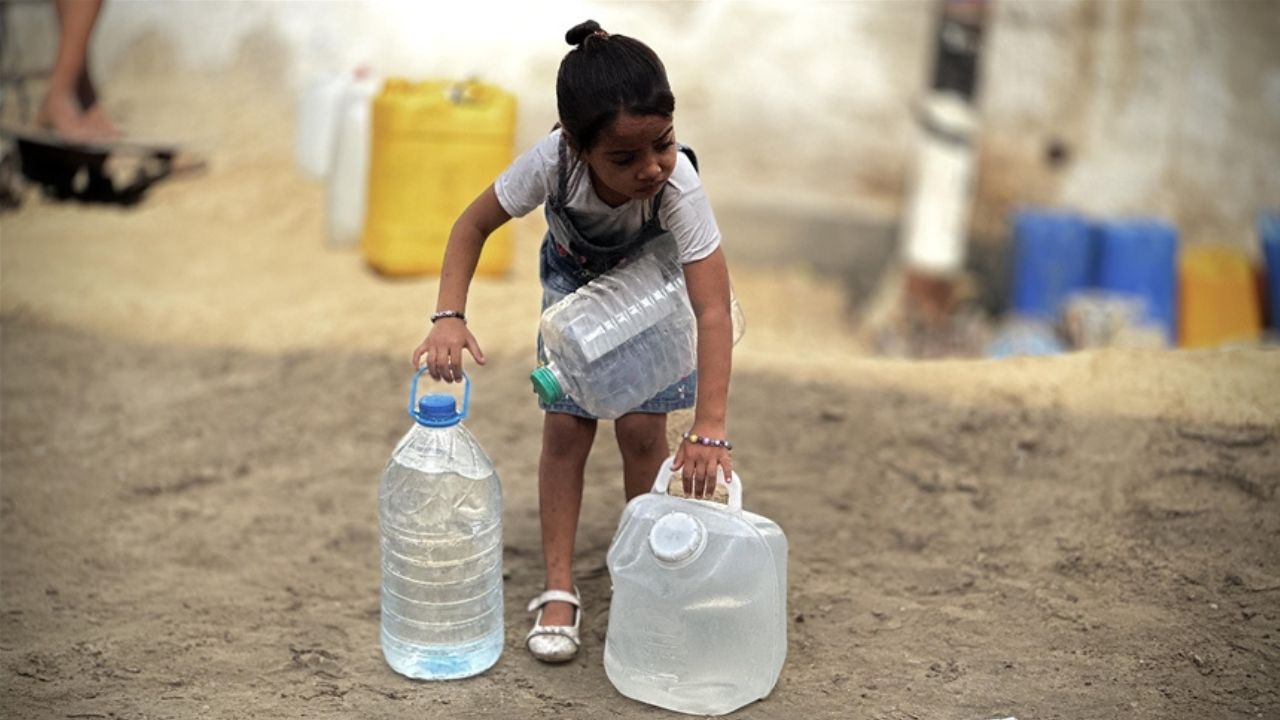
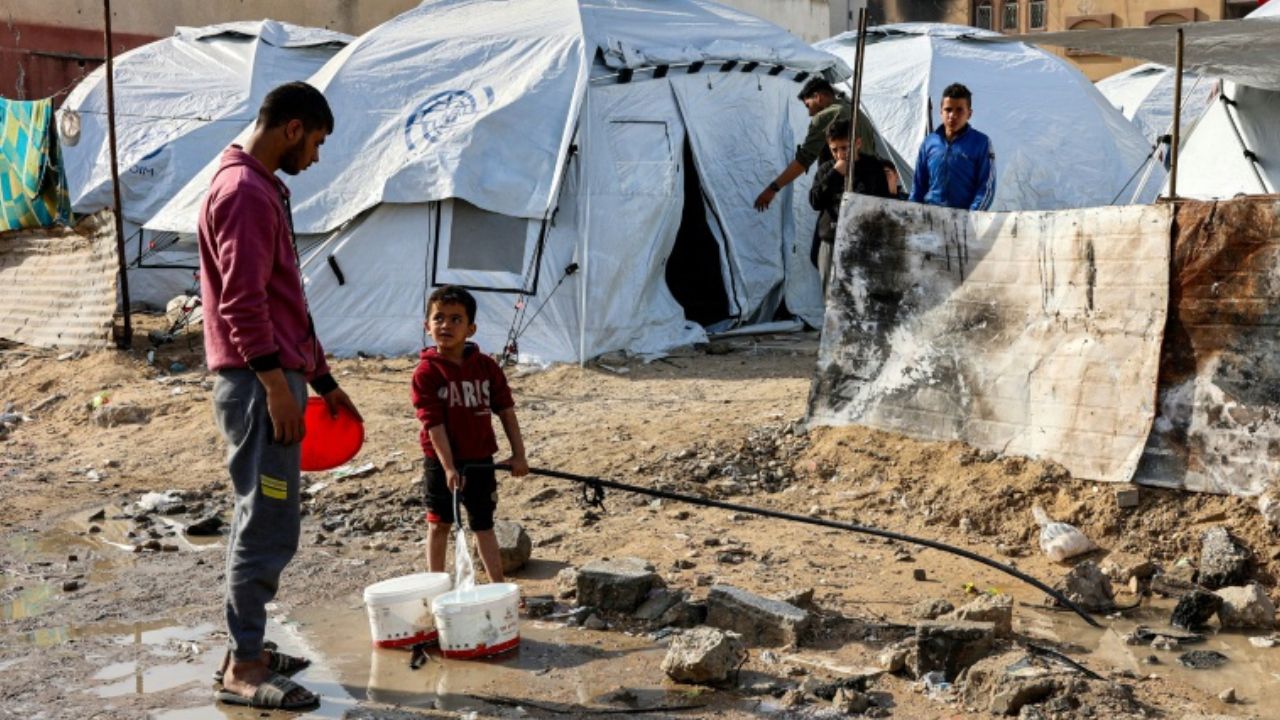
    Human Rights Watch (HRW) on Thursday accused Israel of committing “acts of genocide” in the Gaza Strip for damaging water infrastructure and cutting off supplies to civilians, calling on the international community to impose targeted sanctions.

    In a new report, which focused specifically on water, the New York-based rights group detailed what it said were deliberate efforts by Israeli authorities “of a systematic nature” to deprive Gazans of water, which had “likely caused thousands of deaths… and will likely continue to cause deaths”.

    “Since October 2023, Israeli authorities have deliberately obstructed Palestinians’ access to the adequate amount of water required for survival in the Gaza Strip,” the report said.

    Israel has steadfastly rejected previous similar accusations from rights groups, saying its actions in Gaza are legitimate military operations.

    The HRW report detailed what the group said was the intentional damaging of water and sanitation infrastructure, including solar panels powering treatment plants, a reservoir and a spare parts warehouse, as well as the blocking of fuel for generators.

    Israel also cut electricity supplies, attacked repair workers and blocked the importation of repair materials, it said.

    The report concluded that in doing so, “Israeli authorities intentionally inflicted on the Palestinian population in Gaza ‘conditions of life calculated to bring about its physical destruction in whole or in part.’”

    This, it said, amounted to the war crime of “extermination” and to “acts of genocide”.

    However, HRW stopped short of saying Israel was committing outright “genocide”.

    Under international law, proving genocide requires evidence of specific intent, which experts say is very difficult.

    HRW said only that: “The pattern of conduct set out in this report together with statements suggesting some Israeli officials wished to destroy the Palestinians in Gaza may indicate such intent.”

    Speaking at a briefing on the report, Lama Faqih, director of HRW’s Middle East and North Africa division, said that in the absence of “a clear articulated plan” to commit genocide, the International Court of Justice (ICJ) might find that the evidence meets the “very strict threshold” of reasonable inference of genocidal intent.

    HRW pointed to a statement by then-defence minister Yoav Gallant in October 2023, when he declared a “complete siege” and said: “No electricity, no food, no water, no gas — it’s all closed.”

    Israel is facing a case brought by South Africa at the ICJ last December, arguing that the war in Gaza breached the 1948 United Nations Genocide Convention, an accusation Israel has strongly denied.

    On December 5, Amnesty International accused Israel of committing genocide in the Gaza Strip, drawing a furious reaction from the government.

    Israel denies intentional destruction of the population in Gaza, saying that it facilitates aid to the besieged territory.


    The HRW report, drawn up over nearly a year, is based on interviews with dozens of Gazans, staff at water and sanitation facilities, medics and aid workers, as well as satellite imagery, photographs, videos and data analysis.

    It said Israeli authorities did not reply to requests for information.

    The lack of water left Gazans vulnerable to water-borne diseases and complications, such as infected wounds and the inability to heal due to dehydration, HRW said.

    Medical facilities were also struggling to maintain basic hygiene practices.

    Deaths from such cases “are likely vastly underreported”, the report said.

    Doctors and nurses told HRW “that many of their patients have died from preventable diseases and infections, and healable wounds, due to dehydration and the unavailability of water”.

    One emergency room nurse cited in the report said they were forced to decide “not to resuscitate children who were severely malnourished and dehydrated”.

    The rights group called on Israel to take numerous actions, including to “immediately ensure” sufficient water, fuel and electricity in Gaza.

    It also said the international community must “take all measures within their power to prevent genocide by Israeli authorities in Gaza”.

    That included “discontinuing any military assistance and arms sales or transfers, imposing targeted sanctions, and reviewing bilateral deals and diplomatic relations”.

    The genocide in Gaza was sparked by Hamas’s October 7, 2023 attack on Israel that resulted in the deaths of 1,208 people in Israel, which has, in turn, killed at least 45,097 people in Gaza, a majority of them civilians, according to figures from the Gaza’s territory’s health ministry that the United Nations considers reliable.