Author: AFP

  • Syrians rejoice as opposition take over country, Assad flees to Moscow

    Syrians rejoice as opposition take over country, Assad flees to Moscow

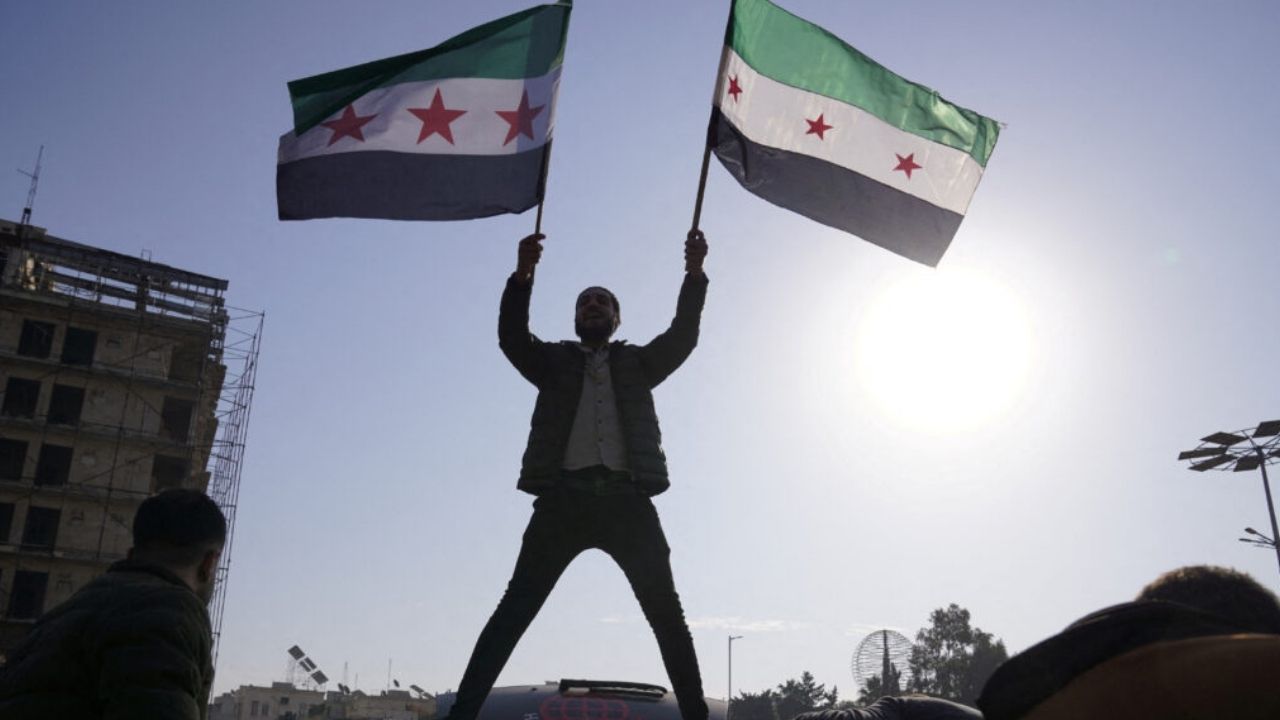
    President Bashar al-Assad fled Syria as Islamist opposition swept into Damascus, triggering celebrations across the country and beyond at the end of his oppressive rule.

    Crowds cheered in the streets of Damascus, where celebratory gunfire erupted as five decades of brutal Baath party rule came crashing to a dramatic end with Assad’s flight from the capital on Sunday.

    Russian news agencies said that Assad and his family were in Moscow, while rescuers on Monday searched the Syrian capital’s notorious Sednaya prison for hidden underground cells holding detainees in secret.

    Assad’s government fell 11 days after the opposition began a surprise advance, more than 13 years after Assad’s crackdown on anti-government protests ignited Syria’s civil war — which had become largely dormant until the rebel push.

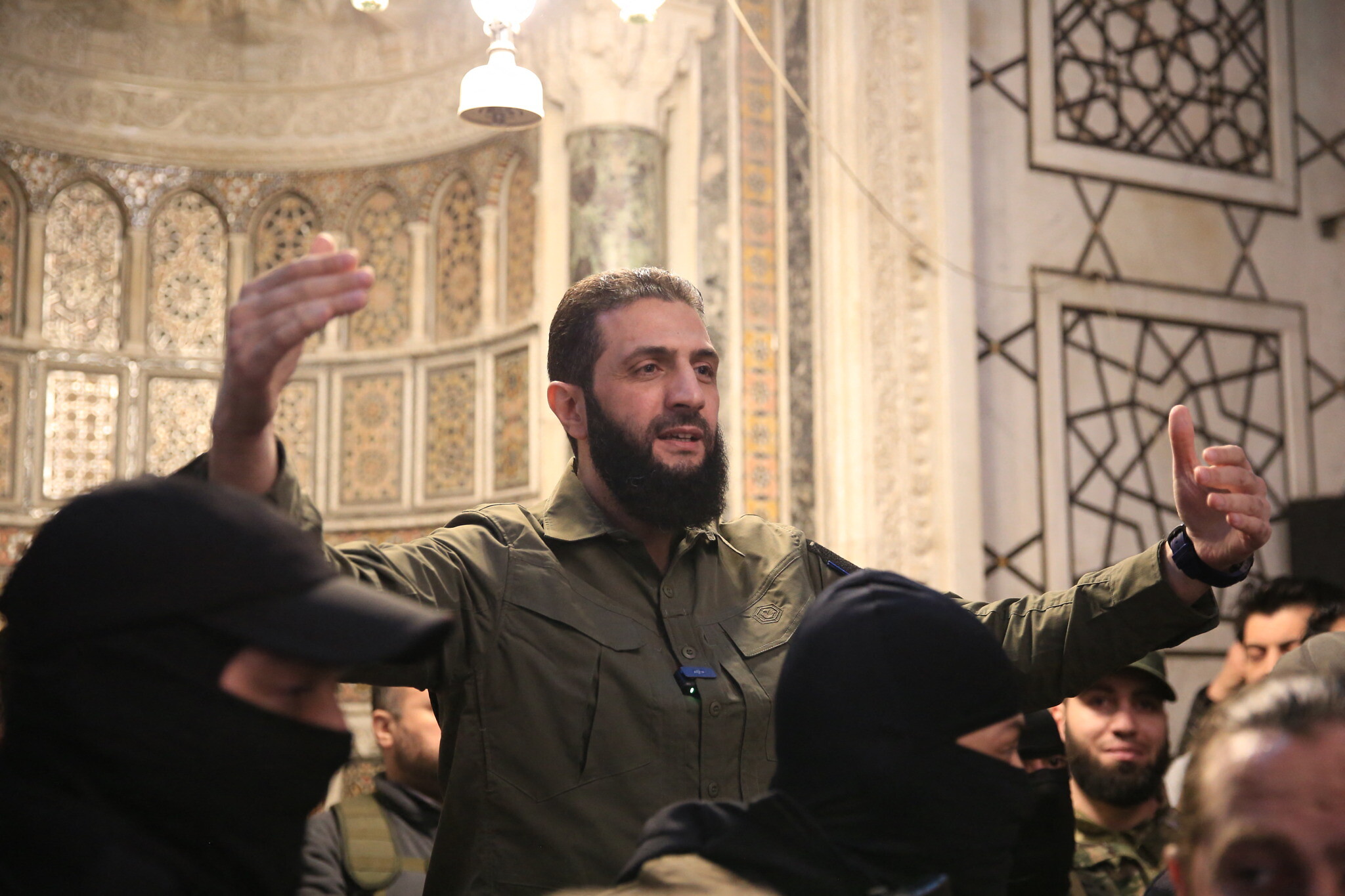
    “This victory, my brothers, is historic for the region,” Abu Mohammed al-Jolani, leader of the Islamist Hayat Tahrir al-Sham group (HTS) that spearheaded the advance, said in an address at the landmark Umayyad Mosque in Damascus.
    1733728684-D5YLBLYRGI.jpg

    ‘Syria is ours’

    Residents cheered in the streets as the rebel factions heralded the departure of “tyrant” Assad, saying: “We declare the city of Damascus free.”

    Celebratory gunfire sounded along with shouts of, “Syria is ours and not the Assad family’s”.

    AFP correspondents saw dozens of men, women and children wandering through Assad’s modern, spacious home whose rooms had been stripped bare.

    “I can’t believe I’m living this moment,” tearful Damascus resident Amer Batha told AFP by phone.

    “We’ve been waiting a long time for this day,” he said.

    The rebel factions on Telegram proclaimed the end to “50 years of oppression under Baath rule, and 13 years of crimes and tyranny and displacement”.

    It is, they said, “the start of a new era for Syria.”

    Search for Damascus prisoners 

    Around the country, people toppled statues of Hafez al-Assad, Bashar al-Assad’s father and the founder of the repressive government he inherited.

    For the past 50 years in Syria, even the slightest suspicion of dissent could mean prison or death.

    During their advance, the opposition said they had freed prisoners, including on Sunday at the Sednaya facility, notorious for the darkest abuses of Assad’s era.

    An intense search was underway at the jail Monday for “hidden underground cells, reportedly holding detainees”, said the White Helmets rescue group which had dispatched emergency teams to the facility.

    “The teams consist of search and rescue units, wall-breaching specialists, iron door-opening crews, trained dog units, and medical responders,” the group said.

    UN war crimes investigators urged those taking charge in the country to ensure the “atrocities” committed under Assad’s rule are not repeated.

    The end of Assad’s rule came just hours after HTS said it had captured the strategic city of Homs.

    Homs was the third major city seized by the opposition, who began their advance on November 27, the same day a ceasefire took place in neighbouring Lebanon between Israel and the Iran-backed Hezbollah movement.

    Hezbollah had supported Assad during the long civil war but has been severely weakened by Israeli strikes.

    Hezbollah forces “vacated their positions around Damascus”, a source close to the group said Sunday.

    HTS is rooted in the Syrian branch of Al-Qaeda but has sought to soften its image in recent years. It remains listed as a terrorist organisation by Western governments.

    The commander of the US-backed, Kurdish-led Syrian Democratic Forces (SDF), which controls much of northeast Syria, hailed the fall of Assad’s “authoritarian regime” as “historic”.

    A military council affiliated with the SDF clashed Sunday with Turkish-backed Syrian fighters in Syria’s north, leaving 26 fighters from both sides dead, the Observatory said, as the Turkish-backed group launched an offensive on the Manbij area.

    World reacts to Syria

    The Observatory said Israel had struck government security buildings and weapons depots Sunday on the outskirts of Damascus, as well as in the eastern Deir Ezzor province.

    Israeli Prime Minister Benjamin Netanyahu said the overthrow of Assad was a “historic day in the… Middle East” and the fall of a “central link in Iran’s axis of evil”.

    The UN envoy for Syria said the country was at “a watershed moment”.

    Russia requested an emergency UN Security Council meeting in New York, which is set for 3:00 pm (2000 GMT) Monday, multiple diplomatic sources told AFP.

    Turkey, which has historically backed the opposition, called for a “smooth transition”.

    Iran said it expected “friendly” ties with Syria to continue, even as its embassy in Damascus was vandalised.

    Since the start of the rebel offensive, at least 910 people have been killed, mostly combatants but also including 138 civilians, the Observatory said.

    Syria’s war has killed more than 500,000 people and forced half of the population to flee their homes.

    Millions fled abroad.

    “I can barely remember Syria,” said Reda al-Khedr, who was only five years old when he and his mother escaped Syria’s Homs in 2014.

    “But now we’re going to go home to a liberated Syria,” he told AFP in Cairo.

    US President Joe Biden said Assad should be “held accountable” but called the nation’s political upheaval a “historic opportunity” for Syrians to rebuild their country.

    The foreign ministry of Assad’s key backer, Russia, had announced earlier Sunday that Assad had resigned from the presidency and left Syria.

    The head of war monitor the Syrian Observatory for Human Rights, Rami Abdel Rahman, told AFP: “Assad left Syria via Damascus International Airport before the army security forces left” the facility.

    Later Sunday, a Kremlin source told Russian news agencies that Assad and his family had arrived in Moscow, where they had been granted asylum “on humanitarian grounds”.

    As the Syrian opposition troops leave their positions, Israel has temporarily seized control of a demilitarized buffer zone in the Golan Heights, claiming that the 1974 disengagement agreement with Syria has “collapsed” with the opposition takeover of the country.

    Residents of the occupied region also celebrated the HTS take over of the country.

    Meanwhile, analysts are saying that Israel is behind toppling Assad’s regime as Prime Minister Benjamin Netanyahu claimed that Assad’s demise was “a direct result of the blows we have inflicted on Iran and Hezbollah, Assad’s main supporters”.
  • UnitedHealthcare CEO fatally shot outside New York hotel

    UnitedHealthcare CEO fatally shot outside New York hotel

    A masked gunman shot dead a top US health insurance executive outside a New York hotel Wednesday in an apparently targeted hit, before fleeing on a bicycle and triggering a citywide manhunt.

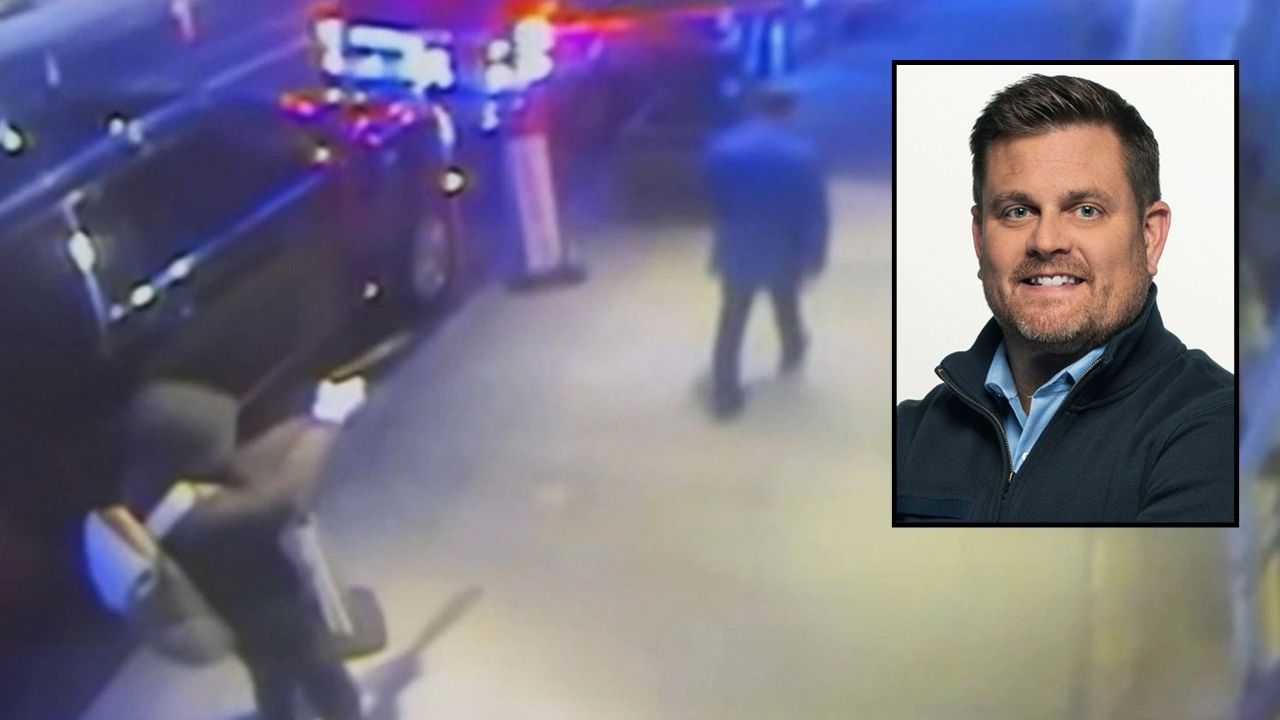
    UnitedHealthcare CEO Brian Thompson was gunned down as he prepared to address investors with the gunman firing several times before using a rented bike to flee in the direction of Central Park, police said.

    Police released security camera images showing the killer brandishing a handgun and wearing a hooded top. Detectives offered a $10,000 reward for the man’s capture.


    Chief of Detectives Joseph Kenny said the shooter arrived on foot about five minutes before Thompson as pedestrians streamed past an access door to the Hilton.

    Kenny said he approached Thompson from behind and opened fire, cleared a jam in the firearm, and fired again.

    “The motive for this murder currently is unknown, but based on the evidence we have so far, it does appear that the victim was specifically targeted. But at this point, we do not know why,” Kenny told a press conference.

    UnitedHealthcare is a major player in the multi-trillion-dollar US health care market, providing workplace insurance, as well as administering huge health care programs like Medicare and Medicaid for older and low-income people funded by state budgets.


    Thompson, 50, was shot just before 7:00 am at the hotel in the Midtown district of Manhattan, with the CNBC broadcaster suggesting a silencer had been used.

    Kenny would not confirm the report of a silencer being used, saying that the question would be part of the investigation but did confirm that a cell phone had been recovered from the scene.

    He said that Thompson apparently had no security detail.

    Video footage showed officers performing CPR on Thompson before he was taken to a nearby hospital where he was later pronounced dead.

    The detective had no comment when asked at the press conference whether the killing could have been carried out by someone who had been denied insurance coverage for a medical condition — a common problem in the United States.

    Minnesota-based Thompson’s wife Paulette Thompson told the NBC News outlet that he had received unspecified threats.

    “There had been some threats basically I don’t know — (over) a lack of coverage? I don’t know details,” said Paulette Thompson who had two children with her late husband.

    In a statement, UnitedHealth Group — the parent company of UHC — said it was “deeply saddened and shocked.”

    Officers said the lighting of the Christmas tree at the nearby Rockefeller Center, a major annual event that draws vast crowds of tourists and locals, would proceed normally amid tightened security.


    Central New York 

    UnitedHealth Group had revenues of $100.8 billion in the third quarter of the year.

    UnitedHealthcare’s Employer and Individual products are used by almost 30 million people in the United States according to an investor presentation.

    Thompson’s own compensation package in 2023 was $10.2 million according to a regulatory filing.

    He had been chief executive of UnitedHealthcare since April 2021, according to a separate Securities and Exchange Commission filing.

    Before that, he oversaw UnitedHealthcare’s government programs including Medicare from July 2019 to April 2021.


    The company was due to hold an investor day in New York on Wednesday at which Thompson was scheduled to deliver a keynote speech.

    The event was canceled, CNBC reported, and the company did not respond to an AFP request for comment.

    The New York Hilton Midtown is one of the city’s biggest hotels, popular with tourists and business travelers, and describes itself as Manhattan’s largest self-contained function space.

    It was not answering calls in the wake of the incident.

    Outside the hotel, senior police commanders briefed officers as plainclothes detectives passed by upturned paper cups placed on the ground to mark evidence.

    The suspect was described as a white man wearing a hooded jacket, black face mask, black and white sneakers, and carrying a grey backpack.

  • Natural disasters cause $310 billion in economic losses in 2024

    Natural disasters cause $310 billion in economic losses in 2024

    Natural disasters have caused an estimated $310 billion in economic losses around the world this year, swelling six percent from 2023 as the climate crisis takes its toll, reinsurance giant Swiss Re said Thursday.

    Insured losses, meanwhile, swelled by 17 percent year-on-year to $135 billion, with the devastating hurricanes Helene and Milton pushing up the costs, Swiss Re said in a statement.

    It marks the fifth consecutive year that insured losses have topped $100 billion, the Swiss company said.

    “Much of this increasing loss burden results from value concentration in urban areas, economic growth, and increasing rebuilding costs,” Balz Grollimund, Swiss Re’s head of catastrophe and perils, said in a statement.

    Swiss Re, which serves as an insurer of insurance companies, emphasised the impact of climate change, with this year set to be declared the hottest year on record.

    “By favouring the conditions leading to many of this year’s catastrophes, climate change is also playing an increasing role,” Grollimund said.

    The company highlighted in particular the swelling insurance cost of floods, with intense flooding in Europe and the United Arab Emirates alone seeing insurers dish out $13 billion.

    2024 was thus the third-costliest year for floods globally and the second costliest for Europe, it said.

    The United States meanwhile saw the highest insured losses.

    Hurricanes Helene and Milton, which struck the southeast United States in quick succession in late September and early October, alone resulted in estimated insured losses approaching $50 billion, Swiss Re said.

    Coupled with a high frequency of severe thunderstorms, this meant the United States accounted for at least two-thirds of 2024’s total global insured losses, its estimates showed.

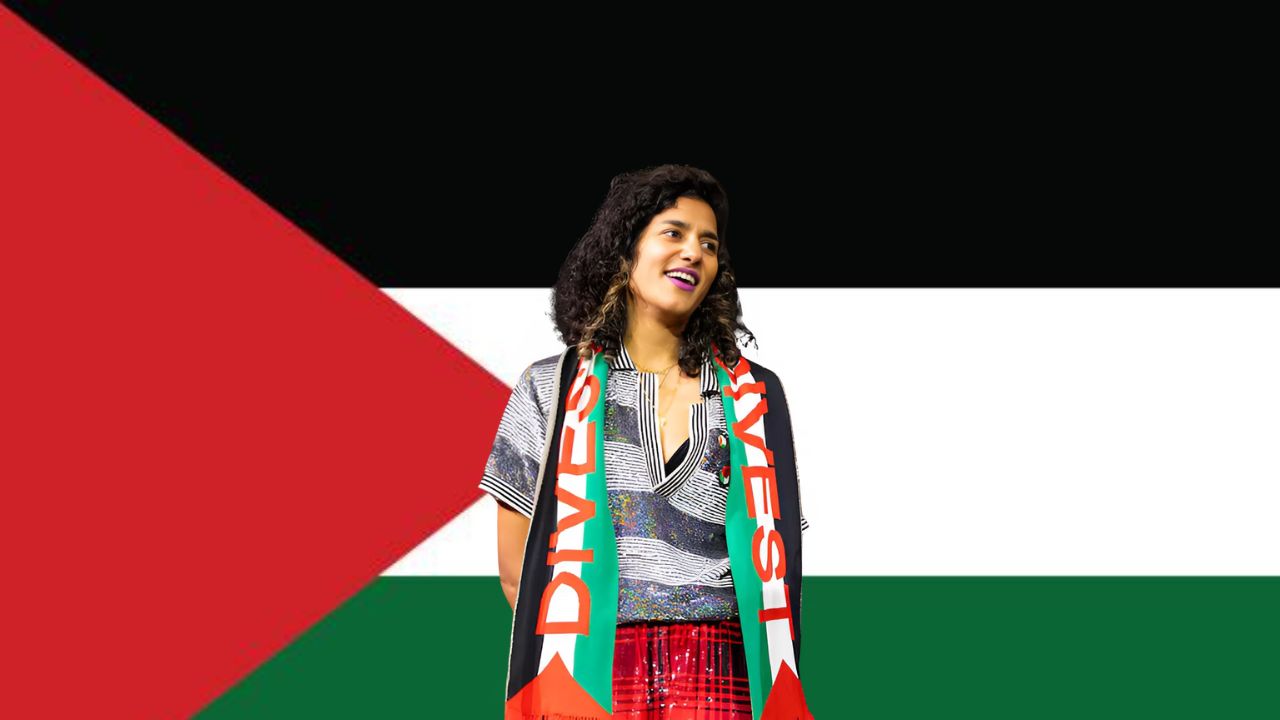
  • Jasleen Kaur speaks up for Palestine after winning Turner Prize 2024

    Jasleen Kaur speaks up for Palestine after winning Turner Prize 2024

    Scottish artist Jasleen Kaur won the prestigious Turner Prize on Tuesday, as the UK contemporary art award celebrated its 40th anniversary.

    Jasleen Kaur was honoured for her solo exhibition Alter Altar, which includes an installation of a Ford Escort car with a giant doily on it.

    She was announced the winner during a ceremony at the Tate Britain gallery in central London.

    The 38-year-old pipped Philippines-born Pio Abad, Manchester-born Claudette Johnson and English artist Delaine Le Bas to the award.

    Kaur walked away with £25,000 ($32,000), while the remaining shortlisted artists were awarded £10,000 each.

    The five jury members chose Kaur for ‘her ability to gather different voices through unexpected and playful combinations of material’.

    During her victory speech, she called for a ceasefire in Gaza and said “Free Palestine“.

    Established in 1984, the Turner Prize is awarded each year to a British artist for an outstanding exhibition or other presentation of their work.

    Previous victors include now-household names such as the duo Gilbert & George, Anish Kapoor, Rachel Whiteread, Antony Gormley, Chris Ofili, Steve McQueen and Damien Hirst.

    British artist Jesse Darling won last year’s prize for his sculptures and installations that invoke societal breakdown.

    The annual award seeks to encourage debate around new advances in contemporary art and is given to a visual artist based or born in Britain.

    But that debate has often spilled over into controversy. Ofili, for example, won in 1998 for incorporating elephant dung into his paintings.

    Hirst in 1995 exhibited pieces including a rotting cow’s head, while Tracey Emin’s 1999 entry ‘My Bed’ – an unmade double bed with stained sheets surrounded by soiled underwear, condoms, slippers and empty drink bottles – attracted huge attention.

  • South Korean president pressed to step down over martial law bid

    South Korean president pressed to step down over martial law bid

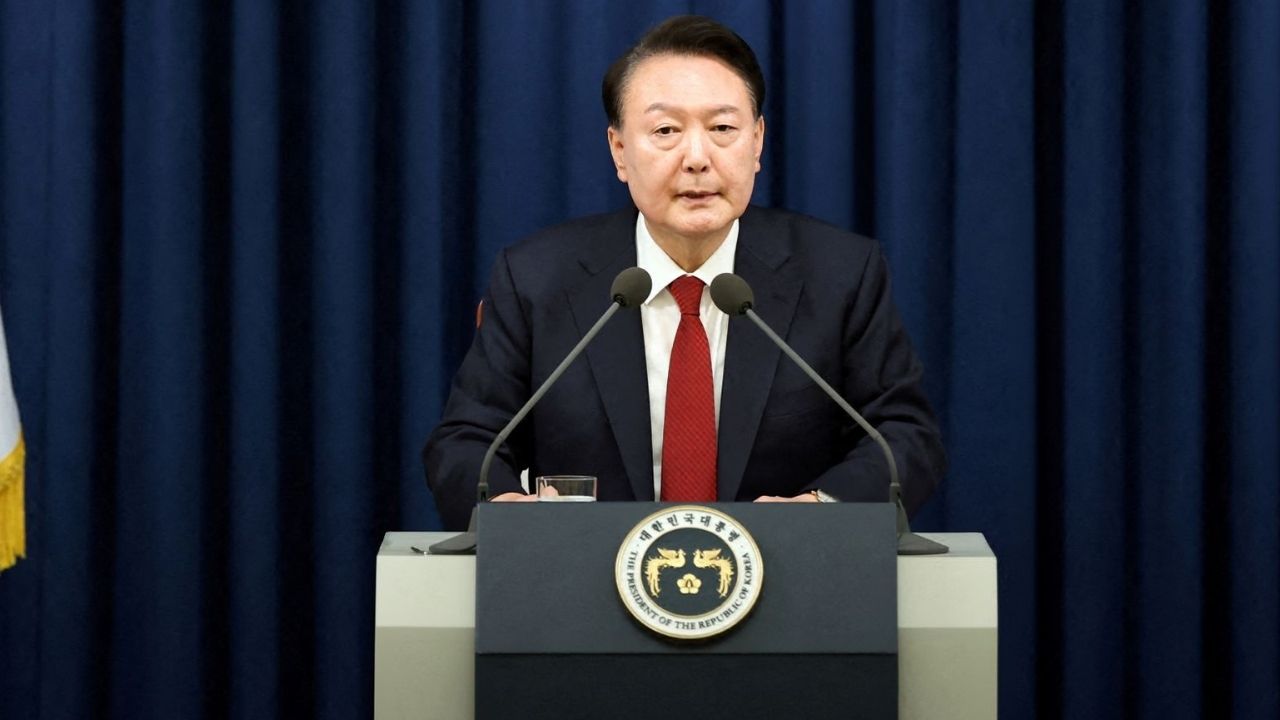
    South Korean President Yoon Suk Yeol faced demands to resign on Wednesday after his short-lived attempt to impose martial law was voted down by lawmakers and brought thousands of protesters to the streets.

    Yoon’s shock bid to impose martial law on South Korea for the first time in over four decades plunged the country into the deepest turmoil in its modern democratic history and caught its close allies around the world off guard.

    The United States, which stations nearly 30,000 troops in South Korea to protect it from the nuclear-armed North, initially voiced deep concern at the declaration, then relief that martial law was over.

    The dramatic developments have left the future of Yoon — a conservative politician and former star public prosecutor who was elected president in 2022 — in jeopardy.

    South Korea’s main opposition party — whose lawmakers jumped fences and tussled with security forces so they could vote to overturn the law — demanded Yoon’s immediate resignation.

    “We will file charges of insurrection,” against Yoon, his defence and interior ministers and “key military and police figures involved, such as the martial law commander and the police chief”, the Democratic Party said in a statement.

    It added that it would also push for impeachment.

    The nation’s largest umbrella labour union called an “indefinite general strike” until Yoon resigned.

    And the leader of Yoon’s own ruling party described the attempt as “tragic” while calling for those involved to be held accountable.

    – Defiance –

    Yoon stunned the world with a late-night television announcement that he was declaring martial law because of the threat of North Korea and “anti-state forces”.

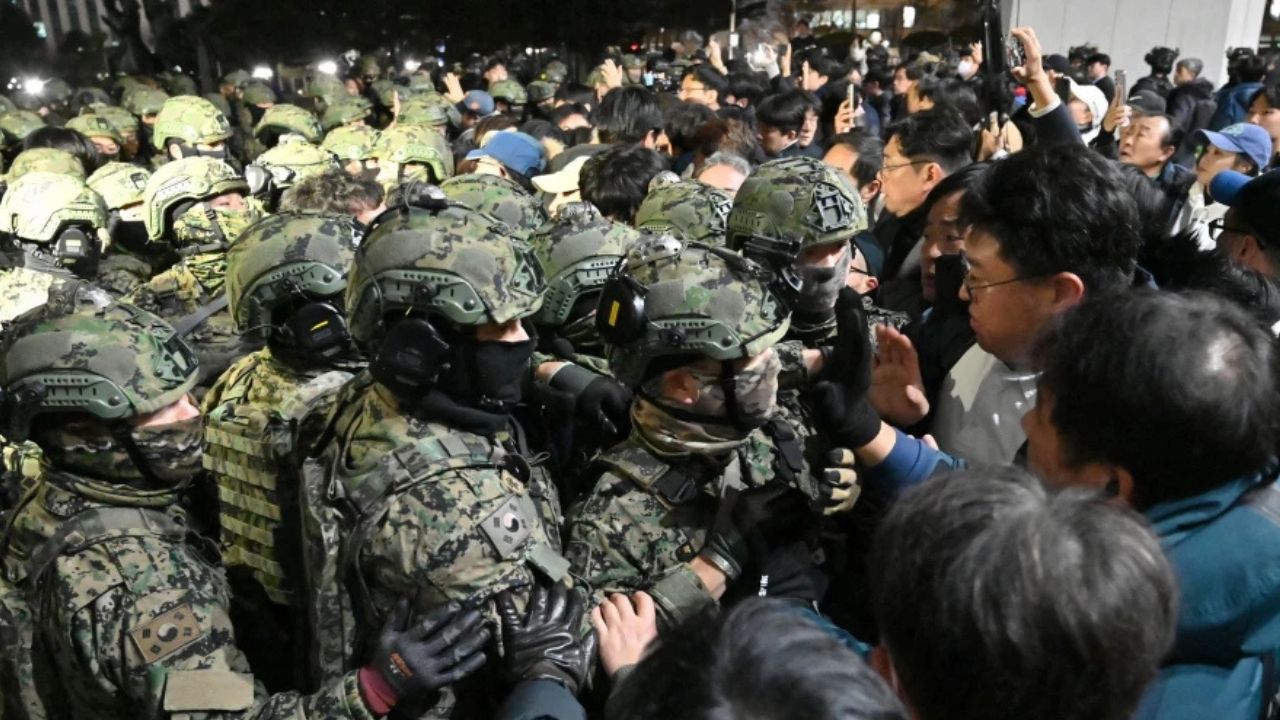
    More than 280 troops backed by 24 helicopters arrived at parliament to lock down the site after the extraordinary declaration.

    But 190 lawmakers defied the rifle-carrying soldiers to force their way into parliament to vote against the move, leaving Yoon with no choice but to retract.

    Under the constitution, martial law must be lifted when a majority in parliament demands it.

    “Just a moment ago, there was a demand from the National Assembly to lift the state of emergency, and we have withdrawn the military that was deployed for martial law operations,” Yoon said in a televised address around 4:30 am (1930 GMT Tuesday).

    “We will accept the National Assembly’s request and lift the martial law through the Cabinet meeting.”

    Senior aides working for Yoon offered Wednesday to resign en masse over the martial law declaration.

    By midday, Yoon had yet to reappear publicly.

    – ‘Impeachment’ –

    The U-turn prompted jubilation among protesters outside parliament who had braved freezing temperatures to keep vigil through the night in defiance of Yoon’s martial law order.

    Demonstrators who had been waving South Korean flags and chanting “Arrest Yoon Suk Yeol” outside the National Assembly erupted in cheers.

    Lim Myeong-pan, 55, told AFP that Yoon’s decision to rescind martial law did not absolve him of wrongdoing.

    “Yoon’s act of imposing it in the first place without legitimate cause is a serious crime in itself,” Lim told AFP.

    “He has paved his own path to impeachment with this.”

    With more protests expected, large numbers of police were patrolling key avenues Wednesday morning.

    – ‘Anti-state’ elements –

    Yoon had given a range of reasons to justify his action.

    “To safeguard a liberal South Korea from the threats posed by North Korea’s communist forces and to eliminate anti-state elements plundering people’s freedom and happiness, I hereby declare emergency martial law,” Yoon said in a televised address.

    Yoon did not give details about the North’s threats, but the South remains technically at war with nuclear-armed Pyongyang.

    “Our National Assembly has become a haven for criminals, a den of legislative dictatorship that seeks to paralyse the judicial and administrative systems and overturn our liberal democratic order,” Yoon said.

    The president labelled the main opposition Democratic Party, which holds a majority in the 300-member parliament, “anti-state forces intent on overthrowing the regime”.

    Yoon and his People Power Party are also bitterly at odds with the opposition over next year’s budget.

    Opposition MPs last week approved a significantly downsized budget plan through a parliamentary committee.

    Yoon’s move came after his approval rating dropped to 19 percent in the latest Gallup poll last week, with many expressing dissatisfaction over his handling of the economy and controversies involving his wife, Kim Keon Hee.

    – Concern, relief –

    Democratic South Korea is a major ally of the United States in Asia, but Washington said it was not given advance notice of Yoon’s plan to impose martial law.

    “We welcome President Yoon’s statement that he would rescind the order declaring emergency martial law,” US Secretary of State Antony Blinken said.

    “We continue to expect political disagreements to be resolved peacefully and in accordance with the rule of law.”

    China, a key ally of North Korea, urged its nationals in the South to stay calm and exercise caution, while Tokyo said it was monitoring the situation with “exceptional and serious concerns”.

    Vladimir Tikhonov, professor of Korea studies at the University of Oslo, said Yoon’s move to impose martial law was “an attempt to wind history back”.

    “I don’t think South Korea’s civil society can recognise Yoon as a legitimate president any longer,” he told AFP.

  • South Korea president declares martial law

    South Korea president declares martial law

    South Korea’s President Yoon Suk Yeol on Tuesday declared martial law, accusing the opposition of being “anti-state forces” and saying he was acting to protect the country from “threats” posed by the North.

    The National Assembly was sealed late on Tuesday night and helicopters were seen landing on the roof, as army chief General Park An-su took charge as martial law commander and immediately issued a decree banning “all political activities”.

    Troops entered the building for a short time, while hundreds of protesters gathered outside parliament chanting: “arrest Yoon Suk Yeol” and facing off with security forces guarding parliament.

    Yoon’s stunning announcement — South Korea’s first declaration of martial law in more than 40 years — came as his party and the opposition bicker over the budget.

    “To safeguard a liberal South Korea from the threats posed by North Korea’s communist forces and to eliminate anti-state elements plundering people’s freedom and happiness, I hereby declare emergency martial law,” Yoon said in a live televised address to the nation.

    Yoon did not give details of the North’s threats, but the South remains technically at war with nuclear-armed Pyongyang.

    “With no regard for the livelihoods of the people, the opposition party has paralysed governance solely for the sake of impeachments, special investigations, and shielding their leader from justice,” Yoon added.

    “Our National Assembly has become a haven for criminals, a den of legislative dictatorship that seeks to paralyse the judicial and administrative systems and overturn our liberal democratic order,” Yoon said.

    With martial law imposed, all military units in the South have been ordered to strengthen their emergency alert and readiness postures, Yonhap news agency reported.

    Some 190 lawmakers managed to get in to the assembly in the early hours of Wednesday, where they unanimously voted in favour of a motion to block the martial law declaration and call for its lifting.

    Under the constitution, martial law must be lifted when a majority in parliament demands it, but it was not immediately clear whether this would be respected.

    Democratic South Korea is a major ally for the United States in Asia, and the US State Department said it had “grave concern” about the situation.

    “We are watching the recent developments in the ROK with grave concern,” Campbell said, referring to South Korea by its official name, the Republic of Korea.

    “We have every hope and expectation that any political disputes will be resolved peacefully and in accordance with the rule of law,” he said.

    China, a key ally of North Korea, urged its nationals in the South to stay calm and exercise caution, while Britain said it was “closely monitoring developments”.

    – ‘Anti-state’ forces –

    The decree by martial law commander Park also banned “actions that deny or seek to overthrow the liberal democratic system, including the spread of fake news, public opinion manipulation, and false propaganda”.

    The president labelled the opposition, which holds a majority in the 300-member parliament, as “anti-state forces intent on overthrowing the regime”.

    Yoon described the imposition of martial law as “inevitable to guarantee the continuity of a liberal South Korea,” adding that it would not impact the country’s foreign policy.

    “I will restore the country to normalcy by getting rid of anti-state forces as soon as possible,” he said, without elaborating further other than the martial law in place.

    He described the current situation as South Korea “on the verge of collapse, with the National Assembly acting as a monster intent on bringing down liberal democracy”.

    – Budget row –

    Yoon’s People Power Party and the main opposition Democratic Party are bitterly at odds over next year’s budget.

    Opposition MPs last week approved a significantly downsized budget plan through a parliamentary committee.

    The opposition has slashed approximately 4.1 trillion won ($2.8 billion) from Yoon’s proposed 677 trillion won budget plan, cutting the government’s reserve fund and activity budgets for Yoon’s office, the prosecution, police and the state audit agency.

    Yoon, a former prosecutor, accused opposition lawmakers of cutting “all key budgets essential to the nation’s core functions, such as combatting drug crimes and maintaining public security… turning the country into a drug haven and a state of public safety chaos.”

    The imposition of emergency martial law came after Yoon’s approval rating dropped to 19 percent in the latest Gallup poll last week, with many expressing dissatisfaction over his handling of the economy and controversies involving his wife, Kim Keon Hee.

  • UK filmmaker Richard Curtis makes first foray into animation

    UK filmmaker Richard Curtis makes first foray into animation

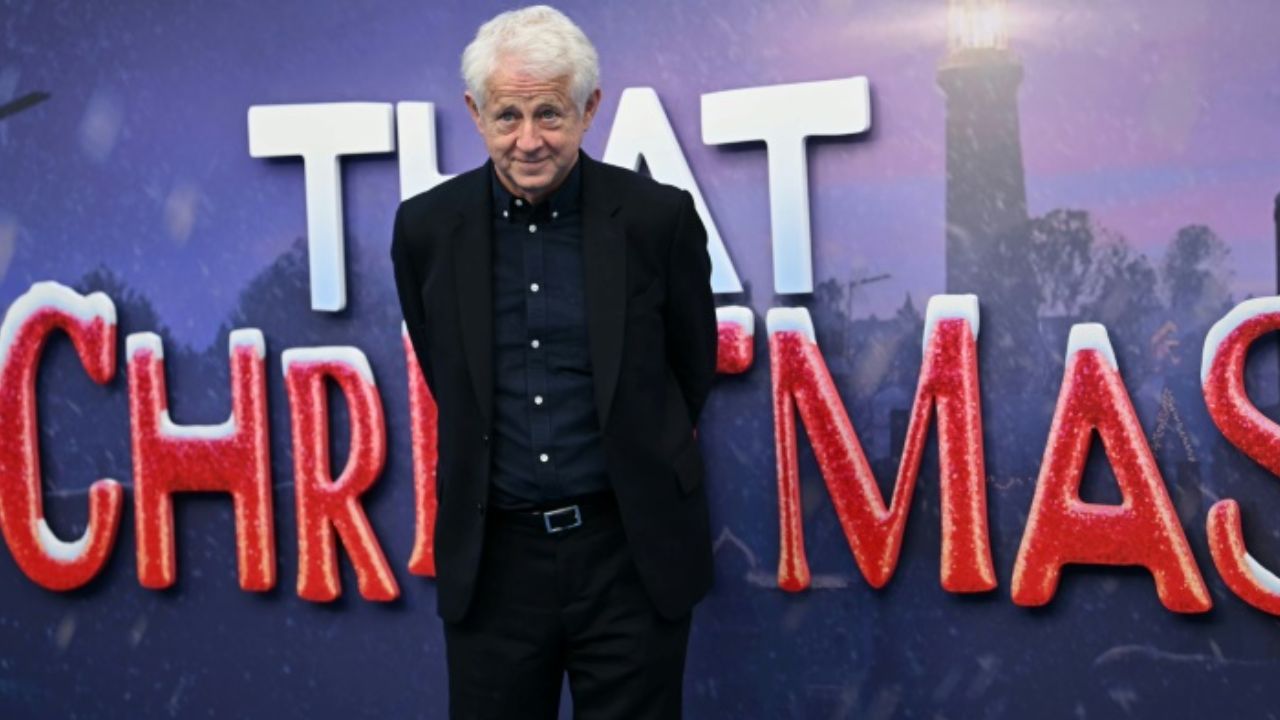
    Two decades after scoring a surprise holiday season global hit with “Love Actually”, British filmmaker Richard Curtis is bidding to repeat the trick with his first foray into animation. 

    The 68-year-old writer and director has co-adapted his own trilogy of children’s books, and commandeered longtime friend Ed Sheeran into contributing an original song, to bring “That Christmas” to the big and small screens.

    Featuring the voices of Brian Cox (“Succession”), Bill Nighy (“Love Actually”) and a host of other acting talent, it hits select UK cinemas this week before its worldwide release on Netflix from December 4.

    Curtis, behind box office successes like “Four Weddings and a Funeral” and “Notting Hill”, before 2003’s “Love Actually”, said his first venture into animated movies was full of surprises, particularly the time-consuming nature of the genre.

    “I’ve been shocked by the amount of time (it takes),” he told AFP as the film premiered at the London Film Festival last month. There were some silver linings, however.

    “My theory is that it means that people working in animation are nicer than people working in normal movies, because they know they’ve got to get on for five years. 

    “You really do get married. It’s not a one night stand — it’s not a sexy holidayy in Ibiza! It’s a long journey together. So I really enjoy it.”

    – ‘Edgy’ –

    “That Christmas” — a series of entwined tales about a town of friends and relatives during a troubled festive period — is a family-friendly offering which still has a grown-up contemporary edge to it.

    It features plenty of jokes and references to everything from Jesus being a hipster to abortion and climate change.

    “If love were easy, your father wouldn’t have run off with his 25-year-old dental nurse,” one of the main animated characters, Mrs Williams, tells her schoolboy son, Danny.

    Curtis said he and co-screenwriter Peter Souter were confident the format meant they could be “modern and sometimes edgy and satirical without crossing any big red lines”.

    “I’ve always thought that you shouldn’t, as it were, dumb down if you’re dealing with kids,” he explained.

    Veteran stage and screen actress Fiona Shaw was equally enthused about contributing to a film not just aimed at adults. 

    “I really love a young audience, because they watch with such enthusiasm and such accuracy and such memory. They remember things,” she said.

    “So I’m hoping that this audience will enjoy Ms Trapper as much as I enjoyed playing it.”

    – Suffolk story –

    Simon Otto, known for his work heading character animation for the “How to Train Your Dragon” films, makes his feature directorial debut on the project, which he said breaks new ground in the genre.

    “In animation, it’s very uncommon to tell multi-thread storylines — it’s usually about a single hero on a fantastical journey,” he explained.

    “Bringing the charm and timelessness of animation to Richard’s real-life stories that have universal appeal and wish-fulfilment felt like a really interesting match to everyone.”

    Curtis revealed that Sheeran wrote and recorded an original song for the film, “Under the Tree”, largely thanks to the story’s setting in the southeast English county Suffolk, where both of them live.

    “Ed is, as it were, the epitome of Suffolk,” the filmmaker explained, while joking the star musician’s involvement could also be down to him looking “like an animated character”.

    “I went round, showed him the film, and he said: ‘Oh, I’d love to write a song for this’. And he did it fast, and it’s a really beautiful song,” said Curtis. “We’re really lucky.”

    Otto noted that the track “really became the heart of the film” as it features at a climactic moment in the movie.

    “It’s building towards this moment,” he said. “And he could be one of our characters.”

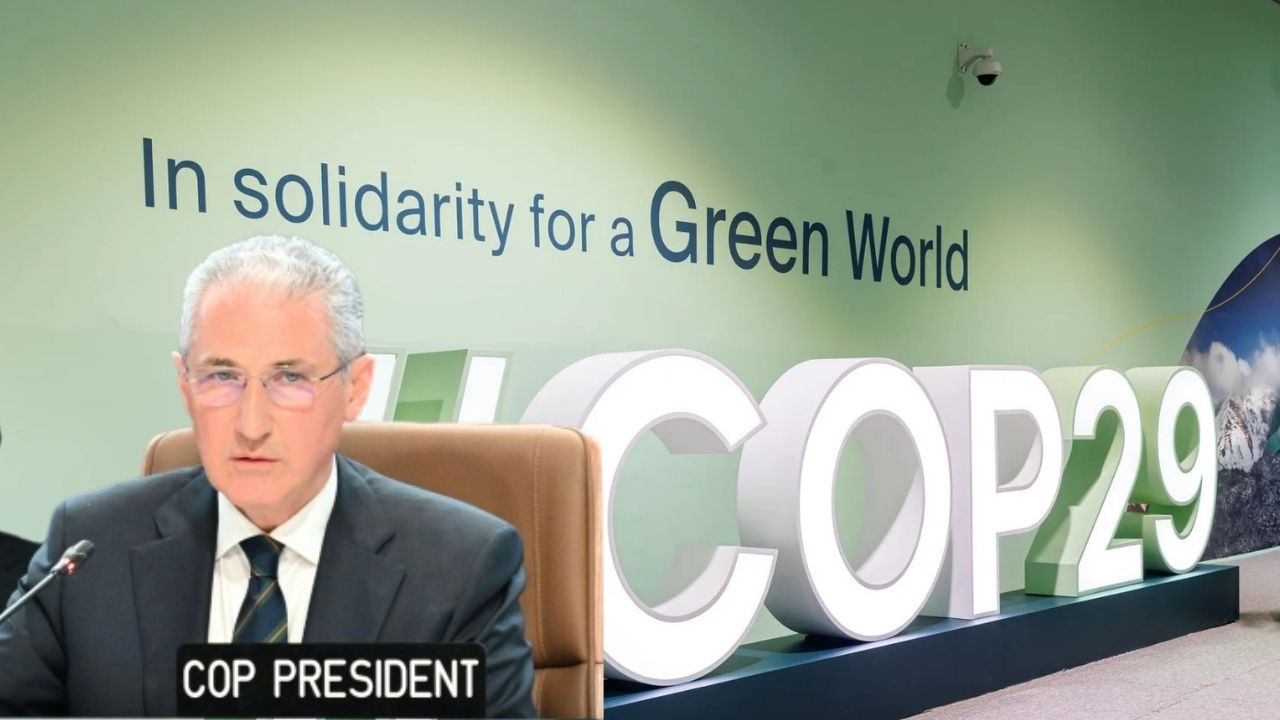
  • COP29 President blames rich countries for ‘Imperfect’ deal

    COP29 President blames rich countries for ‘Imperfect’ deal

    The tough-fought finance deal at UN climate negotiations was “imperfect”, the Azerbaijan COP29 leadership has admitted, seeking to blame richer countries for an outcome slammed by poorer nations as insulting.

    The contentious deal agreed on Sunday saw wealthy polluters agree to a $300 billion a year pledge to help developing countries reduce emissions and prepare for the increasingly dangerous impacts of a warming world.

    COP29 president Mukhtar Babayev conceded that the deal was insufficient to meet escalating needs and suggested that China would have agreed to stump up more cash had others agreed to budge.

    Writing in Britain’s Guardian newspaper on Monday he said wealthy historical emitters had been “immovable” until very late in the negotiating process.

    “This deal may be imperfect. It does not keep everyone happy. But it is a major step forward from the $100 billion pledged in Paris back in 2015,” he said.

    “It is also the deal that almost didn’t happen.”

    Azerbaijan, an authoritarian oil and gas exporter, came under heavy criticism for its handling of COP29, notably France and Germany.

    Babayev banged the deal through in the early hours of Sunday after nearly two weeks of fractious negotiations that at one point appeared on the verge of collapse.

    As soon as the deal was approved, India, Bolivia, Nigeria and Malawi, speaking on behalf of the 45-strong Least Developed Countries group, took to the floor to denounce it.

    Finance was always going to be a thorny issue for the nearly 200 nations that gathered in a sports stadium in Baku to hammer out a new target by 2035.

    Wealthy countries failed to meet the previous goal on time, causing cratering trust in the UN climate process.

    COP29 did set out a wider target of $1.3 trillion per year by 2035 to help developing nations pay for the energy transition and brace themselves for worsening climate impacts.

    The deal envisages that $300 billion mobilised by wealthy nations will be combined with funds from the private sector and financial institutions like the World Bank to reach this larger sum.

    But Babayev said he agreed with developing nations that “the industrialised world’s contribution was too low and that the private sector contribution was too theoretical”.

    Contrasting China’s involvement in the negotiations with that of wealthy historical emitters like the European Union and United States, he said Beijing was “willing to offer more if others did so too (but the others didn’t)”.

    China, the world’s second-biggest economy and top emitter of greenhouse gases, is considered a developing country in the UN process and is therefore not obliged to pay up, although it does already provide climate funding on its own terms.

    The new text states that developed nations would be “taking the lead” but implies that others could join.

    Babayev said the deal was “not enough”, but would provide a foundation to build on in the lead up to next year’s climate talks in Brazil.

  • Ireland has a cultural moment, from rock and books to cinema

    Ireland has a cultural moment, from rock and books to cinema

    From Sally Rooney’s bestsellers to actor Paul Mescal, Ireland, which holds a general election this week, has been enjoying a cultural and creative renaissance in recent years.

    In the past few weeks it’s been hard to miss Rooney’s fourth novel “Intermezzo”, the Grammy nomination of rockers Fontaines DC or Mescal’s muscles on posters and trailers for “Gladiator II”.

    “We’re having a cultural moment and there’s a lot of energy around Irishness at the moment,” said Ruth Barton, professor of film studies at Trinity College Dublin.

    The phenomenal global success of the television adaptation of Rooney’s “Normal People”, which introduced Mescal to the world, has played a key role.

    “I definitely think there’s a new wave of Irish writers, novelists — particularly women — who came up with books on experiences that were not articulated before,” said Christopher Morash, the Seamus Heaney professor of Irish writing at Trinity.

    Irish writers, musicians and filmmakers have all been praised for their humour and being down-to-earth.

    “The profile, internationally in particular, of Irish artists across all arts forms has actually never been higher,” said Maureen Kennelly, director of the Arts Council of Ireland.

    That has led to cross-cultural cooperation, for example, with Oscar-winning actor Cillian Murphy starring in the adaptation of Irish author Claire Keegan’s bestseller “Small Things Like These” and Fontaines DC providing the soundtrack to Andrea Arnold’s film “Bird”.

    It also starred Dubliner and Oscar nominee Barry Keoghan (“The Banshees of Inisherin”).

    Barton said the presence of multinational tech giants such as Meta and Apple in Ireland due to low corporate taxes has helped.

    “The country has more money than it used to have… we’re fundamentally a rich country and we have spent a lot of money on culture,” she added.

    The Arts Council budget has jumped since 2019, Trinity’s drama academy, The Lir, has become a hotbed of new talent, while the country has even launched a trial minimum income for artists, which the main political parties have promised to continue.

    – Pride and plaudits –

    “I think the country has always defined itself through its culture and particularly its writers and poets,” said Barton, pointing to the likes of James Joyce and Samuel Beckett, who earned world renown.

    For Kennelly, periods of cultural booms have coincided with “seismic shifts” in society, the last being the final years of the three decades of sectarian violence over British rule in Northern Ireland.

    That brought the likes of U2 and The Cranberries to the global stage.

    More recently, the approval of same-sex marriage in 2015 then legalisation of abortion in 2018 have also transformed Ireland’s image from conservative to progressive.

    “There’s no doubt that there’s a sense of Irish society increasingly freeing itself from the affects of the (Roman Catholic) Church,” said Kennelly.

    Morash likened Ireland’s outsized cultural influence to that of South Korea, where K-Pop has become its biggest global export.

    “You had a country that was an agricultural one that turned into a pop culture hub,” he added.

    Now Ireland is “cool” overseas because of a new generation of actors: Mescal and Murphy are household names alongside the likes of Saoirse Ronan (“Blitz”, “Lady Bird”, “Brooklyn”), Andrew Scott (“Fleabag”, “Sherlock Holmes”, “Ripley”) and Nicola Coughlan (“Bridgerton”, “Derry Girls”).

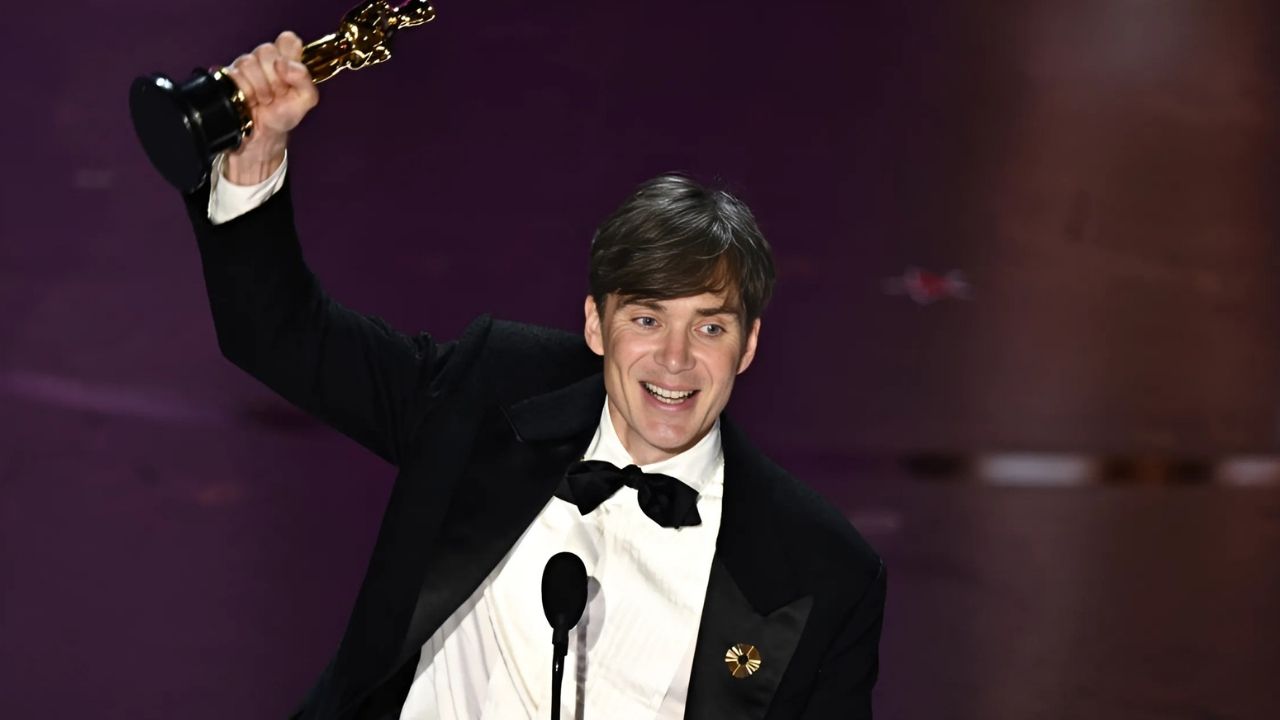
    Murphy, who hails from Cork in Ireland’s deep south, this year spoke of his pride in his country in his best actor Oscar acceptance speech for “Oppenheimer”, ending with a heartfelt thank you — in the Irish language.

    The unexpected success of “Kneecap”, a docu-fiction about three Belfast upstarts who rap in the ancient langauge, marks the beginning of a new turn towards the Irish language “as a kind of medium of cultural expression”, said Barton.

    The film has been named in 14 categories in the British Independent Film Awards in December and selected to represent Ireland in the foreign language category at next year’s Oscars.

  • Ceasefire between Israel, Hezbollah starts now

    Ceasefire between Israel, Hezbollah starts now

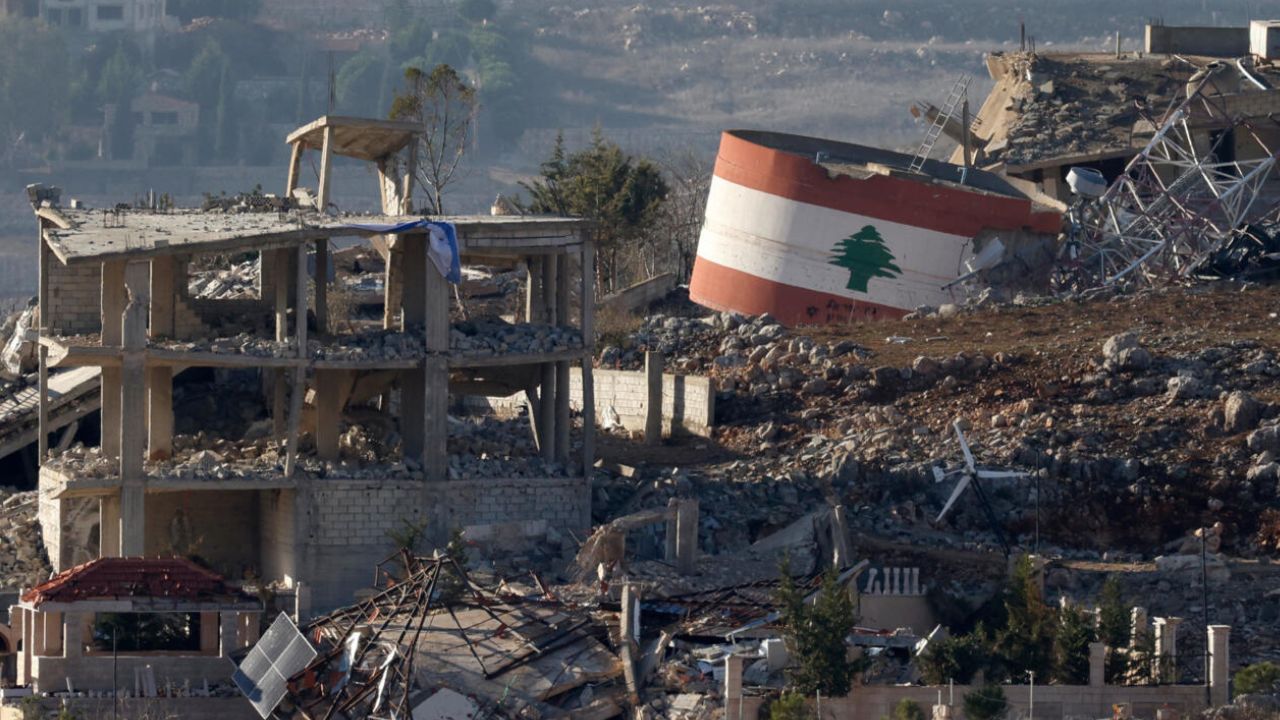
    The ceasefire between Israel and Hezbollah in Lebanon took effect on Wednesday after more than a year of fighting that has killed thousands of people.

    The truce, which began at 4:00 am (0200 GMT), should bring to a halt a war that has forced tens of thousands of people in Israel and hundreds of thousands more in Lebanon to flee their homes. The war has seen areas of Lebanon pounded by air strikes and Israeli troops deployed across the border to battle Hezbollah militants.

    It began with Hezbollah launching cross-border strikes in support of its Palestinian ally Hamas following its October 7, 2023 attack on Israel.

    US President Joe Biden announced the ceasefire agreement on Tuesday, as Israeli Prime Minister Benjamin Netanyahu said his ministers had agreed to a halt.

    The United States is Israel’s key ally and military backer, and Biden hailed the deal as “good news” and a “new start” for Lebanon. 

    Netanyahu thanked Biden for his involvement in brokering the deal and said it would allow Israel to focus on Hamas in Gaza and Iran.

    Under the terms of the Lebanon truce, Israel will maintain “full” freedom to act against Hezbollah if it pose any new threat, Netanyahu said.

    Lebanon says at least 3,823 people have been killed in the country since exchanges of fire began in October 2023, most of them in the past several weeks when Israel escalated its campaign against Hezbollah.

    On the Israeli side, the hostilities with Hezbollah have killed at least 82 soldiers and 47 civilians, authorities say.

    The hours before the truce took effect were some of the most violent in the war.

    Israel conducted a spate of strikes on the heart of the Lebanese capital on Tuesday, while Hezbollah claimed attacks on northern Israel after the truce was announced. 

    Hezbollah did not participate in any direct talks for the truce, with Lebanese parliamentary speaker Nabih Berri mediating on its behalf. It has yet to formally comment on the truce.

     Focus on Iran and Gaza

    The war in Lebanon has left Hezbollah massively weakened but not crushed. It lost its longtime leader, Hassan Nasrallah, in a massive air strike in September, as well as a string of top commanders in other raids.

    A truce in Lebanon, Netanyahu said, will permit Israel to redirect its focus on Gaza, “When Hezbollah is out of the picture, Hamas is left alone in the fight. Our pressure on it will intensify,” Netanyahu said.

    The agreement will also enable “focusing on the Iranian threat” and give Israel’s military time to resupply, he added. 

    Iran is the main backer of both Hezbollah and Hamas, as well as other anti-Israeli groups.

    Iran itself has fired two barrages of missiles and drones at Israel since the outbreak of Israeli aggression in Gaza, most of which were intercepted by Israel or its allies. 

    ‘Blown away’

    In Lebanon, the war has forced nearly 900,000 people to flee their homes, the UN says.

    Biden said the ceasefire deal was designed to be a “permanent cessation of hostilities” between Israel and Hezbollah.

    Under the agreement, the Lebanese army would take control of the border area on their side and “what is left of Hezbollah and other terrorist organisations will not be allowed… to threaten the security of Israel again”, he said.

    Hezbollah was the only armed group that refused to surrender its weapons after the 1975-1990 Lebanese civil war ended.

    To date, the group has maintained a strong presence in parts of Lebanon and its arsenal is believed to be more powerful than that of the national army.

    Divided Lebanon has been in crisis for years and will struggle to return to a semblance of normalcy even after a truce.

    The United States and France would ensure the deal was fully implemented, Biden said.

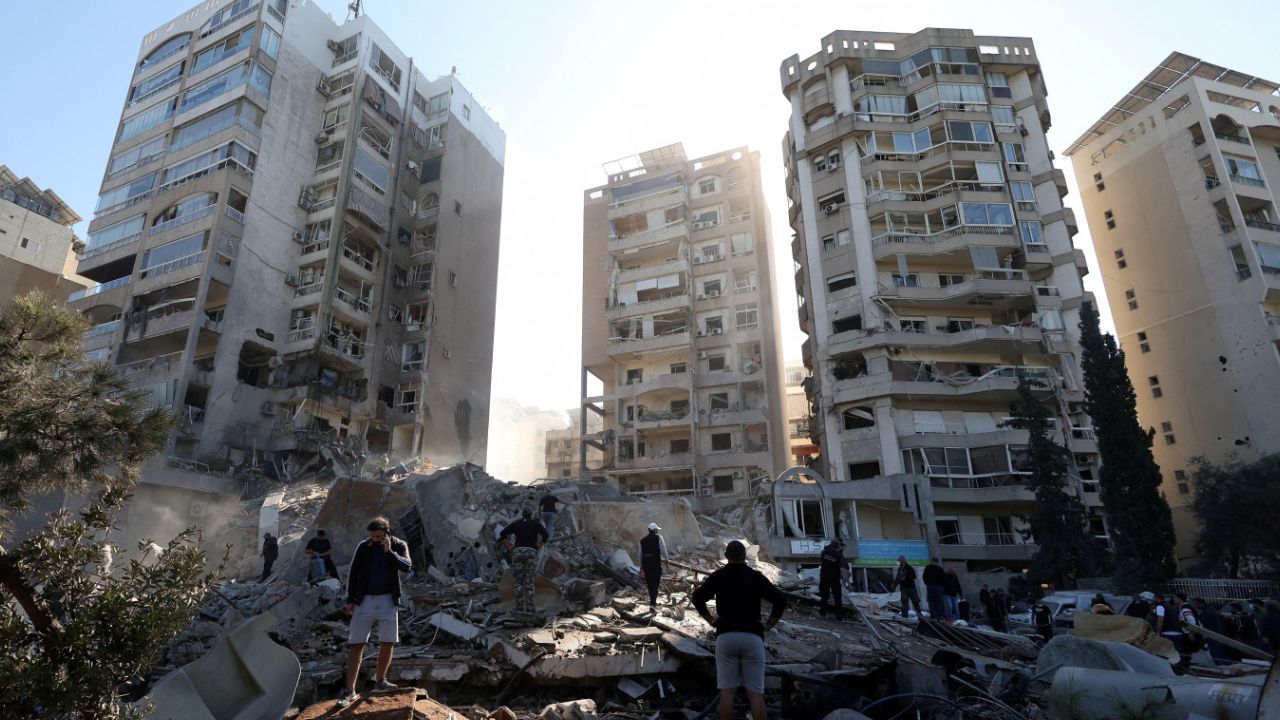
    The announcements followed a flurry of strikes on central Beirut as well as on Hezbollah’s bastion in the southern suburbs.

    One strike hit the normally busy Hamra district, home to residential buildings, restaurants, offices, shops, the American University of Beirut and its associated hospital.

    Earlier, Lebanon’s state-run National News Agency reported that three strikes hit the central Nweiri neighbourhood and destroyed a “four-storey building housing displaced people”.

    “We were blown away and the walls fell on top of us,” said Rola Jaafar, who lives in the building opposite.

    Iran’s response

    Iran on Wednesday welcomed the end of Israel’s “aggression” in Lebanon, after a ceasefire deal came into force between Israel and Hezbollah.

    “Welcoming the news” of the end of Israel’s “aggression against Lebanon”, foreign ministry spokesman Esmaeil Baghaei said in a statement, stressing Iran’s “firm support for the Lebanese government, nation and resistance”.

    United Nations

    A top UN official welcomed the ceasefire agreement but warned that “considerable work lies ahead” to implement the deal.

    “Nothing less than the full and unwavering commitment of both parties is required,” UN Special Coordinator for Lebanon, Jeanine Hennis-Plasschaert, said in a statement.