Author: AFP

  • Climate finance: what you need to know ahead of COP29

    Climate finance: what you need to know ahead of COP29

    Developing countries will need trillions of dollars in the years ahead to deal with climate change- but exactly how much is needed, and who is going to pay for it?

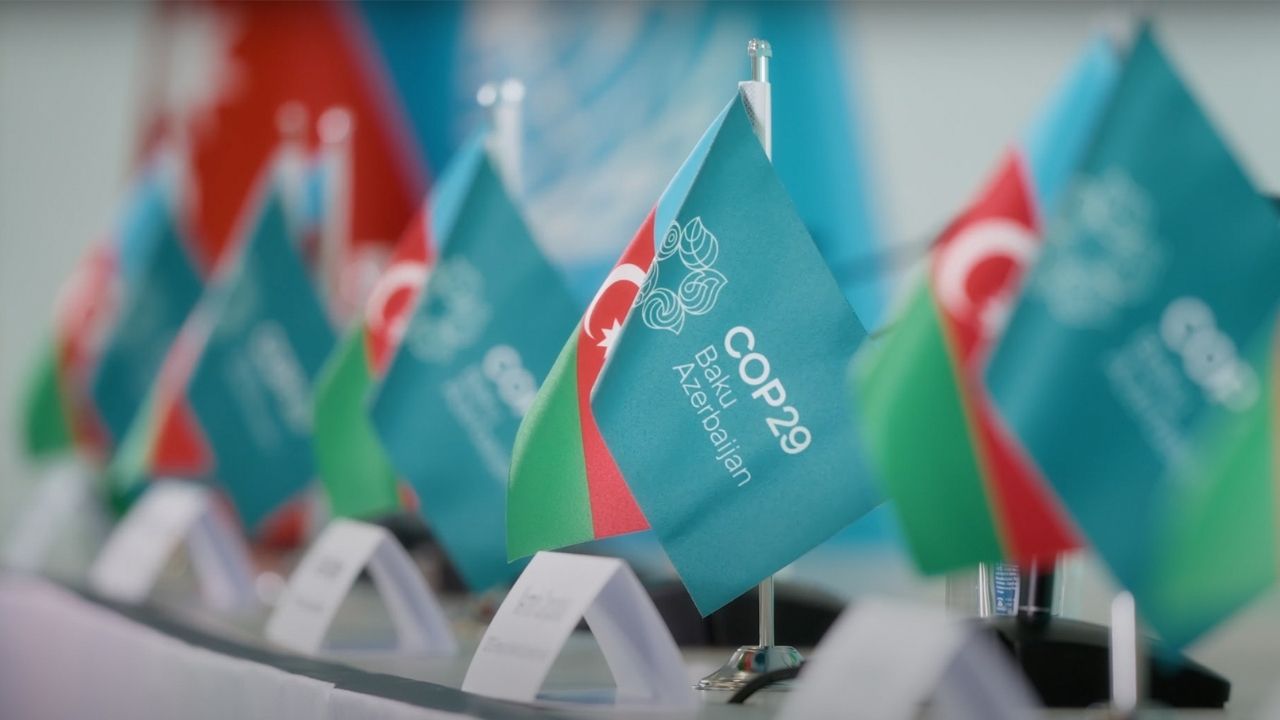
    These difficult questions will be wrestled at this year’s United Nations climate conference, known as COP29, being hosted in Azerbaijan in November.

    What is climate finance?

    It is the buzzword in this year’s negotiations, but there isn’t one agreed definition of “climate finance”.

    In general terms, it’s money spent in a manner “consistent with a pathway towards low greenhouse gas emissions and climate-resilient development”, as per phrasing used in the Paris Agreement.

    That includes government or private money channelled into low-carbon investments in clean energy like wind and solar, technology like electric vehicles, or adaptation measures like dikes to hold back rising seas.

    But could a subsidy for a new water-efficient hotel, for example, be included in climate finance?

    The COPs — the annual UN-sponsored climate summits — have never defined it.

    How much is needed?

    The Climate Policy Initiative, a nonprofit research group, estimates that $10 trillion per year in climate finance will be needed between 2030 and 2050.

    This compares to around $1.3 trillion spent in 2021-2022.

    But in the parlance of UN negotiations, climate finance has come to refer to something more specific — the difficulties that developing nations face getting the money they need to adapt to global warming.

    The line between climate finance and conventional development aid is sometimes blurred.

    But experts commissioned by the UN estimate that developing countries, excluding China, will need an estimated $2.4 trillion per year by 2030.

    Who will pay?

    Under a UN accord adopted in 1992, a handful of countries deemed wealthy, industrialised, and the most responsible for global warming were obligated to provide compensation to the rest of the world.

    In 2009, these countries — the United States, the European Union, Japan, the United Kingdom, Canada, Switzerland, Turkey, Norway, Iceland, New Zealand and Australia — committed to paying $100 billion per year by 2020.

    They only achieved this for the first time in 2022. The delay eroded trust and fuelled accusations that rich countries were shirking their responsibility.

    At COP29, nearly 200 nations are expected to agree on a new finance goal beyond 2025 — but deep divisions remain over how much should be paid, and who should pay it.

    India has called for $1 trillion annually, a ten-fold increase in the existing pledge, but countries on the hook to pay it want other major economies to chip in.

    They argue times have changed since 1992. Economies have grown, new powers have emerged, and today the big industrialised nations of the early 1990s represent just 30 percent of historic greenhouse gas emissions.

    In particular, there is a push for China — the world’s largest polluter today — and the Gulf countries to pay, a proposal they do not accept.

    Where will they find the money?

    Today, most climate finance aid goes through development banks or funds co-managed with the countries concerned, such as the Green Climate Fund and the Global Environment Facility.

    Campaigners are very critical of the $100 billion pledge because two-thirds of the money was distributed as loans, often at preferential rates, but seen as compounding debt woes for poorer nations.

    Even revised upwards, it is likely any future commitment will fall well short of what is needed.

    But it is viewed as highly symbolic nonetheless, and crucial to unlocking other sources of money, namely private capital.

    Financial diplomacy also plays out at the World Bank, the International Monetary Fund and the G20, where hosts Brazil want to craft a global tax on billionaires.

    The idea of new global taxes, for example on aviation or maritime transport, is also supported by France, Kenya and Barbados, with the backing of UN chief Antonio Guterres.

    Redirecting fossil fuel subsidies towards clean energy or wiping the debt of poor countries in exchange for climate investments are also among the options.

    Another proposal, from COP29 host Azerbaijan, has floated asking fossil fuel producers to contribute to a new fund that would channel money to developing countries.

    As for the “loss and damage” fund created at COP28 to support vulnerable nations cope with extreme weather events, it is still far from up and running, with just $661 million pledged so far.


  • More than 95,000 Japanese aged over 100, most of them women

    More than 95,000 Japanese aged over 100, most of them women

    The number of people in Japan aged 100 or older has hit a record high of more than 95,000 — almost 90 percent of them women — government data showed Tuesday.

    The figures further highlight the slow-burning demographic crisis gripping the world’s fourth-biggest economy as its population ages and shrinks.

    As of September 1, Japan had 95,119 centenarians, up 2,980 year-on-year, with 83,958 of them women and 11,161 men, the health ministry said in a statement.

    On Sunday, separate government data showed that the number of people over the age of 65 hit a record high of 36.25 million, accounting for 29.3 percent of Japan’s population.

    The proportion puts Japan at the top of a list of 200 countries and regions with a population of over 100,000 people, the Ministry of Internal Affairs and Communications said.

    Japan is currently home to the world’s oldest living person, Tomiko Itooka, who was born on May 23, 1908 and is 116 years old, according to the US-based Gerontology Research Group.

    The previous record-holder, Maria Branyas Morera, died last month in Spain at the age of 117.

    Itooka lives in a nursing home in Ashiya, Hyogo prefecture in western Japan, the ministry said.

    She often says “thank you” to the nursing home staff and expresses nostalgia about her hometown, the ministry said.

    “I have no idea at all about what’s the secret of my long life,” Japan’s oldest man, Kiyotaka Mizuno, who is 110, told local media.

    Mizuno, who lives in Iwata, Shizuoka prefecture in central Japan with his family, gets up at 6:30 am every morning and eats three meals a day — without being picky about his food.

    His hobby is listening to live sports, including sumo wrestling, the ministry said.

    Japan is facing a steadily worsening population crisis, as its expanding elderly population leads to soaring medical and welfare costs, with a shrinking labour force to pay for it.

    The country’s overall population is 124 million, after declining by 595,000 in the previous,  according to previous government data.

    The government has attempted to slow the decline and ageing of its population without meaningful success, while gradually extending the retirement age — with 65 becoming the rule for all employers from fiscal 2025.

  • AI is ‘accelerating the climate crisis’, expert warns

    AI is ‘accelerating the climate crisis’, expert warns

    If you care about the environment, think twice about using AI.

    Generative artificial intelligence uses 30 times more energy than a traditional search engine, warns researcher Sasha Luccioni, on a mission to raise awareness about the environmental impact of the hot new technology.

    Recognized as one of the 100 most influential people in the world of AI by the American magazine Time in 2024, the Canadian computer scientist of Russian origin has sought for several years to quantify the emissions of programs like ChatGPT or Midjourney.

    “I find it particularly disappointing that generative AI is used to search the Internet,” laments the researcher, who spoke with AFP on the sidelines of the ALL IN artificial intelligence conference in Montreal.

    The language models on which the programs are based require enormous computing capacities to train on billions of data points, necessitating powerful servers.

    Then, there’s the energy used to respond to each individual user’s requests.

    Instead of simply extracting information, “like a search engine would do to find the capital of a country, for example,” AI programs “generate new information,” making the whole thing “much more energy-intensive,” she explains. According to the International Energy Agency, the combined AI and the cryptocurrency sectors consumed nearly 460 terawatt hours of electricity in 2022 — two percent of total global production.

    Energy efficiency

    A leading researcher on the impact of AI on climate, Luccioni participated in 2020 in the creation of a tool for developers to quantify the carbon footprint of running a piece of code. “CodeCarbon” has since been downloaded more than a million times.

    Head of the climate strategy of startup Hugging Face, a platform for sharing open-access AI models, she is now working on creating a certification system for algorithms.

    Similar to the program from the US Environmental Protection Agency that awards scores based on the energy consumption of electronic devices and appliances, it would make it possible to know an AI product’s energy consumption in order to encourage users and developers to “make better decisions.”

    “We don’t take into account water or rare materials,” she acknowledges, “but at least we know that for a specific task, we can measure energy efficiency and say that this model has an A+, and that model has a D,” she says.

    Transparency

    In order to develop her tool, Luccioni is experimenting with it on generative AI models that are accessible to everyone, or open source, but she would also like to do it on commercial models from Google or ChatGPT-creator OpenAI, which have been reluctant to agree.

    Although Microsoft and Google have committed to achieving carbon neutrality by the end of the decade, the US tech giants saw their greenhouse gas emissions soar in 2023 because of AI: up 48 percent for Google compared to 2019 and 29 percent for Microsoft compared to 2020.

    “We are accelerating the climate crisis,” says Luccioni, calling for more transparency from tech companies.

    The solution, she says, could come from governments that, for the moment, are “flying blindly,” without knowing what is “in the data sets or how the algorithms are trained.”

    “Once we have transparency, we can start legislating.”

    ‘Energy sobriety’

    It is also necessary to “explain to people what generative AI can and cannot do, and at what cost,” according to Luccioni.

  • Zimbabwe to slaughter 200 elephants amid food shortages

    Zimbabwe to slaughter 200 elephants amid food shortages

    Zimbabwe will cull 200 elephants as it faces an unprecedented drought that has led to food shortages while also tackling a ballooning population of the animals, the country’s wildlife authority said Friday.

    The country has “more elephants than it needed”, Zimbabwe’s environment minister said in parliament on Wednesday, adding that the government had instructed the Zimbabwe Parks and Wildlife Authority (ZimParks) to begin the culling process.

    The 200 elephants will be hunted in areas where they have clashed with humans, including Hwange, home of Zimbabwe’s largest natural reserve, ZimParks Director General Fulton Mangwanya told AFP.

    Zimbabwe is home to an estimated 100,000 elephants and has the second-biggest elephant population in the world after Botswana. Thanks to conservation efforts, Hwange is home to 65,000 of them, more than four times its capacity, according to ZimParks. Zimbabwe last culled elephants in 1988.

    Neighbouring Namibia has already killed 160 in a cull of more than 700 elephants to cope with its worst drought in decades.

    Zimbabwe and Namibia are among a swathe of countries in southern Africa that have declared a state of emergency because of drought.

    However, the move to hunt the animals for food was not welcomed across the board.

    “[The] Government must have more sustainable eco-friendly methods to dealing with drought without affecting tourism,” said Farai Maguwu, director of the nonprofit Centre for Natural Resource Governance. “They risk turning away tourists on ethical grounds. The elephants are more profitable alive than dead.”

    He added, “We have shown that we are poor custodians of natural resources, and our appetite for ill-gotten wealth knows no bounds, so this must be stopped because it is unethical.”

    On the other hand, Chris Brown, a conservationist and CEO of the Namibian Chamber of Environment, said that “elephants have a devastating effect on habitat if they are allowed to increase continually, exponentially”.

    “They really damage ecosystems and habitats, and they have a huge impact on other species which are less iconic and therefore matter less in the eyes of the eurocentric, urban armchair conservation people,” he said. “Those species matter as much as elephants. “

  • Justin Timberlake given community service in drunk driving case

    Justin Timberlake given community service in drunk driving case

    Pop star Justin Timberlake was handed a sentence of community service on Friday after he changed his plea to guilty following his arrest for drunk driving, US media reported.

    On June 18, the 43-year-old entertainer was pulled over in the town of Sag Harbor, about 100 miles (160 kilometers) east of New York City, after police observed his BMW go through a stop sign and struggle to stay within road lanes.

    Sag Harbor Village Justice Court justice Carl Irace handed Timberlake a community service sentence and ordered the star to make a public statement after the singer pleaded guilty to a lesser charge of driving while alcohol impaired, broadcaster NBC reported.

    The charge is a traffic violation that carries a fine between $300 to $500 and a 90-day license suspension.

    Timberlake told Irace that he would be willing to perform between 25 and 40 hours of community service to settle the case, NBC reported.

    – ‘Selfish’ star –

    “I try to hold myself to a very high standard for myself. This was not that. I found myself in a position where I could have made a different decision,” Timberlake said outside the court.

    “Even if you’ve had one drink, don’t get behind the wheel of a car, there’s so many alternatives,” added Timberlake, who wore a dark cardigan and a pearl necklace.

    “I grew up in a small town so I can appreciate and understand the strain, or unique nature, of what this must have been for the people of Sag Harbor… I’m very grateful and I thank them.”

    Sag Harbor is an upmarket community in the exclusive Hamptons, notorious for its decadent parties and a favorite destination for the rich and famous, many of whom have summer houses on Long Island.

    The officer who pulled over the “Selfish” singer said he was in no fit state to drive, although Timberlake has always insisted he had only one martini at the American Hotel during an evening with friends.

    “His eyes were bloodshot and glassy, a strong odor of an alcoholic beverage was emanating from his breath, he was unable to divide attention, he had slowed speech, he was unsteady afoot, and he performed poorly on all standardized field sobriety tests,” the police report said.

    Timberlake’s lawyer, Edward Burke Jr, said that the star was respectful during his encounter with police.

    “Contrary to what was reported, (Timberlake) wasn’t drinking other people’s drinks, or warned in advance not to drive, he wasn’t rude, he wasn’t obnoxious, he wasn’t belligerent. In fact he was polite and he was cooperative,” he said outside court.

    “His plea today to a reduced and amended non-criminal charge, which is a traffic violation, is consistent with these facts.”

  • Sweden offers immigrants $34,000 to leave country

    Sweden offers immigrants $34,000 to leave country

    Sweden plans to boost payments to up to $34,000 to immigrants who leave the nation that has been a haven for the war-weary and persecuted, the right-wing government said on Thursday.

    The Scandinavian country was for decades seen as a “humanitarian sup­erpower” but, over the years, has struggled to integrate many of its newcomers. Immigrants who voluntarily return to their countries of origin from 2026 would be eligible to receive up to 350,000 Swedish kronor, the government, which is prop­ped up by the anti-immigration Swe­d­en Democrats, told a press conference.

    “We are in the midst of a paradigm shift in our migration policy,” Migration Minister Johan Forssell told reporters as the government presented its latest move to crack down on migration.

    Currently, immigrants can receive up to 10,000 kronor per adult and 5,000 kronor per child, with a cap of 40,000 kronor per family. Immigr­ants groups could not immediately be reached for comment on the change.

    “The grant has been around since 1984, but it is relatively unknown, it is small and relatively few people use it,” Ludvig Aspling of the Sweden Democrats told reporters.

    Forssell said only one person had accepted the offer last year. Aspling added that if more people were aware of the grant and its size was increased, more would likely take the money and leave.

    He said the incentive would most likely appeal to the several hundred thousand migrants who were either long-term unemployed, jobless or whose incomes were so low they needed state benefits to make ends meet. “That’s the group we think would be interested,” Aspling said.

    A government-appointed probe last month advised the government against significantly hiking the amount of the grant, saying the expected effectiveness did not justify the potential costs.

    The Nordic nation has struggled for years to integrate immigrants, and the head of the inquiry, Joakim Ruist, said that a sizeable financial inc­rease would send a signal that mig­rants were undesirable, further hampering integration efforts. Other European cou­ntries also offer grants as an ince­ntive for migrants to return home.

    Denmark pays more than $15,000 per person, compared to around $1,400 in Norway, $2,800 in France and $2,000 in Germany.

    Sweden’s Prime Min­i­ster Ulf Kris­t­e­r­sson came to power in 2022 with a minority government propped up by the Sweden Democrats, vowing to get tough on immigration and crime. The Sweden Democrats emerged as the second-largest party. Sweden has offered generous foreign development aid since the 1970s and has taken in large numbers of migrants since the 1990s.

  • Trump rules out holding another TV debate with Harris

    Trump rules out holding another TV debate with Harris

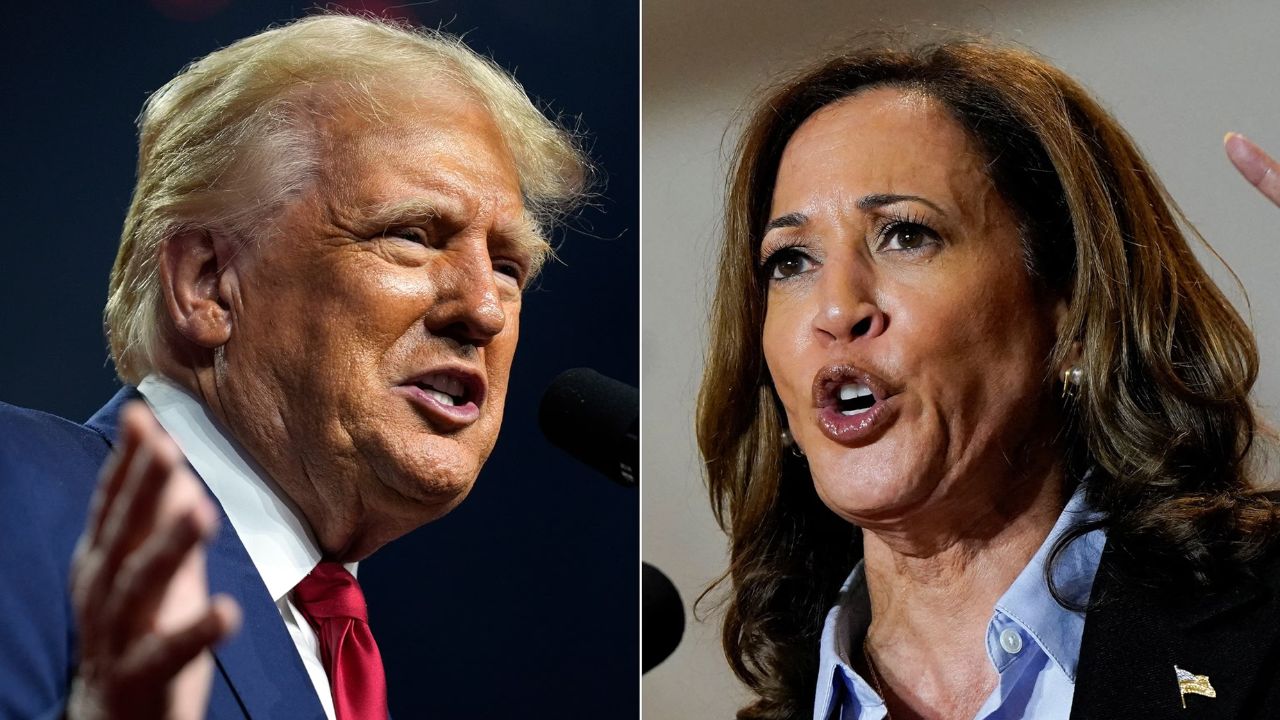
    Donald Trump on Thursday announced he will not participate in another televised debate with his Democratic rival Vice President Kamala Harris ahead of November´s presidential election.

    “There will be no third debate!,” the Republican candidate wrote on his Truth Social platform, including in his tally the earlier debate with US President Joe Biden in June and his Tuesday showdown with Harris.

    The Democratic candidate put Trump on the defensive in their ABC News-hosted clash, watched by 67 million people. Almost immediately, her campaign called for a second showdown in October.

    The day after the debate, Trump said he “would do NBC and would do Fox, too.” However, his latest statement, issued in his characteristic mix of all-caps segments and insults, made clear he has bowed out — while claiming that Harris is just desperate for a second chance.

    “Polls clearly show that I won the Debate against Comrade Kamala Harris, the Democrats’ Radical Left Candidate, on Tuesday night, and she immediately called for a Second Debate,” he wrote in his post.

    “When a prizefighter loses a fight, the first words out of his mouth are, ‘I WANT A REMATCH,’” he said.

    CNN snap poll of viewers said Harris performed better than Trump by 63% to 37, while a YouGov poll said Harris laid out a clearer plan by 43 to 32%.

    A debate between the vice presidential running mates, Democratic Minnesota Governor Tim Walz and Republican Senator J.D. Vance, from Ohio, is currently set to be hosted by CBS News on October 1.

  • Pakistani man with ties to Iran charged in ‘plot to kill US official’

    Pakistani man with ties to Iran charged in ‘plot to kill US official’

    Pakistani man with ties to Iran has been charged for allegedly plotting to kill a US official in retaliation for the assassination of Revolutionary Guards comm­ander Qassem Solei­mani, prosecutors said on Wednesday.

    Asif Raza Merchant, 46, allegedly sought to hire a hitman to assassinate a politician or a US government official in the United States, the Justice Department and prosecutors said in a statement.

    “As these terrorism and murder for hire charges against Asif Merchant demonstrate, we will continue to hold accountable those who would seek to carry out Iran’s lethal plotting against Americans,” Attorney General Merrick Garland said.

    Soleimani was killed in a US drone strike in Baghdad in January 2020.

    “As alleged, Merchant orchestrated a plot to assassinate US politicians and government officials. Today’s indictment is a message to terrorists here and abroad,” US Attorney Breon Peace added.

    The intended victim was not identified, but the attorney general has previously said no evidence has emerged to link Merchant with the July 13 murder attempt against former president Donald Trump in Butler, Pennsylvania.

    FBI Director Christo­pher Wray has said the Pakistani national had “close ties to Iran” and that the alleged murder-for-hire plot was “straight out of the Iranian playbook”. Another FBI official said the assassins Merchant allegedly tried to hire were undercover FBI agents.

    “After spending time in Iran, Merchant arrived in the US from Pakistan and contacted a person he believed could assist him with the scheme to kill a politician or government official,” the Justice Department said.

    “That person reported Merchant’s conduct to law enforcement and became a confidential source.”

    Merchant was arrested on July 12 as he planned to leave the country.

    Iran’s mission to the United Nations said in August it had “not received any report on this from the American government”.

    “But it is clear that this method is contrary to the Iranian government’s policy of pursuing Soleimani’s killer,” the mission said in a statement carried by Iran’s official IRNA news agency.

    In 2022, the US charged a Revolutionary Guards member with plotting to assassinate former US National Security Adviser John Bolton. The Justice Department said Shahram Poursafi, who remains at large, had offered to pay an individual in the United States $300,000 to kill Bolton.

  • Harris takes fight to Trump in fiery presidential debate

    Harris takes fight to Trump in fiery presidential debate

    Kamala Harris went on the offensive against Donald Trump in a fiery televised debate Tuesday, getting under her rival’s skin as they battled for a breakthrough in an agonizingly close election.

    In a performance that earned her the endorsement of pop superstar Taylor Swift, the Democrat clashed with the “extreme” Republican on hot-button issues from abortion to democracy and accused him of being a friend to dictators.

    Trump repeatedly raised his voice as he hit back at the vice president on immigration and the economy, branding her a “Marxist” and blaming her for what he said were the failings of President Joe Biden’s administration.

    The former president claimed after that the ABC News-hosted clash in Philadelphia was his “best debate”, while Harris’s campaign also claimed victory and challenged him to a second debate in October.

    With less than two months until the election, Harris, 59, was under pressure to deliver in front of an audience expected to run into the tens of millions after her sudden replacement as the Democratic candidate in place of Biden.

    She started on the front foot by surprising Trump by approaching him to shake his hand before they took to their lecterns.

    Then the niceties ended.

    Trump, who only a few weeks ago had believed himself to be cruising to victory, reacted to pressure from Harris by resorting to the kinds of finger-jabbing insults and meandering invective that he uses at his rallies.

    Harris responded by looking on in amusement and occasionally exclaiming “c’mon”, before declaring that she represents a fresh start after the “mess” of the Trump presidency — and saying: “We’re not going back.”

    ‘Eat you for lunch’

    One of their most intense exchanges was on abortion.

    Trump insisted that while having pushed for the end of the federal right to abortion, he wanted individual states to make their own policy.

    Harris said he was telling a “bunch of lies” and called his policies “insulting to the women of America.”

    Within minutes, Trump hammered at the Democrat’s weak spot on immigration by falsely claiming that she and Biden had allowed “millions of people pouring into our country from prisons and jails, from mental institutions and insane asylums.”

    Harris pointed out that Trump is a convicted felon, called him “extreme” and  said it is “a tragedy” that throughout his career he had used “race to divide the American people.”

    The rivals also clashed on foreign policy, with Harris telling Trump that Russian President Vladimir Putin would “eat you for lunch” when it came to the war in Ukraine and that foreign dictators were “laughing” at him.

    Trump shot back by accusing Harris of being weak on the war in Gaza, saying she “hated Israel” and that Israel would be “gone” within two weeks if she was president.

    Another jarring clash came as Trump doubled down on his unprecedented refusal to accept losing to Biden in the 2020 election, before trying to overturn the result.

    Harris responded by mocking his catchphrase as a reality TV star, saying that Trump had been “fired by 81 million people.”

    Swift endorsement

    Taylor Swift broke her silence on US politics minutes after the debate, backing Harris as president and praising her as a “steady-handed, gifted leader.”

    Her message on Instagram — which received 3.6 million likes in the space of an hour — was signed off “childless cat lady” in a jibe at an insult that Trump’s running mate J.D. Vance directed at Democrat-supporting women.

    The last presidential debate in June had resulted in a crushing victory for Trump, after Biden delivered a catastrophic performance that ended up dooming his reelection campaign.

    Biden said the Harris-Trump debate “wasn’t even close”, in a post on X.

    Trump had long seemed invulnerable. He has been convicted of falsifying business records to cover up an affair with an adult film star, found liable for sexual abuse, and faces trial on charges of trying to overturn the 2020 election — and still is polling neck-and-neck with Harris.

    But Harris clearly needled him on one of his favorite, if less serious topics: the size of his trademark rallies.

    Attendees, she said, prompting an angry retort, were leaving early out of “exhaustion and boredom.”

    At another moment where Trump appeared to be losing his cool, he talked at length about a debunked conspiracy theory that Haitian immigrants have been eating local people’s pets in Ohio.

    “They’re eating the dogs, the people that came in, they’re eating the cats,” he said before being corrected by the ABC News moderator that the authorities in the town of Springfield have said this did not happen.

  • Bangladesh to seek Hasina’s extradition from India

    Bangladesh to seek Hasina’s extradition from India

    Bangladesh’s war crimes tribunal is to seek the extradition of ousted leader Sheikh Hasina from neighbouring India, its chief prosecutor has said, accusing her of carrying out “massacres”.

    Weeks of student-led demonstrations in Bangladesh escalated into mass protests last month, with Hasina quitting as prime minister and fleeing by helicopter to old ally India on August 5, ending her iron-fisted 15-year rule.

    “As the main perpetrator has fled the country, we will start the legal procedure to bring her back,” Mohammad Tajul Islam, chief prosecutor of Bangladesh’s Interna­tional Crimes Tribunal (ICT), told reporters on Sunday.

    The ICT was set up by Hasina in 2010 to probe atrocities during the 1971 independence war from Pakistan.

    Hasina’s government was accused of widespread human rights abuses, including the mass detention and extrajudicial killing of her political opponents.

    “Bangladesh has a criminal extradition treaty with India which was signed in 2013, while Sheikh Hasina’s government was in power,” Islam added.

    “As she has been made the main accused of the massacres in Bangladesh, we will try to legally bring her back to Bangladesh to face trial”.

    Hasina, 76, has not been seen in public since fleeing Bangladesh.

    Her presence in India has infuriated Bangladesh. Dhaka has revoked her diplomatic passport, and the countries have a bilateral extradition treaty which would permit her to return to face criminal trial.

    Read more: Ousted Bangladeshi leader becomes diplomatic headache for India