Author: AFP

  • Six dead In Tokyo heatwave

    Six dead In Tokyo heatwave

    Six people have died of heatstroke in Tokyo as Japan swelters under a rare rainy season heatwave, prompting authorities to issue a flurry of health warnings.

    Over the weekend, the central Shizuoka region became the first in Japan to see the mercury reach 40 degrees Celsius (104 Fahrenheit) this year, far surpassing the 35-degree threshold classified by weather officials as “extremely hot”.

    Such severe heat in the middle of Japan’s rainy season is “rather rare”, caused in part by a strong South Pacific high-pressure system, a weather agency official told AFP.

    Temperatures also hit record highs near 40 degrees Celsius on Monday at observation posts in Tokyo and in the southern Wakayama region, according to local media.

    The past few days, authorities have issued heatstroke alerts in much of the country, urging residents to avoid exercising outside and to use air conditioning.

    The capital logged three deaths linked to heatstroke on Saturday and three more on Monday, when the mercury hovered around 35 degrees Celsius at midday, according to the city’s medical examination office.

    “Without the AC on, I find it difficult to survive,” Tokyo resident Sumiko Yamamoto, 75, told AFP, adding she feels “it’s gotten drastically hotter” since last year.

    “Through the advice given on TV, I try to stay hydrated as much as possible. Because I’m old, I’m being careful not to collapse,” she said.

    Heatstroke is particularly deadly in Japan, which has the second-oldest population in the world after Monaco.
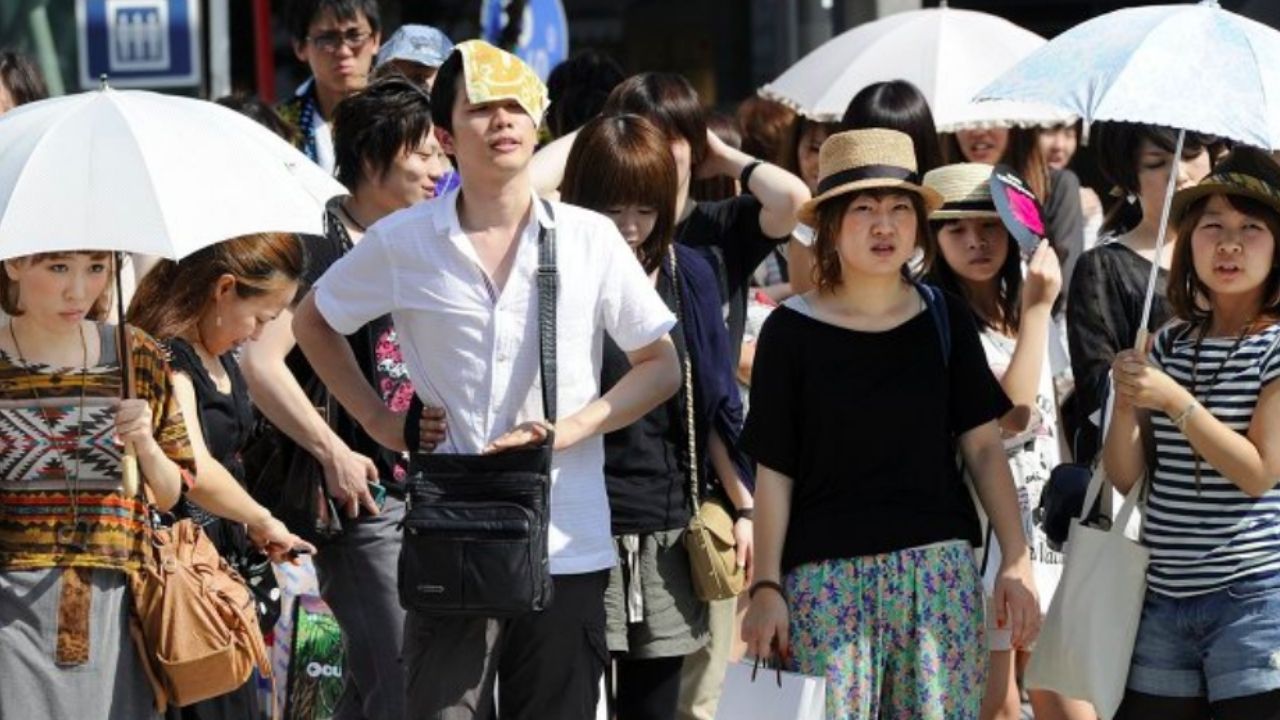
    Yamamoto’s age puts her in the demographic flagged by health experts as particularly vulnerable to heatstroke, along with infants and those living alone or who are too poor to afford air conditioning.

    The Japanese Association for Acute Medicine on Monday warned of the rising death toll from heat exhaustion nationwide, which grew from just a few hundred per year two decades ago to around 1,500 in 2022.

    The sheer number of fatalities suggests that heatstroke now poses a danger on par with that of “a major natural disaster”, the group said, warning against non-essential outings.

    Tokyo business executive Mikio Nakahara, 67, says the difference between Tokyo 50 years ago and now is stark.

    “Tokyo wasn’t as hot as it is now,” he told AFP.

    But these days, “I try to work remotely as much as possible so I don’t have to go outside.”

    With ever-hotter summers becoming the norm around the world, tourists like Ainhoa Sanchez, 29, aren’t too surprised by Tokyo’s temperatures.

    “So the plan is going sightseeing a little bit. Drinking a lot of liquids. Maybe when we get too hot, we can get into a shop, look around, chill a bit and then go back to the street,” she told AFP.

  • ‘Despicable Me 4’ tops N.American box office on opening weekend

    ‘Despicable Me 4’ tops N.American box office on opening weekend

    Animated comedy “Despicable Me 4” rose to the top of the North American box office on its first weekend in theaters, according to figures from industry watcher Exhibitor Relations published Sunday.

    The fourth major installment of the Minions universe — which features Will Ferrell voicing a new villain — racked up $75 million in ticket sales in the United States and Canada since its Friday release by Universal Pictures.

    “This is an outstanding opening for the 4th episode of an animation series, ranking only behind Toy Story 4,” said box office analyst David A. Gross.

    In second place with $30 million was “Inside Out 2,” the coming-of-age Disney and Pixar film which was knocked off the top spot after enjoying three consecutive weekends there.

    Apocalyptic horror “A Quiet Place: Day One” was in third place after taking in $21 million with its story of New Yorkers who must remain silent to survive an invasion by extraterrestrial creates with acute hearing.

    “MaXXXine,” a slasher that sees a mysterious killer stalking an aspiring actress in Hollywood, took fourth place with $6.7 million in ticket sales.

    Will Smith’s action-comedy “Bad Boys: Ride or Die,” which also stars Martin Lawrence, took the last top five spot as it earned $6.5 million.

    Rounding out the top 10 were:

    “Horizon: An American Saga — Chapter One” ($5.5 million)

    “Sound of Hope: The Story of Possum Trot” ($3.2 million)

    “Kalki 2898 AD” ($1.9 million)

    “The Bikeriders” ($1.3 million)

    “Kinds of Kindness” ($860,000)

  • Samsung workers begin three-day general strike over pay

    Samsung workers begin three-day general strike over pay

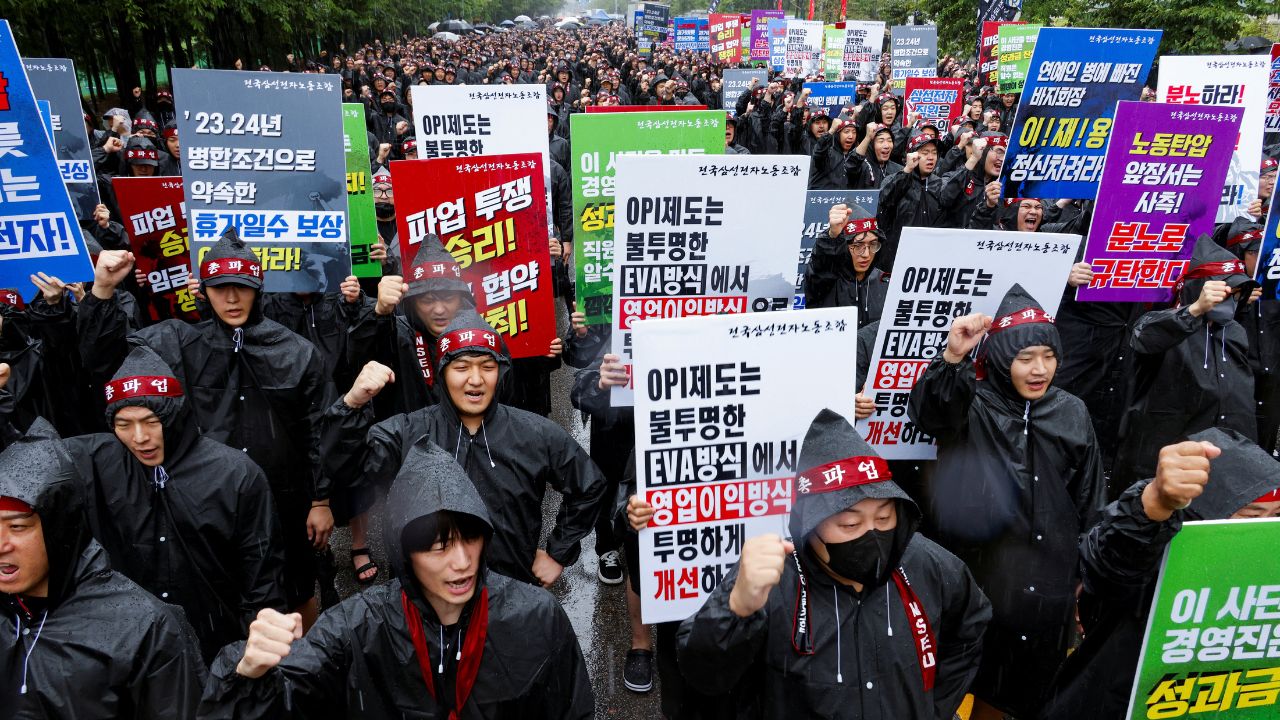
    Workers at South Korean tech giant Samsung began a three-day general strike over pay and benefits on Monday, the head of a union representing tens of thousands of employees told AFP, warning the action could impact memory chip production.

    Samsung Electronics is the world’s largest memory chip maker and accounts for a significant chunk of global output of the high-end chips.

    Wearing rain jackets and ribbons saying “fight with solidarity”, thousands of workers gathered outside the company’s foundry and semiconductor factory in Hwaseong, Gyeonggi, an hour south of Seoul.

    Samsung management has been locked in negotiations with the union since January, with the two sides failing to narrow differences on benefits and a rejected 5.1 percent pay raise offer from the firm.

    “The strike has started from today,” Son Woo-mok, head of the National Samsung Electronics Union, told AFP.

    “Today’s general strike is just the beginning,” he added.

    “Recalling why we are here, please do not come to work until July 10th and do not receive any business calls,” he told the crowd of workers.

    The union said about 5,200 people from factory facility, manufacturing and development had joined the protest.

    “Do they still not think this will affect their production line?” said Lee Hyun-kuk, vice president of the union.

    The union, which has more than 30,000 members, or more than a fifth of the company’s total workforce, announced the three-day general strike last week, saying it was a last resort after talks broke down.

    The move follows a one-day walkout in June, the first such collective action at the company, which went decades without unionisation.

    “We are now at critical crossroads,” the union said in an appeal sent out to members last week, urging them to support the strike.

    “This strike is the last card we can use,” it said, saying that workers at the company needed to “act as one”.

    “I’m really excited,” one union member and protester told AFP. “We’re making history.”

    Workers rejected the offer of a 5.1 percent pay hike in March, with the union having previously outlined demands including improvements to annual leave and transparent performance-based bonuses.

    Samsung declined a request for comment.

    “While the ongoing strike is only scheduled for three days, the participating members include those working in chip assembly lines,” business professor Kim Dae-jong at Sejong University told AFP.

    “Given that the union could carry out additional strikes in case the gridlock continues, it could pose a great risk to Samsung management amid its race for dominance in the competitive chips market.”

    Samsung Electronics avoided its employees unionising for almost 50 years — sometimes adopting ferocious tactics, according to critics — while rising to become the world’s largest smartphone and semiconductor manufacturer.

    Company founder Lee Byung-chul, who died in 1987, was adamantly opposed to unions, saying he would never allow them “until I have dirt over my eyes”.

    The first labour union at Samsung Electronics was formed in the late 2010s.

    The firm is the flagship subsidiary of South Korean giant Samsung Group, by far the largest of the family-controlled conglomerates that dominate business in Asia’s fourth-largest economy.

    It recently predicted a 15-fold increase in its on-year second quarter operating profits, thanks to growing demand for generative AI.

    Semiconductors are the lifeblood of the global economy, used in everything from kitchen appliances and mobile phones to cars and weapons.

    And demand for the advanced chips that power artificial intelligence systems has skyrocketed thanks to the success of ChatGPT and other generative AI products.

    Semiconductors are South Korea’s leading export and hit $11.7 billion in March, their highest level in almost two years, accounting for a fifth of South Korea’s total exports, according to figures released by the trade ministry.

  • Iran reformist Pezeshkian wins presidential election

    Iran reformist Pezeshkian wins presidential election

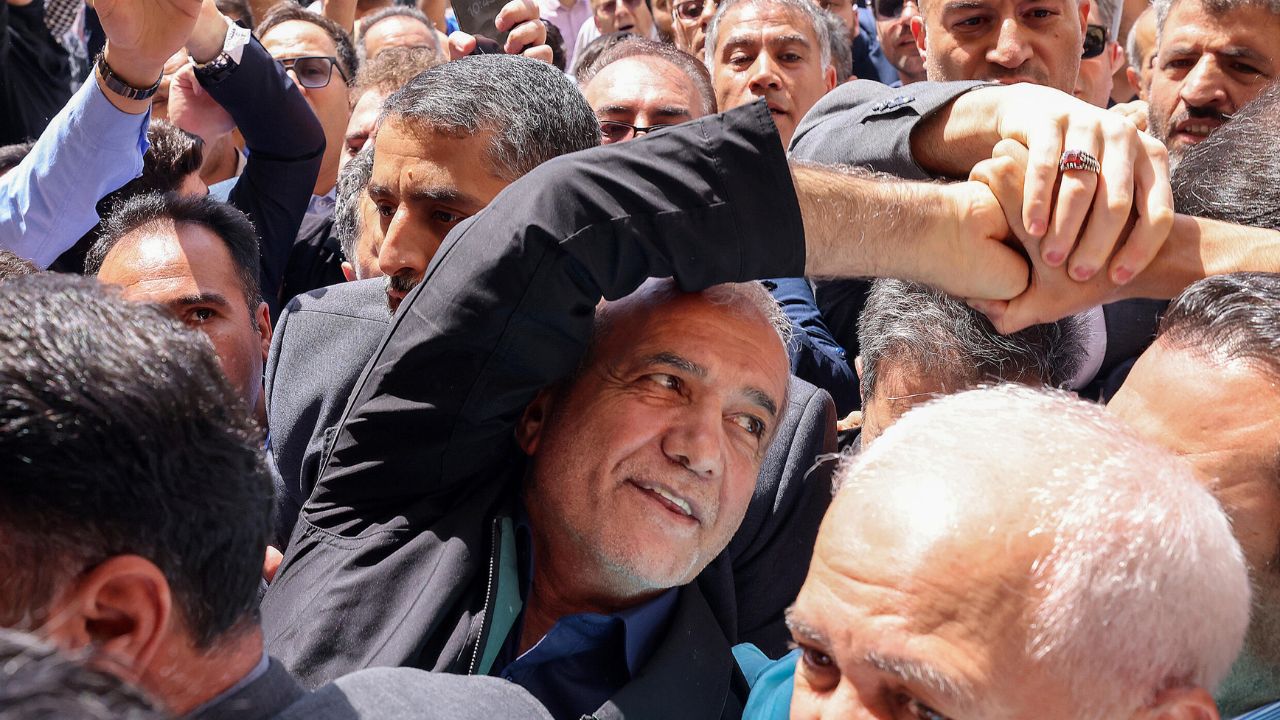
    Tehran (AFP) – Masoud Pezeshkian, Iran’s only reformist candidate in the latest presidential election, has risen from relative obscurity to become the ninth president of the Islamic republic.

    Pezeshkian, 69, won around 53.6 percent of the vote in a runoff election against the ultraconservative Saeed Jalili.

    In the first round of Iran’s snap elections on June 28, Pezeshkian led the polls against three other conservative figures, stunning supporters and rivals alike.

    Pezeshkian’s victory has raised the hopes of Iran’s reformists after years of dominance by the conservative and ultraconservative camps.

    He will replace late ultraconservative president Ebrahim Raisi who died in a May helicopter crash.

    “The difficult path ahead will not be smooth except with your companionship, empathy, and trust. I extend my hand to you,” Pezeshkian said in a post on X, after on Tuesday saying he would “extend the hand of friendship to everyone” if he won.

    In the lead-up to the elections, Iran’s main reformist coalition threw its weight behind Pezeshkian, with former presidents Mohammad Khatami and the moderate Hassan Rouhani declaring support for his bid.

    Pezeshkian takes over the presidency amid heightened regional tensions over the Gaza war, a dispute with the West over Iran’s nuclear programme and domestic discontent over the state of Iran’s sanctions-hit economy.

    ‘Out of isolation’

    The outspoken heart surgeon had publicly criticised the Raisi government over its handling of the death in custody of Iranian Kurd Mahsa Amini, who had been arrested for allegedly violating the Islamic republic’s strict dress code for women.

    In a post on Twitter, now known as X, at the time, he called on the authorities to “set up an investigation team” to look into the circumstances behind her death.

    In recent campaigning, he has maintained his stance, criticising the enforcement of mandatory hijab laws which require women to cover their head and neck in public since shortly after the 1979 Islamic revolution.

    “We oppose any violent and inhumane behaviour towards anyone, notably our sisters and daughters, and we will not allow these actions to happen,” he said.

    He also vowed to ease internet restrictions and to involve ethnic minorities in his government.

    Pezeshkian was born in 1954 to an Iranian father of Turkic origin and a Kurdish mother in the city of Mahabad in the northwestern province of West Azerbaijan.

    He has represented Tabriz in Iran’s parliament since 2008, served as health minister in Khatami’s government, and supervised sending medical teams to the war front during the Iran-Iraq conflict between 1980 and 1988.

    In 1993, Pezeshkian lost his wife and one of his children in a car accident. He never remarried and raised his remaining three children — two sons and a daughter — alone.

    Campaigning on behalf of Pezeshkian was Mohammad Javad Zarif, Iran’s combative former foreign minister who helped secure the landmark 2015 nuclear deal with world powers, which fell through three years later.

    Pezeshkian has called for reviving the accord — which sought to curb Tehran’s nuclear activity in return for sanctions relief — to get Iran “out of isolation”.

    “If we manage to lift the sanctions, people will have an easier life while the continuation of sanctions means making people’s lives miserable,” he said during a televised interview.

    Pezeshkian will be tasked with applying state policy outlined by the supreme leader Ayatollah Ali Khamenei, who wields ultimate authority in the country.

  • When TikTok reunited identical twins separated at birth

    When TikTok reunited identical twins separated at birth

    Georgian student Elene Deisadze was browsing TikTok in 2022 when she stumbled across the profile of a girl, Anna Panchulidze, who looked exactly like her. Months later, after chatting and becoming friends, they both separately learnt they were adopted, and last year decided to take a DNA test. It revealed they were not only related, but identical twins.

    “I had a happy childhood, but now my entire past felt like a deception,” Anna, an English student at university, told AFP.

    Far from an innocent case of separation at birth, the sisters are among tens of thousands of Georgian children who were illegally sold in a decades-long baby trafficking scandal. The scheme, uncovered by journalists and families searching for lost relatives, saw babies stolen from their mothers – many of whom were told they had died – and then sold to adoptive parents in Georgia and abroad.

    Journalists have found that the illegal adoptions took place over more than 50 years, orchestrated by a network of maternity hospitals, nurseries and adoption agencies that colluded to take the children from their parents, falsify birth records, and place them with new families in exchange for cash.

    ‘New reality’

    Elene and Anna, now 19, began unravelling their hidden past two years ago. “We became friends without suspecting we might be sisters, but both of us felt there was some special bond between us,” Elene, a psychology student, told AFP.

    Last summer, both of their parents independently told the girls they had been adopted — revelations they had long planned to make. It was then that the pair decided to take the genetic test that would reveal they were identical twins.

    “I struggled to process the information, to accept the new reality — the people who had raised me for 18 years are not my parents,” said Anna. “But I feel no anger whatsoever, only immense gratitude to the people who raised me, and joy at finding my flesh and blood,” she added.

    ‘Buy a baby’

    The test for Elene and Anna was arranged with the help of Georgian journalist Tamuna Museridze, who runs a Facebook group dedicated to reuniting babies stolen from their parents.

    It has over 200,000 members — including mothers who were told by hospital staff that their babies had died shortly after being born, but then discovered years later they might be alive. Museridze set up the group in 2021 in a bid to find her own family after learning she had been adopted. She soon uncovered the mass baby-selling operation.

    “Mothers were told their babies had died shortly after birth and were buried at a hospital cemetery,” Museridze said. “In fact, hospitals had no cemeteries, and babies were being secretly whisked away and sold to adoptive parents.”

    The new parents were often unaware the adoptions were illegal and told fabricated stories about the circumstances. “Some people, however, consciously chose to circumvent the law and buy a baby” to avoid decade-long waiting lists, Museridze told AFP.

    She says she has evidence that at least 120,000 babies “were stolen from their parents and sold” between 1950 and 2006, when anti-trafficking measures by reformist president Mikheil Saakashvili eventually quashed the scheme.

    In Georgia, new parents would pay the equivalent of many months’ salary to arrange the adoption, while babies trafficked abroad were sold for up to $30,000, Museridze said.

    ‘Virtually impossible’

    Elene’s adoptive mother, Lia Korkotadze, decided with her husband to adopt after learning they couldn’t have children a year into their marriage. “But adopting from an orphanage seemed virtually impossible due to incredibly long waiting lists,” the 61-year-old economist told AFP.

    In 2005, an acquaintance told her about a six-month-old baby available for adoption from a local hospital – for a fee.

    Korkotadze said she “realised that was my chance,” and agreed. “They brought Elene right to my house,” Korkotadze said, never suspecting there was “anything illegal.” “It took months of excruciating bureaucratic delays to formalise the adoption through court,” she said.

    The tale of Anna and Elene mirrors that of another set of twin sisters — Anna Sartania and Tako Khvitia. They were separated at birth and sold to different parents, managing to reunite years later after finding each other on social media.

    More than 800 families have been reunited thanks to Museridze’s Facebook group. Successive Georgian governments have made multiple attempts to investigate the scheme and have made a handful of arrests over the last 20 years. Interior ministry spokesman, Tato Kuchava, told AFP that an “investigation is underway” into Museridze’s revelations, but declined to provide further details.

    Georgia’s Prime Minister Irakli Kobakhidze said last week in parliament that Tbilisi is among the world leaders in combating trafficking. But Museridze says the state’s response has been lacking. “The government did nothing tangible to help our efforts.”

  • Woman found dead swallowed by python in Indonesia

    Woman found dead swallowed by python in Indonesia

    A woman was found dead inside the belly of a snake after it swallowed her whole in central Indonesia, police said Wednesday, the second python killing in the province in a month.

    Siriati, 36, had gone missing after she left her house Tuesday morning to buy medicine for her sick child, police said, prompting relatives to launch a search.

    Her husband Adiansa, 30, found her slippers and pants on the ground about 500 metres (yards) from their house in Siteba village, South Sulawesi province.

    “Shortly after that, he spotted a snake, about 10 metres from the path. The snake was still alive,” local police chief Idul, who like many Indonesians has one name, told AFP.

    Village secretary Iyang told AFP that Adiansa became suspicious after he noticed the python’s “very large” belly. He called the villagers to help cut open its stomach, where they found her body.

    Such incidents are considered extremely rare, but several people have been swallowed by pythons in recent years.

    A woman was found dead last month inside the belly of a reticulated python in another district of South Sulawesi.

    Last year residents in the province killed an eight-metre python, which was found strangling and eating one of the farmers in a village.

    A 54-year-old woman was found dead in 2018 inside a seven-metre python in Southeast Sulawesi’s Muna town.

    And the year before, a farmer in West Sulawesi went missing before being found being swallowed by a four-metre python at a palm oil plantation.

  • Slow art: the master illuminator of Tehran

    Slow art: the master illuminator of Tehran

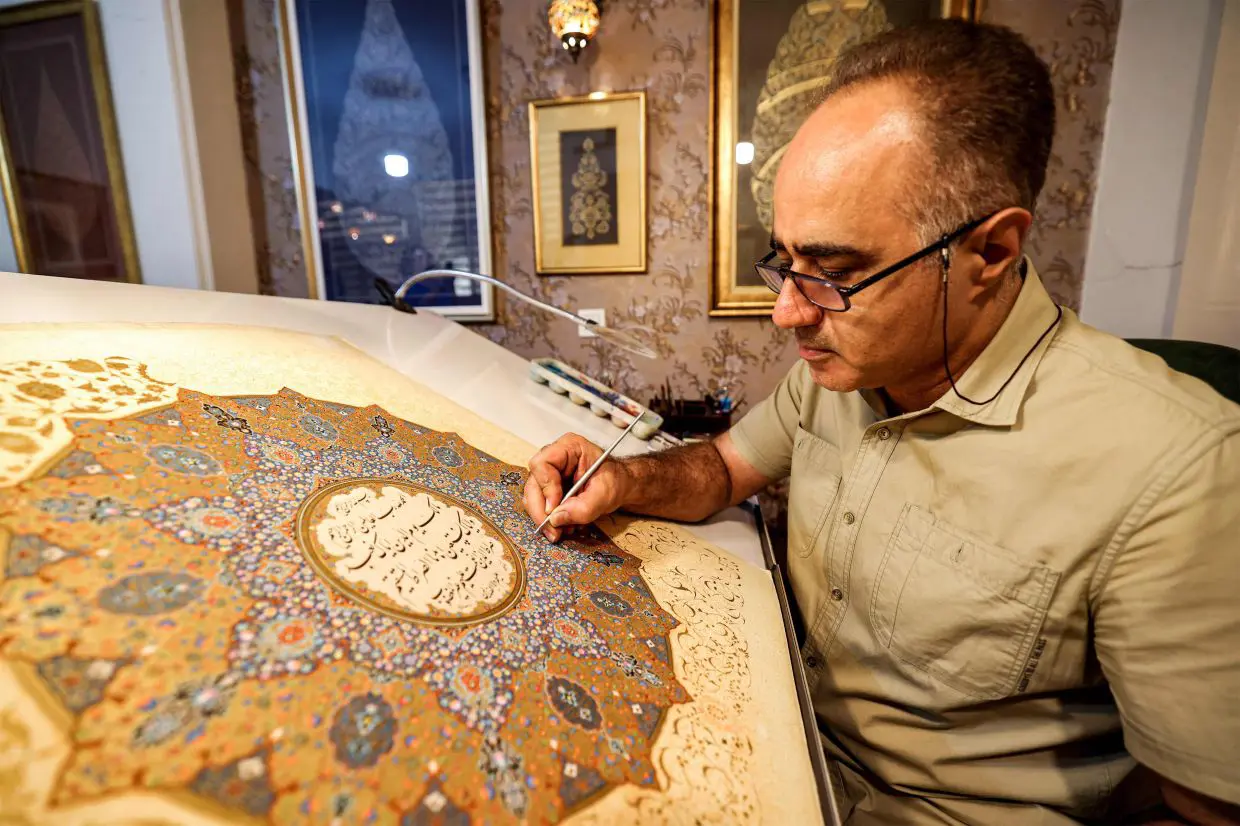
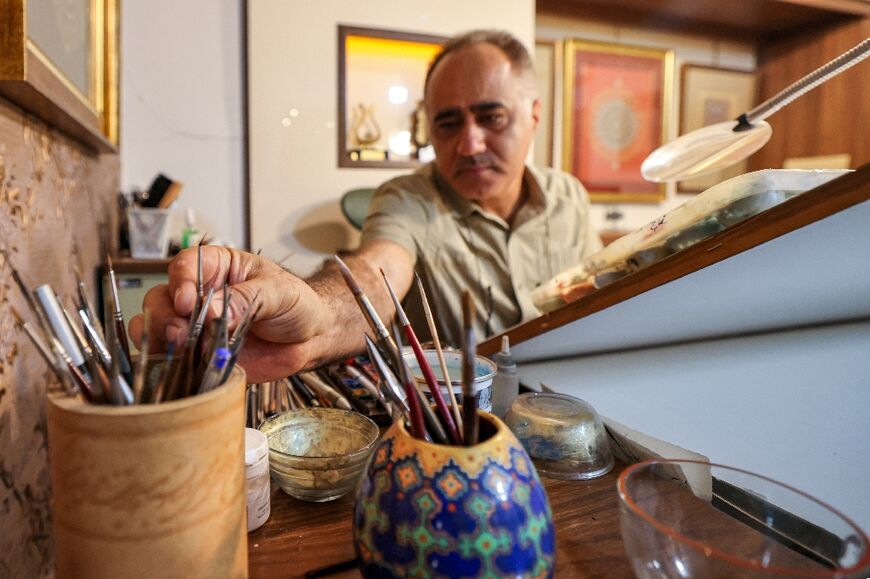
    Iranian artist Mohammad Hossein Aghamiri sometimes labours for six months on a single design, very carefully — he knows a single crooked line could ruin his entire artwork.

    In the age of AI-assisted graphic design on computer screens, the centuries-old tradition of Persian illumination offers an antidote to rushing the creative process.

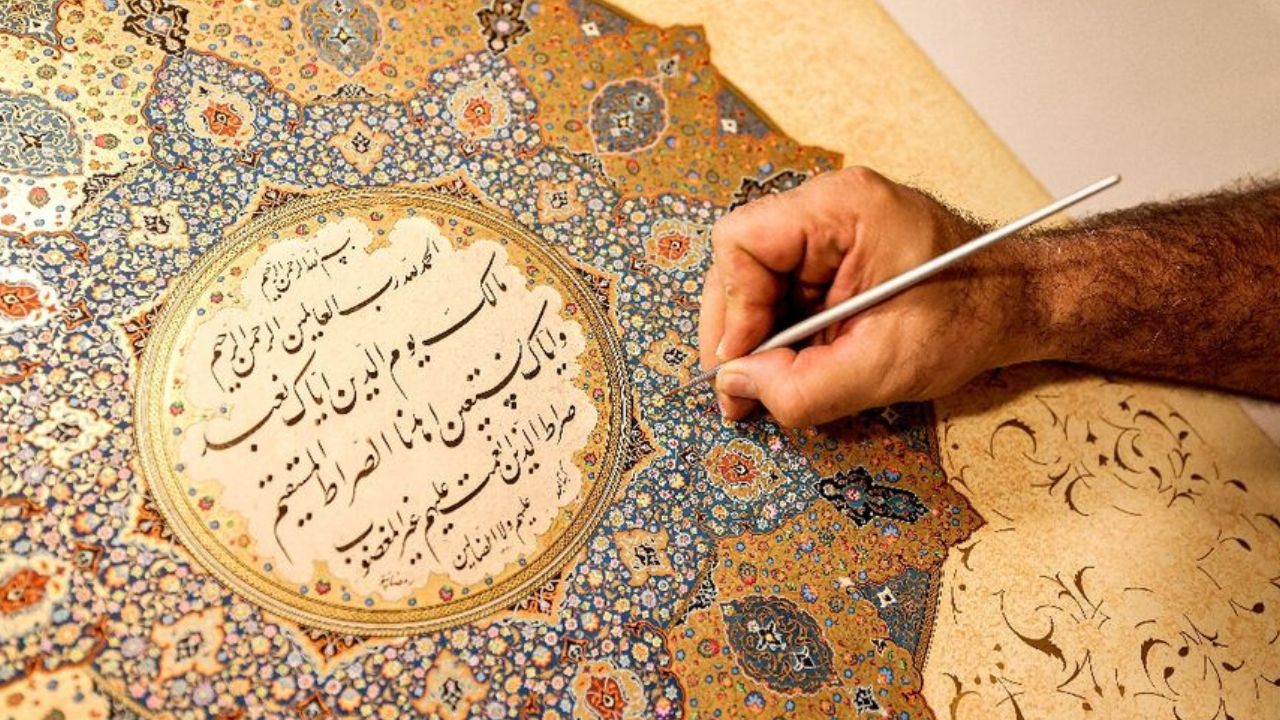
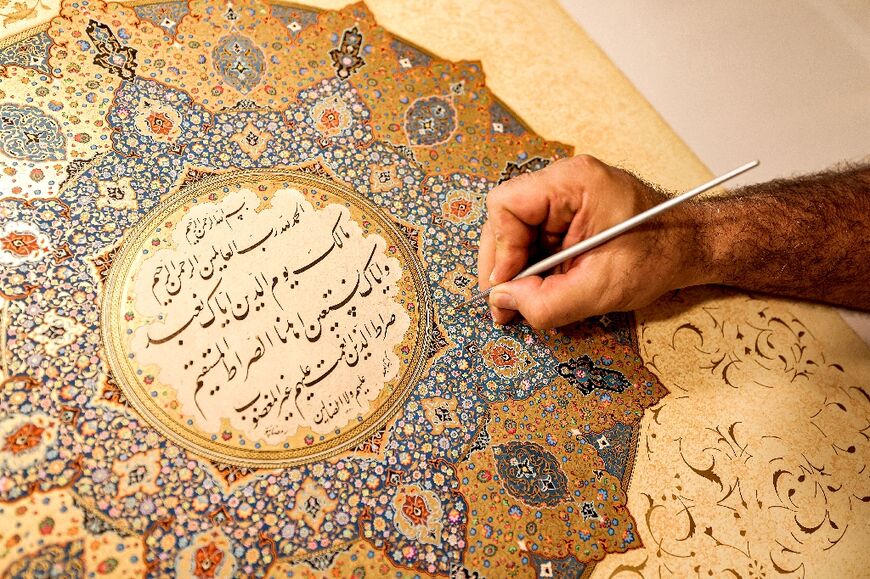
    Aghamiri’s fine brush moves natural pigments onto the paper with deliberate precision as he creates intricate floral patterns, religious motifs and elegantly flowing calligraphy.

    The exquisite artwork has for centuries embellished literary manuscripts, religious texts and royal edicts as well as many business contracts and marriage certificates.

    Aghamiri, 51, is one of Iran’s dozen or so remaining masters of the ancient illumination art of Tazhib, which was inscribed last year on UNESCO’s list of intangible heritage.

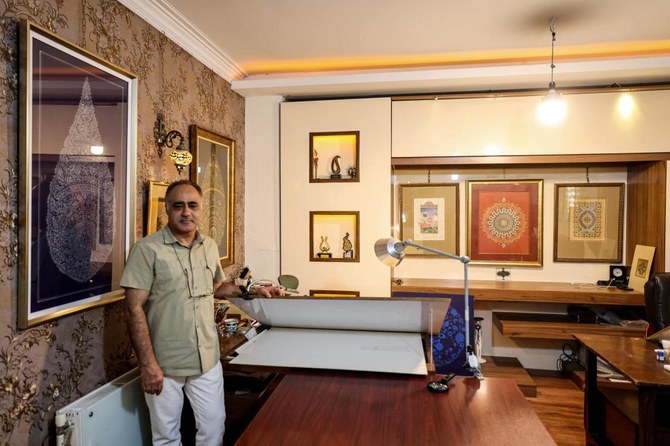
    “It is a very unique job that requires a lot of patience and precision,” Aghamiri, a veteran of the craft with over 30 years’ experience, told AFP in his downtown Tehran studio.

    “It’s not accessible to everyone.”

    Tazhib’s non-figurative and geometric flourishes have traditionally adorned the margins of holy books and epic poems.

    The artform dates back to the Sassanid era in pre-Islamic Iran but flourished after the seventh century advent of Islam, which banned human depictions.

    Aghamiri says it often takes him months to finish one design and that a single misplaced stroke that disrupts its symmetrical harmony can force him to start over.

    – Global workshops online –

    When AFP visited, he was working on a so-called shamsa design, a symbolic representation of the sun, about 50 centimetres across with intertwined abstract, geometric and floral patterns.

    He said he started the piece over four months ago and aimed to finish it within six weeks, using natural pigments such as lapis lazuli, saffron, gouache and pure gold, from China.

    “Gold has a very strong visual appeal,” said Aghamiri. “It’s expensive and it enhances the perceived value of the work.”

    Aghamiri hails from a family of artists and artisans with a rich history in Iranian craft traditions including calligraphy, miniature painting and carpet design.

    His work has been showcased in museums in Iran and in nearby Arab countries of the Gulf region where interest in Oriental and Islamic art continues to grow.

    “Eighty percent of my works are sold in the region, especially in the Emirates and Qatar” as well as in Turkey, he said.

    In recent years, Aghamiri garnered interest abroad and even began teaching the ancient art online to students from across the world, notably the United States.

    Soon, he also hopes to hold workshops in Britain for his craft, which he says is fundamentally different from European illumination art, which flourished in the Middle Ages.

    European designs, he said, are more figurative and can depict human faces, animals and landscapes, and often illustrate biblical scenes.

    UNESCO labelled the Persian art of illumination as part of the Intangible Cultural Heritage of Humanity in December 2023, at the request of Iran as well as Turkey, Azerbaijan and Uzbekistan.

    “Twenty years ago, I didn’t have much hope” for the future of Persian illumination, said Aghamiri. “But things have changed, and I see that this art is becoming more and more popular.”

  • At least 27 crushed to death in India religious gathering: govt

    At least 27 crushed to death in India religious gathering: govt

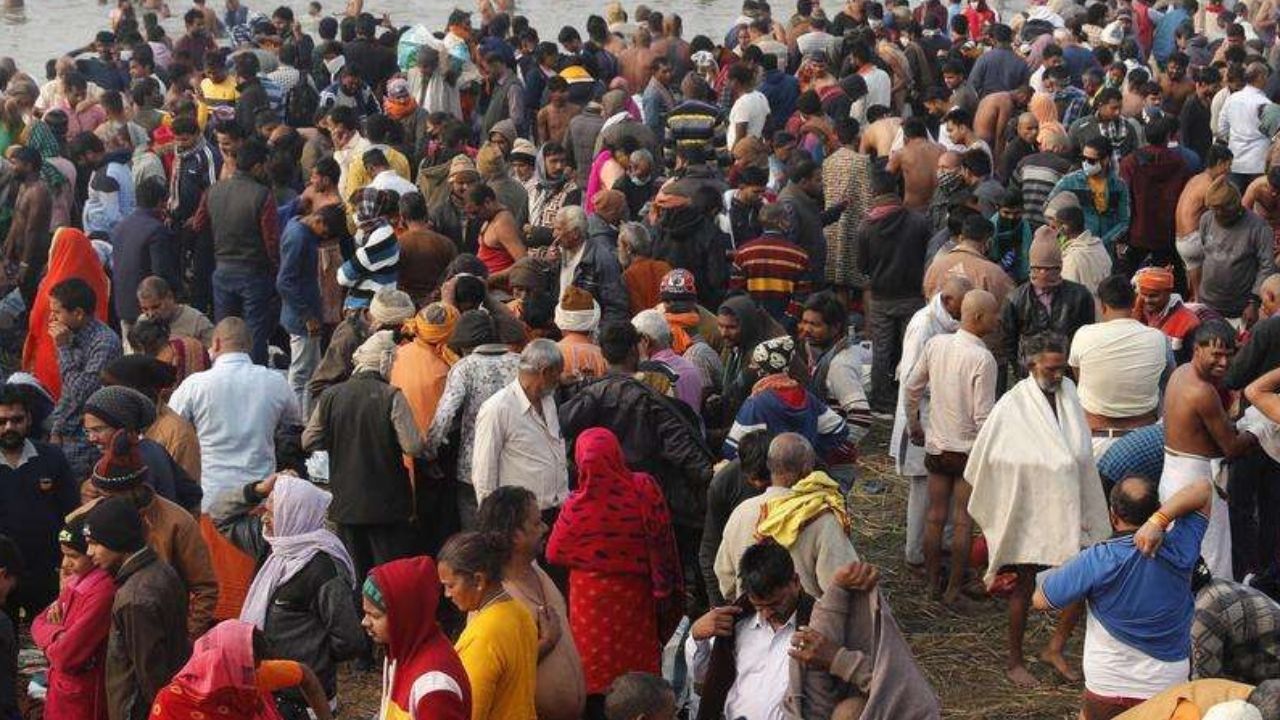
    At least 27 people were crushed to death at a Hindu religious gathering in northern India, with several more injured and fears the toll could rise, government medics said Tuesday.

    “We have received 27 bodies so far… bodies are still coming,” Uttar Pradesh state senior medical officer Ram Mohan Tiwari told AFP.

    Crowds had gathered to celebrate the Hindu deity Shiva in the city of Hathras, some 140 kilometres (87 miles) southeast of New Delhi.

    Umesh Kumar Tripathi, chief medical officer, told reporters the dead were 25 women and two men.

    “Many injured have also been admitted,” Tripathi said. “The primary reason is a stampede during a religious event.”

    Deadly accidents are common at places of worship in India during major religious festivals.

    At least 112 people were killed in 2016 after a huge explosion caused by a banned fireworks display at a temple marking the Hindu new year.

    The blast ripped through concrete buildings and ignited a fire at a temple complex in Kerala state, where thousands had gathered.

    Another 115 devotees died in 2013 after a stampede at a bridge near a temple in Madhya Pradesh.

    Up to 400,000 people were gathered in the area, and the stampede occurred after a rumour spread that the bridge was about to collapse.

    About 224 pilgrims died and more than 400 others were injured in a 2008 stampede at a hilltop temple in the northern city of Jodhpur.

  • The Indian women campaigning to criminalise marital rape

    The Indian women campaigning to criminalise marital rape

    New Delhi (AFP) – Raped by her husband on her wedding night aged 17, Divya described her repeated suffering — an all-too-common account in India, permitted by a terrifying colonial-era legal loophole.

    “I told him I have never had sex, and asked him if we can take it slowly and try to understand it,” 19-year-old Divya said.

    “He said: ‘No, the first night is very important for us men’.”

    He then slapped her hard, ripped her clothes off and forced himself on her.

    What followed her arranged wedding in 2022 was 19 months of sexual and physical abuse.

    “If I was hurt, it was invisible to him,” said Divya, whose name has been changed to protect her identity.

    “He used to have sex with me ruthlessly”.

    Six percent of married women aged 18-49 report spousal sexual violence, according to the government’s latest National Family Health Survey.

    In the world’s most populous country, that implies more than 10 million women have been sexual victims of their husbands.

    Nearly 18 percent of married women feel they cannot say no if their husbands want sex, according to the health survey.

    And 11 percent of women thought a husband was justified in beating his wife if she refused, it found.

    ‘Victorian mentality’

    Under India’s inherited British-era penal code, an exception clause stated that “sexual acts by a man with his own wife, the wife not being under fifteen years of age, is not rape”.

    India introduced a new penal code on Monday but the exception clause remains — although it does raise the minimum age that a man can rape his wife to 18.

    Lawyer Karuna Nundy is challenging that.

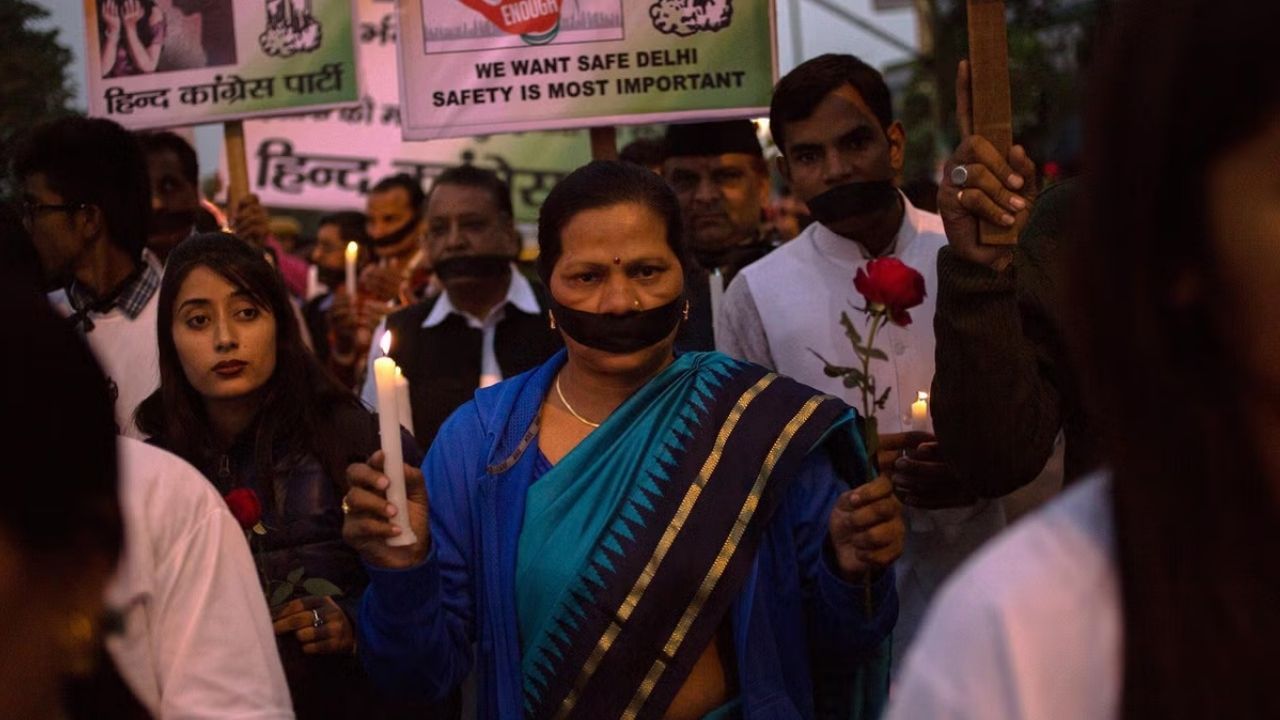
    Nundy, who has a case for the All India Democratic Women’s Association (AIDWA) rights group at the Supreme Court, condemned the clause as “colonialism from a Victorian mentality”.

    She holds a “fervent hope” for change, mentioning some of the more than 50 nations who have outlawed it.

    Chief Justice D. Y. Chandrachud called it an “important issue” this year.

    But the decade-long case has made painfully slow progress.

    In May 2022, a two-judge bench in the Delhi High Court issued a split verdict.

    One judge, C. Hari Shankar, said that while “one may disapprove” of a husband forcibly having sex with his wife, that “cannot be equated with the act of ravishing by a stranger”.

    The other judge, Rajiv Shakdher, disagreed.

    Shakdher said it “would be tragic if a married woman’s call for justice is not heard even after 162 years”, referring to the British-era statute.

    Monika Tiwary from Shakti Shalini, a rights group which supports sexual violence survivors, said marriage should not shield a crime.

    “How can marriage change the definition of rape?” she said.

    “Getting married does not take away the rights over your body.”

    Arranged marriages

    “Most of the survivors do not really have this understanding that it is not okay, and it is marital rape,” Tiwary added.

    “The moment we label it and attach a law to it, people start recognising it, awareness increases”, Tiway added.

    Divya’s marriage was arranged, like many in India.

    But her family did not pay the usual hefty cash dowry to the husband — something he used against her.

    “He would taunt me by saying ‘It’s not like your parents gave any dowry, I can at least do this’,” Divya said.

    “At times he would put a knife on my throat and dare me to say no. (He would say) ‘You are my wife, I have full rights on you’.”

    Swati Sharma, a 24-year-old mother of two, said she married a man for love.

    The first time her husband assaulted her was after their first daughter was born.

    “I used to think: ‘Okay, we are married, so we can do this’,” she said.

    Death threats

    When he was angry, he would take it out on her. If she refused sex, he accused her of having an affair.

    The tipping point came when he stripped her naked in front of their children, waiting until they slept.

    “Then he proceeded to have sex with me,” she said. “He didn’t leave me till he had his way.”

    She packed her bags, took her children and left.

    But despite the abuse, some women return to violent husbands fearing for their children, and under intense social pressure.

    Sharma also returned to her husband, after he went to counselling and persuaded her to come back.

    While Divya escaped, she still lives in fear.

    Her husband messaged her mother threatening that he “will not let her live”.

    But she says she is “proud” that she left.

    “There are many girls who still endure this, happening to them day and night,” she said.

    “Such men should be punished.”

  • Barbie that went to space to go on display in London

    Barbie that went to space to go on display in London

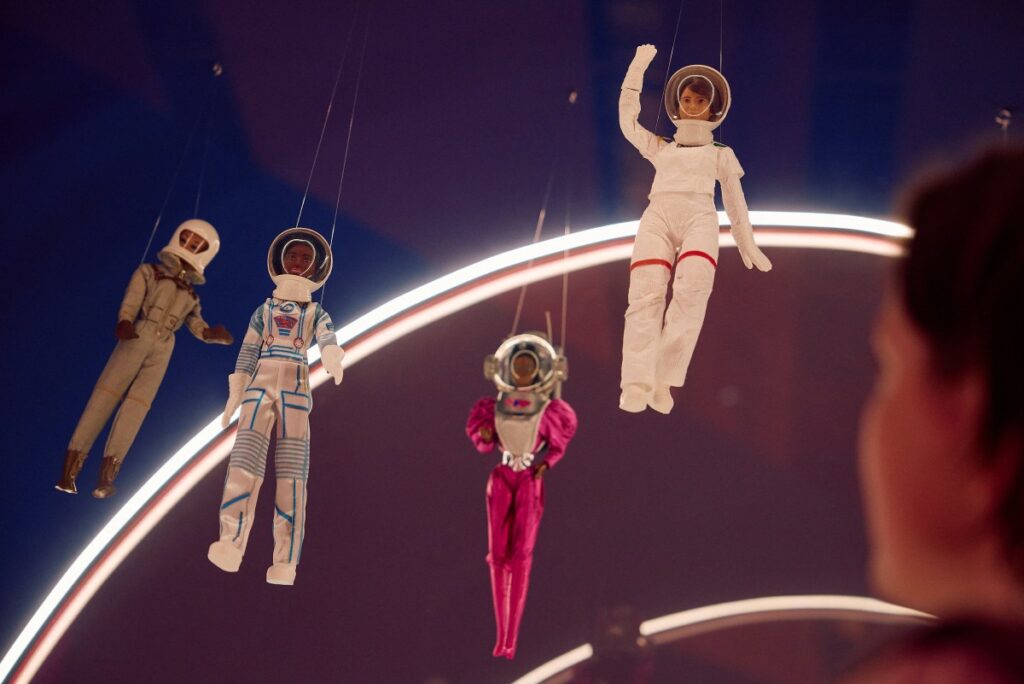
    A Barbie that spent six months orbiting the Earth on the International Space Station will go on public display for this first time this week at the Design Museum in London.

    It will be part of a new exhibition marking the 65th anniversary of the Barbie brand, set to open on Friday in partnership with the doll’s creator Mattel.

    The Barbie was made to resemble Samantha Cristoforetti, the first female commander of the ISS. On the mission in which she was accompanied by her lookalike Barbie, Cristoforetti became the first European woman to complete a spacewalk.

    There will be videos on display of Cristoforetti answering questions from space to encourage young girls to become scientists and astronauts –- all while floating in zero gravity alongside the Barbie.

    “We’re so excited that the first time anyone can see Samantha’s doll since it returned from the International Space Station is at the Design Museum this summer,” said curator Danielle Thom.

    “Its remarkable journey on Samantha’s history-making mission 400 kilometres above the Earth was one of the most dramatic moments in Barbie’s evolving story.”

    Cristoforetti said she was “thrilled” her Barbie would play a “starring role” in the exhibition.

    Highlighting other connections between Barbie and the cosmos, there will be a rare edition of the first space-themed Barbie on display.

    The silver “Miss Astronaut” was Barbie’s first depiction as an astronaut released in 1965, four years before Neil Armstrong reached the moon.

    Another Barbie in a metallic pink spacesuit on display was released in 1985 after Sally Ride became the first American woman in space.

    Other rare dolls will include a prototype of the first Talking Barbie launched in 1968 and one of the earliest first edition Barbie dolls.

    Visitors can also expect some more iconic figurines on display, including the Sunset Malibu Barbie and Day to Night Barbie.

    Charting the changing design of Barbie through time, the exhibition will also include friends of Barbie including Midge, and a while section dedicated to Ken, Barbie’s male companion.

    Ever since the “Barbie” movie starring Margot Robbie hit cinemas and broke box office records last year, the doll has become ever-more prominent in popular culture, making forays into fashion, music, and now design.