Author: AFP

  • WhatsApp introduces first major advertising features

    WhatsApp introduces first major advertising features

    WhatsApp announced Monday it will introduce its boldest advertising features yet, marking a significant shift for the messaging platform that has largely remained ad-free since its launch.

    The move is a sensitive one for WhatsApp, whose chief firmly denied a report in 2023 that said the Meta-owned app was exploring advertisements as it sought to boost revenue.

    Unlike Facebook, Instagram, and other social platforms, WhatsApp has maintained minimal advertising since Meta acquired it in 2014.

    Users and regulators have kept a close watch on whether the social media giant would seek to monetize an app that was primarily used to chat with friends and family, and was appreciated for its privacy.

    Until now, the platform’s advertising consisted primarily of WhatsApp Business promotional messages to opted-in customers and some limited Status ad testing in select markets.

    The messaging app has no display ads in chat feeds or conversations.

    The company said it will roll out three new monetization features exclusively within its Updates tab, which houses both Channels and Status features used by 1.5 billion people daily and became widely available last year.

    The company stressed that users who only use WhatsApp for personal messaging will see no changes to their experience, as all new features are confined to the separate Updates tab.

    “We’ve been talking about our plans to build a business that does not interrupt your personal chats for years and we believe the Updates tab is the right place for these new features to work,” WhatsApp said.

    The new features include paid channel subscriptions, promoted channels in the Discovery directory, and advertisements within Status, WhatsApp’s version of Instagram Stories.

    WhatsApp emphasized that the new advertising features are designed with privacy safeguards.

    “I want to be really clear about one thing: Your personal messages, calls and statuses will remain end-to-end encrypted. This means no one, not even us, can see or hear them, and they cannot be used for ads,” Nikila Srinivasan, vice president of product management at Meta, told reporters.

    The company committed to never selling or sharing phone numbers to advertisers and said personal messages, calls, and group memberships will not influence ad targeting.

    “To show ads in Status or Channels, we’re going to use basic information like your country or city, your device language and your activity in the Updates tab,” Srinivasan said.

    The introduction of advertising represents Meta’s effort to monetize WhatsApp’s massive user base of over two billion monthly active users.

    Industry analysts have long speculated that Meta would eventually bring advertising to WhatsApp given its scale and engagement rates.

    The timeline for these features was not specified in the announcement.

    “They’re going to be rolling out slowly over the next few months, so it might be a while until you see them in your countries,” Srinivasan said.
  • Iran says hypersonic missiles fired at Israel as Trump demands ‘unconditional surrender’

    Iran says hypersonic missiles fired at Israel as Trump demands ‘unconditional surrender’

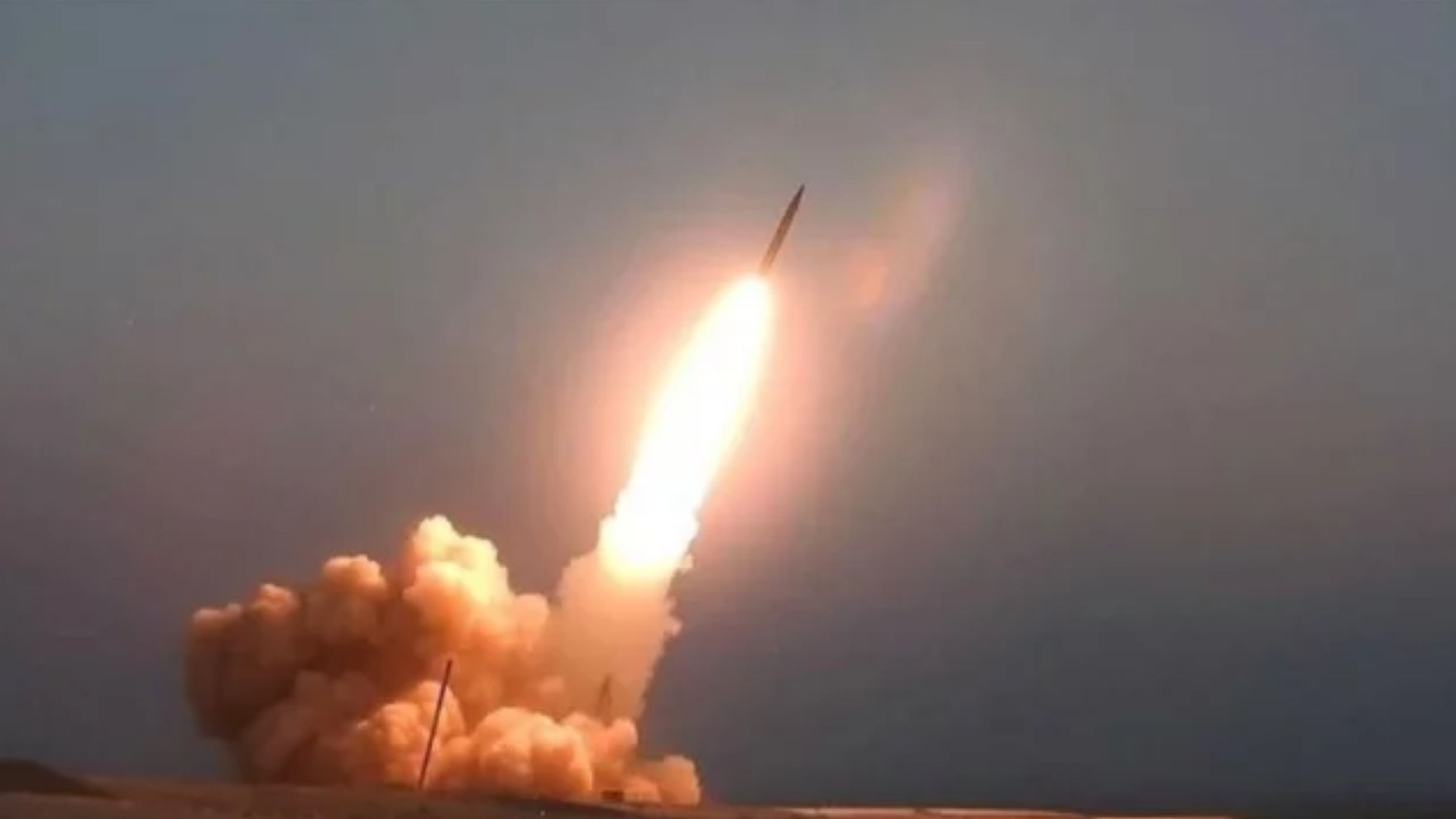
    Iran said early Wednesday it fired hypersonic missiles at Israel in the latest round of overnight strikes between the archfoes, hours after Donald Trump demanded the Islamic republic’s “unconditional surrender”.

    The US president insists Washington has played no part in ally Israel’s bombing campaign, but also warned Iran his patience is wearing thin as the conflict enters a sixth day.

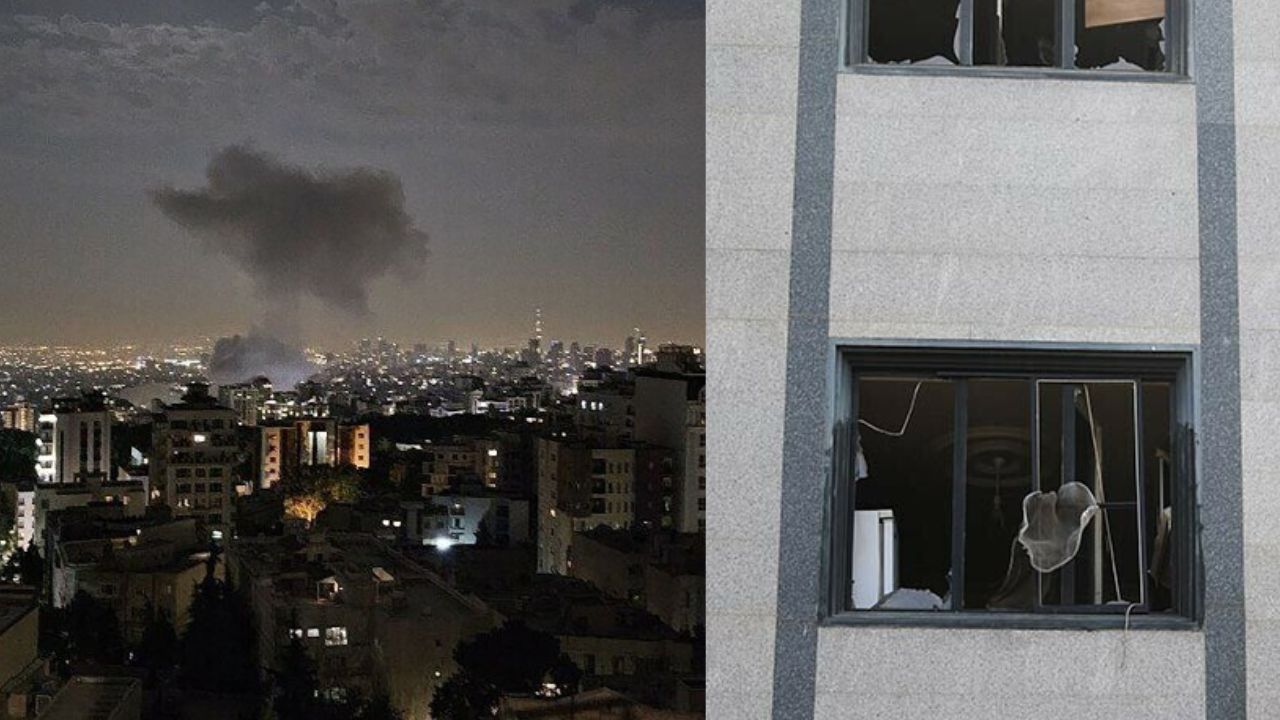
    Israeli warplanes targeted the Iranian capital before dawn Wednesday after the military issued a warning for civilians to leave one district for their safety.

    The Israeli military later said it struck weapons manufacturing sites and a facility used to make centrifuges in Tehran.

    Iran told residents of Tel Aviv to prepare for an attack, with the Islamic Revolutionary Guard Corps claiming its hypersonic Fattah-1 missiles were “repeatedly shaking the shelters” in the commercial hub.

    “The 11th wave of the proud Operation Honest Promise 3 using Fattah-1 missiles” was carried out, the Guards said in a statement broadcast on state television.

    Hypersonic missiles travel at more than five times the speed of sound and can manoeuvre mid-flight, making them harder to track and intercept.

    Iran also sent a “swarm of drones” towards Israel, where the army said it intercepted two over the Dead Sea area.

    World powers have scrambled for an offramp, hoping to prevent the conflict from spiralling into a region-engulfing war.

    In separate phone calls with his Iranian counterpart and US envoy Steve Witkoff on Tuesday night, Egyptian Foreign Minister Badr Abdelatty urged a diplomatic solution.

    Trump fuelled speculation about American intervention when he made a hasty exit from the G7 summit in Canada, where the leaders of the club of wealthy democracies jointly called for a ceasefire.

    Back in Washington on Tuesday, Trump demanded the Islamic republic’s “unconditional surrender”.

    He also boasted that the United States could easily assassinate Iran’s supreme leader.

    “We know exactly where the so-called ‘Supreme Leader’ is hiding. He is an easy target, but is safe there — We are not going to take him out (kill!), at least not for now,” Trump wrote on his Truth Social platform.

    He met with his National Security Council to discuss the conflict, ending after an hour and 20 minutes with no immediate public statement.

    While he has repeatedly vowed to avoid wading into the “forever wars” of the Middle East, Trump ordered the USS Nimitz aircraft carrier to the region along with a number of US military aircraft.

    US officials stressed he has not yet made a decision about any intervention.

    – Evacuations –

    Despite international alarm, neither side has backed off from the long-range blitz that began Friday, when Israel launched an unprecedented bombing campaign targeting Iranian nuclear and military facilities.

    Israel claims its attacks have killed senior Iranian commander Ali Shadmani as well as his predecessor, Gholam Ali Rashid.

    Residential areas in both countries have suffered deadly strikes since the fighting broke out, and foreign governments have scrambled to evacuate their citizens.

    More than 700 foreigners living in Iran have crossed into neighbouring Azerbaijan and Armenia since Israel launched its campaign, according to government figures.

    Among those evacuated were citizens of Russia, Belarus, Kazakhstan, Kyrgyzstan, Tajikistan and Uzbekistan, along with others from Germany, Spain, Italy, Serbia, Romania, Portugal, the United States, the United Arab Emirates, China and Vietnam, a government source told AFP.

    The United States said it was closing its embassy in Jerusalem until Friday amid the growing conflict, but there was no announcement about helping Americans leave the “crisis area”.

    Fearing violence, many residents of Tehran have fled.

    On Tuesday, long queues stretched outside bakeries and petrol stations as people rushed to stock up on fuel and basic supplies.

    A cyberattack on Tuesday crippled Sepah Bank, one of Iran’s main state-owned banks, the Fars news agency reported.

    With air raid sirens regularly screaming over Tel Aviv, some people relocated to an underground parking lot below a shopping mall.

    “We’ve decided to permanently set camp here until it’s all clear, I guess,” Mali Papirany, 30, told AFP.

    – Nuclear facilities –

    After decades of enmity and a prolonged shadow war, Israel said its surprise air campaign was aimed at preventing Iran from acquiring nuclear weapons — an ambition Tehran denies.

    Iranian media reported several explosions Tuesday in the central city of Isfahan, home to nuclear facilities.

    The UN’s nuclear watchdog said there appeared to have been “direct impacts on the underground enrichment halls” at Iran’s Natanz facility.

    Israel has maintained ambiguity regarding its own atomic activities, but the Stockholm International Peace Research Institute (SIPRI) says it has 90 nuclear warheads.

    The conflict derailed a running series of nuclear talks between Tehran and Washington, with Iran saying after the start of Israel’s campaign that it would not negotiate with the United States while under attack.

    French President Emmanuel Macron said Trump had a critical role to play in restarting diplomacy with Iran, where attempts at regime change would bring “chaos”.

    China accused Trump of “pouring oil” on the conflict, while Turkish President Recep Tayyip Erdogan accused Israeli leader Benjamin Netanyahu of being “the biggest threat to the security of the region”.

    Since Friday, at least 24 people have been killed in Israel and hundreds wounded, according to Netanyahu’s office.

    Iran said on Sunday that Israeli strikes had killed at least 224 people, including military commanders, nuclear scientists and civilians. It has not issued an updated toll since then.

  • Pro-Gaza activists ‘stopped in Libya, Egypt’

    Pro-Gaza activists ‘stopped in Libya, Egypt’

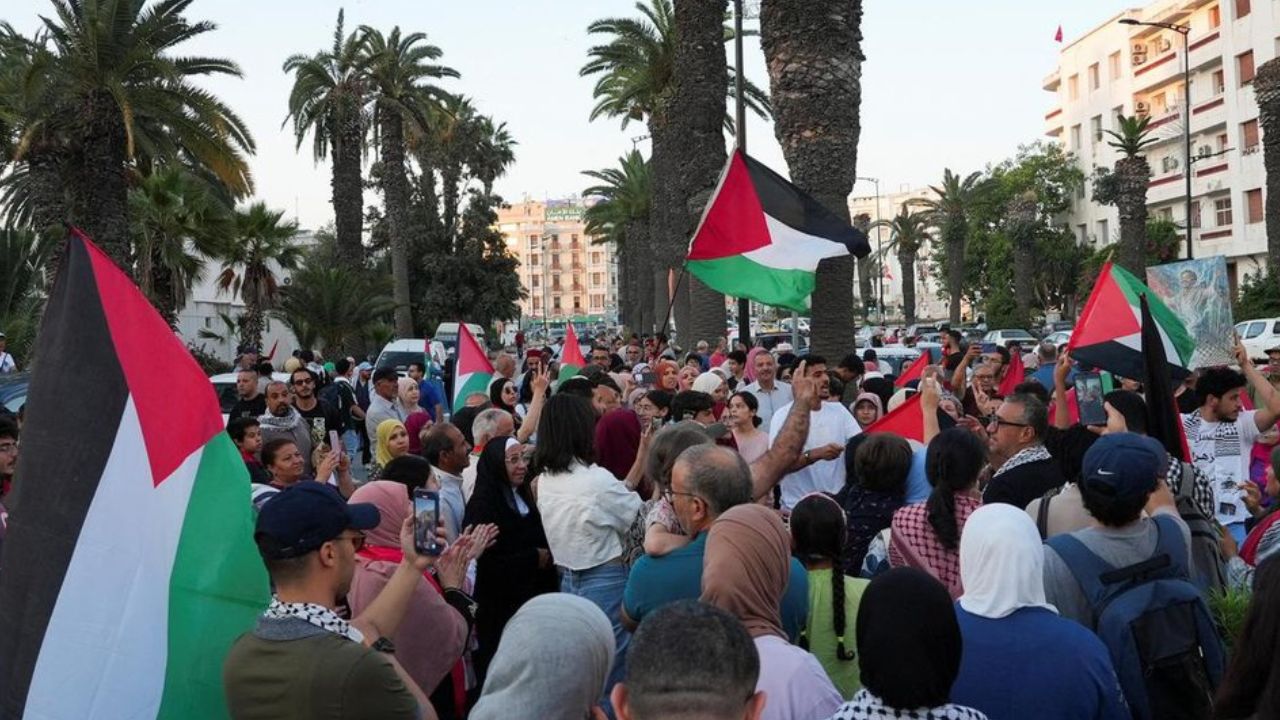
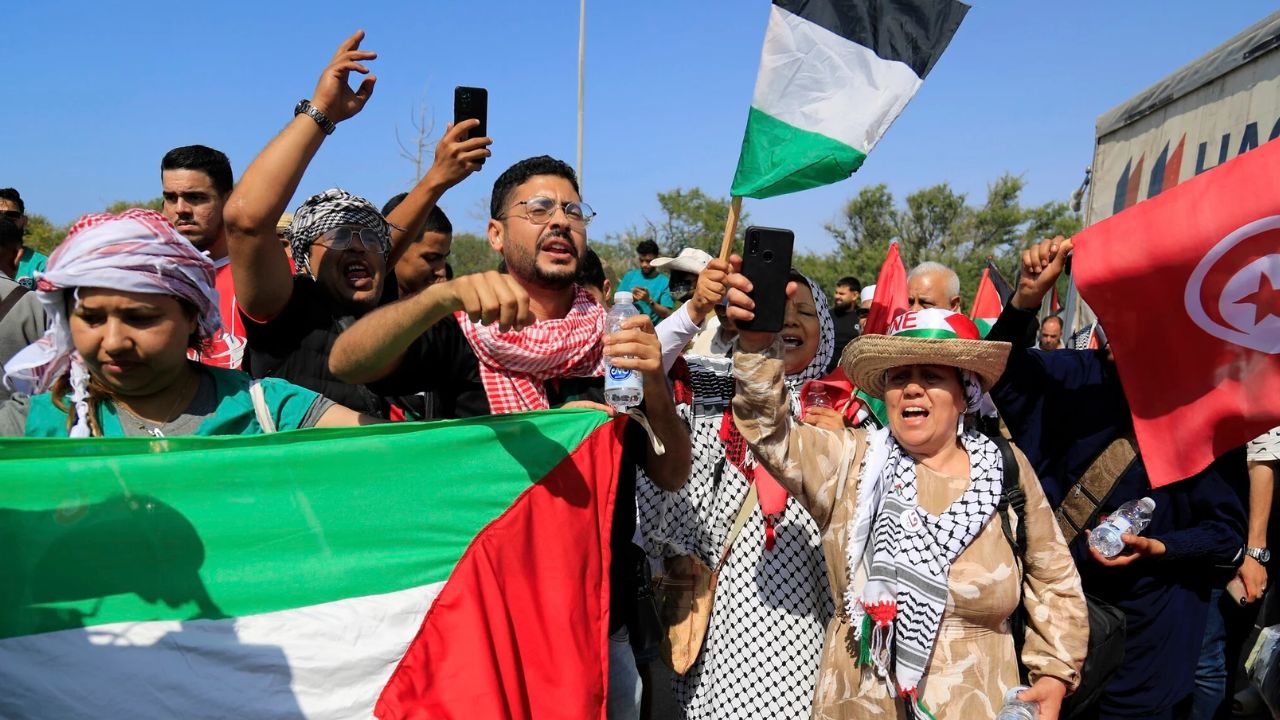
    Pro-Palestinian activists seeking to march to Gaza with the stated aim of breaking Israel’s blockade on the territory were stopped Friday in both Libya and Egypt, organisers said.

    “Forty participants of the Global March to Gaza have had their passports taken at a checkpoint on the way out of Cairo,” organisers said in a statement.

    “They are being held in the heat and not allowed to move,” the statement said, adding that another “15 are being held at hotels”. The activists are from France, Spain, Canada, Turkey and the United Kingdom, it said.

    “We are a peaceful movement and we are complying with Egyptian law.”

    The group urged embassies to help secure their release so they could complete their voyage.

    It later sent video footage to AFP showing Egyptian security forces intervening to break up impromptu sit-ins.

    Women were “molested and carried like cattle onto the bus”, according to a message from Florence Heskia, one of the protesters stuck on the road.

  • Six nuclear scientists killed in Israel attack on Iran: media

    Six nuclear scientists killed in Israel attack on Iran: media

    At least six nuclear scientists were killed Friday in Israel’s attacks on Iran, media outlets in the Islamic republic reported.

    Tasnim news agency named the six scientists including Mohammad Mehdi Tehranchi, who was the president of the Islamic Azad University of Iran.

    Fereydoun Abbasi, a former head of the Atomic Energy Organization of Iran, was also among the scientists killed, it added.

    Friday’s strikes hit multiple targets across Iran including residential buildings in Tehran as well as key nuclear enrichment facility in Iran’s centre.

    Iran’s Revolutionary Guards chief Hossein Salami and armed forces chief of staff Mohammad Bagheri were killed in the Israeli operation.


    Israel pounded Iran in a series of air raids on Friday, striking 100 targets including Tehran’s nuclear and military sites, and killing the armed forces’ chief of staff, the head of Iran’s Revolutionary Guards and top nuclear scientists.

    Iran’s Supreme Leader Ayatollah Ali Khamenei warned Israel it faced a “bitter and painful” fate over the attack, which also killed a senior Guards commander according to Iranian media.

    Iran had launched 100 drones in response towards Israel whose defences were working to intercept, the Israeli military said.

    US President Donald Trump told Fox News he had advance notice of the Israeli strikes which Israel’s military said involved 200 fighter jets. Trump also stressed that Tehran “cannot have a nuclear bomb”.

    The United States also underlined that it was not involved in the Israeli action, warning Tehran not to attack its personnel or interests.

    But Tehran said the United States would be “responsible for consequences” as Israel’s operation “cannot have been carried out without the coordination and permission of the United States”.

    Israel’s operation struck at the “heart of Iran’s nuclear enrichment programme”, taking aim at the atomic facility in Natanz and nuclear scientists, Prime Minister Benjamin Netanyahu said.

    The operation against Iran will “continue as many days as it takes,” Netanyahu said, adding in a later video statement that the initial strikes were “very successful”.

    Iran’s Revolutionary Guards leader Hossein Salami and armed forces Chief of Staff Mohammad Bagheri were killed in the Israeli operation, said Iranian media.

    Iranian state media said residential buildings in Tehran were hit as well, killing a number of civilians including women and children.

    Air traffic was halted at Tehran’s main international airport Imam Khomeini, while neighbouring Iraq has also closed its airspace and suspended all flights at all airports, state media reported.

    Israel declared a state of emergency, likewise closing its airspace, with Defence Minister Israel Katz anticipating retaliatory action from Tehran.

    “Following the State of Israel’s preemptive strike against Iran, a missile and drone attack against the State of Israel and its civilian population is expected in the immediate future,” Katz said.

    An Israeli military official added that the Israeli army believed that Iran had the ability to strike Israel “any minute”.

    – ‘Might blow’ deal

    Oil prices surged 12 percent while stocks sank on the Israeli strikes, which came after Trump’s warning of a “massive conflict” in the region.

    Trump had also said the United States was drawing down staff in the Middle East, after Iran threatened to target US military bases in the region if conflict breaks out.

    Trump said he believed a “pretty good” deal on Iran’s nuclear programme was “fairly close”, but said that an Israeli attack on its arch foe could wreck the chances of an agreement.

    The US leader did not disclose the details of a conversation on Monday with Netanyahu, but said: “I don’t want them going in, because I think it would blow it.”

    Trump quickly added: “Might help it actually, but it also could blow it.”

    US Secretary of State Marco Rubio warned Iran not respond to Israeli strikes by hitting US bases, saying Washington was not involved.

    “Let me be clear: Iran should not target US interests or personnel,” Rubio said in a statement.

    Prior to Friday’s attack, Iran had threatened to hit US bases in the Middle East if conflict were to erupt.

    “All its bases are within our reach, we have access to them, and without hesitation we will target all of them in the host countries,” Iran’s Defence Minister Aziz Nasirzadeh said this week.

    With the violence raising questions on whether a sixth round of talks planned between the US and Iran will still take place on Sunday in Oman, Trump said however that Washington is still “hoping to get back to the negotiating table”.

    Confirming Natanz among targets, the UN’s nuclear watchdog said it was “closely monitoring” the situation.

    “The agency is in contact with Iranian authorities regarding radiation levels. We are also in contact with our inspectors in the country,” International Atomic Energy Agency head Rafael Grossi said.

  • Egypt detains over 200 pro-Palestine activists ahead of Gaza march: organiser

    Egypt detains over 200 pro-Palestine activists ahead of Gaza march: organiser

    Egyptian authorities have detained more than 200 pro-Palestinian activists in Cairo ahead of an international march with the stated aim of breaking Israel’s blockade on Gaza, organisers said Thursday.

    As part of the Global March to Gaza, thousands of activists planned to travel to Egypt’s Rafah border crossing with the Palestinian territory on Friday to demand the entry of humanitarian aid.

    On Thursday, the march’s spokesperson Saif Abukeshek told AFP: “Over 200 participants were detained at Cairo airport or questioned at hotels across Cairo.”

    He added that those detained included nationals from the United States, Australia, the Netherlands, France, Spain, Morocco and Algeria.

    Abukeshek said that plainclothes police entered hotels in Cairo on Wednesday with lists of names, questioned activists and in some cases confiscated mobile phones and searched personal belongings.

    “After interrogations, some were arrested and others were released,” he added.

    At Cairo airport, some detainees were held for long hours without explanation, Abukeshek said, adding that others were deported, without specifying exact numbers.

    Twenty French activists who had planned to join the march were held at Cairo airport “for 18 hours”, he said.

    “What happened was completely unexpected,” Abukeshek said.

    Footage shared with AFP showed dozens of people with their luggage crammed inside a holding room at the airport.

    “We’re locked up here in this room with so many people — some 30-40 people,” a German national said in one video.

    “I called the embassy and they told me their people are trying to figure things out,” she said.

    The Greek contingent said in a statement that dozens of Greek nationals were among those held at Cairo airport “despite having all legal travel documents, having broken no law and followed every legal procedure in entering the country”.

    Cairo’s security chief did not respond to an AFP request for comment.

    Pressure

    After 21 months of war, Israel is facing mounting international pressure to allow more aid into Gaza, which the United Nations has dubbed “the hungriest place on Earth”.

    Another convoy dubbed Soumoud, or steadfastness in Arabic, left the Tunisian capital on Monday, hoping to pass through divided Libya and Egypt — which organisers say has yet to provide passage permits — to reach Gaza.

    The Global March to Gaza, which is coordinating with Soumoud, said around 4,000 participants from more than 40 countries would take part in the event, with many having already arrived ahead of the Friday march.

    According to the plan, participants are set to travel by bus to the city of El-Arish in the heavily securitised Sinai Peninsula before walking 50 kilometres (30 miles) towards the border with Gaza.

    They would then camp there before returning to Cairo on June 19.

    Israel has called on Egyptian authorities “to prevent the arrival of jihadist protesters at the Egypt-Israel border”.

    Such actions “would endanger the safety of (Israeli) soldiers and will not be allowed”, Defence Minister Israel Katz said.

    In response, Egypt’s foreign ministry said that while it backs efforts to put “pressure on Israel”, any foreign delegations visiting the border area must receive approval through official channels.

    “We will continue despite what happened because the current numbers in Egypt and those expected to arrive are enough to organise this march,” Abukeshek said.

  • Air India says passengers on crashed plane included 169 Indians, 53 British

    Air India says passengers on crashed plane included 169 Indians, 53 British

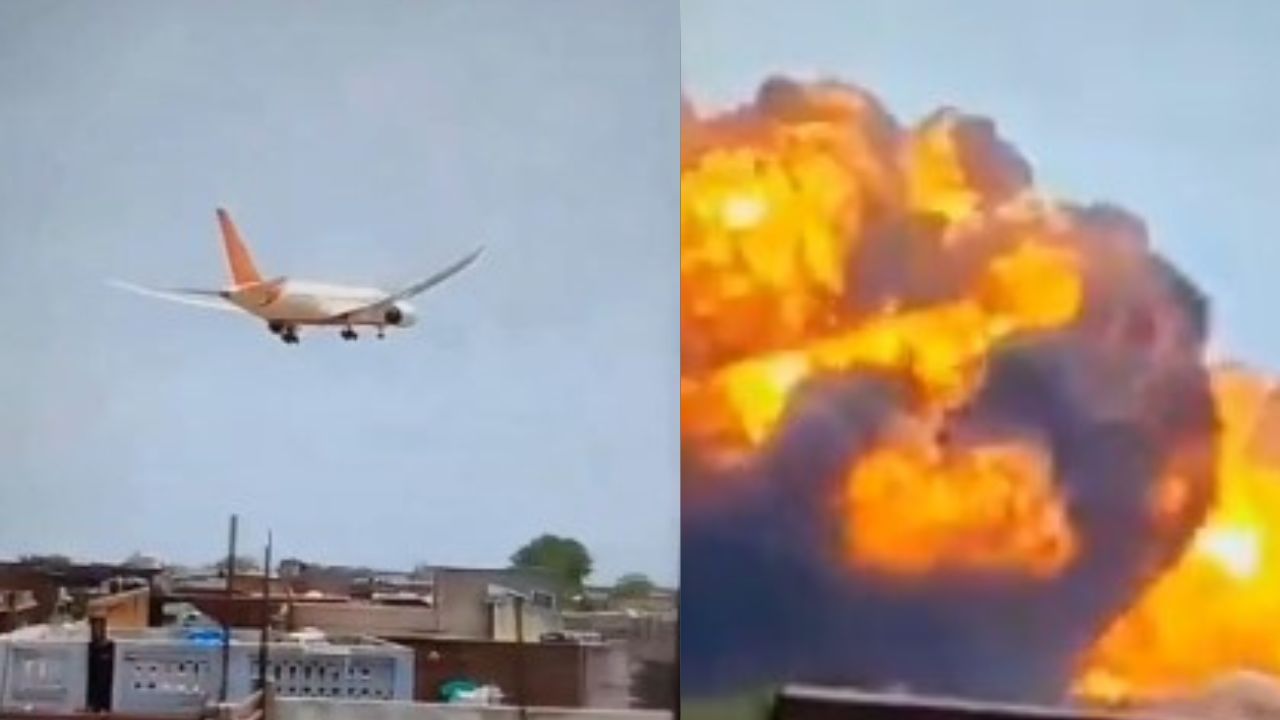
    Air India said that the 242 passengers and crew on board the London-bound passenger plane that crashed on Thursday included 169 Indian passengers, as well as British, Canadian and Portuguese nationals.

    “The flight… was carrying 242 passengers and crew members on board the Boeing 787-8 aircraft”, it said in a statement. Among the 230 passengers, “169 are Indian nationals, 53 are British nationals, one Canadian national and seven Portuguese nationals”, it said.

    “The injured are being taken to the nearest hospitals,” it said, adding that “Air India is giving its full cooperation to the authorities investigating this incident”.

  • US withdraws staff amid fears of Israeli strike on Iran

    US withdraws staff amid fears of Israeli strike on Iran

    President Donald Trump said US personnel were being moved from the potentially “dangerous” Middle East on Wednesday as nuclear talks with Iran faltered and fears grew of a regional conflict.

    Trump also reiterated that he would not allow Iran to have a nuclear weapon, amid mounting speculation that Israel could strike Tehran’s facilities.

    Iran threatened Wednesday to target US military bases in the region if conflict breaks out.

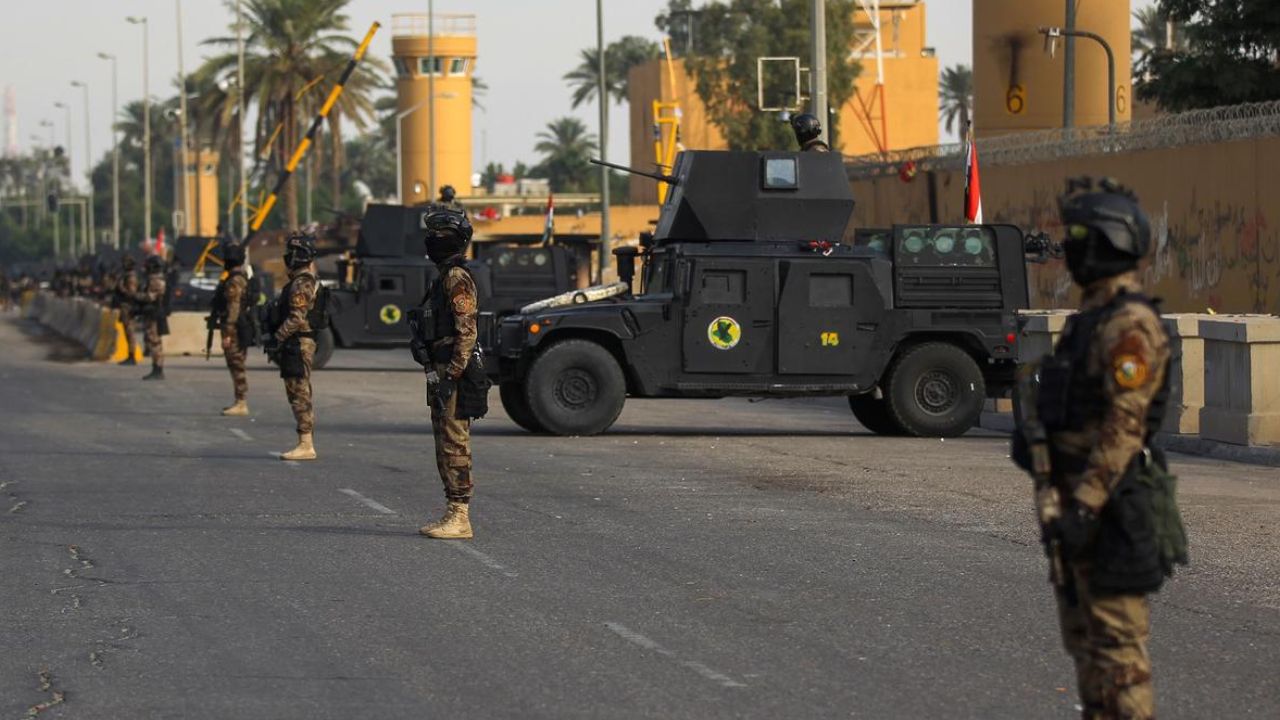
    A US official had earlier said that staff levels at the embassy in Iraq were being reduced over security concerns, while there were reports that personnel were also being moved from Kuwait and Bahrain.

    “Well they are being moved out because it could be a dangerous place,” Trump told reporters in Washington when asked about the reports of personnel being moved.

    “We’ve given notice to move out and we’ll see what happens.”

    Trump then added: “They can’t have a nuclear weapon, very simple. We’re not going to allow that.”

    Tehran and Washington have held five rounds of talks since April to thrash out a new nuclear deal to replace the 2015 accord that Trump abandoned during his first term in 2018.

    The two sides were due to meet again in coming days.

    Trump had until recently expressed optimism about the talks, but said in an interview published Wednesday that he was “less confident” about reaching a nuclear deal.

    Since returning to office in January, Trump has revived his “maximum pressure” campaign on Tehran, backing nuclear diplomacy but warning of military action if it fails.

    The US president says he has pressed Israeli Prime Minister Benjamin Netanyahu to hold off striking Iran’s nuclear facilities to give the talks a chance, but has increasingly signaled that he is losing patience.

    Iran however warned it would respond to any attack.

    “All its bases are within our reach, we have access to them, and without hesitation we will target all of them in the host countries,” Iran’s Defence Minister Aziz Nasirzadeh said in response to US threats of military action if the talks fail.

    ‘Suffer more losses’

    “God willing, things won’t reach that point, and the talks will succeed,” the minister said, adding that the US side “will suffer more losses” if it came to conflict.

    The United States has multiple bases in the Middle East, with the largest located in Qatar.

    In January 2020, Iran fired missiles at bases in Iraq housing American troops in retaliation for the US strike that killed top Iranian general Qassem Soleimani days before at the Baghdad airport.

    Dozens of US soldiers suffered traumatic brain injuries.

    Amid the escalating tensions, the UK Maritime Trade Operations, run by the British navy, also advised ships to transit the Gulf with caution.

    Iran and the United States have recently been locked in a diplomatic standoff over Iran’s uranium enrichment, with Tehran defending it as a “non-negotiable” right and Washington calling it a “red line.”

    Iran currently enriches uranium to 60 percent, far above the 3.67-percent limit set in the 2015 deal and close though still short of the 90 percent needed for a nuclear warhead.

    Western countries have long accused Iran of seeking to acquire atomic weapons, while Tehran insists its nuclear program is for peaceful purposes.

    Last week, Iran’s supreme leader Ayatollah Ali Khamenei said enrichment is “key” to Iran’s nuclear program and that Washington “cannot have a say” on the issue.

    During an interview with the New York Post’s podcast “Pod Force One,” which was recorded on Monday, Trump said he was losing hope a deal could be reached.

    “I don’t know. I did think so, and I’m getting more and more — less confident about it. They seem to be delaying and I think that’s a shame. I am less confident now than I would have been a couple of months ago,” he said.

    Iran has said it will present a counter-proposal to the latest draft from Washington, which it had criticised for failing to offer relief from sanctions — a key demand for Tehran, which has been reeling under their weight for years.

  • Israel detains Greta Thunberg, 11 others as Gaza aid boat seized

    Israel detains Greta Thunberg, 11 others as Gaza aid boat seized

    Israel intercepted a Gaza-bound aid boat on Monday morning, preventing the activists onboard, including Swedish campaigner Greta Thunberg, from reaching the blockaded Palestinian territory. 

    The Madleen, Freedom Flotilla Coalition aid ship, departed from Italy on June 1 aiming to bring awareness to food shortages in Gaza, which the United Nations has called the “hungriest place on Earth”. After 21 months of war, the UN has warned the territory’s entire population is at risk of famine.

    AFP lost contact with the Madleen early Monday morning.

    At around 3:02 am CET (0102 GMT), Israeli forces “forcibly intercepted” the vessel in international waters as it was approaching Gaza, the Freedom Flotilla Coalition said in a statement.

    “If you see this video we have been intercepted and kidnapped in international waters,” Thunberg said in a pre-recorded video shared by the coalition.

    The Palestinian group Hamas condemned the diversion, saying in a statement the boat was being taken to the Israeli port of Ashdod.

    The Israeli government had vowed to prevent the “unauthorised” ship from breaching the naval blockade of Gaza, urging it to turn back.

    On Sunday, Defence Minister Israel Katz said the blockade, in place since years before the Israel-led genocide against Palestinians in Gaza, was needed to prevent Palestinian militants from importing weapons.

    After diverting the boat, Israel’s foreign ministry posted a picture of the activists all in orange life jackets being offered water and sandwiches.

    “All the passengers of the ‘selfie yacht’ are safe and unharmed,” the ministry wrote on social media, adding that it expected the activists to return to their home countries.

    “The tiny amount of aid that was on the yacht and not consumed by the ‘celebrities’ will be transferred to Gaza through real humanitarian channels,” it added.

    Israel is facing mounting international pressure to allow more aid into Gaza to alleviate widespread shortages of food and basic supplies.

    It recently allowed humanitarian deliveries to resume after barring them for more than two months and began working with the newly formed, US-backed Gaza Humanitarian Foundation (GHF).

    But humanitarian agencies have criticised the GHF and the United Nations refuses to work with it, citing concerns over its practices and neutrality.

    Dozens of people have been killed near GHF distribution points since late May, according to Gaza’s civil defence agency.

    It said Israeli attacks killed at least 10 people on Sunday, including five civilians hit by gunfire near an aid distribution centre.

    ‘Risked their lives’ for food

    Civil defence spokesman Mahmud Bassal and witnesses said the civilians had been heading to a site west of Rafah, in southern Gaza, run by the US-backed Gaza Humanitarian Foundation.

    Witness Abdallah Nour al-Din told AFP that “people started gathering in the Al-Alam area of Rafah” in the early morning.

    “After about an hour and a half, hundreds moved toward the site and the army opened fire,” he said.

    The Israeli military said it fired on people who “continued advancing in a way that endangered the soldiers” despite warnings.

    The GHF said in a statement there had been no incidents “at any of our three sites” on Sunday.

    Outside Nasser Hospital, where the emergency workers brought the casualties, AFPTV footage showed mourners crying over blood-stained body bags.

    “I can’t see you like this,” said Lin al-Daghma by her father’s body.

    She spoke of the struggle to access food aid after the two-months Israeli blockade, despite the recent easing.

    At a charity kitchen in Gaza City, displaced Palestinian Umm Ghassan told AFP she had been unable to collect aid from a GHF site “because there were so many people, and there was a lot of shooting. I was afraid to go in, but there were people who risked their lives for their children and families”.

  • Spain cancels purchase of Israeli anti-tank missiles: reports

    Spain cancels purchase of Israeli anti-tank missiles: reports

    Spain, which has strongly criticised Israel’s offensive in Gaza, has cancelled a contract to buy 168 firing posts and 1,680 anti-tank missiles from Israeli defence company Rafael, Spanish media reported Wednesday.

    The deal was worth 287.5 million euros ($327 million), according to top-selling daily Spanish newspaper El País, which cited unnamed government sources.

    The equipment was to be manufactured in Spain under licence from Rafael.

    Spanish defence ministry sources told AFP that the government “has begun a process to revoke licences of Israeli origin” and was working to redirect its procurement programmes “with the goal of achieving greater technological independence and autonomy”.

    Spanish Prime Minister Pedro Sanchez’s criticisms of the offensive in Gaza infuriated Israeli Prime Minister Benjamin Netanyahu’s government last year by recognising a Palestinian state.

    In late April, Spain cancelled a contract to buy bullets from another Israeli company, IMI Systems, following pressure from the Socialist-led government’s far-left coalition partner Sumar — a move swiftly condemned by Israel.

    Labour Minister Yolanda Diaz, the founder of Sumar, said at the time that Spain could not engage in “business with a genocidal government… that is massacring the Palestinian people”.

    Sanchez’s government said it halted weapons transactions with Israel after the start of the war following Hamas’s attack on Israel on October 7, 2023.

    But according to Centre Delas, a Barcelona-based think tank specialising in security and defence, the government has granted 46 contracts worth more than 1 billion euros to Israeli companies based on data published on a public tenders platform.

  • Gaza aid sites shut, as Israel issues ‘combat zones’ warning

    Gaza aid sites shut, as Israel issues ‘combat zones’ warning

    A US and Israeli-backed group operating aid sites in the Gaza Strip announced the temporary closure of the facilities on Wednesday, with the Israeli army warning that roads leading to distribution centres were “considered combat zones”.

    The announcement by the Gaza Humanitarian Foundation (GHF) follows a string of deadly incidents near the distribution sites it operates that have sparked condemnation from the United Nations.

    Israeli bombardment on Wednesday killed at least 16 people in the Gaza Strip, including 12 in a single strike on a tent housing displaced people, the Palestinian territory’s civil defence agency told AFP.

    On Tuesday, 27 people were killed in southern Gaza when Israeli troops opened fire near a GHF aid site, with the military saying the incident was under investigation.

    UN Secretary-General Antonio Guterres condemned the deaths of people seeking food aid as “unacceptable”, and the world body’s rights chief condemned attacks on civilians as “a war crime” following a similar incident near the same site on Sunday.

    Israel recently eased its blockade of Gaza, but the UN says the territory’s entire population remains at risk of famine.

    – UN vote –

    The GHF said its “distribution centres will be closed for renovation, reorganisation and efficiency improvement work” on Wednesday and would resume operations on Thursday.

    The Israeli army, which confirmed the temporary closure, warned against travelling “on roads leading to the distribution centres, which are considered combat zones”.

    The GHF, officially a private effort with opaque funding, began operations a week ago but the UN and major aid groups have refused to cooperate with it over concerns it was designed to cater to Israeli military objectives.

    Israeli authorities and the GHF, which uses contracted US security, have denied allegations that the Israeli army shot at civilians rushing to pick up aid packages.

    Food shortages in Gaza have propelled fresh international calls for an end to the war, but a ceasefire agreement between Israel and Hamas remains elusive.

    The UN Security Council will vote Wednesday on a resolution calling for a ceasefire and humanitarian access to Gaza, a measure expected to be vetoed by key Israel backer the United States.

    – ‘A trap’ –

    At a hospital in southern Gaza, the family of Reem al-Akhras, who was killed in Tuesday’s shooting near GHF’s facility, were beside themselves with grief.

    “She went to bring us some food, and this is what happened to her,” her son Zain Zidan said, his face streaked with tears.

    Akhras’s husband, Mohamed Zidan, said “every day unarmed people” were being killed.

    “This is not humanitarian aid — it’s a trap.”

    The Israeli military maintains that its forces do not prevent Gazans from collecting aid.

    Army spokesperson Effie Defrin said the Israeli soldiers had fired towards suspects who “were approaching in a way that endangered” the troops, adding that the “incident is being investigated”.

    UN human rights chief Volker Turk called attacks against civilians “unconscionable” and said they “constitute a grave breach of international law and a war crime”.

    The International Committee of the Red Cross meanwhile said “Gazans face an “unprecedented scale and frequency of recent mass casualty incidents”.

    – Activists’ boat –

    Scenes of hunger in Gaza have also sparked fresh solidarity with Palestinians, and a boat organised by an international activist coalition was sailing toward Gaza, aiming to deliver aid.

    The boat from the Freedom Flotilla Coalition departed Sicily Sunday carrying a dozen people, including environmental activist Greta Thunberg, along with fruit juices, milk, tinned food and protein bars.

    “Together, we can open a people’s sea corridor to Gaza,” the coalition said.

    But Israel’s military said Tuesday it was ready to “protect” the country’s maritime space.

    When asked about the Freedom Flotilla vessel, army spokesman Defrin said “for this case as well, we are prepared”, declining to go into detail.

    Israel has stepped up its offensive in Gaza in what it says is a renewed push to defeat the Palestinian group Hamas, whose October 2023 attack sparked the war.

    The health ministry in Hamas-run Gaza said at least 4,240 people have been killed since Israel resumed its offensive on March 18, taking the war’s overall toll to 54,510, mostly civilians.

    Hamas’s 2023 attack on Israel resulted in the deaths of 1,218 people, also mostly civilians, according to an AFP tally based on official figures.

    The army said three of its soldiers had been killed in northern Gaza, bringing the number of Israeli troops killed in the territory since the start of the war to 424.