Author: AFP

  • Hajj death toll exceeds 1,000 as temperatures reach 52 degrees

    Hajj death toll exceeds 1,000 as temperatures reach 52 degrees

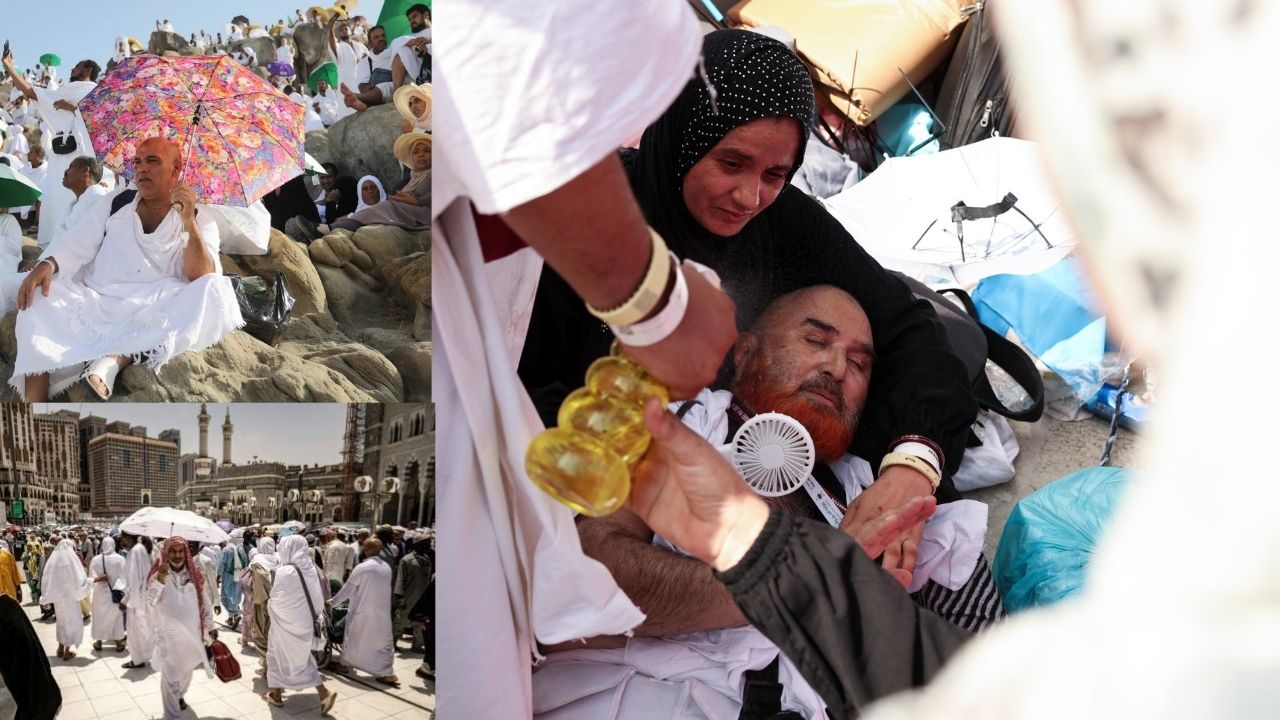
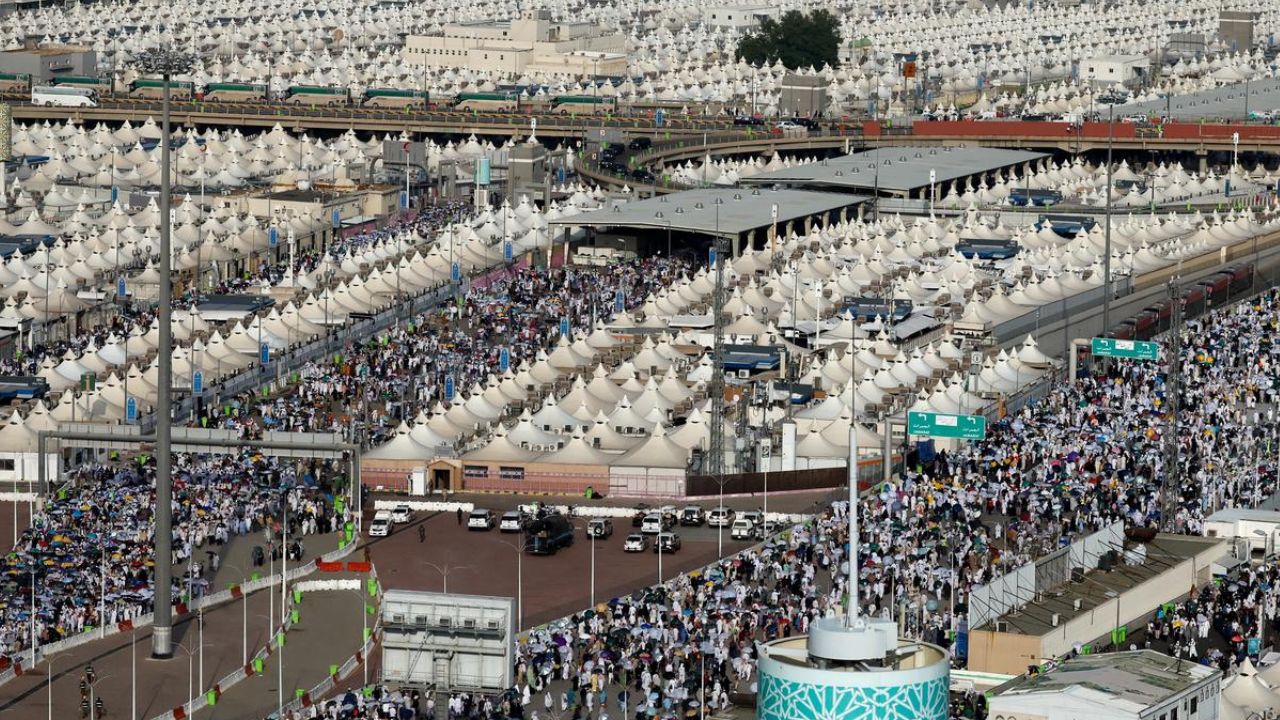
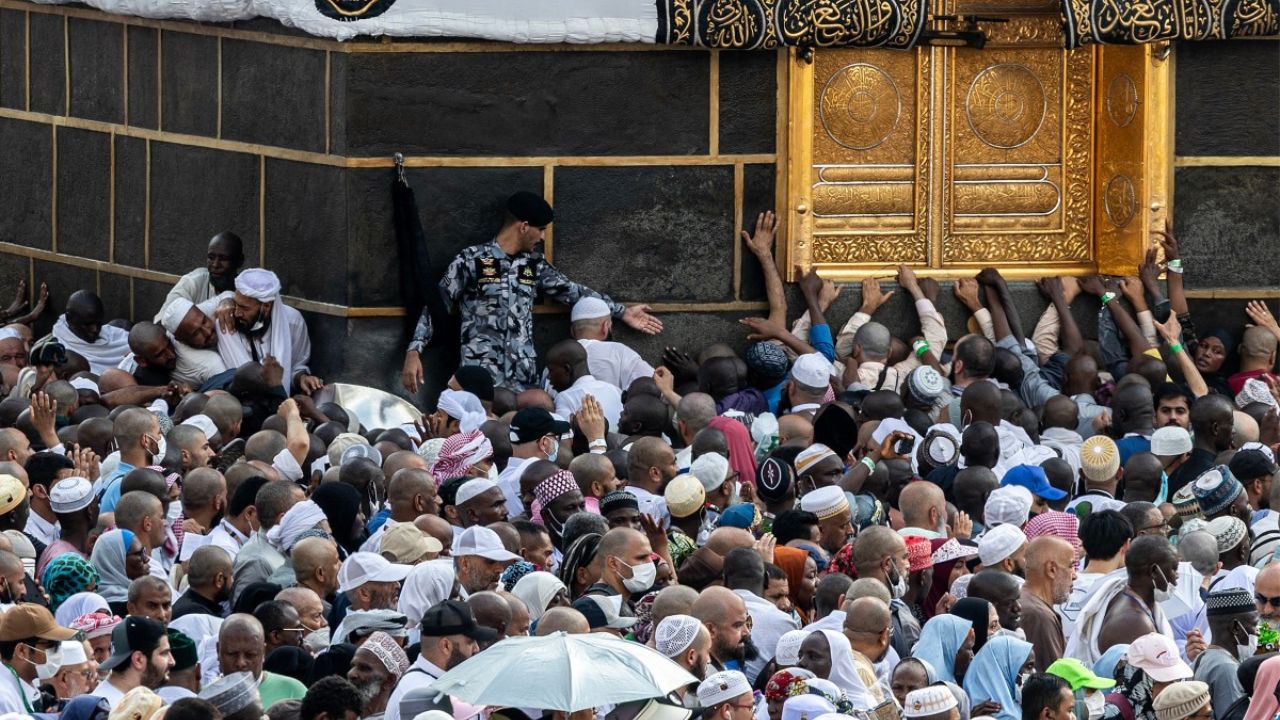
    The death toll from this year’s hajj has exceeded 1,000, an AFP tally said Thursday, more than half unregistered worshippers who performed the pilgrimage in extreme heat in Saudi Arabia.

    The new deaths reported Thursday included 58 from Egypt, according to an Arab diplomat who provided a breakdown showing that of 658 Egyptians who died, 630 were unregistered pilgrims.

    Around 10 countries have reported 1,081 deaths during the pilgrimage, one of the five pillars of Islam which all Muslims with the means must complete at least once.

    The hajj, whose timing is determined by the lunar Islamic calendar, fell again this year during the oven-like Saudi summer.

    The national meteorological centre reported a high of 51.8 degrees Celsius (125 Fahrenheit) this week at the Grand Mosque in Mecca.

    A Saudi study published last month said temperatures in the area are rising 0.4 degrees Celsius each decade.

    Each year tens of thousands of pilgrims try to join the hajj through irregular channels as they cannot afford the often costly official permits.

    Saudi authorities reported clearing hundreds of thousands of unregistered pilgrims from Mecca this month, but it appears many still participated in the main rites which began last Friday.

    This group was more vulnerable, because without official permits they could not access air-conditioned spaces provided for the 1.8 million authorised pilgrims to cool down.

    “People were tired after being chased by security forces before Arafat day. They were exhausted,” one Arab diplomat told AFP on Thursday of Saturday’s day-long outdoor prayers that marked the hajj’s climax.

    The diplomat said the main cause of death among Egyptian pilgrims was the heat, which triggered complications related to high blood pressure and other issues.

    Egyptian officials were visiting hospitals to obtain information and help Egyptian pilgrims get medical care, the foreign ministry said in a statement on Thursday.

    “However, there are large numbers of Egyptian citizens who are not registered in hajj databases, which requires double the effort and a longer time to search for missing persons and find their relatives,” it said.

    Egyptian President Abdel Fattah El-Sisi has ordered that a “crisis cell” headed by the prime minister follow up on the deaths of the country’s pilgrims.

    Sisi stressed “the need for immediate coordination with the Saudi authorities to facilitate receiving the bodies of the deceased and streamline the process,” said a statement from his office.

    Burials begin

    More fatalities were also confirmed on Thursday by Pakistan and Indonesia.

    Out of around 150,000 pilgrims, Pakistan has so far recorded 58 deaths, a diplomat told AFP.

    “I think given the number of people, given the weather, this is just natural,” the diplomat said.

    Indonesia, which had around 240,000 pilgrims, raised its death toll to 183,  its religious affairs ministry said, compared with 313 deaths recorded last year.

    Deaths have also been confirmed by Malaysia, India, Jordan, Iran, Senegal, Tunisia, Sudan and Iraq’s autonomous Kurdistan region. In many cases, authorities have not specified the cause.

    Friends and relatives have been searching for missing pilgrims, scouring hospitals and pleading online for news, fearing the worst.

    Two diplomats told AFP Thursday that Saudi authorities had begun the burial process for dead pilgrims, cleaning the bodies and putting them in white burial cloth and taking them to be interred.

    “The burial is done by the Saudi authorities. They have their own system so we just follow that,” said one diplomat, who said his country was working to notify loved ones as best it could.

    The other diplomat said that given the number of fatalities it would be impossible to notify many families ahead of time, especially in Egypt which accounts for so many of the dead.

    Jordan’s foreign ministry said on Thursday that Saudi authorities had granted 68 permits for Jordanian pilgrims to be buried in Mecca.

    Sixteen Jordanians remain missing and 22 are in hospital, including seven who are in critical condition, the foreign ministry said in a statement.

    ‘Extreme danger’

    Saudi Arabia has not provided information on fatalities, though it reported more than 2,700 cases of “heat exhaustion” on Sunday alone.

    Last year various countries reported more than 300 deaths during the hajj, mostly Indonesians.

    The timing of the hajj moves back about 11 days each year in the Gregorian calendar, meaning that next year it will take place earlier in June, potentially in cooler conditions.

    A 2019 study by the journal Geophysical Research Letters said because of climate change, heat stress for hajj pilgrims will exceed the “extreme danger threshold” from 2047 to 2052 and 2079 to 2086, “with increasing frequency and intensity as the century progresses”.

    Hosting the hajj is a source of prestige for the Saudi royal family, and King Salman’s official title includes the words “Custodian of the Two Holy Mosques”, in Mecca and Medina.

    The hajj has seen a number of disasters over the years, most recently in 2015 when a stampede during the “stoning the devil” ritual killed up to 2,300 people.

    bur/srm

    © Agence France-Presse
  • Loved ones search for missing as hajj death toll passes 900

    Loved ones search for missing as hajj death toll passes 900

    Riyadh, Saudi Arabia – Friends and family searched for missing hajj pilgrims on Wednesday as the death toll at the annual rituals, which were carried out in scorching heat, surged past 900.

    Relatives scoured hospitals and pleaded online for news, fearing the worst after temperatures hit 51.8 degrees Celsius (125 Fahrenheit) in Mecca, Islam’s holiest city, on Monday.

    About 1.8 million people from all over the world, many old and infirm, took part in the days-long, mostly outdoor pilgrimage, which this year fell during the oven-like Saudi summer.

    An Arab diplomat told AFP that deaths among Egyptians alone had jumped to “at least 600”, from more than 300 a day earlier, mostly from the unforgiving heat.

    That figure brought the total reported dead so far to 922, according to an AFP tally of figures released by various countries.

    The diplomat later added that Egyptian officials in Saudi Arabia had received “1,400 reports of missing pilgrims”, including the 600 dead.

    Mabrouka bint Salem Shushana of Tunisia, in her early 70s, has been missing since the climax of the pilgrimage on Saturday at Mount Arafat, her husband Mohammed told AFP on Wednesday.

    Because she was unregistered and did not have an official hajj permit, she was unable to access air-conditioned facilities that allow pilgrims to cool down, he said.

    “She’s an old lady. She was tired. She was feeling so hot, and she had no place to sleep,” he said. “I looked for her in all the hospitals. Until now I don’t have a clue.”

    Facebook and other social media networks have been flooded with pictures of the missing and requests for information.

    Those searching for news include family and friends of Ghada Mahmoud Ahmed Dawood, an Egyptian pilgrim unaccounted for since Saturday.

    “I received a call from her daughter in Egypt begging me to put any post on Facebook that can help track her or find her,” said one family friend based in Saudi Arabia, who spoke on condition of anonymity because he did not want to anger Saudi authorities.

    “The good news is that until now we did not find her on the list of the dead people, which gives us hope she is still alive.”

    Searing heat

    The hajj is one of the five pillars of Islam and all Muslims with the means must complete it at least once.

    Its timing is determined by the Islamic lunar calendar, shifting forward each year in the Gregorian calendar.

    For the past several years the mainly outdoor rituals have fallen during the sweltering Saudi summer.

    According to a Saudi study published last month, temperatures in the area are rising 0.4 degrees Celsius (0.72 degrees Fahrenheit) each decade.

    In addition to Egypt, fatalities have also been confirmed by Jordan, Indonesia, Iran, Senegal, Tunisia and Iraq’s autonomous Kurdistan region, though in many cases authorities have not specified the cause.

    A second Arab diplomat told AFP on Wednesday that Jordanian officials were looking for 20 missing pilgrims, though 80 others who were initially reported missing were located in hospitals.

    An Asian diplomat told AFP there were “around 68 dead” from India and that others were missing.

    “Some (died) because of natural causes and we had many old-age pilgrims. And some are due to the weather conditions, that’s what we assume,” he said.

    Saudi Arabia has not provided information on fatalities, though it reported more than 2,700 cases of “heat exhaustion” on Sunday alone.

    Last year more than 200 pilgrims were reported dead, most of them from Indonesia.

    ‘No news’

    Each year tens of thousands of pilgrims attempt to perform the hajj through irregular channels as they cannot afford the often costly official permits.

    This has become easier since 2019 when Saudi Arabia introduced a general tourism visa, said Umer Karim, an expert on Saudi politics at the University of Birmingham.

    “Before, the only people who could have done that were residents of the kingdom, and they know the situation,” he said.

    “For these tourist visa guys, it’s like being on the migrant route without any idea of what to expect.”

    One of the Arab diplomats who spoke to AFP on Wednesday said many of the dead Egyptians were unregistered.

    Even pilgrims who have official permits can be vulnerable, including Houria Ahmad Abdallah Sharif, a 70-year-old Egyptian pilgrim who has been missing since Saturday.

    After praying on Mount Arafat, she told a friend she wanted to go to a public bathroom to clean her abaya, but she never came back.

    “We’ve searched for her from door to door and we have not found her until now,” said the friend, who also spoke on condition of anonymity.

    “We know many who are still searching for their family members and relatives and they are not finding them, or if they are finding them they are finding them dead,” the friend added.

    bur/th/dcp/jsa

    © Agence France-Presse

  • French boys charged with rape of 12-year-old girl

    French boys charged with rape of 12-year-old girl

    French authorities said they have charged two teenagers with the gang rape of a 12-year-old Jewish girl in a Paris suburb in an attack suspected to have been motivated by anti-Semitism.

    The violence has sent shockwaves through the Jewish community and added to tensions in the run-up to a snap election that could bring the far-right National Rally to power for the first time.

    The girl told police she was approached by three boys aged between 12 and 13 while she was in a park near her home with a friend and dragged into a shed on Saturday evening in the northwestern suburb of Courbevoie.

    The suspects beat her and “forced her to have anal and vaginal penetration, fellatio, while uttering death threats and anti-Semitic remarks,” a police source told AFP.

    Her friend managed to identify two of the attackers.

    The three boys were arrested on Monday.

    On Tuesday evening, two of them both aged 13 were charged with gang rape, anti-Semitic insults and violence and issuing death threats. The pair were taken into custody.

    The third boy, 12, was also charged with anti-Semitic insults and violence and issuing death threats, but not with rape. He was allowed return home after being charged.

  • Diplomats say at least 550 pilgrims, mostly Egyptians, died during Haj this year

    Diplomats say at least 550 pilgrims, mostly Egyptians, died during Haj this year

    Diplomats on Tuesday said at least 550 pilgrims died during the Haj, underscoring the gruelling nature of the pilgrimage which again unfolded in scorching temperatures this year.

    At least 323 of those who died were Egyptians, most of them succumbing to heat-related illnesses, two Arab diplomats coordinating their countries’ responses told AFP.

    “All of them (the Egyptians) died because of heat” except for one who sustained fatal injuries during a minor crowd crush, one of the diplomats said, adding the total figure came from the hospital morgue in the Al-Muaisem neighbourhood of Makkah.

    At least 60 Jordanians also died, the diplomats said, up from an official tally of 41 given earlier on Tuesday by Amman.

    The new deaths bring the total reported so far by multiple countries to 577, according to an AFP tally.

    The diplomats said the total at the morgue in Al-Muaisem, one of the biggest in Makkah, was 550.

    The Haj pilgrimage is increasingly affected by climate change, according to a Saudi study published last month that said temperatures in the area where rituals are performed were rising 0.4 degrees Celsius (0.72 degrees Fahrenheit) each decade.

    Temperatures hit 51.8 degrees Celsius (125 Fahrenheit) at the Grand Mosque in Makkah on Monday, the Saudi national meteorology centre said.

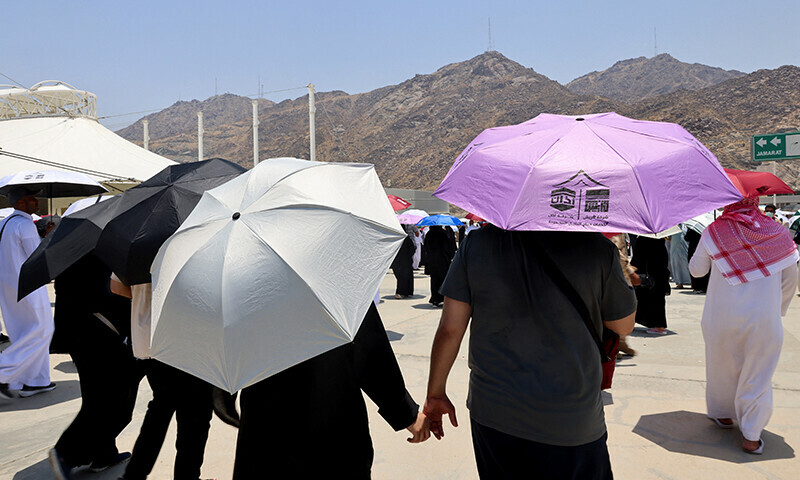
    Muslim pilgrims hold hands as they walk with umbrellas to the site where people take part in the Satan stoning ritual, during the annual haj pilgrimage in Mina, Saudi Arabia on June 18, 2024 — Reuters

    Heat stress

    Earlier on Tuesday, Egypt’s foreign ministry said Cairo was collaborating with Saudi authorities on search operations for Egyptians who had gone missing during the Haj.

    While a ministry statement said “a certain number of deaths” had occurred, it did not specify whether Egyptians were among them.

    Saudi authorities have reported treating more than 2,000 pilgrims suffering from heat stress but have not updated that figure since Sunday and have not provided information on fatalities.

    At least 240 pilgrims were reported dead by various countries last year, most of them Indonesians.

    AFP journalists in Mina, outside Makkah, on Monday saw pilgrims pouring bottles of water over their heads as volunteers handed out cold drinks and fast-melting chocolate ice cream to help them keep cool.

    Saudi officials had advised pilgrims to use umbrellas, drink plenty of water and avoid exposure to the sun during the hottest hours of the day.

    Some pilgrims described seeing motionless bodies on the roadside and ambulance services that appeared overwhelmed at times.

    Around 1.8 million pilgrims took part in the Haj this year, 1.6m of them from abroad, according to Saudi authorities.

    Unregistered pilgrims

    Each year tens of thousands of pilgrims attempt to perform the Haj through irregular channels as they cannot afford the often costly procedures for official Haj visas.

    This places these off-the-books pilgrims at risk as they cannot access air-conditioned facilities provided by Saudi authorities along the Haj route.

    One of the diplomats who spoke to AFP on Tuesday said that the Egyptian death toll was “absolutely” boosted by a large number of unregistered Egyptian pilgrims.

    “Irregular pilgrims caused great chaos in the Egyptian pilgrims’ camps, causing the collapse of services,” said an Egyptian official supervising the country’s Haj mission.

    “The pilgrims went without food, water, or air conditioning for a long time.”

    They died “from the heat because most people had no place” to take shelter.

    Earlier this month, Saudi officials said they had cleared hundreds of thousands of unregistered pilgrims from Makkah ahead of the Haj.

    Other countries to report deaths during the Haj this year include Indonesia, Iran and Senegal.

    Most countries have not specified how many deaths were heat-related.

    Saudi Health Minister Fahd bin Abdul Rahman Al-Jalajel said on Tuesday that health plans for the Haj had “been successfully carried out”, preventing major outbreaks of disease and other public health threats, the official Saudi Press Agency reported.

    Health officials “provided virtual consultations to over 5,800 pilgrims, primarily for heat-related illnesses, enabling prompt intervention and mitigating the potential for a surge in cases,” SPA said.

  • Israeli official confirms Netanyahu dissolves war cabinet

    Israeli official confirms Netanyahu dissolves war cabinet

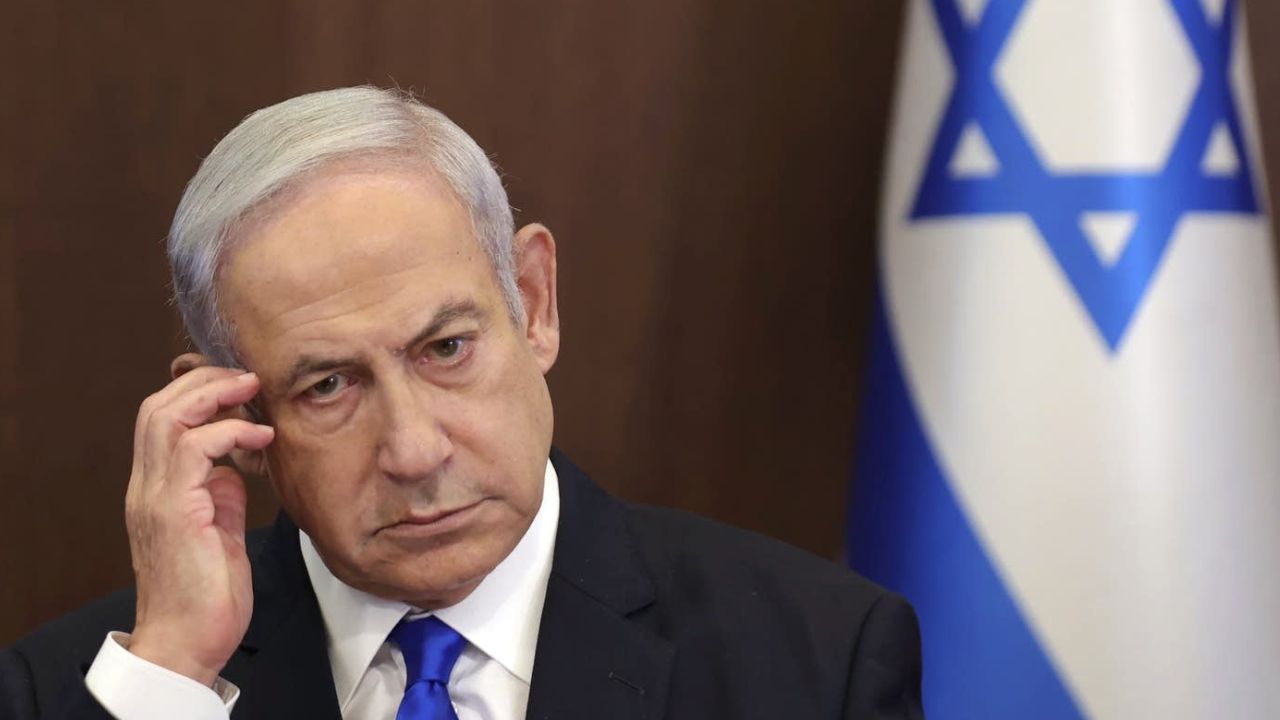
    An Israeli government spokesman on Monday said Prime Minister Benjamin Netanyahu had dissolved the war cabinet following the resignation earlier this month of centrist leader Benny Gantz.

    David Mencer, spokesman at the prime minister’s office, told reporters the war cabinet was a “prerequisite” for former army chief and defence minister Gantz to join a unity government.

    “So with Mr Gantz leaving government, there is no need for the cabinet. Its duties will be taken over by the security cabinet”, a pre-existing body, on matters regarding the war between Israel and Hamas in the Gaza Strip, he said.

    Israeli media said the move, which was not expected to trigger any major policy shift, was meant to counter pressure from far-right politicians seeking a greater say in decision-making.

    The war cabinet was formed after Gantz had left the opposition to join Netanyahu’s government following Hamas’s October 7 attack on Israel.

    Another member of Gantz’ party, also a former military chief, Gadi Eisenkot, had also agreed to join the government on condition that a war cabinet be formed, according to Israeli officials.

    Eisenkot left the war cabinet along with Gantz.

    “It means that the security cabinet will meet more often. The security cabinet is the body responsible for making decisions (related to the war) anyway,” said an Israeli official on condition of anonymity because he was not authorised to speak on the issue.

    Defence Minister Yoav Gallant, National Security Adviser Tzachi Hanegbi and Strategic Affairs Minister Ron Dermer, who were all part of the war cabinet, also sit on the security cabinet — which ratifies decisions regarding the war including truce and hostage release negotiations.

    Gantz announced his resignation on June 9 after failing to get Netanyahu to approve a post-war plan for Gaza.

    Israeli media reported that Netanyahu dissolved the war cabinet to avoid including far-right coalition members in the sensitive forum, fearing harm to relations with Western allies such as the United States.

    Mencer declined to answer when asked if Netanyahu’s decision aimed to rebuff his far-right partners and tighten his grip over decision-making.

    National Security Minister Itamar Ben Gvir and Finance Minister Bezalel Smotrich, who are both security cabinet members and opposed to a truce before Hamas is “eliminated”, had put pressure on Netanyahu to add them to the war cabinet.

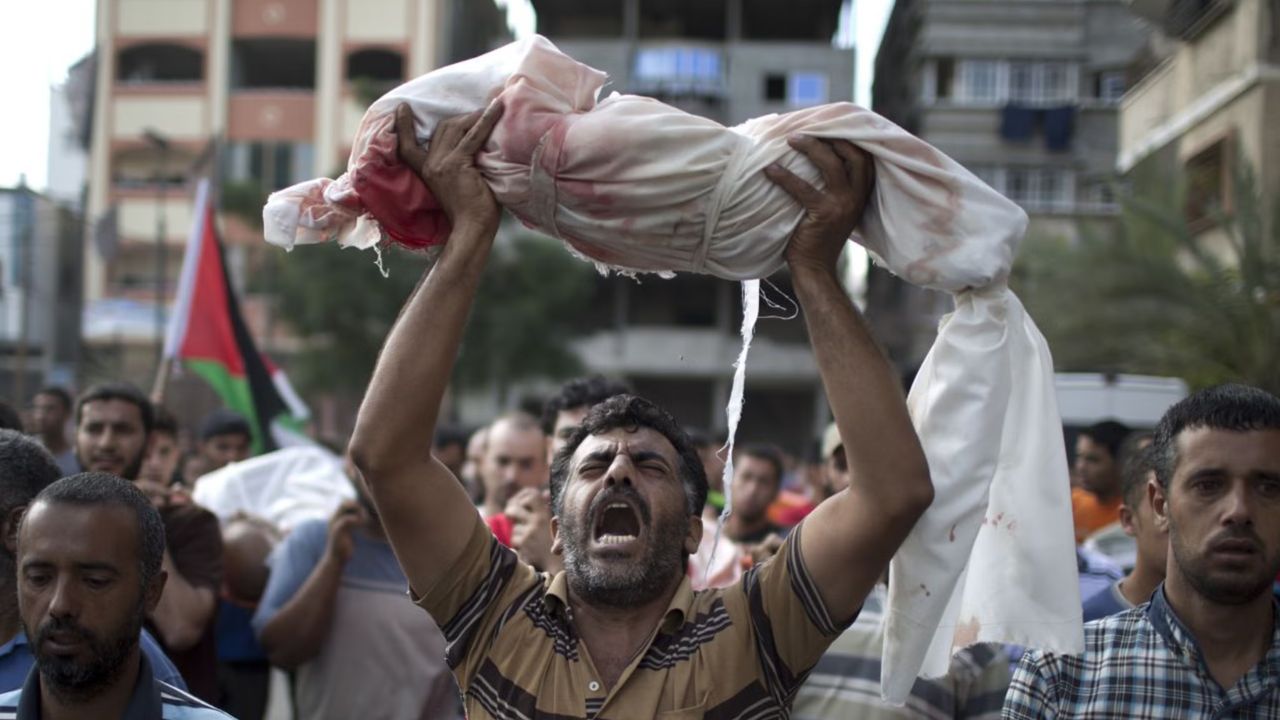
    Israel’s genocide against Palestinians in Gaza has killed at least 37,347 people, also mostly civilians, according to the health ministry in the territory.

  • Princess Catherine looks stunning in first public appearance since cancer diagnosis

    Princess Catherine looks stunning in first public appearance since cancer diagnosis

    Catherine, Princess of Wales, on Saturday made a tentative return to public life for the first time since being diagnosed with cancer, attending a military parade in central London to mark Britain’s King Charles III’s official birthday.

    Kate, as she is widely known, rode in a carriage alongside her three children at the outset of the annual celebration before disembarking to watch proceedings from a viewing point.

    It comes nearly three months after the future queen revealed she was receiving chemotherapy treatment. The 42-year-old princess had not been seen at a public engagement since a Christmas Day service last year.

    In a Friday evening statement Kate said she was “making good progress” with her treatment, which is set to last for several more months, but was “not out of the woods yet”.

    “I’m looking forward to attending the King’s Birthday Parade this weekend with my family and hope to join a few public engagements over the summer,” the princess said.

    Kate’s announcement that she had cancer came just weeks after it was disclosed that her father-in-law, King Charles III, had also been diagnosed with the condition.

    Neither has revealed what type of cancer they have.

    British head of state Charles, 75, was given the green light to resume public duties in April, after doctors said they were “very encouraged” by his progress.

    His first engagement was meeting staff and patients at a London cancer treatment centre.

    Earlier this month, he attended commemoration events in northern France for the 80th anniversary of D-Day.

    However, unlike previous years when he inspected troops on horseback at Trooping the Colour, Charles participated this year from a carriage, in full military regalia alongside Queen Camilla.

    His elder son and heir William, 41, rode on horseback, also in military uniform.

    Kate, wearing a white dress and hat, had been seen arriving by car at Buckingham Palace with William and their children ahead of the parade, which formally began at 11:00 am (1000 GMT).

    Spectators on The Mall leading to Buckingham Palace to witness the yearly ceremonial event welcomed Kate’s tentative return to public appearances.

    “I was so pleased to hear the news last night,” Angela Perry, a teacher in her 50s from Reading in central England, told AFP.

    “She’s our future queen. She’s so important,” she added, calling Kate’s reemergence “reassuring”.

    Royal officials will be keen to manage expectations about Kate’s gradual return to the public eye, and have maintained that her appearances will depend on her treatment and recovery.

    Kate explained in her statement that she had “good days and bad days” and was “taking each day as it comes”.

    After travelling with Prince George, aged 10, Princess Charlotte, nine, and six-year-old Prince Louis in a state carriage to watch the parade from a building, the family were set to return to Buckingham Palace for a balcony appearance.

    Trooping the Colour marks the British sovereign’s official birthday and is a minutely choreographed military tradition dating back more than two centuries.

    It starts at Buckingham Palace and moves down The Mall to Horse Guards Parade, where Charles will receive a royal salute before inspecting soldiers.

    Charles was actually born in November but the second birthday tradition dates back to King George II in 1748, who wanted to have a celebration in better weather as his own birthday was in October.

    The ceremony has its origins in the preparations for war, where all regimental flags — or colours — were shown to the soldiers so that they would recognise them in the confusion of battle.

    This year’s event will include three of five military horses that bolted through the streets of central London in April after being spooked by the noise of building construction.

    London’s Metropolitan Police said it would mount a “significant” security operation and had been liaising with anti-monarchy group Republic, which kicked off protests at the event.

    The force said it had banned “amplified sound” in and around the parade route on public safety grounds and to avoid disruption to the mounted regiments taking part.

    Republic’s activists, who huddled on a section of The Mall alongside royalists, held aloft placards bearing slogans including “not my king” and “down with the crown”.

  • Two missing Japanese climbers spotted in Pakistan’s north

    Two missing Japanese climbers spotted in Pakistan’s north

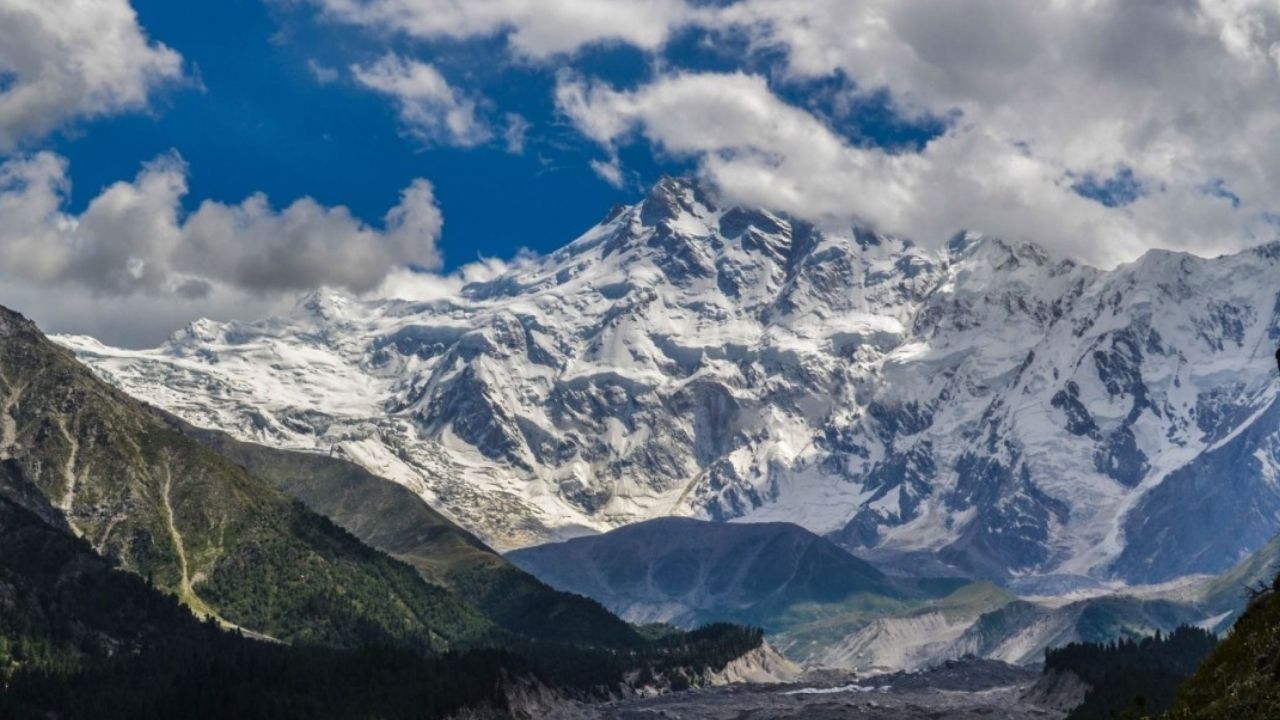
    Two missing Japanese climbers were spotted by helicopter on Thursday in Pakistan’s mountainous north, home to some of the world’s tallest peaks, but their condition remains unknown, a tour operator said.

    The Japanese climbers Ryuseki Hiraoka and Atsushi Taguchi were attempting to summit the 7,027-metre (23,054-foot) Spantik mountain in the Karakoram range before they went missing.

    “The rescuers saw the climbers and recognised them by their clothes, but they could not determine their condition,” Naiknam Karim, the CEO of Adventure Tours Pakistan (ATP) which organised the tour, told AFP.

    The two were spotted during a military helicopter search on Thursday that was called off due to poor weather conditions.

    “There has been no communication between the two Japanese climbers and officials at basecamp since they started their expedition,” Karim earlier said.

    “They were seen on June 10 (for the) last time at above 5,000 metres.”

    Another team of Japanese climbers raised the alarm on Tuesday after arriving at Camp 2, at around 5,650 metres, where Hiraoka and Taguchi were scheduled to be.

    The search is scheduled to resume on Friday.

    “An 8-member rescue team including five Japanese climbers will ascent on foot and search for them,” Karim Added.

    The pair had reached base camp on June 3 and were attempting the climb without the help of porters.

    Spantik, also known as the Golden Peak, is described as a “relatively accessible and straightforward peak” on the website of a separate tourist company, Adventure Tours.

    The country is home to five of the world’s 14 mountains higher than 8,000 metres — including K2, the world’s second highest.

    More than 8,900 foreigners visited the remote Gilgit-Baltistan region in 2023, according to official figures from the government, where the summer climbing season runs from early June to late August.

  • Denmark recalls South Korean noodles for being too spicy

    Denmark recalls South Korean noodles for being too spicy

    Denmark’s food agency has recalled South Korean instant ramen produced by a brand popular in the West, warning noodle lovers that they were so hot they might cause “acute poisoning”.

    Three Samyang Foods noodle products were assessed to have dangerous levels of capsaicin, the active component of chilli peppers, the Danish Veterinary and Food Administration said in a statement on Tuesday.

    The three products from Samyang instant ramen line — Buldak 3x Spicy & Hot Chicken, 2x Spicy & Hot Chicken, and Hot Chicken Stew — were being withdrawn from sale in Denmark.

    The level in a single packet of the noodles was “so high that they pose a risk of the consumer developing acute poisoning”, the Danish body said.

    “If you have the products, you should discard them or return them to the store where they were purchased,” the statement added.

    It issued a special warning against children eating the noodles, urging parents to contact the Poison Line if their little ones appeared to show “acute symptoms”.

    Samyang products are hugely popular overseas, with the company’s operating profit hitting a record high of over $110 million in 2023.

    Samyang Foods said it was the first time the company’s products had been recalled because they were deemed too hot, and added that it would work to better understand local regulations in export markets.

    “Currently, the products are being exported around the world, but this is the first time they have been recalled for this reason,” a spokesperson for the company told AFP.

    Samyang Foods saw its stock price soar 70 percent in recent months after its buldak carbonara ramen went viral on TikTok, with the product becoming so popular in the United States there have been reports of shortages.

    Celebrities such as Cardi B have posted stories online about searching for over 30 minutes to find the flavourful instant noodles.

  • UN probe accuses Israel of crimes against humanity

    UN probe accuses Israel of crimes against humanity

    A UN investigation concluded on Wednesday that Israel has committed crimes against humanity during the genocide in Gaza, including that of “extermination”, while saying Israeli and Palestinian armed groups have both committed war crimes.

    The independent Commission of Inquiry’s report is the United Nations’ first in-depth investigation into the events following October 7.

    It found that Israel had committed war crimes, crimes against humanity and violations of international humanitarian law (IHL) and international human rights law (IHRL).

    The report noted “a widespread or systematic attack directed against the civilian population in Gaza.”

    “The commission found that the crimes against humanity of extermination; murder; gender persecution targeting Palestinian men and boys; forcible transfer; and torture and inhuman and cruel treatment were committed,” it added.

    Israel rejected the conclusions by accusing the UN commission of “systematic anti-Israeli discrimination”.

    Israel intensified its attacks in Gaza after Hamas’s October 7 attack.

    The commission found that in that attack, members of the military wings of Hamas and other Palestinian armed groups and Palestinian civilians committed war crimes, as well as violations and abuses of IHL and IHRL.

    Militants seized 251 hostages, of which 116 remain in Gaza, though the Israeli army says 41 of them are dead.

    The Israeli army launched a devastating offensive on the Gaza Strip that has left more than 37,000 people dead, the majority of them civilians, according to the territory’s health ministry.

    The unprecedented Commission of Inquiry was established by the UN Human Rights Council in May 2021 to investigate alleged violations of IHL and IHRL in Israel and the Palestinian territories.

    Since October 7, the three-member commission has focused on Israeli geocide against Palestinians in Gaza.

    “It is imperative that all those who have committed crimes be held accountable,” said the commission’s chair Navi Pillay, a former UN rights chief and an ex-International Criminal Court judge.

    “Israel must immediately stop its military operations and attacks in Gaza.

    “Hamas and Palestinian armed groups must immediately cease rocket attacks and release all hostages. The taking of hostages constitutes a war crime.”

    ‘War crimes’ in October attack

    The commission concluded that members of Hamas, other Palestinian armed groups and civilians participating in the October 7 attack “deliberately killed, injured, mistreated, took hostages and committed sexual and gender-based violence”.

    These acts were committed against civilians and members of the Israeli security forces.

    “These actions constitute war crimes and violations and abuses of IHL and IHRL,” it said.

    The commission further said it found “significant evidence on the desecration of corpses, including sexualised desecration, decapitations, lacerations, burning, severing of body parts and undressing”.

    “Women were subjected to gender-based violence during the course of their execution or abduction. Women and women’s bodies were used as victory trophies by male perpetrators.”

    Many children who witnessed their relatives being killed were “also filmed for propaganda purposes”, with the commission finding it “particularly egregious that children were targeted for abduction”.

    The report said Israeli authorities “failed to protect civilians in southern Israel on almost every front”.

    Israel’s ‘starvation’ of Gaza

    In their actions in Gaza, the commission found the Israeli authorities “responsible for the war crimes of starvation as a method of warfare, murder or wilful killing, intentionally directing attacks against civilians and civilian objects, forcible transfer, sexual violence, torture and inhuman or cruel treatment, arbitrary detention and outrages upon personal dignity”.

    Starvation will affect the Gaza population, particularly children, “for decades to come”, the report said, while “the siege it imposed… constitutes collective punishment and reprisal against the civilian population, both of which are clear violations of IHL.”

    In the West Bank, the commission found that Israeli forces committed acts of sexual violence, torture and inhuman or cruel treatment and outrages upon personal dignity, “all of which are war crimes”.

    Israel’s government and forces “permitted, fostered and instigated a campaign of settler violence against Palestinian communities” in the territory, the commission added.

    The report is based on interviews with victims and witnesses conducted remotely, and in Turkey and Egypt, and through studying thousands of verified open-source items, satellite imagery and forensic medical reports, the commission said.

    “Israel obstructed the commission’s investigations and prevented its access to Israel and the Occupied Palestinian Territory,” it added.

    The report is due to be presented to the UN Human Rights Council next week.

    rjm/rlp/lb

    © Agence France-Presse

  • BTS star Jin finishes South Korean military service

    BTS star Jin finishes South Korean military service

    K-pop megastar Jin from BTS was discharged from his South Korean military service on Wednesday, AFP reporters saw, the first member of the band to complete the mandatory duty, freeing him up to fully resume musical activities.
    The seven members of the world’s most popular boy band have been performing their service — which South Korea requires of all men under 30, due to tensions with the nuclear-armed North — with the K-pop juggernaut on a self-described “hiatus” since 2022.
    Jin emerged from the gates of his army base in South Korea’s northern Yeoncheon county where he was met by fellow bandmates J-hope, V, RM, Jungkook and Jimin.
    RM played the saxophone, belting out the hook of BTS’s mega-hit “Dynamite” while the bandmates hugged and presented Jin with a giant bouquet of flowers.


    Fans had hung colourful banners outside the base, with one reading: “Seok-jin you did so well for the last 548 days. We’ll stand by you with our unwavering love,” referring to the star by his full first name.
    A giant balloon flew in front with the message: “Worldwide handsome Seok-jin! Congratulations on your discharge.”
    Yeoncheon county put up its own banner that read: “BTS Jin, The last year and a half was a joy for us. Yeoncheon will not forget you!”


    Fans had been urged not to attend, and there were only a couple of admirers present early Wednesday outside the base.
    BTS’s agency HYBE announced Jin’s discharge on Weverse — a superfan social media platform — earlier this week.
    “We are excited to bring you the news of Jin’s upcoming military discharge,” it said.
    It also “strongly advised” fans to “refrain from the visiting site” citing safety concerts, and added that there would be no special events planned.